

Check out our latest compact vacuum sealer for food collection!
You're halfway through dinner prep when you realize the cumin is buried behind three mystery containers, your cutting board is drowning in packaging, and that fresh basil you bought two days ago has somehow vanished into the fridge abyss.
It's a familiar scene, and honestly, it's more than just annoyin, it’s a big reason why cooking feels like a mad scramble instead of something to look forward to.
Let’s be real, cooking efficiency doesn’t begin at the stove. It starts with how you stash and organize your ingredients before you even pick up a knife. Bad storage habits mean you’re hunting for spices mid-recipe, cleaning up leaks from containers that never sealed right, and wasting precious time on tasks that should be effortless.
When ingredients have real homes, containers close like they’re supposed to, and you can spot what you’ve got without a treasure hunt, cooking shifts from stressful to actually kind of smooth.
If you think the stress of cooking is all about the recipe or your skills, you’re probably missing the main culprit: the chaos in your pantry, those mystery containers, and the “surprise!” expired goods lurking in the back.
Tiny tweaks to how you store and organize food can shave minutes off meal prep, cut down on waste, and maybe, just maybe, make you want to cook more often.
Key Takeaways
- Organized storage means less frantic searching and a calmer kitchen vibe
- Good containers, clear labels, and zones keep ingredients fresh and easy to grab
- Smart storage habits help you waste less food, save money, and actually enjoy cooking
How Storage Habits Drive Cooking Efficiency
Bad storage habits slow everything down. Organized systems, on the other hand, make meal prep faster and way less stressful. The way you set up your kitchen and stash your ingredients really does shape how easy—or painful—cooking feels.
The Impact of Poor Storage on Workflow
If you can’t find what you need fast, your whole flow gets thrown off. Disorganized storage means rummaging through containers, checking expiration dates in the middle of a recipe, or realizing you’re out of something crucial after you’ve already started.
Typical workflow disruptions:
- Opening half the spice jars to find the right one
- Finding wilted produce shoved in the back of the fridge
- Constantly moving stuff around to reach what you actually need
- Forgetting you already bought something and buying it again
These interruptions break your focus and add extra time to cooking. When you set up zones—like keeping baking stuff together or oils near the stove—you cut out those extra steps and keep your mind on the food, not the search.
Connection Between Storage and Meal Prep Speed
When your kitchen’s organized, you move faster—simple as that. Using the FIFO method (first in, first out) helps you grab ingredients before they go bad, and you always know what’s on hand.
Smart positioning is a game changer. Keep cutting boards near the sink, knives close to your prep spot, and your go-to spices right at eye level. Suddenly, you’re not running laps around the kitchen, you’re just cooking.
Pre-portioned ingredients in clear, labeled containers? That’s a lifesaver on busy nights. You see what you’re low on, you grab what you need—no more digging through bags or repackaging stuff when you’re already elbow-deep in a recipe.
Reducing Mid-Cooking Stress With Organized Storage
When you’re in the thick of cooking, the last thing you need is to hunt for missing ingredients. If everything has a spot, you keep your rhythm and don’t have to break stride searching.
A good storage system taps into muscle memory. Once you get used to where things live, you grab them without thinking, so you can focus on the heat, timing, and technique.
Storage habits that keep stress in check:
- Dedicated stations: Baking stuff together, oils by the stove, proteins on lower fridge shelves
- See-through containers: So you know what’s inside without guessing
- Smart placement: Heavy stuff at waist height, lighter things up high, everyday essentials front and center
This kind of setup turns cooking from a frantic search-and-rescue into a process you can actually control.
Building an Organized Kitchen Foundation
A kitchen that works for you needs three things: ditching what you don’t use, making purposeful work zones, and setting up storage that fits your cooking style. These basics change cluttered chaos into a place where meal prep just flows.
Decluttering for Maximum Usability
Let’s face it—most of us have way more kitchen gadgets than we’ll ever use. That avocado slicer in the back of the drawer? The third spatula you never touch? It’s all just visual noise that slows you down.
A reality check: pull everything out and sort it by how often you use it—weekly, monthly, or basically never. If you haven’t touched something in six months, it’s probably time to let it go or stash it somewhere out of the way.
You’ll find duplicates you forgot about—like three can openers or a pile of wooden spoons. Keeping just one solid version of each tool is usually all you need.
What to consider purging:
- Specialty appliances gathering dust
- Extra utensils you never use
- Odd mugs and mismatched containers
- Expired pantry stuff and mystery spices
This isn’t about being a minimalist for the sake of it. It’s about clearing space so you can actually find and use what matters when you’re in the middle of cooking.
Establishing Functional Kitchen Zones
Organize your kitchen by task, not just by where things fit. Group stuff where you’ll actually use it, and you’ll move less and cook more.
Four basic zones work for most folks: a prep zone (near the sink, with knives and boards), a cooking zone (around the stove with oils and spices), a storage zone (for dry goods and cans), and a cleaning zone (with soap and towels). Each zone only gets what it needs.
In the prep zone, keep colanders, peelers, and bowls close. The cooking zone should have potholders, spoons, and tongs right by the stove. Store pantry staples at eye level, and put bulk goods or appliances on lower shelves.
A quick zone guide:
| Zone | Core Items | Location |
|---|---|---|
| Prep | Cutting boards, knives, bowls | Near sink |
| Cooking | Pots, pans, oils, heat tools | At stove |
| Storage | Dry goods, spices, containers | Pantry/cabinets |
| Cleaning | Soap, towels, scrubbers | Under sink |
Tweak this setup to match how you cook. If you bake all the time, carve out a baking zone with everything you need in one spot.
Choosing the Right Storage Solutions
Storage only works if it fits your space and your habits. Clear bins are a personal favorite for deep cabinets—they make it easy to spot what’s inside without digging.
Drawer organizers keep utensils in check and make sure zones stay functional. Expandable dividers are handy because you can adjust as your collection changes. For stuff like baking sheets and boards, vertical dividers are a game changer—they use space that would otherwise just collect dust.
Storage tools worth the money:
- Clear, stackable containers for pantry basics
- Pull-out shelves for those awkward lower cabinets
- Adjustable drawer dividers
- Lazy Susans for corners and deep shelves
Labels are a must—mark what’s inside and when you stored it. No more guessing if that powder is flour or sugar. Airtight containers keep things fresher and stack better, so you waste less space and less food.
Use the right bin for the job. Dry stuff like pasta needs airtight, moisture-proof containers. Produce needs air flow. And before you buy anything, measure your cabinets—trust me, nothing’s more annoying than organizers that don’t fit.
Food Storage Essentials for Efficiency
Efficient food storage comes down to three things: seeing what you have, grabbing it easily, and making the most of your space. With the right containers, clear labels, and a bit of vertical thinking, you’ll spend less time searching and more time actually cooking (or relaxing).
Benefits of Clear and Airtight Containers
Clear containers change the game. You see what’s inside instantly—no more opening five jars or guessing at mystery bags. That means you don’t buy extras by mistake, and you know when you’re almost out of something.
Airtight containers do more than keep things visible. They protect dry goods from moisture, bugs, and staleness. Whole-grain flours especially need airtight storage, since they go rancid faster than you’d think.
In our experience, transparent containers are best for the stuff you reach for most—keep them at eye level. Glass or BPA-free plastic both work, and you’ll save money in the long run since food stays fresh longer.
Labeling Containers for Fast Access
Labels take the guesswork out of cooking. Mark what’s inside and when you stored it. This keeps you from using something past its prime and helps you rotate stock so nothing gets forgotten.
A consistent labeling system is a serious time-saver. Permanent marker on tape, printed stickers, or even chalkboard labels all work. Put labels on the front and top—especially for high shelves.
Tracking dates matters most for opened stuff. Dry goods can last months, but only if you know when you opened them. Plus, clear labels mean anyone in the house can pitch in without asking where things are.
Using Stackable and Vertical Storage
Stacking containers lets you use every inch of space. Go for square or rectangular shapes—they fit together better than round ones and don’t waste precious shelf real estate.
Think vertical beyond just stacking. Adjustable shelves make space for tall and short items. Shelf risers add extra layers. Door racks are perfect for spices or small jars. Pull-out drawers keep things from getting lost in the back.
Keep your everyday items between waist and eye level. Top shelves are for stuff you use once in a blue moon, and bottom shelves can handle the heavy or bulky things. This way, you’re not stretching or stooping every time you cook.
Smart Storage Habits Every Cook Should Adopt
Good storage habits aren’t just about pretty containers. They’re about how you prep, clean, and plan all week long.
Mise en Place for Prep Readiness
Borrowing mise en place from pro kitchens has been a total game changer. It means “everything in its place”—so you measure, chop, and prep before you even start cooking.
Storage is key here. We keep little prep bowls handy in one spot. Measuring cups hang near the pantry. Spices live in a drawer or rack where every label is visible.
When everything has a clear, reliable home, you can see what you need at a glance. Oils, salt, and garlic are at eye level by the stove. Less-used stuff gets tucked out of the way.
This habit saves serious time. No more burning onions while you hunt for cumin, or searching for a measuring spoon with sticky hands. It’s all right there because your storage works with your flow.
Clean As You Go for Smoother Flow
The clean as you go method keeps your workspace sane and your storage organized. Wash and put away tools right after using them. That garlic press? Straight into the sink while the pasta water boils.
Wipe down containers before they go back on the shelf—a sticky honey jar can turn your pantry into a mess in no time. Five seconds now saves you a headache later.
Treat storage as part of cooking, not just cleanup. Put the flour away after you measure. Return the cutting board after you’re done chopping. These little habits keep counters clear and make sure you always know where things are.
Honestly, this keeps your storage solutions in better shape, too. Clean bins last longer and stack better. Drawer organizers stay neat instead of collecting crumbs and spills.
Meal Planning to Support Storage Systems
We plan meals around what’s already in the fridge, freezer, and pantry. Every Sunday, we spend a few minutes checking what needs to be used up before writing our shopping list.
This meal prep habit helps us buy just enough for our actual storage space. We know our vegetable drawer fits about five days’ worth, so we skip the temptation to overbuy greens that’ll wilt before we get to them.
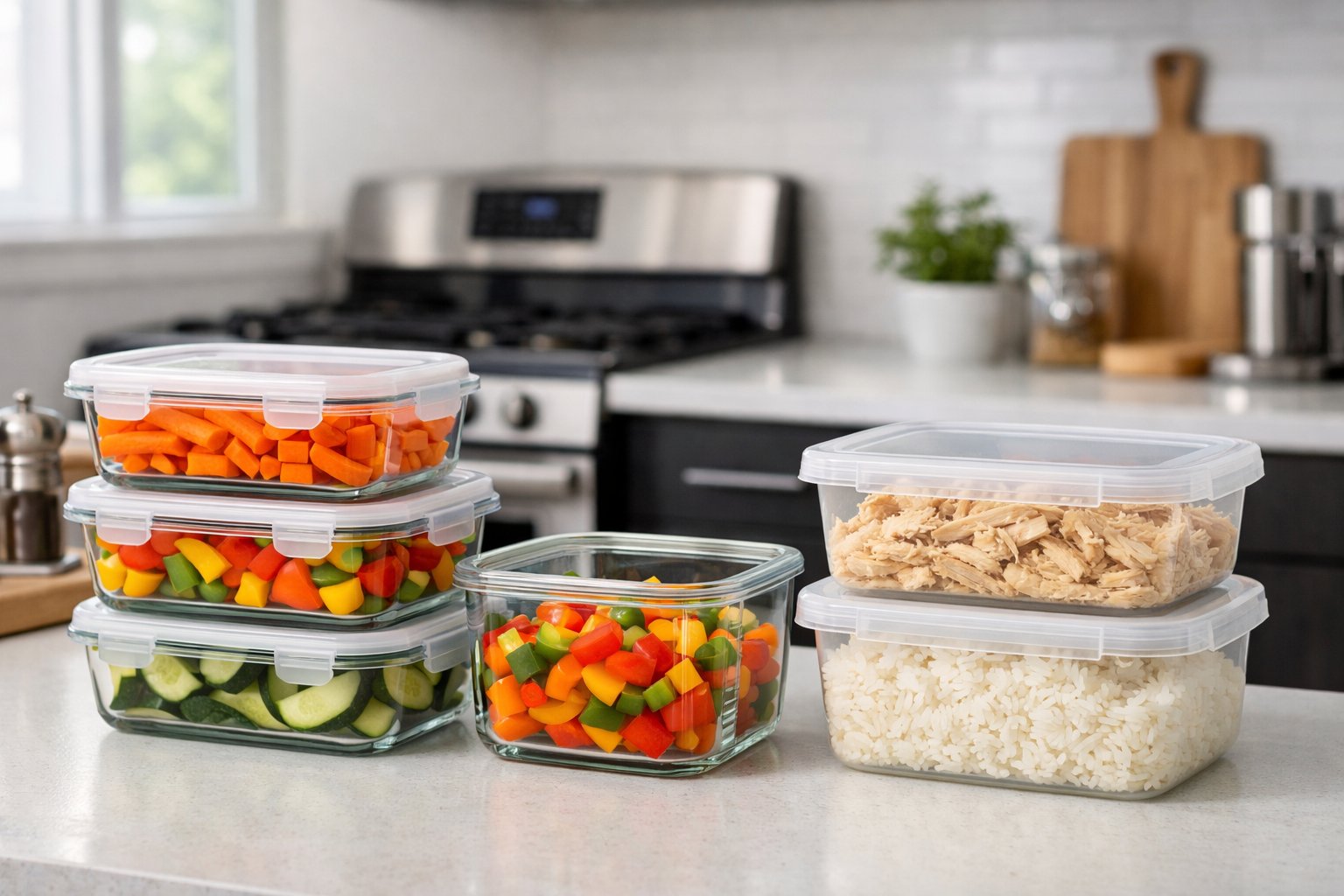
On weekends, we batch-prep ingredients and stash them in clear, labeled containers: chopped onions in one, cooked grains in another, washed greens in a third. Each has its own spot in the fridge, so we can see at a glance what’s prepped and ready to cook.
When we shop with our storage limits in mind, everything lands in a logical spot and nothing gets forgotten in the back of the freezer.
Optimizing Zones: Prep, Cook, and Cleaning Areas
If tools and ingredients live where we actually use them, we don’t waste time zigzagging around the kitchen. When storage matches our cooking flow, efficiency just sort of happens.
Arranging Prep and Cooking Tools Accessibly
We keep our most-used tools within arm’s reach. A magnetic knife strip over the prep counter shows off the blades, keeps them dry, and means no more rummaging through drawers. If we use multiple prep spots, we’ll throw up a second strip.
Cookware sits right near the stove—deep drawers below the cooktop work best. No more frantic pan hunts when oil’s already sizzling. Pot lids get stored vertically with tension rods or a lid rack to avoid the dreaded lid avalanche.
Our spice rack sits between prep and cooking zones—mounted on the wall or tucked in a pull-out cabinet. Grouping spices by cuisine or alphabetically means we don’t have to squint at every jar mid-recipe.
Mixing bowls, cutting boards, and measuring cups hang out in the prep zone, sorted in a drawer with dividers. We keep wooden spoons and spatulas in a crock between the prep counter and stove—always within reach.
Designing the Cleaning Zone for Easy Reset
The cleaning zone centers on the sink and dishwasher, which we’ve placed side by side (on the dominant hand’s side, if possible) for easy rinse-and-load. Under the sink, we use pull-out trays or bins to separate dish soap, sponges, scrubbers, and garbage bags—no more dark, jumbled chaos.
A small compost bin or pull-out trash drawer near the prep area catches scraps fast. We empty these into a bigger bin later, so the kitchen doesn’t get smelly or cluttered.
Dish drying racks or wall-mounted options give wet dishes a place to land without hogging counter space. We keep these near the dishwasher to streamline the drying and putting-away process.
Preventing Cross-Contamination Through Storage
We keep raw and ready-to-eat items apart at every stage. Raw proteins always go on the lowest fridge shelf so nothing drips onto produce or leftovers.
We use separate cutting boards for meat, veggies, and bread—stored vertically in labeled slots or racks. Color-coding helps, especially when we’re in a hurry.
Cleaning supplies live in their own drawer, never with food containers. Dish soap stays away from food, and cleaning cloths get their own spot, far from kitchen towels.
We’re picky about returning only clean, dry cookware to cabinets. Used utensils go in a “dirty bowl” by the stove until we can wash them—no mixing with clean ones.
Advanced Storage Tools and Techniques
A few upgrades can make a huge difference. Specialized organizers and clever use of vertical space let us keep more stuff accessible without the usual clutter.
Shelf Risers and Adjustable Dividers
Shelf risers double cabinet space by stacking items in layers. Mugs or bowls go up top, bulkier stuff like mixing bowls below. Metal wire risers are easiest to see through, but bamboo or acrylic look better if you care about that.
Adjustable dividers keep baking sheets and cutting boards upright, so we don’t trigger an avalanche every time we grab one. Spring-loaded models are quick to install—just wedge them in and adjust the spacing for your biggest items.
Innovative Drawer and Cabinet Organizers
Pull-out organizers let us reach the back of cabinets without crawling on the floor. Deep drawers get tiered inserts to sort utensils by type. We like expandable bamboo trays for the everyday stuff, with non-slip mats underneath to keep things from sliding.
Under the sink, bins with handles make everything easier to grab. Clear bins are great for instant ID, while labeled ones work best for pantries. We group similar items—one bin for baking, another for lunch stuff, and so on.
Corner cabinets aren’t dead space anymore with lazy Susans. Two-tier turntables make oils, vinegars, and spices easy to reach, even in tight corners.
Reducing Food Waste With Smarter Storage
If we can see what we have and keep it organized, we use things up before they go bad.
Tracking Ingredients to Avoid Expiry
We’ve all found a mystery container in the fridge that’s way past its prime. Usually, it’s just out of sight, not out of mind.
Transparent containers help a ton. If we can see what’s inside, we’re way more likely to use it. Glass or clear plastic makes it easy to scan the fridge in seconds.
Dating and labeling is simple but powerful. A bit of masking tape with the date helps us know what needs eating first. For meal prep containers, we write both the date and what’s inside—“chicken stir-fry, Jan 24” is better than playing fridge roulette.
We rotate food so older stuff is up front:
- New groceries go behind what’s already there
- Older containers move to eye level
- A “use first” zone sits at the front
No fancy apps needed—just make the oldest food easiest to grab.
Meal Prep and Rotation Strategies
When we prep ingredients in usable portions, we actually use them before they spoil.
Batch-prepping veggies on shopping day extends their life. Washed, chopped produce in airtight containers stays fresh way longer than a forgotten carrot in the crisper. We can see what’s there, and it’s ready to toss into a pan.
Flat freezing is a game changer. Soups, sauces, and cooked grains go into thin, flat bags that stack neatly and thaw fast. Beats losing a container of chili to freezer burn because it got buried.
Uniform, stackable containers help us fit more in the fridge or freezer and keep everything visible. No more food graveyard at the bottom of the pile.
Frequently Asked Questions
How we store stuff really does shape how fast we cook, how fresh our food stays, and how smoothly we move through the kitchen.
How do organized storage habits lead to savings in prep and cooking time?
Honestly, just putting things where we use them saves loads of time. Baking supplies in one drawer, oils by the stove—no more mid-recipe scavenger hunts.
It’s wild, but research says cluttered kitchens can add up to 37% more prep time. We end up dodging stuff we don’t use or digging past appliances that haven’t seen daylight in years.
So we keep our go-to tools—knives, cutting boards, measuring cups—in their own zones. Grabbing what we need beats tearing apart the kitchen every time.
Can you dish out some tips for maximizing freshness through savvy food storage practices?
We treat the fridge like a priority shelf. Stuff that needs using soon goes front and center. Hardy veggies can chill in the back.
A weekly fridge cleanout helps a ton. Studies show that organized fridges cut food waste by 28% because we actually see what’s about to expire.
Glass containers win for keeping food fresh. They don’t stain, they’re microwave-safe, and we can see what’s inside without lifting every lid.
We’re also fans of mason jars for dry goods. Scribbling the date on the lid with a wax pencil keeps us honest about how long that quinoa’s been hanging around.
What are the 'secret ingredients' to establishing a kitchen that flows with your cooking rituals?
We map storage to our own cooking habits. Prep tools by the cutting board, utensils by the stove, serving stuff near the plates.
Vertical storage is underrated. Magnetic knife strips free up space, wall rails hold tools, and tiered spice racks bring everything into view.
The real trick? Letting our habits shape what gets prime real estate. If we bake every week, the mixer stays out. If not, it goes in a cabinet.
What's the recipe for keeping your cooking space both functional and safe through proper storage?
Sharp knives get their own spot—magnetic strip or in-drawer block—so nobody grabs one by accident.
Heavy pots and pans go on low shelves. We learned the hard way that lifting a cast iron pan from up high is just asking for trouble.
Clear counters aren’t just nice—they’re safer. When we’re not dodging appliances, we’re way less likely to spill or burn ourselves.
And cleaning supplies? Always separate from food, with clear labels. Grabbing vinegar instead of vanilla is not a fun surprise.
How do smart storage solutions spice up the efficiency of meal preparation?
A well-stocked mise en place station—oils, salt, pepper, and daily-use spices within arm’s reach of the stove—means we never lose momentum hunting for ingredients.
Drawer dividers keep tools sorted by job: baking stuff in one, stovetop tools in another, sharp things in their own spot. No more digging through a tangled mess.
Matching lids to containers before we need them is a lifesaver. We nest containers by size and stand lids up vertically in magazine files so everything’s easy to spot.
And the scrap bowl trick? One medium bowl on the counter for peels and trimmings saves us a dozen trips to the trash while we prep. Simple, but it works.
Could mastering the art of storage help in reducing food waste and, in turn, stir up your cooking efficiency?
We’ve honestly cut our food waste just by organizing the fridge and pantry so nothing gets lost or goes bad. When grains hang out with grains and sauces stay together, it’s way easier to spot duplicates—no more accidentally buying a third bottle of soy sauce.
Clear storage containers make life simpler. You can glance in and see exactly how much rice is left, or whether those greens need to be used up today or if they’ll last until tomorrow. No guesswork, just a quick look.
We keep a running grocery list stuck to the fridge. The second we see we’re running low on olive oil or garlic, we scribble it down. That way, we’re not left scrambling mid-recipe or making last-minute dashes to the store.
Leftovers don’t have to be sad, forgotten things. We batch-cook on weekends, portion out meals, slap on a quick label with the date, and plan our week around what needs to be eaten first. It’s not a perfect system, but honestly, it’s saved us time and money—and maybe a little bit of sanity.
Share:
How Better Storage Leads to Better Cooking Outcomes
How Better Storage Leads to Better Cooking Outcomes