

Check out our latest compact vacuum sealer for food collection!
You start dinner, and suddenly you're elbow-deep in cluttered cabinets, hunting for that one spice while your onions threaten to burn. The counter's already a disaster, and the main course isn't even started yet.
Poor food storage habits make cooking chaotic, they force you to search for ingredients, lead to spills from badly sealed containers, and make it nearly impossible to work efficiently in a messy space.
When storage systems fail, cooking feels like a stressful scramble instead of something enjoyable. Most of us have knocked over containers stacked the wrong way, found wilted herbs hidden in the back of the fridge, or discovered a flour bag left open, now dusting everything in sight. These aren't just small annoyances; they're usually why the kitchen gets so messy halfway through a meal.
Key Takeaways
- Disorganized storage makes you search for ingredients mid-cooking, which leads to burnt food and cluttered counters
- Sealed containers and organized cabinets prevent spills and help keep your workspace clean
- Even small storage tweaks, like grouping similar items or using clear containers, can seriously cut down on mess and save time
How Poor Storage Creates Chaos Mid-Cooking
In the thick of cooking, bad storage doesn't just slow you down—it forces you to stop and search for things, ups your food safety risks, and clutters your workspace with packaging you should've ditched earlier.
Forgotten Ingredients and Last-Minute Searches
You know the feeling: the pan's hot, onions are sizzling, and suddenly you're rifling through three cabinets for paprika you swear you bought last month. Disorganized storage makes this a regular headache.
When ingredients aren't labeled or kept in predictable places, you waste precious cooking time searching instead of actually cooking. Chicken sits out too long while you ransack the pantry. Pasta water boils over while you're behind cereal boxes looking for tomatoes.
The problem's worse when you can't see what you have. Overcrowded shelves and opaque containers turn every recipe into a guessing game. Suddenly, you have three half-empty flour bags in different spots because you couldn't find the first two.
Honestly, a simple labeling system and some clear containers solve most of this. When everything's got a home and you can see what's inside, cooking flows better and you avoid the scavenger hunt.
Cross-Contamination Hazards
Poor storage can crank up food safety risks. Raw meat dripping onto veggies in the fridge, or cooked and raw foods sharing space without separation—these are recipes for contamination.
Things get riskier when you're moving fast. You might grab lettuce that looks clean, not realizing it sat under defrosting chicken. Or you reach for leftover rice that's been next to raw fish, uncovered.
Common cross-contamination mess-ups:
- Storing raw meat above ready-to-eat foods in the fridge
- Containers that aren't sealed, letting odors and bacteria spread
- Reusing packaging from raw foods without washing it
- Storing all kinds of food in unlabeled, identical containers
When you're already in the middle of cooking, you can't always stop to clean properly. Suddenly, what should've been a quick ingredient grab turns into a possible health risk, and you might have to toss food you were counting on.
Unnecessary Clutter From Excess Packaging
Leaving packaging until you're ready to cook just creates chaos. Bulky cereal boxes, giant bags of rice, and random manufacturer containers hog precious counter space.
You end up shoving the flour bag aside to chop veggies, or moving spice jars just to set down a bowl. Every extra move adds up, and before you know it, the kitchen's a mess.
Wrestling with oversized packaging makes measuring and pouring harder too. Trying to scoop flour from a five-pound bag or pour oil from a giant jug? Pretty much guarantees spills.
Transferring bulk stuff into right-sized containers before you start cooking clears this clutter. You can grab what you need, measure easily, and keep your workspace for actual food—not packaging.
The Connection Between Organization and Cooking Efficiency
Kitchen organization really does shape how quickly and smoothly you can cook. When ingredients and tools are set up before you start, you spend less time searching and more time actually cooking.
Mise En Place: Your Secret Weapon
Mise en place—French for "everything in its place"—turns chaotic cooking into a smooth process. You prep and organize all your ingredients before the stove even goes on.
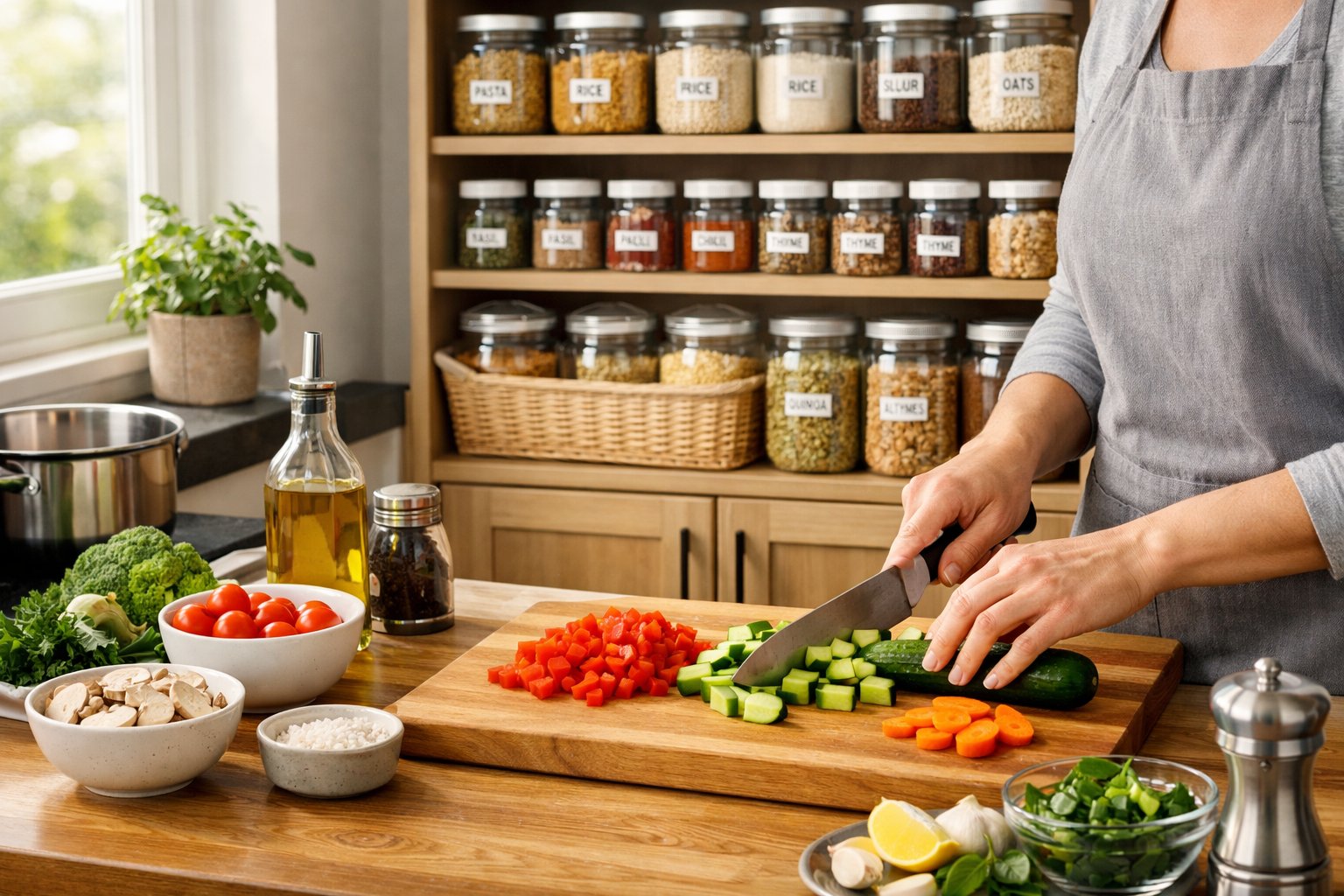
It means washing, chopping, and measuring ahead of time, then putting each ingredient in small bowls or containers right by your cooking station. No more frantic mid-recipe hunts for spices or veggies.
Professional chefs swear by it because it prevents mistakes. When you aren't juggling a bunch of things, you can focus on timing and technique. A study in Sustainability even found this approach cuts waste and keeps things efficient, even when you're busy.
There's a mental benefit too. When you know everything's ready, you don't get stressed about missing an ingredient halfway through.
The Role of Prep Containers and Tools
Prep containers are the backbone of organized cooking. Small glass or plastic bowls keep measured ingredients separate and ready. Clear containers let you see what's inside without opening everything.
Good tools matter too. A sharp knife, solid cutting board, and measuring cups make prep faster and more consistent. If you keep your go-to tools in the same spot, you can grab them on autopilot.
Labeling containers with what's inside and when you prepped it stops confusion, especially if you're making more than one dish. It keeps you from using the wrong thing or grabbing something that's gone bad. Skipping this step just means more mess and mystery containers mid-recipe.
Common Storage Issues That Make Cooking Messy
Bad container choices, unclear labels, and forgotten ingredients create a domino effect that can turn meal prep into a scavenger hunt. These mistakes force you to juggle containers, dig through shelves, and waste time on messes that shouldn't exist.
Improper Container Choices
We've all just used whatever container was handy for leftovers, but that habit backfires when cooking. Containers without airtight seals spill, leak, and let ingredients dry out—meaning extra cleanup or wasted food. Flimsy bags or mismatched containers tip over and make messes in the fridge.
Glass containers with tight lids are gold. They stack, prevent leaks, and you can see what's inside. Plastic containers without good seals let veggies go limp, leaving you with sad produce halfway through a recipe.
Size matters too. Huge containers waste fridge space and make things hard to reach. Tiny ones overflow and mix ingredients. Use containers that fit your portions and stack well, so every fridge trip isn't a game of Tetris.
Lack of Clear Labeling
No labels? Cooking becomes a guessing game. You end up opening several containers to find the right thing, leaving a trail of opened lids and clutter. It's a time-waster and makes more mess.
Dating your food helps avoid the surprise of spoiled ingredients mid-recipe. Just slap on a piece of tape with the date and what's inside. No more sniff tests or risky taste checks.
What to put on labels:
- Date stored
- What's inside
- Use-by notes
- How much or how many servings
Label everything—from prep containers to freezer bags. If you rotate stock (FIFO, first in first out), labels are even more important for using up old stuff before it goes bad.
Expired or Stale Ingredients
Opening a container mid-recipe to find moldy veggies or rancid nuts can derail your whole plan. You scramble for substitutes, maybe run to the store, or just give up on the dish. This usually happens when you don't check dates or rotate your stash.
Nuts and seeds go bad fast at room temp, but last for months in the fridge or freezer. We often keep them in the pantry, where heat and humidity ruin them. The result? Wasted money and last-minute substitutions that mess with your recipe.
Stuff left too long in the freezer gets freezer burn after about six months. You might grab what looks like good soup or meat, only to find ice crystals and weird flavors. Regular checks and dated labels keep these surprises at bay and help your cooking run smoother.
How Mid-Cooking Messes Lead to Bigger Problems
When you're scrambling mid-recipe for ingredients or cleaning up spills, you lose focus and timing—two things good cooking really needs. This chaos creates physical problems, like overcrowded pans that ruin food texture, and mental distractions that lead to burnt garlic or missed steps.
Overcrowding the Pan and Uneven Cooking
We've all done it—dumped a whole bag of veggies into one pan because who wants to wash another dish? But overcrowding ruins even cooking. Instead of crispy, caramelized food, you get steamed, soggy veggies.
When food's packed too tight, moisture can't escape. Instead of browning, everything gets pale and limp. Each piece needs space for steam to get out and for the pan to do its job.
The fix? Spread ingredients in a single layer with space between them. Sometimes that means cooking in batches or using more pans. If your storage system makes it hard to grab bigger skillets or baking sheets, you'll probably cram everything in—and your food suffers.
Losing Focus: When Disorganization Causes Mistakes
A messy cooking process splits your attention at the worst times. When you're digging for a spice or searching for a missing ingredient, you miss cues—like garlic going from fragrant to burnt in seconds.
Can't find your sharp knife? You use a dull one, which slows you down and ups the risk of cutting yourself. Uneven cuts cook differently, making timing harder.
These distractions pile up. You forget to salt the pasta water because you were looking for a colander. You overcook the chicken while hunting for a clean plate. Each slip makes the meal more stressful and less enjoyable.
Clean as You Go: Tactics to Prevent Mid-Cooking Disaster
Cleaning strategically while you cook can stop kitchen chaos before it gets out of hand. A trash bowl and regular wiping make a huge difference.
The Power of the Trash Bowl
We've all made endless trips to the trash can while chopping onions, dropping garlic peels along the way. A trash bowl fixes this. Put a medium bowl near your workspace before you start. Toss scraps, packaging, and food waste in it as you go.
This saves you from crossing the kitchen every few minutes and keeps your cutting board clear. Less debris means less chance of contaminating ingredients.
Keep the bowl close—within arm's reach is best. Use a stainless mixing bowl or even an old plastic container. When you're done with prep, dump it all in the main trash in one go.
If you compost, this makes it easier to separate scraps from non-recyclable waste—no more sorting through piles later.
Staying Tidy with a Cleaning Routine
A clean kitchen really starts with a sink of warm, soapy water ready before you even slice an onion. Fill one side of the sink or grab a big basin. As soon as you're done with a utensil, measuring cup, or prep tool, toss it right in the water.
While something simmers or roasts, go ahead and wash those soaking dishes. It keeps food from hardening, and the dish pile never has a chance to turn into a mountain. I like to keep a damp cloth next to the stove just for spills—wipe them up right away, before they get stuck.
Between cooking steps, wipe the counter and put ingredients away. Seriously, putting the flour back now is way easier than trying to find space later. Clearing one section of the counter at a time helps keep chaos from spreading everywhere.
If you make these habits automatic, cleaning feels like part of the cooking—not some separate, dreaded chore.
Quick Cooking Without the Mess: Storage Strategies for Success
Smart storage can turn quick cooking from a frantic scramble into something almost relaxing. When ingredients and tools are organized, you spend less time searching and way less time scrubbing extra dishes.
Prepping and Batch Cooking
Prepping ingredients ahead and storing them properly saves so much hassle. If you wash and chop veggies on Sunday, weeknight dinners mean grabbing a ready container instead of making a mess at 6 PM.
Batch cooking takes it up a notch. Cook proteins, grains, or sauces in bulk and portion them into clear, labeled containers. You’ll dirty fewer pots through the week and cleanup gets a lot easier.
The right containers help a ton. Stackable, see-through ones let you spot what you need without digging through the fridge. Square or rectangular shapes make better use of shelf space than round. Glass containers are great for reheating—one less dish to wash.
Staging Ingredients for Quick Access
Keep your most-used ingredients within arm’s reach of where you cook. Oil, salt, pepper, and go-to spices should be right by the stove. Measuring cups and spoons? Stash them in the drawer closest to your prep area.
Give high-traffic items the best spots:
- Oils and vinegars on the counter or a shelf nearby
- Daily spices in a drawer or rack by the stove
- Cutting boards stored vertically for easy grabbing
- Favorite pots and pans in lower cabinets near the range
This way, you’re not tearing apart every cabinet for one ingredient. Try measuring straight over the sink or pot to catch spills. And putting ingredients away as you go keeps the counters clear—trust me, it’s worth it.
Reusing and Minimizing Dish Pile-Up
Cut down on dirty dishes by reusing tools. That bowl you used for marinade? Rinse it and use it for serving. The cutting board? Wipe it between similar ingredients instead of grabbing a new one every time.
One-pot and sheet-pan meals are lifesavers for cleanup. Line baking sheets with parchment or foil—no scrubbing needed. Stir-fries and skillet meals let you cook everything in one pan, one after another.
Keep a sink of warm soapy water going. Toss used utensils right in so they don’t crust over. That damp cloth nearby? It’s for catching spills before they turn into sticky messes that need serious scrubbing later.
Small Habits That Make a Big Difference
You don’t need a total kitchen makeover to build better cooking routines. Tiny changes in how you work and clean can stop things from spiraling.
Taste as You Go
You can’t rescue bland food at the table, but you can fix it while you cook. Taste along the way so you can adjust salt, acid, and spices before it’s too late. Sometimes, what tastes perfect early on needs a bit more salt or maybe a splash of vinegar after everything’s simmered together.
This habit also keeps you from overdoing it. Add a little, taste, adjust. It’s way better than dumping in half a bottle of soy sauce and hoping for the best.
Keep a small bowl for tasting spoons so you’re not double-dipping or digging through drawers with sticky hands. For hot dishes, blow on the spoon or let a bit cool first. Your taste buds work best when things aren’t scalding hot.
Keeping Surfaces Clear and Ready
A cluttered counter just makes everything harder. You end up juggling ingredients, tools, and boards with nowhere to set anything down—and that’s when flour spills, garlic rolls onto the floor, and something burns while you’re distracted.
Clearing and wiping down your main workspace before you start really helps. Put the olive oil back after using it. Drop the cutting board in the sink when you’re done chopping. These tiny cleanups keep your space usable.
Pick a spot for dirty utensils instead of leaving them everywhere. A bowl or spoon rest keeps used tools in one place, so final cleanup is faster and your prep area stays open.
Frequently Asked Questions
Storage mishaps can turn a smooth cooking session into a scramble—lost ingredients, spoiled food, last-minute changes. It’s never fun.
What tips can prevent a chaotic disaster when you're cooking up a storm?
Prepping ingredients before you start makes the biggest difference. Wash produce, measure spices, and have everything nearby before you even turn on the stove.
Set up kitchen zones. Oils and seasonings by the cooktop, cutting boards close to the sink, measuring tools in one easy-access drawer.
A trash bowl on the counter during prep saves you from constant trips to the garbage. It’s a simple trick that keeps you focused on cooking, not cleaning.
How can disorganized pantry practices lead to a full-blown kitchen fiasco mid-recipe?
If you don’t label or rotate pantry items, you’ll grab expired stuff halfway through a recipe. Realizing your baking powder is ancient while making pancakes? Not ideal.
Shoving things randomly in the pantry means you can’t find what you need. I’ve definitely bought duplicate spices because I couldn’t find the ones I already had.
Without clear containers or decent shelving, ingredients get lost and forgotten. That half-bag of flour you didn’t seal? Now it’s full of pantry moths.
Why should you think twice before overstuffing your fridge, and what culinary chaos could ensue if you don't?
Stuffing your fridge blocks air flow, so things spoil faster—even if you think they’re safe.
You lose track of what’s in there. Stuff gets pushed to the back, expires, and starts to smell, which seeps into other food.
An overfull fridge makes it tough to grab what you need while cooking. When you’re in a rush, knocking over containers and causing spills just adds to the stress.
Is there a secret to keeping your cool (and your counter clean) when juggling multiple dishes at once?
Honestly? Cleaning as you go is the only thing that works. Wash bowls and utensils while things simmer or bake—it keeps the dish pile manageable.
Lay out all your ingredients before starting. This “mise en place” thing really helps you see what goes where, especially when you’re juggling a few pots at once.
Have spots for dirty utensils and used cutting boards. A damp towel nearby for quick wipe-downs stops sticky spills before they harden.
What kitchen blunders tend to turn meal prep into a recipe for disaster?
Dull knives slow you down and make injuries more likely. Slicing tomatoes shouldn’t be a fight, and uneven pieces cook weirdly.
Not reading recipes all the way through can really mess you up. Realizing halfway in that something needs two hours to marinate when you wanted dinner in 30 minutes? Been there.
Forgetting to preheat pans or ovens throws off your timing. If you add food to a cold surface, it won’t brown right and your estimates go out the window.
How does treating your kitchen like a game of Tetris with your containers and ingredients lead to a boiling point?
Stacking containers in odd ways? Good luck grabbing anything from the bottom without pulling everything apart. That ingredient you need is always the one trapped under five others, and suddenly dinner's running late.
Containers with missing or wrong lids just make things messier. Stuff spills, dries out, or picks up weird smells in the fridge. Nobody wants to dig through a cabinet of half-open bags and mismatched plastic.
And let's talk about raw meats—if you stash them on the wrong shelf, you're just asking for trouble. One leaky package can drip onto ready-to-eat food below, and now you’ve got a real food safety mess on your hands.
Share:
How Storage Readiness Impacts Meal Preparation Speed
How Ingredient Storage Affects Cooking Consistency