

Check out our latest home & kitchen collection!
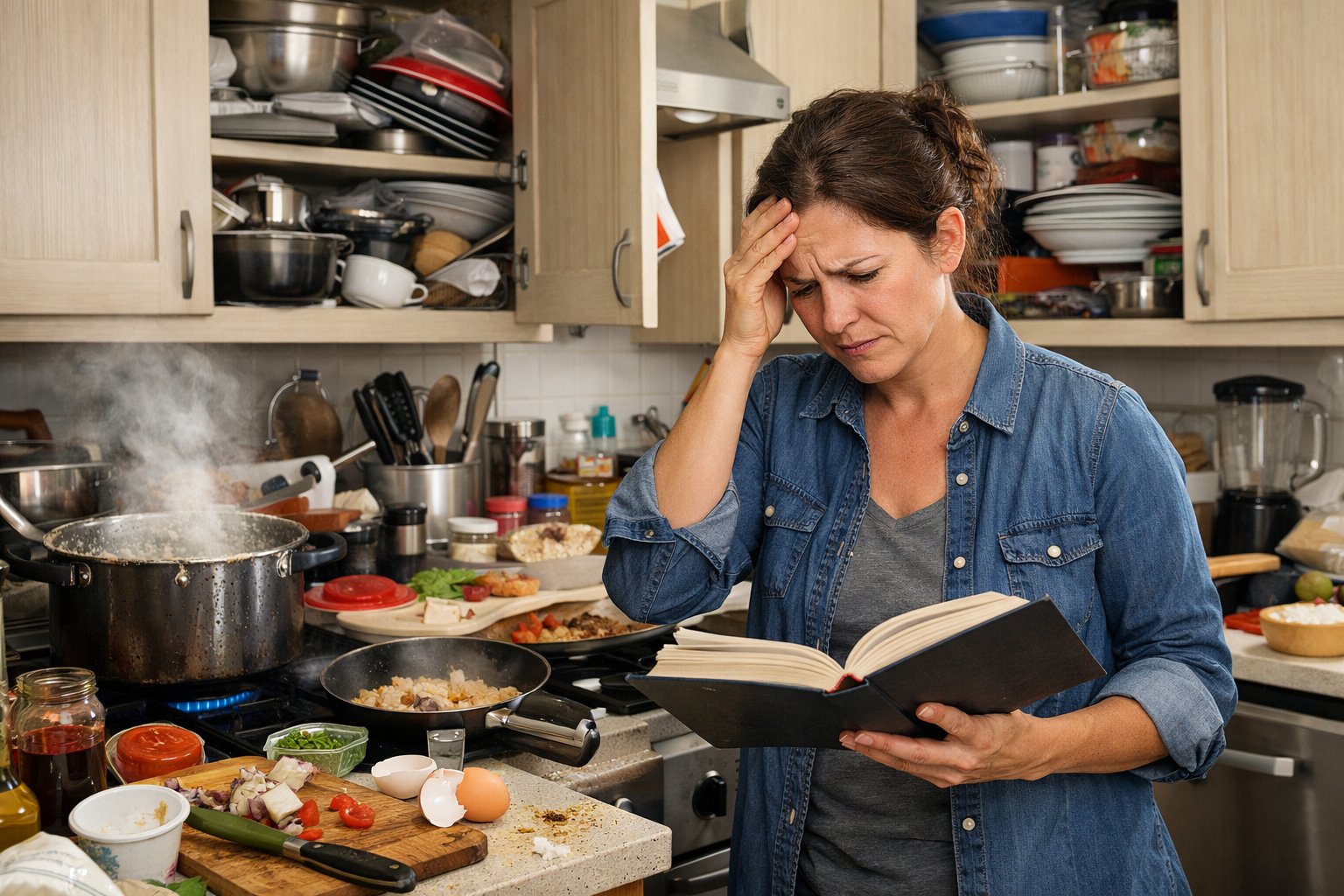
We've all been there, you open a cabinet to grab a pot, and suddenly you're playing a game of kitchen Jenga as containers tumble out and lids scatter across the counter.
Overfilled cabinets make cooking harder because they force you to waste time searching for items, increase stress levels during meal prep, and create chaos that disrupts your natural workflow in the kitchen. What should be a simple task turns into a frustrating obstacle course before you even turn on the stove.
It’s not just about looks or owning too much stuff. When cabinets are stuffed to the brim, we lose track of what we have, ingredients expire out of sight, and the tools we need get buried under things we barely use. All this mess slows us down and can make cooking feel like a chore instead of something to look forward to.
But you don’t need a total kitchen makeover or to toss everything you own. If you get why overfilled cabinets mess with your cooking and use a few practical fixes, your kitchen can actually help you out instead of getting in your way.
Key Takeaways
- Overstuffed cabinets eat up your time and ramp up stress, which can tank meal quality
- Disorganized storage means you forget ingredients, waste food, and can’t grab what you need
- Smart organizing and a few storage tweaks can bring back kitchen sanity—no big renovations needed
How Overfilled Cabinets Disrupt Cooking Flow
Jammed cabinets throw off your cooking rhythm, hiding what you need and tripping you up in your own kitchen. The hassle builds up—before you know it, cooking feels like a slog.
Lost Tools and Ingredients
When cabinets overflow, finding a specific tool gets weirdly difficult. You know you have that spatula, but it’s probably wedged behind a stack of mixing bowls and baking sheets.
It gets worse with ingredients. Spices migrate to the back, canned goods hide behind cereal boxes, and suddenly you’re buying another jar of cumin you already had. The more crowded it gets, the less you can see, and the cycle of clutter just feeds itself.
You end up guessing where things are instead of focusing on the food. Stuff buried in the back might as well not exist. Why even own it if you can’t reach it?
Wasted Time Searching
Every minute spent rooting through a cabinet is a minute lost from actually cooking. Some studies say messy kitchen storage can add 10-15 minutes to meal prep. That’s a lot of time if you’re hungry.
You wind up pulling out half the cabinet just to get at something in the back, leaving stuff all over the counter. This mess interrupts your workflow and kills your focus. If you’re sautéing veggies, you really don’t want to leave the stove to hunt for a lid.
The more complicated the meal, the worse it gets. What should be a smooth process turns into a series of scavenger hunts. You lose the momentum that makes cooking fun.
Obstructed Meal Prep Surfaces
When cabinets are stuffed, things spill out onto counters because there’s nowhere else for them to go. Suddenly, your kitchen layout stops working for you.
Pulling stuff out of packed cabinets means you need somewhere to put it, and that usually means the counter. Pretty soon, you’re chopping veggies in a tiny corner, constantly moving things around just to find space.
It’s not just annoying—it’s less safe. When you’re juggling limited space, it’s easy to mix up raw and cooked ingredients, and that’s a food safety risk. Even a kitchen with a good layout can’t help you if the storage is overflowing.
Mental Clutter and Cooking Stress
The chaos of overfilled cabinets isn’t just physical—it messes with your head, too. Apparently, about 77% of people feel more anxious in cluttered spaces, and kitchens are no exception.
Impact on Mental Clarity
Open a jam-packed cabinet and your brain instantly goes into overdrive. Every messy stack and tangled utensil grabs your attention, scattering your focus before you even start cooking.
That visual noise is exhausting. Instead of thinking about flavors or what to make next, you’re just trying to find a measuring cup. It’s no wonder you end up reaching for takeout instead of cooking something new.
When the kitchen’s a mess, it’s harder to think straight. You forget what ingredients you have, lose your place in a recipe, and the creative part of cooking disappears under all that mental clutter.
Increased Frustration and Anxiety
Just walking into a cluttered kitchen can make your shoulders tense. You know you’ll have to dig through shelves, dodge falling containers, and brace yourself for whatever tumbles out next.
It’s not just in your head—visual mess actually triggers stress hormones. No surprise if you start avoiding cooking because your kitchen feels more like a battleground than a place to relax.
Over time, the frustration adds up. Cooking, which could be satisfying, starts to feel like a hassle. You doubt your abilities, not because you can’t cook, but because your environment makes everything harder than it should be.
Food Waste and Safety Risks in Overstuffed Cabinets
When cabinets get too full, food ends up hidden and forgotten, which leads to expired stuff and more waste. That’s bad for your wallet and, honestly, kind of gross.
Forgotten and Expired Food
Stuffed cabinets create layers of forgotten food. That can of beans you bought months ago? It’s probably buried behind newer items, quietly expiring.
When you can’t see what you own, you end up buying duplicates. Expired food piles up in the back, especially spices and canned goods that lose quality over time. You usually don’t notice until it’s too late.
Trying to use the “first in, first out” rule is pretty much impossible when everything’s crammed together. You grab what’s easiest to reach, and the older stuff just lingers in the shadows, adding to the waste.
Rising Risk of Food Waste
Disorganized cabinets mean you throw out more food. It’s one of the easiest ways to waste money and hurt the environment, yet overcrowded storage makes it almost inevitable.
Cramped cabinets lead to spills and broken seals. If you can’t get to things easily, you forget what needs to be used up, and stuff spoils. The average family tosses a surprising amount of food every year, mostly because they lose track of what’s in the pantry.
Stuff that often gets wasted in crowded cabinets:
- Opened flour or sugar that goes stale
- Spices that lose flavor after a few months
- Canned goods past their best-by date
- Half-used ingredients you totally forgot about
A regular declutter session helps you spot what needs to be used before it expires. When you can actually see your food, you waste less and save more.
Organization Strategies to Avoid Overfilling
You can keep cabinets from overflowing by ditching what you don’t use, splitting up storage spaces, and using containers that make the most of vertical room. These moves help create a kitchen where everything actually has a spot.
Decluttering and Prioritizing Essentials
Start by emptying every cabinet and sorting things into three piles: keep, donate, and trash. Only keep what you’ve used in the last year.
That weird waffle maker you haven’t touched in ages? If it’s been more than twelve months, it’s just wasting space. Be honest—do you really need five wooden spoons that all do the same thing?
Keep these in easy reach:
- Everyday dishes and glasses
- Pots and pans you use often
- Regular cooking utensils
- Spices and oils you reach for all the time
Once you’ve narrowed it down, put your daily stuff front and center. Store holiday platters or the fondue set you use once a year in the back or up high. It’s not about being a minimalist, but you should be able to find what you need without moving a mountain first.
Proper Use of Drawer Dividers
Drawer dividers can turn a messy junk drawer into an organized spot where you actually find things. Measure your drawers before buying dividers so they don’t slide around.
Spring-loaded dividers are handy since you can adjust them as your needs change. Make separate spots for measuring spoons, spatulas, whisks, and serving utensils. No more digging through a pile of tangled tools.
For deep drawers, expandable dividers help keep pot lids standing up instead of stacked. And don’t forget your utensil drawer near the stove—keeping cooking tools and prep tools apart just makes sense.
Choosing Stackable Containers
Stackable containers let you use vertical space and keep things from toppling out every time you grab something. Go for clear containers so you can see what’s inside without opening everything.
Square or rectangular containers are best—they fit together without wasting space. Stack same-sized ones to make neat columns that won’t fall over. For pantry staples like flour, sugar, and pasta, airtight containers keep food fresh and shelves tidy.
Tips for stackable storage:
- Label the front and top of each container
- Put heavier stuff on the bottom
- Leave a little space between stacks so you can grab things easily
- Group by meal type or category
Just don’t buy containers before you declutter, or you’ll end up organizing stuff you should’ve tossed in the first place.
Design Choices That Prevent Clutter Build-Up
Good kitchen design stops clutter before it starts by giving everything a home and making stuff easy to see. The right layout and lighting can make a huge difference when you’re trying to find what you need.
Importance of Kitchen Layout
The classic kitchen work triangle is still around for a reason—it cuts down on pointless trips between the sink, stove, and fridge. If those three zones are too far apart, you’ll end up leaving things out on the counter instead of putting them away.
Keep your most-used items close to where you use them. Wooden spoons near the stove, cutting boards by the prep area, oils within reach of the cooktop. It’s simple, but it stops the “I’ll just leave this out” habit.
Counter depth matters more than you’d think. Standard 24-inch counters work, but if you’ve got those shallow 18-inch ones, you’ll probably start stacking stuff and create mini avalanches.
Leave at least 42 inches of open space between work zones if you cook alone, or 48 inches if you share the kitchen. Tight spaces make you pile things up instead of walking around to put them away.
Task Lighting for Better Organization
Under-cabinet LED strips brighten up your workspace and get rid of those dark corners where things disappear. When you can see into cabinets and drawers, you stop buying extras of what you already have.
Interior cabinet lighting turns deep cabinets from black holes into usable storage. Battery puck lights or motion-activated LEDs are cheap and help you find things without emptying the whole shelf.
Different tasks need different lighting. Bright white (4000-5000K) is best for food prep; warmer tones (2700-3000K) make dining areas cozy. Dimmer switches let you adjust for whatever you’re doing.
Hang pendant lights over islands about 30-36 inches above the counter to give you focused light without blocking your view. Bad lighting creates shadows that make even organized spaces look messy.
Storage Solutions Beyond Traditional Cabinets
When cabinets start to overflow, open shelving and a less-is-more attitude can dial down the visual clutter and keep your go-to items close at hand.
Smart Use of Open Shelving
Open shelving shines when we get picky about what earns a spot. Let’s keep these exposed shelves for stuff we actually grab every day—coffee mugs, dinner plates, cooking oils, and the spices we reach for on autopilot. That way, we’re not fumbling with cabinet doors while juggling a hot pan or racing against burning onions.
Visual order makes all the difference. Grouping similar things with matching containers or uniform dishes keeps things from looking like a thrift store. Glass jars for pasta, rice, and beans? They’re practical and they look good, too.
Shelves near prep zones cut down on the cabinet shuffle. No more wrestling with doors mid-recipe. Of course, open shelves do mean more dust and grease, so yeah, expect to wipe things down more often than if they were tucked away.
For everyday use, shelves should sit at eye level or just below. Anything up high is basically for show—not for grabbing during the dinner rush.
Embracing Minimalist Kitchen Concepts
Minimalism in the kitchen isn’t about denying yourself; it’s about keeping what you actually use. Start by ditching duplicate tools and those weird gadgets that gather dust. Most of us don’t need three wooden spoons or that avocado slicer we thought was a good idea at the time.
The one-in-one-out rule keeps things in check. Get a new pan? Let an old one go. This helps stop cabinets from overflowing with forgotten stuff.
Regularly checking what’s in our kitchen pays off. If something hasn’t seen action in six months, does it really deserve prime real estate? Stash seasonal stuff like cookie cutters somewhere less convenient to free up space for daily essentials.
Countertops, especially, benefit from a less-is-more approach. Set up zones for things like a knife block or cutting board, and stash the rest out of sight.
Planning Meals in an Organized Kitchen
When ingredients are visible and easy to reach, meal planning feels less like a guessing game. Clear cabinets and smart storage zones cut through the mental clutter.
Meal Planning Made Easy
Organized cabinets let us see exactly what we’ve got—no more hide-and-seek with canned goods. Assign spots for breakfast stuff, dinner staples, and snacks so we know what’s on hand before making a grocery list.
This kind of setup prevents buying duplicates and cuts down on food waste. We’re less likely to end up with three jars of curry powder hiding behind mountains of other stuff.
Grouping similar ingredients naturally sparks meal ideas. A baking zone with flour, sugar, and spices front and center makes it easy to dream up a weekend project. A pasta section loaded with shapes, sauces, and oils turns weeknight dinners into a breeze.
Clear containers and labels help even more. We can spot if there’s enough rice for a few meals or see at a glance when the quinoa stash is running low. Meal planning gets quicker and a bit less stressful.
Supporting Culinary Creativity
An organized kitchen clears the mental cobwebs that kill spontaneous cooking. Spotting a can of coconut milk next to the spices might remind us of that Thai curry we meant to try.
Creativity thrives when ingredients are visible and easy to grab. Dedicated zones for oils, vinegars, and specialty items turn shelves into inspiration boards. If we actually see that bottle of pomegranate molasses, we might finally use it.
Where we put things matters, too. Keeping oils near the stove and spices in a pullout rack means we can browse options while cooking. This setup encourages us to play with flavors and tweak recipes as we go.
Sometimes, organization helps us rediscover forgotten gems. That jar of preserved lemons or pack of soba noodles—suddenly, they’re dinner instead of just taking up space.
Frequently Asked Questions
Overstuffed cabinets can really slow us down, from hunting for ingredients to draining our creative energy. Here are some questions (and straight-up answers) about wrangling storage and making cooking smoother.
How do jam-packed cabinets put a damper on your meal prep groove?
When cabinets are crammed, we waste time digging for what we need. Every minute spent shuffling pots and bowls is a minute lost to actual cooking.
Overfilled cabinets force us to move things just to reach one tool or ingredient. It’s distracting and breaks our flow.
There’s also the physical hassle—reaching around obstacles adds stress. We’re more likely to knock things over or forget key ingredients when the storage is a mess.
What's the secret to keeping your spices accessible, not just as decoration?
Spices need to be stored in a single layer so we can see all the labels at once. Stacking jars just guarantees frustration.
A spice drawer or a dedicated shelf keeps the go-to seasonings right where we need them. Put the most-used ones front and center, and rotate the rest as needed.
Grouping spices by cuisine or how often we use them makes grabbing the right jar quick and painless. Uniform containers help, too—no more squinting at mismatched bottles mid-recipe.
Is there a kitchen hack to prevent cabinet clutter from crushing your culinary creativity?
Assign zones in cabinets for different categories: baking stuff in one spot, tools in another, ingredients by type. This way, we’re not hunting for the whisk under a pile of canned tomatoes.
Decluttering every few months helps, too. If something never gets used, why let it eat up space?
Shelf risers and stackable organizers make the most of vertical space without turning cabinets into chaotic piles. We can see what we have and grab it without dismantling everything.
Why is embracing minimalism in your kitchen cupboards not just a fad but a feast facilitator?
Cabinets are technically built to hold a lot, but do we really want to push those limits? Keeping only what we use saves cabinet hardware—and our sanity.
Cooking is faster and less stressful when we’re not overwhelmed by choices or searching through clutter. A streamlined set of tools and ingredients means quicker access and clearer thinking.
Minimalism isn’t about going without. It’s about making sure everything in the kitchen has a job and earns its place.
Could playing Tetris with your Tupperware be the reason your cooking mojo's missing?
Storing containers nested inside each other seems smart until we need a specific lid from the bottom. That’s a recipe for wasted time and mild rage.
Matching lids to containers right after washing and storing them as sets keeps things under control. Dedicating a drawer or section just for food storage containers avoids the avalanche every time we open a door.
Stacking identical containers makes for stable, easy-to-grab columns. And really, it’s time to let go of those random containers with no lids—they’re just hogging space.
What are the risks of turning a blind eye to the Bermuda Triangle of bakeware in your cabinets?
Overstuffed cabinets with heavy baking sheets and pans can turn into safety hazards—things shift, and next thing you know, a cast iron skillet is aiming for your toes. I mean, who hasn't had to catch a tumbling mixing bowl or two?
When bakeware is all jumbled together, it's easy to grab the wrong pan size halfway through a recipe. That throws off your timing and, honestly, sometimes messes up the whole dish.
Moisture gets trapped in crowded cabinets, which can leave metal bakeware rusty or warp those non-stick pans we rely on. Air needs to move around your kitchen stuff if you want it to last—and if you care about food safety, well, that's kind of non-negotiable.
Share:
When Kitchen Storage Starts Working Against You
How Organized Storage Reduces Daily Kitchen Cleanup