

Check out our latest home & kitchen collection!
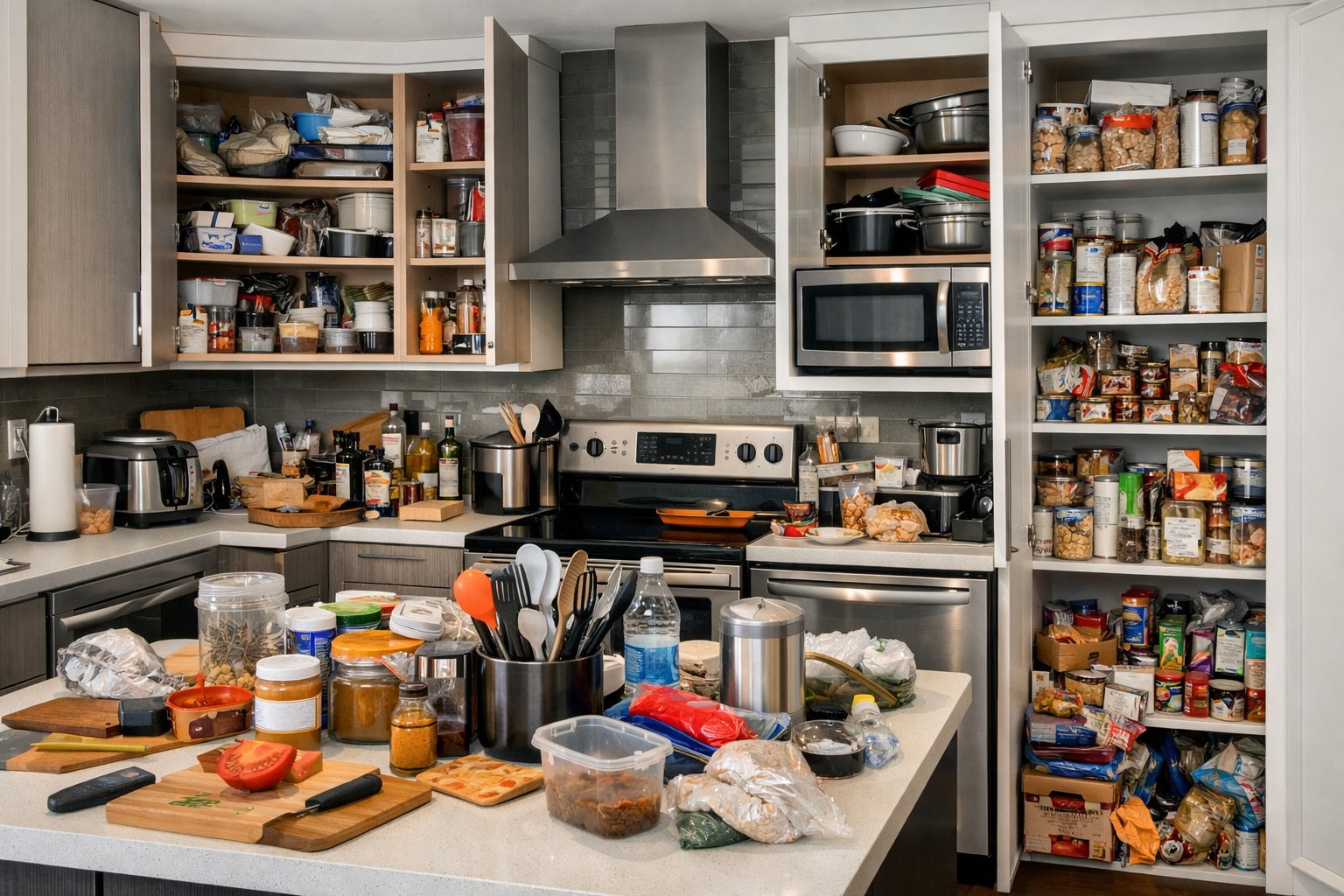
Your kitchen’s supposed to make cooking easier, right? But somehow, the storage system you set up just isn’t pulling its weight anymore. Maybe you’re wedging pans wherever they’ll fit, losing ingredients behind stacks of containers, or fishing through drawers for that one spatula you swear you own.
When kitchen storage starts fighting you, every meal gets harder, and honestly, it can turn a simple dinner into a headache.
Most of us have been there, buying organizers that don’t fit, cramming too much into cabinets, or watching our “system” unravel in a matter of weeks. Storage tends to break down when it doesn’t match how we actually use the kitchen. Needs change, people move in or out, and suddenly what worked last year just… doesn’t.
You don’t need a fancy remodel or a bunch of pricey gadgets to fix it. What really helps is figuring out where your storage is falling short and making some practical tweaks. Let’s dig into how to spot those trouble spots and actually get your kitchen working for you again.
Key Takeaways
- Storage fails when it doesn’t match your real cooking habits and routines
- Small changes—like zoning tools or using vertical space—can make a huge difference
- Regular decluttering and maintenance keep things from falling apart again
Understanding When Kitchen Storage Turns Into a Problem
That “brilliant” storage system you set up a while ago? Sometimes it quietly turns into a daily obstacle course. If you’re always shifting things around just to reach what you want, or meal prep takes twice as long because you can’t find anything, something’s off.
Signs Your Storage Is Holding You Back
The biggest giveaway: you’re constantly rummaging through cabinets for basic stuff. If grabbing a spatula or finding the cumin means emptying half a drawer, your setup’s failing you.
Physical clues pop up too. Cabinets jammed so full they barely close or stuff tumbling out when you open a door? That’s a big red flag. When appliances end up living on the counter because there’s literally no room in the cabinets, your storage isn’t doing its job.
Time’s another clue. Meal prep shouldn’t feel like a scavenger hunt. If you spend minutes just searching for ingredients or tools before you even start cooking, your kitchen’s slowing you down. And if you keep buying duplicates because you forgot what’s buried in the back? Yeah, that’s storage working against you.
Expired food piling up in the pantry? That’s a sign things are getting lost in the shuffle. When storage hides things instead of making them easy to grab, it’s a problem.
Common Causes of Inefficient Storage
A lot of the time, it starts with not really thinking about how you use your space. We just assume standard cabinet layouts will fit every lifestyle, but honestly, they don’t. A family that bakes every weekend needs something totally different than someone who mostly microwaves dinner.
Ignoring vertical space is a classic mistake. Lower shelves get packed while upper ones stay empty, or you stack things so high it’s risky to reach them. Cabinet doors often sit bare, even though they could hold organizers for lighter stuff.
Mismatched containers can make things feel chaotic even if you try to be organized. Random jar sizes waste space and make stacking a nightmare. Without any kind of system, you end up with weird gaps that could be put to better use.
| Common Issue | Result |
|---|---|
| No designated zones | Tools scattered everywhere |
| Deep cabinets without organizers | Stuff lost in the back |
| Single-layer storage | Vertical space wasted |
Another problem? Not updating storage as your needs change. What worked five years ago might be totally wrong for your current cooking habits or family size.
Impact on Daily Cooking and Meal Prep
When storage is inefficient, your whole kitchen workflow takes a hit. If your tools aren’t where you need them, you end up pacing back and forth. Even a simple dinner can drag out way longer than it should.
And let’s be honest—if every meal means battling clutter, you’re way more likely to give up and order takeout. That can mess with both your budget and your health in the long run.
Food waste creeps up too. Ingredients you can’t see get forgotten and spoil. There’s real research showing households lose a lot of money every year to expired food, just because it got buried in the pantry.
Safety’s another concern. Digging into overstuffed cabinets can lead to accidents. Heavy pots falling from crowded shelves or knives mixed in with random utensils? Not great. Plus, when you’re rushing through a messy kitchen, it’s easier for cross-contamination to happen. If your storage doesn’t support your cooking flow, it’s not just annoying—it can actually be risky.
Kitchen Layout Mistakes That Ruin Storage
Layout issues don’t just slow you down—they can make it almost impossible to use your storage well. If the kitchen work triangle’s ignored or traffic patterns clash with cabinet placement, you end up with weird dead zones and spaces you just can’t reach.
Ignoring the Kitchen Work Triangle
The work triangle—sink, stove, fridge—should form a path of about 4-9 feet between each point. If they’re too far apart, you’re running laps. Too close, and everything feels cramped.
When the triangle’s stretched out, you can’t group storage by task. Cutting boards wind up far from the sink, pots nowhere near the stove, and you lose that natural grab-and-go flow.
In galley or one-wall kitchens, the triangle gets squeezed into a straight line. Sometimes that works, but it limits where you can put things like tall pantry cabinets or deep drawers without blocking your main workspace. You need at least 36 inches of clearance between counters, which eats into storage depth.
Traffic Jams and Poor Workflow
Workflow breaks down fast when walkways get blocked. If your trash pull-out sits next to a fridge or oven door, you’re constantly playing musical chairs just to open things.
Islands too close to cabinets make aisles so tight you can’t open drawers if someone walks by. High-traffic areas, especially near the fridge, really need 42-48 inches of clearance. Anything less, and you’re trapped.
Corner cabinets are notorious for wasted space if you don’t plan for door swings. Two standard doors at a 90-degree corner? You’ll never get either one fully open, and the back becomes a no-man’s-land. With the right lazy Susan or corner drawers, you can reclaim that space.
When Islands and Peninsulas Hinder Function
We add islands thinking they’ll be a storage miracle, but sometimes they just block off cabinets you actually use. An island right in front of your base cabinets? Good luck opening both at once.
Peninsulas that stick out too far turn the kitchen into a maze. They might look good in a design plan, but in practice, you’re walking around them all day. The storage they offer rarely makes up for the inconvenience.
Oversized islands can mess up the work triangle entirely. If you have to walk around a five-foot island to get from sink to stove, those drawers better be organized—otherwise, you’re just adding steps to every meal.
Countertop Chaos: Managing Visible Clutter
When your counters disappear under appliances, mail, and whatever else piles up, even making a sandwich feels like a chore. Visual clutter creates stress and slows you down.
Cluttered Countertops and Prep Area Struggles
Who hasn’t tried to chop veggies while dodging the toaster, pushing aside mail, and working around a pile of mugs? Cluttered counters make meal prep way harder than it should be.
It gets worse when small appliances claim every inch of space. That stand mixer you used once last month? It’s hogging prime real estate. Counters become a dumping ground for stuff without a real home—keys, mail, homework, random gadgets.
Common counter clutter:
- Appliances you barely use
- Oversized utensil holders
- Stacked dishes drying forever
- Decorative stuff that’s just… in the way
- Papers, keys, and other non-kitchen junk
If you can’t even set down a cutting board, it’s time for a reset.
Strategies to Clear and Organize Surfaces
Here’s a rule that works: if you don’t use it every single day, it shouldn’t live on the counter. That means knife blocks, bread makers, and most gadgets can go elsewhere.
Start by clearing everything off and giving the counters a good wipe. Then, only put back what truly deserves a spot. Maybe the coffee maker, maybe a cutting board—but the waffle iron? Nope.
A few ideas:
- Use a tray or basket as a drop zone for daily stuff
- Store small appliances in cabinets—add risers or organizers to use the space better
- Hang pots, pans, or utensils on wall hooks or a rack
- Dry and put away dishes right away (I know, easier said than done)
Before you start organizing the counters, check your cabinets. Sometimes, a little rearranging frees up more space than you’d expect for those bulky appliances.
Maximizing Cabinet and Drawer Efficiency
Even the fanciest cabinets can turn into black holes without the right setups inside. The real difference between a usable cabinet and a frustrating one? How easily you can actually reach what’s in there.
The Trouble with Deep Cabinets and Dead Corners
Standard base cabinets are usually 24 inches deep. Anything shoved to the back is basically gone until you pull everything out. That’s where mixing bowls and random lids go to die.
Corner cabinets are even worse. The 90-degree angle creates dead space you just can’t reach. A typical corner base cabinet can waste more than half its storage potential just because it’s so awkward.
Wall cabinets above counter height add another layer of pain. Stuff on the top shelf? You’ll need a stool or a long reach, so you end up cramming everyday things into lower cabinets, making them cluttered.
Pull-Out Shelves, Lazy Susans, and Drawer Dividers
Pull-out shelves are a game changer for deep cabinets. They bring everything out in one motion. Most need 4-6 inches of space for the hardware, but newer models are getting slimmer.
Lazy Susans make corner cabinets actually usable. A double-decker lazy Susan can boost usable space by almost half. You can finally grab things from the back without emptying the whole cabinet.
Drawer dividers keep utensils and tools sorted instead of sliding all over. Adjustable ones are best—you can size them for measuring spoons, big spatulas, whatever you’ve got.
Adding these after the fact can cost more, but there are plenty of budget-friendly modular options at big box stores.
The Appliance Garage and Range Hood Shuffle
An appliance garage hides countertop clutter behind a roll-up or lift door, usually in the corner where cabinets meet the counter. It keeps toasters and blenders handy but out of sight. Just make sure there’s an outlet inside.
The space under your range hood often goes unused. You can add shallow shelves or magnetic strips for spices and oils (just don’t store anything that melts or spoils from heat).
Wall cabinets next to the range hood work great for storing pot lids or baking sheets vertically with dividers. That way, your go-to cooking tools are always within reach.
Open Shelving vs. Closed Storage: Finding the Sweet Spot
Open shelving versus closed cabinets—it’s not about picking one side. It’s about knowing when each works for you. I’ve seen kitchens where open shelves look cool but become dust magnets, and others where closed cabinets hide so much stuff it just goes bad or gets forgotten.
When Open Shelves Become a Dust Trap
Let’s just say it: open shelving means you’ll be dusting and wiping down more often than you’d probably like. Every time you cook, some of that airborne grease and dust finds its way onto your favorite dishes. That beautiful stack of vintage bowls? It turns into a dust collector faster than you’d expect.
It gets especially bad above the stove or in busy cooking spots. Open shelves do best away from heat and grease. If you’re going to display something, you should use it regularly—otherwise, it’s just sitting there gathering grime.
Best spots for open shelving:
- Far from stovetops and ovens
- In drier parts of the kitchen
- Near dining areas for easy access to everyday stuff
- For daily-use items you want handy
Storing rarely used items on open shelves just adds to the cleaning hassle. Those fancy serving platters might look nice, but they’re really just collecting kitchen gunk.
Balancing Display and Practicality
Honestly, the most workable kitchens seem to favor a 70-30 split: about 70% closed storage to hide the chaos, 30% open shelving for the things you want to show off or grab quickly. It keeps things looking tidy but still practical.
Adjustable shelves inside cabinets are a game changer. You can move them around as your needs change—one month it’s tall bottles, next month it’s stacks of plates. On open shelves, maybe keep 8-12 items you actually use. If it just sits there, it probably doesn’t deserve the dusting.
Hide bulk pantry stuff, mismatched containers, and extras behind doors. Open shelves are for the mugs you reach for every morning, the glasses you use all the time, maybe a single quirky vase. If it’s on display, it should earn its keep (and the extra cleaning).
Utilizing Vertical Space and Hidden Opportunities
Most kitchens have wasted space—blank walls, that awkward gap between cabinets and the ceiling. Wall-mounted racks and adjustable shelves can almost double your storage without any major remodeling.
Wall Storage and Magnetic Knife Strips
Walls are storage goldmines that often get ignored. A magnetic knife strip on an empty wall keeps your blades easy to grab and off the counter. And they’re not just for knives—hang up metal utensils, scissors, even spice tins with metal lids.
Don’t stop wall cabinets at eye level. Hang them higher if you need to. Sure, you’ll need a step stool sometimes, but it’s worth it for the extra storage space. Even the inside of cabinet doors can hold hooks, racks, or cork boards for things like measuring spoons or quick-reference charts.
Pegboards are another flexible option—move hooks and shelves around as you need, no extra holes required.
Adjustable and Ceiling-High Shelving
Adjustable shelves beat fixed ones every time. Need more space for a new gadget? Just move a shelf up or down. It saves you from those annoying “almost fits” moments.
That dusty gap above your cabinets? Don’t waste it. Put up some shelves or stash lightweight storage boxes there for things you only need once in a while—holiday pans, extra mixing bowls, bulk paper towels. Just keep a step stool handy.
Ceiling-mounted pot racks are handy, especially above islands where you won’t bump your head. They keep pots and pans within reach and free up cabinet space.
Smart Food Storage: Keeping Freshness and Order
Good food storage stops waste and chaos. With a little planning, you can actually see what you have and use it before it goes bad.
Avoiding Pantry Pile-Ups and Forgotten Goods
Who hasn’t found an expired can shoved in the back of the pantry? It happens when you can’t see what’s there and things get buried.
Some tricks to avoid the black hole:
- Put new groceries behind older ones, not in front
- Use shelf risers or tiered organizers so nothing gets hidden in the back
- Keep a running list on your phone or stick a notepad to the pantry door
- Make zones for grains, canned goods, snacks, etc.
Clear containers let you see what’s inside. Some even come with freshness indicators—pretty high-tech, but honestly, sometimes a sticky note does the trick. Either way, seeing what you have cuts down on waste.
Label containers with when you bought or opened them. Keep a “use first” section at eye level for food nearing expiration.
FIFO Systems and Clear Containers
FIFO—First In, First Out—is how restaurants keep food fresh, and it works at home too. Always move older stuff to the front and put new items behind.
How to make FIFO work:
- Use clear containers so you can see what you have
- Date everything when you buy or open it
- Always grab the front item first
Clear airtight containers keep food fresher than the original boxes and make it obvious when you’re running low. You’ll notice if that pasta has been sitting for months, and you’re less likely to buy duplicates by mistake.
In the fridge, leftovers go in clear containers on a dedicated shelf—oldest in front, so you can’t ignore them.
Frequently Asked Questions
Storage headaches are pretty universal. Here are some practical answers to the questions that come up again and again—because we’ve all been there, staring at a messy counter and wondering where to start.
What are some clever ways to maximize storage in a small kitchen?
Vertical space is your best friend in a small kitchen. Wall-mounted knife strips, pegboards, hooks under cabinets—they all help free up drawers and counters.
Stack with purpose. Shelf risers create extra levels in cabinets, perfect for plates, bowls, or canned goods.
Don’t forget the inside of cabinet doors. Mount little racks or organizers for stuff like measuring spoons or spice packets.
Pull-out organizers in lower cabinets mean you don’t have to dig around in the back. No more lost Tupperware lids.
How can I effectively declutter my over-stuffed kitchen cabinets?
Take everything out of one cabinet at a time. Trying to tackle the whole kitchen is overwhelming and usually leads to giving up halfway.
Sort into three piles: use all the time, use once in a blue moon, and haven’t touched in a year. Be real about that bread maker you swore you’d use.
Donate or toss duplicates and broken stuff right away. No one needs five spatulas or three can openers.
Put only what you actually use back in the main cabinets. Seasonal or rarely used things can go up high or in storage.
Can you suggest the top organizer products to enhance kitchen efficiency?
Drawer dividers are a lifesaver for keeping utensils sorted. Adjustable ones are best—they grow with your needs.
Lazy Susans make corner cabinets actually usable. They’re great for spices, oils, or even cleaning supplies.
Clear stackable bins keep similar items together and let you see what’s inside. No more digging.
Pull-out trash and recycling bins hide the mess but keep it accessible. Under-sink organizers with adjustable shelves help you work around pipes and weird spaces.
What's the secret to organizing kitchen cabinets and drawers like a pro?
Group things by how you use them, not just by type. Mugs by the coffee maker, baking tools together, prep gadgets in their own spot.
Organize drawers by task—one for baking, one for cooking, one for prep. It’s just easier.
Keep heavy stuff low, lighter and frequently used items at eye level. Your back will thank you.
Use vertical dividers for flat things like baking sheets and cutting boards. Stacking them flat is just asking for a mess.
How does the 'Kitchen Triangle' rule improve meal prep and cooking flow?
The kitchen triangle links your sink, stove, and fridge in a way that just makes sense. It cuts down on unnecessary steps and zig-zagging.
When the triangle gets blocked, you end up running back and forth for no reason. Ideally, each side is between 4 and 9 feet.
Store your most-used stuff near the triangle: pots by the stove, cutting boards by the sink, ingredients near the fridge.
Watch out for islands or furniture that block your path. The goal is to move easily between those three core spots, not dodge obstacles.
What are the common pitfalls when organizing a kitchen and how can I avoid them?
Jumping into buying organizers before figuring out what you actually need? That’s a classic mistake. Measure your cabinets, poke around to see what you already have, and then—only then—start shopping. Otherwise, you’ll just end up with a pile of bins that don’t fit anywhere.
If you ignore drawer height differences, you’ll box yourself in. Try mixing up shallow drawers for utensils and deeper ones for pots or those awkward little appliances you can’t quite part with.
People often skip adjustable shelving, but honestly, why limit yourself? Adjustable shelves let you switch things up, whether you’re storing a tall blender or a row of squat jars. It’s just more practical.
And let’s talk about charging stations. Forgetting to plan for them is a recipe for messy counters. Set aside a drawer or cabinet with an outlet for your devices—phones, tablets, whatever. That way, you keep your workspace clear and your gadgets juiced up.
Share:
Understanding the Role of Containers in Kitchen Organization
Why Overfilled Cabinets Make Cooking Harder