

Check out our latest compact vacuum sealer for food collection!
Most of us barely think about how we stash leftovers or meal-prepped dishes, but the way we store food really shapes how it reheats, affecting texture, flavor, and even nutrition.
Studies on precooked meats and aquatic products make it clear: storage conditions set off a chain of physical and chemical changes that either preserve quality or speed up decline. Ice crystals form during freezing, proteins and fats oxidize in the fridge, and moisture migrates, all starting in storage, all still influencing what happens when we finally reheat.
It’s not just about food safety. When we freeze something, the speed and temperature of freezing determine the size of ice crystals, which can puncture cell structures in both meats and veggies. That’s why reheated frozen food sometimes weeps moisture or feels mushy.
Meanwhile, refrigerated foods keep changing too, enzymes and oxygen keep working, so the food’s chemistry shifts, which can mean microwave heating brings out weird flavors or textures compared to steaming or pan-frying.
Whether you’re storing a stew, a plant-based omelet, or seafood, how you store it sets the stage for what you’ll get when you heat it up again.
Key Takeaways
- Storage conditions launch physical and chemical changes that shape texture, moisture, and flavor when reheated
- Freezing forms ice crystals, refrigeration drives oxidation—both keep influencing food quality when you reheat
- Pairing the right storage with the right reheating method helps keep prepared foods tasty and nutritious
How Storage Methods Directly Affect Food Reheating Quality
How you store food changes it at the cellular level, and that messes with how it heats up later. Freezing versus refrigeration, plus how long you store something, all change moisture and protein stability—those changes decide how your reheated meal turns out.
Impact of Freezing Versus Refrigeration
Freezing makes ice crystals inside muscle tissue, which smash up cell membranes in ways refrigeration doesn’t. That damage lets moisture and nutrients escape more easily when you reheat, especially with meat.
Refrigeration keeps cells mostly intact but only gives you a few days of shelf life. Stored meats in the fridge oxidize faster than in the freezer, so off-flavors and rancidity show up sooner. That’s why leftovers in the fridge get funky faster than frozen ones.
Frozen storage at -18°C slows oxidation and microbes way down. Research on frozen beef meatballs shows that freezing can keep them tasting good for a while—if you also reheat them right. But the trade-off is that texture changes from ice crystal damage.
Optimal Storage Temperatures and Durations
How cold and how long you store food both matter for reheating quality. Frozen storage past two months? Protein structure breaks down more, oxidation climbs, even at -18°C.
Key storage temps:
- -18°C (0°F): Standard freezer—keeps most cooked dishes decent for 1-2 months
- 0-4°C (32-39°F): Fridge zone—quality drops off in 3-5 days
- -23°C (-10°F): Deep freeze—can stretch storage to 3-4 months
The longer you freeze, the more oxidative damage builds up in fats and proteins. Heating can’t undo that. Meatballs frozen for two months show more oxidation than those frozen for just one, no matter how you reheat.
Moisture and Water Distribution Changes
Freezing rearranges water inside food. Slow freezing makes big ice crystals that bust up cells more than fast freezing, so reheated food loses more moisture.
When you thaw and reheat, those busted cells can’t hold water, so you get drier food and more juice on the plate. With refrigeration, water just slowly escapes from the surface, making the outside tough and the inside harder to heat evenly.
Effects on Ready-to-Eat Meat Products
Ready-to-eat meats—think meatballs or patties—have their own issues. Ground meat, extra fat, and processing mean they oxidize and lose texture faster.
Frozen meatballs taste pretty good reheated after a month. After two months, though, you start to taste that “warmed-over” flavor from fat oxidation, no matter how gentle you reheat. That flavor comes from storage, not the reheating itself.
Salt in processed meats speeds up oxidation, even in the freezer. Ground meats oxidize faster than whole cuts because there’s more surface area and the natural barriers are gone.
So, picking the right storage really puts a cap on how good your reheated meat will be. Even the best reheating can’t fix what bad storage ruins.
The Role of Microbial and Chemical Stability During Storage
While food sits in storage, two things keep happening: bacteria multiply and chemical changes keep chugging along. Both can make or break your reheated meal.
Microbial Growth and Total Plate Count (TPC)
Total plate count (TPC) tells you how many live bacteria are in your food. Warm temps speed up bacteria, while fridge and freezer slow them down. Studies on fermented stuff show that storing at 37°C is a disaster for microbes, but freezing or cooling keeps things safer.
TPC climbs over time if storage isn’t cold enough. Bacteria can double fast at room temp, so food spoils and can get unsafe in just a few hours. Even cooked food isn’t immune—handling and air can reintroduce bacteria.
Even in the fridge, TPC creeps up. That’s why leftovers are best in 3-4 days, then start to slide. The bacteria level when you reheat affects both taste and safety.
Lipid Oxidation and Off-Flavors
Fats react with oxygen during storage, creating those nasty rancid flavors. Heat, humidity, and air all make it worse. Higher temps make oxidation go faster, and moisture can trigger more breakdown.
TBARS tests measure these oxidation byproducts. Foods with lots of unsaturated fat—fish, poultry, oil-rich dishes—are especially vulnerable. We’ve all tasted that stale, cardboardy flavor in tired leftovers.
Packaging plays a role. Regular packaging lets in air, while vacuum sealing slows oxidation and keeps food moist longer. Still, even vacuum-packed foods eventually get freezer burn or off-flavors if left long enough.
Total Volatile Basic Nitrogen (TVB-N) Indicators
TVB-N measures nitrogen compounds released as proteins break down—think the ammonia smell in spoiled meat or fish. Cold storage slows this, but room temp sends TVB-N soaring. That’s why fish left out stinks so fast, while properly chilled fish stays fresh longer.
Once TVB-N rises, reheating can’t fix the off-tastes or smells that developed during storage.
How Reheating Methods Interact With Storage Outcomes
Your reheating method doesn’t act alone—it works with (or against) whatever changes happened during storage. Storage sets the baseline, but reheating decides the final result.
Boiling Versus Microwaving: Quality Differences
Boiling and microwaving give different results, especially for frozen foods. Studies on beef meatballs show microwaving tends to dry them out more than boiling, especially after they’ve been frozen for a while. Microwaves heat unevenly, so hot spots drive off water before the whole thing’s even warm.
Boiling is gentler and more even, but it can suck out flavor and nutrients into the water. After two months of storage, microwaving toughens meatballs even more, since the proteins are already damaged.
The longer food’s been stored, the more these differences show up. A meatball frozen for a week acts differently than one frozen for two months—the longer it’s stored, the worse the texture after microwaving.
Effect of Storage on Reheating Loss and Cooking Yield
How long you store food affects how much weight and moisture it loses during reheating. Freezing creates ice crystals that damage cells, so more water leaks out when you heat it.
Typical yields:
- Fresh to 1 week: 85-90% after reheating
- 1-2 months frozen: 75-85%
- Beyond 2 months: 70-80%
Longer storage means more loss. Refrigerated foods lose less than frozen, but still lose more the longer they sit. Different reheating methods pull out different amounts of moisture—convection ovens, for example, can dry food out even more than boiling.
Flavor and Odor Profile Preservation
The flavors and aromas in food change during storage, and reheating can either keep or destroy what’s left. Oxidized fats make those “warmed-over” smells, and high-heat reheating methods can make them stronger.
Microwaving can actually get rid of some off-flavors by vaporizing them, but it also takes away good aromas. Pan-roasting after freezing brings out both the tasty browning and the less pleasant oxidized notes.
Storage time really matters here. After a month, off-odors go up no matter how you reheat. Gentler methods like steaming keep more of the original flavor, while aggressive heating amps up the changes. What you smell after reheating is a mix of storage damage and heat effects—a double whammy you can’t totally avoid, but you can minimize by choosing your method wisely.
Sensory and Nutritional Quality Post-Storage and Reheating
How you store and reheat food shapes its texture, juiciness, and nutrition. The dance between storage and reheating determines if you get something tender and juicy, or just dry and bland.
Texture, Juiciness, and Water-Holding Capacity
Water-holding capacity drops during freezing, so you lose more juice when reheating. Meat loses moisture two ways: ice crystals break up fibers during freezing, and reheating denatures proteins, squeezing out what’s left.
Reheating method matters a lot. Air frying and pan-frying can make a crust that helps hold in moisture, while boiling usually gives the driest, toughest results. Some studies suggest that with the right prep, you can get yields over 96% and reheating losses as low as 11.32%.
The balance between immobilized water (water stuck to proteins) and free water shifts during storage. Better texture comes from reheating methods that keep more water bound up, not just dripping away.
Longer storage makes all this worse. The longer you freeze, the more moisture you’ll lose when reheating, no matter what method you use.
Nutritional Value Retention
Processing technologies always walk a tightrope: boost nutrition, and you might lose some sensory appeal; focus on taste, and nutrition can take a hit. During storage and reheating, proteins and fats oxidize—nutritional value drops, and odd flavors creep in.
Key Nutritional Changes:
- Protein oxidation ramps up the longer food sits in storage.
- Fats break down faster when reheated at high temps.
- Minerals? They mostly hang in there, no matter how you reheat.
- Boiling washes out water-soluble vitamins.
Dry-heat reheating, like air frying or microwaving, tends to save more nutrients than boiling or steaming. Microwaves, with their speed, limit the time food spends breaking down. That said, the biggest nutritional changes usually come from how long food sits in the freezer, not so much from how you reheat it.
Maillard Reactions and Warmed-Over Flavor
The Maillard reaction gives us those lovely browned flavors during the first cook, but it doesn’t play out the same way when you reheat. Air frying brings out more of those toasty, nutty aromas—lots of pyrazines and sulfur notes—while boiling just doesn’t deliver on flavor.
Warmed-over flavor sets in as fats oxidize during storage, turning meat a bit rancid, especially after reheating. The longer something sits, the more off-notes you’ll get, no matter how you reheat. If storage conditions are off, butyric acid builds up, adding a sour edge.
Some reheating methods can sort of cover up these storage flavors. Higher temps create new volatiles—2-acetylfuran, ethyl acetate—that add sweet or fruity notes to balance out the oxidized ones.
People’s willingness to buy these products lines up closely with how they taste. Air-fried leftovers come out on top in taste tests, with most folks saying they’d buy again. Boiled ones? Not so much—flavor just doesn’t develop as well.
Practical Examples: Impact on Stewed Meats and Specialty Ingredients
Storage has a direct effect on how stewed meats handle reheating, especially if you’ve added specialty ingredients. Water retention, texture, and flavor compounds in precooked lamb and mutton all shift depending on how long and at what temperature you store them.
Storage and Reheating Results for Stewed Lamb and Mutton
Precooked lamb and mutton go through noticeable changes in the fridge. Over time, the meat loses its ability to hold water, so when you reheat, it dries out more than when it was freshly made.
Protein oxidation speeds up, especially in the muscle proteins, making what was once tender meat turn tough after reheating. Fats also oxidize more the longer they’re stored, leading to stronger off-flavors when you heat them back up.
Collagen, which makes fresh stewed lamb so tender, starts to break down during storage. When you reheat stewed mutton that’s been sitting a while, the collagen doesn’t bounce back, so the meat feels less cohesive than a fresh batch.
Microbes do their thing during storage, producing byproducts that can mess with both safety and flavor. Reheating activates some of these compounds, and suddenly, you notice odd smells and tastes that weren’t there when the dish was new.
Eleutherine americana and Its Influence on Quality
Eleutherine americana, a plant found in some traditional meat dishes, brings natural preservative powers to the table. Its bioactive compounds slow down microbial growth and keep oxidation at bay in the fridge.
Add Eleutherine americana extracts to stewed lamb, and you’ll notice the color holds up better. These compounds interact with myoglobin, keeping browning (from metmyoglobin) to a minimum in stored meats.
The plant’s antioxidants help fatty cuts of lamb and mutton keep their original flavor longer by curbing lipid oxidation. Reheated portions taste a lot closer to freshly cooked stews when treated this way.
Protein breakdown also slows down, so texture stays more consistent during storage. When reheated, these treated meats hold onto moisture better and don’t dry out as much as untreated ones.
Analytical Techniques for Assessing Storage and Reheating Effects
To really know what’s happening to food during storage and reheating, we use a mix of tools. Gas chromatography-mass spectrometry (GC-MS), electronic noses, and sensory panels help us track volatile compounds and flavor changes. Moisture retention tests show us how structure breaks down.
GC-MS, Electronic Nose, and Advanced Sensory Tools
GC-MS lets us separate and identify the individual volatiles that pop up during storage and reheating. For example, after frozen storage, GC-MS can pick out aldehydes and ketones that mark lipid oxidation. Research on pork shows how these profiles shift based on heat treatments and storage time.
Electronic noses use sensor arrays to quickly create an odor fingerprint—no need to identify every single molecule. They’re handy for rapid quality checks, measuring aroma patterns rather than breaking down each compound.
Trained sensory panels still matter because people can pick up subtleties that machines miss. We look for things like “warmed-over flavor,” rancidity, and texture changes. Studies on beef meatballs, for instance, use both instruments and human panels to make sure the science lines up with what people actually experience.
Measuring Water and Flavor Changes Over Time
Water holding capacity drops as ice crystals form and damage cells during freezing. We check this by weighing food before and after cooking or reheating to see how much moisture is lost.
TBARS testing measures how much lipid oxidation has happened by tracking malondialdehyde levels. If it’s under 0.5 mg/kg, the meat’s still fresh; over 2.0 mg/kg, and you’re dealing with rancid flavors.
pH readings help us track protein breakdown and microbial growth. We blend samples with distilled water and use a pH meter to spot shifts that signal quality loss over a month or two in storage.
Consumer Preferences and Industry Implications
People want convenience, so precooked foods that hold up through storage and reheating are in demand. This trend shapes how food companies develop products and how we store food at home.
Trends in Kitchen Storage Habits
Let’s face it—we’re stocking more precooked and processed meats in our freezers than ever, thanks to packed schedules and meal prepping. The frozen food market keeps growing as folks look for quick options that don’t skimp on quality.
Still, a lot of people see frozen meat as second-best, even though processing has come a long way. This perception influences what we buy and how we store it.
The food industry’s responded by tweaking formulations to handle freezing better. Natural antioxidants like nutmeg extract are now in the mix, along with standbys like BHT, to help products survive the freezer and still taste good after reheating.
Linking Reheating Quality to Consumer Choice
How we store food changes which reheating methods work best. Frozen products develop different textures and flavors than refrigerated ones, so they need different reheating strategies.
Microwave reheating really shines for frozen precooked foods. Studies show it cuts down on cooking loss and keeps texture better than oven methods after freezing. That’s important—if leftovers reheat well, we’re way more likely to buy that product again.
Food makers now test their products for microwave performance, since most of us won’t bother with a convection oven for a quick bite. They also weigh natural antioxidants against synthetics like BHT, knowing people often prefer “cleaner” labels, even if synthetics work just as well at tiny concentrations.
Frequently Asked Questions
How we store food affects moisture, oxidation, and structure—the key things that make reheated meals taste and feel right. Container choice, freezing method, and storage temp all play their part in keeping reheated food appealing.
What's the secret to keeping leftovers tasting fresh after reheating?
Honestly, it’s all about cooling food fast and sealing it up tight. Letting food sit out too long invites dryness and bacteria, which wreck both safety and flavor.
Get cooked food into storage within two hours. Use shallow containers for quick cooling in the fridge—this locks in moisture and slows the protein oxidation that causes off-flavors.
Don’t overlook temperature. Keeping your freezer at -18°C, and not opening the door every hour, makes a bigger difference than you might think.
Can the way we store food actually change the reheating game?
Absolutely. Studies on precooked meats show that letting air into packaging during freezing speeds up fat oxidation compared to vacuum sealing.
Texture takes a hit, too. Foods exposed to air get freezer burn, lose water, and turn out dry and tough when reheated—no matter your method.
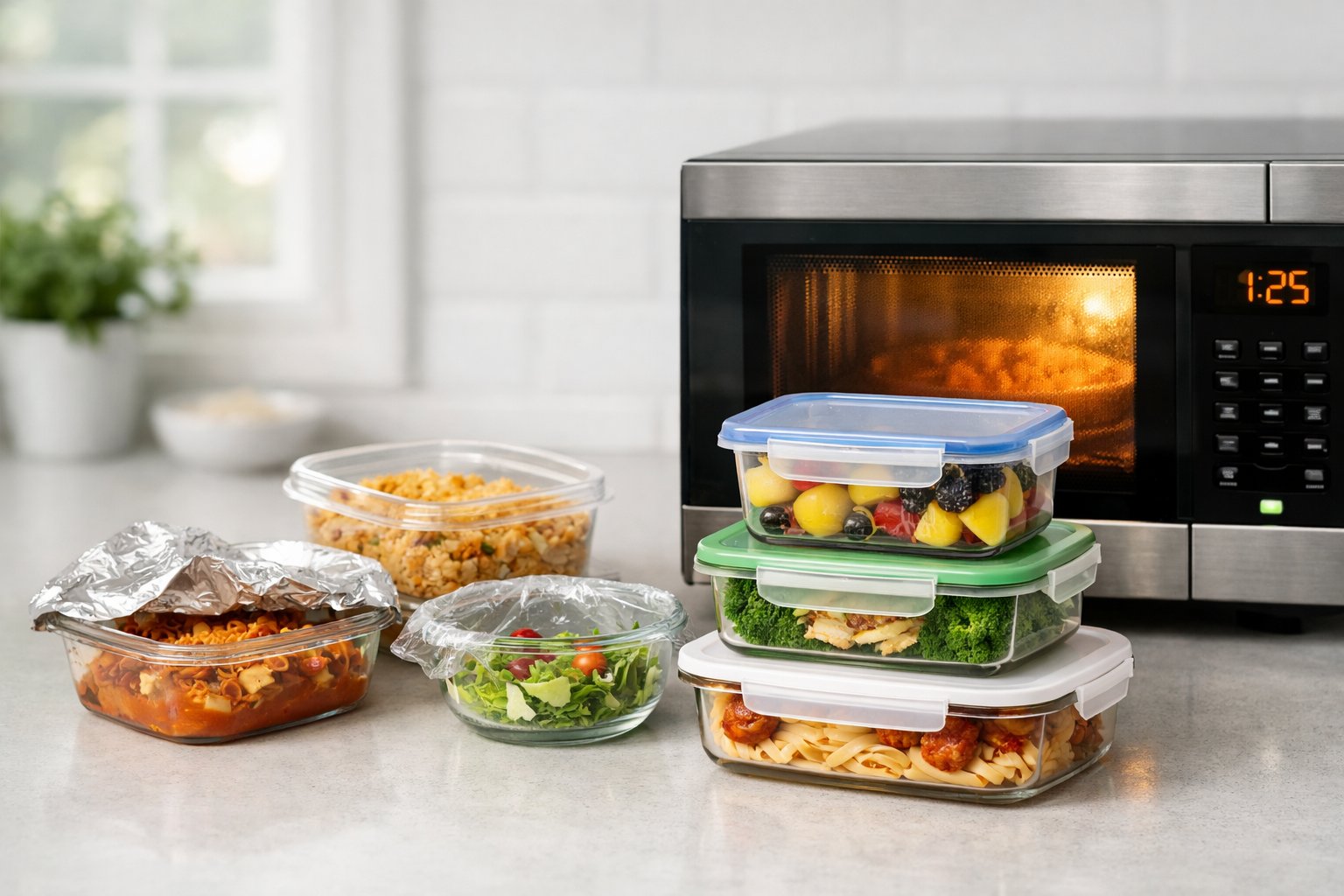
Good containers matter. Glass or sturdy plastics with tight seals keep out air and moisture, helping leftovers reheat more like the original meal.
Ever wonder how ingredient storage affects your meal's encore performance?
Not all ingredients handle storage the same way, and that shapes how leftovers taste. Proteins are especially prone to oxidation in the freezer, picking up that telltale warmed-over flavor.
Fatty dishes go rancid faster than lean ones, especially if there’s extra air in the container. That’s why some leftovers taste off after a few days, while others hold up.
Starchy foods like rice and pasta firm up in the fridge as starches recrystallize. Keeping moisture in and adding a splash of liquid when reheating helps bring back a softer texture.
What's the magic behind preserving flavors and textures in leftover cuisine?
It comes down to fighting oxidation and moisture loss. If you keep air out and the temp steady, you slow the flavor and texture changes that make leftovers disappointing.
Natural antioxidants in foods can help, too. For example, adding a bit of nutmeg extract to meatballs cuts down on oxidation during months in the freezer.
The Maillard reaction from the first cook also helps. Those flavor compounds stick around if you store food right and come back to life when you reheat, giving you that just-cooked taste.
Are there storage hacks that can level up your next day's meal rehearsal?
Portioning is key. Smaller servings freeze and thaw more evenly, so you avoid the hot-and-cold spots that ruin texture.
Layering helps, too. Keep sauces, proteins, and starches separate to stop textures from blending in weird ways.
For freezing, try double-wrapping: first in plastic wrap to push out air, then into an airtight container. This combo gives you a much better shot at keeping food fresh.
Label everything with dates. Most cooked foods are best within 3-4 days in the fridge or 2-3 months in the freezer. Stick to that, and your leftovers will almost always taste better.
What's the deal with containers: Do they make or break the reheating wonder?
Container choice really shapes how your leftovers turn out. Glass holds up to temperature swings and doesn't leach chemicals when you heat it, so it's a solid pick for storage and tossing in the microwave.
But let's face it—some plastics just don't handle repeated heating well. Old or beat-up plastic containers can mess with food safety and might even give your meal a weird aftertaste.
Shape and size matter more than you might think. Shallow, wide containers help heat things evenly, while deep, narrow ones tend to leave cold spots in the middle and scorched edges.
Transparent containers? Honestly, they're underrated. Seeing what's inside without popping the lid helps keep temps steady and makes it easier to keep track of what's actually still good.
Share:
Why Prepped Ingredients Need Different Storage Rules
How Storage Choices Affect Flavor During Cooking