

Entdecken Sie unsere neueste Kollektion an kompakten Vakuumierern für Lebensmittel!
Wochentage fühlen sich einfacher an, wenn das Abendessen bereits zur Hälfte zubereitet ist. Batch Cooking hilft Ihnen, Zeit zu sparen, Abfall zu reduzieren und gesunde Mahlzeiten bereit zu halten, ohne jeden Abend bei Null anfangen zu müssen.
Der Schlüssel liegt nicht nur darin, mehr Essen auf einmal zuzubereiten. Es geht darum, Mahlzeiten nach Frische, Textur, Lagerzeit und intelligenten Portionen zu organisieren. Wenn Proteine, Getreide, Gemüse und Saucen richtig geplant sind, bleiben Ihre Mahlzeiten länger frisch und sind die ganze Woche über einfacher zu verwenden.
In diesem Leitfaden erfahren Sie, wie Sie Batch-Cooking-Sitzungen strukturieren, Mahlzeiten korrekt lagern, Portionen intelligent einfrieren und Abendessen unter der Woche einfach halten, ohne an Frische oder Vielfalt einzubüßen.
Wichtigste Erkenntnisse
- Strukturieren Sie das Batch Cooking, indem Sie Zutaten getrennt vorbereiten, um Textur und Frische die ganze Woche zu erhalten.
- Kombinieren Sie gekühlte Mahlzeiten für die ersten 3-4 Tage mit gefrorenen Portionen für später in der Woche, um die beste Qualität zu erzielen.
- Sorgen Sie für Abwechslung mit verschiedenen Proteinen, Saucen und Kochmethoden, um Mahlzeiten-Müdigkeit zu vermeiden und die Abende unter der Woche einfach zu halten.
Grundlagen des Batch Cookings und der Essensvorbereitung verstehen
Beim Batch Cooking geht es darum, viel Essen auf einmal zuzubereiten, während es beim Meal Prep eher darum geht, Zutaten für zukünftige Mahlzeiten vorzubereiten. Beides reduziert die tägliche Küchenzeit und hält, richtig gemacht, Ihr Essen frischer und Ihre Nerven intakt.
Was ist Batch Cooking?
Batch Cooking bedeutet, dass Sie mehrere Portionen ganzer Gerichte oder einzelner Zutaten in einer Sitzung zubereiten. Vielleicht kochen Sie einen großen Topf Suppe, braten viel Hühnchen oder bereiten eine Wochenration Getreide und Gemüse zu.
Es ist anders, als jeden Abend zu kochen. Sie wählen einen Zeitblock, zum Beispiel Sonntagnachmittag, und erledigen den größten Teil der Arbeit. Vielleicht bereiten Sie ein paar Aufläufe zu, braten eine Menge Hühnchen oder köcheln eine große Portion Bohnen.
Der Hauptvorteil? Effizienz. Sie nutzen Ihren Ofen, Herd und Arbeitsbereich für mehrere Rezepte gleichzeitig. Anstatt fünfmal Zwiebeln zu hacken, tun Sie es einmal und verteilen sie auf verschiedene Mahlzeiten.
Die Lagerung ist hier enorm wichtig. Sie portionieren alles in Behälter, kühlen das, was Sie bald essen werden, und frieren den Rest für später ein.
Batch Cooking versus Essensvorbereitung
Beide beinhalten die Vorbereitung, aber sie sind nicht ganz dasselbe. Batch Cooking liefert Ihnen vollständig gekochte Mahlzeiten, die Sie einfach aufwärmen können. Beim Meal Prep geht es mehr darum, Zutaten vorzubereiten, wie zum Beispiel hacken, marinieren, vielleicht vorkochen, damit Sie während der Woche schnell Mahlzeiten zubereiten können.
Beim Meal Prep könnten Sie Gemüse hacken, Fleisch marinieren und Getreide kochen und dann alles getrennt aufbewahren. Wenn es Zeit zum Essen ist, kombinieren Sie es für eine frische Mahlzeit. Dies hält Texturen und Aromen schärfer.
Batch Cooking ist super praktisch, bedeutet aber manchmal etwas weniger Frische. Ein Eintopf, der zwei Wochen lang eingefroren war, wird nicht ganz so frisch schmecken wie ein frischer, aber hey, er ist immer noch gesund und spart viel Zeit.
Ehrlich gesagt, funktioniert eine Mischung aus beidem am besten. Batch kochen Sie Ihre Proteine und Getreide, aber halten Sie Gemüse frisch für schnelle Wok-Gerichte oder Salate.
Batch-Cooking-Techniken für jeden Lebensstil
Zeitpläne variieren, daher sollte auch das Batch Cooking variieren. Familien könnten sonntags eine große Kochaktion machen und 4-5 Mahlzeiten für die Woche vorbereiten.
Wenn Sie für eine Person kochen, könnten Sie Proteine im Batch kochen, aber Beilagen und Gemüse einfach frisch zubereiten. So erhalten Sie Abwechslung ohne endloses tägliches Kochen.
Einige praktische Techniken:
- Gestaffeltes Kochen: Nutzen Sie den Ofen für Gemüse, während Sie Getreide und Proteine auf dem Herd zubereiten.
- Komponenten kochen: Bereiten Sie Grundnahrungsmittel wie geschreddertes Hühnchen, gekochten Quinoa und geröstetes Gemüse vor, die zu vielen Mahlzeiten passen.
- Strategisches Einfrieren: Verdoppeln Sie Rezepte und frieren Sie die Hälfte für später ein, wechseln Sie zwischen verschiedenen Gerichten ab, um es interessant zu halten.
Wie oft Sie im Batch kochen, hängt von Ihrem Gefrierschrank und Ihrem Haushalt ab. Kleinere Haushalte kochen vielleicht alle paar Wochen im Batch, während größere Familien es oft wöchentlich tun und Kühl- und Gefriermahlzeiten mischen.
Strategische Essensplanung für Frische und Vielfalt
Eine gute Essensplanung hält die Dinge interessant und reduziert Lebensmittelverschwendung. Der Trick besteht darin, Rezepte auszuwählen, die gemeinsame Zutaten verwenden, aber völlig unterschiedlich schmecken, eine Einkaufsliste zu erstellen, die Sinn macht, und Ihr Kochen so zu timen, dass alles frisch bleibt.
Rezepte mit überlappenden Zutaten auswählen
Beginnen Sie mit 3-4 Rezepten, die die gleichen 2-3 Hauptzutaten verwenden. Das erleichtert den Einkauf und hilft Ihnen, das Gekaufte auch wirklich zu verwenden.
Denken Sie an Hähnchenkeulen, Paprika und Zwiebeln. Daraus können Fajitas vom Blech, ein Wok-Gericht oder eine Hühnersuppe werden. Variieren Sie Gewürze und Zubereitungsarten, um es frisch zu halten.
Wählen Sie Proteine, die Sie auf die gleiche Weise zubereiten, aber anders würzen können. Gebratenes Hähnchen kann mit einer schnellen Gewürzänderung mediterran, asiatisch oder mexikanisch werden. Eine Charge, viele Geschmacksrichtungen.
Vermeiden Sie Rezepte, die einmalige Spezialitäten erfordern. Diese werden immer vergessen und verschwendet.
Intelligente Erstellung der Einkaufsliste
Eine intelligente Einkaufsliste sortiert Artikel danach, wie und wann Sie sie verwenden werden, nicht nur nach Gang. Teilen Sie sie auf: Proteine und robustes Gemüse (sonntags kochen), Getreide und Stärke (sonntags oder unter der Woche) und zartes Grünzeug oder Kräuter (unter der Woche besorgen).
Überprüfen Sie Ihre Rezepte und zählen Sie genau auf, was Sie benötigen. Wenn drei Gerichte Zwiebeln erfordern, summieren Sie die Gesamtmenge, damit Sie nicht ausgehen oder zu viel kaufen.
Kaufen Sie haltbare Artikel wie Reis oder Konservenbohnen in großen Mengen. Für frisches Obst und Gemüse sowie Proteine kaufen Sie nur das, was zu Ihrem Plan passt, es sei denn, Sie frieren es sofort ein.
Essensplanungs-Apps können helfen, aber ehrlich gesagt funktioniert eine einfache Tabelle. Stellen Sie einfach sicher, dass Ihre Zahlen stimmen.
Saisonale Zutaten und vielseitige Grundnahrungsmittel integrieren
Saisonale Zutaten schmecken besser und kosten weniger, also machen Sie sie zu Ihrem Ausgangspunkt. Planen Sie Ihre Woche um 2-3 Gemüsesorten, die gerade Saison haben.
Frühling? Greifen Sie zu Spargel und Erbsen. Der Sommer bringt Tomaten und Zucchini. Der Herbst dreht sich um Kürbisse. Der Winter bietet herzhaftes Grün und Zitrusfrüchte. Sie sind frischer und günstiger, wenn Sie sie saisonal kaufen.
Kombinieren Sie diese mit Grundnahrungsmitteln wie Reis, Quinoa, Nudeln, Konservenbohnen, Olivenöl und grundlegenden Gewürzen. Halten Sie Hähnchen, Hackfleisch und Eier bereit. Sie passen zu fast allem.
Streben Sie etwa 60% saisonale Produkte und 40% Vorratsschranks-Grundnahrungsmittel an. Das hält die Dinge interessant, aber trotzdem budgetfreundlich.
Batch Cooking Pläne und Wochenkalender
Ein Essenskalender hilft Ihnen, festzulegen, was Sie essen und wann Sie es kochen werden. Normalerweise funktionieren zwei Sitzungen am besten: eine größere Vorbereitung am Sonntag und eine kleinere unter der Woche.
Sonntag ist für Proteine, Getreide und robustes, gebratenes Gemüse. Mittwoch ist für schnellkochende Sachen wie Fisch oder Salate. Auf diese Weise vermeiden Sie welkes Gemüse bis Freitag.
Planen Sie einfache Zubereitungsmahlzeiten für Ihre geschäftigsten Abende ein. Vielleicht ist Montag eine Grain Bowl mit den Zutaten vom Sonntag. Donnerstag könnte eine schnelle Pasta mit vorgekochtem Protein und frischem Gemüse sein.
Markieren Sie jede Mahlzeit mit der Kochmethode und der ungefähren Zubereitungszeit. So bleiben Sie nicht stecken, wenn Sie den Ofen für drei Dinge gleichzeitig benötigen. Der Kalender hält Sie auf Kurs und hilft, alles zu verbrauchen, solange es noch frisch ist.
Zutaten vorbereiten und Batch-Cooking-Sitzungen meistern
Ein wenig Vorbereitung bewirkt viel. Wenn Sie Ihren Raum organisieren und Ihre Schritte planen, fühlt sich Batch Cooking viel weniger überwältigend an. Konzentrieren Sie sich darauf, alles vor Beginn vorzubereiten, erledigen Sie mehrere Aufgaben gleichzeitig, wo immer möglich, und machen Sie vielseitige Grundlagen, die Sie die ganze Woche über verwenden können.
Mise En Place für Organisation und Effizienz
Mise en Place bedeutet, dass Sie Ihre Sachen zusammen bekommen. Waschen und trocknen Sie zuerst Ihr gesamtes Gemüse, dann schneiden Sie Gemüse nach Größe. Zwiebeln, Paprika und Karotten können zusammen verarbeitet werden.
Legen Sie Messbecher, Löffel und alle Werkzeuge bereit, die Sie benötigen. Verwenden Sie separate Schneidebretter für rohes Fleisch und Gemüse, um jegliche grobe Kreuzkontamination zu vermeiden. Verwenden Sie kleine Schüsseln für Gewürze, Knoblauch und Flüssigkeiten.
Bevor Sie mit dem Kochen beginnen, stellen Sie sicher, dass Sie:
- Gemüse und Proteine waschen
- Gemüse nach Rezept und Größe schneiden
- Alles abmessen
- Ihre Töpfe, Pfannen und Utensilien bereitstellen
- Ihre Aufbewahrungsbehälter bereitstellen
Eine aufgeräumte Küche spart Tonnen von Zeit bei Ihrer Sitzung. Keine panische Paprika-Suche mehr, während Zwiebeln verbrennen.
Effizientes Multitasking in der Küche
Nutzen Sie Ihre Zeit optimal, indem Sie mehrere Dinge gleichzeitig kochen. Lassen Sie Reis köcheln, während Gemüse brät und Proteine angebraten werden. Beginnen Sie mit dem, was am längsten dauert.
Ähnliche Aufgaben zusammenfassen. Schneiden Sie alle Zwiebeln auf einmal, wenn mehrere Rezepte sie benötigen. Bräunen Sie eine große Menge Hackfleisch und teilen Sie es auf.
Reinigen Sie während des Kochens. So bleibt Ihr Arbeitsbereich nutzbar. Spülen Sie Schüsseln und Utensilien zwischen den Aufgaben, besonders wenn Sie von rohem Fleisch wechseln. Halten Sie ein Spülbecken mit heißem Seifenwasser für schnelle Reinigungen bereit.
Stellen Sie für alles Timer. Überlappende Kochzeiten können schnell verwirrend werden. Verwenden Sie Ihr Telefon, Ihre Uhr, was auch immer funktioniert.
Zubereitung von Batch-Grundlagen: Getreide, Proteine und Gemüse
Batch-Grundlagen sind Ihre Retter unter der Woche. Kochen Sie einen großen Topf Reis, Quinoa oder Farro. Machen Sie genug für mehrere Mahlzeiten.
Braten oder grillen Sie eine Menge Hähnchenkeulen oder -brüste, oder bräunen Sie ein paar Pfund Hackfleisch. Halten Sie die Würzung einfach, damit Sie sie in verschiedenen Gerichten verwenden können. Portionieren Sie sie in leicht zugängliche Portionen.
Einige Kernkomponenten für Batch Cooking:
| Komponententyp | Zubereitungsmethode | Lagerzeit |
|---|---|---|
| Getreide | In großem Topf kochen, vollständig abkühlen | 4-5 Tage gekühlt |
| Proteine | Im Ofen backen, grillen oder pur anbraten | 3-4 Tage gekühlt |
| Gemüse | Bei 220°C (425°F) rösten, bis es karamellisiert ist | 4-5 Tage gekühlt |
Variieren Sie Ihr geröstetes Gemüse jede Woche, je nachdem, was gerade gut ist. Brüsselsprossen, Paprika, Zucchini oder Süßkartoffeln mit Olivenöl vermischen und rösten. Sie lassen sich gut aufwärmen und werten jede Mahlzeit auf.
Portionieren, Lagern und Einfrieren für maximale Frische
Lebensmittel in die richtigen Behälter, in den richtigen Portionen und korrekt beschriftet zu verpacken, unterscheidet einen Gefrierschrank voller unbekannter Mahlzeiten von einem System, das das Leben tatsächlich einfacher macht.
Die besten Aufbewahrungsbehälter auswählen
Nicht alle Behälter sind gefriergeeignet. Glas ist großartig, wenn es als gefriergeeignet gekennzeichnet ist, aber vermeiden Sie enge Gläser. Flüssigkeiten dehnen sich aus und können sie zum Reißen bringen. Weithalsige Glasgefäße sind perfekt für Suppen und Saucen. Lassen Sie einfach einen Zentimeter Platz.
Plastikbehälter eignen sich für komplette Mahlzeiten und Aufläufe. Wählen Sie BPA-freie, gefriergeeignete, die gut stapelbar sind. Billige Kunststoffe verziehen sich oder reißen in der Kälte. Habe ich selbst erlebt.
Gefrierbeutel sind die Platzsparer schlechthin. Flach zum Einfrieren auslegen, dann wie Akten stapeln. Verwenden Sie Literbeutel für Einzelportionen, Gallonenbeutel für Familienmahlzeiten.
| Behältertyp | Am besten geeignet für | Hauptvorteil |
|---|---|---|
| Weithals-Glasgefäße | Suppen, Brühen, Saucen | Umweltfreundlich, wiederverwendbar |
| Gefriersicheres Plastik | Aufläufe, komplette Mahlzeiten | Stapelbar, langlebig |
| Gefrierbeutel | Getreide, Fleisch, Gemüse | Platzsparend im flachen Zustand |
Vakuumierer sind ein Game-Changer für Proteine und Beilagen. Sie halten Luft draußen und verlängern die Haltbarkeit.
Strategien zur Portionskontrolle
Ganze Chargen in einem Behälter einzufrieren, ist ein Garant für Schwierigkeiten beim Auftauen. Wir portionieren Mahlzeiten nach der Anzahl der Personen, die wir tatsächlich füttern, normalerweise 1-2 Tassen-Portionen für Einzelpersonen oder 4-6 Tassen für Familien.
Silikon-Muffinformen sind ein Lebensretter für Einzelportionen Suppe oder Chili. Frieren Sie sie ein, bis sie fest sind, nehmen Sie sie heraus und werfen Sie sie in Gefrierbeutel. Eiswürfelbehälter sind praktisch für kleinere Dinge wie Saucen, Pesto oder Brühe.
Für Getreide und Pasta verteilen wir 1-2 Tassen flach in Gefrierbeuteln. Das taut viel schneller und gleichmäßiger auf als ein großer Block. Flache Behälter funktionieren auch und beschleunigen sowohl das Einfrieren als auch das Wiedererhitzen.
Kleine Chargen sparen Lebensmittel. Wenn Sie für ein oder zwei Personen kochen, teilen Sie Rezepte in ein paar kleine Behälter auf, anstatt in eine große Pfanne. So tauen Sie nur das auf, was Sie essen werden.
Einfrieren und Beschriften von Mahlzeiten
Lassen Sie das Essen vor dem Einfrieren auf Raumtemperatur abkühlen. Heißes Essen beeinträchtigt die Temperatur Ihres Gefrierschranks und verursacht Eiskristalle, die die Textur ruinieren.
Wir beschriften jeden Behälter, bevor er hineinkommt. Kreppband und ein Permanentmarker tun es. Schreiben Sie darauf, was es ist, das Datum und wie viele Portionen. Beutel lassen sich viel einfacher beschriften, bevor Sie sie füllen. Vertrauen Sie uns.
Unser Beschriftungssystem ist einfach: Name des Essens oben, Datum an der Seite. So sehen Sie beides, auch wenn die Dinge gestapelt sind. „First in, first out“ verhindert, dass ältere Mahlzeiten im Durcheinander verloren gehen.
Drücken Sie so viel Luft wie möglich aus den Gefrierbeuteln, bevor Sie sie verschließen. Wenn Sie einen Vakuumierer haben, noch besser. Ihr Essen hält Monate länger.
Gefrierbrand und Lebensmittelverschwendung vermeiden
Gefrierbrand entsteht, wenn Luft dem Essen Feuchtigkeit entzieht und trockene, seltsam aussehende Stellen hinterlässt. Das ist nicht unsicher, schmeckt aber schlecht. Luftdichte Behälter und eine gute Versiegelung sind Ihre beste Wette.
Wir verpacken Fleisch doppelt in Frischhaltefolie und stecken es dann in Gefrier- oder Vakuumbeutel. Diese zusätzliche Schicht hält die Luft draußen. Bei Saucen und Suppen füllen Sie die Behälter bis zur empfohlenen Markierung. Weniger Luft bedeutet weniger Gefrierbrand.
Überprüfen Sie die Temperatur Ihres Gefrierschranks. Sie sollte immer bei 0 °F oder darunter liegen. Alles, was wärmer ist, beschleunigt den Gefrierbrand und beeinträchtigt die Qualität.
Die meisten im Batch zubereiteten Mahlzeiten bleiben 2-3 Monate gut, bevor sie an Qualität verlieren. Wir wechseln den Bestand jeden Monat und schieben ältere Dinge nach vorne. Diese Gewohnheit reduziert Lebensmittelverschwendung und verhindert, dass der Gefrierschrank zu einem schwarzen Loch vergessener Reste wird.
Batch-Cooking-Rezepte und Ideen für jede Mahlzeit
Das beste Batch Cooking? Es dreht sich alles um herzhafte, gefrierfreundliche Abendessen wie Aufläufe und Suppen, Frühstücke zum Mitnehmen (Hallo, Eier-Muffins und Overnight Oats) und Grundnahrungsmittel wie gekochtes Getreide und Saucen, damit Sie die ganze Woche über variieren können.
Abendessen unter der Woche: Aufläufe, Suppen und Wok-Gerichte
Aufläufe sind unsere Batch-Cooking-MVPs. Sie lassen sich gut einfrieren und ohne seltsamen Geschmack aufwärmen. Lasagne, Shepherd's Pie und Enchilada-Aufläufe können in Einwegformen zubereitet, ungebacken eingefroren und bei Bedarf herausgenommen werden. Wir portionieren diese als Einzel- oder Familienmahlzeiten, je nachdem, wer anwesend ist.
Suppen und Eintöpfe sind natürliche Batch-Cooking-Kandidaten. Ihre Aromen werden nach ein oder zwei Tagen tatsächlich besser. Hähnchen Tikka Masala, Bohnenchili und Rinder-Ragu halten sich Monate im Gefrierschrank und tauen schnell auf. Lassen Sie einfach etwas Platz in den Behältern, da sich Flüssigkeiten ausdehnen.
Wok-Gerichte sind etwas anders. Wir bereiten Proteine wie gezupftes Hähnchen, Schweinefleisch oder Frikadellen in großen Mengen vor und lagern sie dann mit gehacktem Gemüse und gekochten Nudeln. Zum Abendessen werfen wir einfach alles mit Sauce in eine heiße Pfanne. Frische Mahlzeit in unter 10 Minuten.
Schnelles Frühstück und Snacks
Eier-Muffins sind unsere Antwort auf hektische Morgen. Backen Sie ein Dutzend auf einmal mit den Zutaten, die Sie mögen. Käse, Spinat und Wurst passen gut dazu. Sie lassen sich in 30 Sekunden aufwärmen und halten sich fünf Tage im Kühlschrank. Normalerweise machen wir sonntags zwei Chargen und variieren die Geschmacksrichtungen.
Overnight Oats sind super unkompliziert. Portionieren Sie sie in Gläser, belegen Sie sie mit allem, worauf Sie Lust haben, und schnappen Sie sich jeden Morgen eines. Selbstgemachtes Müsli hält sich wochenlang in luftdichten Behältern und kostet viel weniger als gekauftes.
Für Snacks bewahren wir Keksteigrollen im Gefrierschrank auf. Schneiden Sie ab, was Sie möchten, für warme Kekse jederzeit. Geröstete Kichererbsen bleiben tagelang knusprig und treffen genau den Nerv, wenn Sie etwas Salziges möchten.
Vielseitige Grundnahrungsmittel und kombinierbare Komponenten
Gekochte Getreidesorten sind das Rückgrat einfacher Getreide-Bowls die ganze Woche über. Kochen Sie Reis oder Quinoa in großen Mengen und variieren Sie dann Proteine und Toppings für Abwechslung. Ein großer Topf Quinoa am Montag kann eine mediterrane Bowl mit Hummus an einem Abend sein, eine Burrito-Bowl am Donnerstag.
Saucen und Dips in großen Mengen erweitern einfache Mahlzeiten noch weiter. Machen Sie zusätzlichen Hummus oder Tzatziki und verwenden Sie sie auf Sandwiches, als Gemüsedips oder in Getreide-Bowls. Diese Grundnahrungsmittel bieten Ihnen Optionen ohne tägliches Kochen.
Was wir immer bereit halten:
- Gekochte Proteine (gezupftes Hähnchen, Frikadellen, Hackfleisch)
- Gekochte Getreidesorten (Reis, Quinoa, Farro)
- Zubereitete Saucen (Marinara, Curry, Wok-Sauce)
- Gehacktes Gemüse (Paprika, Zwiebeln, Karotten)
Dieser Mix-and-Match-Ansatz bedeutet, dass wir nicht jeden Abend dasselbe essen müssen, auch wenn wir nur ein- oder zweimal gekocht haben.
Sicherheit, Frische und Vermeidung von Essensmüdigkeit
Batch Cooking funktioniert nur, wenn Sie die Dinge sicher und frisch halten. Seien wir ehrlich, es funktioniert auch nur, wenn Sie sich nicht mit Ihrem eigenen Kochen langweilen. Hier erfahren Sie, wie wir die Grundlagen handhaben, häufige Fallstricke umgehen und die Mahlzeiten die ganze Woche über interessant halten.
Lebensmittelsicherheit und richtiger Umgang
Lebensmittelsicherheit beginnt, wenn Sie vom Laden nach Hause kommen, und hört nicht auf, bis Sie gegessen haben. Rohes Fleisch und Meeresfrüchte brauchen eigene Schneidebretter, und Sie müssen sich wirklich die Hände vor und nach dem Berühren von rohen Sachen waschen.
Die Kochtemperaturen sind wichtiger, als Sie vielleicht denken. Geflügel sollte 165 °F erreichen, Hackfleisch 160 °F und ganze Stücke Rind- oder Schweinefleisch 145 °F (mit einer dreiminütigen Ruhezeit). Ein Lebensmittelthermometer eliminiert das Rätselraten.
Spielen Sie nicht mit der Zwei-Stunden-Regel. Stellen Sie gekochtes Essen innerhalb von zwei Stunden (einer Stunde, wenn es in Ihrer Küche über 90 °F ist) in den Kühlschrank. Um große Mengen schneller abzukühlen, teilen Sie sie in flache Behälter von nicht mehr als zwei Zoll Tiefe auf.
Sichere Kühlschrankzeiten:
- Gekochtes Fleisch/Geflügel: 3-4 Tage
- Gekochte Meeresfrüchte: 3-4 Tage
- Suppen/Eintöpfe: 3-4 Tage
- Gekochtes Gemüse: 3-7 Tage
Wir beschriften Behälter immer mit dem Gerichtnamen und dem Datum. Sonst weiß niemand, was drin ist.
Einfrier- und Aufwärmtechniken
Einfrieren verlängert die Haltbarkeit von Mahlzeiten, aber es kommt darauf an, wie man es macht. Portionieren Sie Mahlzeiten in Einzel- oder Familiengrößen, bevor Sie sie einfrieren, damit Sie nicht dasselbe Essen auftauen und wieder einfrieren. Die meisten gekochten Gerichte behalten ihre Qualität für 2-6 Monate.
Nicht alles lässt sich gut einfrieren. Reis, Nudeln, gekochte Proteine, Suppen und Aufläufe eignen sich in der Regel gut. Milchbasierte Soßen können sich trennen, und wässriges Gemüse wie Salat oder Gurken wird einfach matschig.
Erhitzen Sie Mahlzeiten vollständig auf 74 °C, um Bakterien abzutöten. Rühren Sie Suppen und Eintöpfe zur Hälfte um, damit es keine kalten Stellen gibt. Wir erhitzen dieselbe Mahlzeit niemals mehr als einmal. Wiederholte Temperaturschwankungen sind ein Rezept für Probleme.
Mikrowellen können ungleichmäßig erhitzen, daher überprüfen wir die Temperaturen mit einem Thermometer, auch wenn das Essen heiß aussieht.
Mahlzeiten die ganze Woche über interessant halten
Essensmüdigkeit ist real. Wir bekämpfen sie, indem wir grundlegende Proteine und Getreidesorten kochen, die verschiedene Geschmacksrichtungen vertragen. Aus einfachem Hühnchen an einem Abend werden am nächsten Tacos, Curry oder Sandwichfüllung.
Wir halten Soßen und Gewürze getrennt und fügen sie kurz vor dem Servieren hinzu. So können dieselben gerösteten Gemüse italienisch, asiatisch oder mexikanisch schmecken. Je nachdem, wonach uns gerade ist.
Wir essen die empfindlichsten Mahlzeiten zuerst und sparen herzhaftere Sachen wie Suppen und Aufläufe für später in der Woche auf. Das Mischen von Texturen und Temperaturen hilft ebenfalls.
Häufige Herausforderungen beim Vorkochen meistern
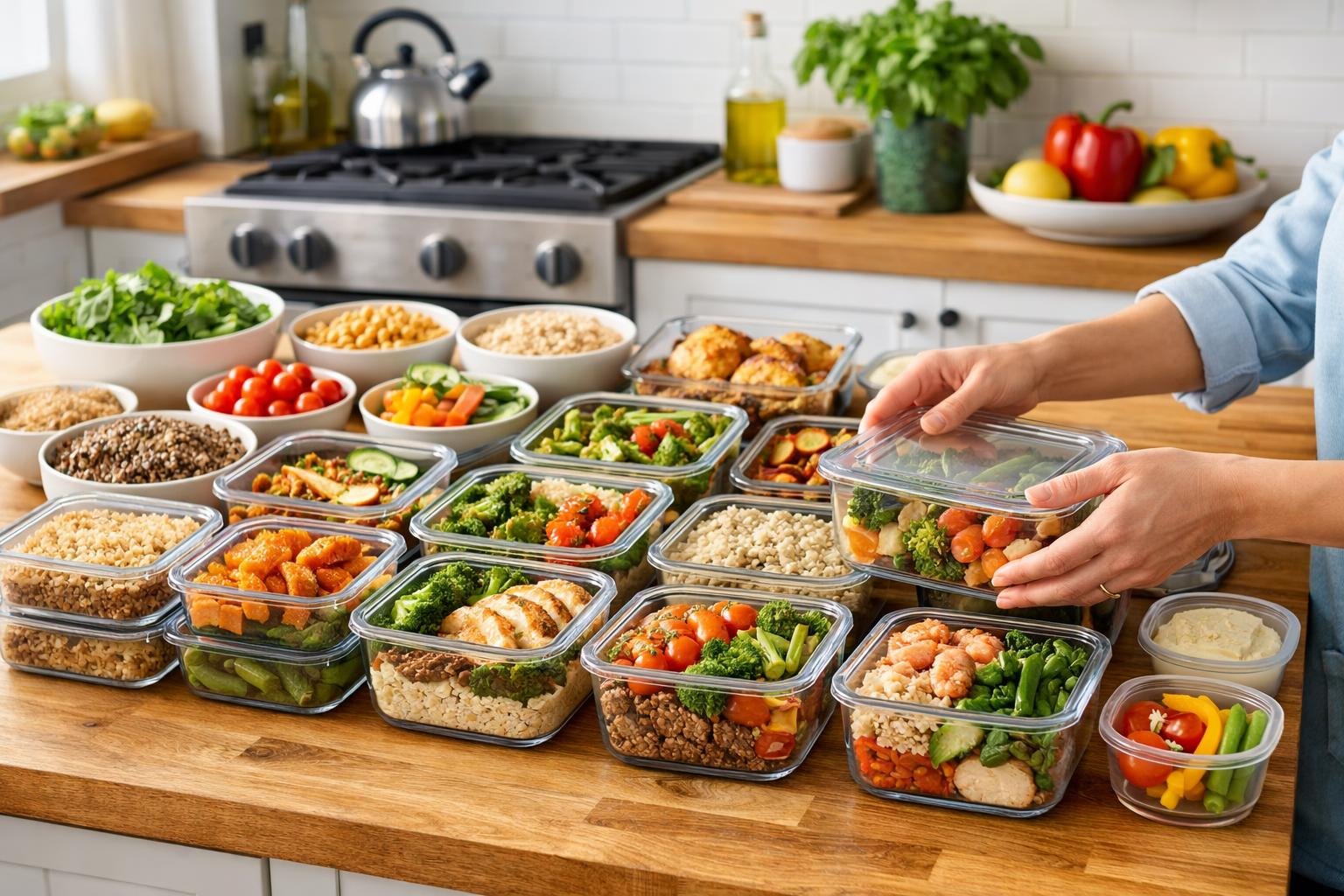
Die schwierigsten Teile? Timing, Stauraum und Motivation. Das Stauraumproblem haben wir gelöst, indem wir stapelbare, durchsichtige Behälter gekauft haben. Wenn wir sehen, was drin ist, vergessen wir nichts.
Wenn wir mehr zubereiten, als wir frisch essen können, frieren wir die Hälfte sofort ein, anstatt es im Kühlschrank verkümmern zu lassen. So haben wir später einfache Mahlzeiten und verschwenden weniger Lebensmittel.
Ehrlich gesagt kann der anfängliche Zeitaufwand abschreckend wirken. Wir haben klein angefangen, zuerst nur zwei oder drei Gerichte. Das langsame Aufbauen der Gewohnheit hat dazu geführt, dass sie sich etabliert hat.
Essentielle Küchenausstattung und Geräte für den Erfolg beim Vorkochen
Die richtige Ausrüstung und ein aufgeräumter Arbeitsplatz machen das Vorkochen viel stressfreier. Gute Ausrüstung spart Zeit, und eine organisierte Küche hält die Dinge in Bewegung, wenn Sie mehrere Rezepte gleichzeitig zubereiten.
Unverzichtbare Küchengeräte
Beginnen Sie mit einem großen Topf oder einem Schmortopf für Suppen, Eintöpfe und Schmorgerichte. Eine Größe von 6 Litern reicht normalerweise aus, ohne den ganzen Herd zu blockieren.
Ein Slow Cooker oder Schnellkochtopf ist ein Game-Changer für Mahlzeiten, die ohne ständiges Eingreifen zubereitet werden. Beginnen Sie morgens etwas, und es ist fertig, wenn Sie nach Hause kommen, oder verwenden Sie einen Schnellkochtopf, um die Garzeit für Bohnen, zähes Fleisch und Getreide zu verkürzen.
Vorratsbehälter sind unverzichtbar. Glas ist am besten. Es verträgt Temperaturschwankungen, nimmt keine Gerüche an und man kann sehen, was drin ist. BPA-freier Kunststoff ist leichter und lässt sich gut im Gefrierschrank stapeln.
Ein scharfes Messerset beschleunigt die Gemüsezubereitung erheblich. Wir halten Silikonspatel, Messbecher und stabile Rührschüsseln griffbereit, da wir sie ständig benutzen.
Einrichten eines organisierten, effizienten Arbeitsbereichs
Wir räumen die Arbeitsplatten vor Beginn ab und stellen die Werkzeuge nach Aufgabe bereit: Zutaten in der Nähe des Schneidebretts, Utensilien am Herd und Behälter im Kühlbereich.
Das Aufbewahren von oft verwendeten Gegenständen auf Augenhöhe in Schränken oder offenen Regalen spart Zeit. Wir verwenden eine Schublade oder ein Regal nur für Vorratszubereitungszubehör, damit nichts verloren geht.
Eine Kühlstation ist wichtiger, als man denkt. Wir verwenden einen Teil der Arbeitsplatte oder ein Drahtgitter für fertige Gerichte, um sie abzukühlen, bevor sie in Behälter kommen. Heißes Essen in verschlossenen Behältern führt zu Kondensation, was matschiges Essen und Gefrierbrand bedeutet.
Beschriftungszubehör bleibt bei den Aufbewahrungsbehältern. Permanentmarker und Malerkrepp sind immer griffbereit, damit wir sofort beschriften können.
Häufig gestellte Fragen
Batch Cooking funktioniert am besten, wenn Mahlzeiten geplant, gekühlt, gelagert und wieder aufgewärmt werden, wobei die Frische im Vordergrund steht. Diese kurzen Antworten decken die Grundlagen ab.
Wie plant man eine wöchentliche Batch-Cooking-Session, damit die Mahlzeiten bis Donnerstag noch frisch schmecken?
Kochen Sie am Sonntag herzhaftere Mahlzeiten und Grundzutaten und bewahren Sie die ersten 3 Tage im Kühlschrank auf. Frieren Sie Mahlzeiten für später in der Woche ein und tauen Sie sie bei Bedarf im Kühlschrank auf.
Welche Lebensmittel eignen sich am besten für Batch Cooking im Vergleich zu denen, die nach ein paar Tagen traurig und matschig werden?
Geschmortes Fleisch, geröstetes Wurzelgemüse, Getreide, dicke Suppen und Eintöpfe halten gut. Empfindliche Salate, knusprige Lebensmittel, angemachte Salate und wässriges Gemüse verlieren schneller an Textur.
Wie sollten Sie vorgekochte Mahlzeiten portionieren und beschriften, um sie unter der Woche schnell mitnehmen zu können, ohne mysteriöse Behälter zu haben?
Verwenden Sie durchsichtige Behälter und beschriften Sie jeden mit dem Namen des Gerichts, dem Zubereitungsdatum und der Portionsgröße. Portionieren Sie Mahlzeiten danach, wie viele Personen sie essen werden.
Welche Aufbewahrungsstrategie funktioniert am besten, um Kühlschrankmahlzeiten und Gefrierreserven in derselben Woche auszugleichen?
Bewahren Sie 2 bis 3 Tage Mahlzeiten im Kühlschrank auf und frieren Sie den Rest ein. Das hält die Mahlzeiten frischer und bietet Ihnen einfache Reserven für geschäftigere Abende.
Wie können Sie Grundkomponenten (Getreide, Proteine, Soßen) zubereiten, die sich zu verschiedenen Abendessen kombinieren lassen, damit Sie sich nicht langweilen?
Bereiten Sie einfache Proteine, Getreide, Gemüse und Soßen getrennt zu. Mischen Sie sie mit verschiedenen Gewürzen, Toppings oder Beilagen, um während der Woche neue Mahlzeiten zu kreieren.
Was sind die sichersten Kühl- und Aufwärmschritte, um vorgekochte Speisen frisch und wochenendfreundlich zu halten?
Kühlen Sie Speisen in flachen Behältern und stellen Sie sie innerhalb von 2 Stunden in den Kühlschrank. Erhitzen Sie Reste, bis sie durchgehend 74 °C erreichen, und vermeiden Sie es, dieselbe Mahlzeit mehr als einmal aufzuwärmen.
Teilen:
Was verursacht den Geschmacksverlust von Tiefkühlkost, selbst bei sorgfältiger Lagerung?
Welches Lebensmittelaufbewahrungssystem eignet sich am besten für kleine Gefrierschränke und vielbeschäftigte Küchen?