

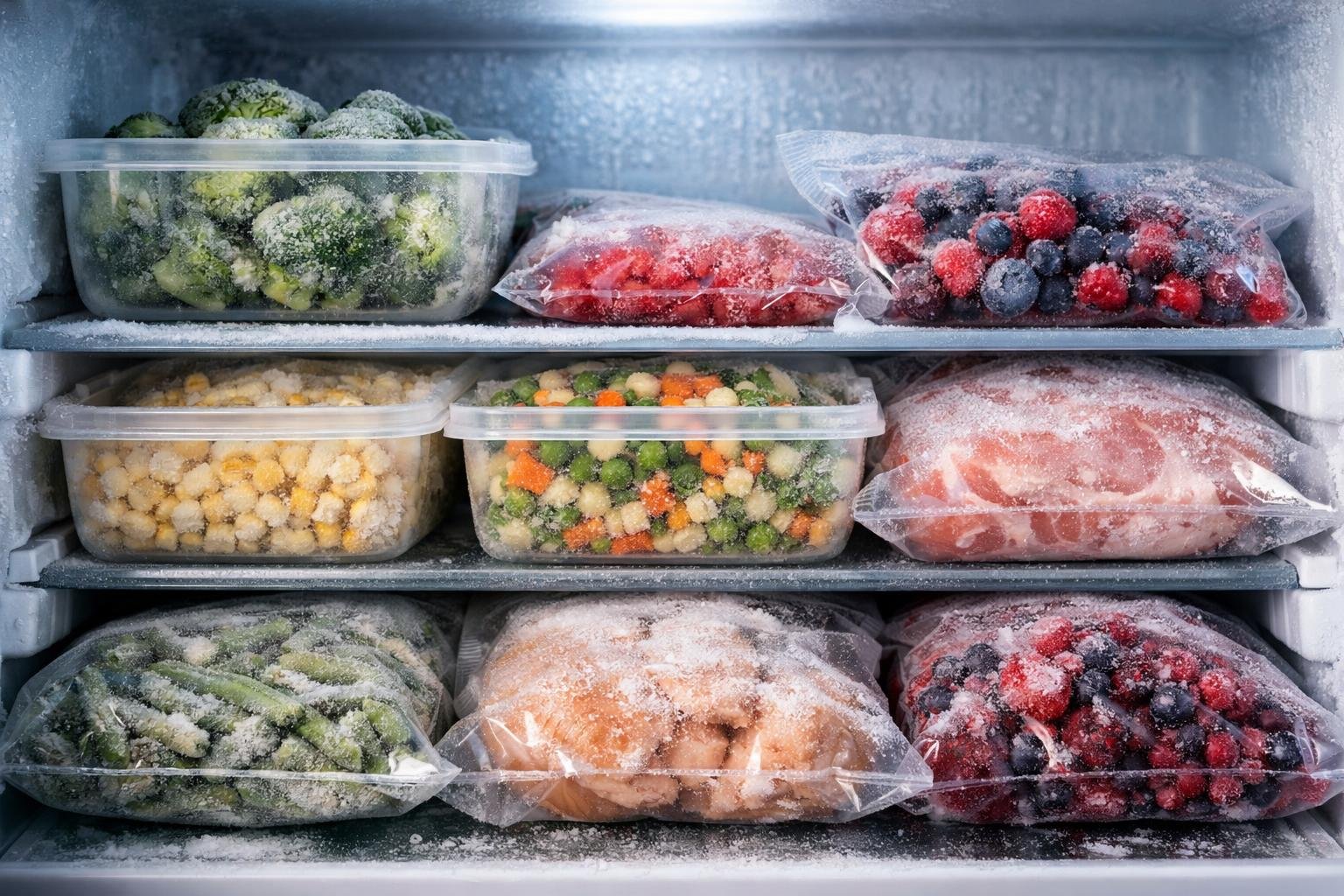
Check out our latest collection of compact vacuum sealer for food!
Frozen food should make meals easier, not leave them tasting dull, dry, or stale. Yet even when food is stored carefully, flavor can slowly fade inside the freezer.
Frozen food loses flavor mainly because ice crystals damage cell structures, oxidation breaks down fats and flavor compounds, and moisture slowly escapes during storage. These changes happen much more slowly than they would at room temperature, but they still affect taste, texture, and freshness over time.
In this guide, you will learn why frozen food loses flavor, how freezer burn and temperature changes play a role, and what storage methods help protect food quality for longer.
Key Takeaways
- Ice crystals break down texture and flavor by rupturing cell walls during freezing and storage.
- Oxidation and odor absorption change taste even in frozen conditions, so airtight packaging is a must for quality.
- Keeping the temperature stable and using prep steps like blanching can help frozen meals keep their original flavor longer.
The Role of Freezer Burn and Dehydration
Freezer burn is a top reason frozen foods lose flavor. It happens when cold, dry air steals moisture from food surfaces and sets off oxidation. That combo changes taste and texture, leaving meals dry and kind of sad.
How Freezer Burn Develops
Freezer burn kicks in when food gets exposed to air inside the freezer. Even if your freezer is set at 0°F or below, it doesn't matter. If air gets in, moisture finds a way out.
When we don't wrap food tightly enough, or use containers that aren't really airtight, oxygen creeps in and starts the damage. Moisture escapes, and oxidation goes after fats and proteins, especially in meat and fish.
What causes freezer burn most often?
- Loose or torn wrapping
- Containers that aren't made for the freezer
- Too much air left in storage bags
- Frequent door opening, including those late-night snack runs
- Storing food way past its prime
Signs and Effects of Freezer Burn
You can spot freezer burn by those weird grayish-brown or white patches on meat or veggies. Ice crystals clinging to the surface mean moisture left the food and froze on the outside. That water used to be part of the flavor and juiciness.
Texture goes downhill fast. Burned spots get tough, dry, and leathery. Sometimes, after thawing, you might find a slimy texture, especially on poultry or fish.
The smell gives it away, too. Freezer-burned food can smell stale or slightly rancid, especially fatty stuff. Technically, it's still safe to eat, but the taste can become flat, cardboard-like, or just plain unpleasant. Sometimes it's not even worth salvaging.
Sublimation and Moisture Loss
Sublimation is what really drives freezer burn. It's when ice skips the melting step and turns straight into vapor. In the freezer, ice crystals inside and on food evaporate into the dry air, leaving behind dry, damaged spots.
This happens faster if the temperature fluctuates or the packaging isn't up to snuff. Foods with lots of water, such as fruits, veggies, and lean fish, are hit hardest.
To prevent freezer burn:
- Use freezer-specific bags and containers
- Squeeze out as much air as possible before sealing
- Double-wrap for long-term storage
- Keep the freezer steady at 0°F or below
- Flash freeze items on trays before packing
Stopping freezer burn keeps your food tasting like it should and helps hold onto nutrients, too.
The Science of Ice Crystals and Cell Damage
When water in food freezes, it forms ice crystals that rip through cell walls, changing the food's structure. That starts a slow decline in both texture and flavor.
Ice Crystal Formation Process
Water molecules love to stick together, and as they freeze, they organize into crystals. The speed of freezing is key. Slow freezing lets big crystals form, which do more damage by poking holes in cell walls. Fast freezing makes lots of tiny crystals, which are way less destructive.
You see this difference between store-bought frozen foods and what you freeze at home. Industrial freezers blast food at -40°F, so crystals stay small. Home freezers at 0°F work slower, making bigger, nastier crystals.
The temperature at which freezing starts also matters. Lower temps mean faster freezing and smaller crystals, which helps food hold up better.
Impact on Texture and Taste
When ice crystals break cell walls, the fluids inside, which are packed with flavor and nutrients, leak out. Thawing turns that into a pool of lost juice. Meat gets mushy, veggies limp, and fruit collapses.
Those lost fluids take flavor, vitamins, and minerals with them. Proteins get bent out of shape, and texture suffers more. Foods with high water content, such as lettuce, cucumber, and watermelon, just don't survive freezing well at all.
Recrystallization and Glass Transition
If the freezer temperature goes up and down, small crystals melt and refreeze into bigger ones. This process is called recrystallization. Every time this happens, food structure weakens.
There's also something called glass transition. Below a certain temperature, usually between -10°F and 5°F, food stays stable. Warmer than that, molecules move around more, speeding up damage.
Keeping the freezer cold and steady at 0°F or below helps slow these problems. Even a brief temperature spike can start the damage rolling, and you can't undo it.
Oxidation, Odor Absorption, and Off-Flavors
Even in the freezer, chemical reactions don't stop. They just crawl along. That's why frozen food can pick up stale or rancid flavors, especially over time.
Lipid and Fat Oxidation Effects
Fats in frozen foods react with oxygen, even at low temps. This oxidation makes hydroperoxides, which break down into compounds that taste metallic, rancid, or like cardboard. Fatty fish, ground meats, and foods with exposed fat are especially at risk.
If packaging isn't airtight, or if you didn't wrap things well, oxidation speeds up. Even a little trapped oxygen can do damage over months.
You might notice grayish-brown meat or yellowed baked goods. Those are signs flavor's breaking down, too.
Pressing plastic wrap right against food before bagging helps. Double-wrapping is even better for keeping oxygen out and flavor in.
Absorption of Odors in Frozen Foods
Frozen foods soak up nearby smells, even through packaging. Volatile compounds sneak through plastic, and suddenly your strawberries taste like fish or your bread has a hint of onion.
Fatty foods are especially good at absorbing odors. The fix? Store strong-smelling items in dedicated containers or wrap them up tight. Glass containers with good seals beat plastic for blocking smells. An open box of baking soda in the freezer helps with general odors, but it won't save individual foods from picking up weird flavors if they're not well-wrapped.
Packaging and Equipment: Defending Against Flavor Loss
The packaging you use, and how well it keeps air out, decides whether your frozen food tastes fresh or like freezer. Let's get real about what works.
Choosing the Right Packaging Materials
Not all freezer bags are created equal. Heavy-duty freezer bags beat regular storage bags any day. They're thicker and do a better job blocking moisture loss and odors.
Multi-layer materials are best for long-term storage. Freezer paper with a plastic or wax coating works well for meat and fish. For soups and sauces, rigid airtight containers like freezer-safe plastic or glass are our go-to.
Plastic wrap alone? Not enough. It's too thin and lets air sneak in. If you use it, add a second layer. Foil or a freezer bag helps.
Quick freezing in sealed packaging keeps ice crystals small, which means better texture and flavor.
The Importance of Air Exclusion
Air is frozen food's worst enemy. If air touches the food, freezer burn and flavor loss aren't far behind.
Get out as much air as you can. Press air from freezer bags before sealing, fill containers nearly to the top, and leave just a little space for expansion.
Even tiny air pockets speed up flavor loss. Airtight packaging isn't just nice. It's essential if you want food to last more than a few weeks.
Vacuum Sealing vs. Traditional Methods
Vacuum sealers take almost all the air out, giving you the best shot at keeping flavor. We've kept vacuum-sealed meats and veggies tasting great for up to a year, compared to a few months with regular freezer bags.
Vacuum sealers aren't cheap, and the bags cost more, but if you freeze a lot, it pays off in less food waste and better meals.
Traditional methods still work for short-term storage or delicate foods that might get crushed under vacuum. Heavy-duty freezer bags are fine for bread, berries, or grains you'll use soon.
Temperature Management and Storage Best Practices
Keeping the freezer at the right temp is the backbone of stopping flavor loss. Consistency matters a lot.
Maintaining a Consistent Freezer Temperature
Aim for 0°F (-18°C) or colder, always. This stops enzyme activity and keeps microbes at bay, protecting flavor. Most home freezers have thermostats, but they're not always spot-on.
Stick a freezer thermometer in the middle of the freezer to check the real temperature. They're cheap and give peace of mind. Check it weekly, especially in hot weather.
If your freezer runs warmer than 0°F, ice crystals grow bigger and food suffers. Adjust the settings if needed. It's worth it for better-tasting food.
The Risks of Temperature Fluctuations
Temperature swings are a real problem for frozen food. When the temperature goes up and down, ice crystals melt a bit and then refreeze, but bigger. That damages the cells inside the food and pulls out moisture, along with a lot of the flavor.
Frost-free freezers sound great, but their automatic cycles mean food gets exposed to these little thaws over and over. It helps to keep your freezer at least three-quarters full. More cold mass means less temperature change.
If you’re always opening the freezer or leave it open for too long, you’re letting in warm air and causing more temperature jumps. Try to organize things so you can grab what you need fast. No digging around. Even short periods of warming can zap flavor and shorten how long your food stays good.
Optimal Freezer Setup and Tools
Organizing by food type and storage time makes a difference. Stick newer stuff in the back, and move older items up front so you use them first. This way, nothing sits around too long and gets sad.
Airtight containers and vacuum-sealed bags are your friends. They protect against temperature swings. Leave some headspace in rigid containers so things can expand without popping the lid. Flat packages freeze faster and more evenly, too.
Don’t cram the freezer full. That kills airflow and creates warm spots. Good air circulation keeps the whole freezer at a steady temp. I always keep a freezer thermometer in there so I can spot any weird hot or cold zones.
Food Prep: Blanching, Flash Freezing, and More
How you prep food before freezing has a huge impact on flavor. The right techniques slow down enzymes and keep ice crystals from wrecking everything. It’s all about keeping food as close to its original taste as possible.
Blanching Vegetables Before Freezing
Blanching is a must for most veggies. Even at freezing temps, enzymes keep working and break down flavor, color, and texture. Blanching stops them in their tracks.
Basically, you dunk veggies in boiling water or steam for a minute or two, then cool them off in ice water. The timing depends on the veggie. Green beans need about 3 minutes, broccoli florets maybe 2-3.
Skip blanching, and you’ll notice off-flavors in just a few weeks. Do it right, and veggies keep their taste for 8-12 months. The quick heat kills those pesky enzymes but doesn’t cook the veggies through, so you keep the nutrients and the flavor.
Flash Freezing for Quality
Flash freezing is all about speed. The faster food freezes, the smaller the ice crystals, and the less damage to the food’s structure. When you freeze slowly, big crystals form and burst cells, which means you lose moisture and flavor when you thaw.
Commercial freezers can freeze food in minutes. At home, it’s not quite the same, but you can get close by spreading food out in a single layer on a cold baking sheet before packing it up. Pre-freezing individual pieces keeps them from sticking and helps them freeze faster. Not perfect, but it’s way better than tossing everything into a bag straight from the counter.
Cryoprotectants and Food Additives
Cryoprotectants are basically stuff that helps food survive freezing. They are common in commercial products. Sugar, salt, and some other compounds help keep ice crystals small and stabilize the food’s structure.
Sugar syrup on fruit or a little ascorbic acid on veggies can help at home. They lower the freezing point and keep flavors from fading. Salt brines do something similar for meats.
If you lightly coat fruit with syrup or treat veggies with lemon juice before freezing, you’ll see the benefits after a few months. The difference isn’t obvious right away, but it adds up over time.
Frequently Asked Questions
Frozen food can lose flavor because of ice crystals, oxidation, temperature swings, and odor absorption. Here are quick answers to the most common questions.
Why does food taste bland or "off" after a few weeks in the freezer, even in airtight containers?
Ice crystals can damage food cells, causing moisture and flavor to escape when thawed. Small amounts of trapped air can also cause oxidation, which makes food taste stale or flat.
What's the difference between freezer burn and flavor loss, and can you get one without the other?
Freezer burn is visible dryness caused by moisture loss. Flavor loss can happen without visible freezer burn because oxidation, enzymes, and ice crystal damage can still affect taste.
How do temperature swings from frequent door opening impact frozen food flavor over time?
Temperature swings cause ice to melt and refreeze into larger crystals. This damages food texture, pulls out moisture, and speeds up flavor loss.
Can frozen foods absorb odors from the freezer, and what's the best way to stop that?
Yes. Frozen foods can absorb smells from strong foods nearby. Use airtight containers, double wrap items, and keep strong-smelling foods sealed separately.
Do certain ingredients like herbs, garlic, onions, or dairy lose flavor faster when frozen?
Yes. Herbs lose delicate oils, garlic and onions can change in flavor, and dairy can separate. These foods often taste or feel different after freezing.
Why can't you freeze food indefinitely, and what actually changes as it sits for months?
Frozen food can stay safe at 0°F, but quality declines over time. Oxidation, moisture loss, and ice crystal growth slowly affect taste, texture, color, and freshness.
Teilen:
How Can Families Keep Bulk Grocery Purchases Fresher For Longer
How Can Batch Cooking Be Structured For Better Freshness And Easier Weeknights