

Schauen Sie sich unsere neueste Kollektion von kompakten Vakuumierern für Lebensmittel an!
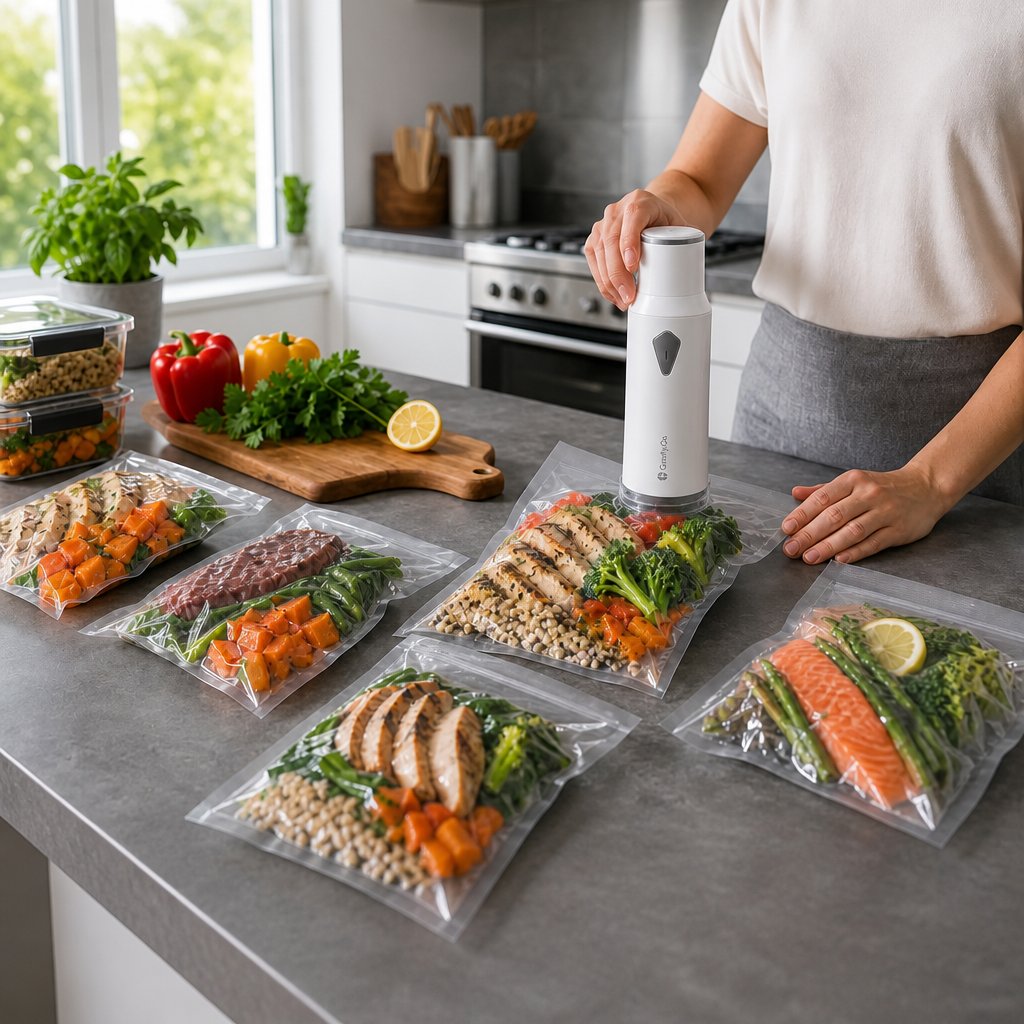
Essensvorbereitung soll Ihre Woche erleichtern, nicht Ihren Kühlschrank mit halb aufgebrauchten Zutaten und geheimnisvollen Resten überladen. Ein kabelloser Vakuumierer hilft dabei, die wöchentliche Essensvorbereitung in ein einfaches System zu verwandeln, indem er Portionen frisch, organisiert und leicht lagerbar hält, ohne Ihren Arbeitsbereich zu überladen.
Mit dem richtigen Arbeitsablauf können Sie in großen Mengen kochen, Mahlzeiten portionieren, Zutaten schnell vakuumieren und alles so lagern, dass Sie in geschäftigen Wochen Zeit sparen. Ein kabelloser Vakuumierer bietet Ihnen auch mehr Flexibilität, da Sie in der Nähe Ihres Kühlschranks, Ihrer Arbeitsplatte, Ihrer Speisekammer oder wo immer Sie Platz haben, vorbereiten können.
In diesem Leitfaden erfahren Sie, wie Sie Ihre Mahlzeiten planen, die richtigen Lebensmittel zum Vakuumieren auswählen, häufige Lagerfehler vermeiden und eine wöchentliche Vorbereitungsroutine aufbauen, die Lebensmittel länger frisch hält.
Wichtige Erkenntnisse
- Kabellose Vakuumierer ermöglichen Ihnen die Zubereitung und das Vakuumieren von Lebensmitteln überall, ohne Kabel und ohne Ärger.
- Das Kochen in großen Mengen und das sofortige Vakuumieren hält Lebensmittel frisch, schmackhaft und nahrhaft und reduziert Lebensmittelverschwendung erheblich.
- Gute Planung und intelligente Lagerung machen die Essensvorbereitung nachhaltig und sparen Ihnen sowohl Zeit als auch Geld.
Vorteile des Vakuumierens bei der Essensvorbereitung
Das Vakuumieren verwandelt die Essensvorbereitung ehrlich gesagt von einem ständigen Kampf gegen den Verderb in ein System, das Lebensmittel drei- bis fünfmal länger frisch hält. Es vereinfacht auch das Portionieren und Lagern erheblich.
Maximierung von Frische und Haltbarkeit
Beim Vakuumieren werden bis zu 99 % der Luft um Ihre Lebensmittel herum entzogen, was die Oxidation und das Bakterienwachstum verlangsamt. Wenn Sie Dinge wie rohes Huhn oder marinierte Proteine vakuumieren, halten sie im Kühlschrank bis zu zwei Wochen statt nur ein paar Tage.
Das Einfrieren wird noch besser. Wenn Sie in großen Mengen kochen, müssen Sie sich jahrelang keine Sorgen um Gefrierbrand machen. Suppen, Eintöpfe, Aufläufe und Proteine behalten ihre Textur und ihren Geschmack viel länger, wenn sie vakuumiert werden.
Eine luftdichte Versiegelung hält auch Nährstoffe und Feuchtigkeit zurück. Blanchiertes Gemüse behält seine Farbe und seinen Biss, und mariniertes Fleisch nimmt mehr Geschmack auf. Sogar Kräuter bleiben grün statt traurig und braun nach ein paar Tagen in einem normalen Behälter.
Reduzierung von Lebensmittelverschwendung und Geldersparnis
Verdorbene Produkte wegzuwerfen ist so ärgerlich. Vakuumieren hilft Ihnen, in großen Mengen einzukaufen, besonders wenn etwas im Angebot ist, ohne sich Sorgen machen zu müssen, dass es schlecht wird. Diese großen Packungen Hühnchen oder Hackfleisch? Einfach aufteilen, vakuumieren und verstauen.
Wenn Sie genau sehen können, was sich in Ihrem Kühlschrank oder Gefrierschrank befindet (durchsichtige Beutel sind ein Muss), ist es viel unwahrscheinlicher, dass Sie Dinge im hinteren Bereich verlieren. Beschriften Sie jeden Beutel mit dem Inhalt und dem Datum, und Sie werden tatsächlich das verwenden, was Sie gelagert haben.
Es summiert sich wirklich. Wenn Lebensmittel länger halten, müssen Sie seltener Last-Minute-Essen bestellen und weniger Lebensmittel wegwerfen. Ehrlich gesagt, ein Vakuumierer zahlt sich ziemlich schnell aus, indem er Ihnen einfach erspart, Zutaten zu verschwenden und Notfall-Abendessen zu kaufen.
Portionskontrolle und bequeme Mahlzeiten
Das Vorportionieren von Mahlzeiten in Vakuumbeuteln macht das Rätselraten bei den Portionsgrößen überflüssig. Wir vakuumieren Einzelportionen von Proteinen, Getreide und kompletten Mahlzeiten, sodass das Mittag- oder Abendessen nur noch darin besteht, einen Beutel herauszuholen.
Batch Cooking funktioniert hier so gut. Bereiten Sie sonntags einen großen Topf Chili oder Curry zu, teilen Sie es auf und vakuumieren Sie jede Portion. Plötzlich haben Sie ein Wochenangebot an Mittagessen, die perfekt aufgewärmt werden können. Sie können den Beutel direkt in kochendes Wasser geben, um ihn sous-vide-artig aufzuwärmen, oder einfach öffnen und in der Mikrowelle erhitzen.
Die Portionskontrolle erfolgt automatisch. Keine doppelten Portionen mehr, weil Sie einen Berg Nudeln gemacht haben. Wenn Sie Makros verfolgen, Familienmitglieder mit unterschiedlichen Ernährungsweisen haben oder einfach nur Konsistenz wünschen, erleichtern vorportionierte, vakuumierte Mahlzeiten es Ihnen erheblich, die ganze Woche über auf Kurs zu bleiben.
Grundlegende Ausstattung und Einrichtung
Ein kabelloser Vakuumierer gibt Ihnen die Freiheit, überall vorzubereiten, und eine Handvoll guter Beutel und Werkzeuge runden Ihre Essensvorbereitungsstation wirklich ab. Die richtige Einrichtung bedeutet weniger Chaos im Kühlschrank und Lebensmittel, die es tatsächlich bis Donnerstag schaffen.
Auswahl eines kabellosen Vakuumiergeräts
Wählen Sie ein Modell mit einem wiederaufladbaren Akku, der mindestens 30-40 Versiegelungen pro Sitzung bewältigen kann. Das reicht normalerweise für eine ganze Wochenvorbereitung, ohne dass Sie anhalten und aufladen müssen.
Achten Sie auf einstellbare Saugstärken. Empfindliche Lebensmittel wie Brot, Beeren oder Weichkäse benötigen eine leichtere Berührung als rohes Hähnchen oder Steak. Der Pulsmodus ist super praktisch, um zu steuern, wie viel Luft Sie absaugen.
Das Gewicht spielt eine größere Rolle, als man denkt. Ein kabelloser Vakuumierer unter 600 Gramm lässt sich leicht mit einer Hand halten, während Sie die Beutel mit der anderen positionieren. Ich mag Modelle im Bereich von 400-700 Gramm, sie sind tragbar, fühlen sich aber immer noch robust an.
Der Batterietyp macht auch einen Unterschied. Lithium-Ionen-Batterien laden schneller und halten länger als alte Nickel-Metallhydrid-Batterien. USB-C-Laden ist ein netter Bonus, ein Kabel weniger, das man im Auge behalten muss.
Auswahl hochwertiger Vakuumierbeutel
Wir halten zwei Arten bereit: vorgeschnittene Beutel mit integrierten Verschlüssen (ideal für Schnelligkeit) und Endlosrollen, die man selbst zuschneiden kann (perfekt für unregelmäßig geformte Gegenstände wie Baguettes oder ganze Fische).
Die Dicke ist entscheidend. Beutel zwischen 3-4 mil (ca. 75-100 Mikrometer) eignen sich für die meisten Kühl- und Gefrierlagerungen. Gehen Sie dicker (5-6 mil) für scharfe Knochen oder Hochtemperatur-Sous-Vide.
Achten Sie auf Beutel, die:
- BPA-frei und lebensmittelecht sind
- Mit Ihrem Vakuumiergerät kompatibel sind
- Gefrierfest bis -18°C oder darunter sind
- Mikrowellen- und kochfest sind, wenn Sie sie im Beutel aufwärmen möchten
- Durchsichtig sind, damit Sie sehen können, was drin ist
Mehrlagige Beutel verhindern Gefrierbrand besser als einlagige. Ich habe Fleisch 2-3 Jahre lang in guten Beuteln frisch gehalten, verglichen mit nur ein paar Monaten in normalen Reißverschlussbeuteln.
Andere unverzichtbare Werkzeuge zur Essenszubereitung
Eine digitale Waage macht das Portionieren von Proteinen und Getreide viel genauer. Wir wiegen alles, von Hackfleisch bis zu gekochtem Reis, um die Portionen konstant zu halten.
Gute Aufbewahrungsbehälter (Glas mit dichten Deckeln) eignen sich hervorragend für Zutaten, die Sie nicht vakuumieren müssen, z. B. gehacktes Gemüse, gekochtes Getreide oder Saucen, die Sie bald verwenden werden.
Scharfe Messer sparen Zeit. Ein Kochmesser erledigt die meisten Arbeiten, während ein Schälmesser Details wie das Trimmen von Fett oder das Schälen übernimmt.
Backbleche ermöglichen es Ihnen, viele Dinge gleichzeitig zu rösten. Wir verwenden sie für Hähnchenschenkel, Wurzelgemüse, was auch immer in den Mahlzeiten der Woche landet, und füllen es dann nach dem Abkühlen in Vakuumbeutel.
Eine Küchenmaschine beschleunigt das Zwiebelschneiden, das Reiben von Käse oder die Zubereitung von Saucen. Wenn Sie viel vorbereiten, lohnt sich der Platz auf der Arbeitsplatte.
Planung und Organisation Ihrer wöchentlichen Mahlzeiten
Ein guter Arbeitsablauf bei der Essenszubereitung beginnt damit, zu wissen, was man tatsächlich kochen wird, und die richtigen Zutaten bereit zu haben. Ich versuche, das System einfach und wiederholbar zu halten, damit die Abendessen unter der Woche kein Wettlauf sind.
Beginnen Sie damit, Ihren Kalender zu überprüfen. Wie viele Mahlzeiten werden Sie diese Woche wirklich zu Hause essen? Die meisten Leute planen besser für 4-5 Abendessen, nicht für jede einzelne Nacht.
Fassen Sie ähnliche Kochmethoden zusammen. Wenn Sie Hühnchen braten, geben Sie gleichzeitig etwas Gemüse dazu. Getreide kochen? Machen Sie mehr und versiegeln Sie es für eine weitere Woche.
Weisen Sie den Nächten lose Themen zu, vielleicht ist Montag Slow Cooker-Abend, Mittwoch Wok-Gericht, Freitag Reste. Das erleichtert die Planung und hält die Dinge flexibel.
Erstellen einer effektiven Einkaufsliste
Wir organisieren Einkaufslisten nach Ladenabteilungen, nicht einfach nur willkürlich. Gruppieren Sie Produkte, dann Proteine, dann Vorratsspeisen. Das spart Zeit und hilft Ihnen, sich an alles zu erinnern.
Bevor Sie einkaufen gehen, überprüfen Sie, was Sie bereits haben. Möglicherweise finden Sie vakuumverpackte Proteine oder Gemüse, die verbraucht werden müssen. Planen Sie Ihre Mahlzeiten zuerst um diese herum.
Hier ist eine grundlegende Listenstruktur:
- Proteine: Hähnchenbrust, Hackfleisch, Lachs
- Produkte: Brokkoli, Paprika, Spinat, Zwiebeln
- Getreide/Basen: Reis, Nudeln, Kartoffeln
- Milchprodukte/Eier: Milch, Käse, Butter
- Vorrat: Gewürze, Saucen
Überprüfen Sie Ladenangebote und passen Sie Ihren Plan an. Wenn Hähnchenschenkel günstig sind, tauschen Sie sie ein. Wir kaufen in großen Mengen, wenn Dinge im Angebot sind, portionieren und vakuumieren sie dann für den Gefrierschrank.
Vorräte, die man immer griffbereit haben sollte
Eine gut gefüllte Speisekammer bewahrt Sie davor, für fehlende Zutaten auszugehen. Konzentrieren Sie sich auf Grundnahrungsmittel, die in vielen Rezepten funktionieren, nicht auf Spezialitäten, die nur herumliegen.
Unsere wichtigsten Vorräte:
| Kategorie | Artikel |
|---|---|
| Öle und Essige | Olivenöl, Pflanzenöl, Reisessig, Balsamico-Essig |
| Getreide und Nudeln | Weißer Reis, brauner Reis, Spaghetti, Penne |
| Konserven | Gewürfelte Tomaten, Bohnen, Kokosmilch, Brühe |
| Geschmacksbasen | Knoblauch, Zwiebeln, Sojasauce, scharfe Sauce |
| Backen und Kochen | Mehl, Zucker, Salz, schwarzer Pfeffer, Paprika, Kreuzkümmel |
Wir vakuumieren trockene Massengüter wie Reis und Mehl, um sie frisch und vor Schädlingen zu schützen. Es spart auch Platz im Vergleich zu großen Beuteln oder Kartons.
Gewürze verlieren mit der Zeit ihre Würzkraft, daher kaufen wir kleine Mengen und erneuern sie alle 6-12 Monate. Die Must-haves? Knoblauchpulver, Zwiebelpulver, italienische Gewürzmischung, Chilipulver und Kreuzkümmel. Diese fünf decken die meisten Rezepte ab.
Schritt-für-Schritt-Arbeitsablauf bei der Essenszubereitung mit einem kabellosen Vakuumiergerät
Ein guter Arbeitsablauf bedeutet, in großen Mengen zu kochen, präzise zu portionieren, mit klaren Etiketten zu vakuumieren und die Mahlzeiten nach dem Zeitpunkt des Verzehrs zu lagern. Diese Schritte helfen uns, organisiert zu bleiben und Lebensmittelverschwendung zu vermeiden.
Große Mengen kochen und abkühlen
Wir kochen Proteine, Getreide und Gemüse in großen Mengen. Mehrere Hähnchenbrustfilets grillen, ein paar Backbleche Gemüse rösten oder einen großen Topf Reis kochen spart Zeit und bietet uns viele Optionen für Mahlzeiten.
Das Abkühlen ist wichtiger, als man denkt. Heiße Speisen verursachen Kondensation in Vakuumbeuteln, die in das Vakuumiergerät gesaugt werden und es beschädigen können. Wir lassen die Speisen etwa 30-45 Minuten auf Raumtemperatur abkühlen und kühlen sie dann eine weitere Stunde im Kühlschrank, bevor wir sie vakuumieren.
Während der Abkühlzeit bereiten wir die nächste Charge Zutaten vor. Das hält den Prozess am Laufen, ohne zu hetzen oder das Vakuumiergerät zu beschädigen.
Portionieren und Zubereiten von Mahlzeiten
Sobald alles abgekühlt ist, teilen wir die Mahlzeiten in Einzel- oder Familienportionen auf. Die Verwendung einer Küchenwaage sorgt für genaue Portionen, insbesondere bei Proteinen und Getreide.
Wir arrangieren die Lebensmittel in Behältern oder direkt in Vakuumbeuteln. Flaches Anordnen erleichtert das Stapeln und gleichmäßige Auftauen später. Bei feuchten Lebensmitteln wie Eintöpfen oder Marinaden verwenden wir die Flüssigkeitskontrollfunktion oder frieren die Flüssigkeit etwas ein, bevor wir sie vakuumieren.
Das separate Halten von Zutaten hilft, wenn sich die Dinge mit unterschiedlicher Geschwindigkeit aufwärmen. Das Vakuumieren von Proteinen getrennt von Gemüse oder Getreide gibt uns mehr Flexibilität, wenn es Zeit zum Essen ist.
Professionelles Versiegeln und Etikettieren
Wir verwenden unseren kabellosen Vakuumierer, um Beutel zu versiegeln, beginnend am offenen Ende und arbeiten uns durch unseren Stapel vorbereiteter Mahlzeiten. Die kabellose Einrichtung ermöglicht es uns, uns in der Küche zu bewegen, anstatt nach einer freien Steckdose zu suchen, was ehrlich gesagt eine Erleichterung ist.
Direkt nach dem Versiegeln nehmen wir einen Permanentmarker und notieren den Inhalt und das Datum auf jedem Beutel. Das ist eine kleine Gewohnheit, die uns später erspart, "Ratespiele mit Resten" zu spielen, und uns dazu bringt, ältere Mahlzeiten zuerst aufzubrauchen.
Für alles, was in den Gefrierschrank kommt, schreiben wir die Aufwärmanweisungen direkt auf das Etikett. Kein Rätselraten mehr über die Garzeiten, und jeder im Haus kann einfach zugreifen und aufwärmen, ohne den Koch zu belästigen.
Sichere Lagerung: Kühlschrank vs. Gefrierschrank
Vakuumverpackte Mahlzeiten halten im Kühlschrank in der Regel drei bis fünf Tage, oder bis zu drei Monate im Gefrierschrank. Alles, was wir bald essen werden, bewahren wir im Kühlschrank auf und frieren den Rest ein.
Im Gefrierschrank stapeln wir die Beutel flach, damit sie schnell gefrieren und keinen Platz wegnehmen. Sobald sie fest sind, stellen wir sie wie Akten in einer Schublade aufrecht hin. So ist es viel einfacher, das zu finden, was man braucht.
Kühlschranklagerung: Gekochte Proteine, vorbereitete Salate (Dressing weglassen), gehacktes Gemüse
Gefrierlagerung: Großpackungen Proteine, Suppen, Saucen, komplette Mahlzeiten
Wir frieren vakuumverpackte Mahlzeiten niemals erneut ein, sobald sie aufgetaut sind. Die Planung, was zuerst gegessen werden soll, hilft uns, die Lebensmittelsicherheitsregeln einzuhalten und das Beste aus dem Vakuumieren herauszuholen.
Essenszubereitungs-Ideen und Rezepte, die gut mit Vakuumverpackung funktionieren
Vakuumverpackung glänzt wirklich bei Mahlzeiten, die länger frisch bleiben müssen, oder wenn Sie Dinge portionieren möchten. Wir lieben es für Frühstücke wie Overnight Oats, vorgefertigte Getreide-Bowls und gefrierfreundliche Abendessen, besonders wenn die Woche voll ist.
Frühstück zum Vorbereiten und Overnight Oats
Overnight Oats sind ein absoluter Gewinn für die Vakuumversiegelung. Sie bleiben im Kühlschrank bis zu fünf Tage frisch. Wir portionieren Haferflocken, Chiasamen, Milch und das Süßungsmittel unserer Wahl in einzelne Vakuumbeutel oder -behälter. Wenn Sie Beeren, Nüsse oder Nussbutter hinzufügen, versiegeln Sie diese separat, damit nichts matschig wird.
Eier-Frühstück ist auch einfach zu versiegeln. Rührei, Gemüse-Frittatas und Frühstücksburritos können gekocht, abgekühlt und in Einzelportionen versiegelt werden. Wenn Sie bereit sind, einfach im Beutel aufwärmen oder in eine mikrowellengeeignete Schüssel geben.
Pfannkuchen und Waffeln? Definitiv vorbereitungsfreundlich. Eine große Menge zubereiten, vollständig abkühlen lassen und dann mit Backpapier zwischen jedem stapeln, bevor sie versiegelt werden. Sie halten im Gefrierschrank bis zu drei Monate und bekommen nicht diesen seltsamen Gefriergeschmack.
Getreideschalen und Mittagessen
Getreideschalen eignen sich perfekt zum Vakuumieren, da Sie jeden Teil im Voraus zubereiten können. Wir kochen große Mengen Getreide wie Quinoa, braunen Reis oder Farro und vakuumieren sie dann in Portionen. Gegrilltes Hähnchen, gebackener Tofu oder hartgekochte Eier lassen sich ebenfalls gut vakuumieren und werden nicht gummiartig.
Geröstetes Gemüse behält seine Textur und seinen Geschmack, wenn es vakuumiert wird. Wir rösten Süßkartoffeln, Brokkoli, Paprika und Rosenkohl in großen Mengen und portionieren sie dann. Dressings und Saucen kommen in eigene kleine versiegelte Behälter, bis Sie bereit zum Essen sind.
Beste Komponenten für Getreideschalen zum Vakuumieren:
- Gekochtes Getreide (Quinoa, Reis, Farro)
- Mageres Eiweiß (Hähnchenbrust, Pute, Tofu)
- Geröstetes oder gedünstetes Gemüse
- Hülsenfrüchte (Kichererbsen, schwarze Bohnen, Linsen)
Für Salate vakuumieren wir Blattgemüse mit einem Papiertuch, um überschüssige Feuchtigkeit aufzusaugen. Dieser Trick hält sie viel länger frisch, als wenn man sie einfach in einen Behälter gibt.
Abendessen und gefrierfreundliche Mahlzeiten
Suppen und Eintöpfe sind einige der einfachsten Dinge, die man für den Gefrierschrank vakuumieren kann. Lassen Sie sie vollständig abkühlen, bevor Sie sie vakuumieren, damit die Flüssigkeit nicht vom Gerät aufgesaugt wird. Wir portionieren sie flach in Beuteln, damit sie schneller auftauen und ordentlich gelagert werden können.
Marinierte Proteine sind hierfür hervorragend geeignet. Rohes Hähnchen, Rindfleisch oder Schweinefleisch mit Ihrer Lieblingsmarinade vakuumieren und einfrieren. Das Vakuum hilft sogar, dass die Marinade besser einzieht, was ein netter Bonus ist.
Aufläufe und gebackene Gerichte kommen direkt in vakuumierbare Behälter, werden versiegelt und dann vor dem Backen eingefroren. Wenn Sie bereit sind, tauen Sie sie über Nacht im Kühlschrank auf und backen Sie sie. Wir haben mit Lasagne, Enchiladas und Shepherd's Pie gute Erfahrungen gemacht.
Gerichte aus dem Slow Cooker sind ein echter Zeitsparer. Geben Sie rohe Zutaten wie Hähnchenschenkel, Gemüse und Gewürze in einen Vakuumbeutel, frieren Sie ihn flach ein, und wenn Sie ihn brauchen, tauen Sie ihn auf und geben Sie ihn direkt in den Slow Cooker. Das ist ein Lebensretter an geschäftigen Morgen.
Tipps für eine nachhaltige, gesunde Essenszubereitungsroutine
Eine solide Routine zur Essenszubereitung beruht auf der Ausgewogenheit von Ernährung, Vielfalt und intelligenter Lagerung. Das Portionieren und Kochen in großen Mengen reduziert Abfall und hilft Ihnen, Ihre Ernährungsziele tatsächlich einzuhalten.
Intelligentes Portionieren und Vorbereiten in großen Mengen
Wir haben festgestellt, dass das Schätzen von Portionen fast immer zu Verschwendung führt. Die Verwendung einer Küchenwaage für Proteine, Getreide und Gemüse (zumindest für die ersten paar Zubereitungen) macht einen großen Unterschied. Die meisten Leute stellen fest, dass sie viel zu viel zubereitet haben, was nur mehr Reste und höhere Lebensmittelrechnungen bedeutet.
Das Kochen in großen Mengen funktioniert am besten, wenn wir vielseitige Grundnahrungsmittel statt kompletter Mahlzeiten zubereiten. Das Kochen von zwei oder drei Proteinen, ein paar Getreidesorten und einer Handvoll Gemüse in einer Sitzung gibt uns die ganze Woche über Kombinationsmöglichkeiten, ohne immer dasselbe zu essen.
- Proteine: Hähnchenbrust, gemahlenes Truthahnfleisch, hartgekochte Eier
- Getreide: Quinoa, brauner Reis, Farro
- Gemüse: Brokkoli, Süßkartoffeln, Paprika, Rosenkohl
Wir vakuumieren einzelne Portionen, sobald sie gekocht sind. Das bewahrt die Frische und macht es einfach, unterwegs eine Mahlzeit zu greifen. Das Portionieren vor dem Vakuumieren hilft uns auch, Überessen zu vermeiden und verhindert, dass Dinge im Kühlschrank verloren gehen.
Rezepte rotieren, um Langeweile zu vermeiden
Seien wir ehrlich: Jeden Tag dasselbe zu essen, wird schnell langweilig. Das Rotieren von Rezepten alle zwei Wochen bietet uns genügend Abwechslung, um das Interesse zu wahren, hält aber die Einkaufsliste überschaubar. Wir führen eine laufende Liste von 10-12 Lieblingsrezepten und wechseln diese einfach ab.
Themenabende helfen auch. Jeden Tag ein Thema zuzuordnen (wie mediterrane Montage oder Taco-Dienstage) sorgt für Abwechslung, ohne die Essensplanung zu einer lästigen Pflicht zu machen. Auf diese Weise können wir saisonale oder im Angebot befindliche Produkte verwenden, ohne in eine Routine zu verfallen.
Wir verfolgen, was tatsächlich gegessen wird und was einfach im Kühlschrank bleibt. Es stellt sich heraus, dass "Wunsch"-Essensplanung nicht immer der Realität entspricht, und das ist in Ordnung. Wir konzentrieren uns auf bewährte Favoriten und fügen nur alle paar Wochen ein neues Rezept hinzu.
Das separate Vakuumieren verschiedener Komponenten ermöglicht es uns, Dinge zu variieren, ohne uns vorher auf bestimmte Kombinationen festzulegen.
Vakuumieren für spezielle Diäten nutzen
Vakuumieren ist ein Wendepunkt für alle mit speziellen Ernährungsbedürfnissen. Wir haben gesehen, wie es Menschen mit Diabetes, makrobasierten Diäten oder Lebensmittelallergien geholfen hat, sicher portionierte Mahlzeiten wochenlang im Voraus zuzubereiten, ohne an Qualität einzubüßen.
Für kohlenhydratarme oder ketogene Diäten vakuumieren wir Proteine und fettreiche Beilagen wie Avocadosaucen getrennt von frischem Gemüse. So bleibt alles frisch und die Makros stimmen.
Pflanzliche Mahlzeiten-Vorbereiter können gekochte Hülsenfrüchte, marinierten Tofu und Getreideproteine vakuumieren. Diese halten sich normalerweise nicht lange im Kühlschrank, aber mit Vakuumverpackung bleiben sie drei- bis viermal länger gut.
Wir beschriften jede Packung mit Inhalt, Datum und Ernährungsdaten (Kalorien, Makros, Allergene) mit einem Beschriftungsgerät oder Permanentmarker. Das wird noch wichtiger, wenn man für mehrere Personen mit unterschiedlichen Bedürfnissen vorkocht.
Vakuumieren verhindert auch Gefrierbrand, was super hilfreich ist, wenn man extra für Bio-, Weide- oder allergenfreie Lebensmittel ausgibt. Ihre Investition hält Monate, nicht Wochen.
Häufig gestellte Fragen
Hier sind schnelle Antworten auf häufige Fragen zur Verwendung eines kabellosen Vakuumierers für die wöchentliche Essensvorbereitung.
Wie sieht ein realistischer Sonntags-Mahlzeiten-Vorbereitungsablauf aus, der Vakuumieren nutzt, um die Kochzeit unter der Woche zu verkürzen?
Planen Sie zwei bis drei Stunden ein. Kochen Sie zuerst Ihre Proteine, Getreide und Gemüse. Lassen Sie alles abkühlen, portionieren Sie dann die Mahlzeiten in Beutel, vakuumieren Sie sie und beschriften Sie jeden Beutel mit Inhalt und Datum.
Welche Lebensmittel lassen sich für eine ganze Woche gut vakuumieren, und welche sollten anders gelagert werden?
Gekochte Proteine, festes Gemüse, Getreide, Suppen, Eintöpfe und mariniertes Fleisch eignen sich gut. Empfindliche Beeren, Salat, weiche Kräuter und Weichkäse lagert man besser in Behältern, da sie sonst Druckstellen bekommen oder zerdrückt werden können.
Wie portionieren Sie Proteine, Gemüse und Snacks für Mahlzeiten zum Mitnehmen, ohne Beutel zu verschwenden?
Verwenden Sie mittelgroße Beutel für komplette Mahlzeiten und kleinere Abschnitte für Snacks. Legen Sie Lebensmittel flach hin, vermeiden Sie Überfüllung und vakuumieren Sie, wenn möglich, mehrere kleine Snackportionen in einem längeren Beutel.
Wie beschriftet und organisiert man vakuumierte Mahlzeiten am besten, damit Kühlschrank und Gefrierschrank nicht zu einer Wundertüte werden?
Notieren Sie auf jedem Beutel den Namen des Lebensmittels, das Datum, die Portionsgröße und den Hinweis zum Wiedererwärmen. Lagern Sie die Mahlzeiten nach Kategorien, z. B. Frühstück, Mittagessen, Abendessen, Proteine und Gemüse.
Wie weit im Voraus kann man verschiedene Zutaten vorbereiten und vakuumieren, ohne dass Geschmack und Textur darunter leiden?
Gekochte Mahlzeiten bleiben im Kühlschrank normalerweise drei bis fünf Tage frisch. Tiefkühlkost kann zwei bis drei Monate mit guter Textur halten. Lassen Sie Lebensmittel immer vollständig abkühlen, bevor Sie sie vakuumieren.
Welche Reinigungs- und Wartungsschritte sorgen dafür, dass ein kabelloser Vakuumierer Woche für Woche zuverlässig funktioniert?
Wischen Sie den Versiegelungsbereich nach jedem Gebrauch ab, leeren Sie die Tropfschale, falls Ihr Modell eine hat, und überprüfen Sie regelmäßig die Dichtung. Halten Sie das Gerät vor der Lagerung trocken.
Teilen:
Wiederverwendbare Vakuumbeutel vs. Einweg-Aufbewahrungsbeutel: Was ist sinnvoller für die wöchentliche Essenszubereitung?
Wie man marinierte Proteine ohne Auslaufen, Geruch oder Texturverlust aufbewahrt