

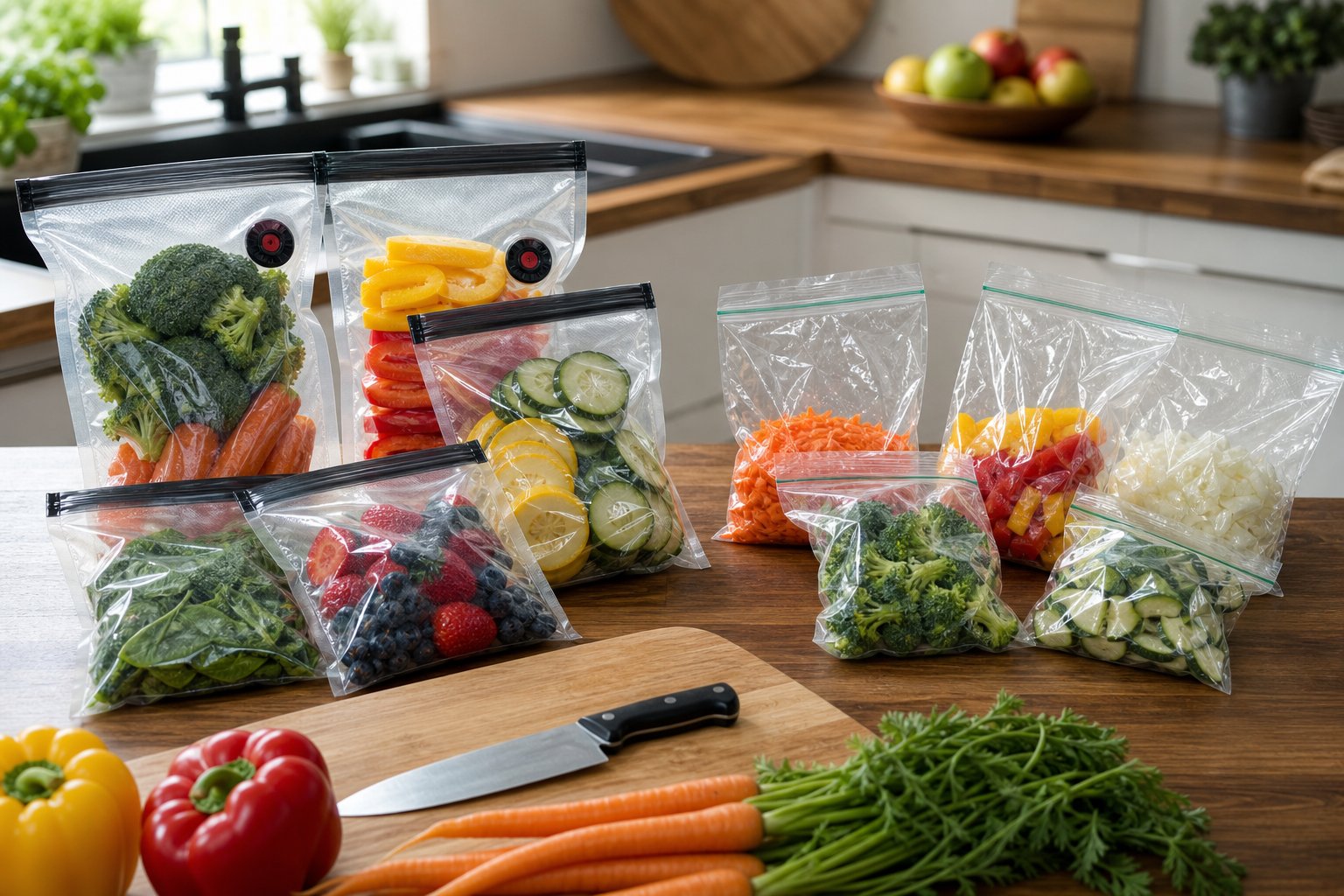
Entdecken Sie unsere neueste Kollektion an kompakten Vakuumiergeräten für Lebensmittel!
Frische Essenszubereitung beginnt mit der richtigen Lagerung. Wenn Ihre Reste austrocknen, Tiefkühlgerichte vereisen oder Snacks zu schnell ihre Frische verlieren, könnte die von Ihnen verwendete Tasche Teil des Problems sein. Wiederverwendbare Vakuumbeutel und Einweg-Aufbewahrungsbeutel haben beide ihren Platz in der Küche, funktionieren aber am besten für unterschiedliche Routinen.
Wiederverwendbare Vakuumbeutel wurden entwickelt, um Luft zu entziehen, Lebensmittel länger zu schützen und wiederholten Abfall zu reduzieren. Einweg-Aufbewahrungsbeutel sind einfach, schnell und leicht für die kurzfristige Kühlschranklagerung zu verwenden. Die bessere Wahl hängt davon ab, wie oft Sie zubereiten, welche Lebensmittel Sie lagern und wie viel Zeit Sie mit dem Reinigen und Wiederverwenden von Beuteln verbringen möchten.
In diesem Leitfaden erfahren Sie, wie wiederverwendbare Vakuumbeutel und Einweg-Aufbewahrungsbeutel in Bezug auf Frische, Kosten, Bequemlichkeit, Gefrierverwendung, Lebensmittelsicherheit und langfristige Essenszubereitung abschneiden.
Für die wöchentliche Essenszubereitung sind wiederverwendbare Vakuumbeutel in der Regel sinnvoller, wenn Sie vier oder mehr Mahlzeiten gleichzeitig zubereiten und genügend Gefrierraum haben. Einwegbeutel sind schneller für die tägliche Portionierung und Kühlschranklagerung. Die richtige Wahl hängt davon ab, wie Sie tatsächlich zubereiten, was Sie lagern und ob Sie sich jede Woche mit dem Waschen und Trocknen wiederverwendbarer Beutel befassen möchten.
Wichtigste Erkenntnisse
- Wiederverwendbare Vakuumbeutel verhindern Gefrierbrand hervorragend und halten vorgekochte Mahlzeiten frisch, während Einwegbeutel schneller für Kühlgut und schnelle Portionierung sind
- Sie sparen nur mit wiederverwendbaren Beuteln Geld, wenn Sie sie tatsächlich ausreichend verwenden und pflegen, um die höheren Anschaffungskosten auszugleichen
- Lebensmittelsicherheit, Reinigungsbedarf und wie viel Stauraum Sie haben, sollten ebenso wichtig sein wie Umweltbelange
Lagerung von Lebensmitteln verstehen: Beuteltypen, Merkmale und Materialien
Wiederverwendbare Vakuumbeutel sind luftdicht verschließbar und halten wiederholtem Gebrauch stand. Bei Einwegbeuteln geht es um Bequemlichkeit und niedrige Anschaffungskosten. Das Material, ob lebensmittelechtes Silikon, PEVA-Kunststoff oder einfaches LDPE, beeinflusst die Robustheit des Beutels, wie gut er abdichtet und wie lange er in Ihrer Küche verweilen wird.
Was sind wiederverwendbare Vakuumbeutel?
Wiederverwendbare Vakuumbeutel ziehen Luft heraus und dichten fest ab, wodurch Lebensmittel länger frisch bleiben, indem der Verderb verlangsamt wird. Die meisten funktionieren mit einer kleinen Handpumpe oder einem Tisch-Vakuumiergerät, das die Luft durch ein Ventil ansaugt.
Hersteller fertigen diese Beutel aus dickerem Material als Einwegbeutel. Silikonbeutel können vom Gefrierschrank in den Ofen (manchmal bis zu 218 °C) gehen, sodass Sie sie zum Sous-vide-Garen, Aufwärmen oder Kochen verwenden können. PEVA-Kunststoffbeutel sind kostengünstiger und fühlen sich leichter an, können aber in der Regel keine Temperaturen über 60 °C vertragen.
Die Verschlussarten hängen von der Marke ab. Einige verwenden Doppelreißverschlüsse plus ein Ventil zum Vakuumieren, während andere einen Klemmverschluss haben, der die Luft ohne separates Vakuumwerkzeug fernhält.
Nach unserer Erfahrung sind wiederverwendbare Vakuumbeutel am sinnvollsten für Essenszubereiter, die Proteine portionieren, marinieren oder Großeinkäufe einfrieren. Sous-vide-Fans lieben sie auch, da sie Beutel benötigen, die in heißem Wasser nicht schmelzen oder auslaufen.
Wie funktionieren Einweg-Aufbewahrungsbeutel?
Einweg-Aufbewahrungsbeutel, die vertrauten Beutel mit Reißverschluss, die die meisten von uns kennen, verschließen sich, wenn Sie die beiden Kunststoffstege zusammendrücken. Sie erhalten kein Vakuum, sodass Sie vor dem Verschließen so viel Luft wie möglich manuell herausdrücken müssen.
Hersteller verwenden für diese Beutel Polyethylen niedriger Dichte (LDPE). Es ist dünn, flexibel und billig. LDPE funktioniert im Gefrierschrank und hält Feuchtigkeit fern, verhindert aber nicht wirklich Gefrierbrand wie ein vakuumversiegelter Beutel.
Sie finden diese Beutel in den üblichen Größen: Snack, Sandwich, Liter und Gallone. Die Verschlüsse eignen sich gut für die kurzfristige Kühlschranklagerung, können aber aufspringen, wenn Sie sie überfüllen oder in einem vollen Kühlschrank umherstoßen.
Der größte Vorteil? Bequemlichkeit. Einfach nehmen, füllen, verschließen und entsorgen. Kein Waschen, kein Ärger.
Wichtige Materialien: Silikon, Kunststoff und mehr
Silikon zeichnet sich als die haltbarste Option für wiederverwendbare Beutel aus. Es ist hitzebeständig, spülmaschinenfest und steckt den normalen Küchengebrauch praktisch weg. Silikon verfärbt oder nimmt keine Gerüche an, selbst nach der Lagerung von Zwiebeln oder Fisch.
PEVA (Polyethylen-Vinylacetat) ist eine ungiftige Kunststoffalternative, die billiger als Silikon ist. PEVA-Beutel sind dicker und robuster als Einwegbeutel, sollten aber nicht in die Nähe von Hitze gelangen. Sie eignen sich gut für den Kühl- und Gefrierschrank.
LDPE (Polyethylen niedriger Dichte) finden Sie in typischen Einweg-Aufbewahrungsbeuteln. Es ist leicht und billig, reißt aber leicht und ist nicht zum Waschen und Wiederverwenden gedacht.
Einige Spezialbeutel verwenden bienenwachsbeschichtete Baumwolle zur Aufbewahrung von Brot und Backwaren. Diese Beutel verhindern Schimmelbildung, sind aber nicht sicher für rohes Fleisch oder Flüssigkeiten.
Ihre Materialwahl entscheidet, wie robust der Beutel ist, welche Temperaturen er verträgt und ob er eine Reise vom Gefrierschrank in die Mikrowelle oder den Ofen überlebt. BPA-freie Etiketten sind wichtig für die Lebensmittelsicherheit, egal welches Material Sie wählen.
Umweltauswirkungen von wiederverwendbaren und Einwegbeuteln
Sowohl wiederverwendbare als auch Einwegbeutel verursachen Umweltkosten bei Produktion, Nutzung und Entsorgung. Der Hauptunterschied liegt darin, wie viel Abfall Sie im Laufe der Zeit erzeugen, was zum Reinigen und Wiederverwenden erforderlich ist und ob die Materialien recycelt oder wiederverwendet werden können.
Abfall- und Deponieprobleme
Jedes Mal, wenn Sie einen Einwegbeutel verwenden, tragen Sie zur Abfallmenge bei. Wenn Sie wöchentlich Mahlzeiten zubereiten, könnten Sie bei jeder Sitzung 4-8 Einwegbeutel verbrauchen, das sind 200-400 Beutel pro Jahr, direkt in den Müll.
Die meisten Einwegbeutel zersetzen sich nicht schnell. Sie können Jahrzehnte auf Deponien verbleiben und beim Abbau langsam Chemikalien freisetzen.
Wiederverwendbare Vakuumbeutel reduzieren diesen Abfall drastisch. Ein gut gemachter wiederverwendbarer Beutel kann 50-100 Anwendungen (oder mehr) überdauern und Hunderte von Einwegbeuteln ersetzen. Sicher, die Herstellung eines wiederverwendbaren Beutels verbraucht mehr Ressourcen, aber diese Kosten verteilen sich auf viele Mahlzeiten.
Abfall für ein Jahr wöchentlicher Essenszubereitung:
- Einwegbeutel: 200-400 Beutel auf die Deponie
- Wiederverwendbare Beutel: 3-6 Beutel (wenn Sie sie jährlich ersetzen)
Wasserverbrauch und Reinigung
Sie müssen wiederverwendbare Vakuumbeutel nach jedem Gebrauch waschen, was mehr Wasser und etwas zusätzliche Energie bedeutet. Die meisten Leute spülen sie von Hand mit etwa 1-2 Litern Wasser pro Beutel oder lassen sie in der Spülmaschine laufen.
Handwäsche verbraucht weniger Energie als eine Spülmaschine, aber das Wasser summiert sich. Wenn Sie 4-6 Beutel pro Woche waschen, verbrauchen Sie allein für die Reinigung von Beuteln 300-600 Liter Wasser pro Jahr.
Einwegbeutel müssen zu Hause nicht gewaschen werden, aber Fabriken verbrauchen Wasser, um sie herzustellen. Dieses Wasser wird einfach nicht in Ihrer Küche verwendet. Ob Sie durch Wiederverwendung oder durch Entsorgung mehr Wasser sparen, hängt davon ab, wie oft Sie jeden Beutel wiederverwenden.
Recycelte Materialien und Recyclingprogramme
Einige Einwegbeutel verwenden jetzt recycelten Kunststoff, in der Regel zwischen 25 % und 50 %, manchmal sogar 100 %. Es hängt wirklich von der Marke ab.
Papiertüten sind eine weitere Option, aber Sie müssten sie mindestens viermal wiederverwenden, um die Umweltauswirkungen von Plastik auszugleichen. Sie eignen sich nicht zum Vakuumieren oder für nasse Gegenstände, daher sind sie für die meisten Essenszubereitungen nicht ideal.
Einige Geschäfte nehmen gebrauchte Plastiktüten zum Recycling zurück, aber Lebensmittelreste bedeuten meistens, dass sie trotzdem entsorgt werden. Die Abholung am Straßenrand nimmt fast nie flexible Kunststoffe an, daher müssen Sie sich vor Ort erkundigen.
Wiederverwendbare Beutel aus Silikon oder PEVA können recycelte Inhalte enthalten und länger halten, sind aber schwer zu recyceln, wenn sie endlich abgenutzt sind.
Lebenszyklusanalyse und nachhaltige Verpackung
Betrachtet man den gesamten Lebenszyklus, von der Herstellung des Beutels bis zur Entsorgung, so zeigt die Forschung, dass wiederverwendbare Plastiktüten etwa 27 % weniger Ressourcen verbrauchen als Einwegtüten, sofern man sie ausreichend wiederverwendet.
Der Break-Even-Punkt ist wichtig. Ein wiederverwendbarer Vakuumbeutel benötigt etwa 10-15 Anwendungen, um die größeren Umweltkosten seiner Herstellung auszugleichen. Wenn Sie jede Woche Mahlzeiten zubereiten, erreichen Sie diesen Punkt in etwa drei Monaten.
Zeitplan für den Break-Even:
- Wenignutzer (1-2 Mal/Monat): 6-12 Monate
- Wöchentliche Essenszubereiter: 2-3 Monate
- Tägliche Nutzer: 2-4 Wochen
Beide Arten von Beuteln benötigen Energie und Ressourcen für die Herstellung, aber ein wiederverwendbarer Beutel verteilt diese Kosten auf viele Mahlzeiten. Einwegbeutel verteilen geringere Kosten auf Hunderte von Anwendungen.
Nachhaltige Verpackungen drehen sich heutzutage mehr um Haltbarkeit und wie oft man etwas wiederverwenden kann, nicht nur darum, ob es recycelbar ist. Ein Beutel, der 100 Anwendungen überdauert, erzeugt viel weniger Abfall als 100 recycelbare Beutel, selbst wenn diese recycelt werden, da der Recyclingprozess selbst Energie und Wasser verbraucht.
Kostenvergleich und langfristige Einsparungen
Der Preisunterschied zwischen wiederverwendbaren und Einwegbeuteln erscheint zunächst offensichtlich, aber die wahren Zahlen sehen Sie erst, wenn Sie die Ausgaben über Monate der Essenszubereitung zusammenrechnen. Reinigungszeit und Haltbarkeit der Beutel spielen eine Rolle, wenn Sie tatsächlich Geld sparen möchten.
Anfangsinvestition versus fortlaufende Ersatzkäufe
Ein Starter-Set mit vier bis sechs wiederverwendbaren Vakuumbeuteln kostet in der Regel 15 bis 35 US-Dollar. Sie verwenden dieselben Beutel jede Woche. Einwegbeutel kosten je nach Größe 10 bis 20 US-Dollar pro Karton mit 50 bis 100 Stück.
Hier wird die Rechnung interessant. Wenn Sie wöchentlich Mahlzeiten zubereiten und fünf Beutel pro Sitzung verwenden, verbrauchen Sie in einem Jahr 260 Einwegbeutel. Das sind 52 bis 104 US-Dollar pro Jahr, nur für Beutel. Wiederverwendbare Beutel sind eine einmalige Anschaffung, wenn sie halten.
Das hängt natürlich von der Qualität ab. Gute wiederverwendbare Beutel können Hunderte von Anwendungen überstehen, wenn Sie sie rotieren und nicht überfüllen. Billige können nach 20-30 Anwendungen reißen oder ihren Verschluss verlieren, sodass Sie sie früher ersetzen müssten.
Langfristige Kosteneinsparungen für Hobbyköche
Wir haben gesehen, dass Menschen 150 bis 300 US-Dollar über drei Jahre sparen, indem sie für die wöchentliche Essenszubereitung auf wiederverwendbare Beutel umsteigen. Dies setzt eine moderate Nutzung (vier bis fünf Beutel pro Woche) und keine unsachgemäße Behandlung der Beutel voraus.
Wenn Sie für den Gefrierschrank oder Sous-vide vakuumversiegeln, verbrauchen Sie pro Sitzung noch mehr Beutel, sodass sich die Einsparungen summieren. Eine Familie, die 10-15 Mahlzeiten pro Woche zubereitet, könnte 150 bis 250 US-Dollar pro Jahr für Einwegbeutel ausgeben, verglichen mit 30 bis 50 US-Dollar für wiederverwendbare Beutel, die zwei oder drei Jahre halten.
Wie viel Sie sparen, hängt wirklich davon ab, wie oft Sie Mahlzeiten zubereiten und ob Sie Beutel verlieren oder abnutzen. Menschen, die ihre Beutel kennzeichnen und verfolgen, erhalten das meiste für ihr Geld.
Berücksichtigung von Reinigungs- und Wartungskosten
Das Reinigen wiederverwendbarer Beutel kostet Zeit und ein wenig Geld. Jeder Beutel muss mit Spülmittel gewaschen oder in der Spülmaschine gereinigt werden und muss vollständig trocknen, bevor er wieder verwendet werden kann. Handwäsche dauert fünf bis zehn Minuten pro Beutel, oder Sie können eine Charge in der Spülmaschine reinigen.
Wasser, Seife und Energie kosten nur etwa 0,10 bis 0,15 US-Dollar pro Waschgang, aber Zeit ist wichtig. Wenn Sie Mahlzeiten zubereiten, um Zeit zu sparen, könnte eine halbe Stunde zum Waschen von Beuteln wie ein Rückschritt erscheinen.
Wenn Beutel nicht vollständig trocknen, riskieren Sie Schimmelbildung, was den Beutel ruiniert und Ihr Geld verschwendet. Wir empfehlen, genügend Beutel zum Rotieren zu haben, während andere trocknen. Dies kostet zwar im Voraus mehr, macht die Routine aber überschaubar, wenn Sie viel zu tun haben.
Bequemlichkeit und Alltagstauglichkeit
Wenn Sie Mahlzeiten für die Woche vorbereiten, möchten Sie keine Lagerung, die Sie verlangsamt oder zusätzliche Aufgaben mit sich bringt. Sowohl wiederverwendbare als auch Einwegbeutel haben ihre Vorteile, wenn es um Geschwindigkeit, Anpassung an Ihre Lagermethoden und die Fähigkeit geht, Ihre Lebensmittel tatsächlich versiegelt und sicher zu halten.
Geschwindigkeit und Einfachheit für vielbeschäftigte Essenszubereiter
Einwegbeutel sind die klaren Gewinner in Sachen Geschwindigkeit. Einfach nehmen, füllen, verschließen und fertig. Kein Waschen, Trocknen oder Prüfen, ob noch genügend saubere Beutel vorhanden sind. Wenn Sie sonntags fünf Mittagessen und eine Reihe von Snacks portionieren, ist diese Einfachheit kaum zu übertreffen.
Wiederverwendbare Beutel erfordern etwas mehr Planung. Nach jedem Gebrauch müssen Sie sie waschen und trocknen, bevor sie wieder einsatzbereit sind. Sie benötigen genügend Beutel im Umlauf, um Ihre wöchentliche Zubereitung abzudecken. Die meisten Menschen benötigen mindestens 8-12, um den reibungslosen Ablauf zu gewährleisten.
Aber sobald Sie in den Groove kommen, sind die zusätzlichen Schritte nicht so schlimm. Sie nach dem Abendessen in die Spülmaschine zu werfen, geht schnell, und das Lufttrocknen über Nacht hält sie für die nächste Runde bereit.
Lagerung, Gefrierschrank und Sous-Vide-Leistung
Silikon-Lebensmittelbeutel sind überraschend vielseitig. Bei uns werfen wir sie in den Kühlschrank, verstauen Tiefkühlkost und verwenden sie sogar für Sous-vide. Sie überstehen wilde Temperaturschwankungen, ohne zu reißen oder Gefrierbrand entstehen zu lassen, im Gegensatz zu diesen fadenscheinigen Einwegbeuteln, die immer zu reißen oder brüchig zu werden scheinen.
Einwegbeutel erfüllen ihren Zweck für die kurzfristige Kühlschranklagerung oder das einfache Einfrieren. Aber sobald Sie Wärme verwenden möchten, wie zum Beispiel für Sous-vide, sind sie raus. Sie durchstechen auch viel zu leicht, wenn Sie gefrorene Lebensmittel mit scharfen Kanten oder etwas Spitzem lagern.
Wenn Sie Mahlzeiten in großen Mengen kochen und einfrieren, glänzen wiederverwendbare Beutel wirklich. Ihre dickeren Wände verhindern die Bildung von Eiskristallen auf Ihren Lebensmitteln, und diese dichten Verschlüsse verhindern, dass sich Aromen im Gefrierschrank vermischen. Ehrlich gesagt, ist es schwer, wieder zurückzugehen, wenn man sich einmal daran gewöhnt hat.
Handhabung, Versiegelung und Auslaufschutz
Die Qualität der Versiegelung kann Ihre Essenszubereitung entscheiden. Die meisten wiederverwendbaren Beutel verwenden Klemmverschlüsse oder Schieber, und sobald Sie den Dreh raus haben, sind sie wasserdicht. Wir haben mariniertes Hähnchen, Suppen und sogar Dressings transportiert, ohne ein einziges Leck.
Einwegbeutel verwenden Druckverschlussverschlüsse, die zunächst funktionieren, aber bei Feuchtigkeit oder Fett riskieren Sie eine Sauerei. Wenn Sie jemals den Kühlschrank geöffnet haben und eine Pfütze ausgelaufener Marinade gefunden haben, kennen Sie den Schmerz.
Vergleich der Versiegelung:
| Merkmal | Wiederverwendbare Beutel | Einwegbeutel |
|---|---|---|
| Haltbarkeit des Verschlusses | Hält Hunderte von Anwendungen stand | Schwächt bei Feuchtigkeitskontakt ab |
| Auslaufschutz | Wasserdicht bei ordnungsgemäßer Versiegelung | Zufallstreffer, hängt vom Verschluss ab |
| Lernkurve | Benötigt 2-3 Versuche zur Beherrschung | Von Anfang an ziemlich intuitiv |
Wiederverwendbare Beutel erfordern etwas mehr Mühe, um sie richtig zu verschließen. Man muss sie ganz festdrücken oder zuklicken. Nach ein paar Versuchen wird es zur Gewohnheit.
Gesundheits- und Sicherheitsfaktoren: Lebensmittelfrische und Luftqualität
Beide Beuteltypen können sich darauf auswirken, wie frisch Ihre Lebensmittel bleiben und ob Ihr Kühlschrank nach Zwiebeln riecht. Vakuumversiegelte Beutel halten jedoch Luft fern und verlangsamen Bakterien und Gerüche auf eine Weise, wie normale Beutel dies einfach nicht können.
Wie Beutel die Lebensmittelfrische beeinflussen
Das Vakuumieren entzieht die Luft, was die beiden großen Feinde frischer Lebensmittel bekämpft: Sauerstoff und Bakterien. Wenn wir Mahlzeiten vakuumieren, schaffen wir einen sauerstoffarmen Raum, der den Verderb verlangsamt und die Lebensmittel länger gut schmecken lässt.
Wiederverwendbare Vakuumbeutel halten ihre Versiegelung gut über viele Anwendungen hinweg, wenn Sie sie richtig reinigen. Sie blockieren Gefrierbrand besser als Einwegbeutel, dank des dickeren Materials und einer festen Versiegelung. Dies macht einen großen Unterschied für Proteine und vorgeschnittenes Gemüse, das schnell braun wird, wenn es Luft ausgesetzt wird.
Einwegbeutel, selbst die guten, können die Luft nicht so gut entziehen. Das manuelle Herausdrücken der Luft oder das Schließen des Reißverschlusses lässt immer noch etwas Sauerstoff im Inneren. Bis Mitte der Woche könnte Ihre Sonntags-Mahlzeit bereits etwas braun aussehen oder seltsam riechen.
Die Lagertemperatur ist immer noch wichtig. Vakuumbeutel sind keine Magie. Bewahren Sie Lebensmittel im Kühlschrank bei 4 °C oder darunter auf und frieren Sie sie bei -18 °C oder darunter ein. Der Beutel hilft nur; er ersetzt keine ordnungsgemäße Kühlung.
Raumluftqualität und Geruchskontrolle
Lebensmittel wie mariniertes Fleisch, Curry oder gehackte Zwiebeln können Ihren Kühlschrank verunreinigen, wenn Sie sie nicht gut lagern. Vakuumversiegelte Beutel schließen Gerüche ein, indem sie die Luft (und die Gerüche) fest verschlossen halten.
Wiederverwendbare Beutel aus Silikon oder dickem Kunststoff sind viel besser darin, Gerüche zu blockieren als dünne Einwegbeutel. Das Material und die Versiegelung machen den Unterschied. Überprüfen Sie die Versiegelung regelmäßig, um sicherzustellen, dass sie nicht abgenutzt ist.
Kreuzkontamination ist bei beiden Typen ein Risiko, wenn Sie sie nicht gründlich reinigen. Wiederverwendbare Beutel müssen zwischen den Anwendungen gut gewaschen werden, besonders nach rohem Fleisch. Bakterien verstecken sich gerne in Nähten und Ecken, also sparen Sie nicht am Schrubben.
Tipps zur Auswahl und Pflege von Lebensmittelaufbewahrungsbeuteln
Ob Sie wiederverwendbare Vakuumbeutel bevorzugen oder einfach bei Einwegbeuteln bleiben, die Wahl des richtigen Beutels und seine Pflege können Ihnen Geld sparen und Abfall reduzieren. Eine gute Reinigungsroutine und intelligente Gewohnheiten sind dabei sehr hilfreich.
Den richtigen Beutel für Ihre Bedürfnisse auswählen
Beginnen Sie damit, darüber nachzudenken, was Sie lagern. Schwere Proteine und Flüssigkeiten benötigen dickere, robustere Beutel. Trockene Lebensmittel wie Brot oder Kekse? Leichtere Beutel funktionieren gut. Vergessen Sie nicht die Größe. Zu große Beutel verschwenden Gefrierplatz, während winzige an den Nähten platzen könnten.
Suchen Sie nach lebensmittelechtem Silikon oder BPA-freien wiederverwendbaren Beuteln. Sie überstehen das Waschen viel besser als billige, und einige haben sogar antimikrobielle Eigenschaften, um Bakterien fernzuhalten.
Wenn Sie jede Woche Mahlzeiten vorbereiten, besorgen Sie sich ein Sortiment mit verschiedenen Größen. So können Sie einzelne Portionen abmessen oder große Mengen lagern, ohne Platz zu verschwenden.
Überprüfen Sie immer die Temperaturbeständigkeit. Nicht alle Beutel können kochendes Wasser für Sous-vide oder tiefe Gefriertemperaturen vertragen. Wenn Sie Ihre Beutel für alles verwenden möchten, stellen Sie sicher, dass sie für den jeweiligen Zweck geeignet sind.
Best Practices für Reinigung und Verlängerung der Lebensdauer
Wir waschen wiederverwendbare Beutel normalerweise direkt nach dem Gebrauch. Andernfalls setzen sich Flecken und Gerüche fest. Drehen Sie sie auf links, schrubben Sie sie mit warmem Wasser und milder Seife und achten Sie auf die kniffligen Ecken.
Bei hartnäckigen Gerüchen füllen Sie den Beutel mit Backpulver und warmem Wasser, verschließen Sie ihn und lassen Sie ihn einige Stunden stehen, bevor Sie ihn ausspülen. Weißer Essig funktioniert auch. Mischen Sie ihn mit Wasser, verschließen Sie ihn und lassen Sie ihn über Nacht stehen.
Lassen Sie die Beutel vollständig an der Luft trocknen, bevor Sie sie wegräumen. Hängen Sie sie über ein Abtropfgestell oder stellen Sie sie aufrecht auf ein Flaschenregal. Eingeschlossene Feuchtigkeit ist ein Nährboden für Schimmel.
Überprüfen Sie Ihre Beutel ab und zu auf Löcher oder Schwachstellen. Die meisten wiederverwendbaren Beutel halten Hunderte von Anwendungen, wenn Sie sie richtig behandeln, aber nichts hält ewig. Wenn ein Beutel abgenutzt ist, prüfen Sie, ob der Hersteller ein Recyclingprogramm anbietet, bevor Sie ihn wegwerfen.
Bewahren Sie Ihre sauberen, trockenen Beutel in einer Schublade oder einem Behälter auf, damit sie nicht zerdrückt oder verloren gehen. Ordnung hält die Essenszubereitung schneller und hilft Ihren Beuteln, länger zu halten.
Smarter Einsatz für langfristige Nachhaltigkeit
Wir wechseln unsere Beutel ab, anstatt jedes Mal denselben zu nehmen. Das verteilt den Verschleiß und verhindert, dass ein einzelner Beutel zu schnell verschleißt. Halten Sie ein paar Einwegbeutel für unordentliche Arbeiten wie das Marinieren von rohem Fleisch bereit.
Beschriften Sie Beutel mit Malerkrepp und einem Marker, anstatt direkt darauf zu schreiben. Das erleichtert die Reinigung und ermöglicht es Ihnen, Beutel für verschiedene Lebensmittel ohne Verwechslungsgefahr wiederzuverwenden.
Versuchen Sie, Ihre Essenszubereitung so zu planen, dass Sie die Beutel die ganze Woche über wiederverwenden können. Hähnchen am Montag marinieren, den Beutel am Dienstag waschen, am Mittwoch für Gemüse verwenden. So wird die Reinigung einfach Teil Ihrer Routine.
Wenn Sie Einwegbeutel verwenden, wählen Sie solche aus recycelbaren Materialien und prüfen Sie, ob Ihr lokales Geschäft Weichplastik sammelt.
Das Zuweisen bestimmter wiederverwendbarer Beutel für rohe Proteine und anderer für verzehrfertige Lebensmittel hilft, Kreuzkontaminationen zu reduzieren und Ihre Lebensmittelsicherheitsroutine einfach zu halten. Behandeln Sie es wie Ihre wiederverwendbaren Einkaufstaschen. Halten Sie einfach Produkte und Massengüter getrennt.
Achten Sie darauf, wie oft Sie Beutel tatsächlich wiederverwenden, im Vergleich dazu, wie oft Sie sie wegwerfen. Wenn Sie sie oft wegwerfen, benötigen Sie möglicherweise Beutel von besserer Qualität oder eine bessere Reinigungsroutine. So oder so sparen Sie langfristig Geld und produzieren weniger Abfall.
Häufig gestellte Fragen
Hier finden Sie schnelle Antworten auf häufige Fragen zu wiederverwendbaren Vakuumbeuteln, Einweg-Aufbewahrungsbeuteln, Frische, Reinigung und wöchentlicher Essenszubereitung.
Welche Option spart tatsächlich mehr Geld über einen Monat wöchentlicher Essenszubereitung?
Wiederverwendbare Vakuumbeutel sparen in der Regel auf lange Sicht mehr, wenn Sie jede Woche Mahlzeiten zubereiten. Einwegbeutel kosten zunächst weniger, aber die Ersatzkosten summieren sich schnell. Wiederverwendbare Beutel sind am sinnvollsten, wenn Sie sie oft verwenden und richtig pflegen.
Wie gut halten wiederverwendbare Vakuumbeutel Flüssigkeiten wie Marinaden, Suppen und Eintöpfe, ohne auszulaufen?
Gute wiederverwendbare Vakuumbeutel können Flüssigkeiten gut handhaben, wenn sie richtig versiegelt sind. Lassen Sie oben zusätzlichen Platz und vermeiden Sie Überfüllung. Bei dünnen Suppen oder Eintöpfen kann das leichte Kühlen oder Einfrieren der Speisen vor dem Verschließen helfen, Lecks zu vermeiden.
Schützen Einweg-Aufbewahrungsbeutel Gefriergerichte genauso gut vor Gefrierbrand wie das Vakuumieren?
Nein. Einweg-Aufbewahrungsbeutel eignen sich für die kurzfristige Lagerung im Gefrierschrank, aber sie entziehen die Luft nicht wie das Vakuumieren. Für Mahlzeiten, die länger als ein paar Wochen gelagert werden, bieten wiederverwendbare Vakuumbeutel in der Regel einen besseren Schutz vor Gefrierbrand.
Wie reinigt und trocknet man wiederverwendbare Vakuumbeutel am einfachsten, damit sie keine Gerüche annehmen?

Entwickelt, um Ihr Zuhause, Ihre Küche und Ihren Alltag zu vereinfachen.


Kontaktieren Sie uns
Fragen? Wir sind Montag bis Freitag von 10:00 bis 18:00 Uhr PST für Sie da.
Kontaktinformationen