

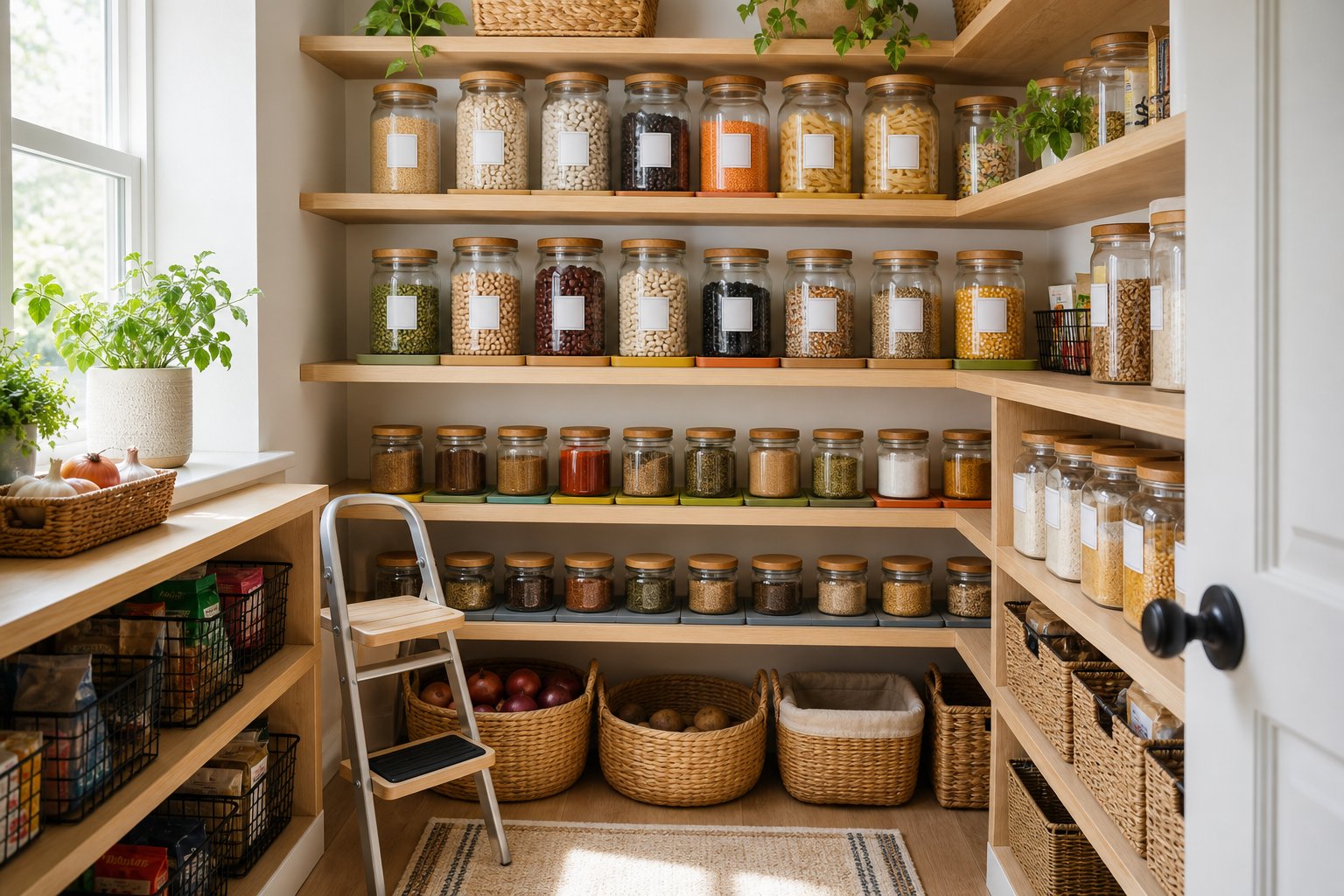
Entdecken Sie unsere neueste Gläser-Kollektion!
Kleine Vorratsartikel können schnell Unordnung verursachen, besonders wenn sich Beutel, Kartons und halb geöffnete Packungen stapeln. Die gute Nachricht ist, dass sich eine kleine Speisekammer dennoch ruhig, sauber und einfach zu bedienen anfühlt, wenn jeder Artikel seinen klaren Platz hat.
Der beste Weg, kleine Vorratsartikel zu organisieren, ist die Verwendung von durchsichtigen Gläsern, einfachen Etiketten und Nachfüllzonen, die Ihre Zutaten leicht sichtbar, erreichbar und nachfüllbar machen. Durchsichtige Behälter helfen Ihnen, auf einen Blick zu wissen, was Sie haben, Etiketten halten jedes Regal konsistent, und Nachfüllzonen verhindern, dass zusätzliche Verpackungen Ihren Raum beanspruchen.
Mit der richtigen Einrichtung kann selbst eine kompakte Speisekammer schnelleres Kochen, intelligenteres Einkaufen und weniger Lebensmittelverschwendung unterstützen. In diesem Leitfaden erfahren Sie, wie Sie Ihre Speisekammer überprüfen, die richtigen Gläser auswählen, Nachfüllzonen einrichten, alles klar beschriften und jeden Zentimeter Stauraum optimal nutzen.
Wichtige Erkenntnisse
- Verwenden Sie durchsichtige Gläser und Behälter, damit Sie sehen können, was Sie haben, und Überkäufe oder Lebensmittelverschwendung vermeiden
- Beschriften Sie jeden Behälter und jede Zone, damit alles seinen Platz hat und organisiert bleibt
- Richten Sie spezielle Nachfüllzonen ein, um das Nachfüllen zu erleichtern und Ihr System mit minimalem Aufwand am Laufen zu halten
Erste Schritte: Überprüfung und Entrümpelung Ihrer Speisekammer
Bevor Sie Ihre kleine Speisekammer in einen organisierten Raum mit durchsichtigen Gläsern und Nachfüllzonen verwandeln können, müssen Sie neu anfangen. Eine gründliche Überprüfung hilft Ihnen herauszufinden, was Sie tatsächlich verwenden, was nur Platz wegnimmt und was einen festen Platz in Ihrer Küchenroutine verdient.
Die Bedeutung einer Speisekammer-Überprüfung
Ehrlich gesagt, eine vollständige Speisekammer-Überprüfung zahlt sich immer aus. Sie zeigt Ihnen Ihre Einkaufsgewohnheiten und was Sie wirklich zur Aufbewahrung benötigen. Holen Sie alles heraus, ja, alles. Schütten Sie es alles auf die Arbeitsplatte oder den Tisch.
Plötzlich werden Sie die Doppelungen, die vergessenen Beutel entdecken und erkennen, wie viel Platz Sie tatsächlich haben. Wenn Sie drei offene Zimtbehälter oder eine Reihe halb voller Mehltüten finden, ist es offensichtlich, warum Ihre Speisekammer überfüllt ist.
Diese Überprüfung hilft Ihnen auch bei der Planung, welche Gläser Sie benötigen. Zählen Sie Getreide, Nudeln, Backzutaten und Snacks, die Sie normalerweise vorrätig haben. So kaufen Sie nicht eine Menge Behälter, die nicht zu dem passen, was Sie tatsächlich verwenden. Wenn Sie jede Woche Mahlzeiten vorbereiten, werden Sie bemerken, welche Zutaten Sie ständig benötigen und die Sie griffbereit halten sollten.
Machen Sie auch ein paar Fotos von Ihren leeren Regalen. Maße sind wichtig, wenn Sie nach Stauraum suchen, und eine visuelle Referenz hilft Ihnen, sich Ihre neue Einrichtung vorzustellen.
Abgelaufene und unerwünschte Artikel entsorgen
Überprüfen Sie die Verfallsdaten von allem, besonders Backpulver, Gewürzen und Ölen. Alte Sachen nehmen nur Platz weg und sind nicht gut für Ihr Kochen.
Seien Sie ehrlich: Wenn Sie vor Monaten etwas für ein einmaliges Rezept gekauft und seitdem nicht mehr angerührt haben, ist es wahrscheinlich jetzt nur noch Gerümpel. Das spezielle Mehl oder das zufällige Gewürz schien damals wichtig zu sein, aber wenn es nicht Teil Ihrer normalen Routine ist, lassen Sie es los.
Werfen Sie abgestandene Cracker, ranzige Nüsse und steinharten braunen Zucker weg. Wenn Sie nur die Vorratsartikel aufbewahren, die Sie verwenden, ist es viel einfacher, organisiert zu bleiben. Spenden Sie ungeöffnete, nicht abgelaufene Lebensmittel an eine lokale Lebensmittelbank, wenn Sie können. Wenn Sie halb aufgebrauchte Packungen derselben Sache haben, fassen Sie sie in einem Behälter zusammen und schaffen Sie sofort Platz.
Gruppierung von Vorratsartikeln für Effizienz
Sortieren Sie das Übriggebliebene in Kategorien, die zu Ihrer Kochweise passen. Wir wählen normalerweise Backzutaten, Frühstückssachen, Getreide und Nudeln, Snacks, Öle und Essige sowie Konserven.
Die Gruppierung ist entscheidend für die Organisation kleiner Speisekammern, da sie Ihnen zeigt, wie viele Gläser Sie für jeden Bereich benötigen. Vielleicht haben Sie mehr Backzutaten als Snacks. Gut zu wissen, bevor Sie mit dem Einkaufen von Behältern beginnen.
Machen Sie separate Stapel für Dinge, die Sie täglich verwenden, und Dinge, die Sie kaum anfassen. Grundnahrungsmittel für die Essenszubereitung sollten leicht zu greifen sein, während Zutaten für besondere Anlässe oben oder unten verstaut werden können. Wenn Sie jede Woche Brot backen, halten Sie Mehl und Hefe griffbereit. Wenn Sie nur einmal im Monat backen, verstauen Sie diese Dinge.
Denken Sie darüber nach, wie oft Sie Dinge verwenden, nicht nur, welcher Kategorie sie angehören. Ihre morgendlichen Kaffeesachen könnten einen eigenen kleinen Bereich verdienen, auch wenn es nur wenige Artikel sind.
Aufbewahrungsgrundlagen: Auswahl von Gläsern, Behältern und Kisten
Die richtigen Aufbewahrungsbehälter machen es viel einfacher, Ihre kleine Speisekammer organisiert zu halten. Durchsichtige Behälter und Glasgefäße zeigen Ihnen genau, was knapp wird, und luftdichte Behälter halten die Dinge viel länger frisch als die Originalverpackung.
Durchsichtige Behälter versus Glasgefäße
Sowohl durchsichtige Plastikbehälter als auch Glasgefäße haben ihre Vorteile. Plastikbehälter sind leicht, bruchsicher und perfekt für obere Regale, wo Sie nichts Schweres fallen lassen möchten. Sie sind normalerweise auch billiger, was hilft, wenn Sie viele auf einmal kaufen.
Glasgefäße halten starke Gerüche gut eingeschlossen und verfärben sich nicht durch Gewürze oder Öle. Sie sind schwerer, bleiben also gut in den Regalen stehen und fühlen sich einfach schön an. Wir greifen meist zu Glas für Dinge, die wir oft nachfüllen, wie Mehl, Zucker und Kaffee, da sie leicht zu reinigen sind und ziemlich schick aussehen.
Ehrlich gesagt, macht es Sinn, beides zu mischen. Verwenden Sie Plastikbehälter für sperrige Dinge wie Nudelpackungen oder Snackbeutel und Glasgefäße für Trockenwaren, die Sie oft entnehmen. Passen Sie Ihre Behälterwahl daran an, wie oft Sie sie verwenden und wo sie in der Speisekammer stehen werden.
Vorteile von luftdichten Behältern für die Frische
Luftdichte Behälter sind nicht nur für Instagram. Sie halten Vorratsartikel wirklich frisch, indem sie Luft, Feuchtigkeit und Schädlinge abblocken. Wir haben bemerkt, dass Mehl, Reis und Müsli in luftdichten Behältern Monate länger frisch bleiben, als wenn man die Beutel nur mit einem Clip zusammenrollt.
Die Dichtung ist tatsächlich wichtiger, als man vermuten würde. Achten Sie auf Deckel mit Silikondichtungen, die die Frische wirklich einschließen. Wenn es nur "schnappt", ist es wahrscheinlich nicht luftdicht. Brauner Zucker bleibt weich, Cracker werden nicht abgestanden und Backpulver behält seine Wirkung, wenn Sie es richtig lagern.
Luftdichte Lagerung verhindert auch, dass sich starke Aromen vermischen. Ihr Kaffee schmeckt nicht nach Currypulver, und Ihre Backsachen nehmen keine seltsamen Speisekammergerüche an. In einer kleinen Speisekammer, wo alles nah beieinander ist, hilft das wirklich.
Stapelbare und modulare Aufbewahrungslösungen
Stapelbare Behälter verwandeln verschwendeten vertikalen Raum in tatsächlich nutzbaren Stauraum. Wir empfehlen immer quadratische oder rechteckige Behälter. Sie passen besser zusammen und nutzen jeden Zentimeter optimal aus.
Modulare Systeme ermöglichen es Ihnen, Ihren Stauraum im Laufe der Zeit aufzubauen. Beginnen Sie mit ein paar Behältern und fügen Sie dann weitere derselben Größe hinzu, wenn Sie herausfinden, was funktioniert. Auf diese Weise verschwenden Sie kein Geld für Behälter, die nicht zu Ihrem Raum oder Ihren Gewohnheiten passen.
Suchen Sie nach Behältern mit geraden Seiten, damit sie ordentlich gestapelt werden können. Griffe helfen Ihnen, obere Behälter zu greifen, ohne alles abzustapeln, und durchsichtige Seiten machen es einfach, den Inhalt zu sehen. Einheitliche Behältergrößen lassen alles ruhiger wirken und erleichtern das Umorganisieren, wenn sich Ihre Bedürfnisse ändern.
Einrichtung einfach zu bedienender Nachfüllzonen
Nachfüllzonen sorgen dafür, dass Ihre kleine Speisekammer reibungslos funktioniert, indem sie Zutaten, die regelmäßig nachgefüllt werden müssen, an bestimmten Stellen gruppieren. Wir organisieren diese nach Lebensmitteltyp und Häufigkeit der Verwendung, damit Sie schnell sehen können, was knapp wird und wohin neue Sachen gehören.
Zonen nach Lebensmitteltypen erstellen
Beginnen Sie damit, die wichtigsten Lebensmittelkategorien zu ermitteln, die zu Ihrem Kochstil passen. Die meisten Leute brauchen Zonen für Frühstückssachen, Grundlagen für das Abendessen unter der Woche, Konserven und Snacks. Platzieren Sie die Zonen, die Sie am häufigsten verwenden, auf Augenhöhe, damit sie während der Essenszubereitung leicht zu greifen sind.
Gruppieren Sie ähnliche Dinge innerhalb jeder Zone. Lagern Sie alle Ihre Nudeln, Reis und Getreide in einem Bereich. Bewahren Sie Konservengemüse, Suppen und Bohnen in einem anderen Regal auf. Dies verwandelt Ideen zur Speisekammerorganisation in ein echtes System.
Gängige Nachfüllzonen:
- Frühstücksutensilien (Haferflocken, Müsli, Kaffee)
- Grundnahrungsmittel für das Abendessen (Nudeln, Reis, Speiseöle)
- Konserven (Gemüse, Bohnen, Suppen)
- Snacks und schnelle Bissen
Beschriften Sie jede Zone mit einfachen Etiketten, damit jeder weiß, wohin die Dinge gehören. Wenn Sie vom Geschäft nach Hause kommen, legen Sie die Artikel direkt an ihren Platz. Eine organisierte Speisekammer reduziert Lebensmittelverschwendung, da Sie tatsächlich sehen können, was nachgefüllt werden muss, bevor Sie einkaufen gehen.
Backstationen und Snackkörbe
Die Backzone verdient etwas besondere Aufmerksamkeit. Wir bewahren Mehl, Zucker, Backpulver und andere trockene Backzutaten gerne in durchsichtigen Gläsern auf, alle in Reichweite voneinander. Stapeln Sie diese auf einem einzelnen Regal für eine dedizierte Backstation.
Bewahren Sie Backmischungen, Schokochips und Extrakte in einem Behälter oder Korb in der Nähe auf. Auf diese Weise können Sie alles, was Sie für Kekse oder Kuchen benötigen, greifen, ohne herumgraben zu müssen.
Für Snacks verwenden Sie durchsichtige Behälter oder Körbe, die sich leicht herausziehen lassen. Platzieren Sie diese auf einer Höhe, wo Kinder ihre eigenen Müsliriegel oder Cracker greifen können. Wenn Sie den Platz haben, trennen Sie süße und herzhafte Snacks. Beschriften Sie jeden Behälter, damit das Nachfüllen nach dem Einkauf schnell und schmerzlos ist.
Beschriftungssysteme: Alles sichtbar und zugänglich machen
Ein gutes Beschriftungssystem verwandelt Ihre kleine Speisekammer in einen Ort, an dem jeder schnell findet, was er braucht. Die richtigen Etiketten, gepaart mit durchsichtigen Gläsern, halten die Dinge mit kaum Aufwand organisiert.
Die richtige Beschriftungsmethode wählen
Die beste Beschriftungsmethode hängt wirklich davon ab, wie oft Sie den Inhalt jedes Glases wechseln. Wenn Sie Grundnahrungsmittel wie Mehl, Reis und Hafer, die sich selten ändern, aufbewahren, sehen permanente Etiketten toll aus und halten jahrelang. Wasserdichte Vinyl- oder laminierte Etiketten vertragen Feuchtigkeit und bleiben lesbar.
Wenn Sie den Inhalt häufig wechseln, wählen Sie wiederverwendbare Optionen. Sie können sie abwischen und ohne Probleme neu beschriften.
Überlegen Sie, wo Sie das Etikett anbringen. Für die meisten Speisekammern funktioniert eine Platzierung vorne auf Augenhöhe. Wenn Sie tiefe Regale haben oder Gläser stapeln, bringen Sie Etiketten sowohl vorne als auch auf dem Deckel an, damit Sie sie aus verschiedenen Blickwinkeln sehen können. Wir mögen kräftige, klare Schriftarten in Schwarz oder dunklen Farben auf hellem Hintergrund. Leicht zu lesen, auch wenn Sie es eilig haben.
Auch die Etikettengröße ist wichtig. Verwenden Sie kleine Etiketten für Gewürzgläser und größere für Großbehälter.
Verwenden eines Etikettendruckers oder Kreidetafel-Etiketten
Etikettendrucker liefern saubere, einheitliche Etiketten, die die gesamte Speisekammer ordentlich aussehen lassen. Die meisten drucken auf strapazierfähigen Klebestreifen, die auf Glas, Plastik oder Metall haften. Der große Vorteil ist die Konsistenz. Alles passt zusammen und ist leicht zu lesen.
Kreidetafel-Etiketten sind super flexibel, was großartig ist, wenn sich Ihr Speisekammerangebot häufig ändert. Schreiben Sie mit Kreidemarkern, wischen Sie mit einem feuchten Tuch ab und schreiben Sie bei Bedarf neu. Sie sind perfekt für rotierende Getreidesorten oder saisonale Backzutaten. Außerdem hat der matte Schwarz-Look einen modernen Bauernhaus-Touch, der ziemlich beliebt ist.
Einige von uns verwenden beides. Permanente Etiketten von Etikettendruckern für Gläser, die immer das Gleiche enthalten, und kleine Kreidetafel-Etiketten für Kaufdaten oder schnelle Notizen. Die Kombination aus beiden bietet ein System, das organisiert ist, sich aber anpassen kann, wenn sich Ihre Speisekammer ändert.
Nachverfolgung mit Verfallsdaten
Das Hinzufügen von Verfallsdaten zu Etiketten hilft, Verschwendung zu vermeiden und schützt alle vor verdorbenen Lebensmitteln. Wir empfehlen, das Datum, an dem Sie Dinge in Gläser füllen, aufzuschreiben, nicht nur das ursprüngliche Verpackungsdatum. Luftexposition kann die Haltbarkeit verändern.
Am einfachsten ist es, die Daten direkt mit einem Permanentmarker auf das Etikett zu schreiben. Einige Etikettendrucker ermöglichen das Drucken von zwei Zeilen, sodass Sie das Datum unter dem Artikelnamen hinzufügen können. Kreidetafel-Etiketten erleichtern das Aktualisieren von Daten beim Nachfüllen.
Fügen Sie eine kurze Notiz wie „Geöffnet: Mai 2026“ oder „Mindestens haltbar bis: Nov 2026“ unter dem Hauptetikett hinzu. Es dauert nur wenige zusätzliche Sekunden pro Glas, erspart Ihnen aber das Rätselraten, ob etwas noch gut ist. Wir bewahren einen dünnen trocken abwischbaren Marker in der Speisekammer auf, um Daten auf wiederverwendbaren Etiketten schnell zu aktualisieren.
Platzmaximierung in kleinen Vorratskammern
Kleine Vorratskammern stellen Ihre Fähigkeit, jeden Zentimeter Platz zu nutzen, vom Boden bis zur Decke und von vorne nach hinten, auf die Probe. Die Verwendung von Regalaufsätzen, Behältern und Türablagen kann einen beengten Bereich in einen überraschend funktionalen Raum verwandken, in dem Sie tatsächlich alles sehen und erreichen können.
Nutzung von vertikalem Raum und Regalaufsätzen
Die meisten kleinen Vorratskammern verschwenden eine Menge vertikalen Platz zwischen den Regalen. Feste Regale lassen in der Regel 20 bis 30 cm ungenutzte Höhe, besonders bei kleinen Gegenständen wie Gewürzgläsern oder Dosen.
Regalaufsätze beheben dies, indem sie Ihnen zwei Ebenen auf einem Regal bieten. Wählen Sie stabile Regalaufsätze aus Metall oder Bambus. Sie können 7 bis 9 kg tragen. Stellen Sie höhere Gegenstände wie Müslischachteln und Nudelbehälter nach hinten, und verwenden Sie dann den Aufsatz, um eine vordere Reihe für kleinere Gläser und Dosen zu schaffen.
Wenn Ihre Vorratskammer hohe Decken hat, macht eine bodenhohe Lagerung einen großen Unterschied. Fügen Sie alle 30 bis 35 cm zusätzliche Regale hinzu, um verschiedene Behälterhöhen unterzubringen. Bewahren Sie Ihre am häufigsten verwendeten Dinge auf Augenhöhe auf, verstauen Sie Großartikel oder Extras hoch oben und stellen Sie schwerere Dinge wie Geräte oder große Töpfe unten hin.
Ein kleiner Tritthocker macht diese oberen Regale für den täglichen Gebrauch nutzbar. Halten Sie einen in der Nähe, damit Sie nicht in Versuchung geraten, das oberste Regal leer zu lassen.
Nutzung von Türregalen und Über-die-Tür-Organizern
Die Rückseite Ihrer Vorratstür verbirgt in der Regel 30 bis 60 Zentimeter Tiefe, die die meisten Menschen ignorieren. Ein über die Tür gehängter Organizer fügt sofort eine Menge Aufbewahrungstaschen hinzu. Hängen Sie ihn einfach über die Kante und fertig.
Türregale glänzen am hellsten mit leichten Sachen, die Ihre Scharniere nicht beschädigen. Wir werfen Gewürzgläser, Snackpackungen, Teebeutel und diese kleinen Gewürzflaschen hinein. Durchsichtige Kunststoff- oder Drahtregale erleichtern das Auffinden dessen, was Sie brauchen, ohne zu graben.
Wenn Sie etwas Permanenteres wünschen, versuchen Sie, flache Regale direkt an der Innenseite der Tür zu montieren. Halten Sie sie unter 10 cm tief, damit die Tür noch schließt. Dübelstangen oder kleine Lippen am Regalrand verhindern, dass Dinge herausfliegen, wenn Sie die Tür öffnen oder schließen.
Bevor Sie etwas installieren, messen Sie den Abstand zwischen der Türkante und dem nächsten Regal, wenn die Tür aufschwingt. Sie möchten nicht, dass Ihre neue Aufbewahrung in Ihre Vorratsschränke kracht.
Tiefe Regale, Schubladenorganizer und verschiebbare Behälter
Tiefe Regale können ein Albtraum sein. Dinge verschwinden einfach hinten und werden abgestanden, bevor sich jemand daran erinnert, dass sie da sind. Wir haben so viele Leute gesehen, die Dinge doppelt kaufen, nur weil sie nicht sehen konnten, was sie bereits hatten.
Ausziehbare Behälter und verschiebbare Schubladen retten hier den Tag. Ein einziger Zug und alles kommt nach vorne. Wir installieren Drahtkorbschubladen oder rollende Organizer, die sich ganz herausziehen lassen, damit Sie alles von oben sehen können. Diese funktionieren hervorragend für Konserven, verpackte Nudeln und Snacks, die immer umzukippen scheinen.
Schubladenorganizer unterteilen verschiebbare Behälter in kleinere Abschnitte für verschiedene Kategorien. Wir lieben verstellbare Teiler. Sie ermöglichen es Ihnen, benutzerdefinierte Zonen zu erstellen, die tatsächlich zu Ihren Gläsern und Behältern passen. Auf diese Weise rutschen die Dinge nicht jedes Mal herum, wenn Sie die Schublade öffnen.
Vorratsbehälter mit Griffen sind eine einfache Alternative, wenn Sie nichts installieren können. Gruppieren Sie einfach ähnliche Artikel in beschrifteten Behältern und ziehen Sie den gesamten Behälter heraus, wenn Sie etwas hinten benötigen. Mieter wissen dies besonders zu schätzen, da keine Bohrungen oder Regalmodifikationen erforderlich sind.
Werkzeuge und Zubehör zur Verbesserung der Organisation
Neben den Grundlagen wie durchsichtigen Gläsern und Etiketten gibt es einige Werkzeuge, die Ihnen wirklich helfen, jeden Zentimeter aus einer kleinen Speisekammer herauszuholen. Drehscheiben machen Ecken nutzbar, Körbe verhindern, dass lose Gegenstände verloren gehen, Drahtregale verdoppeln Ihren Platz, und magnetische Regale oder Spannstangen schaffen neue Ablageflächen, wo Sie sie nie erwarten würden.
Drehscheiben für Ecken und tiefe Regale
Drehscheiben verwandeln knifflige Ecken und tiefe Regale in nutzbaren Raum. Wir lieben es, drehbare Tabletts in Ecken zu stellen, wo Dinge normalerweise für immer verloren gehen. Eine schnelle Drehung bringt Öle, Essige, Saucen und Gewürze direkt in Ihre Hand.
Tiefe Regale sind mit einer Drehscheibe viel weniger störend, da Sie die Dinge vorne nicht bewegen müssen, um an das dahinterliegende zu gelangen. Wir verwenden 30-cm-Drehteller für normale Regale und 40-cm-Drehteller für größere Speisekammern. Erhöhte Ränder sind ein Muss. Sonst fliegen die Flaschen einfach weg.
Hölzerne Drehscheiben aus Akazien- oder Bambusholz sehen in warm getönten Speisekammern großartig aus, während Acryl-Drehscheiben die Dinge leicht und luftig halten. Wenn Sie mehr Platz benötigen, nehmen Sie eine zweistöckige Version. Wir gruppieren gerne Gegenstände nach Typ, wie Backextrakte auf der einen und scharfe Saucen auf der anderen Seite, damit es einfach ist, das zu finden, was Sie brauchen.
Körbe aus Weide, Draht und Korbgeflecht
Körbe sind ein Lebensretter, um kleine Vorratsteile in tragbare, beschriftete Gruppen zu ordnen. Drahtkörbe lassen Sie sehen, was sich darin befindet, während Körbe aus Weide und Korbgeflecht weniger attraktive Verpackungen verbergen. Wir verwenden sie für Snacks, Backzutaten, Frühstückssachen und Tee.
Drahtkörbe mit Griffen sind perfekt für Nachfüllstationen. Ziehen Sie einfach den ganzen Korb heraus, wenn Sie nachfüllen oder mitten in der Essenszubereitung sind. Stapelbare Drahtkörbe mit Bambusdeckeln bieten Stauraum und eine feste Ablagefläche für weitere Gläser.
Geflochtene Körbe aus Naturfasern wärmen die Speisekammerregale auf und halten Proteinriegel, Teebeutel und kleine Päckchen zusammen. Weidenkörbe eignen sich hervorragend für Dinge, die Sie nicht oft verwenden, wie spezielle Mehle oder Ersatzgewürze. Wir beschriften die Vorderseiten mit Kreidetafel-Etiketten oder bedruckten Etiketten, damit jeder weiß, wohin was gehört. Hängekörbe unter Regalen sind praktisch für leichte Dinge wie Pilzpackungen oder Brühwürfel und nehmen keinen Regalplatz weg.
Offene Regale und Drahtregale
Drahtregale erhöhen den vertikalen Stauraum in kleinen Speisekammern, ohne Licht oder Luftzirkulation zu blockieren. Wir fügen bestehenden Regalen Drahtregal-Erhöhungen hinzu, wodurch der nutzbare Platz verdoppelt wird. Dies ist besonders hilfreich für Konserven und Gewürzgläser.
Freistehende Drahtregale verwandeln leere Wände in Speisekammerraum, wenn Sie keine Einbauten haben. Wir stellen diese in Küchen, Hauswirtschaftsräumen oder sogar großen Schränken auf, um Überlauf zu bewältigen. Verstellbare Regale ermöglichen es Ihnen, die Dinge zu ändern, wenn sich Ihre Lagerbedürfnisse ändern.
Offene Regale halten alles sichtbar, sodass Sie seltener Duplikate kaufen oder den Überblick darüber verlieren, was Sie haben. Wir montieren schwebende Regale an leeren Wänden für häufig verwendete Gläser mit Nudeln, Reis und Bohnen. Drahtregal-Teiler helfen, Kategorien zu trennen, Backwaren von Snacks fernzuhalten. Der Trick ist, Dinge wieder dorthin zurückzulegen, wo sie hingehören. Sonst zerfällt selbst das beste System.
Magnetische Gewürzregale und Spannstangen
Magnetische Gewürzregale haften an Speisekammertüren, Kühlschrankseiten oder Metallregalen und schaffen so Platz. Wir mögen es, Gewürze in passenden Magnetdosen mit durchsichtigen Deckeln und Etiketten aufzubewahren. Super einfach zu scannen und nachzufüllen. Wenn Sie wenig Regalplatz haben, ist das ein Game Changer.
Teleskopstangen sind eine weitere Geheimwaffe. Vertikal zwischen Regalen angebracht, halten sie Schneidebretter, Backbleche oder Topfdeckel zusammen. Oder montieren Sie sie horizontal nahe der Oberkante der Speisekammertür, um leichte Körbe mit Gewürzpäckchen oder Tee aufzuhängen.
Eine magnetische Messerleiste in der Speisekammertür hält Messlöffel und kleine Geräte aus Metall. Wir verwenden mehrere Teleskopstangen in verschiedenen Höhen, um individuelle Aufbewahrungsfächer zu schaffen. Manche hängen Sprühflaschen oder Werkzeuge mit Schlaufen an horizontalen Stangen auf. Diese kleinen Verbesserungen kosten nicht viel, machen aber einen großen Unterschied, indem sie Regalfläche freigeben.
Häufig gestellte Fragen
Transparente Gläser, Etiketten und Nachfüllzonen erleichtern die Organisation kleiner Speisekammern. Diese kurzen Antworten decken die häufigsten Fragen zur Auswahl, Beschriftung, Lagerung und zum Nachfüllen von Speisekammerartikeln ab.
Welche Größen von durchsichtigen Gläsern eignen sich am besten für Gewürze, Backzutaten, Snacks und schnell zugängliche Speisekammerartikel?
Verwenden Sie 120 bis 180 ml Gläser für Gewürze und getrocknete Kräuter. Wählen Sie 1 bis 2 Liter Gläser für Mehl, Zucker, Reis, Hafer und andere Backzutaten.
Für Snacks eignen sich 500 bis 750 ml Gläser gut. Gläser mit weiter Öffnung sind am besten für Cracker, Nüsse und schnell zugängliche Artikel, da sie leichter zu erreichen sind.
Wie richtet man Nachfüllzonen ein, damit das Nachfüllen schnell geht und man nicht überall halb geöffnete Tüten herumliegen hat?
Wählen Sie ein Regal, eine Kiste oder einen Korb für Ersatz-Speisekammerartikel. Bewahren Sie ungeöffnete oder teilweise geleerte Beutel dort auf, bis die Hauptgläser nachgefüllt werden müssen.
Beschriften Sie die Zone deutlich und überprüfen Sie sie vor dem Einkauf. Dies hilft, Duplikate zu vermeiden und zusätzliche Verpackungen aus Ihren Hauptregalen der Speisekammer fernzuhalten.
Welcher Etikettenstil hält in einer Speisekammer mit Staub, Feuchtigkeit und häufiger Handhabung am besten?
Wasserdichte Vinyl-Etiketten oder laminierte gedruckte Etiketten halten am besten. Sie widerstehen Feuchtigkeit, Staub und häufiger Handhabung besser als Papieraufkleber.
Für wechselnde Daten verwenden Sie einen kleinen abnehmbaren Aufkleber oder einen abwischbaren Marker. Platzieren Sie Etiketten an der gleichen Stelle auf jedem Glas, damit die Speisekammer leicht zu überblicken ist.
Wie organisiert man Gläser nach Kategorien, damit jeder im Haushalt Dinge finden und richtig zurücklegen kann?
Gruppieren Sie Gläser danach, wie sie verwendet werden. Halten Sie Backwaren zusammen, Getreide und Nudeln zusammen, Snacks zusammen und Kochgrundnahrungsmittel zusammen.
Verwenden Sie Regaletiketten für jede Kategorie. Dies erleichtert es jedem, Artikel an den richtigen Platz zurückzulegen.
Wie lagert und rotiert man Artikel in Gläsern am besten, damit ältere Zutaten zuerst verwendet werden und Lebensmittelabfälle gering bleiben?
Schreiben Sie das Nachfülldatum oder das Öffnungsdatum auf jedes Glas. Wenn Sie neue Lebensmittel hinzufügen, legen Sie den älteren Teil nach oben, damit er zuerst verwendet wird.
Bewahren Sie eine kleine „Zuerst verwenden“-Kiste vorne für Artikel auf, die kurz vor dem Mindesthaltbarkeitsdatum stehen. Diese einfache Gewohnheit hilft, Abfall zu reduzieren.
Wie reinigt und befüllt man Gläser effizient, ohne ein Chaos zu verursachen oder es zu einem ganzen Wochenendprojekt zu machen?
Für trockene Waren wischen Sie saubere Gläser vor dem Nachfüllen mit einem trockenen Tuch ab. Waschen Sie Gläser nur bei Bedarf und lassen Sie sie dann vollständig trocknen, bevor Sie Lebensmittel hinzufügen.
Verwenden Sie einen Weithals-Trichter, um Verschüttungen zu vermeiden. Füllen Sie Gläser nach dem Einkauf nach, damit die Speisekammer organisiert bleibt, ohne ein großes Projekt zu werden.
Teilen:
Quadratische Glasgefäße für mehr Übersicht in der Speisekammer und schnelleres Kochen verwenden
So bauen Sie ein Gefrier-Rotationssystem für Familien mit vakuumversiegelten Portionen