

Schauen Sie sich unsere neueste Golf-Kollektion an!
Ein besseres Golftraining beginnt damit, genau zu wissen, was funktioniert. Ball für Ball zu schlagen, mag produktiv erscheinen, aber ohne ein klares Ziel oder eine einfache Möglichkeit, die Ergebnisse zu verfolgen, ist es schwer zu sagen, ob sich Ihre Genauigkeit tatsächlich verbessert. Zieltaschen machen das Training fokussierter, indem sie jedem Schlag ein definiertes Ziel und jeder Trainingseinheit ein messbares Ergebnis geben.
Mit Zieltaschen können Sie sehen, wo Ihre Schläge landen, Ergebnisse im Laufe der Zeit vergleichen und schnell die Distanzen oder Schlagarten identifizieren, die mehr Übung erfordern. Sie machen das Training auch ansprechender, da jeder Ball einen Zweck hat.
In diesem Leitfaden erfahren Sie, wie Sie Zieltaschen einrichten, nützliche Golfstatistiken verfolgen, einfache Punktesysteme erstellen und Ihre Trainingseinheiten in klarere Fortschritte umwandeln können.
Wichtigste Erkenntnisse
- Zieltaschen verwandeln zielloses Training in messbare Einheiten, indem sie verfolgen, wie viele Schläge in bestimmten Zonen landen
- Das Aufzeichnen Ihrer Genauigkeit bei verschiedenen Distanzen zeigt Muster auf und hilft Ihnen, sich auf das zu konzentrieren, was tatsächlich verbessert werden muss
- Das Setzen klarer Ziele während des Trainings fördert die mentalen Gewohnheiten, die Sie für intelligentere Entscheidungen auf dem Platz benötigen
Warum messbares Golftraining wichtig ist
So viele Golfer schlagen Range-Bälle, ohne zu prüfen, ob ihr Training ihren Scores tatsächlich hilft. Wenn wir messen, was wir auf der Range tun, beginnen wir, eine echte Verbindung zwischen Anstrengung und Ergebnissen zu sehen. Das macht es einfacher herauszufinden, was uns wirklich hilft, unser Handicap zu senken.
Trainingsmetriken verstehen
Wir müssen die richtigen Zahlen verfolgen, wenn unser Training wichtig sein soll. Die nützlichsten Statistiken sind diejenigen, die widerspiegeln, was auf dem Platz passiert: Putts pro Runde, Greens in Regulation (GIR), Annäherung an das Ziel und gewonnene Schläge nach Kategorie.
Diese Zahlen sind nicht nur zur Zierde. Wenn wir durchschnittlich 34 Putts pro Runde haben, ist das unsere Basislinie. Wenn diese Zahl nicht sinkt, ist es Zeit, etwas zu ändern.
Wichtige Metriken, die während des Trainings verfolgt werden sollten:
- Zielgenauigkeit (Prozentsatz der Schläge innerhalb Ihrer gewählten Tasche)
- Streuungsmuster (wie eng Ihre Fehlschläge gruppiert sind)
- Distanzkontrolle (wie oft Sie Ihre beabsichtigte Weite treffen)
- Erfolgsquote (gelochte Putts, erfolgreiche Chips, getroffene Fairways)
Messbares Training gibt Ihnen sofortiges Feedback. Kein Rätselraten mehr, ob Sie sich verbessern. Sie werden sehen, wie sich die Daten verschieben, wenn Ihre Fähigkeiten wachsen.
Statistiken mit niedrigeren Scores verknüpfen
Das ist die Sache: Die Verbesserung Ihres GIR um nur einen pro Runde spart normalerweise 2-3 Schläge. Das ist für viele von uns der Unterschied zwischen einem 18er und einem 15er Handicap.
Wir haben Golfer beobachtet, die Schläge schneller reduzierten, wenn sie ihre Trainingsstatistiken mit ihren größten Scoring-Lecks abglichen. Wenn Sie fünf Schläge um die Grüns verlieren, ist es einfach nicht sinnvoll, die meiste Zeit mit Drives zu verbringen.
| Statistikverbesserung | Typischer Einfluss auf den Score |
|---|---|
| +1 GIR pro Runde | -2 bis -3 Schläge |
| -2 Putts pro Runde | -2 Schläge |
| +10% Fairways getroffen | -1 bis -2 Schläge |
Spieler, die sich am schnellsten verbessern, zielen immer auf ihre Schwachstellen mit klaren Zielen ab und verfolgen die Ergebnisse. Das ist keine Raketenwissenschaft, aber es erfordert Ehrlichkeit darüber, wo Sie wirklich Schläge verlieren.
Daten in Motivation umwandeln
Das Verfolgen Ihrer Zahlen erzeugt Schwung. Wenn Sie diese Woche 15 von 20 Schlägen in Ihre Zieltasche treffen und letzte Woche nur 11, ist das ein echter Beweis dafür, dass Sie sich verbessern.
Das ist wichtiger, als Sie vielleicht denken. Wenn das Training sinnlos erscheint, ist es leicht, entmutigt zu werden. Aber wenn Sie messbare Erfolge erzielen, selbst an schlechten Tagen, bleiben Sie motiviert.
Sie werden auch Plateaus erkennen, bevor sie frustrierend werden. Wenn sich Ihre Zielgenauigkeit seit Wochen nicht verbessert hat, ist das ein Zeichen, etwas zu ändern. Die Zahlen sagen Ihnen, wann Sie härter pushen oder Ihren Fokus auf etwas verlagern sollten, das tatsächlich hilft.
Erste Schritte mit Zieltaschen
Zieltaschen bieten uns eine echte Möglichkeit, die Genauigkeit zu verfolgen und Konsistenz aufzubauen. Sie eignen sich zum Putten und Chippen und machen den Fortschritt Woche für Woche sichtbar.
Was sind Zieltaschen?
Zieltaschen sind tragbare Trainingshilfen, die Golf-Löcher während des Trainings simulieren. Sie haben normalerweise ein Bullseye- oder kreisförmiges Design und liegen entweder flach auf oder stehen in einer 3D-Form auf.
Das Beste daran ist das Feedback. Wenn Sie auf eine Zieltasche zielen, anstatt nur Bälle ins Leere zu schlagen, wissen Sie sofort, ob Ihr Schlag präzise war. Die meisten haben Messmarkierungen, sodass Sie Ihre Sitzungen bewerten und Muster in Ihren Fehlschlägen erkennen können.
Sie können Zieltaschen auf Putting-Grüns, in Ihrem Garten oder sogar drinnen auf Teppich verwenden. Sie sind leicht und faltbar, sodass Sie sie zusammen mit Ihren anderen Trainingshilfen in Ihre Golftasche werfen können. Einige Sets werden mit mehreren Taschen oder verstellbaren Aufbauten geliefert, sodass Sie verschiedene Herausforderungen erstellen können.
Arten von Zieltaschen für das Golftraining
Flache Zieltaschen liegen direkt auf dem Boden und eignen sich hervorragend zum Putten. Sie sind normalerweise 25-38 cm breit und haben Kreise zur Punktvergabe.
3D-Stehziele haben eine erhöhte Rückseite, ähnlich wie ein echtes Loch. Diese eignen sich sowohl zum Putten als auch zum Chippen, da sie leicht erhöhte Schläge abfangen.
Netzartige Ziele werden an Trainingsnetzen befestigt und haben mehrere Taschen in verschiedenen Höhen. Sie werden diese in Gartenanlagen sehen, um an der Genauigkeit des vollen Schwungs oder am Chippen aus verschiedenen Positionen zu arbeiten.
Multi-Zielsysteme werden mit vier oder mehr Taschen geliefert, die Sie nach Belieben anordnen können. Diese sind perfekt, um Spiele oder Wettbewerbe während Ihrer Trainingsroutine zu gestalten.
Wo und wie Sie Ihren Übungsbereich einrichten
Beginnen Sie mit einer ebenen Fläche und geben Sie sich mindestens 4,5 Meter Platz. Zum Putten eignen sich drinnen Teppich oder eine Matte, draußen ist jedes kurze Gras in Ordnung.
Platzieren Sie Zieltaschen in Entfernungen, die Ihren Kursbedürfnissen entsprechen. Richten Sie sich vielleicht bei 1, 2 und 3 Metern zum Putten oder bei 9, 18 und 27 Metern zum Chippen ein. Verwenden Sie Ausrichtungshilfen wie Zollstöcke oder Schnur, um alles gerade zu halten.
Für eine grundlegende Routine:
- Richten Sie 3-4 Zieltaschen in verschiedenen Entfernungen ein
- Sichern Sie sie draußen mit Tees
- Markieren Sie Startpositionen mit Handtüchern oder Ausrichtungsstäben
- Halten Sie ein Notizbuch bereit, um Treffer und Fehlschläge zu verfolgen
Sie können Bälle an einem Ort lassen und die Ziele zwischen den Übungen verschieben. Das spart Zeit und ermöglicht es Ihnen, sich mehr auf das Training und weniger auf den Aufbau zu konzentrieren.
Aufbau einer effektiven Übungsroutine
Eine gute Trainingsroutine verwandelt zufällige Range-Zeiten in echte Verbesserungen. Organisieren Sie Ihre Zeit, setzen Sie klare Ziele und verwenden Sie Zieltaschen, um Ihren Fortschritt sichtbar zu machen.
Strukturierung eines wöchentlichen Trainingsplans
Teilen Sie Ihren Wochenplan in fokussierte Einheiten für verschiedene Bereiche Ihres Spiels auf. Die meisten Golfer erzielen bessere Ergebnisse, wenn sie etwa 60 % ihres Trainings für das Kurzspiel und das Putten aufwenden, da dort die meisten Schläge verloren gehen.
Hier ist eine praktische Wochenstruktur:
Montag/Dienstag: Kurzspiel (30-45 Minuten)
Mittwoch/Donnerstag: Voller Schwung und Drive-Genauigkeit (45-60 Minuten)
Freitag/Samstag: Putten und Drucksituationen (30 Minuten)
Sonntag: Spiel auf dem Platz oder simulierte Runden
Verfolgen Sie spezifische Metriken in jeder Einheit. Arbeiten Sie beim Putten an 3-Meter-Putts, bis Sie 5 von 10 konstant lochen können. Wechseln Sie bei vollen Schwüngen zwischen Distanzarbeit und Genauigkeit, anstatt beides gleichzeitig zu mischen.
Golfer, die bestimmte Tage für bestimmte Fähigkeiten planen, entwickeln bessere Gewohnheiten. Selbst zwei fokussierte 30-minütige Einheiten sind in der Regel besser als eine lange, unfokussierte Range-Einheit.
Einsatz von Zieltaschen für verschiedene Schläge
Zieltaschen schaffen definierte Landezonen und machen jeden Schlag messbar. Verwenden Sie verschiedene Taschengrößen für jeden Schläger und jede Schlagart.
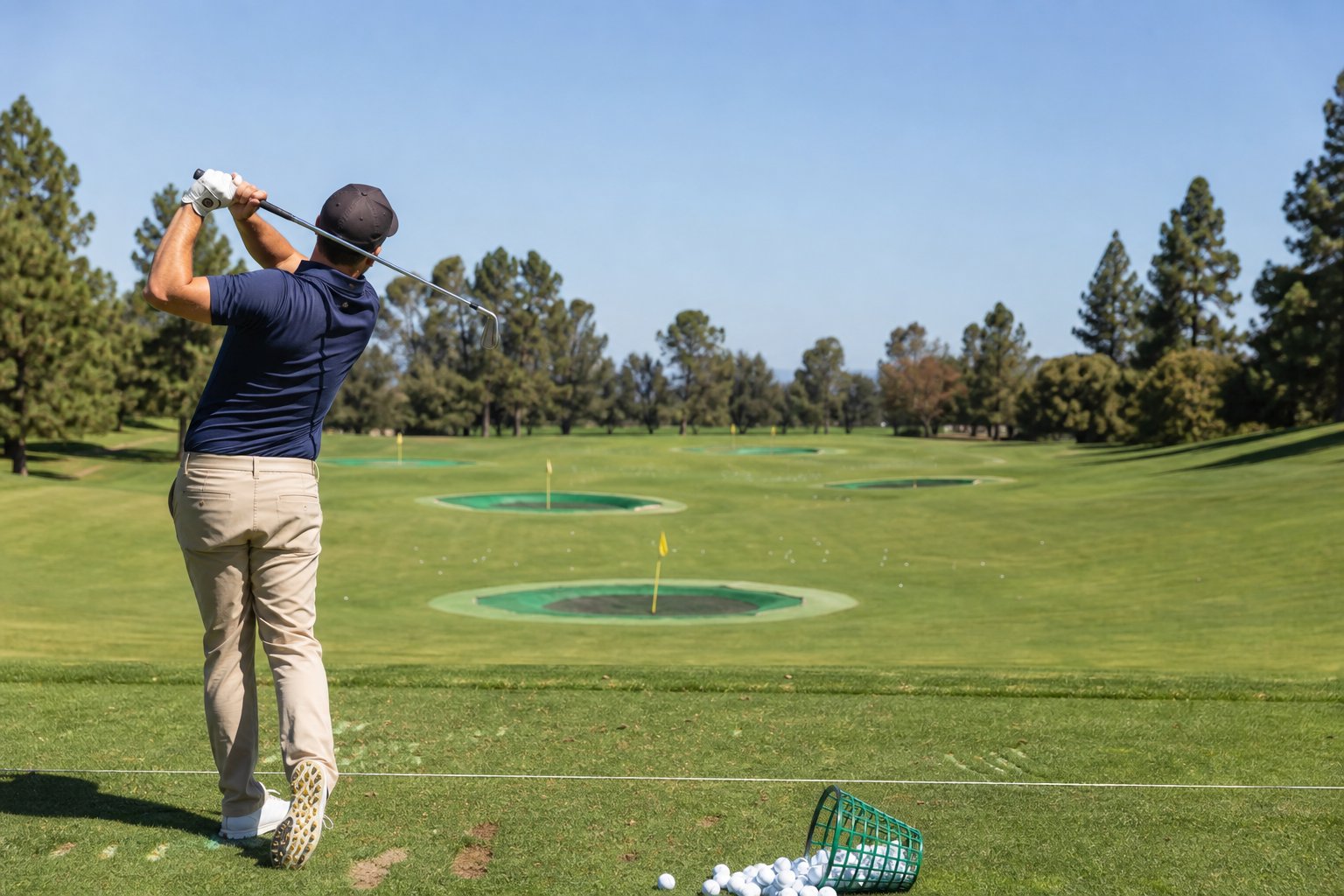
Für Wedge-Schläge (45-90 Meter) wählen Sie Taschen mit einer Breite von etwa 3 Metern. Das ist ein realistisches Ziel für das Treffen des Grüns und hilft Ihnen, die Distanzkontrolle zu verbessern.
Für Annäherungs-Eisen (90-160 Meter) verwenden Sie 4,5-6 Meter breite Taschen. Verfolgen Sie, wie viele von 10 Schlägen innerhalb landen, um Ihre Genauigkeitsgrundlage aufzubauen.
Beim Driver-Training sind größere Taschen erforderlich, etwa 23-27 Meter breit, um Fairway-Breiten darzustellen. Platzieren Sie diese in Ihrer Zielentfernung und zählen Sie erfolgreiche Treffer für Ihren Driving-Genauigkeitsprozentsatz.
Erstellen Sie ein einfaches Tracking-Blatt: Schläger, Zielentfernung, Taschengröße und Erfolgsquote. Nach jeder Einheit haben Sie echte Daten, die zeigen, worauf Sie sich konzentrieren müssen, anstatt nur zu raten.
Fortschritt verfolgen mit wichtigen Golfstatistiken
Zieltaschen-Übungen werden wesentlich nützlicher, wenn Sie die richtigen Statistiken verfolgen. Fairways getroffen und Greens in Regulation zeigen Ihre Richtungsgenauigkeit, während Putting- und Up-and-Down-Statistiken aufzeigen, wie gut Sie Löcher beenden.
Fairways Hit und GIR überwachen
Verfolgen Sie Fairways getroffen und Greens in Regulation als Ihre wichtigsten Ball-Striking-Statistiken. Diese stehen in direktem Zusammenhang mit dem Zieltaschen-Training, da sie messen, ob Sie Ihre beabsichtigten Landezonen auf dem Platz treffen.
Nach jedem Loch notieren Sie einfach ein einfaches Ja oder Nein. Hat Ihr Abschlag das Fairway getroffen? Hat Ihre Annäherung das Grün in Regulation erreicht? GIR bedeutet, das Grün in zwei Schlägen weniger als Par zu erreichen, also müssen Sie bei einem Par 4 in zwei Schlägen auf dem Grün sein.
Verfolgen Sie diese über 5-10 Runden, um Ihre Basislinie zu erhalten. Die meisten Freizeitgolfer treffen 4-7 Fairways und 5-8 Grüns pro Runde. Wenn Ihr GIR unter 30 % liegt, müssen Ihre Annäherungsschläge verbessert werden. Das Zieltaschen-Training wird dabei helfen.
Ihre Tracking-Tabelle könnte so aussehen:
| Statistik | Aktuell | 30-Tage-Ziel |
|---|---|---|
| Fairways getroffen | 5/14 | 7/14 |
| GIR | 6/18 | 8/18 |
| GIR % | 33% | 44% |
Putting und Up-and-Down-Prozentsatz messen
Gesamtzahl der Putts kann irreführend sein, da sie verpasste Grüns nicht zeigen. Konzentrieren Sie sich auf Putts pro GIR und den Up-and-Down-Prozentsatz.
Putts pro GIR zeigt Ihre wahre Putting-Leistung. Wenn Sie acht Grüns treffen und 16 Putts auf diesen Löchern benötigen, sind das 2,0 Putts pro GIR. Alles unter 1,9 ist für die meisten Spieler solide. Dies hilft Ihnen, Drei-Putts und schwierige zweite Putts zu erkennen.
Der Up-and-Down-Prozentsatz misst, wie oft Sie Par retten, nachdem Sie ein Grün verfehlt haben. Die meisten Spieler mit mittlerem Handicap schaffen 25-35 %. Wenn Sie das auf 40 % oder höher steigern können, sparen Sie Schläge.
Beide Statistiken knüpfen direkt an das Zieltaschen-Training an. Bessere Annäherungen bedeuten einfachere Zwei-Putts und weniger Notlagen.
Zielsetzung in das Training integrieren
Die Zielsetzung verwandelt zufällige Range-Sessions in Pläne, die Ihnen tatsächlich helfen, besser zu werden. Das Verfolgen spezifischer Metriken anhand von Zieltaschen hält Sie ehrlich und zeigt genau, wo sich Ihr Training auszahlt.
Wie man realistische Golfziele setzt
Beginnen Sie mit Ihren aktuellen Statistiken, nicht mit den Zahlen, die Sie in den sozialen Medien sehen. Wenn Sie durchschnittlich 95 Schläge haben und nächsten Monat unter 80 bleiben wollen, ist das wahrscheinlich nicht realistisch.
Konzentrieren Sie sich auf Prozessziele, die mit Ihrer Leistung in der Zieltasche verbunden sind. Anstatt „mein Handicap um 5 senken“, versuchen Sie „6 von 10 Annäherungsschlägen innerhalb von 4,5 Metern landen“ oder „Strafschläge von 4 pro Runde auf 2 reduzieren“. Diese Ziele sind direkt mit dem verbunden, was Sie messen können.
Teilen Sie große Ziele in vierteljährliche Meilensteine auf. Wenn Sie nächsten Sommer an der Clubmeisterschaft teilnehmen möchten, setzen Sie sich für jeden Trainingsblock Ziele. Vielleicht dreht sich im Frühling alles um die Annäherungsgenauigkeit und im Sommer um die Konsistenz in der Scoring-Zone.
Versuchen Sie, sich pro Trainingsperiode auf 3-5 Schlüsselbereiche zu konzentrieren. Wenn Sie versuchen, alles auf einmal zu reparieren, werden Sie sich zu sehr verzetteln und es schwierig machen, Fortschritte zu sehen.
Anpassungen basierend auf der Statistikverfolgung vornehmen
Ihre Zieltaschen-Daten zeigen Muster, die Bauchgefühle und Vermutungen einfach nicht erfassen. Wenn Sie Ihre Trainingsprotokolle durchgehen, stellen Sie oft fest, dass Ihre vermeintlichen Schwächen nicht wirklich die Problembereiche sind.
Überprüfen Sie Ihre Statistiken alle paar Wochen und passen Sie Ihre Trainingsverhältnisse bei Bedarf an. Wenn Sie beispielsweise bei 90-110 Metern eine Genauigkeit von 70 % erzielen, aber bei 135-160 Metern nur 35 %, ist es ziemlich offensichtlich, worauf Sie sich als Nächstes konzentrieren müssen. Es macht keinen Sinn, an Entfernungen zu feilen, die Sie bereits beherrschen.
Achten Sie auf Anzeichen, dass Sie feststecken. Wenn Sie drei Einheiten hintereinander keine Fortschritte sehen, ist es möglicherweise an der Zeit, Ihre Ziele zu überdenken oder Ihren Trainingsansatz zu ändern. Vielleicht brauchen Sie neue Übungen, schwierigere Ziele oder einfach mehr Wiederholungen, bevor Sie echte Erfolge sehen.
Verfolgen Sie sowohl Ihre Technik als auch Ihre Ergebnisse. Manchmal haben Sie perfekten Kontakt und richten sich gut aus, verfehlen aber trotzdem aufgrund der Schlägerwahl oder einer falschen Einschätzung des Windes. Herausfinden, warum Sie verfehlt haben, ist genauso wichtig wie das Verfolgen des Fehlschlags selbst.
Tipps für Konsistenz und Denkweise
Konsistenz hängt wirklich von der Struktur und dem mentalen Durchhaltevermögen ab. Eine solide Pre-Shot-Routine gibt jeder Wiederholung einen Sinn, und das Abwechseln des Trainings verhindert, dass Sie in eine Routine verfallen oder in einem Trott stecken bleiben.
Pre-Shot- und Trainingsroutinen nutzen
Ehrlich gesagt, Golfer, die ihre Pre-Shot-Routine im Training weglassen, sehen diese Fortschritte selten auf dem Platz. Ihr Training sollte dem echten Spiel ähneln. Führen Sie die gleichen Vorbereitungsschritte vor jedem Schlag auf eine Zieltasche aus.
Wählen Sie zuerst Ihr Ziel, treten Sie dann hinter den Ball und stellen Sie sich den Flugweg des Schlags vor. Gehen Sie auf den Ball zu, überprüfen Sie Ihre Ausrichtung und machen Sie ein paar Probeschwünge, während Sie sich auf das Ziel konzentrieren. Diese Routine programmiert Ihr Gehirn auf automatische Leistung, wenn es darauf ankommt.
Beim Putten gehen Sie mit der gleichen disziplinierten Herangehensweise vor. Bevor Sie jeden Putt auf einen Zielkreis ausführen, lesen Sie das Break, wählen Sie Ihre Startlinie und führen Sie Ihre übliche Routine aus. Diese Gewohnheit strafft Ihr Putten und hilft, Drei-Putts zu reduzieren, wenn Sie Treffer und Fehlschläge innerhalb Ihrer gewählten Zonen verfolgen.
Behandeln Sie jeden Schlag so, als ob er wichtig wäre. Wenn Sie sich beeilen oder Ihre Routine weglassen, bringen Sie sich nur bei, inkonsistent zu sein, anstatt Gewohnheiten aufzubauen, die unter Druck Bestand haben.
Engagiert bleiben und Plateaus vermeiden
Plateaus schleichen sich ein, wenn das Training zu bequem oder repetitiv wird. Um dem entgegenzuwirken, wechseln Sie Ihre Zieltaschen alle paar Schläge und mischen Sie während jeder Einheit verschiedene Schläger.
Erfinden Sie kleine Spiele mit Ihrem Zielsystem. Versuchen Sie, sieben Schläge hintereinander mit verschiedenen Schlägern in eine bestimmte Entfernungs-Tasche zu schlagen, oder fordern Sie sich selbst heraus, fünf von sechs Wedges in Ihren kleinsten Kreis zu schlagen. Diese kleinen Herausforderungen halten Sie interessiert und geben Ihnen klare Ziele.
Verfolgen Sie Ihre Erfolgsquoten über mehrere Einheiten, um zu sehen, wie Sie sich entwickeln. Wenn Sie mit Ihrem Eisen 8 über mehrere Wochen eine Genauigkeit von 60 % in eine 4,5-Meter-Tasche erzielen, werden Sie merken, wenn diese auf 70 % steigt. Das ist ein echter, sichtbarer Fortschritt.
Ändern Sie auch die Intensität. An manchen Tagen spielen Sie einfach herum und experimentieren mit Schlagformen auf verschiedene Taschen. Zu anderen Zeiten simulieren Sie den Kursdruck. Legen Sie Konsequenzen für Fehlschläge fest oder fordern Sie eine Serie erfolgreicher Schläge, bevor Sie weitermachen.
Häufig gestellte Fragen
Hier sind kurze Antworten auf häufig gestellte Fragen zur Verwendung von Zieltaschen, um das Golftraining messbarer zu machen.
Welche Größe und Form von Zieltaschen eignen sich am besten zur Verbesserung der Genauigkeit bei verschiedenen Distanzen?
Für kurze Schläge unter 45 Meter verwenden Sie 30 bis 45 cm große Taschen. Für 45 bis 90 Meter verwenden Sie 60 bis 75 cm große Taschen. Für längere Schläger verwenden Sie 90 bis 120 cm große Taschen oder rechteckige Zonen, die Fairway-Landezonen nachahmen.
Wie sollte ich Zieltaschen auf einer Übungsmatte oder einem Netz einrichten, damit ich den Fortschritt von Einheit zu Einheit verfolgen kann?
Platzieren Sie jede Tasche in einer festen Position und markieren Sie die Einrichtung mit Klebeband, entfernbaren Streifen oder Messungen. Machen Sie ein Foto des Layouts, damit Sie es beim nächsten Mal wiederholen können.
Welches einfache Punktesystem kann ich mit Zieltaschen verwenden, um die Konsistenz mit jedem Schläger zu messen?
Verwenden Sie drei Punkte für einen Schlag in der Tasche, einen Punkt für einen knappen Fehlschlag und null für einen größeren Fehlschlag. Schlagen Sie 10 Schläge pro Schläger und verfolgen Sie Ihre Punktzahl von 30.
Wie viele Zieltaschen benötige ich tatsächlich für eine kleine Trainingsanlage zu Hause?
Drei Taschen reichen für die meisten kleinen Räume aus. Verwenden Sie ein zentrales Ziel und zwei Seitenziele, um Genauigkeit, Richtungswechsel und Konsistenz zu üben.
Wie kann ich Zieltaschen verwenden, um die Wedgedistanzkontrolle und das Gapping ohne Startmonitor zu üben?
Richten Sie Taschen in verschiedenen Abständen ein und weisen Sie jeder Tasche einen Schläger oder eine Schwunglänge zu. Verfolgen Sie, wie viele Schläge in der richtigen Tasche landen, um ein besseres Distanzgefühl zu entwickeln.
Was sind die häufigsten Einrichtungsfehler, die dazu führen, dass das Zieltaschen-Training eher zufällig als messbar erscheint?
Die größten Fehler sind das zu häufige Bewegen der Ziele, die Verwendung von zu großen Taschen, das Überspringen der Ausrichtung und das Nichtaufzeichnen der Ergebnisse. Halten Sie die Einrichtung konsistent und verfolgen Sie jede Sitzung.
Teilen:
Wie man ein einfaches Golfspiel für den Garten für Familienwochenenden baut
Indoor-Golf-Chipping-Training: Aufbau, Sicherheit und Platzplanung