

Schauen Sie sich unsere neueste Golfkollektion an!
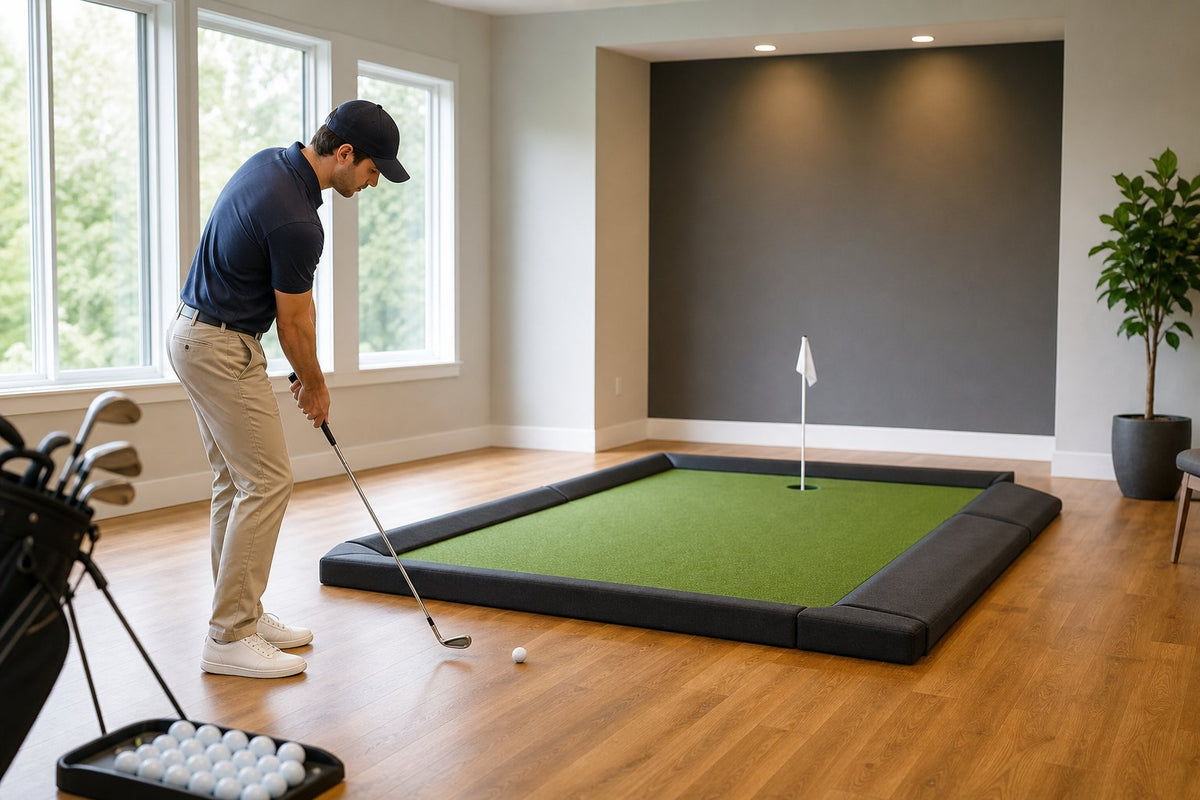
Das Üben von Chip-Schlägen in Innenräumen kann Ihr kurzes Spiel scharf halten, selbst wenn der Golfplatz zu kalt, nass oder zu weit entfernt ist.
Der Schlüssel liegt darin, eine sichere, einfache und realistische Einrichtung für den Ihnen zur Verfügung stehenden Raum zu schaffen. Mit der richtigen Matte, weichen Übungsbällen, einem Netz und einem freien Schlagbereich kann eine Kellerecke, eine Garage, ein Flur oder ein Wohnzimmer zu einer nützlichen Übungszone werden.
Dieser Leitfaden erklärt, wie Sie einen sicheren Ort auswählen, geeignete Ausrüstung für den Innenbereich auswählen, Ihr Zuhause schützen und einfache Übungen aufbauen, die den Kontakt, die Distanzkontrolle und das Selbstvertrauen rund um das Grün verbessern.
Wichtigste Erkenntnisse
- Sie können auch auf kleinem Raum, in Ecken, Fluren oder Garagen effektiv chippen, wenn Sie die richtige Ausrüstung und Einrichtung haben.
- Schaumstoff- oder Plastikübungsbälle, Netze oder Ziele und das Entfernen zerbrechlicher Gegenstände sind ein Muss für die Sicherheit.
- Regelmäßige Indoor-Short-Game-Übungen halten Ihr Gefühl scharf und Ihr Scoring das ganze Jahr über in Form.
Einen Platz zum Chippen zu Hause auswählen
Einen guten Platz zu Hause zu finden, ist der erste Schritt, und ehrlich gesagt, brauchen Sie wahrscheinlich weniger Platz, als Sie denken. Die meisten Golfer können einen soliden Indoor- oder Garten-Chipping-Bereich mit nur wenigen Quadratmetern und einigen grundlegenden Sicherheitsanpassungen einrichten.
Bewertung von Innen- und Außenoptionen
Beim Chippen zu Hause haben Sie zwei Hauptoptionen: draußen oder drinnen. Wenn Sie einen Garten haben, bekommen Sie echtes Gras und wechselnde Bedingungen, das fühlt sich ziemlich nah am Original an. Sie sollten mindestens 4,5 Meter freien Platz haben, damit Sie sich keine Sorgen um Fenster, Zäune oder Nachbarn machen müssen.
Das Üben in Innenräumen, insbesondere in einer Garage oder im Keller, bietet Ihnen das ganze Jahr über die Kontrolle über die Umgebung. Garagen haben in der Regel eine Tiefe von 3 bis 4,5 Metern, was für Chip-Schläge mit Schaumstoff- oder Limited-Flight-Bällen ausreicht. Kellerräume funktionieren auch, wenn Ihre Decke mindestens 2,4 Meter hoch ist, damit Sie Ihren Schläger nicht an die Decke schlagen.
Wohnzimmer und Flure können in kleineren Häusern oder Wohnungen funktionieren. Diese Räume eignen sich am besten für Tempo- und Kontaktübungen, nicht für volle Schwünge. Legen Sie eine Schlagmatte aus, um Ihren Boden zu schützen, und zielen Sie auf ein weiches Ziel wie ein Chipping-Netz.
Minimaler Platz- und Sicherheitsbedarf
Sie benötigen genügend Platz zum Schwingen, ohne Wände, Möbel oder Lampen zu treffen. Eine grundlegende Chipping-Zone sollte mindestens 1,8 Meter breit und 2,4 Meter tief sein, um einfache Chip-Schläge auszuführen.
Schnelle Sicherheitscheckliste:
- Entfernen Sie alles Zerbrechliche aus dem Bereich
- Verwenden Sie Schaumstoff- oder Soft-Flight-Bälle im Innenbereich
- Lassen Sie auf jeder Seite mindestens 30 Zentimeter Platz
- Achten Sie auf Deckenleuchten und Deckenventilatoren
- Bringen Sie Barrieren in der Nähe von Fenstern oder Wertgegenständen an
- Verwenden Sie eine anständige Schlagmatte, um Ihre Schläger und Böden zu schützen
Die Deckenhöhe ist wichtiger, als die meisten Leute denken. Sie benötigen mindestens 2,4 Meter für bequeme Wedgeschwünge. Alles, was niedriger ist, kann Ihren Durchschwung und Ihre Gewohnheiten beeinträchtigen.
Kreative Übungszonen für kleine Bereiche
Selbst winzige Räume können zum Chippen zu Hause genutzt werden. Ecken in Garagen sind großartig, da die Wände wilde Schläge eindämmen. Alles, was Sie wirklich brauchen, ist ein Eimer, eine Matte und etwas Schutzboden, um einen funktionierenden Übungsplatz zu schaffen.
Flure sind überraschend nützlich für Tempo- und Schlagübungen. Legen Sie eine Matte entlang des Flurs und chippen Sie auf ein Netz oder sogar ein Handtuch. Der schmale Raum zwingt Sie, alles unter Kontrolle zu halten, keine wilden Schwünge hier.
Golfer haben Schränke und ungenutzte Ecken in kleine Übungszonen verwandelt. Der Trick besteht darin, Ihre Übungen an den verfügbaren Platz anzupassen. Verwenden Sie kürzere Schläger wie einen Sand-Wedge oder Gap-Wedge an engen Stellen und konzentrieren Sie sich auf Viertelschwünge, die Gefühl und Kontakt aufbauen, nicht auf Weite.
Grundlegende Ausrüstung für sicheres Chipping-Training
Ein guter Indoor-Chipping-Bereich basiert auf vier Haupttypen von Ausrüstung: Chipping-Matten, Netze, Ausrichtungshilfen und die richtigen Übungsbälle. Diese arbeiten zusammen, um Ihren Raum sicher und Ihr Training sinnvoll zu gestalten.
Chipping-Matten und Schlagflächen
Eine ordentliche Chipping-Matte kann das Training von frustrierend zu lohnend machen. Wählen Sie Matten, die Ihnen ein realistisches Rasengefühl vermitteln, so dass Ihr Wedge beim Aufprall durchrutscht und nicht von hartem Plastik abprallt.
Suchen Sie nach Matten mit verschiedenen Oberflächenstrukturen. Die besten haben enge Lagen für Fairway-Schläge und dickere Abschnitte für Rough. Dies ermöglicht es Ihnen, verschiedene Lagen zu üben, genau wie auf dem Platz. Matten mit austauschbaren Schlagstreifen halten viel länger, da Sie die abgenutzten Stellen austauschen können.
Für den Bodenschutz eignen sich Matten mit einer Dicke von 1,5 bis 2 Zoll. Dünnere Matten mögen zum Putten in Ordnung sein, aber sie schützen Ihr Hartholz oder Beton nicht vor wiederholtem Chippen.
Sie möchten, dass Ihre Matte an Ort und Stelle bleibt, daher ist eine Gummiunterlage ein Muss. Manche Leute legen eine Yogamatte darunter für zusätzlichen Halt, aber eine hochwertige Chipping-Matte sollte dies nicht benötigen.
Chipping-Netze und Zielhilfen
Ein solides Chipping-Netz hält Ihre Schläge begrenzt und Ihre Wände sicher. Indoor-Chipping-Netze sind in der Regel 1,2 bis 2,1 Meter breit und in wenigen Minuten aufgebaut.
Netze mit Zielzonen oder Taschen machen das Training interessanter und helfen Ihnen, die Distanzkontrolle zu verbessern. Wir haben festgestellt, dass sichtbare Ziele einen größeren Unterschied machen als leere Netze; das Zielen auf etwas Spezifisches funktioniert einfach besser.
Stellen Sie Ihr Netz mindestens 2,4 Meter von der Schlagposition entfernt auf, um verschiedene Flughöhen zu berücksichtigen. Bei hohen Decken können Sie höhere Chips schlagen, aber bei niedrigeren Decken müssen Sie sich auf Bump-and-Run-Schläge beschränken.
Gute Netze zeichnen sich durch ihre Haltbarkeit aus und verfügen oft über Ballrückführungsfunktionen. Verstärkte Netze halten Tausenden von Schlägen stand, und integrierte Ballrückführungen halten Sie im Fluss.
Ausrichtungshilfen und Trainingszubehör
Ausrichtungshilfen mögen einfach erscheinen, sind aber äußerst nützlich, um eine wiederholbare Chipp-Bewegung aufzubauen. Legen Sie sie parallel zu Ihrer Ziellinie für eine konsistente Einrichtung und Ballposition. Das Erstellen eines Kanals mit zwei Stäben hilft Ihnen, Ihren Schwungpfad zu sehen und die richtige Bewegung zu erlernen.
Weitere praktische Trainingshilfen sind Aufpralltaschen oder Handtücher direkt hinter dem Ball. Zuerst den Ball treffen, dann die Matte streifen und das Handtuch vermeiden. Diese Übung baut einen präzisen Kontakt auf, den Sie auf dem Platz nutzen werden.
Schwungbahn-Trainer und Tempo-Geräte können helfen, aber ehrlich gesagt, beginnen Sie mit den Grundlagen, bevor Sie Gadgets hinzufügen. Sobald Sie Ihre Einrichtung und Ausrichtung beherrschen, können Sie sich verzweigen.
Gewichtete Schläger eignen sich gut zum Aufbau von Kraft und Tempo. Kurze Trainingseinheiten mit einem schwereren Schläger lassen Ihr normales Wedge leichter und kontrollierbarer erscheinen.
Auswahl von Übungsbällen für den Innenbereich
Schaumstoff-Übungsbälle sind unsere erste Wahl für die meisten Indoor-Setups. Sie fliegen etwa 25% eines normalen Schlags und gehen nicht kaputt, wenn Sie sie verfehlen. Moderne Schaumstoffbälle fühlen sich für Chips bis zu 4,5 Metern ziemlich realistisch an.
Plastikübungsbälle mit Löchern sind ein Kompromiss zwischen Schaumstoff- und echten Bällen. Sie fliegen weiter als Schaumstoff, richten aber immer noch nicht viel Schaden an. Diese sind gut, wenn Sie einen speziellen Bereich mit einem Netz haben und etwas mehr Feedback wünschen.
Limited-Flight-Bälle komprimieren sich wie echte Bälle, fliegen aber nur 12 bis 18 Meter weit. Verwenden Sie diese, wenn Sie einen großen Innenbereich und eine vollständige Netzabdeckung haben. Sie fühlen sich authentisch an, aber Sie müssen besonders vorsichtig sein.
Echte Golfbälle sollten wirklich nur in vollständig geschützten Bereichen mit Pro-Grade-Netzen und viel Platz verwendet werden. Die meisten Häuser sind dafür einfach nicht ausgelegt. Schaumstoff- oder Plastikbälle funktionieren gut und beschädigen Ihre Sachen nicht, wenn Sie einen verzogenen Ball schlagen.
Sichere Einrichtung und Tipps zur Heimsicherheit
Wenn Sie drinnen üben, müssen Sie Ihren Raum und alle Bewohner schützen. Gute Sicherheitsgewohnheiten können den Unterschied zwischen angenehmem Training und teuren Reparaturen ausmachen.
Böden, Wände und Möbel schützen
Beginnen Sie mit einer anständigen Chipping-Matte, die eine Gummirückseite hat, damit sie an Ort und Stelle bleibt und Ihre Böden schützt. Hartholz und Fliesen sind besonders gefährdet durch Schlägerstöße, also besorgen Sie sich eine Matte, die mindestens 2,5 cm dick ist.
Versuchen Sie, Ihren Übungsbereich mindestens 2,4 Meter von Wänden entfernt zu halten. Wenn das nicht möglich ist, bringen Sie Schaumstoffpolster oder Gymnastikmatten an der Wand hinter Ihrem Ziel an. Räumen Sie Möbel aus dem Weg, nicht nur um sie zu schützen, sondern auch um nicht um Hindernisse herumarbeiten zu müssen.
Das Auslegen eines großen Teppichs oder ineinandergreifender Schaumstofffliesen markiert Ihren Chipping-Bereich und schützt den Boden vor herunterfallenden Schlägern. Wenn Sie wertvolle Gegenstände wie Fernseher oder Glasschränke in der Nähe haben, stellen Sie diese weg oder decken Sie sie mit Decken oder Umzugspolstern ab.
Wenn Sie Leuchten in Reichweite haben, decken Sie diese ab oder üben Sie einfach dort, wo Ihre Decke hoch genug ist, dass Sie nicht in ihre Nähe kommen.
Bewährte Praktiken für die Sicherheit von Familie und Haustieren
Wir üben immer, wenn Kinder und Haustiere nicht im Raum sind oder anderweitig beschäftigt sind. Eine „Zutritt verboten während des Trainings“-Regel hält alle sicher.
Ein einfaches Schild oder sogar ein Verkehrskegel kann anderen anzeigen, wann Sie trainieren. Manche Familien verwenden Babygitter oder Absperrband, was auch immer funktioniert, um klare Grenzen zu setzen.
Lassen Sie Schläger, Bälle oder Ausrüstung nicht liegen, nachdem Sie fertig sind. Bewahren Sie alles sofort weg. Selbst Schaumstoffbälle können eine Gefahr für Haustiere oder kleine Kinder darstellen.
Stellen Sie sicher, dass Ihr Trainingsbereich gut beleuchtet ist, damit Sie sehen können, was Sie tun, und andere Sie sehen können. Vermeiden Sie Stellen in der Nähe von Treppen, Türen oder belebten Gehwegen, wo jemand hereinwandern könnte.
Verwenden von Schaumstoffbällen und Fangnetzen
Schaumstoffbälle machen das Indoor-Training viel sicherer und geben Ihnen trotzdem nützliches Feedback. Beginnen Sie mit Schaumstoff, selbst wenn Sie viel Platz haben; sie helfen Ihnen, Vertrauen aufzubauen, bevor Sie zu Bällen mit begrenztem Flug wechseln.
Ein guter Rückfänger oder ein Netz ist ein Muss, um verirrte Schläge aufzufangen. Platzieren Sie Ihr Netz 1,8 bis 3 Meter von Ihrer Matte entfernt, je nachdem, wie hoch Sie normalerweise chippen. Das Netz sollte breit genug für Fehlschläge und hoch genug für gelegentliche hohe Schläge sein.
Pop-up-Netze eignen sich hervorragend für kleine Räume und sind einfach zu verstauen. Schwerere Netze mit gewichteten Basen bleiben an Ort und Stelle, aber leichtere müssen möglicherweise festgebunden werden. Wir verwenden Gummiseile oder Gurte, um sie stabil zu halten.
Für zusätzliche Sicherheit stellen Sie den Rückfänger an eine gepolsterte Wand. So wird, falls ein Ball durchschlüpft, kein Schaden angerichtet. Bewahren Sie Ihre Schaumstoffbälle in einem Korb neben Ihrer Matte auf, damit sie leicht zu greifen sind und weniger herumrollen können.
Grundlagen der Chipping-Technik in Innenräumen
Das Indoor-Training stellt Ihre Technik wirklich auf den Prüfstand; weniger Platz bedeutet, dass Ihre Einrichtung und Ihr Schwungpfad noch wichtiger sind. Meistern Sie Ihre Haltung, Ballposition und Schwunggrundlagen für einen soliden Ballkontakt und bessere Kontrolle.
Chipping-Setup und Haltung
Halten Sie Ihren Chipping-Stand kompakt und kontrolliert. Stellen Sie sich mit den Füßen näher zusammen als bei einem vollen Schwung, etwa 15 bis 20 Zentimeter auseinander. Diese schmalere Basis begrenzt die Hüftrotation und hält Ihren Schwung kleiner.
Öffnen Sie Ihren Stand etwas, indem Sie Ihren vorderen Fuß zurückziehen. Dies gibt Ihnen eine klarere Sicht auf Ihr Ziel und fördert einen natürlichen Außen-nach-Innen-Schwung. Stellen Sie Ihre Hände beim Ansprechen vor den Ball, so dass der Schaft zum Ziel geneigt ist.
Bleiben Sie entspannt und athletisch, beugen Sie sich aus den Hüften, nicht aus den Schultern. Lassen Sie Ihre Arme natürlich hängen, ohne zu greifen oder sich anzuspannen.
Beginnen Sie mit etwa 60 bis 70 Prozent Ihres Gewichts auf Ihrem vorderen Fuß und halten Sie es dort während des gesamten Schwungs. Dieses nach vorne verlagerte Gewicht hilft Ihnen, den Ball von oben zu treffen, um einen soliden Kontakt zu erzielen.
Ballposition und Gewichtsverteilung
Die Ballposition prägt wirklich Ihren Kontakt und wie Sie den Ballflug steuern. Für die meisten Indoor-Chips positionieren Sie den Ball leicht hinter der Mitte Ihres Standes, ausgerichtet mit dem Spann Ihres hinteren Fußes oder vielleicht ein Haar weiter vorne. Es ist keine exakte Wissenschaft, aber Sie werden ein Gefühl dafür bekommen.
Wenn Sie sich mit dem Ball hinten aufstellen, treffen Sie den Ball, bevor Ihr Schläger seinen tiefsten Punkt erreicht. Dies erzeugt einen Abwärtsschlag, der Ihnen einen sauberen Kontakt und einen Flug verleiht, auf den Sie sich verlassen können. Wenn Sie den Ball nach vorne bewegen, erhöhen Sie den Loft und die Höhe, aber Sie riskieren auch, die Matte zu verhauen oder den Ball dünn zu treffen – schon erlebt, nicht lustig.
Halten Sie Ihr Gewicht stabil, wobei Sie von Anfang an und während des Schwungs etwa 60 bis 70 Prozent auf Ihre Vorderseite verlagern. Wenn Sie Ihr Gewicht nach hinten verlagern, erhalten Sie diese gefürchteten dünnen oder fetten Schläge.
Das Zurücklegen des Balls und das Vorwärtsverlagern Ihres Gewichts bewirken, dass der Schaft beim Aufprall natürlich nach vorne geneigt ist. Diese Schaftneigung ist es, die für knackige, niedrigere Chip-Schläge in Innenräumen sorgt.
Schwungmechanik und -pfad
Indoor-Chipping sollte sich einfach anfühlen, fast wie ein Pendel. Lassen Sie Ihre Arme und Schultern als Einheit bewegen und halten Sie Ihre Handgelenke ruhig. Stellen Sie sich vor, alles bewegt sich zusammen in einem Stück zurück, es ist keine ausgefallene Handgelenksaktion erforderlich.
Halten Sie Ihren Rückschwung kurz und kontrolliert, vielleicht etwa 20 bis 40 Zentimeter. Es ist kein großer Schwung nötig, besonders wenn Wände oder eine Decke in der Nähe sind. Diese kompakte Bewegung hält Sie unter Kontrolle.
Lassen Sie Ihren Schwung einem sanften Bogen folgen, hauptsächlich dank Ihrer Schulterdrehung. Versuchen Sie, den Schläger nicht mit den Händen zu steuern oder den Ball zu schaufeln. Schwingen Sie den Schläger einfach leicht innerhalb der Ziellinie und bringen Sie ihn auf dieselbe Weise zurück.
Halten Sie das Dreieck zwischen Ihren Armen und Schultern während des Schwungs. Wenn Sie Ihre Handgelenke umklappen oder die Ellbogen beugen, wird Ihr Kontakt unvorhersehbar. Lassen Sie Ihre Brust beim Aufprall etwas rotieren, wodurch Ihre Arme und der Schläger zusammengezogen werden.
Konsistenten Kontakt finden
Konsistenter Kontakt entsteht durch die wiederholte Ausführung derselben Treffposition. Führen Sie den Schlägerkopf mit den Händen, wobei der Schaft deutlich zum Ziel geneigt ist. Diese Vorwärtsneigung sehen Sie beim Aufprall; sie sorgt für diesen präzisen, absteigenden Schlag.
Versuchen Sie, den Kopf ruhig zu halten und die Augen auf den Ball gerichtet, bis Sie ihn getroffen haben. Wenn Sie zu früh wegschauen, werden Sie ihn wahrscheinlich dünn treffen oder ganz verfehlen. Der Ball sollte sich anfühlen, als würde er zwischen der Schlagfläche und der Matte eingeklemmt.
Achten Sie auf das Geräusch beim Aufprall. Ein scharfes Klicken bedeutet einen soliden Kontakt; der Schläger trifft zuerst den Ball, dann streift er die Matte. Wenn Sie ein dumpfes Geräusch hören, haben Sie wahrscheinlich zuerst die Matte getroffen. Ein dünnes, metallisches Geräusch bedeutet, dass Sie den Ball zu hoch getroffen haben.
Üben Sie mit Ausrichtungshilfen oder Klebeband auf Ihrer Matte, um zu markieren, wo Sie schlagen möchten. Versuchen Sie, den Ball zuerst zu treffen und einen Bürstenstrich direkt vor der ursprünglichen Position zu hinterlassen. Diese visuellen Hinweise helfen Ihnen, die richtigen Gewohnheiten für zuverlässiges Indoor-Chipping zu entwickeln.
Kurze Spielübungen und Trainingsroutinen
Wenn Sie ein zuverlässiges kurzes Spiel wünschen, sind gezielte Übungen der richtige Weg. Zufälliges Chippen führt selten zu wirklicher Verbesserung, aber das Üben mit klaren Zielen, wie Distanzkontrolle oder Schlagqualität, macht einen Unterschied.
Ziel- und Leiterübungen zur Distanzkontrolle
Die Leiterübung ist hervorragend geeignet, um das Chippen auf verschiedene Distanzen zu lernen. Beginnen Sie bei 90 cm, dann 180 cm, dann 270 cm und so weiter. Legen Sie Handtücher, Stöcke oder Behälter an jeder Stelle aus. Versuchen Sie, den Ball an jedem Ziel zu landen, bevor Sie weiter hinausgehen.
Diese Übung hilft Ihren Händen und Augen, sich zu synchronisieren, und lehrt Sie, wie die Schwunglänge die Distanz verändert. Schlagen Sie fünf Chips auf das erste Ziel. Wenn Sie drei von fünf richtig treffen, gehen Sie zum nächsten.
Zielübungen funktionieren auf ähnliche Weise, aber Sie konzentrieren sich darauf, verschiedene Distanzen in zufälliger Reihenfolge zu treffen. Stellen Sie drei bis fünf Ziele auf und chippen Sie unvorhersehbar darauf, genau wie Sie es auf dem Platz tun würden.
Beide Übungen helfen Ihnen herauszufinden, wie hart Sie für jede Distanz schwingen müssen, was sich auszahlt, wenn Sie während einer Runde ein Up and Down schaffen müssen.
Münz-, Ausrichtungs- und Torübungen
Die Münzübung schärft Ihren Schlag. Legen Sie eine Münze direkt hinter Ihren Ball und versuchen Sie, den Ball sauber zu treffen, ohne die Münze zu berühren. Es zwingt Sie, einen präzisen, abwärts gerichteten Schlag zu machen, anstatt den Ball zu schaufeln.
Bei Torübungen werden zwei Stöcke oder Schläger parallel aufgestellt, um einen schmalen Weg für Ihren Schlägerkopf zu schaffen. Platzieren Sie das Tor etwa 30 cm vor Ihrem Ball, direkt auf Ihrer Ziellinie. Wenn Sie immer wieder durch dieses Tor schwingen, bauen Sie einen konsistenten Weg auf und halten Ihre Schlagfläche gerade.
Ausrichtungsstäbe sind auch nützlich, um Ihr Setup zu überprüfen. Legen Sie einen entlang Ihrer Zehen und einen anderen entlang Ihrer Ziellinie. Diese Einrichtung gibt Ihnen sofortiges Feedback, ob Ihre Füße, Hüften und Schultern ausgerichtet sind.
Diese Übungen helfen Ihnen, die Grundlagen des Kontakts und der Ausrichtung zu meistern, Dinge, die viele Golfer beim Training zu Hause überspringen.
Üben mit verschiedenen Wedges
Jeder Wedge verhält sich anders. Ihr Pitching-Wedge startet tiefer und rollt mehr aus. Der Gap-Wedge liegt dazwischen. Sand-Wedges fliegen höher mit weniger Roll, und Lob-Wedges gehen am höchsten mit dem geringsten Roll.
Verbringen Sie Zeit mit jedem Schläger während des Trainings. Chippen Sie 10 Bälle mit Ihrem Pitching-Wedge auf dasselbe Ziel, wechseln Sie zu Ihrem Sand-Wedge und tun Sie es erneut. Beachten Sie, wie Sie Ihren Landeplatz ändern müssen, damit der Ball an derselben Stelle landet.
Dieser praktische Vergleich hilft Ihnen, den richtigen Schläger auszuwählen, wenn Sie auf dem Platz mit verschiedenen Situationen konfrontiert sind. Wenn Sie mit all Ihren Wedges geübt haben, wissen Sie, welchen Sie für enge Fahnen oder viel Grün greifen müssen.
Das Abwechseln Ihrer Wedges verhindert auch, dass Sie sich nur auf einen Schläger verlassen, was Sie rund um die Grüns vielseitiger macht.
Effektive Trainingseinheiten strukturieren
Eine gute Routine ist besser, als ziellos Chips zu schlagen. Versuchen Sie, zwei- bis dreimal pro Woche 20 bis 30 Minuten einzuplanen. Das reicht aus, um Fähigkeiten aufzubauen, ohne müde oder schlampig zu werden.
Beginnen Sie mit 5 Minuten Münz-Übung für einen sauberen Kontakt. Gehen Sie dann zu 10 Minuten Leiter- oder Zielübungen zur Distanzkontrolle über. Verbringen Sie weitere 10 Minuten damit, Ihre Wedges abwechselnd zu verwenden. Schließen Sie mit 5 Minuten persönlichen Herausforderungen ab, wie zum Beispiel 7 von 10 Chips in einem 90 cm Kreis zu landen.
Konzentrieren Sie sich pro Sitzung auf eine Hauptschwäche. Wenn die Distanzkontrolle schwierig ist, verbringen Sie mehr Zeit damit. Verfolgen Sie Ihre Ergebnisse, notieren Sie, wie viele erfolgreiche Schläge Sie jedes Mal gemacht haben.
Versuchen Sie nicht, alles auf einmal zu beheben. Qualitätstraining mit einem klaren Ziel gewinnt immer. Heim-Chipping-Übungen funktionieren am besten, wenn Sie sich auf messbare Verbesserungen konzentrieren, anstatt nur Bälle zu schlagen, bis Ihnen langweilig wird.
Fortgeschrittenes Training: Fortschritt verfolgen und Leistung verbessern
Das Verfolgen Ihres Trainings verwandelt zufällige Schwünge in echte Fortschritte. Launch-Monitore und Tracking-Apps können Ihnen genau zeigen, wo Sie sich verbessern oder Schwierigkeiten haben, selbst wenn es während des Trainings nicht offensichtlich ist.
Leistungsverfolgungs-Tools und -Apps
Beginnen Sie einfach. Verwenden Sie ein Notizbuch, um Ihre Fortschritte bei der Distanzkontrolle, den Landepunkten und den Schlägern, die Sie für verschiedene Schläge verwenden, festzuhalten. Muster treten schnell auf; vielleicht stellen Sie fest, dass Sie bei bestimmten Distanzen oder Lagen Schwierigkeiten haben.
Viele kostenlose Golf-Apps ermöglichen es Ihnen, Schläge zu protokollieren, Erfolgsquoten zu verfolgen und Ihre Verbesserung im Laufe der Zeit zu sehen. Einige sind sogar mit Übungen ausgestattet und rechnen Ihnen die Zahlen zusammen.
Was Sie während des Chipping-Trainings verfolgen sollten:
- Wie oft Sie in der Zielzone landen
- Wie nah Sie an Ihre gewünschte Distanz herankommen
- Welche Art von Schlägen Ihnen am besten liegt (flach, hoch usw.)
- Wie lange und wie oft Sie üben
- Von welcher Art von Lagen Sie üben
Der wahre Schlüssel ist Beständigkeit. Schon fünf Minuten Notizen nach jeder Trainingseinheit helfen Ihnen, Trends zu erkennen und Ihren Fokus anzupassen. Nach unserer Erfahrung verbessern sich Golfer, die ihr Chippen verfolgen, schneller, weil sie genau wissen, was verbessert werden muss.
Verwendung von Launch Monitoren und Simulatoren
Launch Monitore geben Ihnen Feedback, das Sie allein durch das Gefühl nicht bekommen können. Selbst Einsteigermodelle zeigen Ballgeschwindigkeit, Carry-Distanz und Flugbahn für ein paar hundert Euro. Sie wissen genau, wie weit jeder Schläger trägt und ob Ihr Kontakt konsistent ist.
Simulatoren gehen noch einen Schritt weiter, indem sie Ihre Schläge auf einem Bildschirm anzeigen und Daten wie Spin-Rate, Abflugwinkel und Roll analysieren. Es ist aufschlussreich zu sehen, wie Schwunggeschwindigkeit und Schlägerwahl Ihre Ergebnisse verändern.
Wichtige Daten für das Chippen:
- Ballgeschwindigkeit gibt Aufschluss über die Qualität Ihres Kontakts
- Spin-Rate zeigt an, ob Sie genügend Rückwärtsdrall erzeugen
- Carry-Distanz überprüft Ihre Distanzkontrolle
- Abflugwinkel verrät, ob Sie Loft hinzufügen oder wegnehmen
Verwenden Sie Launch Monitore für strukturierte Trainingseinheiten anstatt für jedes lockere Training. Richten Sie Distanzkontrolltests ein, versuchen Sie, Chips mit verschiedenen Schlägern auf bestimmte Entfernungen zu landen. Das sofortige Feedback beschleunigt das Lernen erheblich.
Viele Golfer sind anfangs überrascht von ihren Inkonsistenzen. Man könnte meinen, dass alle Chips gleich sind, aber der Monitor zeigt einen Unterschied von 4,5 Metern. Diese Art von Information hilft Ihnen, Ihre Anstrengungen zu fokussieren.
Chippen in die allgemeine Verbesserung des kurzen Spiels integrieren
Chippen funktioniert am besten, wenn Sie es zusammen mit Putten und Annäherungsschlägen üben. Versuchen Sie, Ihre Indoor-Kurzspielzeit aufzuteilen: etwa 40 % Chippen, 40 % Putten und 20 % für Schläge, die beide Fähigkeiten kombinieren.
Richten Sie Routinen ein, die das reale Spiel nachahmen. Chippen Sie auf ein Ziel auf Ihrer Putting-Matte und putten Sie dann ein. Auf diese Weise üben Sie das Up and Down, nicht nur das Chippen im Vakuum.
Verfolgen Sie Ihre „Scrambling-Erfolgsquote“. Richten Sie verschiedene Chip-Schläge ein und sehen Sie, wie oft Sie in zwei Schlägen Up and Down gehen können. Dies steht in direktem Zusammenhang mit Ihrer Punktzahl auf dem Platz.
Verwenden Sie beim Chipptraining einen Putting-Spiegel, um Ihren Stand konsistent zu halten. Die gleichen Ausrichtungstricks, die Ihnen beim Putten helfen, verbessern auch Ihre Chippgenauigkeit. Der Wechsel zwischen Chippen und Putten in einer einzigen Trainingseinheit kann Ihren Fortschritt wirklich beschleunigen.
Probieren Sie monatliche Herausforderungen aus. Chippen Sie zehn Bälle aus 4,5 Metern und zählen Sie, wie viele innerhalb von 90 Zentimetern landen. Überprüfen Sie Ihre Ergebnisse im Laufe der Zeit, Sie werden echte Verbesserungen sehen, und das ist motivierend.
Häufig gestellte Fragen
Hier finden Sie schnelle Antworten auf häufig gestellte Fragen zum Indoor-Golf-Chipping-Training, zur Sicherheit, zum Platzbedarf und zur Ausrüstung.
Wie richte ich am sichersten einen Indoor-Chipping-Bereich ein, damit Golfbälle und Schläger unter Kontrolle bleiben?
Räumen Sie zuerst den Bereich auf, entfernen Sie alles Zerbrechliche und verwenden Sie Übungsbälle aus Schaumstoff oder Plastik. Stellen Sie ein Chipping-Netz vor eine feste Wand, nicht vor Glas, und fügen Sie eine Decke oder Schaumstoffpolsterung dahinter hinzu, um zusätzlichen Schutz zu gewährleisten.
Wie viel Platz brauche ich realistischerweise für das Indoor-Chipping, einschließlich Schwungfreiheit und Ballflug?
Für grundlegendes Indoor-Chipping sollten Sie einen Abstand von etwa 2,4 bis 3 Metern zwischen Ihrer Matte und dem Netz anstreben, mit ausreichend seitlichem Freiraum, um bequem schwingen zu können. In engeren Räumen verwenden Sie kürzere Schwünge und weiche Übungsbälle.
Welche Übungsbälle eignen sich am besten für das Indoor-Chipping, ohne Fenster, Trockenbauwände oder Lampen zu gefährden?
Übungsbälle aus Schaumstoff sind die sicherste Wahl für die meisten Haushalte. Wiffle-Bälle funktionieren auch gut in sehr kleinen Räumen, während Bälle mit begrenztem Flug besser für größere Garagen oder Keller mit einem zuverlässigen Netz geeignet sind.
Welche Art von Schlagmatte eignet sich gut für das Indoor-Chipping und wie verhindere ich, dass sie auf Hartholz oder Teppich verrutscht?
Wählen Sie eine gepolsterte Rasenmatte, die groß genug für Ihren Stand ist und eine rutschfeste Unterseite hat. Auf Hartholz-, Fliesen- oder glatten Böden legen Sie eine Teppichunterlage darunter, um sie stabil zu halten.
Wie wähle ich das richtige Netz oder den richtigen Backstop für kurze Chips und was sollte ich dahinter anbringen, um zusätzlichen Schutz zu erhalten?
Verwenden Sie ein stabiles Pop-up-Chipping-Netz mit engem Netz und einem stabilen Rahmen. Platzieren Sie eine dicke Decke, ein Schaumstoffpolster, eine Leinwand oder eine Kartonrückwand dahinter, um Fehlschläge abzufangen und das Zurückprallen zu reduzieren.
Wie kann ich eine kleine Chipping-Station einrichten, die sich schnell verstauen lässt, ohne das Wohnzimmer in eine Golfhöhle zu verwandeln?
Verwenden Sie ein faltbares Netz, eine aufrollbare Matte, Schaumstoffbälle und eine kleine Aufbewahrungstasche oder einen Korb. Halten Sie alles zusammen, damit der Aufbau schnell geht und nach dem Training leicht wegzuräumen ist.
Teilen:
Wie man Zieltaschen verwendet, um das Golftraining messbarer zu machen
Wie man Geschenke für Golfanfänger auswählt, die zu Hause üben möchten