

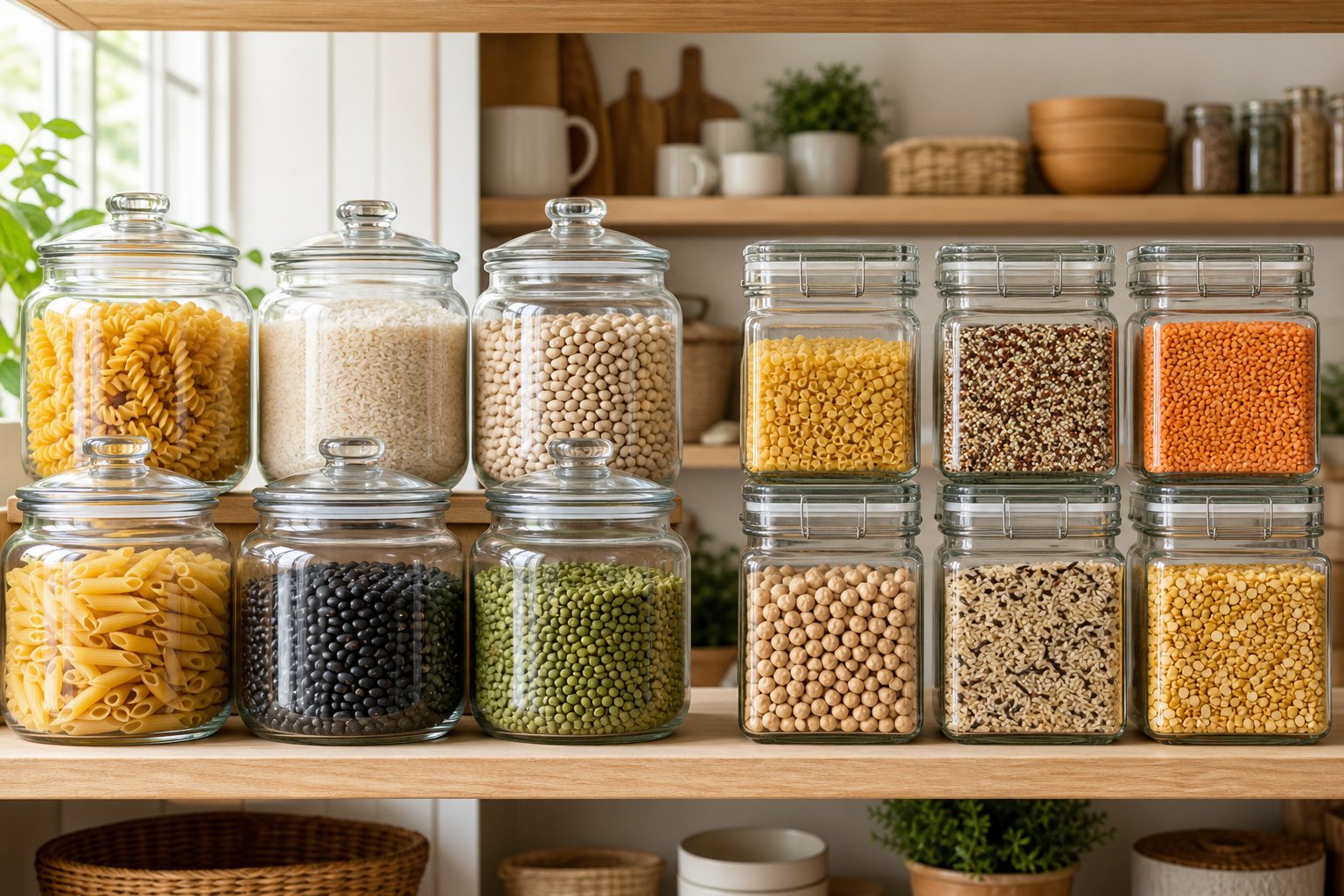
Entdecken Sie unsere neueste Kollektion an Glasbehältern!
Eine aufgeräumte Speisekammer beginnt mit der richtigen Glasform. Große Gläser und quadratische Gläser können beide Trockenwaren schützen, Unordnung reduzieren und die Nutzung der Regale erleichtern, aber sie funktionieren nicht auf die gleiche Weise.
Quadratische Gläser eignen sich am besten, um Platz im Regal zu sparen und saubere Reihen zu bilden, während große runde Gläser leichter zu gießen, zu schöpfen und zu reinigen sind. Die bessere Wahl hängt davon ab, was Sie lagern, wie viel Platz Sie haben und wie oft Sie nach jeder Zutat greifen.
Dieser Leitfaden erläutert die praktischen Unterschiede in Bezug auf Lagerungseffizienz, Frische, Reinigung, Etikettierung und den täglichen Gebrauch in der Speisekammer, damit Sie den Glasstil wählen können, der am besten zu Ihrer Küche passt.
Wichtige Erkenntnisse
- Quadratische Gläser nutzen den Regalplatz optimal aus und lassen sich leicht stapeln; runde Gläser sind einfacher zu gießen und zu reinigen.
- Es kommt darauf an, was Sie lagern: Flüssigkeiten eignen sich normalerweise besser in runden Gläsern, Trockenwaren in quadratischen.
- Beide Formen sind in verschiedenen Größen, Deckeltypen und Öffnungsweiten erhältlich, passend zu Ihrer Speisekammer.
Form zählt: Hauptunterschiede zwischen großen und quadratischen Gläsern
Die Glasform beeinflusst wirklich, wie viel Sie in Ihre Speisekammer bekommen, wie einfach sie zu handhaben sind und ob sie einen Aufenthalt im Gefrierschrank überleben. Große Gläser sieht man normalerweise in runder Form, während quadratische Gläser eine ganz andere Atmosphäre schaffen, Stapeln, Gießen, alles fühlt sich anders an.
Platzeffizienz und Regalorganisation
Quadratische Gläser eliminieren die verschwendeten Lücken, die runde Gläser hinterlassen, wenn man sie aufstellt. Wir haben den Schrankplatz gemessen und festgestellt, dass runde Gläser etwa 20 % der Regalfläche verschwenden, diese Kurven passen einfach nicht zusammen. Quadratische Gläser? Sie passen genau, so dass man mehr Dinge auf dasselbe Regal quetschen kann.
Ein Standardschrank mit 12 Zoll Tiefe fasst zwei saubere Reihen von 4-Zoll-Quadratgläsern. Aber mit großen runden Gläsern, normalerweise 5 bis 6 Zoll breit, bleibt man bei nur einer Reihe hängen. Das ist ein großer Unterschied, wenn der Platz knapp ist.
Stapeln ist mit quadratischen Gläsern auch einfacher. Die flachen Seiten verhindern, dass sie rollen, und ermöglichen es, stabile Türme zu bauen, die den vertikalen Raum nutzen. Wir haben gesehen, dass Menschen bis zu 30 % mehr nutzbaren Stauraum gewinnen, indem sie von runden auf quadratische Gläser umsteigen. Und für unhandliche Ecken oder schmale Regale liegen quadratische Gläser bündig an der Wand an und kippen nicht um.
Handhabung, Gießen und Reinigung in der Praxis
Aus großen runden Gläsern zu gießen, fühlt sich einfach leichter an, besonders bei Flüssigkeiten und Getreide. Der gebogene Rand wirkt wie ein Ausgießer, so dass alles reibungslos herausfließt. Quadratische Gläser erfordern ein vorsichtigeres Kippen, sonst gibt es eine Sauerei.
Was den Griff angeht, können runde Gläser bei nassen Händen rutschen, während quadratische Gläser flache Seiten zum Festhalten bieten. Das ist am wichtigsten, wenn man schwere, volle Gläser herumträgt.
Die Reinigung quadratischer Gläser erfordert etwas mehr Aufwand, da sich Speisereste in den Ecken festsetzen. Eine Flaschenbürste hilft, aber runde Gläser lassen sich mit nur einem Schwamm sauber wischen. Luftdichte Deckel passen auf beide, aber die Gewinde quadratischer Gläser können Schmutz ansammeln, wenn man sie nicht gut abspült.
Haltbarkeit und Gefrierschranktauglichkeit
Sowohl große als auch quadratische Gläser können problemlos eingefroren werden, wenn sie aus Borosilikatglas oder gehärtetem Glas bestehen. Nicht die Form ist entscheidend, sondern wie man sie befüllt. Quadratische Gläser mit geraden Seiten lassen Gefrorenes gleichmäßig ausdehnen, während runde Gläser mit gewölbtem Boden Druckpunkte erzeugen können, wenn man sie überfüllt.
Lassen Sie beim Einfrieren, unabhängig von der Form, mindestens einen Zentimeter Platz oben. Quadratische Gläser haben normalerweise gleichmäßige Wände, sodass sich der Gefrierstress besser verteilt. Runde Gläser können am Boden reißen, wenn man sie zu voll packt.
Die Stoßfestigkeit ist bei guter Glasqualität ungefähr gleich. Wenn ein quadratisches Glas herunterfällt, trifft es wahrscheinlich eine Ecke; fällt ein rundes Glas herunter, verteilt sich der Aufprall. Kalknatronglas zerspringt ziemlich leicht, wenn es herunterfällt oder großen Temperaturschwankungen ausgesetzt wird.
Das richtige Glas für gängige Speisekammerartikel auswählen
Verschiedene Lebensmittel benötigen unterschiedliche Lagerung, und die Glasform kann wirklich beeinflussen, wie frisch die Dinge bleiben und wie einfach sie zugänglich sind. Manchmal funktionieren runde Gläser einfach besser; manchmal ist quadratisch der richtige Weg.
Lagerung von Trockenwaren und Großzutaten
Große quadratische Gläser sind erstaunlich für Großpackungen wie Mehl, Zucker, Reis und Pasta. Sie lassen sich gut stapeln und stehen direkt an der Wand, sodass Sie keinen Regalplatz verschwenden. Für die meisten Backzutaten mag ich quadratische Gläser im Bereich von 1-2 Litern.
Wenn Sie viel schöpfen, wählen Sie eine weite Öffnung. Ein quadratisches Glas mit einer 3-4 Zoll breiten Öffnung ermöglicht es Ihnen, einen Messbecher einzutauchen, ohne ein Chaos zu verursachen. Silikondichtende Deckel halten Zucker trocken und Mehl frisch.
Runde Einmachgläser eignen sich für kleinere Mengen oder ungewöhnlich geformte Dinge wie Cracker oder Kekse. Die Kurven verhindern, dass sich Krümel in Ecken verstecken, sodass die Reinigung schneller geht. Wenn Sie Bohnen oder Getreide in großen Mengen kaufen, fassen große runde Gläser (wie ein halber Gallone) viel, ohne viel Platz auf der Arbeitsplatte zu beanspruchen.
Beste Glasformen für Gewürze, Getreide und Snacks
Gewürze lieben quadratische Gläser, sie reihen sich in Schubladen oder Regalen aneinander, und man kann die Etiketten leicht sehen. Kleine quadratische Gläser (4-8 oz) passen in die meisten Gewürzregale, und die flachen Seiten bieten Platz für Etiketten.
Für Getreide wie Quinoa, Hafer und Linsen bevorzuge ich quadratische Gläser im Bereich von 16-32 oz. Sie passen ineinander, und man kann genau sehen, was noch übrig ist. Runde Gläser funktionieren auch, besonders die sich verjüngenden, die sich gut stapeln lassen.
Die Lagerung von Snacks hängt davon ab, was Sie aufbewahren. Nüsse, Studentenfutter und Müsli lassen sich aus runden Gläsern reibungsloser ausgießen. Cracker und Chips scheinen in quadratischen Gläsern, wo sie flach liegen können, mit weniger Luft um sie herum länger zu halten.
Auswahl von Gläsern für Flüssigkeiten, Saucen und Konserven
Runde Einmachgläser sind immer noch die erste Wahl für das Einmachen von Obst und Gemüse. Die gewölbte Oberfläche verteilt den Druck während der Hitzebehandlung. Wenn Sie Marmelade, eingelegte Gurken oder Tomatensauce herstellen, bleiben Sie bei runden Gläsern, die für sicheres Einmachen getestet wurden.
Gläser mit weitem Mund erleichtern das Befüllen und Entleeren von dicken Saucen oder ganzen Gemüsesorten. Ein rundes Glas mit einer 3-Zoll-Öffnung bietet genügend Platz, um Gurken oder Pfirsichhälften zu verpacken. Quadratische Gläser sind nicht ideal für das Einmachen bei hohen Temperaturen, die Ecken können bei Temperaturschwankungen reißen.
Für Salatdressings, Ahornsirup oder Cold Brew im Kühlschrank funktioniert jede Form. Ich greife normalerweise zu einem runden Glas für Flüssigkeiten, da sie sich besser ausgießen lassen und der gebogene Rand das Tropfen reduziert. Überprüfen Sie einfach, ob Ihre Deckel dicht schließen, damit nichts ausläuft, wenn Sie sie schütteln oder seitlich lagern.
Deckel und Luftdichtheit: Lebensmittel frisch halten
Ihre Wahl des Deckels macht einen riesigen Unterschied, wie lange Ihre Lebensmittel gut bleiben, egal ob Sie große oder quadratische Gläser verwenden. Die Dichtung, das Material und das Design sind alle wichtig, um Luft und Feuchtigkeit fernzuhalten.
Arten von Deckeln und deren Vor- und Nachteile
Wir haben eine Reihe von Deckeltypen ausprobiert, und jeder hat seine Vor- und Nachteile. Metalldeckel mit Gummidichtungen (wie klassische Einmachglasdeckel) bilden eine hervorragende Langzeitdichtung, perfekt für Konserven und Grundnahrungsmittel in der Speisekammer. Sie sind rostbeständig und halten Lebensmittel ewig frisch.
Kunststoffdeckel mit Silikondichtungen und Verschlussclips sind praktisch für den täglichen Gebrauch und die Kühlschranklagerung, obwohl sie mit der Zeit etwas Luft eindringen lassen können. Sie können sich auch verziehen, wenn man sie zu oft in die Spülmaschine gibt oder heiße Sachen einfüllt.
Glasdeckel mit Silikonringen sehen gut aus und halten Hitze gut stand, aber die Klemmteile können sich schließlich lockern. Einfache aufsteckbare Kunststoffdeckel ohne Dichtung schließen nicht gut, überspringen Sie diese, wenn Ihnen die luftdichte Lagerung wichtig ist.
Bedeutung des luftdichten Verschlusses für die Konservierung
Luftdichte Deckel halten Sauerstoff, Feuchtigkeit und Bakterien fern, die drei Hauptursachen, die Lebensmittel verderben. Wenn Ihr Verschluss nicht dicht ist, wird Mehl seltsam, Cracker werden alt und Kaffee verliert schnell seinen Geschmack.
Die Dichtung (Silikon oder Gummi) ist das, was tatsächlich die Luft blockiert. Wenn Sie einen Deckel schließen, drückt er gegen den Glasrand und erzeugt einen vakuumähnlichen Verschluss. Wir testen neue Gläser immer, indem wir sie mit Wasser füllen und umdrehen. Wenn sie auslaufen, erfüllt die Dichtung ihre Aufgabe nicht.
Quadratische Gläser mit Deckeln haben normalerweise einen größeren Bereich, wo die Dichtung auf den Rand trifft, was dazu beitragen kann, dass die Dichtung gleichmäßig bleibt. Achten Sie darauf, die Dichtungen regelmäßig zu reinigen, Öle und Krümel können die Dichtung mit der Zeit beschädigen.
Austausch von Einmachglasdeckeln oder Standarddeckeln
Sie können Einmachglasdeckel austauschen, was bedeutet, dass Ihre Gläser viel länger halten. Wir ersetzen Metalldeckel nach jeder Einkochsession, da der Gummi durch Hitze verschleißt. Für die tägliche Lagerung halten sie jahrelang.
Viele quadratische Gläser haben auch Ersatzdichtungen und Deckel, die Sie separat kaufen können. Prüfen Sie, ob Ihre Marke dies anbietet, bevor Sie kaufen. Wenn eine Dichtung reißt oder steif wird, ersetzen Sie sie sofort.
Kunststoffdeckel müssen normalerweise jedes Jahr oder so ausgetauscht werden, wenn Sie sie viel benutzen. Wir halten zusätzliche luftdichte Deckel bereit, da der Verlust von Lebensmitteln durch eine schlechte Dichtung mehr kostet als ein neuer Deckel.
Stil und Branding: Ästhetische Entscheidungen für Zuhause und Geschäft
Runde Gläser vermitteln ein gemütliches, nostalgisches Gefühl, während quadratische Gläser frisch und modern wirken. Ihre Wahl beeinflusst wirklich, wie Etiketten aussehen, wie Ihre Regale wirken und sogar, wie Menschen Ihre Speisekammer oder Produkte wahrnehmen.
Klassisch Rund vs. Modern Quadratisch für die Optik
Runde Gläser vermitteln eine zeitlose, heimelige Atmosphäre, perfekt für traditionelle Küchen oder rustikale Speisekammern. Einmachgläser und klassische runde Glastypen wirken vertraut und freundlich, was großartig ist, wenn Sie den Bauernhaus- oder hausgemachten Look wünschen. Sie eignen sich hervorragend, um farbenfrohe Pasta, Bohnen oder geschichtete Backmischungen zu präsentieren, die Kurven heben den Inhalt wirklich hervor.
Quadratische Gläser hingegen wirken schlank und bewusst. Sie lassen Regale organisiert und modern aussehen, daher empfehlen wir sie oft für minimalistische Küchen oder wenn Sie ein sauberes, einheitliches Branding wünschen. Die scharfen Linien und flachen Seiten sagen einfach „professionell“.
Wenn Sie Lebensmittel oder hausgemachte Waren verkaufen, können quadratische Gläser den wahrgenommenen Wert steigern. Sie wirken hochwertig und detailorientiert. Aber runde Gläser sind unschlagbar für Nostalgie, denken Sie an Marmeladen, Honig oder Konserven, wo Tradition für Käufer wichtig ist.
Vorteile der Etikettierung je nach Glasform
Quadratische Gläser sind ein Traum für Etiketten. Die flache Vorderseite bietet eine große, glatte Fläche für Informationen, Zutatenlisten oder coole Designs. Das ist enorm wichtig für Unternehmen, die den Kleingedruckten oder das Branding unterbringen müssen.
Runde Gläser benötigen gebogene Etiketten oder kleinere Frontaufkleber, was Ihr Design einschränken und manchmal das Lesen des Textes erschweren kann. Dennoch bieten runde Etiketten einen Umhüllungseffekt, der für kühnes, einfaches Branding funktioniert.
Für die heimische Speisekammer ist es einfach einfacher, ein Etikett auf ein quadratisches Glas zu kleben und es auf einen Blick zu lesen. Bei runden Gläsern können Etiketten nach einer Weile verrutschen oder sich ablösen.
Glasformen für Geschenke und Einzelhandelspräsentation
Runde Gläser wirken persönlicher und eignen sich hervorragend als Geschenke. Wenn Sie Kekse, Badesalze oder Suppenmischungen verpacken, sehen runde Gläser mit einem niedlichen Deckel und Band einfach passend für ein hausgemachtes Geschenk aus.
Quadratische Gläser stechen in Geschäften hervor, sie lassen sich dicht in Regalen packen und lassen Auslagen scharf und organisiert wirken. Wir empfehlen quadratische Gläser für Märkte, Handwerksmessen oder Einzelhandelsflächen, wo Regalplatz wertvoll ist und Sie ein poliertes Aussehen wünschen.
Wenn Sie Geschenkkörbe oder Sets zusammenstellen, kann das Mischen von Formen Spaß machen, aber das Festhalten an einer Form vermittelt ein professionelleres, einheitlicheres Gefühl, als ob Sie es wirklich durchdacht hätten.
Glasgrößen und Mundarten: Die perfekte Passform für Ihre Bedürfnisse finden
Die Glasgrößen reichen von winzigen 4-Unzen-Proben bis zu großen 64-Unzen-Großbehältern. Die Mundart, ob normal oder weit, verändert völlig, wie einfach es ist, jedes Glas im täglichen Gebrauch zu befüllen, zu schöpfen und zu reinigen.
Gängige Glasgrößen und alltägliche Verwendungen
Wir führen Einmachglasgrößen von 8 Unzen (halbe Pints) bis zu 64 Unzen (halbe Gallonen), und ehrlich gesagt passt jede zu einer anderen Aufgabe in der Speisekammer.
Das 16 Unzen (Pint) Glas, das ist aus gutem Grund ein Klassiker. Es fasst genug Mehl oder Zucker für eine Woche Backen, nimmt aber nicht den gesamten Platz auf der Arbeitsplatte ein. Ich nehme diese für getrocknete Pasta, Reis oder so ziemlich jede Zutat, die ich oft benutze.
Das 32 Unzen (Quart) Glas ist für größere Aufgaben gedacht. Ich verwende diese für Haferflocken, Kaffeebohnen oder getrocknete Bohnen. Sie sind gerade hoch genug, um Spaghetti hineinzupassen, wenn man das Glas etwas kippt, was seltsam befriedigend ist.
Das 64 Unzen (halbe Gallone) Glas eignet sich am besten für Großeinkäufe. Man kann eine ganze 5-Pfund-Tüte Mehl oder Zucker auf einmal hineinpassen. Ich verstaue diese normalerweise hinten in der Speisekammer und fülle sie etwa einmal im Monat nach.
Diese kleinen runden 8-Unzen-Gläser? Perfekt für Gewürze, Teemischungen oder kleine Mengen von Zutaten, die in etwas Größerem einfach verschwinden würden.
Weiter Mund vs. Normaler Mund erklärt
Gläser mit weitem Mund haben Öffnungen von 3,37 Zoll, während Gläser mit normalem Mund 2,75 Zoll breit sind.
Dieser Unterschied ist tatsächlich wichtig. Gläser mit weitem Mund ermöglichen es Ihnen, zum Reinigen hineinzugreifen oder Mehl und Zucker mit einem Messbecher herauszuschöpfen. Ich wähle immer einen weiten Mund, wenn ich viel schöpfen werde.
Gläser mit normalem Mund lassen sich sauberer ausgießen. Die kleinere Öffnung gibt Ihnen eine bessere Kontrolle, wenn Sie Flüssigkeiten oder kleine Körner ausgießen. Sie sparen auch etwas Regalplatz, da die Schultern sich verjüngen.
Die meisten quadratischen Gläser sind standardmäßig mit weiten Mundöffnungen ausgestattet, gerade Seiten erleichtern den Zugang. Das ist eine gute Kombination, um die Dinge organisiert zu halten.
Ich bleibe normalerweise bei weitem Mund für trockene Waren oder alles, was klumpig ist, und greife zu normalem Mund, wenn ich gießen möchte, ohne ein Chaos zu verursachen.
Wo und wie kaufen: Großhandel, vertrauenswürdige Quellen und Nachhaltigkeit
Gute Gläser zu einem fairen Preis zu bekommen, beginnt damit, zu wissen, wo man suchen und wem man vertrauen kann. Ob Sie in großen Mengen für ein Geschäft kaufen oder einfach Ihre eigene Speisekammer bestücken, Ihre Entscheidungen wirken sich auf Ihr Portemonnaie und die Umwelt aus.
Vorteile der Beschaffung bei einem vertrauenswürdigen Glashersteller
Ein zuverlässiger Glashersteller macht wirklich einen Unterschied. Unternehmen mit jahrzehntelanger Erfahrung wissen, worauf es ankommt: Glasdicke, solide Dichtungen und maßhaltige Gläser. Das werden Sie bemerken, wenn Sie Gläser mit heißer Suppe füllen, sie hoch stapeln oder Dinge langfristig lagern möchten.
Etablierte Hersteller verfügen in der Regel über eine starke Qualitätskontrolle, so dass Sie weniger wahrscheinlich zerbrechliche Gläser erhalten, die reißen, undicht sind oder mit ungleichmäßigen Deckeln geliefert werden. Diese Art von Ärger ist es nicht wert.
Wenn ich bei etablierten Herstellern kaufe, erhalte ich lebensmittelechtes Glas, das Sicherheitsstandards erfüllt. Das ist riesig, wenn Sie saure Lebensmittel, Öle oder etwas, das monatelang steht, lagern. Billiges Glas kann reißen oder auslaugen, nein danke.
Der direkte Kontakt mit einem Hersteller ermöglicht es Ihnen auch, anzupassen. Wählen Sie Ihren Deckel, wählen Sie Ihre Glasgröße, fügen Sie sogar eine dekorative Note hinzu, wenn Sie Ihre eigenen Produkte verkaufen.
Großhandel mit Gläsern und Tipps für den Großeinkauf
Der Kauf von Gläsern im Großhandel spart viel, wenn Sie mehrere Behälter benötigen. Der Preis pro Glas sinkt, wenn Sie in großen Mengen bestellen, was großartig für Essenszubereiter oder kleine Unternehmen ist.
Die meisten Großhändler legen eine Mindestbestellmenge fest und führen oft Gläser von kleinen Probengrößen bis zu großen Großbehältern. Bevor Sie kaufen, messen Sie Ihre Regale aus und ermitteln Sie, wie viele Gläser Sie tatsächlich verwenden werden.
Einige Tipps, die ich für den Großeinkauf gesammelt habe:
- Bestellen Sie zuerst Muster, damit Sie die Dichtung testen und die Größe überprüfen können
- Klopfen Sie auf das Glas, dickeres Glas klingt tiefer und fühlt sich stabiler an
- Überprüfen Sie die Deckelkompatibilität, nicht jeder Deckel passt auf jedes Glas
- Achten Sie auf die Versandkosten, Glas ist schwer und der Versand summiert sich schnell
- Fragen Sie nach B-Ware oder Überbeständen, manchmal können Sie Rabatte für kleinere Mängel erzielen
Suchen Sie nach Lieferanten, die offen über Maße, Deckelkompatibilität und Preise informieren. Klare Produktdetails ersparen viel Rätselraten, bevor Sie eine größere Bestellung aufgeben.
Gläser vs. Plastikgläser für umweltbewusste Küchen
Der Umstieg von Plastik- auf Gläser ist eine der einfachsten umweltfreundlichen Änderungen, die Sie in der Küche vornehmen können. Glas kann endlos recycelt werden, ohne an Qualität zu verlieren, während Plastik einfach zu Mikroplastik zerfällt, das überall landet.
Plastikgläser mögen billiger erscheinen, aber sie verfärben sich, nehmen Gerüche auf und halten nicht lange. Ich habe gesehen, wie Plastikbehälter im Gefrierschrank rissen, sich in der Spülmaschine verzogen und ewig nach Knoblauch rochen. Glas vermeidet all das und hält Lebensmittel frischer.
Gläser schließen dichter als Plastik. Das ist wichtig für Trockenwaren wie Mehl, Reis oder Kaffeebohnen, sie bleiben frischer, wenn keine Luft eindringen kann. Ein dichter Verschluss hält auch Vorratsschädlinge fern, was eine große Erleichterung ist.
Gesundheitlich gesehen ist es eine Selbstverständlichkeit. Glas birgt keine Bedenken hinsichtlich BPA, Phthalaten oder anderen Chemikalien, die man bei Plastik hat. Besonders heiße Flüssigkeiten lassen Plastik Stoffe auslaugen, die man einfach nicht in seinen Lebensmitteln haben möchte.
Umweltfreundlich ist es ein Kinderspiel. Ein gutes Glas kann im Laufe seines Lebens Dutzende von Plastikbehältern ersetzen. Und wenn es zerbricht, wird es zu neuem Glas recycelt, immer und immer wieder.
Häufig gestellte Fragen
Diese kurzen Antworten decken die größten praktischen Unterschiede zwischen quadratischen und runden Gläsern für die Speisekammer ab.
Welche Glasform lässt sich auf einem Standardregal in der Speisekammer platzsparender verstauen?
Quadratische Gläser lassen sich platzsparender verstauen, da ihre flachen Seiten dicht beieinander und an der Wand anliegen. Runde Gläser lassen kleine Lücken zwischen den Behältern, was Regalplatz verschwenden kann.
Lassen sich quadratische Gläser leichter stapeln und bleiben stabiler, wenn das Regal angestoßen oder überfüllt wird?
Ja. Quadratische Gläser lassen sich in der Regel sicherer stapeln, da ihre flachen Ober-, Unter- und Seitenflächen einen besseren Kontakt herstellen. Runde Gläser können funktionieren, aber sie verschieben sich eher, wenn die Regale überfüllt sind.
Halten runde Gläser Trockenwaren frischer, oder ist die Verschlussqualität der eigentliche Unterschied?
Die Verschlussqualität ist der eigentliche Unterschied. Sowohl runde als auch quadratische Gläser können Trockenwaren frisch halten, wenn der Deckel luftdicht ist und die Dichtung sauber, fest und vollständig geschlossen ist.
Welche Glasform ist einfacher zu schöpfen, wenn man Mehl, Haferflocken, Reis oder Snacks entnimmt?
Runde Gläser sind in der Regel einfacher zu schöpfen, da sie glatte Seiten und keine engen Ecken haben. Quadratische Gläser sind immer noch praktisch, aber Zutaten können sich an den unteren Rändern ansammeln.
Wie schneiden quadratische und runde Gläser in Bezug auf Beschriftung, schnelle Identifizierung und ein ordentliches Aussehen der Speisekammer ab?
Quadratische Gläser sind leichter zu beschriften, da ihre flachen Flächen Text klar und sichtbar halten. Sie lassen sich auch ordentlich anordnen, was für ein organisierteres Aussehen der Speisekammer sorgt. Runde Gläser wirken weicher, müssen aber möglicherweise nach vorne ausgerichtet werden.
Welche Form lässt sich leichter spülen und vollständig trocknen, besonders an Ecken und am Boden?
Runde Gläser sind leichter zu spülen und zu trocknen, da sich in den Ecken keine Krümel oder Feuchtigkeit sammeln können. Bei eckigen Gläsern kann an den unteren Kanten ein zusätzliches Bürsten erforderlich sein.
Teilen:
Was macht eine modulare Abtropfmatte aus Stein nützlich für Tassen, Teller und den täglichen Abwasch?
Welche Vorräte passen besser in große Gläser als in kleine Behälter?