

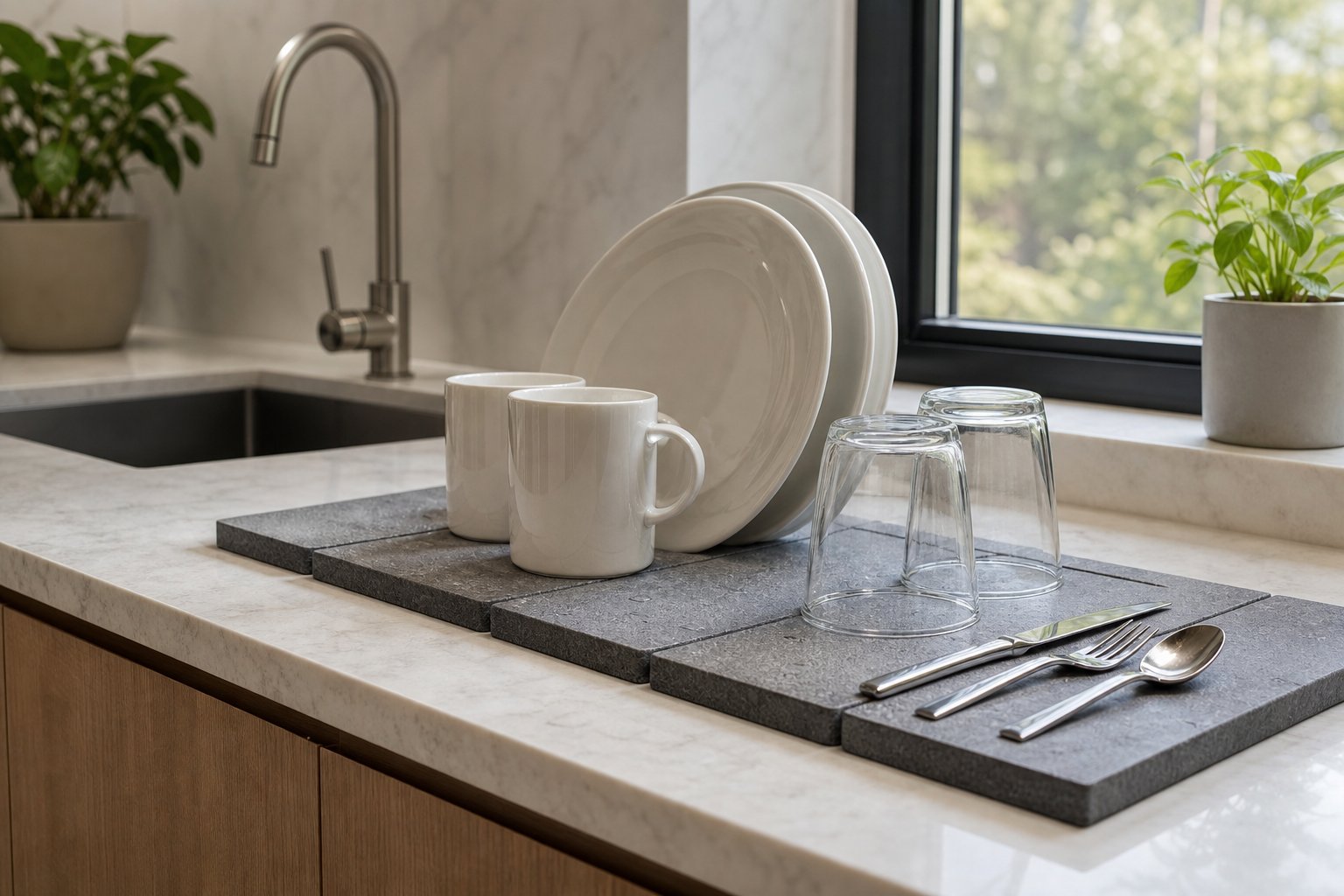
Schauen Sie sich unsere neueste Kollektion an Abtropfmatten an!
Arbeitsflächen verschwinden schnell, wenn sauberes Geschirr, Tassen und Besteck Platz zum Trocknen benötigen. Eine modulare Abtropfmatte aus Stein hilft, dieses tägliche Küchenproblem zu lösen, indem sie Ihnen eine sauberere, flexiblere Abtropflösung bietet, ohne unhandlichen Kram neben dem Spülbecken hinzuzufügen.
Im Gegensatz zu einem normalen Handtuch oder einem starren Abtropfgestell verwendet diese Art von Matte saugfähiges Steinmaterial, um Feuchtigkeit vom Geschirr abzuziehen und gleichzeitig Ihre Arbeitsplatte ordentlich aussehen zu lassen. Ihr modulares Design ermöglicht es Ihnen auch, die Trocknungsbereiche zu stapeln, zu trennen oder neu anzuordnen, je nachdem, was Sie abwaschen.
In diesem Leitfaden erfahren Sie, wie modulare Abtropfmatten aus Stein funktionieren, warum sie für Tassen, Teller und den täglichen Abwasch nützlich sind, wie sie sich von herkömmlichen Optionen unterscheiden und worauf Sie achten sollten, bevor Sie eine für Ihre Küche auswählen.
Das Beste an einer modularen Abtropfmatte aus Stein? Sie verdoppelt Ihre Trocknungskapazität, ohne mehr Arbeitsfläche zu beanspruchen, und die schnell trocknende Steinoberfläche saugt Feuchtigkeit viel schneller auf als Stoff oder Plastik. Das zweistufige Design verwendet Stützstangen, um alles stabil zu halten, und Sie können die Matten auseinanderziehen, wenn Sie sie an verschiedenen Stellen verwenden möchten.
Die meisten Geschirrabtropfmatten aus Stein verwenden saugfähige Materialien wie Kieselgur, die Wasser von Ihrem Geschirr wegzieht und es schnell verdunsten lässt.
Der Wechsel von einem Geschirrständer oder Handtuch zu einer Steinmatte mag wie ein kleines Upgrade klingen, aber er lässt den täglichen Abwasch tatsächlich weniger chaotisch erscheinen. Die modulare Anordnung passt direkt neben das Spülbecken und nimmt Ihr übliches Glasgeschirr, Teller und Besteck auf. Keine wackeligen Stapel oder durchnässten Arbeitsplatten mehr.
Wichtigste Erkenntnisse
- Modulare Steinmatten verwenden ein zweistufiges System, um den Trocknungsplatz zu verdoppeln, ohne zusätzlichen Platz auf der Arbeitsplatte zu beanspruchen.
- Stein-Abtropfmatten saugen Feuchtigkeit schneller auf als Stoff und helfen, Bakterien in Schach zu halten.
- Sie können sie für eine kompakte Nutzung stapeln oder in separate Trocknungsbereiche aufteilen.
Wie modulare Abtropfmatten aus Stein funktionieren
Modulare Abtropfmatten aus Stein nutzen die natürliche Saugfähigkeit von Kieselgur, um Feuchtigkeit vom Geschirr abzuziehen, und ihr stapelbares Design holt mehr Trocknungsfläche aus Ihrer Arbeitsplatte heraus.
Saugfähigkeit und schnelles Trocknen erklärt
Die meisten Stein-Abtropfmatten basieren auf Kieselgur, was im Grunde fossile Algen sind. Sie hat mikroskopisch kleine Poren, die wie ein Schwamm wirken. Wenn Sie ein nasses Gericht oder Glas auf die Matte stellen, ziehen diese winzigen Öffnungen das Wasser durch Kapillarwirkung an.
Die Matte verteilt die Feuchtigkeit über ihr poröses Netzwerk, sodass das Wasser nicht einfach oben liegen bleibt. Tassen und Schüsseln trocknen schneller, als sie es auf einem normalen Handtuch oder einem Plastikgestell tun würden.
Aus Erfahrung kann Kieselgur tägliche Tropfen und leichte Feuchtigkeit sehr gut bewältigen. Stark durchnässte Gegenstände benötigen möglicherweise etwas mehr Zeit, aber der Stein fühlt sich nie nass an wie Stoff. Das macht ihn praktisch für den Abwasch direkt hintereinander während geschäftiger Morgenstunden oder beim Abendessen.
Vorteile der Kieselgur-Steinoberfläche
Neben der Trocknungsgeschwindigkeit haben Geschirrabtropfmatten aus Stein dank des Materials einige Vorteile. Kieselgur ist von Natur aus bakterienresistent, sodass Sie nicht den muffigen Geruch bekommen, der mit feuchten Handtüchern oder Gummimatten einhergeht.
Die Oberfläche bleibt zwischen den Anwendungen sauberer, da sie keine Feuchtigkeit wie gewebte Fasern einschließt. Wischen Sie sie einfach mit einem feuchten Tuch ab, und wenn sie an Saugfähigkeit verliert, bringt ein kurzes Schleifen sie wieder zum Leben.
Steinmatten nehmen keine Gerüche an und müssen nicht ständig gewaschen werden. Sie bleiben flach und stabil unter schwerem Geschirr, im Gegensatz zu weichen Matten, die sich zusammenziehen oder verrutschen.
Platzsparende zweistufige Designs
Modulare Abtropfmatten aus Stein glänzen wirklich, wenn Sie wenig Arbeitsfläche haben. Die zweistufige Anordnung ermöglicht es Ihnen, Tassen und Gläser oben, Teller und Schüsseln darunter zu stapeln.
Dies hält alles organisiert und lässt die Luft um jedes Stück zirkulieren. Sie können die Matten als kompakte Trocknungsstation gestapelt lassen oder sie für verschiedene Zonen aufteilen. Eine kann neben dem Spülbecken stehen, während eine andere neben der Kaffeemaschine platziert werden kann.
In kleineren Küchen nimmt ein vollständiges Geschirregal einfach zu viel Platz ein. Die langen Stangen, die die Ebenen verbinden, halten die Dinge stabil, ohne aufzutragen, und selbst voll beladen bleibt der Platzbedarf minimal.
Hauptvorteile für Tassen, Teller und den täglichen Abwasch
Eine Abtropfmatte aus Stein bewältigt den täglichen Abwasch, indem sie Feuchtigkeit schneller aufsaugt als Handtücher und die Ansammlung verhindert, die zu üblen Gerüchen oder Bakterien führt.
Effiziente Wasserverdunstung
Kieselgur nimmt Wasser bei Kontakt auf und lässt es fast sofort in die Luft verdunsten. Stellen Sie eine frisch gespülte Tasse oder einen Teller auf die Steinmatte, und das angesammelte Wasser verschwindet in Minuten, nicht Stunden.
Dies geschieht, weil die poröse Struktur des Steins die Feuchtigkeit sofort vom Geschirr wegzieht. Glaswaren und Keramikplatten trocknen spürbar schneller als auf einem Stoffhandtuch, das einfach durchnässt wird.
Die Verdunstung setzt sich auch fort, nachdem Sie sich entfernt haben. Steinmatten müssen nicht ausgewrungen oder an der Luft getrocknet werden wie Stoff. Stellen Sie sie ab und zu aufrecht, um ihre gute Funktion zu erhalten, und sie ist bereit für die nächste Runde handgespülten Geschirrs.
Arbeitsplatten sauber halten
Stein-Abtropfmatten schaffen eine definierte Trockenzone, sodass Wasser nicht über Ihre gesamte Arbeitsplatte läuft. Die Matte fängt Tropfen von Tassen, Schüsseln und Besteck auf und verhindert, dass Feuchtigkeit darunter sickert.
Silikonmatten können Wasser darunter einschließen, was zu klebrigen Rückständen oder Wasserflecken führt. Eine Steinmatte liegt flach auf und absorbiert abwärts gerichtete Feuchtigkeit, bevor sie an den Seiten austritt.
Dies ist besonders wichtig in geschäftigen Küchenzeiten, wie dem morgendlichen Kaffeerausch oder nach dem Abendessen, wenn alle Geschirr spülen. Die Steinoberfläche lässt sich leicht abwischen, wenn Lebensmittel darauf landen, und ein wenig Schleifen beseitigt hartnäckige Flecken.
Reduzierung von Schimmel- und Geruchsrisiken
Geschirrtücher werden muffig, wenn sie feucht bleiben. Abtropfmatten aus Stein widerstehen Schimmel, weil sie keine Feuchtigkeit wie Stoff speichern.
Die Mineralien in diesen Matten hemmen Bakterien, sodass Sie den sauren Geruch vermeiden, den Küchen manchmal bekommen. Steinmatten halten ständigem Wasserkontakt stand, ohne schleimig zu werden oder häufigen Austausch zu erfordern.
Sie müssen Steinmatten nicht alle paar Tage in die Wäsche werfen. Sie bleiben dank ihrer natürlichen Eigenschaften frisch, sodass keine Heißwasserzyklen oder Bleichmittel erforderlich sind.
Innovative Merkmale, die modulare Steinmatten auszeichnen
Modulare Abtropfmatten aus Stein heben sich mit ihrem anpassungsfähigen Aufbau und den integrierten Extras von den üblichen einteiligen Designs ab. Der abnehmbare Bambusrahmen bietet Halt und erleichtert das Bewegen der Matte, und der integrierte Besteckhalter verwandelt sie in eine vollständige Abtropfstation.
Vorteil des abnehmbaren Bambusrahmens
Der Bambusrahmen verleiht modularen Steinmatten einen Vorteil gegenüber einfachen Steinplatten. Er schützt die Steinkanten vor Absplitterungen, wenn Sie schwere Teller abstellen, und erleichtert das Bewegen der Matte erheblich.
Wir haben festgestellt, dass der Bambusrahmen einen leichten Rand um die Matte bildet. Das hilft, das Wasser auf dem Stein zu halten, anstatt es auf Ihre Arbeitsplatte laufen zu lassen. Wenn es Zeit ist, die Matte zu reinigen oder zu verstauen, bietet der Rahmen etwas Festes zum Greifen.
Sie können den Bambusrahmen zur Reinigung abnehmen, was praktisch ist, da Bambus eine andere Pflege als Stein benötigt. Wischen Sie den Rahmen ab, während die Steinmatte aufrecht an der Luft trocknet.
Integration des Bambus-Besteckhalters
Viele modulare Steinmatten werden mit einem Bambus-Besteckhalter geliefert, der direkt in den Rahmen einrastet. Er hält Gabeln, Löffel und Messer aufrecht und organisiert, anstatt über die Matte zu rutschen.
Der Halter hat normalerweise Drainagelöcher, sodass Wasser auf den Stein darunter tropft. Sie benötigen keine separate Ablage, die Ihre Arbeitsplatte überfüllt. Der Halter passt bündig zum Bambusrahmen, sodass er ordentlich und durchdacht aussieht.
Für kleine Küchen bewältigt dieses Setup Teller, Tassen und Besteck an einem einzigen, ordentlichen Ort.
Alltagskomfort und Wartungstipps
Modulare Abtropfmatten aus Stein sind pflegeleicht und bleiben bei etwas regelmäßiger Pflege in gutem Zustand. Ihre Haltbarkeit hängt wirklich davon ab, wie Sie das Kieselgur-Material im Alltag behandeln.
Einfache Reinigung und Oberflächenpflege
Wischen Sie Ihre Steinmatte nach jedem Gebrauch mit einem feuchten Tuch ab, um die Ansammlung von Seifenresten zu verhindern. Das dauert vielleicht 10 Sekunden und hält die Oberfläche bereit für weiteres Geschirr.
Für eine tiefere Reinigung spülen Sie die Matte unter warmem Wasser ab und verwenden Sie eine weiche Bürste oder einen Schwamm mit milder Spülmittel. Vermeiden Sie scharfe Scheuermittel, da sie den Stein abnutzen und die Absorption beeinträchtigen können.
Wöchentliche Routine:
- Unter fließendem Wasser abspülen
- Sanft mit einem weichen Schwamm schrubben
- Vor dem nächsten Gebrauch vollständig an der Luft trocknen lassen
Wenn Sie bemerken, dass die Matte nicht mehr so viel Wasser aufsaugt wie früher, ist sie wahrscheinlich mit Ölen oder Rückständen verstopft. Ein monatliches Schrubben mit einer Backpulverpaste bringt sie normalerweise wieder in Schwung. Einfach die Paste auftragen, 10 Minuten einwirken lassen und dann abspülen.
Steinmatten trocknen nach dem Waschen in 30 bis 60 Minuten auf natürliche Weise aus, was viel besser ist als Stoffmatten, die stundenlang feucht bleiben.
Langlebigkeit und Haltbarkeit
Eine gute Kieselgur-Abtropfmatte kann bei regelmäßigem Gebrauch 1 bis 3 Jahre halten. Das Material wehrt auf natürliche Weise Bakterien und Schimmel ab, sodass es die meisten Stoffoptionen überdauert.
Die richtige Lagerung ist wichtiger, als Sie vielleicht denken. Stellen Sie Ihre Steinmatte aufrecht oder legen Sie sie flach an einen trockenen Ort. Lassen Sie sie nicht den ganzen Tag unter nassem Geschirr liegen.
Zeit, Ihre Matte zu ersetzen, wenn Sie Folgendes sehen:
- Risse oder Absplitterungen
- Flecken, die nicht entfernt werden können
- Langsamere Absorption, auch nach der Reinigung
- Eine raue oder ungleichmäßige Oberfläche
Versuchen Sie, die Matte nicht fallen zu lassen oder sehr heiße Töpfe direkt darauf zu stellen. Kieselgur ist robust, kann aber durch starke Stöße oder plötzliche Hitze reißen. Das modulare Design hilft hier, denn wenn ein Stück bricht, können Sie einfach diesen Abschnitt ersetzen.
Vergleich von Stein-Abtropfmatten mit traditionellen Küchenlösungen
Stein-Abtropfmatten saugen Wasser in Sekunden auf und bieten Bakterien keinen Platz zum Verstecken, während altmodische Geschirrständer Arbeitsfläche beanspruchen und Stoffmatten ewig feucht bleiben. Ehrlich gesagt, es hängt davon ab, wie schnell die Dinge trocknen, wie sauber sich Ihre Küche anfühlt und wie viel Platz Sie bereit sind aufzugeben.
Geschirrständer vs. Stein-Abtropfflächen
Geschirrständer aus Metall oder Kunststoff nehmen einen Teil Ihrer Arbeitsplatte ein, egal ob Sie sie benutzen oder nicht. Sie werden oft zu einer dauerhaften Einrichtung, die Wasserflecken und mineralischen Schmutz sammelt.
Eine Stein-Abtropfmatte erledigt die gleiche Aufgabe, aber ohne die Masse. Wenn Sie fertig sind, lässt sie sich zusammenklappen oder in einem Schrank aufstellen, sodass Sie Ihre Arbeitsplatte zurückgewinnen.
Geschirrständer müssen auch regelmäßig geschrubbt werden, um Schimmel aus den Besteckhaltern und Wasserbehältern fernzuhalten. Steinmatten trocknen sich selbst in etwa zwei Stunden, ohne stehendes Wasser für Bakterien zu hinterlassen. Der poröse Stein leitet Feuchtigkeit ab und lässt sie verdunsten.
Wenn Sie täglich nur ein paar Tassen und Teller spülen, erscheint ein Geschirrständer in voller Größe übertrieben. Eine Stein-Geschirrabtropfmatte nimmt problemlos Kaffeetassen, Schüsseln und Glaswaren auf, ohne Ihre Küche zu dominieren.
Stoff- und Silikonmatten vs. Stein
Stoffmatten, Baumwolle oder Mikrofaser, absorbieren Wasser, brauchen aber ewig, um vollständig zu trocknen. Diese Feuchtigkeit führt zu Geruch und erfordert, sie alle paar Tage in die Wäsche zu werfen. Die meisten Stoffmatten verlieren nach einer Weile ihre Saugfähigkeit.
Silikonmatten absorbieren überhaupt nicht. Sie fangen nur Tropfen auf und lassen das Geschirr in Pfützen liegen. Am Ende wischen Sie sowohl die Matte als auch Ihr Geschirr ab.
Stein-Abtropfmatten saugen Feuchtigkeit in weniger als 5 Sekunden auf, dank ihrer winzigen Poren. Die Oberfläche bleibt trocken, und die Matte ist in ein paar Stunden wieder einsatzbereit. Kein Stoff zum Waschen, kein Silikon zum Schrubben.
| Merkmal | Steinmatte | Stoffmatte | Silikonmatte |
|---|---|---|---|
| Trocknungsgeschwindigkeit | 5 Sekunden | 6-8 Stunden | Saugt nicht auf |
| Pflege | Abwischen oder schleifen | Maschinenwäsche | Regelmäßig schrubben |
| Geruchsresistenz | Antimikrobiell | Entwickelt Geruch | Fleckenanfällig |
| Lagerung | Faltbar | Sperrig | Starr |
Stil und umweltfreundliche Wirkung in modernen Küchen
Stein-Abtropfmatten kombinieren ein klares Aussehen und nachhaltige Materialien und sind somit ein smartes Upgrade für alle, denen sowohl Funktion als auch Umwelt wichtig sind. Sie passen gut in moderne Küchen und reduzieren den Plastikverbrauch.
Minimalistisches Design und ansprechende Arbeitsfläche
Abtropfmatten aus Stein glänzen besonders in Küchen, in denen die Arbeitsfläche gleichzeitig als Ausstellungsfläche dient. Die natürlichen Oberflächen, wie Marmor, massives Grau und mattes Schwarz, harmonieren mit modernen Arbeitsplatten und wirken nicht überladen. Im Gegensatz zu Abtropfgittern aus Metall, die Ihren Arbeitsbereich optisch unterbrechen, liegen diese Matten flach auf und halten die Dinge ordentlich.
Der Bambusrahmen sorgt für etwas Wärme und schützt die Arbeitsplatte vor den Kanten des Steins. Manche Leute kombinieren ihre Steinmatte mit einem Bambus-Besteckhalter für eine einheitliche Trocknungszone, die das Ambiente der Küche nicht stört.
Diese Matten bleiben während des Gebrauchs an Ort und Stelle. Sie verrutschen nicht, wenn Sie nasse Teller oder Tassen abstellen, so bleibt Ihre Arbeitsplatte auch in hektischen Zeiten organisiert.
Nachhaltigkeitsmerkmale
Stein-Abtropfmatten verwenden Kieselgur, die aus fossilen Algen stammt. Da dieses Material natürlich und biologisch abbaubar ist, landet kein zusätzlicher Plastikmüll auf der Deponie, wie es bei den altmodischen Abtropfgestellen der Fall wäre. Es erfordert kaum Verarbeitung und zerfällt einfach von selbst, wenn Sie es nicht mehr benötigen.
Da diese Matten Wasser so gut aufsaugen, können Sie auf die Stoff-Abtropfmatten verzichten, die ständig gewaschen werden müssen. Ehrlich gesagt, ist es schön zu wissen, dass dies auf lange Sicht Wasser und Energie spart. Kieselgur bekämpft Bakterien auf natürliche Weise, sodass Sie es nicht so oft mit starken Chemikalien schrubben müssen.
Gut gemachte modulare Steinmatten können eine umweltbewusstere Kücheneinrichtung unterstützen, indem sie langlebige Materialien, weniger häufiges Waschen und eine sauberere Alternative zu plastiklastigen Trocknungswerkzeugen kombinieren.
Einkaufstipps und wichtige Benutzerinformationen
Die Wahl der richtigen modularen Abtropfmatte aus Stein bedeutet, herauszufinden, was tatsächlich in Ihre Küche passt, und ehrlich gesagt, zu wissen, wie man sein Konto verwaltet, macht das Einkaufen und Nachbestellen viel einfacher.
Worauf Sie beim Kauf achten sollten
Beginnen Sie mit Größe und Layout. Messen Sie Ihre Arbeitsplatte am Spülbecken. Möchten Sie eine große Matte, oder würden ein paar kleinere Matten besser in die ungewöhnlichen Ecken passen? Die meisten guten Matten aus Kieselgur sind zwischen 12 und 18 Zoll lang.
Prüfen Sie, wie dick die Matte ist. Sie werden normalerweise zwischen 0,3 und 0,5 Zoll sehen. Dickere Matten saugen mehr Wasser auf, aber ja, sie nehmen etwas mehr Platz ein. Achten Sie auf eine rutschfeste Unterseite oder einen Korkboden, damit Ihr nasses Geschirr nicht über die Arbeitsplatte rutscht.
Auch die Oberflächenstruktur spielt eine Rolle. Glatte Matten sind ideal für Glaswaren, aber eine leichte Struktur hilft, dass schwerere Teller und Schüsseln an Ort und Stelle bleiben. Es gibt normalerweise Farbauswahlen wie Marmor, Grau oder Schwarz, so dass Sie Ihre Küche farblich abstimmen können, ohne auf Funktion zu verzichten.
So melden Sie sich an, zeigen das Profil an und melden sich ab
Die Kontoverwaltung sollte beim Einkauf von Küchenaufbewahrung und Trockenzubehör einfach sein. Nach dem Einrichten Ihres Kontos melden Sie sich über den Link oben rechts auf der Startseite an. Geben Sie Ihre E-Mail-Adresse und Ihr Passwort ein, um auf Ihre Details zuzugreifen.
Sobald Sie angemeldet sind, klicken Sie auf „Profil anzeigen“, um Ihre Lieferadresse, Zahlungsmethoden zu aktualisieren oder Ihre Bestellhistorie zu überprüfen. Dies ist hilfreich, wenn Sie Matten nachbestellen oder weitere modulare Teile hinzufügen müssen. Sie sehen, was Sie wann gekauft haben, sodass Sie Ihre vergangenen Einkäufe nicht erraten müssen.
Um sich abzumelden, klicken Sie auf Ihren Kontonamen in der Kopfzeile und wählen Sie „Abmelden“ aus dem Dropdown-Menü. Melden Sie sich unbedingt ab, wenn Sie an einem gemeinsam genutzten Computer arbeiten, damit Ihre Zahlungs- und Versandinformationen sicher bleiben.
Häufig gestellte Fragen
Stein-Abtropfmatten sind einfach zu bedienen, aber ein paar Details können Ihnen helfen, eine bessere Trocknungsleistung und eine längere Nutzung zu erzielen.
Trocknen Abtropfmatten aus Stein Geschirr tatsächlich schneller als ein normales Handtuch oder eine Silikonmatte?
Ja. Matten aus Kieselgur absorbieren Wasser schnell durch winzige Poren, während Handtücher feucht bleiben und Silikonmatten nur Tropfen auffangen. Dies hilft Tassen, Tellern und Schüsseln schneller und mit weniger Unordnung zu trocknen.
Worauf sollte ich bei einer Kieselgur-Abtropfmatte für eine viel frequentierte Küchenarbeitsplatte achten?
Achten Sie auf die richtige Größe, eine solide Dicke, einen stabilen Stand und ausreichend Oberfläche für Ihr tägliches Geschirraufkommen. Eine rutschfeste Unterseite ist auch bei nassen Arbeitsplatten hilfreich.
Wie passen modulare Abtropfmatten aus Stein zu verschiedenen Aufbauten für Tassen, Teller und übergroßes Kochgeschirr?
Modulare Matten können gestapelt, getrennt oder nebeneinander platziert werden. Das macht sie nützlich für kleine Tassensets, vollständige Essgeschirre oder größeres Kochgeschirr, das zusätzlichen Trocknungsplatz benötigt.
Sind Geschirrabtropfmatten aus Stein sicher für empfindliches Glasgeschirr, Tassen und Keramikteller?
Ja, sie sind bei vorsichtiger Verwendung für die meisten Glaswaren, Tassen und Keramikteller sicher. Da die Oberfläche fest ist, stellen Sie empfindliche Gegenstände vorsichtig ab und vermeiden Sie, dass Teile aneinanderstoßen.
Wie reinigt und pflegt man eine Stein-Abtropfmatte, damit sie keine Flecken bekommt oder anfängt zu riechen?
Wischen Sie sie nach Gebrauch ab, spülen Sie sie bei Bedarf und lassen Sie sie zwischen den Anwendungen vollständig trocknen. Wenn die Absorption nachlässt, schleifen Sie die Oberfläche leicht ab und wischen Sie den Staub weg.
Was sind die wirklichen Vor- und Nachteile von Stein-Abtropfmatten für den täglichen Abwasch?
Die Hauptvorteile sind schnelle Absorption, sauberere Arbeitsplatten, kompakte Lagerung und weniger Geruch als Stoffmatten. Die Hauptnachteile sind, dass Steinmatten beim Herunterfallen splittern können und im Laufe der Zeit leicht geschliffen werden müssen.
Teilen:
Stein-Trockenmatte vs. Geschirrabtropfgestell: Was ist besser für eine kleine Küchenarbeitsplatte?
Große Glasgefäße vs. quadratische Glasgefäße: Welche Form passt besser in Ihre Speisekammer?