

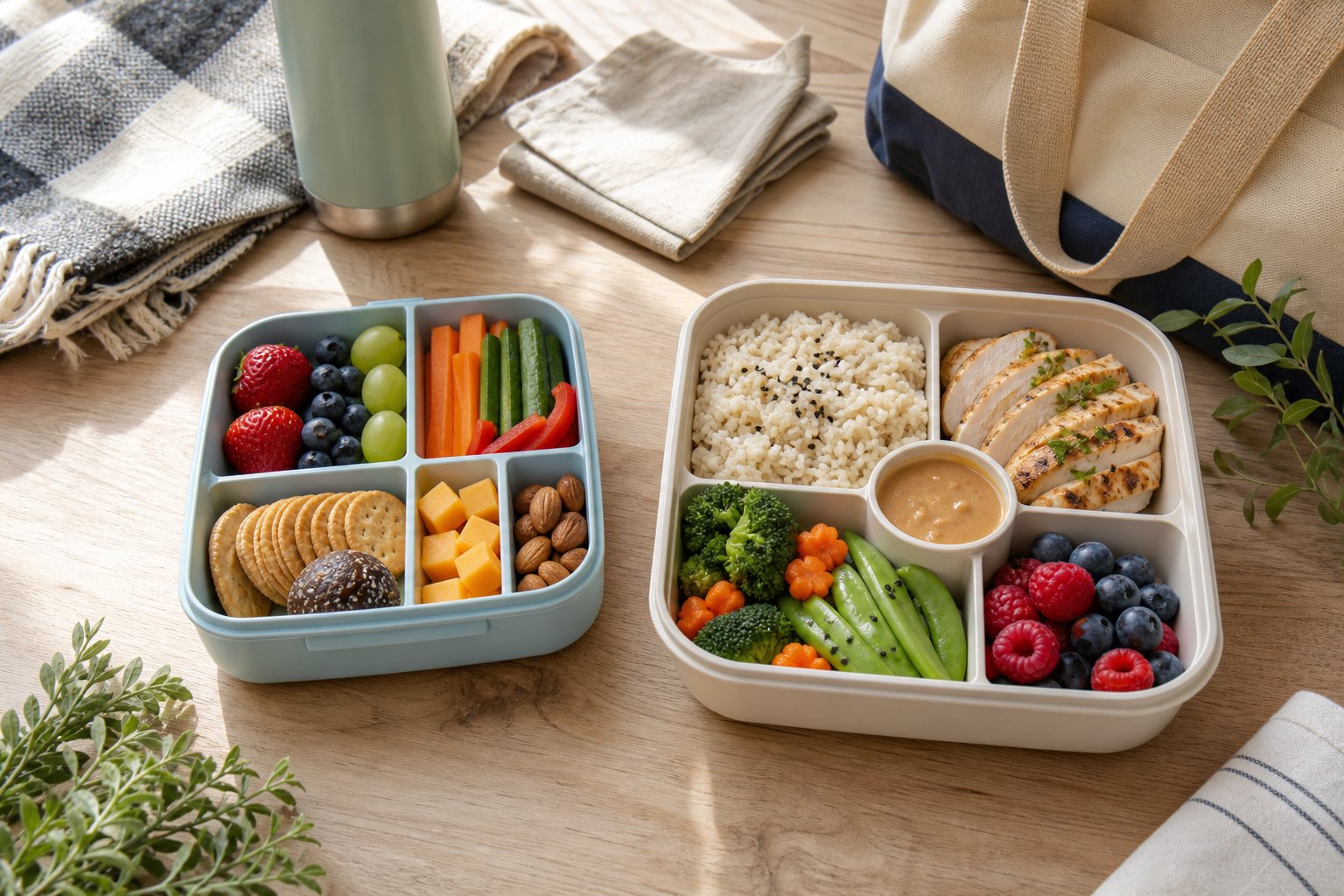
Schauen Sie sich unsere neuesten Snackbox-Kollektionen an!
Snackboxen und Bento-Boxen helfen beide, Lebensmittel organisiert zu halten, aber jedes Format hat seine eigenen Stärken. Snackboxen eignen sich gut für kleine Häppchen und zum Naschen, während Bento-Boxen für strukturiertere Mahlzeiten mit getrennten Komponenten konzipiert sind. Wenn Sie sich zwischen den beiden entscheiden müssen, bevor Sie sich auf den Weg machen, kann die Menge und Art der Lebensmittel, die Sie einpacken möchten, die Entscheidung wesentlich erleichtern.
Snackbehälter verwenden typischerweise kleinere, flachere Fächer für Lebensmittel wie Cracker, Nüsse, Käse oder geschnittenes Obst. Bento-Boxen bieten im Allgemeinen mehr Platz für eine Hauptspeise und mehrere Beilagen. Keines der Formate ist die beste Wahl für jede Situation. Die richtige Option hängt davon ab, was Sie einpacken und wie Sie es essen möchten.
Diese Unterscheidung wird besonders nützlich, wenn Sie Lebensmittel für Schule, Arbeit, Besorgungen, Roadtrips oder Tagesausflüge vorbereiten. Im Folgenden vergleichen wir, wie Snackboxen und Bento-Boxen mit Portionen, Dichtungen, Lagerung und Verpackung umgehen, damit Sie das Format wählen können, das am besten zu Ihrer Routine passt.
Wichtige Erkenntnisse
- Snackboxen eignen sich gut für kleine Portionen und häufiges Naschen, während Bento-Boxen besser für strukturierte Mahlzeiten geeignet sind.
- Fachgröße, Deckeldesign und Auslaufsicherheit können die Reisefähigkeit von Lebensmitteln beeinflussen.
- Die beste Wahl hängt davon ab, ob Sie ein paar Snacks oder eine komplette tragbare Mahlzeit einpacken.
Der praktische Unterschied zwischen jedem Format
Snackboxen und Bento-Boxen werden manchmal synonym verwendet, aber ihre Anordnungen und typischen Verwendungszwecke sind unterschiedlich. Die Hauptunterschiede betreffen die Fachgröße, die Gesamtkapazität und die Art der Lebensmittel, die sie aufnehmen sollen.
Was eine Snackbox auszeichnet
Eine Snackbox ist ein kompakter Behälter zum Mitnehmen, der hauptsächlich für kleine Portionen konzipiert ist. Sie enthält oft mehrere kleinere Fächer, die Lebensmittel wie Cracker, Obst, Käse, Gemüse oder Nüsse aufnehmen können.
Im Gegensatz zu vielen Lunchboxen sind Snackboxen nicht unbedingt auf eine große Hauptmahlzeit ausgelegt. Ihre kleineren Abteilungen machen sie praktisch für Lebensmittel, die Sie zwischen den Mahlzeiten oder bei kürzeren Ausflügen essen möchten.
Eine Snackbox kann nützlich sein für:
- Autofahrten und schnelle Besorgungen
- Snacks im Büro oder in der Schule
- Nachmittagssnacks
- Kaffee- oder Teepausen
Die größte Einschränkung ist die Kapazität. Wenn Sie eine komplette Mahlzeit einpacken müssen, ist eine größere Bento-Box möglicherweise praktischer.
Was eine Bento-Box anders macht
Bento-Boxen sind im Allgemeinen für komplette Mahlzeiten und nicht für einzelne Snacks konzipiert. Sie enthalten typischerweise mehrere Fächer, die es Ihnen ermöglichen, eine Hauptspeise zusammen mit Beilagen zu verpacken, während die Lebensmittel getrennt bleiben.
Das Fachlayout kann es erleichtern, Lebensmittel wie Proteine, Getreide, Gemüse und Obst in einem einzigen Behälter zu organisieren. Einige Modelle enthalten auch herausnehmbare oder verstellbare Trennwände für zusätzliche Flexibilität.
Je nach Produkt können Lunchboxen im Bento-Stil Merkmale wie:
- Dichtungen oder auslaufsichere Deckel
- Mikrowellengeeignete Komponenten
- Isolierte Abschnitte oder Einsätze
- Integrierte oder mitgelieferte Utensilien
Überprüfen Sie immer die Anweisungen des Herstellers, da Hitzebeständigkeit, Auslaufsicherheit und Pflegeanforderungen je nach Produkt variieren.
Wann eine kleine Bento-Snackbox besser passt
Eine kleine Bento-Snackbox bietet einen Mittelweg zwischen einem kompakten Snackbehälter und einer großen Lunchbox. Sie kann nützlich sein, wenn Sie mehrere Arten von Lebensmitteln möchten, ohne einen größeren Essensbehälter mitzunehmen.
Dieses Format eignet sich gut für eine Kombination aus trockenen Snacks, Obst, Gemüse und einem sicher verschlossenen Dip oder einer kleinen Beilage.
Ziehen Sie eine kleine Bento-Snackbox in Betracht, wenn Sie:
- Essen für einen Tagesausflug zubereiten
- Eine kleine Mahlzeit für ein kleines Kind einpacken
- Snacks mit einer Thermoskanne oder einem anderen Essensbehälter kombinieren
- Mehrere separate Portionen in einer kompakten Box suchen
Es ist eine praktische Option für jeden, der eine traditionelle Snackbox zu klein findet, aber nicht die Kapazität einer größeren Bento-Box benötigt.
Passen Sie den Behälter an Ihre Pläne an
Der beste Behälter hängt von Ihrem Zeitplan, der benötigten Essensmenge und dem Ort ab, an dem Sie essen werden. Eine kurze Pause erfordert eine andere Ausstattung als ein ganzer Arbeitstag oder ein Tagesausflug.
Kurze Pausen und Schul-Snackzeit
Für kurze Pausen und die Schul-Snackzeit können Snackboxen mit kleineren Fächern besonders praktisch sein. Cracker, Käse, Obst und Gemüse können jeweils ihr eigenes Fach haben, was die Lebensmittel leicht sichtbar und zugänglich macht.
Separate Fächer können auch dazu beitragen, trockene Lebensmittel von feuchten Zutaten fernzuhalten. Dies ist nützlich, wenn man Lebensmittel wie Cracker neben geschnittenem Obst oder Gemüse einpackt.
Für vorbereitete Snacks können die Fächer die Portionierung und Organisation vereinfachen, ohne mehrere separate Behälter zu benötigen.
Kleine Mahlzeiten für Arbeit und Besorgungen
Mittagsessen und längere Ausflüge erfordern in der Regel mehr Platz. Eine Bento-Box kann eine kleine Mahlzeit, wie Reis oder ein anderes Getreide, ein Protein, Gemüse und Obst aufnehmen, während die Komponenten getrennt bleiben.
Bento-artige Behälter können auch gut für die Essenszubereitung funktionieren, wenn ihre Größe, Materialien und Pflegehinweise zu Ihrer Routine passen. Wenn Sie Lebensmittel aufwärmen möchten, stellen Sie sicher, dass die entsprechenden Teile vor der Verwendung mikrowellengeeignet sind.
Wenn Sie den Behälter in einer Arbeitstasche oder einem Rucksack tragen, suchen Sie nach einem sicheren Deckel mit zuverlässigen Verschlüssen. Bei Lebensmitteln, die Flüssigkeiten oder Saucen enthalten, stellen Sie sicher, dass der Behälter speziell für Auslaufsicherheit konzipiert ist.
Roadtrips, Picknicks und Tagesausflüge
Roadtrips, Picknicks und Tagesausflüge erfordern oft mehr Essen und flexible Aufbewahrung. Eine größere Bento-Box, ein stapelbares Set oder eine Kombination aus Essens- und Snackbehältern kann helfen, alles organisiert zu halten.
Verderbliche Lebensmittel sollten ordnungsgemäß gekühlt werden, bis Sie bereit sind, sie zu essen. Verwenden Sie eine isolierte Lunchtasche oder Kühlbox mit geeigneten Kühlakkus und befolgen Sie die geltenden Lebensmittelrichtlinien für die Lagerung verderblicher Lebensmittel.
Für längere Ausflüge kann die Kombination eines größeren Behälters für die Hauptmahlzeit mit einer kleineren Snackbox für Speisen zwischen den Stopps eine praktische Lösung sein.
Fächer, Kapazität und Portionsplanung
Die Anzahl und Form der Fächer kann beeinflussen, wie Sie Lebensmittel verpacken, wie viel hineinpasst und wie leicht verschiedene Artikel getrennt bleiben. Das richtige Layout hängt davon ab, ob Sie einen schnellen Snack oder eine vollständigere Mahlzeit zubereiten.
Zwei Fächer für einfache Kombinationen
Zwei-Fächer-Boxen eignen sich gut für einfache Kombinationen wie Cracker und Käse oder Gemüse und Dip. Das Getrennhalten von feuchten und trockenen Lebensmitteln kann dazu beitragen, deren Textur während des Transports zu erhalten.
Dieses unkomplizierte Layout ist nützlich für kurze Ausflüge und schnelle Pausen, da es eine grundlegende Trennung bietet, ohne unnötige Komplexität hinzuzufügen.
Es kann auch die Portionsplanung erleichtern, indem jedem Lebensmittel ein definierter Platz im Behälter zugewiesen wird.
Vier Fächer für Vielfalt und Essenszubereitung
Vier Fächer bieten mehr Flexibilität beim Packen einer vollständigen Mahlzeit. Sie könnten je nach Ihren Vorlieben separate Abschnitte für ein Protein, Getreide, Obst und Gemüse verwenden.
Einige Mehrfachbehälter sind mit Dichtungen ausgestattet, die die Bewegung zwischen den Abschnitten einschränken, während andere dies nicht sind. Überprüfen Sie die Produktspezifikationen, bevor Sie Dressings, Saucen, Joghurt oder saftige Lebensmittel einpacken.
Dieses Format kann auch für die Essenszubereitung nützlich sein, da das gleiche Fachlayout die ganze Woche über konsistent verwendet werden kann.
Verwendung von Trennwänden für flexible Portionen
Herausnehmbare Trennwände machen einen Behälter anpassungsfähiger. Sie können eine Trennwand entfernen, um Platz für einen größeren Gegenstand zu schaffen, oder sie beibehalten, wenn Sie mehrere kleinere Portionen wünschen.
Diese Flexibilität ist besonders nützlich für Bento-Snackboxen, da die Menge und Art der Lebensmittel, die Sie einpacken, von Tag zu Tag variieren kann.
Trennwände können auch die Portionsplanung intuitiver gestalten, indem sie klar definierte Bereiche für verschiedene Lebensmittel bereitstellen.
Dichtungen, Materialien und wesentliche Hinweise zur Lebensmittelsicherheit
Ein guter Lebensmittelbehälter sollte aus geeigneten lebensmittelechten Materialien bestehen und einen Deckel haben, der zu den Lebensmitteln passt, die Sie verpacken möchten. Überprüfen Sie immer die Spezifikationen des Herstellers, bevor Sie einen Behälter für Flüssigkeiten, zum Aufwärmen, Einfrieren oder zum Reinigen in der Spülmaschine verwenden.
Auslaufsicherheit für Dips und saftige Speisen
Wenn Sie Dips, Dressings, Joghurt oder andere feuchte Lebensmittel einpacken möchten, suchen Sie nach einem Behälter, der vom Hersteller ausdrücklich als auslaufsicher oder dicht beschrieben wird.
Designmerkmale, die die Auslaufsicherheit verbessern können, sind eine Dichtung um den Deckel und sichere Verriegelungsklammern. Diese Merkmale können besonders nützlich sein für:
- Salatdressings und Dips
- Speisen mit Marinaden oder Saucen
- Geschnittenes Obst, das Saft abgeben kann
- Joghurt oder Overnight Oats
Für sehr flüssige Lebensmittel kann ein separater Behälter mit eigenem sicherem Deckel zusätzlichen Schutz vor Verschütten bieten.
Wahl von BPA-freien und lebensmittelechten Materialien
Wählen Sie Behälter, die vom Hersteller eindeutig als für den Lebensmittelkontakt geeignet gekennzeichnet sind. Gängige Optionen sind bestimmte lebensmittelechte Kunststoffe, Edelstahl, Glas und andere Materialien, die speziell für die Lebensmittelaufbewahrung entwickelt wurden.
Bevor Sie einen Behälter kaufen oder verwenden, überprüfen Sie:
- Materialinformationen: Bestätigen Sie, woraus der Behälter und der Deckel bestehen.
- BPA-freie Kennzeichnung: Achten Sie beim Kauf von Kunststoffbehältern auf klare Herstellerangaben.
- Mikrowelleneignung: Gehen Sie nicht davon aus, dass ein Kunststoffbehälter mikrowellengeeignet ist, es sei denn, er ist ausdrücklich dafür gekennzeichnet.
- Spülmaschineneignung: Befolgen Sie die Pflegehinweise des Herstellers für Boden, Deckel, Dichtungen und Verschlüsse.
Wenn wichtige Material- oder Pflegehinweise fehlen, sollten Sie ein Produkt mit klareren Spezifikationen wählen.
Frische kühler Snacks bis zum Essen bewahren
Verderbliche Lebensmittel wie Milchprodukte, Fleisch, Eier und bestimmte zubereitete Speisen sollten bis zum Verzehr ordnungsgemäß gekühlt werden.
Eine isolierte Lunchtasche oder Kühlbox mit geeigneten Kühlakkus kann dazu beitragen, eine sicherere Temperatur während des Transports aufrechtzuerhalten. Halten Sie die Tasche von direktem Sonnenlicht fern und vermeiden Sie es, verderbliche Lebensmittel in einem heißen Fahrzeug zu lassen.
Bei längeren Ausflügen befolgen Sie die aktuellen Empfehlungen zur Lebensmittelsicherheit für den Transport und die Lagerung gekühlter Lebensmittel.
Snack-Ideen, die gut ohne Unordnung verpackt werden können
Lebensmittel mit fester Textur und minimaler Flüssigkeit lassen sich oft leichter in Snackboxen transportieren. Trockene Snacks, Obst, Gemüse, Proteine und sicher verpackte Dips können viel Abwechslung bieten, ohne unnötige Unordnung zu verursachen.
Knusprige und trockene Snack-Kombinationen
Trockene Lebensmittel lassen sich leicht portionieren und reisen im Allgemeinen gut, wenn sie von feuchten Zutaten ferngehalten werden. Cracker, Brezeln, Trockenfrüchte, geröstete Kichererbsen und Nüsse sind gängige Optionen.
Einfache Kombinationen sind:
- Cracker und Käsestücke
- Brezeln und Trockenfrüchte
- Geröstete Kichererbsen und Nüsse
- Gemüsesnacks mit einem Käsestick
Denken Sie daran, dass verderbliche Lebensmittel wie Käse während des Transports ordnungsgemäß gekühlt bleiben sollten.
Protein- und Produktkombinationen
Die Kombination einer Proteinquelle mit Obst oder Gemüse kann eine Snackbox nahrhafter machen. Je nach Vorlieben können Optionen Käse, hartgekochte Eier, geschnittenes Putenfleisch, Nüsse oder andere geeignete Lebensmittel sein.
Apfelscheiben sind bequem zu verpacken, können aber nach dem Schneiden braun werden. Eine kleine Menge Zitronensaft kann das Bräunen verlangsamen, wenn Sie sie im Voraus zubereiten möchten.
Beeren eignen sich auch gut in einem geteilten Behälter, besonders wenn sie von schwereren Lebensmitteln ferngehalten werden, die sie zerdrücken könnten.
Verpacken von Dips, Joghurt und frischem Obst
Dips und Joghurt erfordern mehr Aufmerksamkeit, da sie verschüttet werden können, wenn der Behälter nicht sicher verschlossen ist. Verwenden Sie bei Bedarf eine spezielle Saucenschale oder einen kleinen Behälter mit einem dicht schließenden Deckel.
Wenn Ihre Snackbox unabhängig versiegelte Fächer für feuchte Lebensmittel hat, können Joghurt oder Dips direkt in den Behälter passen. Andernfalls ist es die sicherere Wahl, sie in einem separaten versiegelten Becher aufzubewahren, um Undichtigkeiten zu vermeiden.
Frisches Obst wie Beeren, Apfelscheiben oder geschnittene Melone kann in einem eigenen Fach verpackt werden. Das Getrennhalten von feuchten und trockenen Lebensmitteln trägt dazu bei, die Textur zu erhalten und das Essen aus der Box einfacher zu machen.
Beliebte Stile für Kinder, Familien und Erwachsene
Snackboxen und Bento-Boxen sind in vielen Größen und Ausführungen erhältlich. Das praktischste Design hängt davon ab, wer den Behälter verwenden wird und wie er in den Haushaltsablauf passt.
Kinderfreundliche Verschlüsse und kompakte Designs
Für jüngere Kinder suchen Sie nach Behältern mit Verschlüssen, die sie selbst bequem öffnen und schließen können. Ein sicherer Deckel ist wichtig, aber der Verschluss sollte nicht so schwergängig sein, dass ein Kind das Essen nicht ohne Hilfe erreichen kann.
Kompakte Behälter mit entsprechend großen Fächern eignen sich gut für Schul-Snacks, Autofahrten, Parkbesuche und Aktivitäten nach der Schule.
Vor dem Kauf sollten Sie, wenn möglich, das Kind den Öffnungsmechanismus testen lassen. Der beste Verschluss ist einer, der einen sicheren Verschluss mit einfacher täglicher Handhabung in Einklang bringt.
Mehrfachpack-Behälter für die wöchentliche Vorbereitung
Mehrfachpack-Snackbehälter können praktisch sein für Familien, die wöchentliche Essenszubereitung oder Haushalte, in denen mehrere Personen regelmäßig Snacks oder Mittagessen außer Haus mitnehmen.
Passende Behälter können das Stapeln, Lagern und die Essenszubereitung vereinfachen und die Notwendigkeit reduzieren, nach kompatiblen Deckeln zu suchen.
Beim Vergleich von Sets konzentrieren Sie sich auf praktische Details wie Fachgröße, Deckelsicherheit, Material, Reinigungsanweisungen und wie effizient die Behälter bei Nichtgebrauch gestapelt werden können.
Was vor der Auswahl eines bestimmten Sets zu überprüfen ist
Vor dem Kauf überprüfen Sie einige praktische Details:
- Anzahl und Größe der Fächer: Wählen Sie ein Layout, das zu Menge und Art der Lebensmittel passt, die Sie regelmäßig verpacken.
- Spülmaschineneignung: Bestätigen Sie, ob Boden, Deckel, Dichtungen und Verschlüsse in der Spülmaschine gereinigt werden können.
- Stapelbarkeit: Suchen Sie nach Behältern, die ordentlich in Ihrem Kühlschrank, Schrank oder Ihrer Lunchtasche verstaut werden können.
- Auslaufsicherheit: Wenn Sie Saucen, Joghurt, Dips oder saftige Lebensmittel verpacken, vergewissern Sie sich, dass der Behälter dafür ausgelegt ist.
Das Überprüfen dieser Details vor dem Kauf kann Ihnen helfen, einen Behälter zu wählen, der zuverlässig zu Ihrer täglichen Routine passt.
Häufig gestellte Fragen
Was ist der Hauptunterschied zwischen einer Snackbox und einer Bento-Box?
Eine Snackbox ist im Allgemeinen für kleinere Portionen und einzelne Snacks konzipiert. Eine Bento-Box bietet typischerweise mehr Platz und mehrere Fächer zum Organisieren einer vollständigen Mahlzeit.
Welche Option ist besser zum Verpacken kleiner Mahlzeiten für Schule oder Arbeit?
Eine Bento-Box ist in der Regel die bessere Wahl, wenn Sie eine komplette Mahlzeit mit mehreren Komponenten einpacken möchten. Eine Snackbox ist praktischer für kleinere Portionen oder Speisen zwischen den Mahlzeiten.
Kann eine Snackbox verschiedene Lebensmittel getrennt halten, ohne dass sie durchweichen?
Das hängt vom Deckel- und Fachdesign ab. Für feuchte Lebensmittel wählen Sie einen Behälter mit unabhängig versiegelten Abschnitten oder verwenden Sie einen separaten auslaufsicheren Becher, um trockene Lebensmittel zu schützen.
Wie viel Essen kann eine Bento-Box für einen Tagesausflug aufnehmen?
Die Kapazität variiert erheblich je nach Modell. Überprüfen Sie das angegebene Volumen und die Fachabmessungen, um sicherzustellen, dass die Box die Menge an Lebensmitteln aufnehmen kann, die Sie für Ihren Ausflug benötigen.
Sind Snackboxen für Kleinkinder und wählerische Esser geeignet?
Das können sie sein. Kleine Fächer erleichtern das getrennte Anbieten mehrerer Lebensmittel. Für kleine Kinder sollten Sie auch die Zugänglichkeit des Verschlusses, die Portionsgröße und mögliche Erstickungsgefahren im Zusammenhang mit den verpackten Lebensmitteln berücksichtigen.
Welche Merkmale sollte ich bei einer auslaufsicheren Snack- oder Bento-Box beachten?
Suchen Sie nach einem sicheren Deckel, zuverlässigen Verschlüssen und Dichtungen, die speziell zur Begrenzung von Lecks entwickelt wurden. Bestätigen Sie auch, dass die Materialien und Reinigungsanweisungen zu Ihrer geplanten Verwendung des Behälters passen.
Teilen:
So hält man den Bereich um das Spülbecken mit einer Abtropfmatte aus Stein beim täglichen Abwasch trockener
Wie man feuchte und trockene Lebensmittel in derselben Snackbox verpackt, ohne dass alles durchnässt wird