

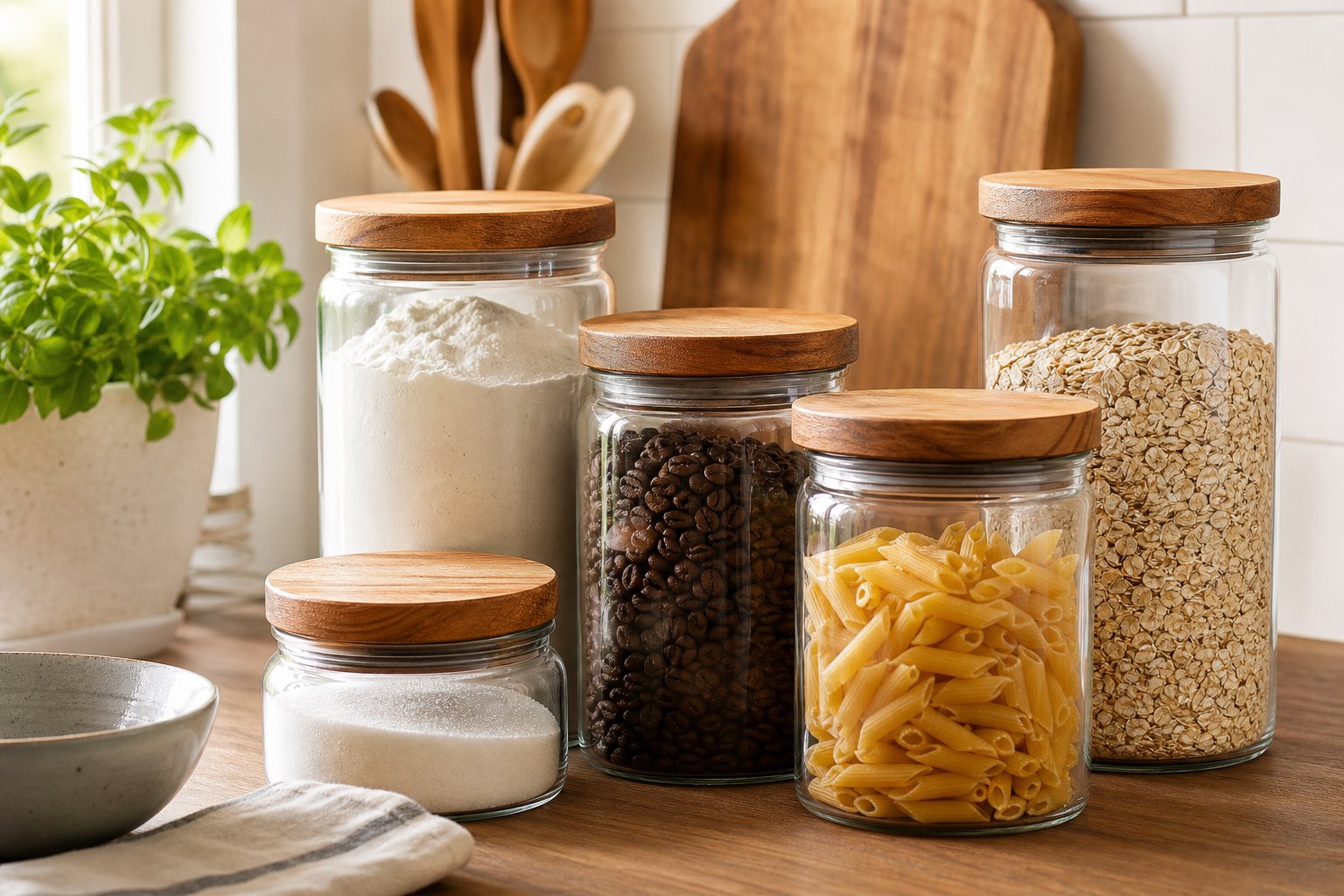
Check out our latest glass jars collection!
A beautiful pantry jar is only useful if it keeps food fresh. Wooden-lid glass jars can create a dependable airtight seal when the lid includes a well-fitted, food-grade silicone gasket. Without that gasket, air and moisture can slip through small gaps between the wood and glass.
For everyday dry goods such as flour, sugar, rice, pasta, coffee, and tea, a quality seal can help preserve freshness while keeping shelves neat and easy to scan. The jar’s performance depends on the gasket condition, lid fit, glass rim, and proper care.
This guide explains how wooden-lid glass jars seal, which foods they suit best, how to choose the right sizes, and how to clean and maintain them for reliable pantry storage.
Key Takeaways
- Wooden-lid glass jars with silicone gaskets can keep dry goods airtight if you seal them properly.
- Picking the right jar size and seal quality keeps ingredients fresh and your pantry looking sharp.
- If you take care of the glass and the wood, these jars last longer and keep working well.
What Makes Wooden-Lid Glass Jars Airtight
The seal really comes down to the gasket material and how snugly the wooden lid fits the glass rim. Most of these jars use silicone inserts to block air and moisture, but the way the pieces fit together decides how well that seal holds up when you use them every day.
The Role of Silicone Gaskets in the Seal
In our experience, silicone gaskets are what separate a jar that keeps flour fresh for months from one that lets it go stale in a few weeks. These flexible rings sit between the wooden lid and the glass rim, squishing down when you tighten the lid to keep air out.
Food-grade silicone is especially good because it doesn’t soak up smells or break down from contact with things like sugar, coffee beans, or pasta. The gasket needs to be thick enough to fill tiny gaps, but flexible so it keeps contact as the wood swells or shrinks with the weather.
What to look for in a gasket:
- 2-3mm thickness for a good seal
- Food-safe and BPA-free
- Removable so you can clean it
- Doesn’t crack easily
If you skip the silicone, the wooden lid just sits on the glass, leaving little gaps where air sneaks in. Even high-quality acacia wood has natural grain lines that keep it from sealing perfectly by itself.
How Airtight Closures Work for Dry Goods
You don’t need a vacuum seal for pantry staples. You just need to slow down air exchange enough to keep out moisture and preserve flavors.
These glass jars with wooden lids use compression sealing. When you twist the lid, the gasket presses against the jar’s rim, making a tight circle all the way around. That’s usually plenty for dry goods, since you’re not dealing with pressure like you would with liquids.
High borosilicate glass jars have smooth rims, so the gasket sits evenly. Most wooden lids use a screw mechanism that puts pressure down gradually, which seems more reliable than snap-on or cork closures for stuff you reach for every week.
We reach for these jars for things like flour, oats, and tea leaves, which you use up within a few weeks. They’re not meant for long-term storage (like months without opening), but they do the job for everyday pantry turnover.
Importance of Lid Fit and Material
The way the threads line up on your glass jar and wooden lid affects how much pressure you get on the gasket. If the threading is loose, the lid stops tightening before the silicone really seals, and you end up with air gaps.
Acacia wood lids are a favorite because they’re dense and don’t warp as easily in a humid kitchen. Bamboo lids are lighter, but they can bend over time, especially if you store them near heat. Both need a good finish to keep moisture out, or the fit will change.
What affects lid fit:
- How well the threads are cut on glass and wood
- The wood’s moisture level when it was made
- Gasket sitting in the right spot
- The rim and lid lining up just right
We always check that the wooden lid sits flush before the threads stop turning. If you feel it get tight too soon, the gasket might be off-center or the threads might not match up well.
Everyday Uses for Wooden-Lid Glass Jars
Wooden-lid glass jars shine when you use them for bone-dry goods like pasta, rice, and sugar. They also look great for meal prep, baked treats, and pantry basics like coffee and tea. The trick is matching the jar size and seal quality to what you’re actually putting inside.
Best Dry Goods to Store
We like these jars best for ingredients that are totally dry. White rice, dried beans, and pasta work great because they don’t have moisture that could mess with the wood or the seal.
Granulated sugar and salt are also a great fit. They stay loose in a sealed jar and don’t give off moisture that could warp the lid. Brown sugar, though, is a little trickier since it has molasses. If you’re storing brown sugar, make sure you’ve got a thick silicone gasket for a tight seal.
Top picks for wooden-lid storage:
- White rice and dried pasta
- Granulated sugar and coarse salt
- Dried beans and lentils
- Loose-leaf tea (bone dry)
- Whole coffee beans (finish within two weeks)
Skip anything with leftover moisture, like dried fruit that’s still sticky or fresh herbs. The wood can soak up that moisture and might end up growing mold under the lid.
Meal Prep and Snacks
We use glass jars with wooden lids for single-serve snacks and some meal prep. They’re perfect for trail mix, roasted nuts, or granola you’ll eat within a few days.
For overnight oats, though, wooden lids can be a pain. Since oats need liquid and refrigeration, you get condensation. If you really want to use these jars for overnight oats, pick ones with extra-thick silicone gaskets and always hand-wash the lids right after use to keep them from soaking up moisture.
Dry snacks are easy. Portion out crackers, pretzels, or popcorn in smaller jars for grab-and-go snacks. The wooden lids look cozy on your counter, and you can see what’s inside at a glance.
Just keep in mind, wooden lids don’t belong in the dishwasher. If you’re rotating meal prep often, you’ll need to wash them by hand and dry them right away.
Storing Cookies and Baked Goods
Cookies and baked goods need a little extra thought with wooden-lid jars. Crispy, totally cooled cookies like biscotti or shortbread work well since they’re dry and won’t release steam. We’ve kept these fresh for up to five days with a good seal.
Soft cookies or anything frosted can cause problems. They let off moisture that gets trapped, which can make the wood swell or pick up weird smells that stick to your treats.
Tips for storing cookies:
- Let cookies cool all the way before jarring (at least two hours)
- Stick to one type of cookie per jar to avoid flavor mixing
- Check the gasket before storing expensive batches
- Plan to eat within three to five days
It’s a good idea to have a set of jars just for baked goods so you don’t get leftover coffee or spice smells in your cookies.
Coffee, Tea, and Other Pantry Staples
Whole coffee beans stay fresh in wooden-lid jars for about two weeks if you use them daily. The trick is to use them up quickly. Coffee releases gas after roasting, so you want a container that lets out as little air as possible without being totally airtight.
Loose-leaf tea is a breeze because it’s dry and doesn’t off-gas, so it stores well. We keep our black and green teas in medium jars on the counter. Wood lids block light better than clear plastic, but not as well as a solid ceramic jar.
Ground coffee is tougher. It goes stale faster and releases oils that can seep into the wood over time. If you store ground coffee, use a jar with a removable gasket you can wash, and plan to re-oil the lid every few months.
Pantry staples that work well in these jars:
- Whole coffee beans (two-week supply)
- Loose-leaf teas
- Dried herbs and whole spices
- Baking basics like flour and cocoa powder
- Breakfast cereals and oats
Keep these jars away from heat and out of direct sunlight. Both can mess up the wood finish and make your food go stale faster.
Choosing the Right Jar for Pantry Organisation
The size of the jar, how the lid is built, and the type of glass all play a role in how well your pantry system works. Knowing the usual sizes, how acacia wood lids stack up, and why borosilicate glass is worth it can help you build a pantry that’s both functional and keeps food fresh.
Standard Sizes for Pantry Storage
Most home cooks need three main jar sizes to cover their bases. Small jars (15-24oz) are perfect for spices, loose tea, seeds, and anything you use in smaller amounts. Medium jars (35-51oz) are great for everyday staples like sugar, coffee beans, oats, and pasta. Big jars (1 gallon or about 4000ml) are for bulk flour, rice, cereal, or even kombucha brewing.
Square or rectangular jars fit more tightly on shelves than round ones. They save space and make it easier to group similar items.
Common pantry jar dimensions:
| Size | Typical Contents | Best For |
|---|---|---|
| 15-24oz | Spices, tea, seeds | Daily access items |
| 35-51oz | Sugar, coffee, oats | Weekly staples |
| 1 gallon | Flour, rice, bulk goods | Long-term storage |
A set with different sizes lets you match jar capacity to how fast you go through each ingredient, so you don’t end up with too many jars you never use.
Comparing Glass and Wood Lid Features
Acacia wood lids with silicone gaskets make a solid airtight seal for most dry goods. The silicone ring sits between the glass and the wood, blocking out air and moisture when you press the lid down. This setup keeps things like flour, pasta, and coffee fresh for weeks without the need for fancy latches.
Glass jars with wood lids need a little more TLC than metal screw-tops. Wood can warp if you soak it or run it through the dishwasher, so we always hand-wash and dry the lids right away. The natural grain and warm color of acacia wood just looks better on a shelf than cold metal or plastic, at least in our opinion.
These jars don’t clamp down as hard as bail-and-trigger closures. They depend on the silicone seal staying clean and flat. Check for crumbs or sticky spots, since even a little mess can break the seal.
Advantages of High Borosilicate Glass
High borosilicate glass doesn’t freak out over temperature changes the way cheaper glass does. You can move these jars from a cool pantry to a warm kitchen without worrying about cracks. The glass handles temperatures from roughly -4°F to 300°F, though we wouldn’t push it with the wooden lids attached since wood and heat don’t mix well.
Borosilicate glass is also thicker and tougher, so it stands up to daily bumps and opening better than thinner jars. We’ve noticed it stays clear over time and doesn’t get cloudy the way cheap glass sometimes does.
It’s non-porous, so it won’t hold onto smells or stains from things like coffee or curry powder. A quick wash and you can switch the jar from one ingredient to another without leftover flavors.
Labelling and Streamlining Your Pantry System
A well-organized pantry really comes down to two things: being able to see what you have at a glance, and grabbing it without shuffling jars around. Waterproof labels take the guesswork out, and smart stacking keeps everything visible and easy to reach.
Pantry Labels for Easy Identification
Pantry labels can turn a chaotic shelf of jars into something everyone in your house actually wants to use. Paper labels? They start peeling within weeks in a steamy kitchen, and handwritten chalkboard labels just smudge the second you wipe them down. Honestly, waterproof vinyl labels are the way to go because they stay readable through years of daily grabs, steam, and washing.
Pre-printed label sets give you the most consistent look. They cover hundreds of pantry staples and spare you the mess of mismatched handwriting. Stick labels on the lower third of each glass jar with a wooden lid so you can still see what’s inside, even when jars are packed close together.
When your label set doesn’t cover something, just write on waterproof label stock with a permanent marker. Before tossing the original bag or box, jot the expiry date on the jar’s base. It’s a small step, but it really cuts down on waste and keeps your pantry rotation on track.
Stacking and Visibility Tips
Stacking jars saves vertical space, but only if you can still see and reach what you need. Put taller jars in back, shorter ones in front, and you’ll get that nice tiered effect. Don’t stack more than two jars high unless you’re using a stepped riser. Otherwise, you’ll end up with a toppled mess.
Group jars by what you use them for, not just by size. Keep baking ingredients together, grains in one spot, and breakfast stuff in another. That way, you grab everything you need without scanning the whole pantry.
Deep shelves can swallow smaller jars, so drop a turntable or a pull-out basket back there. Suddenly, those forgotten jars at the back are easy to reach without the need to unstack or move everything else. Keep your most-used jars at eye level, and stash backup or rarely used stuff up high.
Care and Maintenance for Glass and Wood Components
A little care keeps wooden lids looking good and glass sparkling, so your dry goods stay fresh and visible. If you give both materials regular attention, you’ll avoid warping, weird smells, and leaky seals.
Cleaning Tips for Long-Lasting Use
Hand-wash acacia wood lids with mild dish soap and warm water, then dry them right away with a clean towel. Don’t soak wooden lids or stick them in the dishwasher because too much moisture warps the wood and ruins the silicone gasket.
For the glass jars, go ahead and toss them in the dishwasher or wash by hand with warm, soapy water. If you notice stubborn residue or cloudiness, rub it away with a baking soda paste and a soft cloth.
Pop the silicone gaskets out of the lids when you clean them, so you can wash away anything trapped inside. Clean these separately and check for wear. Once everything’s dry, put the gasket back and make sure it sits flush in its groove. This simple routine keeps your jars sealing tightly for years.
Avoiding Moisture and Odours
Store wooden lids somewhere dry, away from sunlight and humidity. Too much moisture makes wood swell, crack, or even mould. After washing, leave the jar lid slightly loose to let air circulate, especially if you just cleaned it.
Wood absorbs strong smells from foods like coffee, spices, or dried herbs. If you can, rotate lids between different products or dedicate certain lids to the stinkier stuff. When a lid picks up an odd smell, wipe it with a vinegar-dampened cloth and dry it well.
Hot food straight from the stove? Let it cool before putting it in jars with wooden lids. Otherwise, condensation sneaks into the wood. Always dry both the jar rim and the lid before sealing, so you don’t trap moisture inside.
When to Replace Gaskets or Lids
Check silicone gaskets every few months for cracks, tears, or if they’ve flattened out and don’t seal anymore. If you notice air sneaking in or your dry goods going stale faster than usual, swap out the gasket. Most brands sell replacements, so you don’t have to toss the whole lid.
If you spot deep cracks, warping, or stubborn mould on a wooden lid that just won’t come off, it’s time to replace it. Minor scratches happen and don’t matter, but any real damage means the seal won’t work.
Glass jars almost never need replacing unless they’re chipped or cracked. Run your finger around the rim now and then. Chips let air in, and even tiny flaws can ruin the seal.
Maximising Kitchen Storage with Wooden-Lid Glass Jars
Wooden-lid glass jars can actually turn a cluttered pantry into an organised, easy-to-scan space that speeds up meal prep and shopping. With a little strategy, such as picking the right sizes and arranging them with intention, these jars become tools you’ll want to show off, not hide.
Open Shelving and Countertop Organisation
Glass jars with wooden lids look great on open shelves because they give you a clean, uniform look and let you see what’s inside at a glance. The wood adds a bit of warmth, and it doesn’t clash with most kitchen styles, whether you have bright white tile or darker cabinets.
Keep your most-used items on the counter in clear jars, including coffee beans, oats, granola, flour, and sugar. The wooden lids stay cool and won’t scratch up your counters like metal can.
Arrange jars by height and how often you reach for them. Stash tall 37-ounce jars in the back for things like rice or pasta, and keep shorter 16-ounce jars up front for spices or nuts. This way, you don’t lose smaller jars behind bigger ones and you’re not constantly shuffling containers around.
How to Use Multiple Jar Sizes
Mixing jar sizes just makes sense because it matches how much you actually use. A 16-ounce jar will hold a week’s worth of chia seeds for a couple of people, while a 37-ounce jar fits a whole bag of brown rice or enough coffee beans to last a month.
Some size combos that work well:
- 16 oz for daily stuff (oats, nuts, dried fruit)
- 27 oz for medium staples (flour, sugar, tea bags)
- 37 oz for bulk goods (rice, pasta, cereal)
If you stick to two or three sizes, restocking and arranging shelves gets way easier. Try starting with a six-pack that includes a couple of sizes and see what fits your cooking before you buy a whole set.
Creating Aesthetic and Functional Spaces
You can have a kitchen that looks put-together and still works for real life by using glass jars with wooden lids as the backbone of your pantry. Group jars by what they hold (baking stuff together, breakfast stuff together) to make busy mornings less chaotic.
Labels keep things honest. Sure, you might know flour from sugar now, but guests and forgetful family members will thank you for clear markings. Chalk pens on erasable labels or simple adhesive tags keep the look clean but prevent that “mystery jar” problem.
Stackable rectangular jars save more vertical space than round ones, but honestly, round glass jars with wooden lids often seal better. We use rectangular jars for deep shelves and round jars for counters or shallow shelves where you want to see what’s inside from every angle.
Frequently Asked Questions
Here are clear answers about seal quality, suitable foods, and proper care for wooden-lid glass jars.
What makes a jar truly airtight, and how can you tell if your lid is sealing properly?
A food-grade silicone gasket creates the airtight seal between the wooden lid and glass rim. Check that the gasket is clean, flat, undamaged, and closes evenly without visible gaps.
Which dry goods are best suited for wood-lid glass jars, and which ones need a stronger seal?
These jars work well for flour, sugar, rice, pasta, oats, beans, tea, and spices. Ground coffee, freeze-dried foods, and long-term storage may need a stronger seal or vacuum storage.
Do wooden lids help keep pantry staples fresh, or do they let moisture and odours sneak in over time?
Wooden lids help when they include a secure silicone gasket. Keep the jars in a cool, dry place and clean the lids regularly to reduce moisture and lingering odours.
How do silicone gaskets or sealing rings change the performance of a wooden-lid jar?
The gasket fills small gaps between the wood and glass, helping block air and moisture. Replace it if it becomes cracked, stiff, loose, or flattened.
What's the best way to clean and care for wooden lids so they don't warp, crack, or hold smells?
Hand-wash wooden lids with mild soap, avoid soaking or dishwashers, and dry them immediately. Apply food-safe mineral oil occasionally if the wood begins to look dry.
Can you use these jars for meal prep staples like flour, sugar, rice, and coffee without them going stale?
Yes. A well-fitted silicone seal helps keep these staples fresh during normal household use. Store the jars away from heat, moisture, and direct sunlight.
Partager:
How to Store Flour and Sugar in Large Glass Jars Without Moisture or Clumping
How to Organize Low Pantry Cabinets With Stack-Friendly Square Glass Jars