

Check out our latest drying mats collection!
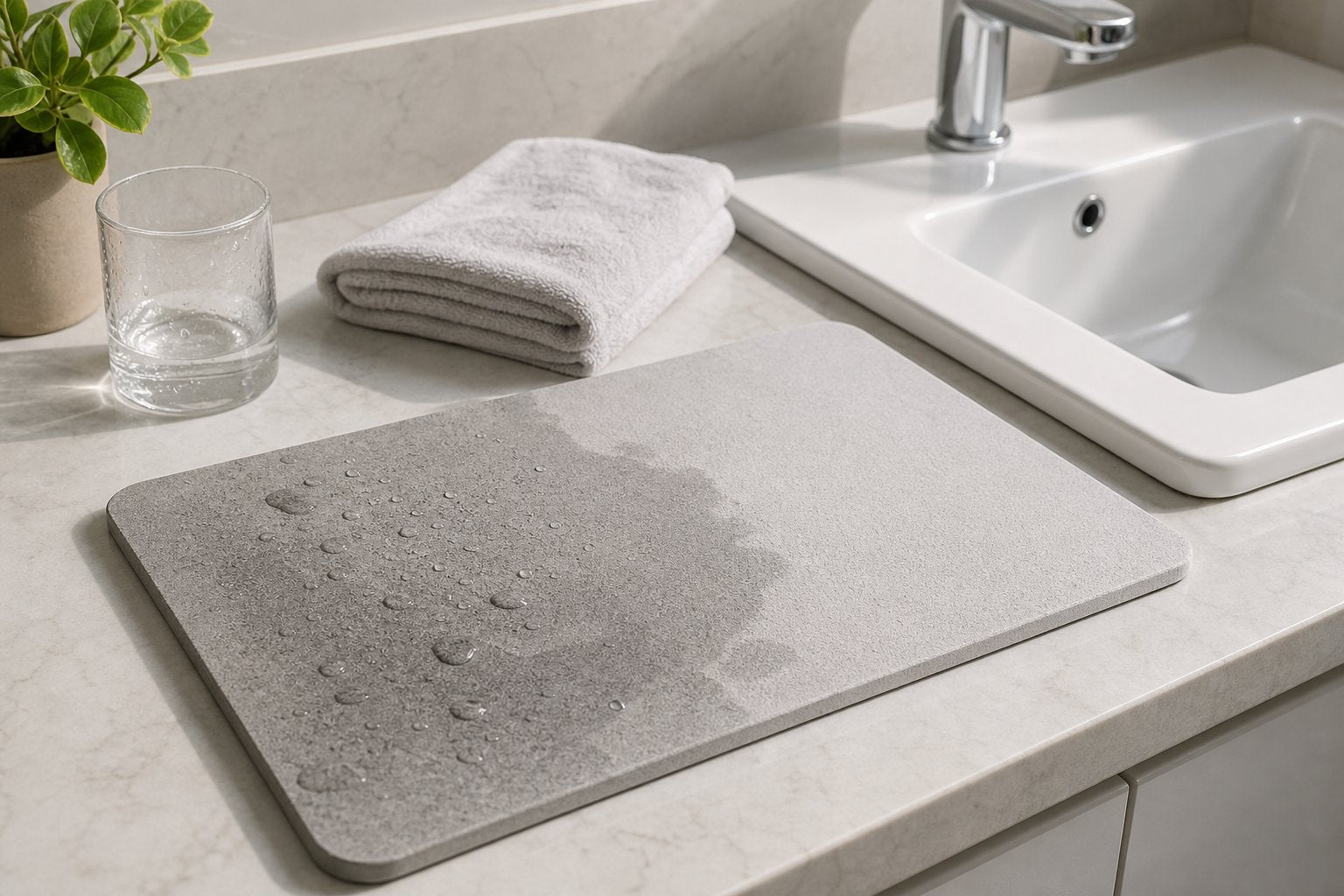
A stone drying mat can begin absorbing surface water within seconds, while the time it takes to become fully dry depends on how much moisture it receives, the room's humidity, airflow, and the mat's construction. Under light everyday use, the surface may feel dry within a few minutes. Heavier loads or humid conditions can extend the drying time.
Much of this performance comes from the porous structure of diatomaceous material. Its microscopic pores help draw in moisture and spread it across a larger surface area, allowing the water to evaporate rather than remain pooled on top.
Drying speed can vary from one household to another. Humidity, mat thickness, surface buildup, airflow, and cleaning habits can all affect how quickly a stone drying mat absorbs and releases moisture. Whether you use one under a dish rack or as a bathroom mat, understanding these factors can help you maintain more consistent performance.
Below, we look at typical drying behavior, how diatomaceous material works, which conditions affect absorbency, and how stone compares with fabric and silicone alternatives.
Key Takeaways
- A stone drying mat can begin absorbing light surface moisture within seconds and may feel dry within a few minutes under favorable conditions.
- Humidity, airflow, water volume, surface buildup, and mat construction can all affect how quickly moisture is absorbed and released.
- Routine cleaning can help maintain absorbency, while gentle sanding may be appropriate for some mats if permitted by the manufacturer's care instructions.
Typical Drying Time in Everyday Use
In kitchens and bathrooms, drying time depends largely on how much water reaches the mat, how humid the room is, and how much airflow the mat receives between uses. Light splashes may disappear quickly, while a larger amount of water from wet dishes or shower use can take longer to evaporate completely.
What Dry to the Touch Really Means
When a stone mat feels dry to the touch, the surface no longer feels slick or visibly wet. This does not necessarily mean that all moisture has already evaporated from deeper within the material.
The top surface can dry before the rest of the mat because it has the most direct exposure to surrounding air. With light moisture, the surface may feel dry within a few minutes. A heavier amount of water will generally require more time.
If the mat has been exposed to wet feet, heavily rinsed dishes, or pooled water, allow additional drying time before storing or covering it.
Light Drips Versus a Full Dish Load
A few drops from a coffee mug or freshly washed utensil place much less demand on a stone mat than an entire rack of wet dishes. Light moisture can be absorbed rapidly because only a small amount of water needs to move through the porous surface.
A full load of plates, bowls, glasses, and cutlery introduces substantially more moisture. Items that trap water underneath can also slow evaporation by limiting airflow across the mat.
As a general guide:
- Light splashes or drips: The surface may begin looking dry within seconds or a few minutes.
- A few wet dishes: Drying may take several minutes depending on airflow and how wet the dishes are.
- A full dish rack: The mat may require considerably longer to release all absorbed moisture, particularly in humid or poorly ventilated rooms.
Keeping the area around the mat open can improve airflow and support faster evaporation.
Why Bathroom and Kitchen Use Differ
Stone bath mats and stone dish mats encounter moisture in different ways. A bath mat often receives a relatively large amount of water immediately after a shower, followed by a longer period without use.
A dish drying mat may receive smaller amounts of water repeatedly throughout the day as dishes, cups, cookware, and utensils are washed.
Bathrooms can also be more humid than kitchens, especially after a hot shower. Higher humidity generally slows evaporation, so a bath mat may benefit from additional ventilation and open space around it.
Why Diatomaceous Stone Absorbs Water Quickly
The absorbent qualities of diatomaceous material come from its naturally porous structure. Diatomaceous earth originates from accumulated remains of microscopic organisms called diatoms, whose silica-rich structures create a material with numerous tiny pores.
Diatoms, Silica, and Diatomaceous Material
Diatoms are microscopic algae with silica-based cell walls. Over long periods, their remains can accumulate in sediment and form deposits known as diatomaceous earth or diatomite.
When diatomaceous material is used in a drying mat, its porous structure provides many small spaces through which moisture can move. The exact composition and construction can vary between products, so not every stone drying mat will perform in exactly the same way.
Microscopic Pores and Internal Surface Area
Diatomaceous material contains a network of microscopic pores. These pores provide a much greater effective surface area than the mat's visible exterior might suggest.
When water reaches the surface, it can spread through these small spaces rather than remaining concentrated in a puddle. Distributing the moisture helps expose more of it to conditions that support evaporation.
Absorbency therefore depends on more than the visible surface texture. The internal pore structure also plays an important role.
Capillary Action Inside the Porous Surface
Capillary action helps move water into narrow spaces within porous materials. When moisture reaches a diatomaceous surface, these small channels can draw water away from the point of contact and distribute it through the material.
This is why a small wet mark may appear to fade quickly after a damp cup, dish, or hand touches the mat. The water is being absorbed and dispersed, although complete evaporation can take longer than the visible mark suggests.
Conditions That Change Absorbency and Evaporation
A stone drying mat will not perform identically in every kitchen or bathroom. Humidity, temperature, airflow, water volume, surface buildup, and product construction can all influence how quickly it absorbs and releases moisture.
Humidity, Temperature, and Air Movement
Room conditions have a significant effect on evaporation. When humidity is high, the surrounding air already contains more moisture, so water generally evaporates more slowly from the mat.
Better air movement can help. A mat in an open, well-ventilated space will usually dry more efficiently than one in a closed or steamy room.
Temperature can also influence evaporation. In typical household conditions, moderate warmth combined with good airflow generally supports faster drying than cool, stagnant air.
Airflow Around the Mat
Air movement around the mat can affect how efficiently moisture escapes. If the mat sits tightly against another surface and moisture reaches its underside, that moisture may take longer to evaporate.
Some drying mats are designed with feet, pads, or other features that create separation from the countertop. When included by the manufacturer, these features can improve airflow and may also help protect the counter or reduce movement.
Always use the mat according to its intended design rather than adding supports that could make it unstable.
Water Volume, Load Weight, and Contact Area
The amount and distribution of water also matter. A few droplets from a rinsed mug are easier for the mat to manage than water draining from a large pot, colander, or full dish rack.
Items that concentrate moisture in one spot can take longer to dry than the same amount of water spread across a larger area. Dishes placed tightly together can also limit airflow.
Leaving reasonable spacing between wet items can improve air circulation and give exposed areas of the mat more opportunity to release moisture.
Hard Water, Soap Residue, and Kitchen Oils
Mineral deposits, soap residue, food particles, and oils can accumulate on a porous mat over time. This buildup may partially block the surface pores and reduce the rate at which water is absorbed.
If a mat begins absorbing more slowly than it did when new, cleaning the surface according to the manufacturer's instructions is a sensible first step. Mild cleaning methods are generally preferable to oily, waxy, or highly abrasive products that could leave residue or damage the surface.
Silicone and other nonporous drying surfaces do not absorb moisture in the same way, so their maintenance requirements differ from those of stone.
Choosing a Mat That Dries Well and Holds Up
Drying performance depends on more than the visible stone surface. Construction, thickness, size, edge design, stability, and intended use can all affect how practical a mat is in daily use.
Material Composition and Composite Construction
Stone drying mats are available in different constructions. Some use predominantly mineral-based materials, while others combine a porous surface with additional backing or structural layers.
These differences can influence rigidity, weight, durability, flexibility, and drying behavior. Rather than assuming all diatomaceous mats are built the same way, review the product specifications and care instructions before buying.
For kitchen use, look for a mat designed specifically to support the types of dishes or accessories you plan to place on it. Construction details are particularly important if the mat will regularly hold heavier cookware or a loaded dish rack.
Elevated Designs, Edges, and Counter Protection
Edge design can affect both appearance and durability. Rounded or beveled edges may be less vulnerable to minor knocks than sharp, exposed corners, although resistance to chipping depends on the overall construction of the mat.
Some models include feet or nonslip pads underneath. Depending on the design, these may improve stability, create additional airflow, or help reduce direct contact between the mat and countertop.
If protecting a delicate counter surface is a priority, check the manufacturer's recommendations for compatible surfaces before use.
Matching the Mat to Dishes, Counters, and Bathrooms
Not every stone drying mat is intended for the same purpose. Size, thickness, surface texture, and construction should match where and how the mat will be used.
- Kitchen counter and everyday dishes: Choose a size that comfortably accommodates your usual dish load without overcrowding the surface.
- Coffee or tea station: A compact mat may be sufficient for mugs, spoons, and small accessories.
- Bathroom: Choose a mat specifically designed for bathroom use, with appropriate stability and slip-resistant features.
Product dimensions, intended use, care requirements, and surface compatibility are more useful selection criteria than appearance alone.
Care Steps That Can Restore a Slow-Absorbing Surface
A stone mat that begins absorbing more slowly may have residue or mineral buildup blocking some of its pores. Proper cleaning can often improve performance, while some products may permit occasional light sanding.
Routine Cleaning Without Clogging the Pores
Follow the manufacturer's cleaning instructions first, since recommended methods can vary by product. For mats that permit it, a gentle cleaning with water, a small amount of mild soap, and a soft cloth or brush may be enough to remove surface residue.
Rinse away any permitted cleaning product thoroughly. Residual soap or oily cleaners can leave a film that interferes with absorbency.
Avoid dishwashers, bleach, harsh chemicals, abrasive scrubbers, or fragranced cleaning products unless the manufacturer specifically states that they are safe for the mat.
After cleaning, allow the mat to air dry completely in a well-ventilated location.
When Gentle Sanding Is Appropriate
Some stone drying mats can be lightly sanded when cleaning no longer restores their absorbency. However, sanding is not appropriate for every construction or finish.
Check the manufacturer's care instructions before sanding. If sanding is permitted, use the recommended grit and technique, work gently, and remove all resulting dust before using the mat again.
Excessive sanding can wear away the surface or alter its finish, so it should only be done when necessary and when specifically supported by the product's care guidance.
Safe Drying, Storage, and Handling Practices
Allow the mat to dry fully before storing it. Placing a damp mat in an enclosed cabinet or stacking items directly against it can slow evaporation and contribute to unwanted odors.
Store the mat in a stable location where it will not be bent, dropped, or placed under excessive weight. Some rigid stone mats can chip or crack if handled roughly.
A dry, well-ventilated storage area is generally preferable. Follow any manufacturer guidance regarding direct sunlight, vertical storage, and temperature exposure.
Stone, Fabric, and Silicone: Practical Trade-Offs
Stone, fabric, microfiber, and silicone drying surfaces manage water differently. The best choice depends on whether you prioritize rapid surface drying, softness, flexibility, washability, heat resistance, or easy storage.
Stone Versus Fabric Dish Mats
Fabric dish mats absorb water into their fibers, where moisture remains until it evaporates or the mat is washed and dried. Stone mats also absorb moisture, but their rigid porous surfaces are designed to distribute that water so it can evaporate.
How long either type remains damp depends on water volume, airflow, humidity, thickness, and construction. Fabric mats can offer cushioning for delicate dishes, while stone mats may appeal to households that prefer a firm surface and less fabric laundry.
Regardless of material, regular cleaning is important because food residue and persistent moisture can contribute to odor or microbial growth.
Microfiber Comfort Versus Faster Surface Drying
Microfiber mats are soft, lightweight, and generally provide cushioning beneath dishes and glassware. They can absorb a substantial amount of water, but the absorbed moisture remains within the fibers until the mat dries.
A stone mat does not provide the same soft cushioning, but its exposed porous surface may feel dry sooner under suitable conditions. Actual drying performance varies by product, room conditions, and the amount of water involved.
Microfiber may be preferable when softness, foldability, and machine washing are priorities. Stone can be a practical alternative when you prefer a firm drying surface with minimal fabric maintenance.
When Silicone Trays Are a Better Fit
Silicone trays are nonporous, so they do not absorb water. Moisture remains on the surface until it evaporates, drains away, or is poured off.
The advantage is flexibility and easy cleaning. Many silicone drying products can also be folded or rolled for storage, although heat resistance and care requirements vary by product and should be checked before placing hot cookware on them.
Silicone may be a better fit for limited storage space or situations where a washable, flexible surface is more important than absorbency. Stone is better suited to users who specifically want a porous surface that draws moisture away from wet dishes.
Frequently Asked Questions
How long does a stone drying mat usually take to dry after holding wet dishes?
There is no single drying time for every stone mat. Light moisture may disappear from the surface within a few minutes, while heavier water exposure can take longer. Humidity, airflow, mat construction, and the amount of water all affect drying time.
What makes a stone drying mat absorb water more quickly than a fabric dish mat?
Diatomaceous material contains microscopic pores that help draw in and distribute moisture through capillary action. Fabric absorbs water into its fibers instead, so the two materials manage moisture differently.
How many dishes can a stone drying mat handle before it needs time to dry out?
Capacity depends on the mat's dimensions, construction, and the amount of water on the dishes. If water begins pooling instead of being absorbed, reduce the load and allow the mat time to dry before adding more wet items.
Does room humidity affect how quickly a stone drying mat dries?
Yes. High humidity generally slows evaporation because the surrounding air already contains more moisture. Better ventilation and air movement can help the mat dry more efficiently.
Why is my stone drying mat taking longer to dry than usual?
Mineral deposits, soap residue, food particles, oils, poor airflow, or higher humidity may slow absorption and evaporation. Clean the mat according to its care instructions and make sure it has adequate ventilation.
How can I clean and maintain a stone drying mat to keep it absorbent?
Follow the manufacturer's care instructions. Gentle cleaning and thorough drying can help prevent buildup. If the manufacturer permits sanding, occasional light sanding may also help restore a clogged surface.
Partager:
Stone Drying Mat vs Microfiber Dish Mat: Which Is Better for Everyday Dish Drying?
Modular vs One-Piece Stone Drying Mat: Which Setup Fits Your Kitchen Counter Better?