

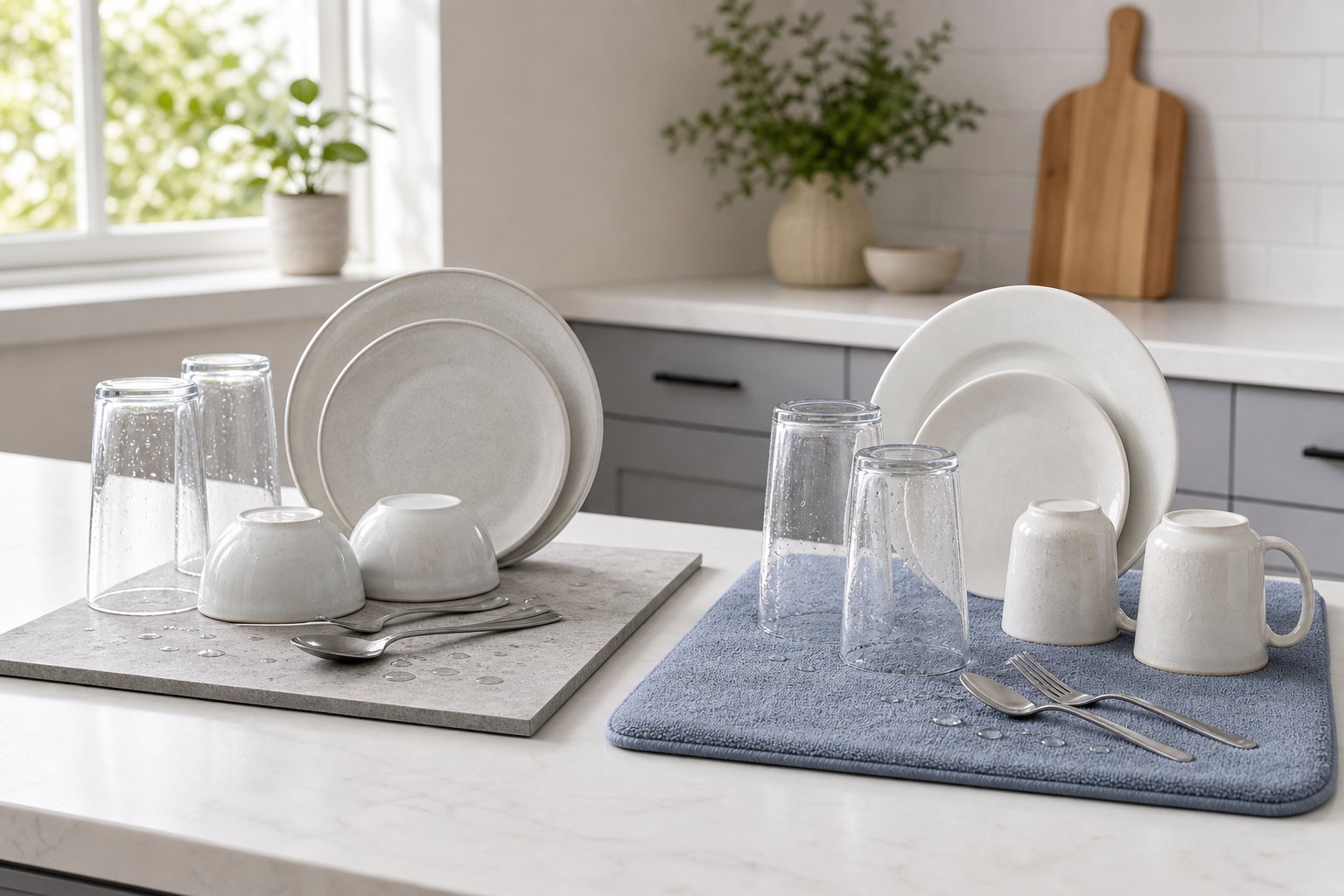
Check out our latest drying mats collection!
Every kitchen has a spot next to the sink where wet dishes collect, and the mat underneath them can make a noticeable difference. Stone drying mats generally release moisture quickly and require relatively little routine washing, while microfiber mats offer a softer, more cushioned surface and are often easy to machine wash. Neither option is right for every kitchen. The better choice depends on your dishwashing habits, available counter space, and maintenance preferences.
The differences become especially noticeable in smaller kitchens where counter space is limited. A stone dish drying mat can absorb surface moisture and allow it to evaporate without leaving a fabric mat sitting damp on the counter. Microfiber, on the other hand, provides more cushioning for delicate glassware and can be convenient for households that already wash kitchen textiles regularly.
Below, we compare how each material performs in the areas that matter most, including drying speed, hygiene, dish protection, maintenance, and everyday practicality. This comparison can help you decide which type of dish drying mat best suits your kitchen routine.
Key Takeaways
- Stone mats typically release moisture quickly and are less likely to remain damp for long periods, while microfiber mats provide a softer surface for dishes.
- Material choice affects maintenance, counter protection, storage, and cushioning.
- The best option depends on your kitchen size, typical dish load, and preferred cleaning routine.
The Everyday Choice at a Glance
Stone and microfiber drying mats suit different kitchens and drying habits. Here is how the two options compare when you consider space, moisture, cushioning, and routine cleaning.
When a Stone Mat Is the Better Fit
A stone dish drying mat can be a practical choice for a small or minimalist kitchen. It sits flat on the counter, maintains a structured appearance, and does not need to be hung up like a damp fabric mat after every use.
It can also suit households that prefer lower-maintenance kitchen accessories. Rather than going into the laundry regularly, a stone mat can typically be wiped or rinsed according to the manufacturer's care instructions.
Consider stone if:
- You want a surface that releases moisture relatively quickly.
- Counter space is limited and you prefer a streamlined setup.
- You would rather not add another kitchen textile to your regular laundry.
When a Microfiber Dish Mat Makes More Sense
A microfiber dish drying mat can be a practical choice if you want a soft, flexible surface for everyday dishes. Microfiber mats are especially useful under fragile glassware, bowls, and other items that benefit from extra cushioning.
A fabric mat can also work well for larger hand-washing sessions because it can provide a broad, absorbent surface for pots, utensils, plates, and glasses.
If you already wash dish towels and other kitchen textiles regularly, adding a microfiber mat to your cleaning routine may require little additional effort.
Key Trade-Offs for Daily Dish Loads
| Factor | Stone Drying Mat | Microfiber Dish Mat |
|---|---|---|
| Moisture release | Typically fast | May remain damp longer |
| Upkeep | Usually wiped or rinsed as needed | Requires regular washing |
| Initial cost | Often higher | Often lower |
| Cushioning | Firm and rigid | Soft and cushioned |
| Best suited for | Streamlined daily use | Fragile dishes and flexible storage |
Neither material performs best in every category. The decision largely comes down to whether you prioritize quick moisture release and minimal laundry or cushioning and flexibility.
How Each Material Handles Water
Stone and microfiber mats manage water in different ways. Porous stone-based surfaces draw moisture into small pores and expose it to air, while microfiber absorbs and holds water within its fibers until that moisture evaporates.
Diatomaceous Earth and Microscopic Pores
Diatomaceous earth is a naturally occurring sedimentary material formed from the fossilized remains of microscopic aquatic organisms called diatoms. Some stone drying mats use diatomaceous earth or similar porous mineral materials as part of their construction.
The small pores within the surface allow water to spread rather than simply pooling on top. This porous structure helps expose absorbed moisture to the surrounding air so it can evaporate.
Actual drying performance varies by mat construction, thickness, airflow, humidity, and the amount of water present.
Microfiber Absorbency and Moisture Retention
Microfiber works by absorbing moisture within a network of fine synthetic fibers. This makes it useful for catching drips from dishes, glasses, utensils, and cookware.
However, the absorbed water remains within the material until it evaporates. A heavily saturated microfiber mat can therefore stay damp for some time, particularly in humid kitchens or areas with limited airflow.
Capillary Action, Airflow, and Evaporation
Porous stone materials use capillary action to move moisture through small spaces within the surface. As the water spreads, more of it is exposed to air, supporting evaporation.
Microfiber holds water between and within its fibers. Its drying rate depends on factors such as airflow, room temperature, humidity, mat thickness, and how much water it has absorbed.
| Factor | Stone Mat | Microfiber Mat |
|---|---|---|
| Main mechanism | Moisture movement through pores | Fiber absorption |
| Moisture release | Generally faster under suitable conditions | Often slower when heavily saturated |
| Standing water | Reduced when the mat is used within its capacity | Possible when oversaturated |
Drying Speed After a Full Sink Load
Drying speed is one of the most noticeable differences between the two materials. Stone mats are designed to spread absorbed moisture across a porous surface, which can help them feel dry relatively quickly under favorable conditions.
Microfiber generally retains absorbed moisture for longer. How long either mat takes to dry depends on humidity, airflow, mat size, construction, and the amount of water involved.
This difference can matter in households that wash multiple loads of dishes in quick succession, since a heavily saturated fabric mat may need additional time and airflow between uses.
Hygiene, Odors, and Counter Protection
The surface underneath your dishes affects more than drying performance. How long a mat remains damp, how often it is cleaned, and whether food residue collects on it can all influence odors and general kitchen hygiene.
Why Damp Materials Can Develop Odors
Microfiber can remain damp longer than a porous stone mat, particularly when it absorbs a large amount of water. Any kitchen textile that stays wet for an extended period may develop unpleasant odors if it is not allowed to dry thoroughly.
Food residue and other organic material can also contribute to odors, which is why routine cleaning is important regardless of the mat material.
Because many stone drying mats release surface moisture relatively quickly, they may be less likely to remain noticeably damp between typical uses. They still require regular cleaning according to the manufacturer's instructions.
Reducing Mildew and Bacterial Growth
Persistent moisture can create conditions that support microbial growth, particularly when combined with warmth and food residue. Microfiber mats should therefore be washed regularly and allowed to dry completely between uses.
Stone mats can also collect residue and should not be considered self-cleaning or antibacterial unless the manufacturer specifically supports such a claim. Keeping either type of mat clean and dry is the most reliable approach.
Keeping Moisture Off the Kitchen Counter
A drying mat should help prevent drips from spreading across the countertop. Stone mats absorb water into a rigid porous surface, while microfiber mats hold water within their fibers.
A microfiber mat that becomes oversaturated may allow moisture to remain underneath it. For countertops that are sensitive to prolonged moisture, regularly lifting the mat and checking the surface underneath is a sensible precaution.
Stone mats should also be placed and used according to their care instructions, particularly on delicate countertop materials.
Safe Drying Habits for Clean Dishes
Regardless of which material you choose, a few simple habits can help keep your drying area cleaner:
- Shake off excess water before placing dishes on the mat.
- Allow the mat to dry fully between uses whenever possible.
- Wash microfiber mats regularly according to the care label.
- Clean stone mats as directed by the manufacturer.
- Avoid tightly stacking wet dishes because trapped moisture can slow air drying.
Consistent cleaning and adequate airflow matter more than relying on the material alone.
Dish Protection, Capacity, and Kitchen Setup
Your choice of mat also affects cushioning, available drying space, storage, and how comfortably the surface accommodates different types of dishes and cookware.
Cushioning for Delicate and Fragile Glassware
A padded microfiber mat gives delicate glassware a softer landing, which can be helpful when drying thin glasses, stemware, or fragile dishes.
Stone mats are firmer and more rigid. Their hard surface provides less impact protection if a glass or dish is placed down too quickly.
If cushioning is a priority, microfiber is generally the better fit. Some stone drying setups may be paired with separate racks or accessories, but compatibility should be confirmed before use.
Drying Non-Stick Pans and Heavier Cookware
Heavier cookware places different demands on a drying surface. Both stone and microfiber mats may be suitable depending on the product's construction and weight limits.
For non-stick cookware, a clean, smooth surface is important to help avoid unnecessary abrasion. Microfiber offers more cushioning, while stone provides a rigid base.
| Concern | Stone Mat | Microfiber Mat |
|---|---|---|
| Cushioning | Low | High |
| Support for heavier items | Rigid, subject to product limits | Cushioned, subject to product construction |
| Surface feel | Firm | Soft |
Always follow the mat manufacturer's guidance regarding hot cookware, weight, and compatible surfaces.
Using a Mat With a Dish Rack
A drying mat and dish rack can work well together. A rack keeps plates, cutting boards, and other items upright to improve airflow, while the mat underneath catches drips and helps protect the countertop.
Using a mat alone can be convenient for smaller daily loads. For larger loads, a rack can make better use of vertical space and help keep items organized while they air-dry.
Sizing a Mat for a Small Kitchen or Coffee Bar
Measure your available counter space before choosing a drying mat. Rigid stone mats cannot usually be folded for storage, while microfiber mats are generally more flexible.
A compact drying mat can also be useful beneath a coffee maker, kettle, or other beverage station where small drips are common. If the mat will be placed on a smooth countertop, check whether the product includes a suitable non-slip feature or requires a separate base.
For kitchens where the counter needs to be cleared frequently, a foldable microfiber mat may be easier to store between uses.
Cleaning and Maintenance Requirements
Each drying mat material comes with its own care requirements. Following the manufacturer's cleaning instructions is important because construction and recommended cleaning methods vary between products.
How to Wash a Microfiber Dish Drying Mat
Many microfiber drying mats are machine washable, but the correct water temperature and drying method depend on the product. Always check the care label before washing.
Fabric softener is often discouraged for microfiber because it can coat the fibers and reduce absorbency. Use an appropriate detergent and allow the mat to dry completely before returning it to the counter or storing it.
Wash frequency should reflect how often the mat is used, how wet it becomes, and whether it develops visible soil or odors.
Machine Washing Without Reducing Absorbency
Microfiber mats may contain different materials, including foam or padded inner layers, so universal temperature recommendations are not appropriate. The care label should determine the safest machine settings.
To help preserve performance:
- Use a suitable detergent in the recommended amount.
- Avoid fabric softener unless the manufacturer permits it.
- Follow the care label regarding bleach and other cleaning agents.
- Consider washing microfiber separately from lint-producing fabrics.
- Allow the mat to dry completely before folding or storing it.
Refreshing a Stone Surface With Fine-Grit Sandpaper
Some stone drying mats can be refreshed with fine-grit sandpaper when mineral buildup or surface staining reduces absorption. However, sanding is not appropriate for every product.
Before sanding, check the manufacturer's care instructions. Routine maintenance may involve wiping or rinsing the mat and allowing it to dry completely. Avoid soaking or using harsh cleaners unless the product instructions specifically allow them.
Care Needs for Silicone and Bamboo Alternatives
Silicone drying mats are another low-maintenance option. Many can be cleaned with soap and water, while some are dishwasher safe. Check the manufacturer's instructions before placing one in a dishwasher.
Bamboo drying accessories typically require different care. They should generally be allowed to dry thoroughly after exposure to water, and any additional maintenance should follow the manufacturer's recommendations for the finish and construction.
Cost, Durability, and Product Selection
Initial price is only one part of choosing a drying mat. Longevity, maintenance, storage, and suitability for your typical dish load can be equally important.
Upfront Price Versus Total Cost of Ownership
Microfiber mats are often available at a lower initial price than rigid stone drying mats. Stone options may cost more because of their material and construction, although prices vary significantly by size, brand, and design.
Long-term cost depends on how often a product needs to be replaced and how it is maintained. Fabric mats are washed repeatedly and may eventually lose their shape or absorbency, while stone mats can remain functional for an extended period if they are handled carefully and maintained according to their instructions.
Rather than comparing price alone, consider how each material fits your routine and how much maintenance you are willing to do.
Expected Lifespan and Replacement Considerations
There is no universal replacement schedule for either type of mat. A microfiber mat may eventually show flattened fibers, fraying, staining, reduced absorbency, or other signs of wear.
Stone mats do not experience the same type of fabric wear, but rigid mineral-based materials can chip or crack if dropped or subjected to impact. Surface staining or mineral buildup may also affect appearance and performance over time.
Replace either type when damage, wear, persistent odors, or reduced performance can no longer be corrected through appropriate cleaning and care.
Choosing Features That Match Your Routine
The best dish drying mat is the one that fits your daily habits and available space.
- Frequent hand-washing: Look for enough surface area to accommodate your usual dish load without overcrowding.
- Small kitchens or renters: A compact or foldable microfiber mat can be easy to store when the counter is needed for other tasks.
- Households with delicate glassware: A padded microfiber mat offers more cushioning than a rigid stone surface.
- Anyone who dislikes damp kitchen textiles: A stone mat may be appealing because its porous surface is designed to release moisture efficiently.
Matching the mat to your actual routine is more useful than choosing based on one feature alone.
Choosing Between Fabric and Stone Drying Mats
If you are deciding between fabric and stone, start with the way you use your kitchen. A microfiber mat offers flexibility, cushioning, and convenient storage, while a stone drying mat offers a firm, streamlined surface designed to manage moisture without functioning like a traditional kitchen textile.
For everyday hand-washing, consider how many dishes you typically dry at once, whether you regularly handle fragile glassware, and whether you prefer machine washing or simple surface cleaning.
The right choice should make your drying area easier to maintain while fitting naturally into the space available beside your sink.
Frequently Asked Questions
Here are concise answers to common questions about stone and microfiber dish drying mats.
What is the difference between a stone drying mat and a microfiber dish mat?
A stone drying mat uses a rigid, porous mineral-based surface to absorb and release moisture. A microfiber mat uses fine synthetic fibers to absorb and retain water until it evaporates. Stone is firm, while microfiber provides more cushioning.
Which type of dish mat dries faster after everyday washing?
Stone drying mats generally release absorbed moisture more quickly than saturated microfiber mats. Actual drying time varies with airflow, humidity, mat construction, and the amount of water present.
Are stone drying mats more hygienic than microfiber dish mats?
Not automatically. A mat that dries quickly may spend less time damp, but either material can collect residue. Regular cleaning and complete drying are important for both.
How do you clean and maintain each type of dish mat?
Many microfiber mats can be machine washed, while stone mats are typically wiped or rinsed. Some stone mats can also be lightly sanded when needed. Always follow the manufacturer's care instructions.
Which dish mat is better for protecting countertops from water marks and scratches?
Both can help contain drips when used correctly. Microfiber provides a softer contact surface, while stone mats are rigid. For delicate countertops, confirm that the mat and any backing are suitable for the surface.
Is a stone drying mat or microfiber dish mat better for a small kitchen?
Either can work. Stone offers a neat, fixed drying area, while microfiber can usually be folded or stored when the counter is needed for other tasks. The better choice depends on your available space and storage preferences.
Partager:
How to Organize Baking Ingredients in Glass Jars for Easier Everyday Cooking
How Fast Does a Stone Drying Mat Dry, and What Affects Its Absorbency?