

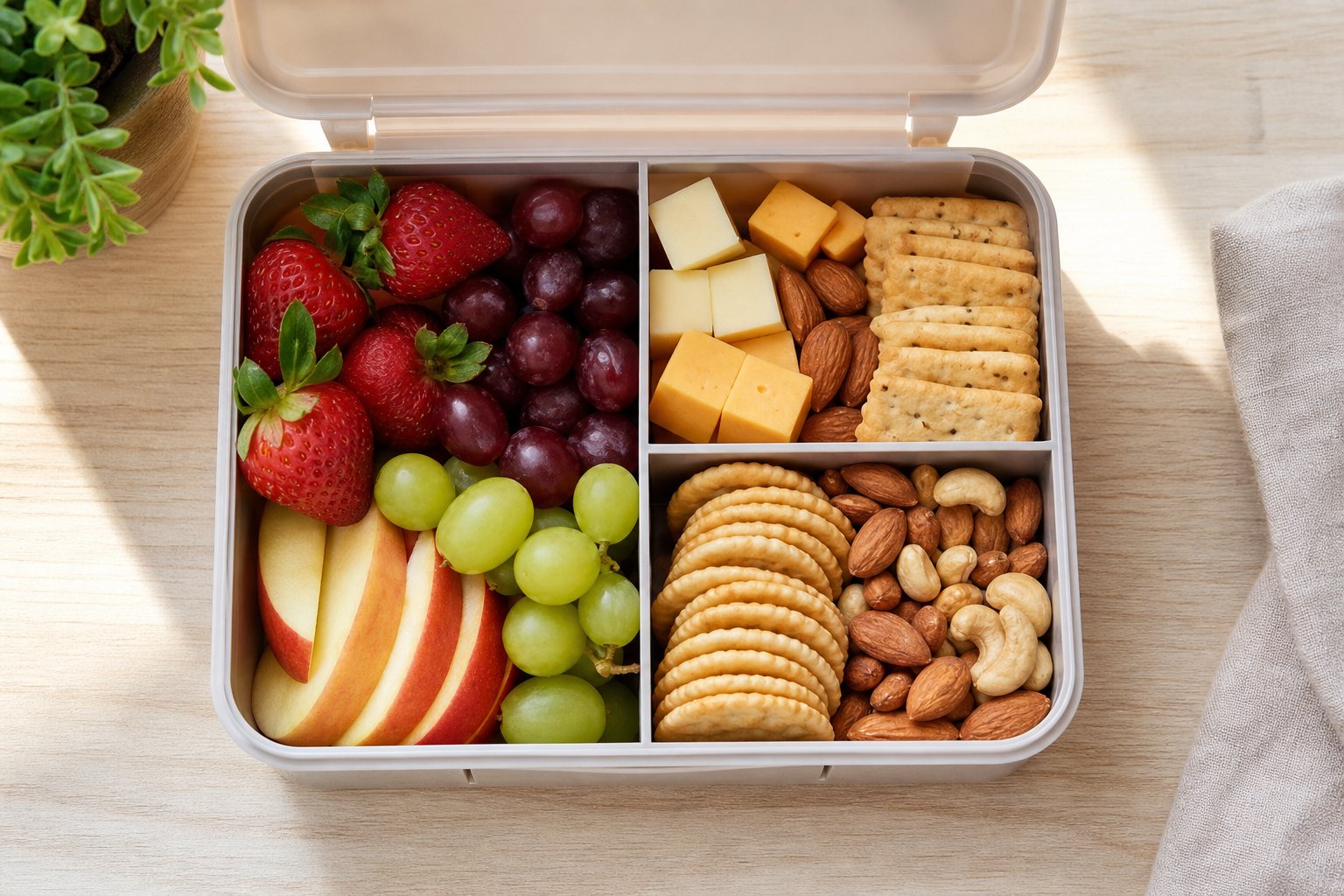
Check out our latest snack box collections!
Packing snacks for a road trip, flight, or busy day seems simple until you open your bag and find crushed crackers, melted chocolate, or pretzels softened by fruit juice. A compartment snack box solves these common problems by keeping sweet snacks away from savory foods, separating juicy items from dry ones, and containing stronger flavors.
A well-packed snack box requires more than filling each section with whatever is available. Different foods release moisture, absorb odors, soften, melt, or crumble during travel. Understanding how these foods behave helps you create a snack box that stays fresh, organized, and appealing until you are ready to eat.
This guide explains how to choose the right container, select travel-friendly foods, separate sweet and savory snacks, and protect delicate textures while you are on the go.
Key Takeaways
- Use divided compartments to keep sweet and savory snacks apart and prevent unwanted flavor or texture transfer.
- Choose a snack box with secure seals, and keep juicy foods away from dry snacks such as crackers and chips.
- Use an insulated bag and cold packs whenever you pack cheese, deli meat, yogurt, dips, or other perishable foods.
Choosing the Best Snackle Box Container
The best snackle box depends on how you plan to use it, which materials you prefer, and how much food you typically pack. Look for a container that keeps foods separate, cleans easily, and fits comfortably into your daily routine.
Compartment Styles and Portability
Snackle boxes are available with fixed or adjustable compartments. Adjustable dividers let you create larger spaces for sandwiches, cheese, or fruit and smaller sections for nuts, candy, and other bite-sized snacks.
A foldable or built-in handle makes the container easier to carry, especially when you are also managing bags, drinks, or other travel essentials. A clear lid allows you to check the contents without opening the box.
Consider the overall size as well. A compact snackle box fits more easily into a backpack, work bag, or lunch bag, while a larger model may be better for picnics, parties, or family outings. Measure your available cabinet and refrigerator space before choosing a container.
Food-Safe Materials and Cleaning Tips
Choose a container made from materials clearly labeled as food-safe and BPA-free. Polypropylene and PET are common options, but you should always follow the manufacturer's instructions regarding temperature limits, microwave use, freezing, and dishwasher cleaning.
A dishwasher-safe box can simplify cleanup. For handwashing, removable compartments and dividers make it easier to reach corners and grooves. Silicone seals can help prevent leaks, but they should be removed and cleaned regularly when the product design allows.
Dry every compartment and seal thoroughly before storing the box. Trapped moisture can cause odors or mold, particularly around lid grooves and removable gaskets.
Organizing for Different Occasions
For work lunches, place cheese, vegetables, and crackers in separate sections so moisture does not soften dry foods. For road trips, choose shelf-stable options such as nuts, dried fruit, pretzels, and individually wrapped snacks.
For parties, a larger compartment tray can serve as a compact charcuterie-style board with meats, cheese, olives, fruit, and crackers. Keep meats and cheeses properly chilled until serving.
When packing for children, offer a manageable selection rather than filling every compartment with a different item. For meal preparation, consider using separate areas for sweet and savory foods, especially when either category includes strong aromas or sticky ingredients.
Selecting Snacks That Stay Fresh and Separate
Selecting snacks according to texture, moisture, and storage needs helps prevent unwanted flavor transfer and sogginess. Crunchy foods need dry compartments, while perishable protein snacks should remain properly chilled.
Crunchy Snack Options
Give popcorn its own dry compartment because it can quickly lose its crisp texture when exposed to moisture. Air-popped or lightly seasoned popcorn is generally less messy than heavily buttered varieties.
Vegetable chips and pita chips travel well when kept away from juicy foods such as grapes or melon. Breaking oversized chips into smaller pieces can make them easier to pack, although they should not be crushed too finely. Mini rice cakes are another lightweight option.
Granola clusters and granola bites can hold their shape better than loose granola. Banana chips also provide crunch, but they may soften in humid conditions, so keep the compartment tightly sealed.
Trail mix is a practical option, but separating nuts from sticky dried fruit can help both ingredients maintain their texture. Energy bites made with oats and nut butter should have their own compartment because they can be sticky.
Sweet Treats That Travel Well
Mini cookies travel well in an airtight compartment. Choose unfrosted varieties without soft fillings when possible, as they are less likely to smear or become messy. Crisp cookies such as gingersnaps or vanilla wafers generally hold their shape better than very soft cookies.
Keep dried apricots, mango, cranberries, and other dried fruits away from crackers or chips. Their residual moisture can soften dry snacks over time. Pack only the amount you expect to eat so the container does not need to be opened repeatedly.
Granola bites and energy balls can provide a sweet and filling option. Individually wrapped versions reduce contact with nearby foods. Homemade varieties made with honey or syrup may become sticky in warm conditions and should be packed separately.
Chocolate chips and yogurt-covered treats are best reserved for cool conditions. Place them in a protected compartment and use an insulated bag with a cold pack when temperatures are warm.
Savory Snacks for On-the-Go
String cheese and cheese cubes should be packed in an insulated bag with a cold pack. Keep individually wrapped cheese sealed until you are ready to eat it.
Shelf-stable jerky can be a convenient protein option when stored according to its package instructions. Beef, turkey, and plant-based varieties pair well with plain crackers. Date-based or nut-based protein bites may be sticky, so give them a separate compartment.
Mini sandwiches require careful packing. Use sturdy bread, limit high-moisture fillings, and wrap each sandwich in parchment paper before placing it in the box. Sandwiches containing cheese, meat, cream cheese, mayonnaise, or other perishable ingredients should remain chilled.
Pita chips and mini rice cakes pair well with hummus or guacamole, but the dip should be kept in a sealed cup and properly chilled. Roasted chickpeas should remain in a dry compartment to preserve their crunch.
Creative Snackle Box Ideas for Every Occasion
Packing a snackle box for a specific occasion means considering who will eat it, how long it will be stored, and whether refrigeration is available. Road-trip snacks should be filling, low-mess, and easy to eat. Children often enjoy familiar favorites paired with one or two new options. Themed boxes can also make movie nights, beach days, and game days feel more special.
Road Trip Favorites
Fill road-trip snackle boxes with satisfying foods that travel well and require minimal cleanup. Shelf-stable jerky, mixed nuts, pretzels, and crackers provide a useful combination of textures.
Peanut butter pretzels offer crunch and are easy to eat without utensils. Give them their own dry compartment so they do not soften beside fresh fruit.
Fruit leather and dried apricots or mango provide sweetness without the juice and mess of cut berries. Check packaging carefully when packing for anyone with food allergies.
Other convenient options include granola bars, whole-grain crackers, mini cookies, and shelf-stable snack packs. Keep perishable foods chilled throughout the trip.
Snackle Boxes for Kids and Picky Eaters
Build a child's snack box around a few familiar foods, then add one nutritious or less familiar option in a small portion. Whole-grain cereal, fruit, vegetables, cheese, and crackers can create a varied selection.
Too many choices can feel overwhelming. Four to six options are often enough for a balanced and visually appealing box. Possible combinations include cheese cubes, thin apple slices, popcorn, crackers, and a sealed dip.
For a selective eater, repeat a favorite food in more than one section instead of filling the box with items that are unlikely to be eaten. Introduce new foods in small amounts beside something familiar.
Simple presentation can also make snacks more inviting. Use small cookie cutters for cheese or soft fruit when age appropriate, or cut fruit leather into easy-to-hold strips.
Themed Snackle Box Inspirations
For movie night, fill a larger compartment with white cheddar or caramel popcorn. Add chocolate-covered nuts, yogurt-covered pretzels, fruit-flavored gummies, or mini cookies in separate sections.
For beach days, prioritize foods that are less likely to melt, such as pretzel sticks, dried fruit, crackers, roasted chickpeas, and shelf-stable snack bars. Fresh vegetables and cheese should remain in a properly chilled insulated bag.
Game-day boxes can focus on savory foods such as pretzels, spicy nuts, crackers, and shelf-stable snack mixes. Pepperoni, cheese, pickles, salsa, and other perishable or high-moisture foods should be sealed separately and kept cold.
Breakfast snackle boxes can include granola, dried apple rings, mini muffin pieces, and energy bites. A hard-boiled egg can add variety, but it must remain properly chilled until eaten.
How to Keep Sweet and Savory Foods Separated
Keeping sweet and savory snacks apart protects both flavor and texture. Strategic placement, secure dividers, and small reusable cups can prevent sticky, fragrant, or moist foods from affecting the rest of the box.
Preventing Flavor Mixing
Some sweet and savory snacks do not store well beside one another. Chocolate can soften and coat nearby foods, while sticky candy may transfer sugar or flavor to crackers and nuts.
Identify snacks with strong aromas, high moisture, or ingredients that melt easily. Dried fruit, chocolate, candy, seasoned crackers, dips, and pickled foods should each have a secure compartment.
Temperature also matters. Chocolate and other heat-sensitive treats should be packed separately and kept cool so they do not melt into surrounding sections.
Arranging Compartments by Category
Place sweet foods on one side of the box and savory foods on the other. This layout makes the box easier to navigate and creates distance between contrasting flavors.
Start by placing the main savory snack in the largest available compartment. Add complementary savory items, such as crackers or roasted chickpeas, in nearby sections.
Place candy, cookies, or dried fruit at the opposite end. Middle compartments can hold neutral snacks such as plain popcorn, rice cakes, or lightly seasoned granola.
Using Dividers and Silicone Cups
Fixed dividers are useful, but small foods can sometimes move beneath or around them when the container is carried. Reusable silicone cups provide an additional barrier for sticky, strongly flavored, or high-moisture snacks.
Place silicone cups inside larger compartments to contain chocolate pieces, honey-roasted nuts, fruit leather, or small candies. Choose cups that are food-safe, fit securely, and can be cleaned according to the manufacturer's instructions.
Silicone cups can also divide a large section into smaller areas or keep juicy fruit away from dry crackers. They are particularly helpful when packing different snack preferences in one container.
Must-Have Fillers and Mix-Ins for Variety
A satisfying snack box should include a variety of textures and flavors. Combining crunchy foods, sweet treats, and protein-rich options can make the selection more enjoyable and substantial.
Nuts, Seeds, and Dried Fruit
Almonds and cashews provide a satisfying crunch and fit easily into smaller compartments. Sunflower or pumpkin seeds may suit some nut-free needs, but always confirm individual allergy requirements and review product labels for cross-contact warnings.
Sesame sticks add a savory flavor that can balance sweeter foods. Roasted chickpeas are another crunchy option, but they should remain dry and separate from fruit or dips.
Dried apricots, cranberries, and mango add sweetness without the juice of fresh-cut fruit. Keep them separate from crackers because their moisture and sticky surfaces can affect dry foods. Dates can also be packed, but they are best placed in a silicone cup or individual wrapper.
Candy, Gummies, and Treats
Gummy bears, fruit-flavored gummies, and sour candies can satisfy a sweet craving without melting as quickly as chocolate. Keep them in their own compartment to prevent colors, sugar, and flavors from transferring.
Individually wrapped fruit chews travel well and are less likely to stick to other foods in warm conditions. Chocolate chips can also be packed as a small treat, provided the box remains cool.
Granola bites offer sweetness and texture from oats and seeds. Energy bites made with dates, nut butter, and oats can serve as a more substantial option, but they should remain separated from dry snacks.
Protein Boosters
Protein balls made with oats, nut butter, or protein powder can be a filling snack between meals. Pack them in a larger compartment or reusable liner so they do not stick to nearby foods.
Shelf-stable jerky is another convenient protein option. Beef, turkey, and plant-based varieties fit into narrow compartments and pair well with crackers. Follow the package instructions for storage after opening.
String cheese can add protein and pair well with whole-grain crackers, but it should remain chilled in an insulated bag with a cold pack.
Packing, Storing, and Traveling Tips
Once the snack box is filled, proper packing and storage protect its contents. Paying attention to temperature, moisture, and compartment capacity can prevent sogginess, spills, and damaged snacks.
Maintaining Freshness on the Go
Check that every divider, cup, and lid is secure before placing the box in a bag. Some containers have individual compartment lids, while others use a single lid designed to press against the dividers. Follow the manufacturer's instructions and avoid relying on a container for liquids unless it is specifically labeled leak-resistant or leakproof.
Pack cheese, yogurt, deli meat, cut fruit, dips, sandwiches, and other perishable foods in an insulated bag with cold packs. Keep the bag closed as much as possible, particularly during long trips or warm weather.
When packing several boxes, label each one with a reusable marker, sticker, or piece of tape. This can prevent confusion during busy mornings or group outings.
Shelf-stable snacks such as nuts, pretzels, and dried fruit should remain dry. Make sure the lid closes completely and keep the box away from leaking bottles, wet towels, or condensation.
Keeping Crunchy Snacks Crisp
Moisture can quickly soften crackers, pretzels, chips, and cookies. Keep wet foods such as berries, melon, cucumber slices, dips, and cheese in separate, well-sealed sections.
Leave crackers in their original sealed sleeve when the packaging fits inside the compartment. This provides an additional barrier against humidity and keeps them fresh until needed.
For mini cookies and other baked treats, place parchment paper between layers when stacking them. This can reduce oil transfer and help protect delicate surfaces.
Kid-Friendly Safety and Portioning
Pack portions that children can comfortably finish. Avoid overfilling compartments, as excess food can make the box harder to open and increase the risk of spills.
Cut grapes, cherry tomatoes, and other round foods into age-appropriate pieces for young children. Consider the child's age, chewing ability, and individual needs when selecting nuts, popcorn, hard candy, and other potential choking hazards.
Children can help choose and pack one snack for each section from a set of approved options. This provides a sense of involvement while helping adults maintain an appropriate balance.
Choose secure latches that children can operate safely. Test the closure before leaving to confirm that the lid stays in place and the child can open the box without assistance when appropriate.
Frequently Asked Questions
Smart placement, secure seals, and appropriate storage temperatures help compartment snack boxes stay organized while protecting flavors and textures.
What container features help stop dips, chocolate, and juicy fruit from leaking into dry snacks?
Choose a container with secure seals that press firmly against each divider. Removable sauce cups are useful for dips and other wet foods. Do not pack liquids unless the container is specifically designed and labeled for them.
How do you keep crackers or chips crisp when packing them alongside cut fruit or cheese?
Place crackers and chips in the compartment farthest from wet foods. Keep fruit and cheese in securely separated sections, pat cut fruit dry before packing, and leave crackers in sealed packaging when possible.
What is the best way to portion sweet treats so they do not pick up savory flavors such as garlic or onion?
Place sweet treats at the opposite end of the box from strongly seasoned foods. Use a neutral snack as a buffer, or wrap fragrant savory items in parchment or a sealed reusable cup.
How full should each compartment be to prevent snacks from shifting and mixing?
Fill each section enough to limit movement without pressing food against the lid. Overfilling can prevent a secure closure, while leaving too much empty space allows snacks to move and break.
Which snacks are most likely to transfer flavor or moisture?
Cut fruit, soft cheese, dips, pickles, chocolate, and strongly seasoned foods are common sources of moisture or flavor transfer. Pat fruit dry, seal dips separately, and place aromatic foods in corner compartments or reusable cups.
How do you pack a snack box for a hot day?
Use an insulated bag with frozen cold packs and keep it out of direct sunlight. Choose shelf-stable snacks when reliable cooling is unavailable. Chocolate, cheese, yogurt, deli meat, eggs, dips, and other perishable foods require consistent temperature control.
Partager:
How to Choose the Right Drying Stone Mat Size for Your Sink and Counter Space
How to Keep Snacks Cool in a Portable Snack Box With an Ice Pack and Insulated Bag