

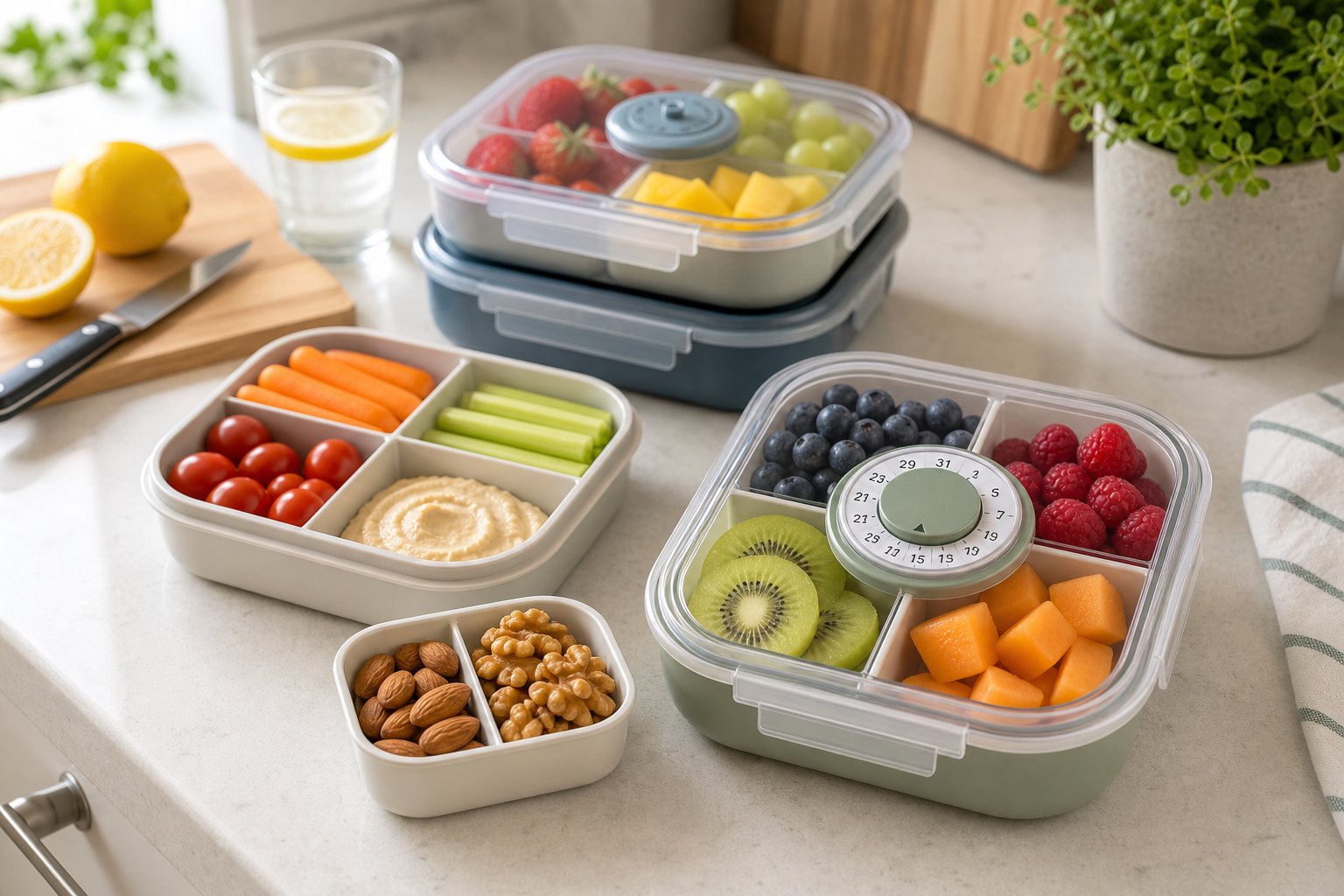
Check out our latest snack box collections!
Busy mornings can make balanced snacking feel harder than it needs to be. A simple weekly prep routine, paired with containers that have removable compartments and a built-in date dial, can make snacks easier to portion, organize, and grab when you are heading out the door.
Removable compartments help separate wet and dry foods, while a date dial gives you a quick visual record of when each container was prepared. The dial is useful for rotation, but it should be used alongside proper refrigeration, package directions, and food-safety guidance.
With a focused prep session and a small midweek refresh for more delicate foods, you can build a practical mix of snacks for work, school, travel, or home. This guide explains how to choose containers, plan portions, protect texture, rotate food safely, and create combinations that stay appealing throughout the week.
Key Takeaways
- Removable compartments help separate foods and make portions easier to organize.
- A date dial records the prep date and supports a first-in, first-out rotation system.
- Dry snacks can often be prepared for the full week, while some cut produce and perishable foods may need a midweek refresh.
Choosing the Best Removable Compartments and Date Dial Containers
The right container can make snack prep faster, cleaner, and easier to maintain. Look for a design that suits the foods you pack most often and fits comfortably in your refrigerator, lunch bag, or backpack.
Features to Look For
Choose containers with secure lids and seals that close evenly. A reliable seal helps limit leaks and protects dry foods from excess moisture, although it does not extend food beyond recommended storage times.
Removable compartments should fit securely without shifting during transport. Select food-safe materials and confirm that the container is suitable for the refrigerator, freezer, microwave, or dishwasher before using it in any of those environments. Clear lids are helpful because they let you identify contents without opening each container.
Date dials or rotating markers should be easy to read and adjust. Some display a day or number, while others use a simple color or symbol system. A dial built into the lid can be more convenient than disposable labels, provided it is cleaned and reset after every use.
Dishwasher-safe components can simplify cleanup. Follow the manufacturer's care instructions, especially for lids, seals, and gaskets. Stackable designs can also make better use of refrigerator space.
Types of Compartments for Different Snacks
Small compartments work well for nuts, dried fruit, seeds, chocolate pieces, cheese cubes, or a modest serving of dip.
Medium compartments can hold sliced fruit, vegetable sticks, yogurt, hummus, or cottage cheese. Pairing two or three sections can help you combine protein, fiber-rich foods, and satisfying fats in one snack box.
Large compartments are useful for sandwiches, whole fruit, muffins, or larger portions of trail mix. Removable dividers let you switch between one open space and several smaller sections based on the day's needs.
Tiered containers can be useful for keeping wet and dry foods apart. Place dips or yogurt in a tightly sealed section and keep crackers, granola, or pretzels separate until you are ready to eat.
Benefits of Date Dials for Freshness
A date dial makes it easy to record when a snack was prepared. Set the dial immediately after filling the container so you do not have to rely on memory later.
The date can help you place older snacks at the front of the refrigerator and use them first. It also makes it easier for family members to identify which container should be selected next.
A date dial is a tracking tool, not a guarantee of safety or freshness. Always consider the ingredients, refrigerator temperature, package instructions, and how long the food has been stored.
Strategic Snack Planning for the Week
Effective snack prep starts with two questions: what will you realistically eat, and which foods will hold their quality until you need them? The answers shape your shopping list, portion sizes, and prep schedule.
Balancing Nutrition With Variety
A satisfying snack often combines a protein source with fruit, vegetables, whole grains, or another fiber-rich food. Adding a moderate portion of nuts, seeds, cheese, avocado, or nut butter can make the snack feel more substantial.
Protein options include hard-cooked eggs, Greek yogurt, cheese, cottage cheese, turkey roll-ups, hummus, roasted chickpeas, or oat and nut butter bites. Choose options that match your dietary needs and follow safe storage instructions for perishable ingredients.
Variety helps prevent snack fatigue. Plan several combinations instead of repeating the same box every day. For example, pair apple slices with nut butter one day, vegetables with hummus another day, and yogurt with granola later in the week.
Consider texture and temperature as well. Some foods can stay in a pantry or lunch bag, while dairy, eggs, cut produce, and other perishables must remain cold. Use the date dial to support rotation, then confirm that each food has been stored appropriately.
How Many Snacks to Prep Per Day
The right number of snacks depends on your routine, meal schedule, appetite, and activity level. Start with the number you usually eat rather than preparing extra containers that may go unused.
For two snacks per weekday, prepare up to 10 portions. A mix of shelf-stable and refrigerated choices can provide flexibility without crowding the refrigerator.
If your schedule changes from day to day, keep some components separate. You can assemble a lighter or more filling snack by adding or removing one compartment.
Review what was eaten at the end of the week. Reduce combinations that regularly come home untouched and make more of the options your household consistently enjoys.
Top Healthy Snacks to Meal Prep and How to Portion Them
The best grab-and-go snacks are convenient, appealing, and suited to the way they will be stored. Portioning them in advance can reduce last-minute decisions and make it easier to choose an option that fits your day.
Nutritious Bites: Sweet and Savory Options
Energy bites are a convenient sweet option. Combine oats, peanut or almond butter, honey, and optional seeds or chocolate pieces, then roll the mixture into small portions. Store them according to the ingredients used.
Muffins can also be prepared in batches. Recipes made with ingredients such as Greek yogurt, cottage cheese, fruit, oats, or seeds can add variety to a weekly snack plan. Cool baked items completely before storing them to reduce condensation.
For a savory option, pair a hard-cooked egg with cherry tomatoes, cucumber slices, crackers, or a small serving of hummus. Keep the egg refrigerated and leave it unpeeled until needed when practical.
Frozen yogurt bites can be made by combining yogurt with mashed fruit, spooning the mixture into molds, and freezing it. Transport them in a properly chilled container if they will not be eaten at home.
Best DIY Snack Mixes
Homemade trail mix lets you control the ingredients and portion size. Combine nuts, seeds, dried fruit, cereal, or a small amount of chocolate, then divide the mixture into small compartments or reusable bags.
Granola can be stored separately from yogurt to protect its texture. Add it just before eating so it stays crisp.
Crackers with toppings travel well when the ingredients remain separate. Pack whole-grain crackers in a dry compartment and add hummus, cheese, or nut butter in a leak-resistant section.
Homemade granola bars can be wrapped individually or placed in a clean, dry compartment. Let them cool fully before storing to prevent trapped moisture.
Prep-Ahead Proteins and Dairy
Hard-cooked eggs are a practical refrigerated option. Store them promptly after cooking and use the prep date to track rotation. Federal cold-storage guidance lists hard-cooked eggs for up to one week in a refrigerator kept at 40°F or below.
Cottage cheese and Greek yogurt work well in sealed compartments. Keep fruit, granola, nuts, and other toppings separate until serving.
String cheese and cheese cubes are easy to portion, but they still need refrigeration. Follow the package's storage directions and use-by date.
Egg salad can be paired with crackers or cucumber slices. Because it is a prepared egg salad, refrigerate it promptly and plan to use it within the recommended refrigerated storage window. FoodSafety.gov lists egg salad for three to four days at 40°F or below.
Roasted chickpeas can be a crunchy alternative to nuts. Let them cool completely before sealing them so steam does not soften the texture.
Fruits and Veggies That Last All Week
Whole apples, oranges, grapes, and firm bananas are convenient choices, but their storage needs vary. Keep bananas whole until needed, and wash or cut other fruit close to the time you plan to eat it when possible.
Cherry tomatoes, broccoli florets, cauliflower, carrots, and bell pepper strips can work well in snack boxes. Wash produce under running water, dry it thoroughly, and refrigerate cut items promptly.
Peaches, plums, and apricots ripen at different rates. Use softer fruit earlier in the week and reserve firmer pieces for later.
Separation protects texture. Store wet foods such as berries, yogurt, and dips away from crackers, nuts, or granola. Removable compartments keep the ingredients together without allowing moisture to spread.
Smart Storage and Labeling Strategies
A consistent storage system makes prepared snacks easier to see, rotate, and use. Good organization also reduces the chance that older containers will be forgotten at the back of the refrigerator.
Shelf Placement and Fridge Organization
Dedicate a shelf, bin, or drawer to grab-and-go snacks. Choose an area where containers remain consistently cold and are easy to reach. Avoid storing highly perishable foods in the refrigerator door, where temperatures can fluctuate more often.
Arrange snacks by type or use date. For example, keep vegetable and hummus boxes together, place yogurt-based snacks in another row, and group eggs or cheese in a clearly visible section.
Keep dry snacks in a pantry or another cool, dry area until they are needed. When a snack includes refrigerated and shelf-stable parts, store the components separately and combine them before leaving.
Stack reusable containers according to the manufacturer's guidance. Place stable, larger containers on the bottom and avoid stacking them so tightly that cold air cannot circulate.
Rotating for Freshness Using Date Dials
Set each dial to the prep date as soon as the container is filled. Use the same convention for every box so the meaning of the dial remains clear.
Move older containers to the front and place newer ones behind them. This follows the first-in, first-out method and helps reduce forgotten food.
Check the date before selecting a snack, but do not rely on the dial alone. Different ingredients have different storage limits, so follow package directions and recognized food-safety guidance.
Tips for Preventing Waste and Spoilage
Confirm that every lid and removable compartment is seated correctly before refrigerating the container. A poor seal can cause leaks and allow dry foods to absorb moisture.
Keep granola, crackers, nuts, and other dry foods separate from yogurt, cut fruit, dips, and dressings. Combine them only when you are ready to eat.
Dry washed produce thoroughly before portioning it. If you use a clean paper towel to absorb condensation, replace it when it becomes damp.
Keep the refrigerator at 40°F or below and refrigerate perishable foods within two hours, or within one hour when the surrounding temperature is above 90°F. Appearance and smell can help identify obvious spoilage, but food can be unsafe even when it looks normal, so storage time and temperature also matter.
Snack Assembly and Creative Combos for Every Taste
Snack prep becomes easier to maintain when the combinations offer different textures, flavors, and levels of fullness. A few interchangeable components can create several distinct boxes without adding much prep time.
Pairing Dips and Dippers
Hummus pairs well with cucumber slices, carrots, cherry tomatoes, flatbread crackers, or pita chips. Greek yogurt can be used as a dip for fruit or as the base for a savory herb dip.
Peanut butter and almond butter work with apple slices, celery, bananas, or whole-grain crackers. Keep nut butters in a sealed section and consider allergy restrictions when preparing snacks for school, work, or shared spaces.
Preparing two dip options can add variety. For example, alternate between hummus and tzatziki during the week rather than placing both in every container.
Mixing Proteins, Fruits, and Grains
A practical snack box may include a protein source, fruit or vegetables, and a whole-grain item. Oat and nut butter bites, cheese, yogurt, hummus, roasted chickpeas, and eggs are all flexible options.
Try cheese with grapes and whole-grain crackers, a hard-cooked egg with cherry tomatoes and pretzels, or Greek yogurt with berries and granola stored separately.
Removable compartments make it easy to prepare individual components and combine them differently throughout the week. Alternating sweet and savory choices can make the routine feel less repetitive.
Snacks Kids Love to Help Prep
Children may be more interested in snacks they helped select or assemble. Invite them to choose fruit, wash produce, count crackers, or arrange foods in the compartments.
Older children can help roll no-bake oat bites or build trail mix from approved ingredients. Use age-appropriate foods, account for allergies, and avoid choking hazards such as whole nuts for young children.
String cheese, pretzel sticks, sliced fruit, vegetables, and dips can give children several simple choices. Adults should handle cutting, cooking, and food-safety tasks that are not appropriate for the child's age.
Routine Habits for Effortless Weekly Snack Prep
A repeatable routine turns snack prep into a manageable household task. Choosing a consistent time, using an assembly-line process, and refreshing delicate foods midweek can keep the system practical.
Making Prepping Part of Your Sunday
Set aside a focused block of time on Sunday or another convenient day. Wash produce, prepare sturdy ingredients, portion dry snacks, and organize refrigerated components.
Start with foods that store well, such as whole fruit, carrots, crackers, nuts, seeds, granola, and individually packaged dairy products. Prepare more delicate cut fruit, berries, or mixed salads closer to the day they will be eaten.
Set the date dial on every completed box. For foods with shorter storage windows, plan a brief midweek refresh instead of preparing the entire week's supply at once.
An assembly-line approach can save time. Wash first, dry thoroughly, cut approved ingredients, portion them, close the lids, set the dials, and place the oldest items at the front.
Getting the Whole Family Involved
Assign age-appropriate jobs to make prep faster. Younger children can wash sturdy produce or sort packaged items, while older children can measure ingredients and assemble their own boxes with supervision.
Let each family member choose from a small group of approved options. Giving everyone some control can reduce waste and make the prepared snacks more appealing.
A short family prep session can include separate stations for produce, proteins, dry ingredients, and labeling. Rotate the tasks to keep the routine engaging.
Label containers with names when needed and use the same date-dial system for everyone. Clear ownership and consistent rotation reduce morning confusion.
Frequently Asked Questions
These answers cover the most common questions about portioning, storage, separation, and date-dial use.
How do you plan a full week of snacks that stay fresh and do not get soggy by day three?
Prepare dry snacks for the full week, keep wet and dry ingredients separate, and refresh delicate produce or prepared salads midweek. Dry washed produce thoroughly and add granola, crackers, or toppings only when you are ready to eat.
What kinds of snacks work best in removable compartments without flavors mixing?
Use mild, dry foods such as crackers, plain nuts, seeds, vegetables, and granola. Place cheese, flavored foods, dips, nut butters, and aromatic ingredients in tightly sealed sections.
How should you portion snacks for kids versus adults when you are prepping for the week?
Base portions on age, appetite, activity level, and the foods being served rather than a fixed calorie target. Use smaller compartments for children, choose age-appropriate textures, and account for allergies and choking risks.
How do you use the date dial properly so you know what to eat first and what to discard?
Set the dial to the prep date, place older containers at the front, and use them first. Check the ingredient's storage guidance as well because the dial records time but does not determine safety on its own.
What is the best way to clean and dry removable compartments to avoid odors and staining?
Wash the components promptly with warm, soapy water or follow the dishwasher instructions. For lingering odors, use a baking soda and water paste if the manufacturer allows it, then rinse and air-dry every piece completely before storage.
Can you prep a mix of refrigerated and pantry snacks in the same container system without compromising food safety?
Yes, but store the components in the conditions they require and combine them before leaving. Keep perishable foods at 40°F or below in an insulated bag with sufficient cold packs, and do not leave them unrefrigerated for more than two hours, or one hour when temperatures exceed 90°F.
Partager:
How to Keep Snacks Cool in a Portable Snack Box With an Ice Pack and Insulated Bag
What Foods Should You Avoid Packing in a Compartment Snack Box for Upright Travel?