

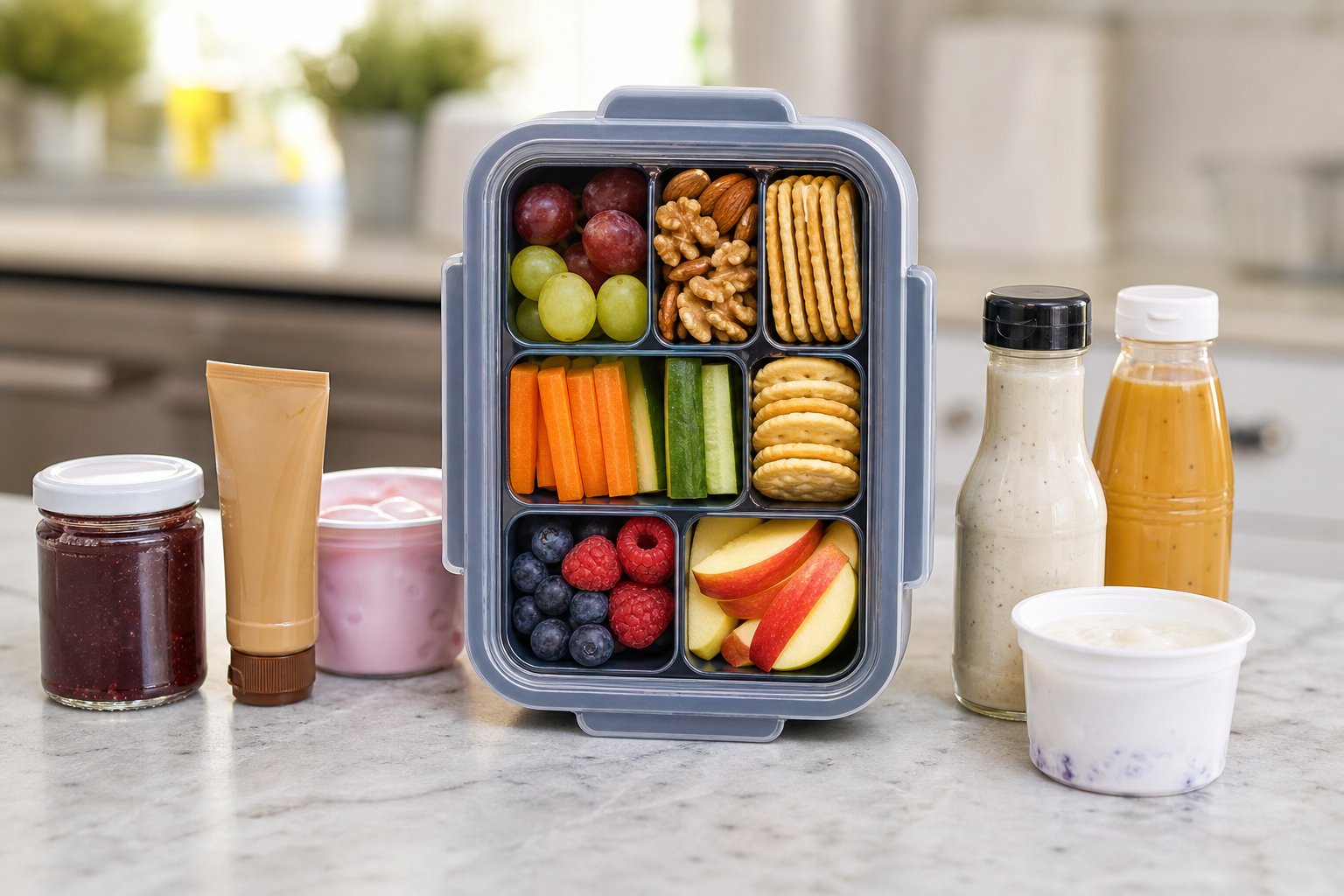
Check out our latest snack box collections!
One leaky or strongly scented snack can turn a convenient travel box into a sticky, unpleasant mess. The wrong foods may also lead to crushed snacks, soggy compartments, spoilage, or delays at airport security.
Liquids, spreads, soft foods, and pungent items are often poor choices for upright travel. Yogurt, hummus, nut butter, ripe fruit, soft cheese, tuna, and hard-boiled eggs can leak, soften, spoil, or affect nearby travellers.
This guide explains which foods to avoid, how airport liquid restrictions apply, and which solid snacks stay fresh, tidy, and easy to carry.
Key Takeaways
- Avoid liquids, gels, spreads, and strongly scented foods.
- Choose sturdy snacks such as crackers, firm cheese, seeds, and non-sticky dried fruit.
- Separate moist and dry foods to prevent leaks, crumbs, and soggy textures.
- Check current airport security and destination entry rules before travelling.
Foods That Don’t Travel Well in a Snack Box
Some foods bruise, leak, soften, or spoil when packed upright in a compartment box. Knowing what to avoid can prevent an inconvenient mess during your journey.
Highly Perishable Items
Delicate berries, including raspberries and blackberries, bruise easily and may release juice into nearby compartments. Soft cheeses such as brie and cream cheese can also become unsafe if they are not kept properly chilled.
Raw sprouts are another poor choice for long journeys without refrigeration. Alfalfa and bean sprouts require careful temperature control and can quickly become unappealing in a warm, humid container.
Cut avocado may brown and soften during travel, while sushi and other foods containing raw fish must remain cold. Avoid packing these items unless you can maintain a safe temperature throughout the trip.
For longer journeys, choose shelf-stable options such as protein bars, trail mix, crackers, and dried fruit. Select dried fruit that is firm rather than highly sticky.
Foods Prone to Leaking or Oozing
Yogurt, hummus, salsa, and other dips may leak if the snack box tips or gets shaken. Even a small amount can spread across the lid or into neighbouring compartments.
Cut watermelon, oranges, pineapple, and tomatoes release moisture as they sit. Their juice can quickly soften bread, crackers, cereal, and other dry snacks. Cherry tomatoes may also burst if they are compressed by heavier foods.
Nut butters are easier to manage in sealed single-serving packets. Spreading them on crackers in advance can cause the crackers to absorb oil and lose their texture.
Overripe bananas are also risky because they bruise, split, and soften easily. For upright travel, choose firm whole fruit, sturdy vegetables, and securely packaged snacks.
Smelly or Allergen-Rich Foods
Tuna, hard-boiled eggs, aged cheeses, kimchi, and sauerkraut can release strong odours when stored in a closed container. These foods may also transfer their aroma and flavour to nearby snacks.
Garlic-heavy dips, onion-flavoured crackers, curry snacks, and strongly scented fish may be unsuitable for planes, trains, offices, or other shared environments. Milder foods are usually a more considerate choice.
Peanuts and tree nuts are common allergens. Follow any airline, school, workplace, or venue policies, and avoid opening nut products when staff ask passengers or visitors not to do so.
Roasted chickpeas, pumpkin seeds, and sunflower seeds can be useful alternatives, but always check the label for allergen warnings and possible cross-contact.
Understanding Liquid, Gel, and Paste Restrictions
Many solid snacks pass through airport security without difficulty, but yogurt, nut butter, hummus, jam, and other spreadable foods are generally treated as liquids or gels.
Common Foods Classified as Liquids or Gels
Airport security authorities may classify foods as liquids or gels when they are spreadable, pourable, creamy, or squeezable. This can include foods that do not seem like conventional drinks.
Foods commonly treated as liquids or gels include:
- Yogurt and pudding
- Applesauce and fruit purée
- Nut and seed butters
- Hummus, guacamole, salsa, and other dips
- Jam, jelly, honey, and syrup
- Cream cheese and soft cheese spreads
- Sauces, dressings, and gel-filled snacks
Hard cheese, crackers, bread, and other foods that hold their shape are generally treated as solid foods. However, fresh produce and animal products may be restricted by customs or agricultural rules at your destination.
TSA and International Security Rules
At Canadian and United States airport checkpoints, liquids, gels, and aerosols in carry-on baggage are generally limited to containers with a capacity of 100 mL or 3.4 oz or less. In Canada, these containers must fit inside one clear, closed, resealable bag with a maximum capacity of one litre. United States screening follows the comparable 3-1-1 liquids rule.
A large yogurt container, full jar of nut butter, or oversized tub of hummus will generally need to go in checked baggage or be left behind unless it qualifies for an exemption.
Exceptions may apply to breast milk, infant or toddler food, formula, prescription medication, essential non-prescription medication, and other medically necessary liquids. Exempt items should be accessible and presented to screening officers for inspection.
Rules can vary by country, airport, and destination. Check the official guidance for every airport on your itinerary before packing.
Best Practices for Packing Solid Snacks
Solid snacks are usually the easiest choice for travel. They are less likely to leak, are simpler to organize, and often pass through airport screening without additional handling.
Dry and Shelf-Stable Foods
Dry snacks work well in compartment boxes because they stay tidy and generally do not require refrigeration. Individually wrapped protein bars are convenient, but chocolate or yogurt coatings may soften in warm conditions.
Trail mix offers variety and can be divided into smaller compartments for portion control. Choose a mix with larger pieces, and avoid chocolate or sticky candy if the box may be exposed to heat.
Dried apricots, apple rings, mango slices, and apple chips provide sweetness without the bruising associated with delicate fresh fruit. Choose less sticky varieties or use a parchment liner to simplify cleanup.
Whole grain crackers, roasted chickpeas, pretzels, popcorn, and dry cereal are also suitable. Keep them away from heavy or moist foods to prevent crushing and sogginess.
Snack Ideas for Hassle-Free Screening
Practical solid snacks for travel include:
- Nuts and seeds, where appropriate
- Granola bars and firm energy bites
- Whole apples, oranges, and firm bananas
- Cheese sticks packed with a cold source
- Carrot, celery, and bell pepper sticks
- Pretzels, popcorn, and sturdy crackers
- Roasted chickpeas or broad beans
- Firm, non-sticky dried fruit
Original packaging can make ingredients and allergen information easier to identify. Single-serving packages also help reduce spills and overpacking.
Keep spreadable foods within the applicable liquid limit and place them in the required liquids bag. A small sealed packet is generally easier to manage than a jar or open cup.
Optimal Compartment Choices
Match each snack to the size and position of its compartment. Place heavier foods where they will not crush crackers, chips, or delicate fruit.
Small compartments work well for seeds, trail mix, and roasted chickpeas. Medium compartments suit dried fruit and sturdy crackers, while larger sections provide space for whole fruit, vegetable sticks, or wrapped protein bars.
Compartment organization by snack type:
| Snack Type | Compartment Size | Placement Tips |
|---|---|---|
| Protein bars | Large or medium | Place below lighter snacks for stability |
| Trail mix | Small or medium | Use a secure lid to prevent spills |
| Dried fruit | Medium | Use parchment for sticky varieties |
| Whole fruit | Large | Protect it from heavy items |
| Crackers | Medium or large | Keep them dry and away from weight |
Avoid Mess and Crumbs in Compartments
Foods that keep their shape are easier to carry upright. Choosing sturdy snacks and sealing each section properly can reduce crumbs, leaks, and residue.
Snacks That Stay Intact During Upright Travel
Trail mix with larger pieces stays in place more effectively than mixes containing fine seeds, powders, or crushed ingredients. Whole seeds, roasted chickpeas, and chunky dried fruit are easier to contain.
Dense, chewy protein bars usually travel better than brittle bars that can shatter. Keep each bar wrapped until you are ready to eat it.
Apple rings, apricot halves, firm mango slices, baby carrots, snap peas, and whole grapes can also travel well when properly washed, dried, and packed. Avoid overfilling the compartment or placing heavy items on top.
Minimizing Sticky and Crumbly Foods
Chocolate-covered snacks, frosted cookies, and soft candies can melt and leave residue on lids, seals, and dividers.
When packing crackers or chips, choose thick varieties such as pita chips, bagel crisps, or sturdy whole grain crackers. Place them in a single layer or protect them from heavier foods.
Loose granola, crushed pretzels, and broken cookies create fine crumbs that can move between compartments. Granola bars or larger clusters are easier to contain.
Powdered seasonings can also coat the box and transfer to other foods. Snacks with lightly baked or dry seasonings are generally tidier.
Nutrition and Allergen Considerations on the Go
A balanced travel snack box can include protein, fibre, carbohydrates, and healthy fats while still being easy to transport. Allergen safety and temperature control should remain priorities.
High-Protein and Energy-Boosting Choices
Firm protein bars fit easily into most snack compartments and can help make a travel snack more satisfying. Choose varieties that suit your dietary needs and are unlikely to melt.
Trail mix can combine carbohydrates, protein, and fats in a compact portion. Select larger ingredients that will not slip through gaps, and leave out chocolate pieces when warm conditions are expected.
Dried apricots, apple rings, and mango slices provide convenient carbohydrates. Keep sticky dates, figs, or heavily sweetened fruit in liners or separate sealed cups.
Single-serving seed butter packets pair well with crackers or apple slices. Treat them as liquids or gels when passing through airport security.
Managing Common Allergens and Sensitivities
A multi-compartment box does not automatically prevent allergen cross-contact. Use separate sealed containers when foods must remain isolated, and avoid sharing utensils between compartments.
Read ingredient lists and allergen statements carefully. Products labelled nut-free, gluten-free, or dairy-free may still carry warnings about shared equipment or facilities.
Wash the box, lid, seals, and dividers thoroughly with soap and water before packing food. Allow every part to dry completely before reuse.
Keep prescribed emergency medication accessible and separate from food. Follow the storage and usage instructions provided by your healthcare professional.
Creative Snack Box Packing Tips
A simple packing strategy can keep snacks fresh, intact, and easy to reach. Separate foods according to their moisture, texture, weight, and aroma.
Smart Ways to Separate Snacks
Keep moist foods away from crackers, cereal, and other crisp snacks. Separate strongly flavoured foods from mild items, and protect anything delicate from heavier products.
Useful separation tips include:
- Dry washed fruit and vegetables thoroughly before packing.
- Keep crunchy snacks in dry, securely covered compartments.
- Place pungent foods in separate airtight containers.
- Use parchment paper around sticky or delicate snacks.
- Keep heavy items below crackers and other breakable foods.
Place snacks you plan to eat first in an easy-to-reach section. This reduces unnecessary opening, shifting, and handling during the journey.
Making Use of Resealable Compartments
Resealable sections help contain crumbs and reduce exposure to air. Close each compartment as soon as possible after removing a snack.
For cleaner packing:
- Leave enough space for each lid to close securely.
- Check every seal before placing the box in your bag.
- Use liners or small cups for sticky foods.
- Label compartments when sharing the box with others.
- Keep moist and dry foods behind separate seals.
Pack reasonable single servings instead of filling every section to the top. This supports portion control and reduces pressure against the lid when the box is carried upright.
Frequently Asked Questions
Choose snacks that stay firm, dry, and fresh when the box is upright. Avoid foods that leak, melt, produce strong odours, or require refrigeration that you cannot provide.
Which snacks are most likely to leak into other compartments when the box is carried upright?
Yogurt, hummus, salsa, dressings, soft cheese, and juicy cut fruit are most likely to leak. Use sealed inner containers or choose dry alternatives.
What foods tend to get soggy or lose their texture when packed beside crunchy items?
Cucumber, tomatoes, grapes, pickles, and cut fruit can release moisture. Keep them separate from crackers, chips, cereal, and bread.
Are there ingredients that can melt or sweat and make a mess in a snack box during a commute?
Chocolate, soft cheese, and creamy spreads can soften or release oil in warm conditions. Use a cold source or choose heat-stable snacks.
What foods are too sticky and will glue themselves to dividers, lids, and seals?
Dates, figs, sticky dried fruit, honey, jam, and nut-butter energy bites can leave residue. Pack them in liners, wrappers, or sealed cups.
Which snacks have strong odours that can make the whole box smell like them all day?
Tuna, hard-boiled eggs, garlic-heavy foods, onion-flavoured snacks, and strong cheeses can transfer odours. Use milder foods or a separate airtight container.
What kinds of foods are more likely to spoil quickly if the snack box is not kept chilled?
Yogurt, soft cheese, dairy dips, deli meat, cooked poultry, seafood, eggs, and cut produce require careful temperature control. Perishable food should generally not remain at room temperature for more than two hours, or one hour when the temperature is above 32°C. Use an insulated bag with a reliable cold source.
Partager:
How to Prep a Week of Grab-and-Go Snacks With Removable Compartments and a Date Dial
How Much Space Do You Need for an Indoor Golf Practice Net?