

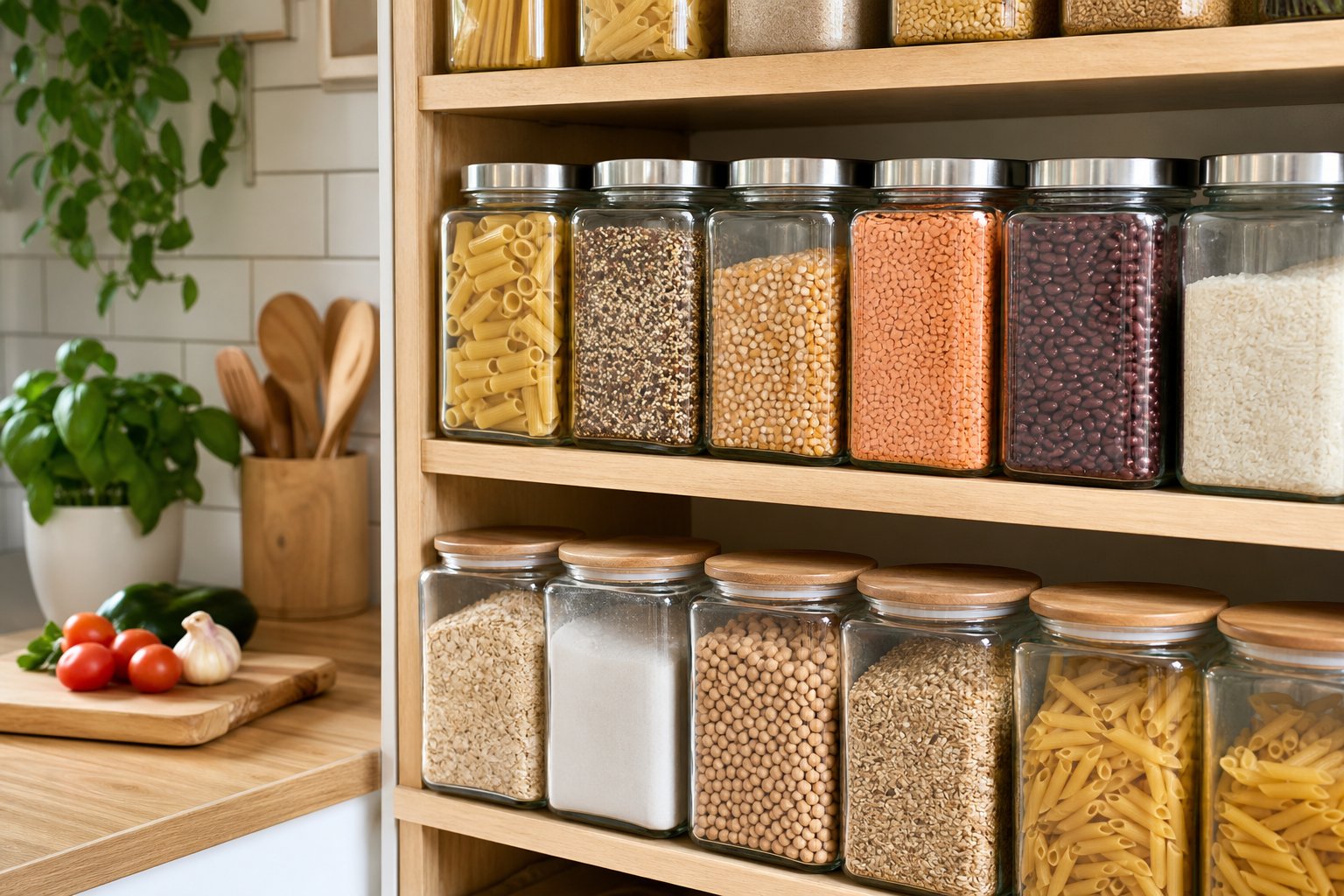
Check out our latest glass jars collection!
A clear pantry makes cooking feel faster before you even turn on the stove. When ingredients are visible, easy to reach, and stored in matching containers, meal prep becomes smoother and less wasteful.
Square glass jars are especially useful because their clear sides show what you have at a glance, while their straight edges help you use shelf space more efficiently. They are ideal for dry goods, snacks, baking staples, and meal prep ingredients that often disappear in bags and boxes.
In this guide, you will learn how to choose the right jar sizes, organize shelves, label ingredients, keep food fresh, and build a pantry system that helps you cook with less searching and more confidence.
Key Takeaways
- Square glass jars use shelf space way better than round ones and let you see exactly what's inside
- Good labelling and grouping in clear jars cuts down prep time and stops you from buying things twice
- Airtight square glass storage keeps food fresh longer and makes meal prep smoother
Key Advantages of Square Glass Jars for Pantry Organization
Square glass jars totally change up pantry storage. Their clear walls help you make quick decisions, airtight lids keep food fresh, and the square shape means you can fit more into tight spaces.
Clear Visibility for Easy Meal Prep
Transparent jars take the guesswork out of cooking. You can see flour levels at a glance and add it to your shopping list before you even start baking. This saves time since you don't have to open a bunch of jars just to find what you need.
Glass jars show off the textures and colors of your ingredients, making it easy to tell rice from quinoa or brown sugar from white. We notice that this kind of visual clarity really speeds up prep because there is no more reading labels or peeking under lids over and over.
The see-through design also helps you avoid buying things you already have. Opaque containers hide stuff in the back, but glass jars let you keep track and cut down on food waste from forgotten ingredients.
Airtight Seals for Food Preservation
Airtight lids keep moisture, air, and pests away from your dry goods. Quality glass jars usually have silicone gaskets that seal tightly, keeping flour, sugar, and cereal fresh for weeks or even months longer than the original packaging.
These seals lock in flavor and texture better than most plastic containers. Coffee beans stay aromatic, nuts stay crunchy, and brown sugar doesn't turn into a brick. That means fewer last-minute store runs and less money wasted on stale food.
We always test the seal by giving the lid a gentle tug after closing. If you feel a little resistance, you know it's airtight and your food's safe.
Space Efficiency and Stackable Design
Square jars fit together with no wasted space, unlike round ones that leave gaps. This matters a lot in small kitchens or narrow cabinets. We've seen people get 20-30% more storage just by switching to square jars.
Flat sides let jars sit flush against the wall and stack neatly. You don't have to worry about them rolling or toppling, so you can stack a few layers high without stress. Suddenly, those awkward corner cabinets become useful again.
| Storage Advantage | Square Glass Jars | Round Glass Jars |
|---|---|---|
| Space efficiency | Minimal gaps between jars | 15-25% wasted space |
| Stacking stability | Flat sides prevent rolling | Requires extra caution |
| Cabinet depth use | Fits tightly in corners | Leaves unusable gaps |
Choosing the Best Square Glass Jars for Your Pantry Needs
Pick your square glass jars based on three main things: the sizes you need for your favorite ingredients, the lids that keep things fresh, and materials that are safe for your family and the planet.
Comparing Sizes for Pantry Staples
Most home cooks need three jar sizes to cover their basics. Small jars (500ml to 750ml) are great for spices, seeds, and flours you don't use much. Medium jars (1L to 1.5L) work for things like brown sugar, quinoa, and coffee.
Large jars (2L to 3L) hold big-batch stuff like flour, oats, or pasta. We always keep a couple of each size on hand to avoid the headache of mismatched containers.
Square jars stack way better than round ones, giving you up to 20% more shelf space, which is especially helpful in narrow cupboards. Flat sides also mean jars won't roll when you pull them forward.
Common Pantry Staple Storage Sizes:
- Rice: 2L to 3L
- Flour: 2.5L to 3L
- Pasta shapes: 1.5L to 2L
- Granulated sugar: 2L
- Nuts and dried fruit: 750ml to 1L
Selecting Lid Types for Different Uses
Airtight lids with silicone gaskets keep pantry staples fresh. We like clamp-style glass jars for daily-use stuff because they're easy to open one-handed when you're juggling a spatula.
Bamboo or wood lids with silicone rings also seal well and look nice on open shelves. They're less likely to warp than plastic, but we don't use them in really humid kitchens.
Screw-on metal lids are good for foods that stain or have strong smells, like curry powder or dried mushrooms. Two-piece mason jar lids work for canning, but they're not as handy for daily pantry use.
The right lid can actually make you cook faster. Flip-top closures mean you can pour or scoop without putting the jar down, saving you a few seconds every time.
Safety and Sustainability Considerations
We stick with tempered or borosilicate glass because it handles bumps and temperature changes better than regular glass. If a tempered jar breaks, it shatters into less dangerous pieces, and borosilicate doesn't crack with hot or cold foods.
Even for dry goods, BPA-free lids matter. Chemicals can transfer from lids to your hands and then to your food over time.
Glass jars cut out single-use plastic and last for years. We've used some of ours for eight years and the seals still work. Sure, they cost $4 to $8 each, but that's nothing compared to all the disposable bags and boxes you won't buy.
Look for jars with replaceable gaskets and lids. That way, if something wears out, you can just swap the part instead of tossing the whole jar.
Maximizing Storage Space and Layout in Any Kitchen
Square glass jars really shine in tight kitchens if you use some smart layout tricks. Open shelving puts everything at eye level, and things like lazy Susans and vertical stacking help you use every corner and shelf.
Arranging Clear Containers on Open Shelving
Open shelves turn your jars into a display you actually use. We keep the most-used stuff like flour, sugar, and pasta right at eye level. The glass makes it easy to check what you need without opening anything.
Square jars line up with barely any wasted space. We arrange them by height, with tall jars in back and short ones in front, so you can see everything at a glance.
Labelling matters on open shelves. We use the same style labels on every jar for a tidy look. White labels with black writing work in most kitchens, but chalkboard labels add charm if you're into the farmhouse vibe. Consistency is key.
We stick to dry goods in sealed jars for open shelves and avoid anything that needs to rotate often or is sensitive to light. Big glass jars are perfect for bulk stuff like rice and oats that you use all the time.
Utilizing Vertical Space and Lazy Susans
Stacking jars vertically can double your storage if you plan it right. Square jars stack securely on their flat tops. Measure your shelf height first to make sure you can fit two or three layers with room to grab the top jar.
Lazy Susans make corner cabinets actually usable. We put medium square jars on 12-inch turntables for spices and baking supplies. The square shape keeps jars from sliding off when you spin it, unlike round jars that tend to drift.
Shelf risers add another level in deep cabinets. We use them to put shorter jars in front and taller ones up high, so nothing gets buried. Wire risers are better than solid ones because you can see what's underneath.
For upper cabinets, we stash less-used items like specialty flours on the top shelf and keep everyday stuff within reach.
Organizing Drawers and Small Spaces
Deep drawers work better for square jars than we expected. We lay jars sideways in rows for things like grains, beans, and dried fruit. The square shape keeps them from rolling, and the labels are easy to read from above.
Drawer dividers hold jars upright and separated. Adjustable ones let you customize the space for your jar sizes, so nothing slides around when you open the drawer.
Small kitchens need creative fixes. We mount skinny shelves inside pantry doors for rows of small square jars with spices or baking powder. It uses space you'd otherwise waste.
Under-cabinet storage is handy for lightweight jars. We stick adhesive organizers under cabinets to hold tea, coffee, or spices. That frees up shelf space for bigger jars and keeps your go-to items right where you need them.
Top Strategies for Pantry Organisation and Labelling
Clear labels and smart categories make it way easier to find ingredients when you're cooking. We’ve seen kitchens go from chaos to calm just by sticking to a labelling system and grouping similar things together.
Labelling Basics for Fast Ingredient Access
Keep labels simple and big enough to read from a distance. High-contrast text is best on glass jars because you want to scan shelves quickly, not squint at tiny print.
Label every container, even if you think it's obvious. Flour and baking soda look pretty similar through glass, so you don't want to mix them up mid-recipe. Include the item name and the date you bought or opened it.
Put labels at the same height on all your jars for a neat look and faster scanning. For spice jars, label the lid too, especially if you keep them in a drawer or on a tiered rack.
What to put on your labels:
- Item name (be specific: "all-purpose flour," not just "flour")
- Quantity or volume if it helps
- Date opened or best-before date
Families that label everything spend about 40% less time searching for stuff. That time adds up!
Using Chalkboard Labels for Flexibility
Chalkboard labels solve the problem of changing what's in your jars. When you refill with something new, just wipe and rewrite.
Stick adhesive chalkboard labels straight onto your jars or use hanging tags on wire. Chalk markers look cleaner and don't smudge as much as regular chalk.
Test your labels before you commit. Some chalk markers don't erase well from certain labels, so try it on one jar first.
Black labels on clear glass look sharp, especially if your shelves are white or light-colored. The contrast can turn a boring pantry into something you actually want to show off.
Categorising Pantry Staples
Group items by how you use them, not just by food type. In our kitchen, we sort storage into baking supplies, breakfast items, cooking oils and vinegars, and snacks.
Practical category zones:
- Baking station: Flour, sugar, baking powder, baking soda, chocolate chips
- Breakfast corner: Oats, cereals, pancake mix, coffee, tea
- Cooking essentials: Rice, pasta, dried beans, lentils
- Spice collection: All spice jars together, either alphabetically or by cuisine
Put your most-used pantry staples at eye level in square glass jars. Stash less-used items higher or lower. This way, you don’t have to stretch or bend every time you cook.
Within each zone, arrange jars by height or by how often you grab them. Tall jars fit best at the back of deep shelves, and short spice jars belong up front. We’ve learned this small tweak solves the annoying “What’s hiding behind the pasta?” issue that seems to haunt every pantry.
Specialty Storage Ideas Using Square Glass Jars
Square glass jars shine when you match them to specific kitchen tasks, from organizing baking goods to keeping spices right at your fingertips. Their stackable shape and clear sides make them perfect for both practical storage and nice-looking displays. They keep your kitchen efficient, and honestly, they just look good.
Snacks, Baking Supplies, and Bulk Goods
We portion pantry staples like flour, sugar, and oats into our go-to jar sizes. A 2-litre jar fits a standard bag of all-purpose flour, while 1-litre jars are great for brown sugar, baking soda, and chocolate chips. Because of their square shape, you can fit more jars on a shelf than with round ones, which is kind of a game changer in tight spaces.
For snacks, we use mid-sized jars for trail mix, granola, and pretzels, keeping them low enough for kids to grab. That cuts down on packaging waste and keeps snacks fresher than half-open bags. Bulk goods like lentils, quinoa, and dried beans stack up neatly in matching square jars, so you can quickly see what you have before you shop.
Slap a label on each jar with the contents and purchase date. Removable labels or a grease pencil on the glass both work. This way, you don’t mix up ingredients, and it’s easier to rotate stock, especially for baking stuff that doesn’t last forever.
Spices and Meal Prep Essentials
Small square spice jars (usually 120-240ml) turn messy spice cabinets into tidy grids. We line ours up alphabetically or by cuisine, with labels facing out so you can spot what you need fast. The uniform shape means no more bottles rolling around in drawers.
For meal prep, we use larger square jars (500ml-1L) for chopped garlic, diced onions, or cooked rice, or anything that speeds up dinner on a busy weeknight. Glass doesn’t hold onto smells like plastic, so everything tastes fresh. These jars also come in handy for dry rubs, spice blends, and homemade seasoning mixes.
Stack smaller spice jars on tiered shelf risers to make the most of your cabinet’s height and keep everything in view. It’s a small thing, but it really does make cooking quicker since you’re not digging around for the right jar.
Utensil Holders and Kitchen Decor
We also repurpose square glass jars as countertop utensil holders. A big 2-3 litre jar by the stove keeps wooden spoons, whisks, and spatulas handy, and the glass is heavy enough not to tip over.
Smaller jars double as kitchen decor. Fill them with colourful dried pasta, or layer baking ingredients for a ready-made recipe starter. Sometimes we use them for tea lights, fresh herbs in water, or whatever seasonal stuff looks good at the moment. The clean lines of square jars fit in with both modern and farmhouse kitchens, which is a nice bonus.
Group three jars of different heights on open shelves for a little visual interest, or pick one standout jar for your kitchen island. Because they’re see-through, displays stay light and uncluttered, which is pretty important if your kitchen’s on the small side.
Maintaining Freshness and Preserving Food Quality
Good sealing, regular checks, and a bit of inventory tracking help keep your food fresh and cut down on waste. These habits make sure your square glass jars do their job and make cooking smoother.
Techniques for Food Storage Longevity
Moisture control matters most for keeping dry goods fresh. Before you pour flour, sugar, oats, or pasta into jars, make sure everything’s totally dry and at room temp. Any leftover moisture can cause condensation, which leads to mould and clumps.
Silicone gaskets in bamboo or wood lids create an airtight seal that keeps out oxygen and humidity. Press down on each lid until you feel or hear the seal snap into place. That’s what keeps air from sneaking in.
Keep jars away from direct sunlight and heat, so not right next to the stove or dishwasher. Sunlight breaks down nutrients in spices and oils, and heat messes with the seal over time. Pantries or cabinets with steady, moderate temps work best.
Don’t overfill the jars. Fill them about 80-90% full so the seal can compress properly. If you cram too much in, ingredients can push against the gasket and mess up the seal.
Tips for Checking Airtight Containers
Test new jars before you trust them with pricey ingredients. Close the lid and try lifting the empty jar by the lid. If the seal’s good, the lid holds the jar’s weight.
Check silicone gaskets every month for cracks, warping, or stuck-on food. Pull them out and wash separately in warm, soapy water. Even tiny bits of dried food can let air in and spoil your stuff.
Listen for a soft suction sound when you open jars. That means the seal held. If the jar opens with no resistance, the gasket might need replacing or the lid isn’t closing right.
Watch for condensation inside jars, especially during the first week. If you spot droplets, moisture got in, or maybe you filled the jar before the food was dry. Move the contents to a clean, dry jar and make sure they’re moisture-free before refilling.
Managing Pantry Inventory
Square glass jars make it easy to see what you have, so tracking inventory is a breeze. We always face labels forward and group similar items together: baking supplies, breakfast stuff, snacks, and grains.
Put the things you use most at eye level or within easy reach. Backup supplies or seasonal stuff can go up high. This way, you’re not shuffling everything around every time you cook.
Use a first-in, first-out system. When you buy something new, pour it into the jar first, then add the older stuff on top. That way, nothing sits forgotten at the back and goes stale.
Keep a running list of low items on your phone or a magnetic notepad. Glass jars let you see at a glance what’s running out, but jotting it down right away saves you from last-minute dashes to the store. We’ve noticed this habit naturally cuts down on overbuying and waste.
Label jars with what’s inside and the date you filled them. Masking tape and a marker work for temporary setups, but printed labels look more polished and keep your pantry looking organized.
Frequently Asked Questions
These quick answers help you choose, label, clean, and arrange square glass jars so your pantry stays easy to use.
What jar sizes work best for staples like flour, rice, pasta, and snacks so you can spot what you need at a glance?
Use large jars for flour, rice, oats, and pasta, medium jars for snacks and baking add-ins, and small jars for spices, seeds, and small portions. A mix of 64 ounce, 32 ounce, 16 ounce, and 8 ounce jars usually covers most pantry needs.
How do you organise square jars on pantry shelves to maximise space and keep ingredients easy to grab?
Place everyday ingredients at eye level and group jars by use, such as baking, breakfast, snacks, and dinner staples. Keep heavier jars on lower shelves, lighter jars higher, and use risers or turntables for deep corners.
What's the best way to label glass jars so you can find ingredients quickly and track expiry dates?
Use clear front labels with the ingredient name and a smaller fill or expiry date. Keep labels at the same height on every jar so shelves are easy to scan. For drawer storage, add labels to the lids too.
How can you set up square jars for meal prep so weeknight cooking feels faster and less chaotic?
Pre-portion dry ingredients you use often, such as rice, quinoa, oats, or snack mixes. Group ingredients for common meals together so weeknight cooking starts with less measuring, searching, and cabinet clutter.
Are square glass jars truly airtight, and what should you look for in lids to keep food fresh longer?
They can be airtight, but the lid matters most. Look for silicone or rubber gaskets that compress firmly. Test the seal before storing ingredients for a long time, and replace gaskets when they feel brittle or loose.
What's the easiest way to clean and dry square glass jars and lids to avoid lingering smells or moisture issues?
Wash glass jars with warm, soapy water or in the dishwasher if they are dishwasher safe. Hand wash lids and gaskets, then dry every part fully before refilling. For strong smells, soak the jar with white vinegar and hot water, then rinse well.
Partager:
How to Choose the Right Vacuum Sealer Bag Size for Lunches, Snacks, and Leftovers
How to Organize Small Pantry Items With Clear Jars, Labels, and Refill Zones