

Check out our latest golf collection!
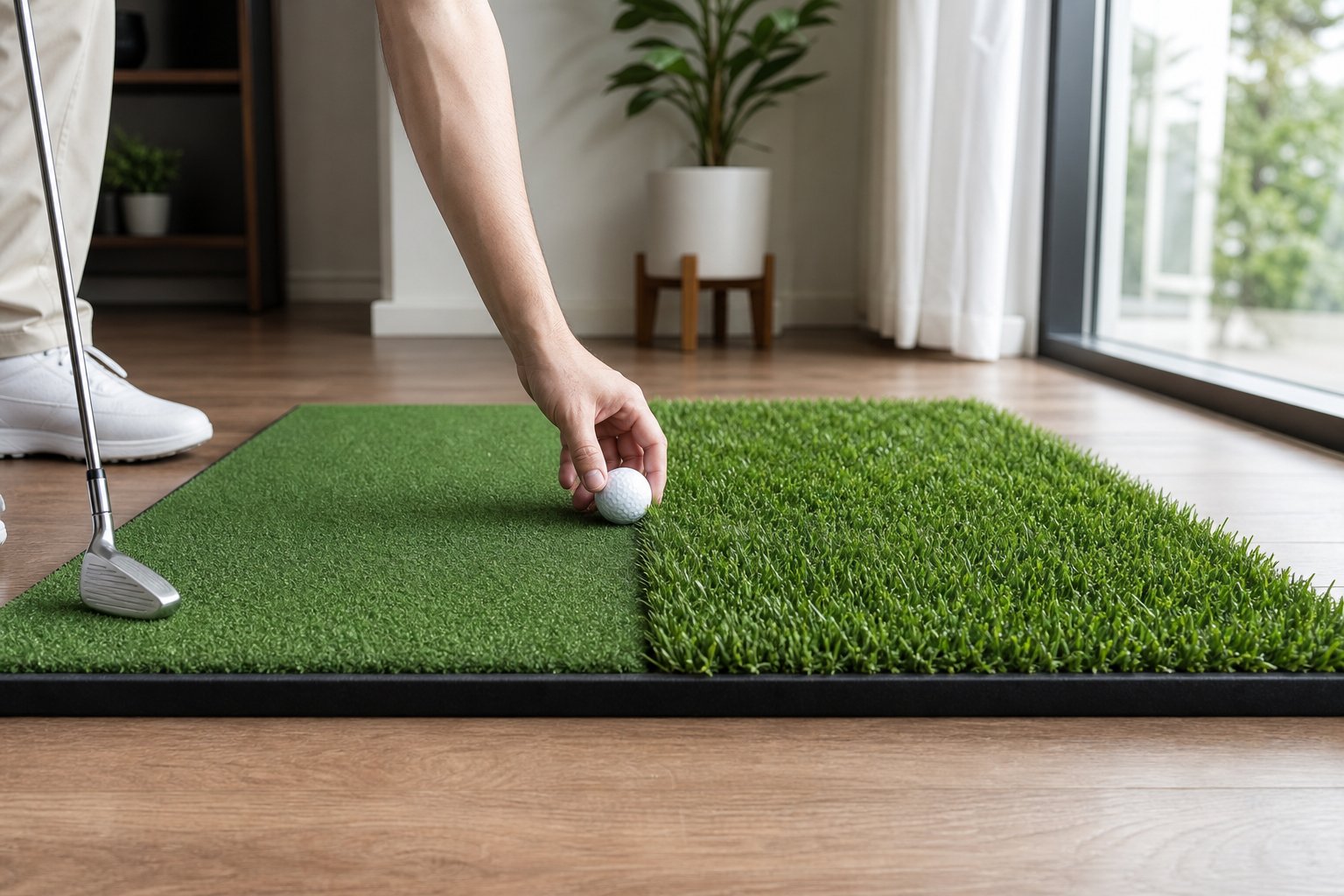
One surface can only teach you so much. If every practice shot comes from the same flat lie, your home setup may feel convenient, but it will not fully prepare you for the variety you face on the course. A dual-turf golf hitting mat solves that problem by giving you both fairway and rough turf in one compact practice station.
This makes home practice more realistic, whether you are working on clean iron contact, wedge control, chips from thicker grass, or full swings into a net. Instead of repeating the same shot over and over, you can train with different lies and build better feel from your garage, basement, or backyard.
In this guide, you will learn how dual-turf mats simulate course conditions, what features improve comfort and durability, and how to choose the right mat for a better home practice setup.
Key Takeaways
- Dual-turf golf mats give you both fairway and rough surfaces for practicing more shot types in one place
- Good mats mix realistic turf feel with thick, shock-absorbing bases to keep your joints safe during long sessions
- Check for mats with the right size, non-slip backing, and tough construction that stands up to repeated use
How Dual-Turf Surfaces Simulate Real Course Conditions
Dual-turf golf mats bring the contrast of short fairways and longer rough right to your home, giving you two distinct surfaces instead of just one boring texture. This setup teaches you to adjust your swing based on the lie, just like you'd have to do during a real round.
Difference Between Fairway and Rough Turf
The fairway turf section uses short, tightly packed synthetic fibers, usually around 0.5 to 0.75 inches tall. This creates a tight lie that rewards clean, ball-first contact with your irons and wedges. If you strike it right, the club glides through without much resistance.
The rough turf section has longer fibers, usually 1 to 1.5 inches, and more spacing between them. This design grabs your clubhead if you come in too shallow or sweepy, forcing you to commit to a steeper angle of attack, especially on chips and pitch shots.
On a single-surface mat, every shot feels the same. With a dual-turf golf mat, you instantly feel how grass length changes your contact. That feedback actually carries over to better performance when you face different lies on the course.
Practicing Multiple Shot Types With One Mat
We use the fairway side for full iron swings, driver practice off a tee, and controlled wedge shots. The crisp surface lets us work on compression and divot patterns without the club bouncing around.
The rough side is our short game zone. We practice flop shots, bunker-style swings, and punch-outs where we need to get through thicker grass. It's also great for testing out different wedge grinds and bounce angles.
With a dual-turf surface, you don't have to buy separate mats or constantly move stations. You just switch between surfaces in seconds, which keeps things interesting and your practice way more productive.
Enhancing Realistic Grass Feel at Home
Most cheap golf mats use stiff, carpet-like material that feels nothing like real turf. A good dual-turf mat uses high-density polypropylene or nylon fibers that flex and recover, so they act more like actual grass blades when you hit them.
The fairway feel comes from the fiber density and how the backing is built. Better mats have a shock-absorbing foam base that mimics the give of soil under natural turf, instead of the hard smack of hitting off concrete or plywood.
When the turf construction matches real grass, your hands get accurate feedback. You'll know right away if you hit it fat, thin, or clean. That realistic feel builds muscle memory that actually transfers to the course, instead of teaching you bad habits on a fake surface.
Features That Improve At-Home Training
Solid construction, visual training aids, and smart convenience features turn a basic golf mat into a real training tool that keeps practice fun and easy on your joints.
Premium Construction and Durability
Effective at-home practice starts with materials that can take thousands of strikes without falling apart. Premium dual-turf mats use high-density eco-friendly PP turf that resists tearing and fiber shedding, even when you hit a steep iron shot.
The real game-changer is the high-elasticity EVA foam base. Most budget mats use thin rubber that sends shock right up your arms. A proper EVA base soaks up impact energy but still gives you honest feedback. In our experience, about 0.83 inches of thickness hits the sweet spot between joint protection and realistic ground feel.
The EVA backing also keeps the mat from slipping. When you're swinging a driver at full speed on concrete or tile, the last thing you want is your mat sliding out from under you. High-elasticity EVA grips hard floors naturally, so you do not need sticky pads or extra rubber mats.
Alignment Aid and Swing Path Feedback
Built-in alignment aids take out the guesswork when you're practicing solo. Many dual-turf mats have visible lines or color contrasts between the fairway and rough, so you can line up square to your target every time.
The dual-turf surface itself acts as instant swing path feedback. When you're working on your short game, the rough-textured fibers grab your clubhead differently than the tight fairway section. That tactile difference helps you feel if you're making clean contact or getting a bit lazy.
We like using the turf seam as a natural alignment guide. Put it perpendicular to your target line and you've got a quick visual checkpoint for ball position and stance width, without extra gadgets cluttering up your setup.
Pre-Cut Tee Holes and Integrated Ball Tray
Pre-cut tee holes turn your mat into a full-bag practice station. Good mats have multiple tee positions so you can hit drivers without tearing up the turf or fussing with rubber tee holders that fall over.
An integrated ball tray keeps practice moving. Instead of bending down to grab balls from a bucket, you've got a dozen ready at waist height. Trust us, this small thing makes a big difference during longer sessions.
Not every dual-turf mat comes with a built-in ball tray, so double-check before you buy. Some brands focus on maximizing hitting space instead. If you care about keeping things organized in your garage or basement, make sure this feature is included instead of assuming all mats have it.
Benefits for Injury Prevention and Joint Comfort
Dual-turf golf mats with good cushioning tech protect your body during long practice sessions by soaking up the repetitive impact that would otherwise pound your wrists, elbows, and lower back. The right shock-absorbing base and realistic turf let you practice longer without the aches that come from hitting off concrete or thin mats.
Shock Absorption Technology
Most premium dual-turf mats use an EVA or high-elasticity EVA foam layer as the main shock-absorbing base. This material compresses a bit on impact and spreads the force out, instead of focusing it right where you hit. The EVA base thickness really matters for home practice because your floors just don't have the give that grass or dirt does.
We've noticed that mats with at least half an inch of EVA backing make a real difference when you're hitting 50 or 100 balls. Thinner mats under 0.4 inches might feel fine for a few swings, but the impact adds up fast. Your joints will let you know if something's off.
The dual-turf design works with the foam layer by spreading your club's strike across different turf densities. When you hit from the fairway, the firmer surface still benefits from the foam underneath, while the rough's longer fibers add a little extra cushion.
Reducing Wrist and Elbow Strain
Wrist and elbow strain usually shows up when the mat stops your club too suddenly. A mat without enough cushion creates a harsh stop that sends vibrations up the shaft and into your hands and arms. This gets even worse if you're working on swing changes or hitting full drivers indoors.
An EVA base absorbs most of that shock before it reaches you. The material flexes just enough to feel like you're hitting through turf, not bouncing off something hard. This is especially important for chip shots and pitch practice, where you're taking shallow divots and hitting the same spot over and over.
The dual-turf setup helps because you can switch between surfaces during a session. Moving from fairway to rough changes your swing just a bit and keeps you from overusing the same motion, which naturally eases repetitive stress on your joints.
Cushioning Across Different Practice Surfaces
What makes a premium dual-turf mat great is how it keeps cushioning consistent, no matter which section you're hitting from. Both the fairway and rough sit on the same shock-absorbing base, so your joints get protection whether you're practicing full swings or bump-and-run chips.
This consistency matters more than you might think. If one part of your mat has better cushion, you'll end up favoring that spot and limiting your practice variety. The EVA backing under both turf types means you can work on every shot in your bag without worrying about which area feels better.
Some mats add anti-slip features on the bottom of the EVA base, keeping the whole thing stable during aggressive swings. That stability protects your joints by stopping unexpected shifts mid-swing that could throw you off balance.
Maximizing Versatility for Home Setups
A dual-turf mat really shines when it fits your space, works with your gear, and stores easily between sessions. The right size, simulator compatibility, and storage options turn a mat from a bulky hassle into a must-have training tool.
Choosing the Right Size and Portability
A 5x4ft golf mat hits the sweet spot for most home setups. This size gives you enough room to stand behind the ball with a driver and stay stable through impact. Smaller mats often make you put one foot off the surface, which messes with your stance and can create bad habits.
We've found the 5x4 size works well in garages, basement corners, and backyards. You can swing freely without worrying about stepping off the edge. The tradeoff is weight, since good dual-turf mats this size usually weigh 12 to 14 pounds because of the thick foam base.
If you plan to move your mat between indoors and outdoors, portability matters. Mats that roll up are easier to carry than rigid ones, but they might show creases that take a couple days to flatten. If you're setting up permanently, weight doesn't matter as much as grip and durability.
Using Dual-Turf Mats With Golf Simulators
Dual-turf mats work great with golf simulators, giving you a stable surface that protects your floors and your joints. The key is to set the mat so the ball sits at the right distance from your launch monitor. Most golfers use the fairway section for full shots tracked by a launch monitor.
The rough section is perfect for short game practice between simulator sessions. You can work on chips and pitches without launching balls into your screen, using the thicker turf to fine-tune your technique. Mark your preferred ball spot with tape or a tee to keep things consistent.
Some mats for simulators come with built-in ball trays that hold 30 to 40 balls. While handy, you don't really need this if you already have a bucket. The main thing is making sure your mat doesn't slide during hard swings, since that can mess up launch monitor readings and isn't exactly safe.
Storage and Space-Saving Options
Roll-up designs make storing dual-turf mats way easier. A 5x4ft mat rolls into a cylinder about 48 inches long and 10 to 12 inches across, which fits vertically in closets or under benches. Use the included straps to keep it from unraveling.
Wall hooks work well if you've got garage space. Hang the rolled mat vertically to keep your floor clear. Some folks just lean their mats behind doors or in tight gaps, though this can wear out the edges faster.
For permanent setups, just treat the mat like a driving range mat that stays put. The thick foam base won't hurt your floors, and leaving it flat means you don't have to deal with creases. If you share your practice space, furniture sliders make it easy to move the mat without straining your back.
Popular Models and User-Focused Innovations
Manufacturers keep tweaking design features to tackle the usual headaches with home golf practice, such as quick wear spots and vague swing feedback. The three feature areas below show how smart engineering can boost durability, improve swing analysis, and help protect your joints.
Heavy-Duty Golf Mat Durability
A durable golf mat often uses a thick, multi-layer build designed for frequent use. A thicker base layer helps spread out the impact from your swing, so you do not pound one spot over and over.
This type of commercial-grade setup solves the main issue you’ll see with budget mats: they wear out fast, especially where you hit the same spot every time. A reinforced hitting strip can stand up to thousands of wedge and short iron swings without caving in.
With a multi-layer base, you get consistent feedback no matter where you tee up. You can move your ball around and still avoid dead zones or weird hard patches. This design really stretches out the mat’s lifespan compared to single-layer mats that get dented after a few months.
Swing Path Feedback Mat Features
Some golf hitting mats include alignment guides and visual markers right on the turf. These lines help you check your swing path and clubface angle at impact, with no extra gadgets needed.
Immediate visual feedback makes a huge difference when you’re trying to groove a new swing. Contrasting lines show clearly if your club is on the right path through the hitting zone.
This setup fits best when you’re drilling specific moves and want something reliable to check against. The mat gives you reference points that help lock in the right feel. If you’re practicing solo and want honest feedback, it’s a real plus.
Premium Cushioning Technology
High-end mats often focus on shock absorption to keep your joints comfortable during long practice sessions. Many use high-density EVA foam that compresses gradually instead of bottoming out when you swing hard.
Good cushioning stops that jarring shock you get from harder mats. That impact adds up, and over time, it can strain your wrists, elbows, or shoulders.
If you plan to practice more than 30 minutes at a time, check the cushioning depth. Thicker foam bases of 25mm or more cut down on fatigue way more than thin ones. You might lose a bit of ground-level feedback, but most home golfers would trade that for less joint pain.
What to Look for in a Golf Mat Review
A solid golf mat review tells you how the mat handles real-world practice and whether it survives daily use. The best ones dig into the materials, share honest long-term user stories, and explain what happens if you need help down the line.
Materials and Realistic Turf Feel
Materials make or break whether a mat feels like a real fairway or just beats up your joints after a few swings. We like reviews that mention turf density and how the club moves through the surface. A good golf mat review should say if the turf lets your club glide naturally or if it grabs and catches.
The base matters just as much. High-density EVA foam is the gold standard because it soaks up shock and saves your wrists and elbows from repetitive pounding. Reviews should talk about how the mat feels on fat shots, not just pure hits.
Realistic turf feel comes down to details. Does the club take a divot? Can you tell the difference between a clean strike and a mishit? We always look for reviews that cover a range of clubs, from wedges to drivers, since each one exposes different things about the mat.
User Experience and Longevity
The most useful reviews talk about what happens after weeks or months of practice hitting, not just the first day out of the box. We pay attention to feedback about how the mat holds up after hundreds of swings and whether you see any worn spots in the usual places.
Stability is huge. A review should mention if the mat stays put on concrete, carpet, or garage floors, or if it slides around mid-swing. Portability matters too, since not everyone has a dedicated space.
Setup counts. We want to know if the tee holders are any good, if the mat lays flat right away, and how easy it is to roll up for storage. These little details matter more than the sales copy.
Support and After-Sale Service
Warranty and customer service tell you a lot about whether a company stands behind its product. We look for reviews that mention how long the warranty lasts and if customers actually got help when needed.
A golf mat review should cover how the company handles defects or early wear. Stories about the return process, response times, or replacements are super helpful. We also watch for complaints about unreachable support or slow fixes, since those are red flags that can save you a headache.
Frequently Asked Questions
Dual-turf mats raise practical questions about tee setup, joint comfort, turf choice, and whether two surfaces really improve practice at home.
How does a two-surface golf mat change the way you can practice irons, wedges, and fairway woods at home?
It gives you two lies in one station. Use the fairway side for clean iron and wood contact, then switch to the rough side for wedges, chips, and shots that need a steeper swing.
Which turf side is better for clean contact versus fat-shot feedback when you are working on ball striking?
The fairway side is best for clean contact because it gives a tight, realistic lie. The rough side gives stronger feedback on fat shots because the longer fibers grab the club sooner.
Can you use real tees with a dual-surface hitting mat, and what tee setup works best for drivers and hybrids?
Most dual-surface mats work better with rubber or plastic mat tees instead of real tees. Use taller rubber tees for drivers and shorter tees, or the fairway turf, for hybrids and fairway woods.
What should you look for in base thickness and padding so a home golf mat feels realistic without beating up your wrists and elbows?
Look for a base around 0.75 to 1 inch thick with EVA foam or similar cushioning. It should absorb impact while still giving clear feedback on mishits.
How does practicing on a mat compare to hitting off real grass when you are trying to improve divots, low point control, and consistency?
A mat will not copy real divots exactly, but a quality dual-turf mat can still help with low point control and consistent ball-first contact. Real grass remains best for divot depth and direction.
Is it worth building a budget-friendly DIY hitting mat, or do purpose-built mats with multiple lies hold up better over time?
A DIY mat can work for light practice, but it usually wears faster and offers less cushioning. A purpose-built dual-turf mat is better for regular use, joint comfort, and long-term durability.
Partager:
Golf Practice Net vs Chipping Net: Which One Fits Your Backyard Practice Goals?
Can a Putting Mat Help You Build Better Distance Control Indoors?