

Check out our latest home & kitchen collection!
A pantry that stays organized for more than a few weeks might seem impossible, but the difference between temporary tidiness and lasting order comes down to one thing: designing a system that works with your real habits, not against them.
Most pantry organization fails because it focuses on making things look perfect instead of actually being practical. We end up with beautiful Instagram-worthy setups that fall apart the second life gets busy.
If you want a pantry that actually stays organized, you need simple zones based on how often you use things, a couple of quick routines to keep things in check, and storage that fits how you cook.
No need for expensive container systems or wild color-coding. Instead, let’s talk about building a setup that saves you time, cuts down on food waste, and still works when life gets hectic.
Doesn’t matter if you’ve got a walk-in pantry or just a single cabinet, here’s how to organize your space once and keep it that way without turning cleaning into a second job. We’ll cover setting up zones, picking affordable storage, and a few tricks to make it all stick.
Key Takeaways
- Organize your pantry by how often you use stuff, not just by food type
- Keep things tidy with a 5-minute daily reset and a quick 15-minute weekly check-in—ditch the marathon cleanouts
- Use affordable airtight containers and bins for stuff you grab a lot; leave the rarely used things in their original packaging
Setting Up the Foundations: Prepping Your Pantry
A well-organized pantry starts with an honest look at what you’ve got and a fresh start. Measure your space, toss what doesn’t belong, and pick storage that fits your real needs.
Evaluating Your Space and Storage Needs
You can’t organize what you don’t really know. Grab a tape measure and jot down your pantry’s height, width, and depth. Watch for weird corners, pipes, or anything that eats into space.
Think about how many people you’re feeding and how much you actually cook. A family that meal preps every Sunday needs a different setup than a couple who mostly eats out.
Go through the last couple weeks of meals and list what you reached for the most. That’s what needs to be easy to grab.
How do you shop? If you’re a bulk buyer, you’ll want deeper shelves and some floor space for big containers. If you shop small and often, you can get away with less.
What to measure:
- Total pantry square footage
- Shelf depths (usually 12-16 inches)
- Ceiling height for vertical storage
- Door clearance
Clearing Out and Cleaning
Take everything out. Yes, everything—even that weird jar in the back you forgot about.
Toss anything expired. If you’ve got unopened, still-good food you’ll never use, donate it. Don’t hang onto stuff out of guilt.
Vacuum or sweep to get rid of crumbs and dust. Wipe shelves with warm soapy water or a water-vinegar mix. Clean the door, walls, organizers—just get it all fresh.
Let shelves dry before putting anything back. Dampness breeds mold and nobody wants that. While you wait, scan for pest problems—droppings, chewed boxes, any of the usual suspects.
Choosing Shelving and Layouts
Fixed shelves are fine, but adjustable ones are way better as your needs change. Move them up or down to fit tall bottles or to add extra layers for small stuff.
Shelf spacing ideas:
| Item Type | Recommended Height |
|---|---|
| Cereal boxes, pasta | 14-16 inches |
| Canned goods | 10-12 inches |
| Spices, small jars | 6-8 inches |
Keep heavy things like cans and appliances on the bottom. Put everyday stuff at eye level so you’re not stretching or stooping. Top shelves? That’s for backup or rarely used things.
Pull-out drawers or lazy Susans make deep corners useful. Door racks work for spices and packets—just be sure your hinges can handle the extra weight.
Essential Pantry Categories Every Beginner Needs
A functional pantry comes down to four main zones that make meal prep faster and help you keep track of what you have. These categories keep things easy to find and make checking inventory a breeze.
Organizing Dry Goods and Grains
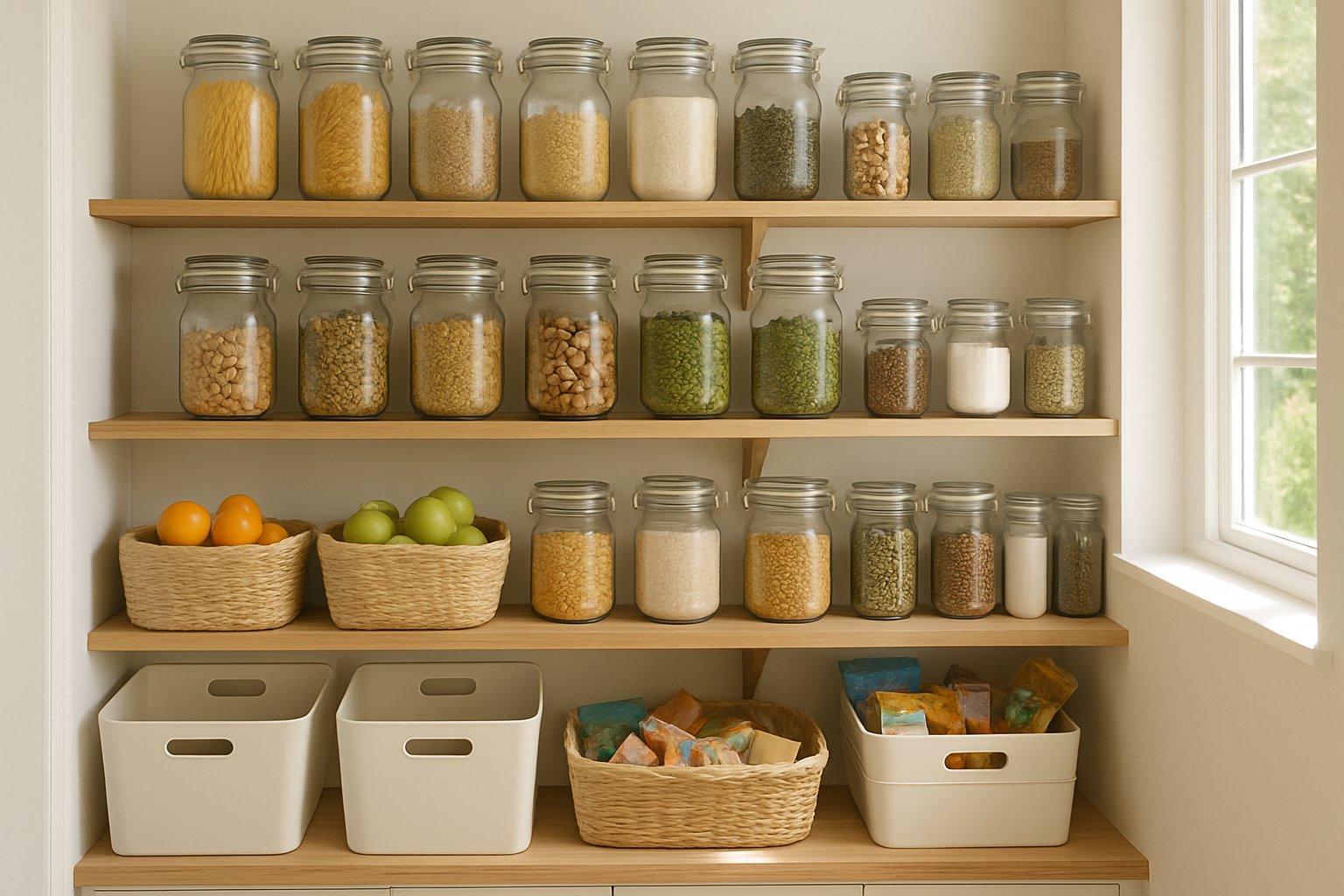
Rice, pasta, oats, and flour are pantry staples, but if you don’t contain them, they’ll take over. Pour them into clear, airtight containers as soon as you get home. That way, you can spot when you’re running low and keep pests out.
Group your grains by type: breakfast grains (oats, cornmeal) on one shelf, cooking grains (rice, quinoa) on another, baking flours together. Label with the purchase date—flour goes flat after about a year.
Dried beans deserve their own spot near grains. They last up to a year in sealed containers and are cheaper than canned. Keep your go-to beans like black beans and chickpeas at eye level.
Stocking the Right Oils and Condiments
Oils like olive oil need a cool, dark home or they’ll go bad faster. Don’t leave them out by the stove, tempting as it is.
Stick to the basics for condiments: soy sauce, vinegar (balsamic, white wine, apple cider), honey, peanut butter. They last for months and add flavor to almost anything. Keep vinegars in their original bottles in a cool spot.
Condiments to keep on hand:
- Extra-virgin olive oil (for cooking and finishing)
- Neutral oil like canola or vegetable
- Toasted sesame oil
- Balsamic and red wine vinegar
- Quality soy sauce or tamari
If you use ghee or coconut oil, stash them here too. Group oils and condiments separately so you’re not digging through bottles mid-cooking.
Canned, Jarred, and Shelf-Stable Goods
Canned and jarred foods are lifesavers when you’re out of fresh stuff. Tuna, tomatoes, beans—they make quick meals. When you organize, check expirations and put older cans in front.
Rotate your stock: backups go behind the current can or jar. Once you open something, move leftovers into a sealed container and refrigerate within a few days. Especially for acidic things like tomatoes—open cans and metal don’t mix.
Smart picks:
- Canned tuna or salmon
- Diced and whole tomatoes
- Beans (black, kidney, chickpea)
- Chicken or veggie broth
- Tomato paste in tubes
- Olives and capers
If you’ve got room, group by meal type: breakfast cans together, lunch proteins in another spot, dinner bases like tomatoes and beans somewhere else.
Snack and Treat Zones
Give snacks their own area so they don’t end up scattered and forgotten. Crackers, popcorn kernels, and other munchies stay fresher in airtight containers once opened.
Popcorn kernels are underrated—cheap, last forever in a jar, and super easy to grab. Keep them with other whole snacks, not mixed in with cookies or chips. Nuts can go here too, though they last longer in the fridge.
Group snacks by type: savory (crackers, pretzels, chips) and sweet (cookies, dried fruit, chocolate). Bins or baskets help keep small packages from turning into a mess.
If you’ve got kids, put their snacks at their eye level. Your own treats? Maybe a little higher up. It’s not about hiding things, just making the better choices easier when you’re in a hurry.
Storage Solutions That Actually Last
The right storage tools keep your pantry running smoothly for the long haul. Focus on containers that keep food fresh, organizers that really earn their spot, and labels that help everyone put stuff back where it belongs.
Choosing the Best Containers for Freshness
After trying way too many options, here’s what matters: airtight seals beat fancy looks every time. Glass jars with bamboo or silicone lids lock in freshness and let you see what’s inside.
Clear plastic containers are great for big stuff like flour, rice, and pasta. Look for BPA-free with real locking lids. You want a seal that actually keeps moisture and pests out.
Avoid weird-shaped containers or ones with tiny openings. You’ll want to fit your hand or a measuring cup in there. Squares and rectangles stack better than round—makes the most of shelf space.
Glass is best for things you refill a lot since it lasts forever and doesn’t hold smells. Plastic works for heavy stuff or for kids’ snacks—they won’t shatter if dropped.
The Power of Labels and Baskets
Labels turn a bunch of containers into a real system. Waterproof labels stick to glass and plastic and don’t peel off after a few months.
You can buy label sets for the basics like flour, sugar, coffee. For everything else, use a label maker or chalkboard labels you can erase and reuse.
Baskets and bins keep similar stuff together and make deep shelves usable. Medium clear bins work for snacks, baking stuff, breakfast items. Just pull out the basket, grab what you need, slide it back.
Wire baskets are better than solid bins for potatoes and onions—they need airflow. Put them on lower shelves so you’re not lifting heavy produce overhead.
Making the Most of Pantry Organization Gadgets
Tiered shelf risers let you see cans and jars in the back without digging. They double your visible storage and help you avoid buying duplicates.
Over-the-door organizers add storage without taking up shelf space. They’re perfect for spices, small packets, and stuff you grab all the time.
Lazy Susans are a lifesaver in corners or deep cabinets. Spin to grab oils, vinegars, and condiments—no more lost bottles.
Under-shelf baskets hook onto shelves and create new zones for lightweight things like snack bars or tea bags. They’re cheap, install in seconds, and don’t need tools.
Keeping Ingredients Fresh and Safe
Storing things right means less waste and safer food. Temperature, pest control, and smart habits protect your pantry and make sure you’re always cooking with good stuff.
Protecting Against Spoilage and Pests
Keep pantry items between 50-70°F in a dry spot away from heat and sunlight. Heat and moisture ruin food and invite bugs.
Move opened bags of flour, rice, oats, and beans into airtight containers right away. Those flimsy bags do nothing against pantry moths and weevils. Glass or heavy-duty plastic with rubber seals is your best bet.
Olive oil goes bad fast if you leave it out, so stash it in a dark cabinet. Butter stays fresher in the fridge’s butter compartment, not the door.
Wipe up spills and crumbs as soon as you spot them—pests love a free snack. Check jars and condiments for damaged seals, since broken ones can let bacteria in.
FIFO: First In, First Out for Pantry Items
Put older stuff in front and new things behind. It’s a simple trick but saves you from finding expired beans months later.
When you restock, pull everything forward, add new stuff at the back, then slide the older stuff up. Takes a minute, but it beats tossing out forgotten rice.
Label containers with the date you bought or opened them. Flour lasts 6-8 months sealed, but whole grain flours turn faster. Write dates so you’re not guessing.
Honey never goes bad (seriously!), but condiments and jars have limits once opened. Most last 6-12 months in the fridge, but always check the label.
Long-Lasting Staples to Prioritize
White rice lasts 4-5 years in airtight containers, so it's a top pick for long-term storage. Brown rice—that's trickier. Its oils cut shelf life to about 6 months, so we just buy what we'll use up quickly.
Dried beans stick around for 2-3 years, though they do get stubborn and take longer to cook as they age. Oats keep about 2 years sealed, but once you crack the bag, aim to use them within 6 months. Flour is a mixed bag: all-purpose keeps for a year, but whole wheat needs the fridge after about 3 months.
| Staple | Shelf Life (Sealed) | After Opening |
|---|---|---|
| White Rice | 4-5 years | 1-2 years |
| Dried Beans | 2-3 years | 1-2 years |
| All-Purpose Flour | 1 year | 6-8 months |
| Rolled Oats | 2 years | 6 months |
| Olive Oil | 2 years | 3-6 months |
Honey will crystallize, but it never really goes bad—just warm it up and it's good as new. We keep these staples on hand because they're versatile and save us from extra grocery runs. Oh, and potatoes? Keep them out of the pantry. They do best in a cool, dark spot, away from onions, unless you want a science experiment.
Organizing for Everyday Cooking
Organizing a pantry around how we actually cook—rather than some magazine spread—makes a world of difference. If we stash things where we naturally reach for them, and group ingredients by the meals we cook most, it's just... easier.
Self-Serve Zones for Easy Meal Prep
Setting up self-serve zones changes everything. We keep oils, vinegars, and our go-to spices right by the stove. No more sprinting across the kitchen mid-recipe.
A breakfast zone is a lifesaver on busy mornings. Coffee, tea, cereal, oatmeal, all within arm’s reach. Now folks can grab what they need without any fuss. It’s honestly a game-changer for weekday chaos.
Snacks? Low shelves or bins are the way to go, especially with kids around. When healthy options are front and center, we actually eat them instead of whatever’s hiding in the back.
Grouping By Recipes and Meal Types
Instead of lumping all canned goods together, we group by the meals we actually make. Taco night? Beans, tortillas, salsa, and seasonings all in one basket. Pasta dinners get their own zone—noodles, jarred sauce, canned tomatoes, Italian herbs.
This setup makes dinner decisions so much faster. We just grab the right basket and get cooking.
Baking stuff lives together on a higher shelf—flour, sugar, baking powder, vanilla, chocolate chips. Asian ingredients like soy sauce and noodles get their own nook too.
We organize for our real cooking habits, not some perfect system from a blog.
Making Pantry Items Easier to Find
Clear containers make a huge difference for visibility—especially for spices and staples like rice or flour. We know when we're running low at a glance. Square or rectangular ones just fit better, too.
Labeling tips:
- Write what's inside and the expiration date
- Face labels forward—it saves time
- Go big on text for the stuff you grab often
- Mark when you opened spices (they lose oomph after a year or two)
We line up spices alphabetically on little risers or a lazy Susan near the stove. For our most-used herbs, we keep a backup in the pantry and one in the cooking zone.
Decanting into fancy jars? Only for things we use all the time. Sometimes the original packaging is fine—just toss it in a labeled bin.
Smart Shopping and Budget-Friendly Stocking
Building a pantry doesn't mean dropping a fortune overnight. Buying on sale, adding a little at a time, and planning around what we’ll actually use keeps things affordable and avoids food waste.
Building Your Pantry in Small Steps
No need for a giant shopping spree. Setting aside $40-50 a month for pantry basics works surprisingly well.
We start with staples that work in lots of dishes—dried pasta, rice, beans. Canned tomatoes are cheap and super versatile.
First-month priorities:
- 2-3 types of pasta (spaghetti, penne, egg noodles)
- White rice or your favorite grain
- Dried beans (black, pinto, kidney)
- Canned tomatoes (diced, crushed)
- Bouillon cubes or powder
Each month, add a new category—baking stuff, oils, canned veggies. This way, we don’t overspend, and we figure out what we really use before buying in bulk.
Shopping Sales and Storing for Savings
Sales cycles are our secret weapon. Grocery stores usually rotate deals every 6-8 weeks, so we stock up when prices drop.
We check flyers before shopping and plan our list around discounts. Buy-one-get-one canned goods, 10-for-$10 deals, and manager’s specials on short-dated items all help stretch the budget. Store brands are almost always cheaper for basics, and honestly, the quality is usually the same.
Bulk buys only make sense if we have space and storage. A 25-pound rice bag is great—unless half goes stale. Airtight containers or vacuum-sealed portions keep things fresh and pest-free.
Best bulk buys:
- Dried beans and lentils
- Rice and grains
- Flour and sugar
- Oats and pasta
Avoiding Food Waste by Planning Ahead
The cheapest pantry item is the one we actually eat. Before shopping, we take stock of what’s already there, so we don’t buy duplicates or let things expire.
We rotate using the first-in, first-out rule—new stuff goes behind the old. Dates on containers help, especially for things we’ve decanted.
Planning meals around what’s in the pantry helps cut waste. That half bag of lentils or lone can of chickpeas? Soup or curry, done. We keep a running list—on our phones or taped to the pantry—of what’s low and what’s in stock. It’s not fancy, but it works.
Store things right: dried goods in airtight containers, cool and dark. Canned goods last ages, but keep them away from heat so they don’t spoil early.
Frequently Asked Questions
Here are the answers to some of the most common pantry questions—real tips for real kitchens.
What's the best way to tackle organizing deep pantry shelves so everything is within easy reach?
Deep shelves are notorious for swallowing food whole, but pull-out bins and lazy Susans solve the problem fast. Sliding organizers turn those dark recesses into drawers, so nothing gets lost.
Tiered risers help too—think stadium seating for canned goods.
Keep everyday stuff at the front and backups behind. Label the front of bins or sections so you know what’s lurking in the back.
Just scored some cool IKEA pieces – any hot tips on using them for a pantry makeover?
IKEA’s VARIERA line is a winner. Pot lid holders double as dividers for cutting boards and trays, and those bag dispensers keep snack bags tidy.
RISATORP baskets are sturdy and let you see what’s inside. We use them for snacks and baking supplies.
ISTAD bags are handy for portioning bulk buys—plus, the colors help you organize by category.
BEVARA clips? Can’t have enough. They keep bags sealed and stack neatly.
Containers schmontainers, isn't there a trick to organize a pantry when I'm fresh out of boxes and bins?
Original packaging works fine if you arrange it smartly. Face labels forward and use shelf dividers—or even books—to group things.
Shoeboxes or cereal boxes cut to size make decent bins. Cover with contact paper if you care about looks, but plain works too.
Rubber bands corral packets like taco seasoning or hot cocoa so they don’t scatter everywhere.
Tension rods make great vertical dividers for bags or boxes that like to tip over.
Mason jars you already own? Perfect for nuts, dried fruit, or spices. No need to buy matching sets.
I'm ready to sort my stash – what are the top categories for structuring a super sorted pantry?
We go by meal type, not just food type. Pasta, sauce, and cheese together; taco shells, beans, and seasoning together; oatmeal, brown sugar, and dried fruit in one spot.
Daily essentials—coffee, breakfast, cooking oils—get the most accessible spot.
Baking supplies all live together. It just saves time when you’re in the mood for cookies.
Snacks get their own basket or shelf so the rest of the pantry doesn’t turn into chaos.
Bulk items and extras go high or low—out of the way but easy to spot when you need a refill.
Feeling lost in the pantry pick-and-mix aisles; what's the ultimate pantry organization system that won't break the bank or my spirit?
Start with three clear airtight containers for your most-used staples—usually flour, sugar, and rice or pasta. It’s cheap and makes a big difference.
Dollar store bins work just as well as pricey organizers for grouping. Honestly, we’ve tried both, and the cheap ones hold up.
Masking tape and a Sharpie beat fancy labels—easy to change as your system evolves.
Zones matter more than containers. Organize by how often you reach for something, then add containers as you go.
Forget perfection. A real-life, slightly messy pantry that works for you is better than a magazine-ready setup you can’t maintain.
Let's talk longevity – got any savvy strategies for storing pantry goods that'll outlast the zombie apocalypse?
Airtight containers make a world of difference for flour, sugar, rice, and other staples. They keep out moisture, bugs, and air—three things that can wreck your food faster than you'd think.
Before tossing grains and flours into your pantry, stick 'em in the freezer for a couple of days. That knocks out any sneaky insect eggs that might've hitched a ride home with you.
Grab a marker and jot the purchase date on everything. Even foods that seem immortal will lose their edge over time, and having dates helps you actually use stuff before it turns sad.
Try to keep your pantry cool and dark. Heat and sunlight speed up the whole spoiling process, so if you've got a spot away from the oven or a window, that's the winner.
Always rotate your stock—new stuff goes to the back, older stuff comes forward. It's an easy trick, but honestly, it saves you from finding weird science experiments lurking in the back.
Vacuum-sealed bags are a lifesaver for bulk buys. We use them for overflow flour, dried beans, and pasta when the regular containers just can't handle the load.
Share:
How to Use Kitchen Containers to Prevent Food Waste
The Best Way to Store Cooked Meals to Maintain Flavor and Texture