

Check out our latest home & kitchen collection!
Kitchen shelves have a way of turning into cluttered chaos before you know it. Who hasn't spent way too long rummaging through cabinets for that one spice jar, or stretching to grab something shoved way in the back?
It's annoying, but honestly, a few smart tweaks and the right tools can change everything. Suddenly, you know where stuff is, you can reach it, and the kitchen just feels... calmer.
The trick is to set up logical zones for similar items, use vertical space, and keep the stuff you reach for most right where you can see it. This saves time, keeps clutter at bay, and makes it easier to stay organized even when life gets hectic.
Standard cabinets, open shelves, pantries, it all comes down to the same basic ideas.
Let's talk about picking storage that suits your space, using clever accessories, and actually keeping things organized over time. Even small upgrades, like a shelf riser or a lazy Susan, can make a surprising difference in how your kitchen works.
Key Takeaways
- Keep like with like, group similar items, and stash the things you use most where you can grab them quickly
- Use shelf risers, bins, drawer dividers, and other tools to make space and keep things visible
- Stay on top of clutter by regularly sorting and always putting stuff back where it belongs
Choosing the Right Kitchen Shelving Solutions
Your shelf choices really shape how your kitchen feels. Open shelving puts everything on display and at your fingertips, floating shelves give a clean, modern vibe, and sturdy pantry shelves keep food sorted and easy to spot.
Understanding Open Shelving Pros and Cons
Open shelves are all about instant access. You can see your dishes, glasses, and daily essentials, and just grab them—no cabinet doors in the way. They're great for small kitchens since they open things up visually.
But, yeah, everything stays on display, mess and all. Dust and grease settle faster, especially near the stove, so you end up cleaning more. If you like things tidy, open shelves can look amazing, but clutter is impossible to hide.
A few things to keep in mind:
- Grease and dust are just part of the deal, especially near cooking zones
- Frequent cleaning is a must
- Best for items you use every day
- Can look really cool if you style them intentionally
You have to stay on top of it, but the easy access is worth it if you don't mind a little extra upkeep.
Benefits of Floating Shelves
Floating shelves screw right into the wall and skip the bulky hardware, so they look sleek and modern. Depending on how you install them, they can hold anywhere from 25 to 50 pounds.
You can put them wherever you want—over the counter, between windows, wherever there's a weird gap. Metal versions can take heavier stuff, while wood adds some warmth.
Just make sure you hit a stud or use good anchors, and avoid spots where you'll bump your head. They're perfect for cookbooks, spice jars, or mugs by the coffee maker.
Selecting the Best Pantry Shelves
Pantry shelves need to be strong. Cans, flour, and bulk goods get heavy fast. Wire shelves help with airflow and visibility, but smaller things can tip over. Solid wood or metal shelves are sturdier and usually hold more weight.
Adjustable shelves make life easier as your needs change. You can raise or lower them for tall cereal boxes or short spice jars, depending on the week.
Shelf depth tips:
- 12-14 inches: Cans and boxes
- 16-18 inches: Big stuff and appliances
- 6-8 inches: Spices and skinny storage
Pull-out shelves are a game-changer for seeing everything at once—no more forgotten cans hiding in the back.
Essential Tools and Accessories for Shelf Organization
With the right accessories, even the messiest shelves can get under control. Spice racks make seasonings easy to spot, and lazy Susans bring those always-lost jars right to you.
Incorporating Spice Racks and Turntables
Spice racks are lifesavers if you’re tired of buying duplicates just because you can’t find what you already have. Wall-mounted or countertop racks work best by the stove for quick grabs.
Tiered racks are great because you can actually see the labels. Clear turntables (lazy Susans) are perfect for oils, vinegars, and anything that tends to get lost in corners. They’re especially handy in those deep, awkward cabinets.
For deep shelves, a two-tier lazy Susan keeps everything in sight. If you store spices in drawers, label the tops for an easy overhead scan.
Making the Most of Pull-Out Shelves
Pull-out shelves take the pain out of deep cabinets. Just slide them out instead of getting on your knees to dig for stuff.
They're easy enough to install, and the good ones hold a lot of weight. Lower cabinets benefit the most, especially for pots, appliances, or bulk goods.
Look for pull-outs with sides so things don’t fall off. They’re worth it for the time (and backaches) they save.
Utilizing Lazy Susans for Hard-to-Reach Items
Lazy Susans make corner cabinets actually usable. Spin to see everything—no more lost jars. Single-tier versions are good for tall stuff, two-tiers for shorter items.
We like to group by category—one for baking, one for cans, another for snacks. That way, you just spin and grab what you need.
Don’t overload them, though. Leave a little space so things don’t topple. Non-slip surfaces help keep bottles and jars in place.
Choosing Utensil Holders for Easy Grab-and-Go
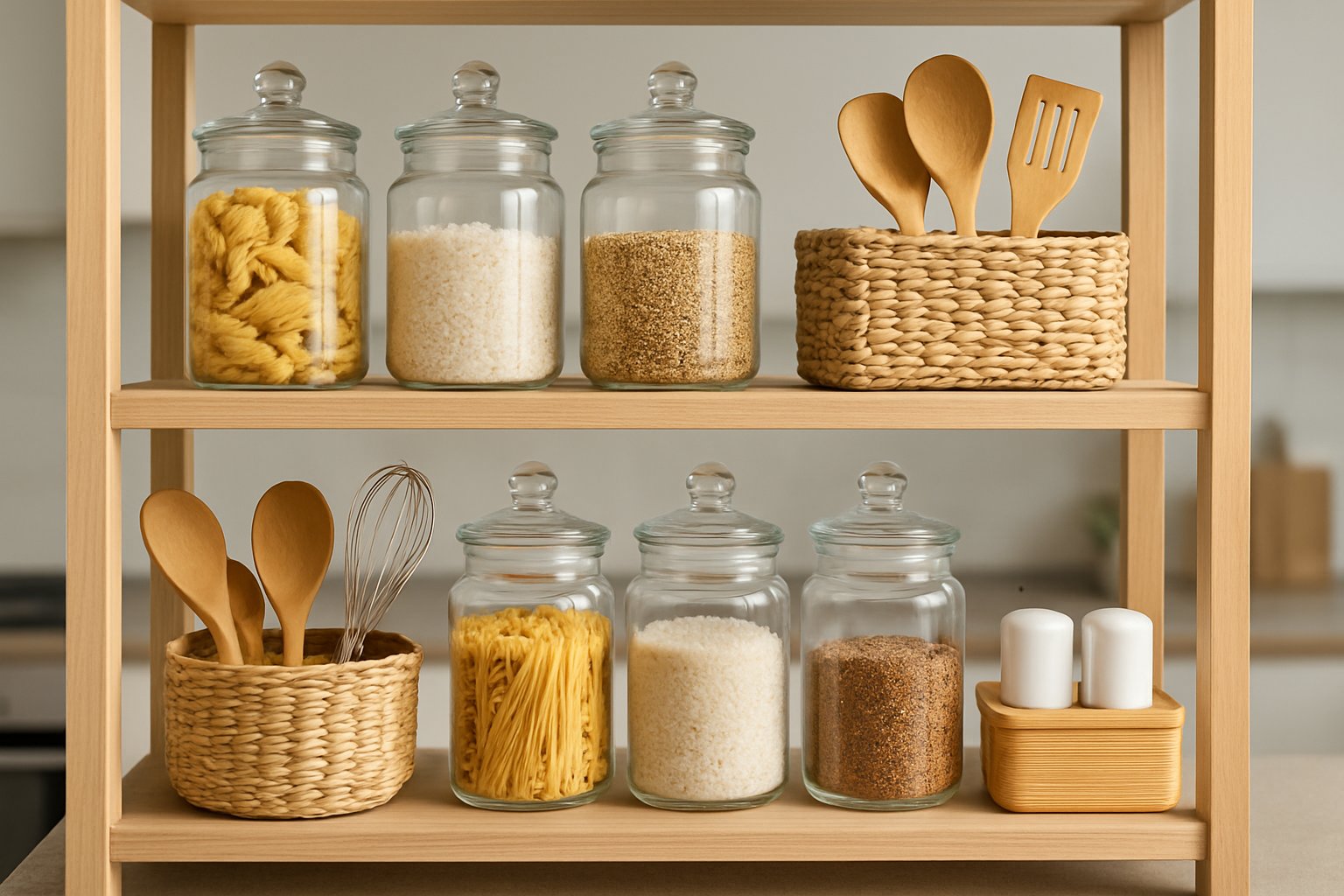
Utensil holders keep your go-to tools handy and stop drawers from turning into junk piles. A crock by the stove is perfect for spatulas and wooden spoons.
On shelves, compartmentalized holders or dividers keep everything separated, so you’re not fishing for tongs tangled with mashers. Wall-mounted holders with hooks are great if you want to clear drawer space.
If you put away wet utensils, holders with drainage holes are a must. Ceramic or stainless steel lasts longer and looks nicer than plastic, at least in our experience.
Smart Storage Strategies for Kitchen Cabinets
Cabinets should work for you, not against you. That means putting essentials where you can reach them, using stackable organizers, and making the most of every corner.
Cabinet Organization for Everyday Essentials
Keep the stuff you use most right up front. Plates and bowls near the dishwasher, utensils by the stove.
Zones make cabinets easier for everyone. Breakfast stuff on one shelf, snacks where kids can reach, baking supplies in their own spot. Clear containers and labels are a big help for keeping things straight.
Drawer dividers stop flatware from getting mixed up. We like forks on the left, knives in the middle, spoons on the right—just like setting a table.
Vertical plate racks are better than stacking. You can grab a plate without moving the whole stack and avoid chips. Baskets are good for loose bits like seasoning packets or tea bags that otherwise vanish into the abyss.
Optimizing Vertical Space
Most cabinets have wasted space between shelves. Tiered organizers or shelf inserts double what you can store.
Adjustable shelves let you fit tall boxes or short cans without leaving empty air. Wall-mounted racks inside cabinet doors are perfect for pot lids, measuring cups, or cleaning stuff. The inside of the door doesn’t have to be dead space.
Corner cabinets love a multi-tier lazy Susan—just spin to reach the back. For tall cabinets, use risers so everything’s visible, no step stool needed.
Integrating Pull-Out Pantry Options
Pull-out shelves save you from losing things in the depths. Slide it out and see everything, front to back.
Narrow cabinets by the stove are great for pull-out spice racks. Turntables work for oils and vinegars.
Wire basket pull-outs are perfect for produce or snacks—good airflow, and you can see what’s inside. Under the sink, pull-out caddies make cleaning supplies easy to grab and carry.
If you have deep drawers with full-extension slides, use them for pots and pans. Nest similar sizes, and stash lids in a separate bin or organizer.
Designing an Organized Pantry for Quick Access
A good pantry setup comes down to zoning, smart door storage, and clear containers so you can see what’s actually in there. No more digging for breakfast or realizing you’re out of pasta after it’s too late.
Zoning for an Organized Pantry
Set up zones that match how you cook. Put oils, vinegars, and sauces at eye level for easy reach. Baking stuff—flour, sugar, vanilla—gets its own shelf, so you’re not searching with floury hands mid-recipe.
Snacks go lower down so kids can help themselves. Breakfast foods together, since you’re always reaching for them at the same time. Specialty or rarely-used items can go higher or further back.
Typical zones:
- Cooking essentials (eye level)
- Baking supplies (mid-level)
- Breakfast stuff (easy to reach)
- Snacks (lower shelves)
- Canned goods (by type)
- Grains and pasta (together)
Keep daily-use items handy, and stash the rest where they won’t get in your way.
Utilizing Over-the-Door Organizers
Over-the-door racks make use of space that usually gets ignored. They hang on the back of pantry doors and hold things that would otherwise crowd shelves.
Pocket-style ones are good for spice packets, seasoning mixes, and little snacks. Wire baskets work for onions, garlic, or potatoes (they need to breathe). Some have hooks for bags or towels.
Everything faces forward, so it’s easy to spot what you need. Don’t overload them, though—too much weight can mess up the hinges or keep the door from closing.
Clear Container Systems to Reduce Clutter
Clear, airtight containers keep dry goods fresh and let you see exactly how much you have left. Pouring stuff out of the original packaging makes shelves neater and easier to stack.
Square or rectangular containers fit together better than round ones, so you don’t waste space. Label everything with the contents and expiration date—trust us, it helps.
Stackable bins are great for small things like seasoning packets or tea bags that tend to wander. Clear bins with handles make it easy to pull out whole categories from the back.
When you can see what you have, you’re less likely to buy doubles or forget what’s buried in the pantry.
Creating Specialized Stations on Your Shelves
Setting up shelves by activity—like a baking zone or a coffee station—just makes life easier. When everything’s grouped together, you spend less time searching and more time actually enjoying your kitchen.
Setting Up a Baking Station
Let’s claim a shelf for all the baking stuff. Flour, sugar, baking powder, baking soda, vanilla, chocolate chips, measuring cups—just put it all in one spot so you’re not hunting every time you want to make cookies.
Clear containers help us see when we’re almost out of something. Slap a label on each with the contents and date you bought it, so nothing gets weird or stale. A tiered shelf organizer makes better use of space—put flour and sugar on the lowest tier so you can grab them fast.
If you’ve got room, keep mixing bowls, measuring spoons, and the hand mixer close by too. A little turntable is great for wrangling sprinkles, food coloring, and extracts. It’s just easier when everything’s right there—no scavenger hunt required on a random Tuesday night.
Designating Snack and Breakfast Zones
A snack shelf everyone can reach? Life-changing. It cuts down on kitchen chaos, especially in the morning. Use clear bins or baskets to group things together.
Keep breakfast stuff—cereal, oatmeal packets, granola bars—on one shelf you can get to easily. For snacks, separate chips, crackers, and protein bars into their own containers so you don’t get an avalanche every time you open the cabinet. If you’ve got kids, put their snacks at their eye level so they can help themselves.
Label bins for sweet, salty, and healthy snacks. It’s a quick way to see what you’re running low on when you make a grocery list. Put new stuff in the back so the older snacks get eaten first. That’s just common sense, right?
Easy Access Drawers for Meal Prep Tools
Drawer dividers change the whole game. Suddenly, the utensil drawer isn’t a disaster zone. Keep your most-used tools near the counter where you do most of your chopping.
Knives, cutting boards, peelers, graters—they all go in the drawers closest to where you prep food. Good dividers keep sharp things separated, so you don’t get cut fishing around for a peeler. Bamboo or adjustable plastic ones both work, just pick what fits your drawer.
Put the cooking utensil drawer near the stove. Spatulas, wooden spoons, tongs, whisks—these are the things you reach for constantly. Use small containers between dividers for tiny stuff like corn holders or measuring spoons that always seem to disappear.
Maximizing Every Inch: Space-Saving Ideas and Maintenance Tips
Small kitchens force us to get clever with storage. We can squeeze out more space by picking the right equipment and sticking to habits that keep clutter from sneaking back in.
Tiered and Pull-Out Storage Solutions
Pull-out shelves turn deep cabinets from food graveyards into usable storage. Slide the shelf, grab what you need—no more digging through piles.
Tiered organizers add vertical layers. Stick a riser in the cabinet, and suddenly you can stack plates or double up your spice rows. Adjustable racks are even better if you like to change things up.
Dividers keep drawers from becoming junk piles. Spring-loaded ones adjust to fit any drawer—no tools needed. They’re tall enough that things don’t jump into the next section when you open the drawer.
Corner cabinets are tricky, but lazy Susans or pull-out corner units make them useful. Standard shelves waste that weird angle, but with a rotating platform, nothing gets lost back there.
Decluttering Regularly for Lasting Order
Even the best setup won’t help if we keep piling on stuff we never use. Every few months, just go through your shelves and ditch expired food and gadgets you forgot you owned.
Try the one-in, one-out rule: buy a new gadget, let go of an old one. It keeps things from slowly spiraling into chaos.
A little trick—put tape on things when you use them. After a month or two, anything without tape probably doesn’t deserve its spot. Most of us don’t need three can openers or five wooden spoons, honestly.
Grouping similar things in containers makes it easier to see what you have and what you don’t need. You can quickly tell if you’re hoarding pasta or snack bags for no reason.
Making Adjustments As Your Needs Change
Kitchen storage isn’t set in stone. Our needs change with life, seasons, and whatever new cooking obsession we’re chasing.
Notice you’re always reaching past stuff to get to what you need? Time to rethink the arrangement. Move holiday baking supplies down in December, swap them back up when grilling season hits.
Families with kids might need to put dishes and snacks lower so the little ones can help themselves. Adjustable shelves make it easy to move things around as life changes.
New gadgets, like an Instant Pot, need their own space. Don’t just shove them in. Rearrange so your go-to tools stay easy to reach, and everything else makes sense.
Frequently Asked Questions
Small pantries, deep shelves, those impossible back corners—we’ve all been there. Here’s how to tackle the worst offenders.
What's the secret to maximizing space in a small pantry?
Go vertical. Stackable shelves and risers create more levels in the same spot. Door racks are great for spices and packets—no shelf space needed.
Clear containers show you what you’ve got and stack neatly. Decant cereal, pasta, and snacks into matching containers so they fit together.
Wall baskets and hanging organizers use up dead space. Just measure your pantry before buying anything so you don’t end up with organizers that don’t fit.
Can you give me tips for organizing deep pantry shelves?
Turntables (lazy Susans) are lifesavers for deep shelves. Spin to grab oils, vinegars, or condiments hiding in the back.
Sliding drawers or pullouts make deep cabinets actually usable. No more digging through rows of cans.
Bins or baskets you can pull out work too. Treat each one like a drawer. Label the front so you know what’s inside without pulling everything out.
What are some creative kitchen pantry designs for limited spaces?
Narrow pullout cabinets next to the stove or fridge make use of skinny spaces. They’re perfect for spices, oils, or baking stuff.
Shallow shelves can go on almost any wall—even in the hallway near the kitchen. Tall open shelves up to the ceiling make the most of vertical space.
Corner lazy Susans keep things from disappearing into the abyss. Some people even turn coat closets or under-stair spaces into pantries with the right shelving.
How do I categorize items in my pantry for peak efficiency?
Think by meal type and how often you use it. Breakfast stuff—cereal, oatmeal, pancake mix—gets its own shelf. Baking supplies go in another spot.
Snacks should be at a height everyone can reach. Everyday cooking stuff (oils, spices, canned tomatoes) stays near eye level.
Bulk items and extras can go on higher or lower shelves since you don’t grab them as much. Keep a meal prep zone for ingredients you use every week.
What strategies can I use to organize my pantry if I'm short on containers?
Reuse glass jars from pasta sauce or pickles—they’re perfect for beans, rice, and small pantry items. Mason jars work too.
Shoe boxes, small cardboard boxes, or clean food containers can hold loose packets and snacks. Cover them with contact paper if you want them to look nicer.
Rubber bands keep packets together, and binder clips seal open bags. Painter’s tape and a marker make quick, changeable labels. Sometimes, simple just works.
What's the trick to making those back-of-the-shelf items feel front and center?
We set up items in stadium-style rows with shelf risers, so shorter things perch behind taller ones. It’s a simple way to actually see everything at a glance—no more forgotten cans hiding in the shadows.
Pullout drawers or sliding shelf inserts just get rid of the “back of the shelf” issue. One tug, and everything’s right there. We’ve put these in our deepest, most annoying cabinets—honestly, it’s a game-changer.
Clear storage bins you can pull out all the way? They make it so much easier to grab stuff from the back without messing up the front. We slap labels on the front and top, since you never know which angle you’ll peek from.
Share:
How to Build a Kid-Friendly Snack Storage System
How to Set Up a Small Kitchen for Daily Meal Prep