

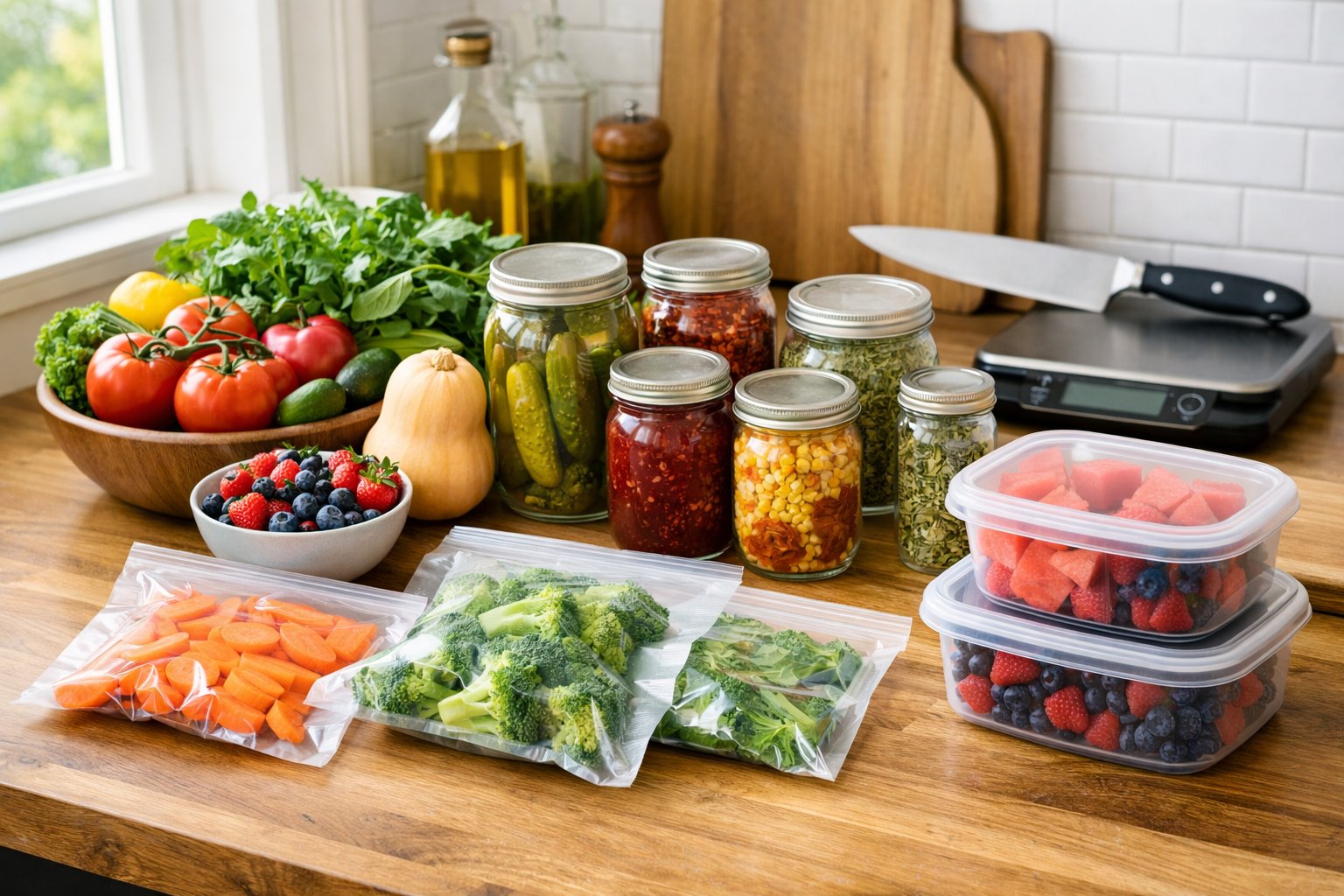
Check out our latest compact vacuum sealer for food collection!
We've all had that moment, standing in the kitchen, staring at the farmers market bounty that seemed like such a good idea a few days ago, now threatening to turn to mush before we can use it.
Summer tomatoes, fall apples, spring berries, they arrive in waves, and sometimes it feels like the fridge is just a waiting room before the compost. Preserving seasonal produce lets us capture fruits and veggies at their best, turning fleeting abundance into year-round flavor, cutting food waste, and slashing grocery bills, sometimes by half.
The best part? You don't need fancy gear or a culinary degree to get started. Whether you're swimming in homegrown zucchini or just snagged a deal at the market, there are plenty of ways to preserve food that fit different routines and kitchen sizes. Freezing takes just minutes, while fermentation develops flavor over weeks, each method has its own perks, and there's no single "right" way.
Preserving produce is more than a practical skill, it's a way to reconnect with food traditions and take charge of what ends up in your pantry. You'll get to know which fruits and veggies freeze well, when to go for canning instead, and how to keep that fresh-picked quality alive. It's a bit of work up front, but the payoff is huge: you get summer brightness in winter, fall coziness in spring, and you skip the bland, overpriced imports.
Key Takeaways
- Preserving produce at its peak locks in nutrition and flavor, cuts waste, and saves money all year
- Freezing, canning, pickling, dehydrating, and fermenting each work best for certain fruits or veggies
- Good preservation can keep food fresh for weeks or even over a year, depending on the method
Why Preserve Seasonal Produce Beyond Its Peak?
Preserving seasonal produce changes how we approach food and storage. By locking in fruits and veggies at their prime, we're making choices that pay off for months.
Reduce Food Waste and Extend Shelf Life
We've all watched decent produce turn into a science experiment in the crisper. When we preserve things at their best, we stop that slow slide before it starts.
Fresh tomatoes might last a week on the counter, but if we can or freeze them, they're good for 8-12 months. Same goes for berries, peppers, and greens that would otherwise wilt in days.
Wasting food isn't just about tossing old veggies—it's money down the drain, and resources gone. By preserving what's in season, we're taking charge of our food instead of letting spoilage win.
Typical shelf life after preserving:
- Freezing: 8-12 months for most produce
- Canning: 12-18 months for high-acid foods
- Dehydrating: 6-12 months (if stored right)
- Fermenting: 4-6 months in the fridge
Save Money and Stock Up During Abundance
When produce is in season, it's cheap. Strawberries in January cost a fortune, but in June, you can fill a basket for a few bucks.
If you buy smart and preserve, those $2 peaches in August become $6 store-bought preserves by winter. Doing it yourself means you keep the savings.
Buying in bulk during peak season makes a real difference. Markets and farm stands often cut prices by the bushel, especially near closing time. Families who get into preserving can save anywhere from $600 to $1,200 a year, depending on how much they put up.
Enjoy Seasonal Flavors Year-Round
Nothing touches the taste of a sun-ripened tomato in August. But come winter, grocery store tomatoes are just... sad. When we preserve, we capture that peak flavor.
You don't have to settle for bland produce in the off-season. Freezing or canning at the right time means you get that concentrated, real taste even months later. Frozen August peaches in a February smoothie? Way better than anything shipped in.
Preserved foods can actually be more nutritious, too. Frozen berries picked ripe often beat "fresh" ones that spent weeks in trucks and warehouses.
Support Smart Storage Habits and Food Security
Preserving isn't just about flavor—it's about resilience. When we've got a pantry full of home-preserved foods, we aren't at the mercy of weekly shopping or supply chain hiccups.
Having these backups means when life gets weird—weather, tight budgets, or just a crazy week—we've got real food on hand. This isn't doomsday prepping, it's just practical.
Getting into the habit of preserving makes us think more strategically about storage. We start to notice seasonal trends, plan ahead, and keep the kitchen running smoother overall.
Smart Strategies for Prep and Storage
Preserving success starts before the first jar is filled or the dehydrator is plugged in. It all comes down to picking the right produce, keeping things clean, and having a storage system that actually works.
Choosing and Preparing Harvest-Ready Produce
Go for produce at its peak—firm, colorful, no bruises. Underripe stuff won't taste right later, and overripe can go bad fast.
For tomatoes and peppers, look for bright color and solid flesh. Berries should be plump, not leaking or mushy. Carrots and beets need to feel dense, no cracks or soft spots.
Harvest in the morning if you can, after the dew dries but before the heat kicks in. That helps keep things fresh and full of nutrients. Try to sort by size—uniform pieces freeze and cook more evenly.
Cleaning, Inspecting, and Organizing
Wash everything under cool water right before preserving. Berries just need a gentle rinse; sturdier veggies can take a soft brush.
Check for mold, bruises, or damage—toss anything iffy. One bad spot can ruin a batch.
Set up your space with zones: raw produce, cleaned produce, and ready-to-store. Use mesh bags for draining berries and herbs. Keep knives and boards handy, but away from anything dirty.
Sanitize jars, lids, and containers with hot soapy water or a dishwasher run. This step's not glamorous, but it's what keeps your preserves safe.
Essential Tools and Equipment
You don't need to spend a fortune, but a few basics help. For canning, you'll want a water bath or pressure canner, jar lifter, funnel, and bubble remover. Stock up on jars, lids, and bands.
For freezing, use freezer-safe containers or bags. A vacuum sealer is a nice upgrade—it keeps things fresh longer and prevents freezer burn. Get bags that work for both raw and cooked foods.
| Method | Essential Equipment | Optional but Helpful |
|---|---|---|
| Freezing | Freezer bags, plastic containers | Vacuum sealer, labels |
| Canning | Mason jars, lids, water bath canner | Pressure canner, jar lifter |
| Drying | Dehydrator or oven | Mesh drying racks |
Clear containers are great for seeing what you've got. We like glass for pantry items and airtight plastic for the fridge.
Labeling and Storage Planning
Label everything—what it is, when you made it, and when to use it by. Permanent markers or sticky labels both work. This spares you from freezer mystery meals.
Our system: date, contents, and a "use by" note. Like: "Strawberries, 3/4/26, use by 3/4/27." It helps rotate stock and avoid waste.
Keep canned goods in a cool, dark spot—no wild temperature swings. Frozen stuff belongs deep in the freezer, not the door. Vacuum-sealed bags stack well and save space.
Organize by type and date. Newest in the back, oldest up front. Drawer dividers, shelf risers, and freezer baskets all help keep things sorted.
Freezing: The Quick and Easy Method
Freezing is fast and keeps things close to fresh, but a little prep makes a big difference. Let's walk through what actually works, from blanching to packaging so you don't end up with a bag of mush.
Prepping for Best Texture and Taste
Freeze produce as soon after picking or buying as possible—ideally within a few hours. The quicker you freeze, the smaller the ice crystals, and the better the texture later.
Wash and dry everything. Any extra water leads to freezer burn. For berries, lay them on towels and pat dry. For sturdier stuff, a salad spinner is handy.
Cut everything into similar sizes so it freezes and thaws evenly. Apple wedges, squash cubes, trimmed beans—whatever you're working with, keep it consistent. It makes life easier when you actually go to cook.
Chill your freezer to 0°F or below before adding new produce. Don't overload it—2 to 3 pounds per cubic foot at a time is plenty. Too much at once slows freezing and hurts quality.
Blanching Before Freezing
Blanching vegetables stops enzymes that would otherwise keep working, even in the freezer, wrecking color and flavor. Bring a big pot of water to a boil, dunk veggies in for their specific time, then straight into ice water.
Blanching times are different for each veggie. Broccoli florets: 3 minutes. Green beans: 3 minutes. Corn on the cob: 7-11 minutes. Spinach: just 2 minutes. Make that ice bath super cold—use a lot of ice.
Drain and dry veggies after their ice bath. Don't skip this, or you'll get icy clumps and weird flavors later.
Fruits usually skip blanching. For apples and peaches, soak slices in water with a little ascorbic acid (vitamin C) to stop browning—about 1/2 teaspoon per quart.
Preventing Freezer Burn
Freezer burn happens when food dries out and gets tough or discolored. It's still safe, but the texture and flavor take a hit. The fix? Get rid of air and use the right containers.
Best options:
- Freezer-safe plastic bags
- Rigid plastic containers with tight lids
- Tempered glass containers for freezing
- Vacuum-sealed bags
Vacuum sealing is the gold standard. It pulls out almost all the air, keeping things fresh for up to a year.
If you use regular bags, squeeze out as much air as you can. One trick: fill the bag, seal almost all the way, then dip it in water up to the seal—the water pushes out the air before you finish sealing.
Leave some space at the top of containers—liquids expand when frozen. Half an inch for pints, an inch for quarts. And, of course, label everything with what's inside and the date.
Flash Freezing for Fruits and Vegetables
Flash freezing (or tray freezing) helps keep produce pieces from sticking together in one big icy clump. We just spread the cut-up fruit or veggies in a single layer on parchment-lined baking sheets, freeze until solid—usually a couple of hours—then dump them into freezer containers or vacuum-sealed bags.
Berries really shine with this method. We rinse and dry strawberries, blueberries, and raspberries, arrange them on trays so they’re not touching, and freeze. Once they’re hard, we pour them into bags, and they stay loose and easy to scoop out.
Sliced peaches, apple wedges, and cubed pumpkin or squash also freeze well this way. For apples and peaches, we treat them with ascorbic acid first, pat dry, then freeze on trays. With squash and pumpkin, we blanch cubes first, dry them off, and then flash freeze.
The main perk here is convenience. We can grab just what we need—no need to thaw a whole bag. A handful of frozen berries goes right into smoothies or oatmeal. Frozen squash cubes drop straight into soup.
Canning: From Jams to Tomatoes
Canning turns summer’s bounty into shelf-stable jars for the pantry. Which method you use depends on what you’re preserving. High-acid foods like fruits can go in a water bath, but low-acid veggies need pressure canning.
Water Bath Canning for Fruit and Pickles
Water bath canning is great for fruits, pickles, and anything with added vinegar. You fill canning jars, submerge them in boiling water for a set time, and you get a vacuum seal that keeps food safe.
We use this for strawberries, peaches, apples, and all sorts of pickled veggies. The acidity in these foods (below pH 4.6) keeps botulism at bay, so boiling water is hot enough.
You’ll need a big pot or a water bath canner, a jar lifter, a funnel, and proper mason jars with new lids. The pot should be deep enough that water covers the jars by at least an inch.
The steps are pretty simple: prep your recipe, fill sterilized jars with a bit of headspace, wipe the rims, put on lids and bands, then process in boiling water for the time the recipe says. Afterward, let the jars cool undisturbed for at least 12 hours before checking seals.
Pressure Canning for Low-Acid Vegetables
Low-acid veggies like green beans, corn, carrots, and plain tomatoes need pressure canning. Their pH is above 4.6, so boiling water won’t get hot enough to kill botulism spores.
A pressure canner (not a regular pressure cooker) heats jars to 240°F under pressure. It’s a bigger investment than water bath gear, but it’s non-negotiable for safely canning veggies, meats, and broths.
We stick to USDA-tested recipes when pressure canning. Processing times depend on jar size, food, and your altitude. You have to watch the pressure gauge and adjust heat to keep it steady.
Don’t try to pressure can in a water bath or skip the pressure step for low-acid foods. The risk isn’t worth it. If you’re new, start with something basic like green beans or corn before moving on to trickier recipes.
Homemade Jams, Sauces, and Preserves
Making jam lets you capture fruit at its sweetest. We cook fresh berries, stone fruits, or apples with sugar until it thickens up. Berry jam usually uses about equal parts fruit and sugar, though it depends on the recipe.
Slightly underripe fruit has more natural pectin, which helps jam set. With fully ripe fruit, we might add commercial pectin or pick a recipe that accounts for the lower pectin.
Tomato sauce is a pantry classic. We turn tomatoes into crushed tomatoes, smooth sauces, or chunky salsa during late summer. Adding bottled lemon juice or citric acid to each jar bumps up the acidity for safe water bath canning.
Most jams and fruit preserves only need 5-10 minutes in the water bath. Tomato products usually go for 35-45 minutes, depending on the recipe.
Food Safety and Canning Basics
We always use tested recipes from trusted sources—USDA, university extension, or established canning books. Random Pinterest finds or old family recipes? Not worth the risk.
Check jars for chips or cracks before each use. Always use new lids (the flat ones with sealing compound), though you can reuse the metal bands. Headspace matters—a quarter inch for jams, half an inch for fruits and tomatoes.
Once jars cool, test the seal by pressing the lid center. If it doesn’t flex, you’re good. Label jars with the contents and date, and stash them in a cool, dark spot. Properly canned food keeps for a year or more.
Never eat from a jar that didn’t seal, leaks, or has a bulging lid. If you’re unsure, just toss it. Reheating won’t fix botulism.
Keep your canning supplies together. We try to stock extra jars, keep an inventory, and plan what to can based on what we’ll actually eat.
Pickling: Quick and Classic
Pickling turns fresh produce into tangy snacks or condiments, and you’ve got options: quick pickling with vinegar brine or old-school fermentation for deeper flavor.
Quick Pickling for Fast Flavor
Quick pickling is fast—veggies go from cutting board to jar in half an hour. We heat vinegar, water, salt, and sugar until the salt dissolves, pour it over the veggies, and let them soak up the flavor.
This works for cucumbers, onions, carrots, radishes, and green beans. Quick pickles are ready in a few hours, but they’re tastier after a day in the fridge. They’ll last up to three months chilled.
Quick pickles are super flexible. We toss in peppercorns, mustard seeds, garlic, dill, or chili flakes before adding the brine. Each batch is a little different—no need to overthink it.
Traditional Pickled Vegetables
Fermented pickles use saltwater and time, not vinegar. We submerge veggies in a brine—usually 2-3 tablespoons of pickling salt per quart of water—and let natural bacteria do their thing for a week or more.
You’ll know fermentation is working when you see bubbles and the brine turns cloudy. Classic ferments include sauerkraut, kimchi, and dill pickles.
Common Fermentation Vessels:
- Glass mason jars with airlocks
- Ceramic crocks with weights
- Food-grade plastic buckets
We keep veggies under the brine to prevent mold. Once they’re tangy enough, we move them to cold storage, where they’ll keep developing flavor for months.
Pickling Salt and Brining Know-How
Pickling salt is different from table salt—no iodine or anti-caking agents, so the brine stays clear and the flavor clean. We use it for both quick and fermented pickles.
For quick pickles, our usual brine is 1 cup vinegar, 1 cup water, and 1 tablespoon each of pickling salt and sugar. Sugar is flexible—add more for sweet pickles, less for tang. White vinegar gives a sharp bite; apple cider vinegar is a bit softer.
For fermentation, salt measurements matter. Too little, and you risk spoilage; too much, and nothing ferments. We weigh our salt for consistent results.
Dehydrating and Drying
Dehydrating pulls moisture out of produce with low heat and airflow, concentrating flavor and letting you store food for months. You can use a dehydrator or an oven, and it works really well for apples, peaches, tomatoes, root veggies, and herbs.
Food Dehydrators and Oven Drying
Food dehydrators give the most reliable results. They keep temps steady (135–145°F) and circulate air across trays. You can load up multiple trays, which is handy if you’ve got a big harvest.
Most dehydrators let you tweak the temperature and remove trays. We usually start at 145°F for the first hour to get rid of surface moisture, then drop to 135–140°F to finish drying without hardening the outside.
Oven drying can work too if you can keep the temp between 140–150°F. Prop the oven door open a few inches so moisture escapes. Convection ovens do better since the fan moves air.
Downside? Ovens use more energy, and since drying takes 6–12 hours, running the oven that long can get pricey.
Choosing Fruits, Vegetables, and Herbs to Dehydrate
Apples and peaches are classics for dehydrating. Slice them evenly (about 1/4 inch thick) and soak in ascorbic acid solution for 10 minutes to prevent browning.
Berries are trickier. Blueberries and cranberries need their skins cracked—usually a quick dip in boiling water does the trick. Move fast so you don’t end up with mush.
Dried tomatoes pack a punch. Slice them in half or into rounds. No pretreatment needed, but blanching in citric acid solution helps keep the color.
Root veggies like carrots and potatoes need blanching before drying. That kills off microbes and slows down enzymes that can make food spoil.
Herbs are the easiest. Basil, oregano, thyme, rosemary—just rinse, pat dry, and spread out on trays with good airflow.
Storing and Using Dried Produce
Dried fruit should feel bendy, not sticky or wet. We “condition” them by loosely packing in airtight containers for a few days so moisture evens out. If you see condensation, dry them longer.
Veggies should be brittle or crunchy when done—no conditioning needed.
We store dried produce in airtight containers, glass or plastic, in a cool, dark place. Fridge or freezer makes them last even longer. Dried fruit keeps 6–12 months at room temp, or up to a year frozen.
Eat dried fruit as-is or rehydrate in warm water for 15–30 minutes. Blanched veggies rehydrate faster. Dried tomatoes can go straight into soups or sauces.
Dried herbs are strong—use about a third as much as you would fresh. Crush them right before using to get the most flavor.
Fermentation: Flavor and Health
Fermentation uses good bacteria to turn veggies into tangy, probiotic-rich foods that last for months. It creates an acidic environment that preserves produce and adds layers of flavor. Plus, it’s good for your gut.
Lacto-Fermentation Basics
Lacto-fermentation relies on lactic acid bacteria naturally found on veggies. We submerge them in a salt brine—usually 1–2 tablespoons of non-iodized salt per quart of filtered water.
Salt level is key. Not enough, and bad bacteria can take over; too much, and nothing ferments. A 2–3% salt solution by weight is the sweet spot for most things.
What you need:
- Non-iodized salt (iodine messes with the bacteria)
- Filtered or boiled water (chlorine kills the good guys)
- Weights to keep veggies under the brine
- Room temp storage (65–75°F is best)
Fermentation time varies—a few days to a few weeks, depending on temperature and how tangy you want things. You’ll see bubbles and cloudy brine when it’s working.
Fermenting Vegetables for Probiotics
Fermented foods bring live bacteria that help with digestion and nutrient absorption. Fermentation boosts vitamins B and C, and creates new compounds our bodies use well.
Different veggies give you different probiotic mixes. Cabbage ferments are loaded with Lactobacillus plantarum and L. brevis, while cucumbers have their own strains.
Probiotic levels peak around two or three weeks, then level off. Refrigeration slows things down but doesn’t kill the probiotics. Properly fermented veggies are packed with billions of good bacteria per serving.
Sturdy veggies are easiest to start with—carrots, radishes, and green beans stay crunchy and get nice and tangy. Summer squash and peppers also ferment pretty reliably if you keep them submerged.
Fermented Favorites: Kimchi, Sauerkraut, and More
Sauerkraut is straightforward—just cabbage and salt. Shred the cabbage, massage it with about 2% salt by weight, and pack it tightly into jars. Within a day, the cabbage releases its own brine.
Kimchi takes that base and turns up the flavor with Korean chili flakes (gochugaru), garlic, ginger, and either fish sauce or miso paste for extra umami. Napa cabbage is ideal, but honestly, radishes, carrots, and scallions fit right in. Adjust the gochugaru for more or less heat.
Fermented pickles aren’t vinegar pickles—they get their tang from natural fermentation. Pack cucumbers in brine with dill, garlic, and grape leaves (tannins keep 'em crisp). Let them sit at room temperature for 5-7 days, and the flavor develops on its own.
Seasonal fermentation candidates:
- Spring: asparagus, radishes, spring onions
- Summer: cucumbers, green beans, cherry tomatoes
- Fall: cabbage, cauliflower, Brussels sprouts
- Winter: root vegetables, turnips, beets
Once you hit your preferred flavor, stash the jars in the fridge. They’ll keep for 4-6 months.
Root Cellaring and Cold Storage
Root cellaring taps into the earth’s natural chill to keep produce fresh for months, no electricity needed. You want temps between 32-40°F and humidity up around 85-95%. That combo stretches freshness way past what a fridge can do.
Setting Up a Root Cellar
Plenty of places can work for cold storage—basements, crawl spaces, even outdoor pits if you can manage the right conditions. The trick is steady cool temps, high humidity (for most crops), and enough airflow to keep mold and ethylene gas in check.
A basic setup? Insulate a basement corner with thick walls, add intake and exhaust vents for airflow, and monitor with a thermometer and hygrometer. The floor should stay a little damp (concrete is good, or set out shallow water trays to bump up humidity). Keep it dark—light makes potatoes and other roots sprout.
No basement? An unheated garage corner or insulated shed works in cool weather. Some folks even use old fridges (unplugged), tossing in ice packs to hold the temp.
Best Produce for Root Cellaring
Root vegetables are the champs here—they love cool, humid spots. Potatoes last 4-7 months if you cure them first (let them sit in a warm, dark place for about 10 days). Carrots, beets, turnips, and parsnips hang on for 3-6 months if you bury them in damp sand or sawdust.
Winter squash and pumpkins like it a bit drier but can store for 2-6 months. Cabbage goes 2-4 months if you keep the heads apart. Firm apples like Granny Smith or Fuji can last up to 7 months, but softer types usually top out at 2-3.
Storage requirements vary by crop:
| Produce | Storage Time | Special Notes |
|---|---|---|
| Potatoes | 4-7 months | Keep completely dark |
| Carrots | 4-6 months | Store in damp sand |
| Apples | 2-7 months | Separate from other produce |
| Onions/Garlic | 3-8 months | Drier conditions, use mesh bags |
| Cabbage | 2-4 months | Avoid moisture buildup |
Onions and garlic need airflow—mesh bags are perfect, and they should go in the driest corner.
Seasonal Storage Tips and Container Choices
Timing matters. Only stash unblemished, peak-ripe produce—anything damaged will spoil fast and take others with it. Don’t wash; just brush off the dirt so you don’t add moisture or strip off protective layers.
Wooden crates, cardboard boxes, and plastic bins all have their place. Shallow wooden crates work for apples (wrap each in newspaper to slow rot). For potatoes, plastic bins with drilled holes work well. Root veggies last longest layered in boxes with damp sand, sawdust, or peat moss between them.
Separation helps: Apples give off ethylene gas that makes potatoes sprout and onions spoil. Keep apples on different shelves—6-8 feet away from roots if you can. Hang onions and garlic in mesh bags from ceiling hooks, away from the damp stuff below.
Check your stores every couple of weeks. Toss anything with soft spots or mold right away—one bad potato really can ruin the whole batch. Watch for freezing temps in winter and heat spikes in early fall.
Frequently Asked Questions
Preserving seasonal produce brings up a lot of questions—about technique, safety, even what actually works. Whether you’re canning stone fruits in July, pickling buckets of cucumbers, or just hoping your garden haul will taste good months later, here’s what we’ve learned.
What's the scoop on canning seasonal fruits to maintain their summer vibe year-round?
Water bath canning locks in peak-season fruit flavor and sweetness. Start by sterilizing jars in boiling water, then pack in the warm fruit, leaving 1/4 to 1/2 inch of headspace for expansion.
Processing time is key. Fruits need 10-25 minutes in boiling water, depending on jar size and your altitude (higher up, you’ll need longer).
Lids aren’t something to cheap out on. Stick with BPA-free options from brands you trust, and check the seals after cooling—press the center; if it pops, it’s not sealed.
Fruit acidity is your safety net. Most fruits have enough acid to keep bacteria at bay, but for low-acid types (like figs), add a little lemon juice. It won’t mess with the flavor much.
How do you pickle vegetables to turn up the flavor and keep them crisp?
Pickling relies on vinegar’s acidity to stop spoilage. We usually start with a 1:1 vinegar-to-water ratio, tweaking it for more or less tang.
Salt draws out moisture, helps keep veggies crunchy, and lets the brine soak in. For crisp pickles, toss in a grape leaf or a pinch of calcium chloride.
Temperature changes everything. Hot brine softens veggies a bit, so for crunchier pickles, use a cold brine and keep them in the fridge.
Underripe veggies actually pickle better—they hold their shape and that snap, even months later.
Which freezing hacks can help preserve the just-picked taste of my garden veggies?
Flash freezing is a lifesaver. Spread kernels, peas, or beans in a single layer on a baking sheet, freeze solid, then bag them up—no clumps.
Blanching is worth the extra step. A quick 2-4 minute boil, then an ice bath, stops enzymes that dull color and flavor.
Push out as much air as you can from freezer bags. Air means freezer burn, and nobody likes those dry, tasteless spots.
Label everything—contents and date. Otherwise, you’ll end up with mystery bags in six months. Most veggies are best within 8-12 months, so work through your stash oldest first.
Can dehydrating fruits and veggies really lock in nutrients and what's the trick to doing it right?
Dehydrating can keep up to 90% of vitamins and antioxidants, as long as you keep temps between 125°F and 140°F. Too hot and you lose nutrients; too low and things just get weird.
Slice everything the same thickness—about 1/4 inch works—so it all dries evenly. Otherwise, you’ll have some pieces too dry and others still sticky.
Tomatoes and berries (lots of water) take 8-12 hours; dense veggies like carrots need 10-14. Let pieces cool, then check for any lingering moisture.
Store dried produce in airtight containers below 60% humidity. Any moisture sneaking back in means mold and a ruined batch.
What's the secret to using vacuum-sealing to keep that 'fresh from the farm' quality?
Vacuum-sealing pulls out oxygen, which is what makes produce spoil and lose nutrients. We’ve found it can make produce last 3-5 times longer in the fridge than regular bags.
It’s especially good for leafy greens and herbs—no wilting, and flavors stay strong for up to two weeks.
For soft fruits, though, go easy. Berries and peaches get squished if you use full strength, so try the gentle setting or freeze them first.
Pair vacuum-sealing with freezing for the longest shelf life. Properly sealed veggies can go 2-3 years in the freezer, but we usually use them within a year for the best taste.
Are fermentation methods the hidden gem in keeping produce funky fresh longer?
Fermentation works a little magic on veggies, beneficial bacteria munch away, pumping out lactic acid, which naturally keeps things preserved. We’ve had good luck fermenting cabbage, cucumbers, carrots, and radishes, needing just salt and a bit of patience.
Salt matters. We usually stick to 2-3% by weight. That’s enough to get the right bacteria going while keeping the bad stuff away.
Temperature plays a huge role, honestly. If you keep things at 70-75°F, you’ll get that tangy kick in about 3-7 days. Drop the temp, and the process slows, but you end up with deeper, more layered flavors if you can wait a few weeks.
Once they're done fermenting, just pop the jars in the fridge. They’ll keep crunchy and good for months. Plus, that tangy brine isn’t just tasty—it boosts probiotics and, weirdly, can make the veggies even more nutritious than when they were raw.
Share:
Why Smart Storage Planning Reduces Grocery Bills Over Time
Why Storage Size and Headspace Affect Ingredient Longevity