

Check out our latest compact vacuum sealer for food collection!
We've all done it: loaded up on groceries with good intentions, only to discover wilted herbs or freezer-burned chicken lurking in the back weeks later. It's not that we're lazy, it's that we don't always have a system that connects what we buy to what we actually cook.
Smart ingredient batching means buying versatile base ingredients in the right quantities, then using a mix of batch cooking and flexible meal planning to turn them into several meals, without tossing anything out.
When we plan for ingredients that overlap across recipes, we stop throwing money away. A package of ground turkey? Suddenly it's chili, tacos, and stuffed peppers. Roasted veggies? Those find their way into grain bowls, pasta, and omelets.
You don't need to spend your entire Sunday batch cooking or buy a second freezer. It just takes a little intention: look at what you already have, think about what you’ll realistically eat, and store things so they don’t get lost behind the milk.
Key Takeaways
- Plan meals around overlapping base ingredients to reduce waste and get the most out of your groceries
- Use decent containers and labels so batch-cooked foods stay fresh and are easy to spot
- Give leftovers a new twist with simple flavor changes, and turn scraps into broths or other meals
Understanding Smart Ingredient Batching
Smart ingredient batching is all about portioning and planning so you waste less food and get more meal variety. The trick is knowing how ingredients play together and measuring so you don’t end up with sad, unused bits.
What Is Ingredient Batching
Ingredient batching means prepping and measuring out specific amounts of food components for several meals at once. Unlike traditional batch cooking (where you make a giant pot of something and eat it for days), batching focuses on prepping raw ingredients in the right amounts for a few different recipes. Maybe you roast three pounds of veggies, cook two cups of grains, and portion proteins based on what you’ll really use.
Think of ingredients as building blocks. That batch of diced onions? It goes in tonight’s stir-fry, tomorrow’s soup, and Thursday’s pasta sauce. You’re not committing to eating the same thing all week—you’re just setting yourself up with a flexible stash of ingredients that can adapt to your mood.
Getting the measurements right actually matters. When we eyeball it, we end up with half a bell pepper or a handful of cilantro that just sits, unloved, until it’s slimy.
Why Food Waste Happens During Meal Prep
Most of us waste food because we overestimate what we’ll eat or buy ingredients without a real plan. You get a whole bunch of parsley for a recipe that needs a tablespoon, or buy five bell peppers just because they’re on sale, forgetting you’ll only use two before they start to wrinkle.
Bad storage habits definitely make things worse. If you don’t seal containers or label them, stuff spoils faster or gets pushed to the back and forgotten. How many times have you found a mystery container of chopped veggies turned to mush?
Cooking for one? That’s a whole different headache. Single servings rarely match how food is packaged or sold, so you end up with leftovers you don’t want. And when you eat the same meal for days, you’re likely to ditch the last serving out of boredom.
Benefits of Efficient Batching for Solo and Family Cooking
Efficient batching saves money and time. You only buy what you’ll use, and you skip the markup on pre-portioned or convenience foods. A rotisserie chicken is cheaper than pre-sliced chicken breast, and if you batch it into portions yourself, you control both quality and budget.
You save time too. Chopping veggies once for the week is way better than dragging out the cutting board every night. Turn on some music or a podcast, and suddenly kitchen prep feels less like a chore. For families, batching helps avoid those frantic “what’s for dinner?” moments.
The real magic? Flexibility. You’re not locked into eating the same dish on repeat. Grilled chicken on Monday becomes chicken tacos on Tuesday and chicken salad on Wednesday. It keeps things interesting and convenient.
Meal Planning for Minimal Waste
The core of waste-free batching is planning meals that use overlapping ingredients—without making things boring or repetitive.
Crafting a Flexible Weekly Meal Plan
Start by looking at what’s already in your pantry and fridge. This keeps you from buying doubles and helps use up stuff before it goes bad.
Instead of locking in specific recipes for each day, try planning by category. Maybe Monday is “grain bowl night,” Wednesday is “sheet pan dinner.” You can swap proteins or veggies depending on what needs to be used up or what you’re in the mood for. Life changes, so should your meal plan.
Planning for three to four days at a time usually works better than a full week. Shorter windows mean less produce goes bad, and you can adjust as you go. If you do plan a week out, front-load the meals with the most perishable ingredients and save freezer-friendly stuff for later.
Building a Versatile Shopping List
Your shopping list should flow straight from your meal plan, organized by store section so you’re not wandering the aisles. Group items by proteins, produce, grains, and staples to keep things efficient.
Before you shop, check what you already have—mark quantities so you don’t overbuy. For produce, buy just what you need for your recipes, not whatever size package is on the shelf.
Seasonal produce is usually fresher, cheaper, and lasts longer. Plus, it tends to work in more dishes because it’s at its best. Keep a note on your phone with what’s in season to guide your choices.
Buy small amounts of perishable things like herbs and greens unless you have a plan to use them quickly.
Selecting Multi-Use Ingredients
Pick ingredients that work well in lots of dishes and cooking styles. Sweet potatoes can be roasted, mashed, or spiralized. Chicken thighs? Grill them, shred for tacos, or cube for stir-fries.
Here are some go-to versatile ingredients:
- Proteins: chicken thighs, ground turkey, eggs, canned beans
- Grains: quinoa, rice, oats
- Vegetables: bell peppers, onions, carrots, broccoli
- Aromatics: garlic, ginger, fresh herbs
These all share similar flavor profiles and cooking times, so they’re easy to batch and repurpose. Skip one-off ingredients unless you’re sure you’ll use them up.
Smart Shopping Strategies to Prevent Overbuying
Before you can batch ingredients, you’ve got to nail the shopping part. A quick pantry check helps you avoid doubles, bulk buying only works if you’ll actually use it, and picking the right package sizes is key to cutting waste.
Shopping Your Pantry First
Spend a few minutes checking your pantry, fridge, and freezer before you make your list. It’s a simple habit, but it really does stop you from buying things you already have.
Look for half-used ingredients that need to be used soon—maybe that jar of tahini or bag of lentils hiding in the back. Check expiration dates on perishables so you can prioritize them.
Pantry inventory checklist:
- Open packages and how much is left
- Items close to expiring
- Staples that are almost gone
- Surprises you forgot you owned
This habit saves money and cuts impulse buys. Families who skip this step can waste over $1,500 a year on food they already had. When you know what’s there, your list becomes intentional, not just wishful thinking.
Bulk Buying Without Bulk Waste
Bulk buying only pays off if you actually use everything before it spoils. Ask yourself: will you eat, freeze, or share it in time?
For shelf-stable stuff like rice, pasta, oils, and canned goods, bulk makes sense. When we buy proteins, bread, or butter in bulk, we portion and freeze them right away, labeling with dates. The freezer basically becomes an extension of our pantry.
If we end up with too much, we’ll split with friends or family. A quick text can save both waste and storage space. We avoid bulk buying delicate produce like berries or lettuce unless we’ll use or freeze them fast.
Best bulk categories for batching:
- Grains and dried beans
- Frozen veggies
- Cooking oils and vinegar
- Nuts and seeds (store these in the freezer)
- Spices we use a lot
Bulk bins are great for buying just what you need, not pre-packed amounts. That way, you only get what your recipes call for.
Choosing Portion-Friendly Packaging
Package size matters. We pick sizes that match how we cook, not just what’s cheapest per ounce.
For herbs, we buy small bunches or grow some ourselves—those big packages always wilt before we finish them. Tomato paste? Tubes are way better than cans that dry out in the fridge. If we only need yogurt sometimes, single-serve containers make more sense than a giant tub.
Portion-friendly packaging picks:
| Instead of | We choose |
|---|---|
| Large herb bunches | Small bunches or potted plants |
| Canned tomato paste | Tube tomato paste |
| Family-size bags | Resealable smaller portions |
| Bulk fresh produce | Exact amounts from bulk bins |
If we do buy a big package for the savings, we immediately repackage into smaller portions and label them. It only takes a few minutes, but it really helps prevent confusion and waste later.
Batch Cooking Techniques for Zero Waste
Smart batch cooking means prepping flexible components and portioning so you’re not tossing food at the end of the week. Cooking ingredients separately (instead of whole meals) gives you more control.
Batch Cooking Components Instead of Full Meals
We find it works better to batch-cook basic ingredients instead of full meals. Roasting a tray of veggies, cooking a pot of grains, and prepping proteins separately lets us mix and match as the week goes on.
This is especially helpful for solo cooks—you aren’t stuck eating the same dish over and over. Batch-cooked quinoa can be breakfast on Monday, salad filler on Wednesday, and fried “rice” on Friday.
Key components to batch prep:
- Grains: rice, quinoa, farro, bulgur
- Proteins: beans, lentils, tofu, tempeh
- Veggies: roasted roots, sautéed greens, caramelized onions
- Sauces/dressings: keep these separate to avoid sogginess
Store each part in its own container so textures stay right. Roasted sweet potato is great on its own, but gets mushy if you mix it with sauce days ahead.
Portioning Methods to Reduce Leftovers
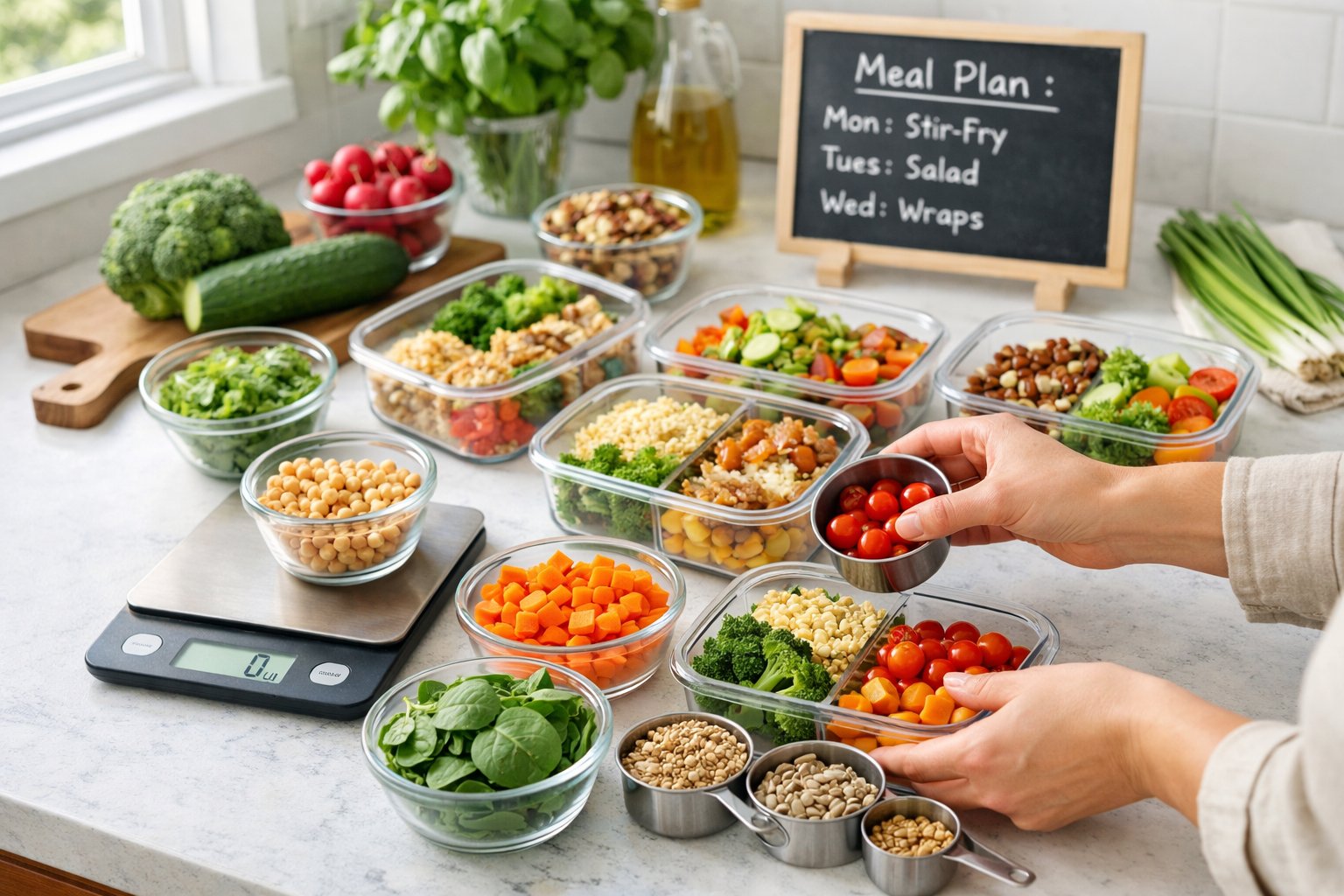
Getting portions right is the real trick. We use a kitchen scale to split batch-cooked ingredients into realistic servings that match how we actually eat.
For solo meals, we portion everything into single servings before storing. That way, you only defrost what you need and skip the guessing game. Our go-to: 240ml containers for grains, 180ml for proteins, 360ml for veggies.
We freeze portions flat in silicone bags to save space and make thawing quicker. Everything gets labeled with contents and date—masking tape and a marker work fine. If we cook 6 cups of rice, we divide it into 180ml portions, so we’ve got 8–10 servings ready to grab.
Utilizing Versatile Cooking Tools
We lean on multi-purpose tools that help us cook efficiently without filling the kitchen with clutter. A large sheet pan? Indispensable. We can roast several things at the same time, each taking its own section.
Our instant pot’s a workhorse. It batch-cooks grains, beans, and veggies while we prep something else. The food processor is another hero—turns veggie scraps into pestos, sauces, or dips, so nothing gets tossed just because it’s a little wilted.
Our essential tool setup:
| Tool | Primary Use | Waste Prevention Benefit |
|---|---|---|
| Sheet pans (2-3) | Roasting multiple components | Cook everything at once to save energy |
| Instant pot | Grains, beans, broths | Extracts maximum flavor from scraps |
| Food processor | Sauces, dips, vegetable prep | Transforms scraps into usable ingredients |
| Glass containers (various sizes) | Storage and reheating | Prevents freezer burn and plastic waste |
Stackable glass containers are a game-changer. They go from freezer to microwave, so we don’t have to shuffle food between dishes. That one switch cut down our need for wraps and cut the pile of dirty dishes.
Creative Ingredient Cross-Utilization and Swaps
Batching ingredients gets even better when we stretch them across meals and make quick swaps when we run low. This approach slashes waste and keeps meal prep flexible—no panic if we’re missing something.
Cross-Utilizing Proteins, Grains, and Vegetables
Picking the right base ingredients really makes zero-waste meal prep tick. Grilled chicken or tofu? They work in all sorts of cuisines with a seasoning change. One batch of chicken becomes Mediterranean with oregano and lemon, Asian with ginger and soy, Mexican with cumin and lime. Why not?
Quinoa’s another favorite. We use it as a base for bowls, toss it cold in salads, or even make it into a quick porridge. Sweet potatoes? Roast them for sides, mash them into veggie burgers, or cube them for curries.
High-Impact Versatile Ingredients:
- Chickpeas: Toss in salads, blend into hummus, or roast as snacks
- Bell peppers: Use raw in salads, roasted for fajitas, or sautéed in stir-fries
- Greek yogurt: Serve as protein, whip into sauce bases, or mix into dips
- Legumes: Add to soups, mash for spreads, or incorporate into grain bowls
Prepping these in bulk with neutral seasonings saves us hours, and we can still make each meal taste unique.
Ingredient Swaps and Flexibility Hacks
If we run out of something, we don’t sweat it—we just swap. The trick is knowing what each ingredient brings to the table: moisture, texture, flavor, or cook time.
| Missing Ingredient | Smart Swap | Best For |
|---|---|---|
| Greek yogurt | Sour cream or mashed silken tofu | Dips, dressings, protein bowls |
| Quinoa | Rice, farro, or cauliflower rice | Grain bowls, sides |
| Bell peppers | Zucchini, carrots, or mushrooms | Stir-fries, roasted dishes |
| Chickpeas | White beans, lentils, or edamame | Salads, protein sources |
Keeping these staples on hand means we’re rarely stuck. Tofu can stand in for chicken in most Asian dishes. Sweet potatoes do the job of regular potatoes—sometimes even better, honestly.
Repurposing Leftovers into New Dishes
Leftovers aren’t just for reheating—they’re building blocks. Roasted veggies from yesterday? Frittata filling or grain bowl topping today. Leftover chicken gets shredded for quesadillas or tossed into pasta.
We try to change the form and context of leftovers. Quinoa from Monday’s dinner turns into a breakfast bowl with fruit and nuts the next morning. Roasted sweet potatoes end up in soup or mashed into pancake batter.
Quick Leftover Transformations:
- Grain dishes → Fried rice, breakfast bowls, or veggie burger binders
- Roasted proteins → Salad toppings, wrap fillings, or soup additions
- Cooked vegetables → Omelets, pizza toppings, or blended sauces
Storing leftovers in clear containers helps us actually see and use what we have. We label everything with dates so nothing gets forgotten. Treating leftovers as ingredients, not just reheats, has made our meals way more interesting and seriously cut down on waste.
Optimal Food Storage and Preservation Methods
Good food storage comes down to three things: the right containers, steady temperatures, and preservation tricks like freezing or pickling to stretch shelf life.
Best Storage Containers and Materials
We’ve found airtight containers made of glass or BPA-free plastic are best for keeping things fresh. Glass is non-reactive and lets us see what’s inside. Plastic is lighter, so we use it sometimes for everyday stuff.
For dry goods, reusable containers with silicone gaskets actually keep air and moisture out. Clear containers help us keep tabs on what we’re running low on—no more surprise empty jars.
Matching container size to volume matters. Too much air speeds up staleness. We use smaller containers for open items and transfer bulk buys into right-sized vessels. Square or rectangular containers stack better than round ones, saving space.
Metal containers are great for oils or anything sensitive to light. Vacuum-sealed bags are our go-to for freezing. We always label with dates, using removable labels or a dry-erase marker on glass.
Temperature Control and Shelf Life
Temperature swings are a food’s enemy. We keep our fridge at 35-38°F and freezer at 0°F or below.
Proteins, dairy, and prepared batches need the coldest, steadiest spots. Raw meat goes on the bottom shelf—no drips on other food. Dairy stays in the main compartment, not the door, since that area warms up every time the fridge opens.
Root veggies do best in cool, dark places—think 50-60°F with some humidity. We leave tomatoes, potatoes, onions, and garlic out of the fridge because cold ruins their flavor and texture. Herbs last longer in water, loosely covered, like a bouquet.
We use an appliance thermometer to keep an eye on temps. Overstuffing the fridge blocks airflow and creates warm spots, so we try not to jam it full.
Freezing, Pickling, and Drying Techniques
For freezing, we portion leftovers or prepped ingredients into meal-sized amounts in freezer-safe bags or containers. We squeeze out as much air as possible to avoid freezer burn—stuff usually stays good for 3-6 months.
Blanching veggies before freezing helps them keep their color and texture. We dunk them in boiling water for a minute, then ice water, and freeze. Raw proteins freeze well when wrapped tightly and labeled.
Quick pickling is another favorite. We use a basic brine—equal parts vinegar and water, plus salt and sugar. In 24 hours, cucumbers, onions, or carrots become tangy toppings.
Drying herbs, mushrooms, and tomatoes concentrates flavor and removes moisture. We use a low oven (200°F or less) or a dehydrator. Dried stuff keeps 6-12 months in airtight containers, stashed in a cool, dark spot.
Eco-Friendly Habits and Zero Waste Kitchen Tips
Batching is great, but it’s even better when paired with habits that cut waste to almost nothing. We turn scraps into flavor boosters, compost what we can’t use, and set up systems to make sustainable cooking a no-brainer.
Using Vegetable Scraps Creatively
We’re big on using the whole vegetable. Carrot tops, celery leaves, and herb stems add depth to stocks and broths. Broccoli stems? Peel and slice for stir-fries or grate into slaw.
Potato, carrot, and parsnip peels crisp up into chips when tossed with a little oil and roasted at 400°F. Beet greens sauté like spinach, and radish tops make a spicy pesto. We keep a freezer bag for scraps, adding to it all week until we’ve got enough for a recipe.
Citrus peels infuse vinegar for homemade cleaners or sugar for baking. Corn cobs simmer into a sweet broth. Wilted greens? Into smoothies or soups—they still pack nutrition, even if they’re floppy.
Composting at Home
Composting turns food waste into garden gold. We keep a small lidded bin on the counter for coffee grounds, eggshells, and veggie trimmings, then empty it into a bigger outdoor bin every few days.
The best mix is three parts brown (leaves, cardboard, paper) to one part green (fruit, veggie scraps, grass). We skip meat, dairy, oils, and cooked foods—they attract pests and smell.
For apartments, vermicomposting with worms works in small bins under the sink or on the balcony. Some meal prep businesses team up with local composting services for bigger-scale waste.
Building Sustainable Kitchen Systems
We set up routines so zero-waste cooking just happens. A shelf holds reusable containers, beeswax wraps, and silicone bags—no single-use plastics. We label everything with washable markers or tape.
Shopping with our own bags, jars, and produce sacks cuts packaging waste. Buying in bulk only works if we actually use things up, so we track what we use and adjust. Meal prep businesses are doing this too—it saves money and waste.
We keep an inventory list on our phone or a whiteboard. First-in, first-out rotation in the pantry and fridge means older stuff gets used first. Weekly fridge cleanouts help us spot what needs using and plan meals around it.
Frequently Asked Questions
Ingredient batching is easier when you know how to store things, plan ahead, and use the right tools. Here are some questions we get all the time.
How can meal planning keep my fridge happy and minimize waste?
We start meal planning by looking at what’s already in the fridge and pantry, then build recipes around those. That way, we don’t buy doubles or let things rot in the back.
We plan meals with overlapping ingredients. If we buy cilantro for tacos, we also use it in curry and salad the same week.
Grouping shopping lists by shelf life helps us cook meals in the right order, so nothing spoils before we get to it.
What's the secret to storing ingredients for maximum freshness?
Every ingredient wants its own storage setup. Root veggies stay in cool, dark spots. Leafy greens last longer wrapped in a damp cloth in the fridge.
Herbs do best upright in water, loosely covered. Tomatoes and stone fruits ripen at room temp.
We use airtight glass or stainless containers for dry goods and prepped ingredients—keeps moisture and pests out, and prevents freezer burn.
Are there any app-etizing ways to tackle meal prep without the food waste?
We label every container with contents and dates. Washable markers or removable labels make it easy. This way, we use things before they turn into mystery science projects.
A “use first” bin in the fridge puts soon-to-expire stuff front and center. We always check it before our next batch cooking session.
Freezing prepped ingredients in portions gives us options without eating the same thing all week. Blanching veggies before freezing keeps them vibrant.
Could you spill the beans on optimizing kitchen storage to keep ingredients in tip-top shape?
We keep most-used pantry items at eye level, specialty stuff higher or lower. It’s easier to see what we have and avoid buying repeats.
Stackable containers save space in cabinets and the fridge. We prefer square or rectangular ones—they just fit better.
Clear containers let us see what’s inside without opening everything. We store bulk items in smaller portions to keep the rest fresher.
Why should measuring spoons be a staple in the quest for ingredient-saving success?
Measuring tools help us portion accurately, so we don’t open more than we need. Measuring pasta, rice, or grains before cooking means less waste.
Kitchen scales let us divide bulk buys into meal-sized amounts. That way, we never thaw or open more than needed.
Getting the amounts right makes food taste better, which means we actually want to eat it all—less waste, happier bellies.
Got any practical tips for cooking enthusiasts to use package sizes to their advantage?
We tend to pick package sizes that actually match how much we eat, not just what looks like a bargain. Honestly, a giant bag that spoils before we finish it just ends up wasting money and food—nobody wants that.
When buying in bulk does make sense, we break things down into smaller portions right away and freeze whatever we won’t use in the next few days. This trick works especially well for proteins, bread, or sauces. It’s a bit of extra effort, but it keeps things fresh and avoids waste.
We also plan meals around the sizes things come in. If cheese is sold in 8-ounce blocks, we’ll make sure to use recipes that add up to the whole block before it goes bad. It’s not always perfect, but it saves a surprising amount of hassle (and money) over time.
Share:
What Causes Ice Crystals to Form on Stored Food and How to Prevent It
How to Store Prepped Vegetables So They Don’t Dry Out or Turn Slimy