

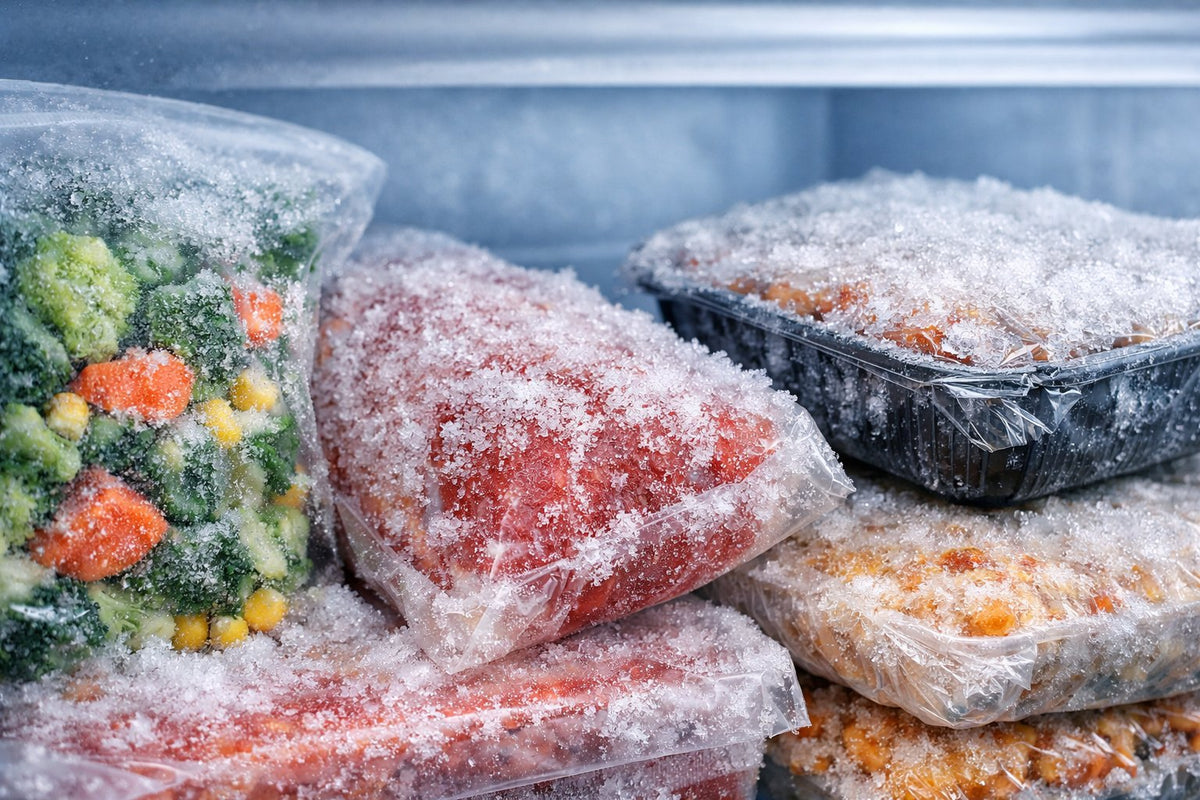
Opening your freezer to find your hard-earned meal prep covered in frost is, honestly, a pain, especially when you thought you did everything right. Ice crystals pop up on frozen food when moisture from the food or the freezer air freezes onto the surface.
Usually, this happens because of temperature swings, bad packaging, or just too much air getting to your food. This whole thing, often called freezer burn, doesn't just mess with how your food looks. It can mess with texture and flavor, too, turning what should be an easy meal into something you'd rather not eat.
The good news? Preventing ice crystals isn't rocket science once you know what's going on. Let's break down the science behind freezer burn, some packaging tricks, and how a little temperature management can keep your frozen food in decent shape.
Whether you're batch cooking for the week or stashing away summer berries, these tips can help keep your freezer stash tasting like it should.
We'll talk containers, storage habits, the mistakes that trip people up, and which tools are actually worth the hassle. The goal? Make frozen food work for you, not against you.
Key Takeaways
- Ice crystals form when moisture freezes on food surfaces thanks to temperature changes and air exposure
- Airtight packaging and a steady freezer temp at 0°F or below help stop crystals from forming
- Freeze food quickly in small portions and squeeze out extra air to keep things tasting fresh
The Science Behind Ice Crystals on Frozen Food
Ice crystals show up on frozen food because of a mix of water molecules, shifting temps, and just plain time. Stuff like sublimation (ice turning straight into vapor), recrystallization (small crystals merging into bigger ones), and moisture moving around inside the freezer all play a part.
What Are Ice Crystals and Why Do They Form
Ice crystals are those tiny, white or see-through bits of frozen water you see on food in the freezer. When you freeze food, the water inside turns to ice, making crystals all through the food. How fast you freeze it matters—a quick freeze makes lots of small crystals, while a slow freeze lets water molecules gather into bigger, rougher crystals. Those big ones can break up the food's cells and mess with texture when you thaw it out.
It all starts with nucleation—water molecules clumping together at cold spots. After that, more water sticks to these clusters and the crystals grow. What's in the food matters, too: water, fat, and protein levels all change how and where crystals form.
Understanding Sublimation and Recrystallization
Sublimation happens when ice skips the liquid stage and goes straight to vapor. In your freezer, this means ice on the food's surface just vanishes into the air, then refreezes somewhere else—maybe on the packaging or the freezer walls, which is where that weird frost comes from.
Recrystallization is a little different. Here, small ice crystals shrink while bigger ones get even bigger. Water molecules move from the little guys to the big ones, especially when the freezer temperature isn't steady. Over time, this leaves you with tough, dry spots in your food.
Both of these pull water out of your food, leaving behind those classic dry, discolored patches we call freezer burn. The texture gets weird, and the taste isn't great either.
How Temperature Fluctuations Contribute to Ice Crystals
Temperature swings are a real troublemaker. Every time your freezer warms up, even a bit, ice on the food can start melting. Then, when it gets cold again, that moisture refreezes into new, usually bigger, crystals.
This is super common with frost-free freezers during defrost cycles, or when you're opening the door a lot, or if the freezer just isn't holding a steady temp. Each little warm-up lets more moisture move around, and that builds up frost over time. A freezer that bounces between 0°F and 10°F? That's a recipe for more ice crystals than you want.
The freeze-thaw cycle also makes it easier for moisture to escape from inside the food. As the crystals melt and refreeze, they break up the food's structure and create little tunnels for water vapor to reach the surface. That just means more frost and more freezer burn.
Freezer Burn: What It Is and How It Affects Food
Freezer burn happens when frozen food loses moisture through sublimation—ice turning right into vapor and escaping. What's left behind? Food that's dried out, faded, and not nearly as tasty or tender as it was, but it's still safe to eat.
The Role of Moisture Loss in Freezer Burn
Freezer burn kicks off when water molecules sneak out of your food and into the dry freezer air. That moisture then heads for the coldest spots and refreezes as frost. The more air your food is exposed to, the faster this happens.
If you leave food unwrapped or badly wrapped, the dry freezer air pulls out moisture even faster. That's why airtight packaging is such a big deal if you want your frozen stuff to taste like it should instead of like, well, cardboard.
Effects of Freezer Burn on Texture and Flavor
You can tell when freezer burn's hit. The texture gets tough, leathery, or just plain rubbery where moisture's left. Meat gets stringy. Veggies lose their snap and turn mushy.
Flavor takes a nosedive too. As the water leaves, it pulls flavor with it, so you're left with bland food. Fatty foods can start to taste off or even rancid, since the dried-out spots are more likely to oxidize.
And the look? Freezer burn leaves white or gray patches, especially on meat. Colors fade, so your veggies look sad. It's not unsafe, but it's definitely not what you want for dinner.
Signs Your Frozen Food Has Freezer Burn
You can usually spot freezer burn by looking for white or grayish spots on the surface. Those are the dried-out areas where ice crystals took over.
Touch helps, too—freezer-burned food feels dry or tough, not smooth like it should. If you see ice crystals inside the packaging or coating the food, that's another sign moisture's on the move.
What to look for:
- Shriveled edges on meat
- Faded veggies
- Frost on the food's surface
- Ice crystals inside the bag or box
If your frozen food snaps or crumbles instead of bending a little, it's probably freezer burned. And when you thaw it, you might notice a stale or just weird smell.
Temperature Management for Preventing Ice Crystals
Keeping your freezer at the right temp and steady is the best way to dodge ice crystals on your food. The magic number? 0°F (-18°C). That stops those freeze-thaw cycles that build up frost.
Why Freezer Temperature Matters Most
You want your freezer at 0°F (-18°C) or colder. At this temp, water in your food stays frozen solid and doesn't migrate to the surface.
Even a small temperature bump above 0°F can start thawing ice crystals. When it cools down again, the moisture refreezes into more crystals. The more this happens, the more frost you get.
Most new freezers can handle this, but sometimes what you set isn't what you get. If your freezer's actually running a few degrees too warm, you're setting yourself up for trouble.
Using a Freezer Thermometer for Accuracy
Don't just trust the freezer's display. Stick a separate thermometer in the middle, away from the door and walls, to see what's really going on.
Check it now and then, especially after power outages or if you start seeing more frost than usual.
Digital thermometers with min-max readings are handy—they show you if your freezer's been creeping above 0°F when you weren't looking. If you notice a jump, it's time to fix the problem before your food takes the hit.
Tips for Avoiding Temperature Fluctuation
Try not to open the freezer door more than you have to. Every time you do, warm air rushes in and bumps up the temp.
Keep it full but not jam-packed. Frozen food actually helps keep temps stable, but you still need some space for air to circulate.
Don't toss hot food straight into the freezer. Let it cool first, or you'll warm up everything around it. And check the door seal—if you can slip a dollar bill out easily, the seal's not tight enough and you'll lose cold air.
Perfect Packaging: Your Defense Against Ice Crystals
The right packaging keeps moisture in and freezer air out, which means fewer ice crystals and better-tasting food. Good seals are your best friend here.
Choosing the Right Packaging Materials
Go for stuff that blocks moisture and air. Heavy-duty freezer bags beat regular ones—they're thicker and tougher.
Freezer paper works for meats and poultry. Wrap with the plastic-coated side facing the food, and you can write on the outside.
Aluminum foil is solid for wrapping, as long as you wrap it tight and avoid sharp edges poking through.
Glass containers with airtight lids are reusable and keep air out. Just make sure they're freezer-safe so they don't crack.
Plastic containers labeled freezer-safe work too. Look for BPA-free options with snap lids that seal tight.
Vacuum Sealing Versus Traditional Methods
Vacuum sealers suck out almost all the air and seal the bag, which really cuts down on ice crystals. Food lasts longer and tastes better this way.
If you don't have a sealer, squeeze as much air as you can out of freezer bags before sealing. It's not perfect, but it works for short-term storage.
Vacuum sealing's worth it for pricier foods like steaks or seafood, or if you freeze a lot. The machines range from $30 to $300, so there's something for everyone.
For stuff you'll eat soon (within three months), regular bags are fine. Not every food suffers from a few ice crystals, so don't stress if you're just freezing something for a couple weeks.
Double-Wrapping for Delicate Foods
For fragile foods, double-wrapping helps a ton. Wrap first in plastic wrap or freezer paper, then put that in a freezer bag or foil.
Baked goods—like cakes and cookies—really benefit from this. The inner wrap keeps moisture in, and the outer layer blocks weird freezer smells.
Fish and seafood hold up better, too. Press the first wrap right up against the food to keep out air, then seal it all up tight in the second layer.
Yeah, it takes a little extra time, but it can save your food's texture, especially for anything you're planning to keep frozen for more than a couple months.
Airtight Packaging and Freezer Bags Tips
We squeeze air out of freezer bags using the water displacement method: submerge the filled bag in water up to the seal line, let the water push the air out, then zip it closed while it's still underwater. It's a bit awkward at first, but you get the hang of it.
Leaving the right amount of headspace matters—liquids and foods expand as they freeze. We usually fill containers to about an inch below the rim to help prevent cracking or the seal popping open.
Flat-packing freezer bags is a game changer for saving space and freezing food faster. We spread things like ground meat or berries into thin, even layers—these stack neatly and thaw out way quicker.
Quality freezer bags with double zippers just work better than the single-seal kind. We run our fingers along the seal a couple of times to make sure it's really closed before tossing it in the freezer.
Labeling is a must. We write the contents and freezing dates right on the bags with a permanent marker, or slap a piece of tape on rigid containers. It saves us from guessing what that mystery lump is six months later.
Cutting Down Air Exposure Around Frozen Food
Air is what gives moisture somewhere to go. The less of it sitting against your food, the less room there is for sublimation and surface frost. A few habits make the biggest difference:
- Pat food dry before you pack it. Surface water is the first thing to turn into frost.
- Match the bag or container to the food. Apart from the headspace liquids need, extra room is just extra air.
- Press the wrap right against the surface of meat, fish and baked goods so there are no air pockets.
- Freeze soups and stocks first, in a container or a flat bag, then pack them once they're solid so liquid isn't pulled toward the seal.
Where vacuum storage helps. Removing air with a sealer gets much closer to the food than squeezing a bag by hand. Vacuum storage pulls the air away from meat portions, fish, cheese and batch-cooked meals, so less dry freezer air touches the surface. A handheld sealer like the Giraffy vacuum sealer set works with reusable zipper bags that have a one-way valve: fill the bag, zip it fully closed, keep the valve flat, and the sealer draws the air out and stops on its own.
Where it doesn't. Vacuum sealing cuts down air exposure, but it isn't a guarantee against freezer burn. It can't stop crystals that form from moisture already inside the food, and it can't make up for a freezer that keeps warming up and cooling down. A seal can also fail if a sharp bone punctures the bag or the zipper isn't fully closed, so check bags after a day or two in the freezer. If a bag has gone soft and loose, air has gotten back in. A steady 0°F, quick freezing and good labeling still matter just as much.
Prep and Storage Habits for Ice-Crystal-Free Food
Getting food ready for the freezer the right way can mean the difference between a delicious meal and a frosty mess. How we prep and portion food really affects those annoying ice crystals.
Cooling Food Before Freezing
Putting hot or even warm food straight into the freezer is a recipe for disaster. It raises the freezer's temperature, creates condensation, and suddenly everything nearby has a layer of ice. The food itself gets surface moisture that freezes into crystals.
We let cooked food cool to room temp first—usually takes 30 to 60 minutes, depending on the size. For big batches, we split them into smaller containers or use shallow pans to speed things up. Sometimes, we pop food in the fridge for an hour before freezing to keep the freezer from working overtime.
It's important to get rid of extra moisture while cooling. We pat surfaces dry with paper towels, especially for stuff like cooked chicken or casseroles that steam as they cool.
Proper Portion Sizes for Quick Freezing
Smaller portions freeze faster, so ice crystals stay tiny and don't wreck the texture. We try to keep things no thicker than two inches. For soups and stews, single-serving containers work better than big tubs. Ground meat? We break it into one-pound chunks and flatten them in bags. Berries, chopped veggies, and cookie dough go in a single layer on a baking sheet until they're solid, then into bags.
This way, nothing clumps together and we only thaw what we need.
Blanching Vegetables and Drying Surfaces
Blanching veggies before freezing stops enzymes that mess with quality. We boil a big pot of water, toss in veggies for 2 to 5 minutes (depends on the type), then dunk them in ice water to stop the cooking.
After blanching, we drain and dry them really well. Any leftover water turns into ice crystals. We use kitchen towels or paper towels to get them as dry as possible. Leafy greens get an extra spin in the salad spinner. The drier, the better—moisture is the enemy here.
Best Practices for Using and Handling Frozen Food
Once we've got freezing down, the next step is managing what's in the freezer so we don't waste food or end up with questionable ingredients.
Never Refreeze Thawed Food
Refreezing thawed food isn't a great idea. Every freeze-thaw cycle messes up the texture—ice crystals melt, water leaks out, and then refreezing just makes bigger, more destructive crystals. The food turns mushy and loses flavor.
There's a safety thing too. When food thaws, the outside can get warm enough for bacteria to grow, even if the inside is still frozen. If something sat out above 40°F (4°C) for more than two hours, throw it out. Cooking it won't make it safe to freeze again. Food thawed in cold water or the microwave should be cooked before it goes back in the freezer.
If food thawed in the fridge and still has ice crystals or feels really cold, you can technically refreeze it. The quality drops, but it's safe. Still, it's way easier to just thaw what you'll use.
Making the Most of Freezer-Burned Food
Freezer-burned food isn't dangerous, but it tastes off and the texture gets weird. We trim off the dry, discolored bits before cooking. With meat, we cut away gray or white patches and use the rest in dishes with sauces or marinades to help with flavor and moisture.
Veggies with a little freezer burn still work in soups or casseroles—no one will notice. We skip using badly freezer-burned stuff as the main ingredient though. It's not worth it.
Smart Organization and Inventory Rotation
We try to organize the freezer so nothing gets lost in the back. Labeling everything with contents and dates only takes a second and saves us from mystery meals. Some of us keep a running list on the freezer door or in a notes app, crossing things off as we use them.
We set up zones—meat in one drawer, veggies in another, prepared meals on a shelf. Newer stuff goes behind older stuff, and we do a quick check every month to catch anything nearing its limit. It's not perfect, but it helps us actually use what we've frozen.
Frequently Asked Questions
Ice crystals show up when food loses moisture to the dry freezer air. Good packaging and steady freezer temps help keep this under control.
What's the deal with freezer burn and those pesky ice crystals on my steak?
Freezer burn happens when moisture from steak escapes into the freezer's dry air—it's called sublimation. The ice crystals you see are water that left the meat's surface and refroze. That leaves dry, discolored patches.
If the steak isn't wrapped tightly or the freezer temp bounces around, this happens faster. Every time we open the door, warm air gets in and starts a freeze-thaw cycle. The upside? Freezer-burned steak is still safe to eat. Just trim off the rough spots if the texture bugs you.
Any chef-approved tricks to stop ice crystals from crashing my frozen food party?
Getting rid of as much air as possible before freezing makes a big difference. Vacuum sealing is best, but squeezing air out of freezer bags works too.
Double-wrapping helps for long-term storage. Wrap food in plastic wrap, then put it in a freezer bag or airtight container.
Freeze food quickly by spreading it in a single layer on a baking sheet. This keeps ice crystals small and the texture better. For veggies, blanching before freezing stops enzymes that cause spoilage.
Is my freezer turning into a winter wonderland because of ice crystals on everything?
If everything in the freezer is covered in ice, something's up with the door seal or temperature. Test the seal by closing it on a piece of paper—if it slides out easily, you need a new seal.
Keep your freezer at 0°F. Use a thermometer to check. Overcrowding blocks airflow and makes temps uneven. Leave some space for air to circulate. If frost is building up on the walls, check for air leaks or defrost system problems.
What's causing my frozen veggies to frost over like a snow-capped mountain?
Veggies have a ton of water, so they're more likely to get frosty. Moisture escapes into the dry freezer air and then refreezes on the surface.
Usually, it's a packaging problem. Once you open store-bought bags, they lose their airtight seal. Transfer opened veggies to new freezer bags and squeeze out the air.
Don't put warm veggies in the freezer—let them cool completely to avoid extra humidity. And remember, even well-packaged veggies lose moisture over time.
How can I evict ice crystals that have overstayed their welcome in my freezer?
Manual defrosting is the way to clear out ice buildup. Turn off the freezer, take everything out, let the ice melt, then wipe it down before turning it back on.
For food with ice crystals, you can't fix the damage, but you can work with it. Trim off freezer-burned parts before cooking. Use those pieces in soups or stews where the extra moisture helps.
Don't refreeze food that's fully thawed, it'll just get worse. Thaw in the fridge to keep moisture loss to a minimum.
Can you enlighten me on how ice crystals decide to set up camp on my frozen lasagna?
Ice crystals go after our lasagna when moisture escapes from the food into the cold, dry air of the freezer. Foods with lots of sauce or cheese are especially vulnerable since they're packed with water.
When the freezer temperature shifts, even just a bit, moisture melts and creeps up to the surface. Then, as things cool down again, that same moisture refreezes and forms those pesky crystals.
If you want to keep your lasagna safe, try wrapping it snugly in plastic wrap and then add a layer of aluminum foil. That double layer really helps. Breaking the lasagna into smaller portions before freezing also speeds up the freezing process, and that keeps ice crystals smaller. It's not a bad idea to slap a date on the package so you remember to eat it within a couple of months while it's still at its best.
Share:
Why Some Frozen Foods Lose Flavor Faster Than Others
A Guide to Smart Ingredient Batching Without Wasting Food