

Check out our latest compact vacuum sealer for food collection!
Buying groceries in bulk can save you a good chunk of change, if you keep those foods fresh long enough to actually use them.
Who hasn’t had the letdown of opening a bag of flour or nuts, only to find they’ve gone bad before you got halfway through? The trick to making bulk buying work is knowing how to store your haul so it stays good and doesn’t end up wasted.
Storage isn’t just a detail, it decides whether your food lasts or fizzles. How you handle temperature, moisture, and air exposure makes a huge difference. Tossing stuff into airtight containers, using your freezer when it makes sense, and keeping your pantry organized can stretch shelf life surprisingly far.
Let’s dig into storage solutions that actually work for normal people. You’ll see what containers make sense, which foods need the fridge, and how to get more mileage from your bulk buys, no fancy gadgets required.
Key Takeaways
- Airtight containers and managing temperature can give your bulk groceries a much longer shelf life
- Each food group needs its own storage approach; proteins might need freezing, dry goods need protection from heat and dampness
- Simple organization and labels help you keep track and avoid letting things go to waste
Understanding Bulk Buying and Shelf Life
Buying in bulk saves money and cuts down on packaging, but only if you know how long things actually stay good—and what those dates on the bag really mean.
What Is Bulk Buying and Why It Matters
Bulk buying is just getting a bigger amount of something at once, usually for less per unit. Think warehouse stores, co-ops, or those bulk bins at your grocery store for things like grains and nuts.
The savings are real. A five-pound bag of rice, for example, often costs 30-50% less per pound than smaller bags. Plus, there’s less packaging and fewer trips to the store.
But here’s the catch: it only works if you use it up or store it right before it spoils. That 25-pound bag of flour? Not such a bargain if you end up tossing half. It’s smart to line up what you buy with what you’ll actually eat and what you can store.
Why bother with bulk?
- Lower price per item
- Fewer runs to the store
- Less packaging in the trash
- Easy meal prep with a well-stocked pantry
The True Shelf Life of Bulk Purchases
Shelf life is all over the map depending on what you’re buying and how you store it. White rice might last for years if you keep it dry and cool, but whole wheat flour can go off in just a few months.
Moisture, temperature, light, and air—these are the big four that decide how long your food lasts. Brown rice and nuts, for example, go rancid faster than their white or refined counterparts because of their oils. Stash them in the freezer, and you can stretch that timeline a lot.
Dried beans and lentils? They’re tough—they’ll hang in there for a year or two. Most whole grains last about 6-12 months. Spices are trickier: whole ones keep their punch for a couple years, but ground spices fade after about a year.
Sugar and salt are the outliers—they’ll last forever if you keep them dry. So if you use a lot, go ahead and buy big.
Expiration Dates vs. Best-By: What to Look For
Expiration and best-by dates aren’t the same. Expiration dates are for stuff like meat or dairy—ignore those at your own risk. Best-by dates are more about quality than safety. Most bulk foods fall into this second group. Dried beans past their best-by? If they look and smell fine, they probably are.
If you’re buying from bins with no dates, it’s on you to keep track. Label containers with the purchase date, and trust your senses—mold, weird smells, or odd colors mean it’s time to toss.
Smart Shopping Strategies for Bulk Groceries
Getting the most out of bulk shopping means picking the right products, knowing what a good deal really is, and timing your buys. It’s not rocket science, but a little planning helps you avoid waste and actually save money.
Choosing the Best Items for Bulk Buying
Stick to non-perishable basics you eat all the time. Rice, pasta, beans, and canned goods are our go-tos—they last a long time and show up in lots of recipes.
Best stuff to buy in bulk:
- Grains and legumes (rice, lentils, quinoa)
- Baking basics (flour, sugar, salt)
- Shelf-stable proteins (canned tuna, chicken)
- Household paper products
- Oils and dried herbs
Before going big, we watch what we actually use for about a month. If we’re blowing through pasta, it’s a yes. If something sits untouched, skip the bulk pack—no matter how cheap.
Fresh produce and dairy? Usually not worth it unless you’re planning to freeze or preserve. Bread gets moldy fast, and those giant bottles of sauce or snacks? Easy to overdo and not always a deal.
Comparing Unit Prices and Bulk Deals
Don’t let the giant price tag scare you off—divide it up and look at the price per ounce or pound to see if it’s really a deal.
Warehouse clubs like Costco usually save you 15-30% over regular stores, but their membership fee ($60 a year) means you need to do a little math. Are you actually saving enough to make it worth it?
How we check:
- Look for unit price labels
- Do the math for bulk sizes
- Remember the membership fee if you’re at a warehouse club
- Compare with sale prices at other stores
Sometimes, a regular store sale with coupons beats the warehouse price. We keep a running list of our usual buys and their prices at different places. It doesn’t have to be fancy—a phone note works.
Warehouse brands can be just as good as name brands and are often cheaper. We like them for basics like paper towels and pantry staples.
Timing Your Bulk Purchases for Maximum Savings
You can save more by buying certain things when they’re at their lowest price. Canned goods, for example, are cheaper in fall and winter. Condiments and grilling stuff go on sale in late summer.
Warehouse clubs rotate deals every month. If you can wait a couple weeks, you might catch a better price. We keep a list of what we need, so we don’t get sucked into buying stuff just because it’s on sale.
When to watch for deals:
- End-of-month markdowns at warehouse clubs
- Post-holiday clearances
- Back-to-school sales in September
- Pantry sales in January
Buying shelf-stable stuff every few months instead of every week saves time and keeps you from impulse spending. For things with a year-long shelf life, we wait for the best price and stock up.
It’s way easier to store bulk buys if you set up your space before you shop. Trying to organize after you’ve already brought home a mountain of food? That never ends well.
Optimal Storage Solutions for Bulk Essentials
Making bulk groceries last comes down to smart storage and a bit of planning. You don’t need a walk-in pantry—just use your space wisely and keep things accessible so you don’t forget what you have.
Assessing and Organizing Your Storage Space
First, check how much space you actually have. Measure your shelves or wherever you plan to store your bulk buys. That way, you’re not stuck with containers that don’t fit.
Heavy-duty shelves are your friend—aim for something sturdy that can handle serious weight. Wire shelves let air move around, but solid ones are better if you worry about spills. Don’t forget those awkward corners—corner shelves can be a lifesaver.
Keep stuff at least 6 inches off the floor to keep out moisture and pests. Risers or stackable bins make the most of your space. Put the things you use most at eye level, and save the lower spots for heavy stuff like flour or sugar.
A few basics:
- Leave space between containers for airflow
- Don’t store food right next to heat sources
- Avoid direct sunlight or windows
Pantry Organization and Inventory Management
A simple First-In-First-Out (FIFO) system helps you use up older stuff before newer buys. Just put the new items behind the old ones.
Label everything—what it is, when you bought it, and when it should be used by. Waterproof markers or stick-on labels work fine. If you’re into spreadsheets or apps, you can track what you have and when to restock, but even a quick photo of your shelves helps you remember what’s running low.
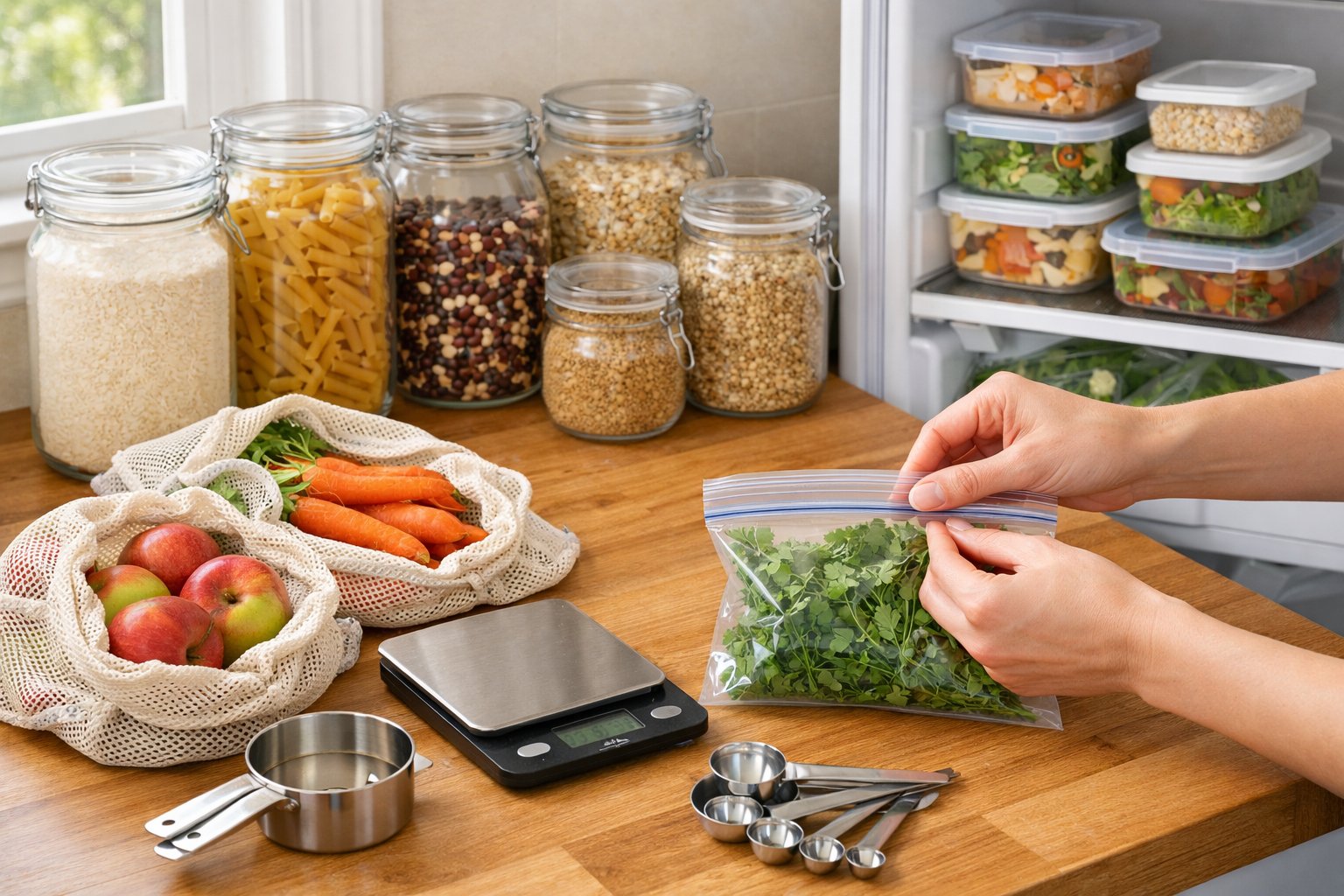
Clear airtight containers are great—you can see what’s inside and how much is left. Measurement marks on the side save you from guessing. Mason jars work for smaller stuff, and food-safe buckets with screw-on lids are great for big bags of rice or flour.
Group similar things together. Baking stuff in one spot, grains in another, oils and condiments on their own shelf—it saves time and keeps things neat.
Preventing Food Spoilage and Waste
Temperature and humidity matter—keep your storage space between 50-70°F and as dry as possible (below 15% humidity if you can). A cheap digital hygrometer tells you where you stand.
Toss a desiccant packet or silica gel sachet into containers with grains, dried fruit, or powders. Check them monthly and swap them out if they’re used up.
A few tricks to keep food fresh:
- Oxygen absorbers (about 300cc per gallon of dry goods)
- Vacuum seal to keep out air
- Bay leaves help keep bugs away
- Check for any signs of condensation or pests weekly
Set up a “use soon” section for things close to their expiration. Put them front and center so you don’t forget. For nuts, seeds, or whole grain flours, stash some in the freezer to keep them fresh up to a year.
Preserving Bulk-Bought Dry Goods: Grains, Flour, Pasta & More
Dry goods like rice, oats, and flour are pantry MVPs if you store them right. Keep them away from moisture, air, light, and pests—airtight containers in cool, dark spots are your best bet.
Best Practices for Storing Rice, Oats, Corn, and Quinoa
We always move grains into airtight containers as soon as we get home. It keeps out moisture and those sneaky bugs. Glass jars with rubber seals or solid plastic containers with locking lids do the job.
White rice can last up to five years if you keep it dry and sealed. Brown rice, with its oils, has a shorter life—about six months in the pantry. We like to freeze brown rice, quinoa, and whole grains for a couple days when we first buy them. This kills off any bug eggs. After that, into airtight containers and then the pantry.
How long do common grains last?
- White rice: 4-5 years
- Brown rice: 6 months in the pantry, up to 18 months in the freezer
- Oats: 1-2 years
- Quinoa: 2-3 years
- Dried corn: 10-12 months
Keep grains away from heat—don’t store them near the stove or dishwasher. If you live somewhere humid, throw a food-safe silica gel packet in each container. Moisture is the real enemy here.
How to Keep Flour and Sugar Fresh
Flour needs different storage depending on the type. All-purpose flour keeps for about a year if you stash it in an airtight container, but whole wheat flour? That stuff turns quickly—three months at room temp, tops, thanks to its higher oil content. We just put whole wheat and specialty flours straight into the fridge or freezer, which stretches their life to somewhere between 6 and 12 months.
Sugar’s a little easier, though it’s not totally hands-off. White sugar does fine in an airtight container and basically lasts forever. Brown sugar, on the other hand, dries out fast. We toss in a terra cotta disk or even a slice of bread to keep it soft.
If we freeze flour, we always let it warm up to room temp before using it—about half an hour on the counter—so condensation doesn’t form. We slap a label with the purchase date on every container. Otherwise, who can remember how long it’s been there?
Maintaining Pasta and Other Dry Essentials
Dry pasta’s a breeze to store. We dump it out of the box into airtight containers—keeps it fresh and stops pantry moths from making themselves at home. Stored in a cool, dark spot, dried pasta lasts a year or two past whatever date’s printed on the box.
Fresh pasta’s another story. It needs the fridge for a few days, or the freezer if you want it to last up to eight months. And we always keep pasta away from spices—otherwise, it picks up every scent in the pantry. Same deal for other strong-smelling foods.
Dried beans and lentils? Same approach. Airtight containers, out of the heat and light, and they’ll last a year or two. Every few months, we peek in to check for moisture, clumps, or any bugs. If something seems off, we don’t risk it—we just toss it.
Winning with Airtight Containers, Vacuum Sealing, and Storage Bags
Protecting bulk groceries from air, moisture, and temperature swings can seriously extend shelf life and keep flavors and nutrients intact. Airtight containers, vacuum sealers, and the right bags make all the difference in keeping food from spoiling and cutting down on waste.
Why Airtight Containers are a Game Changer
Airtight containers keep oxygen out. That matters because oxygen is what makes oils go rancid, dulls spices, and gives nuts that weird flavor. We always transfer bulk buys like flour, rice, pasta, and coffee into airtight containers right away. They block moisture and stop things from clumping.
Best uses for airtight containers:
- Baking staples (flour, sugar, cocoa)
- Grains and legumes (rice, quinoa, beans)
- Nuts and seeds
- Dried fruit
- Coffee beans and tea
- Spices and herbs
Clear-sided containers are handy—you can see what’s inside without opening everything. BPA-free plastic is fine for the pantry, but if you’re moving stuff between fridge and counter, borosilicate glass handles the temperature changes better.
Vacuum Sealing: The Secret to Extended Freshness
Vacuum sealers suck out almost all the air from special bags before sealing them. This slows down bacteria and stops freezer burn, since there’s no oxygen left to do any damage.
Vacuum sealing can double or triple the life of refrigerated foods. In the freezer, vacuum-sealed stuff stays good for months longer than if you just wrap it in plastic or foil.
Foods that really benefit from vacuum sealing:
- Meats (raw or cooked)
- Cheeses (hard and soft)
- Fresh herbs (blanch first)
- Bulk veggies for freezing
- Marinated proteins
- Dry goods that hate moisture
One big plus: you can portion out bulk meat into meal-sized bags, vacuum seal, and freeze them flat. That way, you only thaw what you need.
Vacuum sealers aren’t great with liquids. For soups or anything runny, we freeze them in containers first, then vacuum seal the frozen blocks.
Choosing the Right Storage Bags for Bulk
Not all bags are created equal. Freezer bags are thicker than regular storage bags and do a better job keeping moisture out. We stick with bags labeled for freezer use if we’re storing anything more than a week. They’re less likely to tear and they block freezer burn better. For vacuum sealing, only use bags made for that purpose—they’ll actually hold a seal.
Bag selection guide:
| Storage Method | Best Bag Type | Ideal For |
|---|---|---|
| Pantry | Standard resealable | Snacks, dried fruit, opened packages |
| Refrigerator | Resealable or freezer | Produce, leftovers, cheese |
| Freezer (short-term) | Heavy-duty freezer bags | Bread, veggies, fruit (up to 3 months) |
| Freezer (long-term) | Vacuum seal bags | Meats, meals (up to 12 months) |
Silicone bags are a solid, reusable option for just about everything except vacuum sealing. We use them for lunches and fresh produce in the fridge.
Tips to Prevent Freezer Burn
Freezer burn happens when air hits frozen food, drying it out and messing with flavor and texture. It’s not dangerous, but it’s not tasty either.
We get rid of as much air as possible before freezing anything. With freezer bags, we press them flat and squeeze out the air. For expensive stuff, we’ll double-wrap it.
Freezer burn prevention checklist:
- Let cooked food cool all the way before packaging
- Squeeze out excess air from bags and containers
- Wrap tightly in plastic wrap before bagging
- Label everything with what it is and when you froze it
- Keep freezer at 0°F or lower
- Don’t overpack the freezer—air needs to move
- Use vacuum-sealed stuff within the right time frame
Quick freezing helps too. We spread berries or cookie dough on a baking sheet, freeze till solid, then bag them up. No clumping, easy to grab just what you need.
For stuff we’ll eat soon, heavy-duty freezer bags work fine if you pack them right. We save vacuum sealing for things we want to keep long-term, or foods that get freezer burn easily, like fish or ground meat.
Bulk Buying for Perishable and Frozen Foods
Buying perishable and frozen foods in bulk can save a lot, but only if you actually use what you buy before it goes bad. These items need more attention than dry goods.
Identifying Perishable Items Worth Buying in Bulk
Not every perishable food is a good bulk buy. We stick to foods that freeze well and don’t lose texture or flavor: berries, lean meats like chicken breasts and ground beef, bread, and pre-chopped veggies.
Dairy’s trickier. Hard cheeses freeze okay if you wrap them well, though the texture changes a bit. Butter’s perfect for freezing—lasts a year, no problem. We skip buying milk in bulk unless we freeze it in small batches, since thawed milk is better for cooking than drinking.
Most fresh produce doesn’t freeze well—lettuce, cucumbers, potatoes are a no-go. Instead, we bulk buy produce that can be blanched and frozen (think broccoli, green beans, cauliflower) or stuff that freezes raw, like chopped peppers, onions, or berries.
We always ask ourselves: will we actually eat this before it spoils, or can we prep and freeze it within a couple days?
Storing Frozen Foods for Maximum Longevity
Frozen foods last anywhere from three months to a year, depending on what it is and how you pack it. We squeeze out as much air as possible with freezer bags, or vacuum seal if we’re storing for more than three months.
Keeping the freezer at a steady 0°F or below is key. We try not to open the door too often—every time you do, warm air gets in and makes ice crystals form, which leads to freezer burn.
Optimal Freezer Storage Times:
- Raw ground meat: 3-4 months
- Raw poultry pieces: 9 months
- Bread and baked goods: 3 months
- Blanched veggies: 8-12 months
- Berries: 8-12 months
- Cooked meals: 2-3 months
We label everything with what it is and when we froze it, right on the bag. And we organize the freezer by zones—meat, veggies, meals, baking stuff—so we don’t end up buying duplicates or losing things at the bottom.
Managing Bulk Portions: Meal Planning Techniques
Portioning is what makes bulk buying work. If we bring home five pounds of ground beef, we split it into one-pound packs right away. Cookie dough? We freeze it in scoops, then bag it so we can bake just a few at a time.
We keep a basic inventory list on the freezer door, tracking what’s inside and rough amounts. It keeps us from buying more of what we’ve already got buried in there.
Batch cooking stretches bulk buys even further. If we stock up on chicken, we’ll grill some for now, dice and freeze some for stir-fries, and use the rest for soup in single-serve containers. That way, we’re not stuck eating the same meal over and over.
We plan meals that use the same ingredients in a week—like fajitas, stuffed peppers, stir-fry if we buy a lot of bell peppers—then freeze any leftovers for later.
Sustainability and Environmental Impact of Bulk Buying
Bulk buying tackles two big environmental headaches: too much packaging and wasted food. Buying in larger quantities with reusable containers slashes single-use plastics and cardboard that usually end up in the trash after one trip.
Reducing Packaging and Food Waste
Most grocery shopping creates a mountain of trash from packaging. Packaging is nearly half of all municipal waste, and the world churns out over 430 million tons of plastic a year.
Bulk groceries cut most of that out. Instead of buying four 500g pasta packs, we fill one big container with 2kg of pasta—boom, three fewer pieces of plastic.
Waste reduction goes beyond just packaging:
- Fewer disposable containers means less carbon emissions from manufacturing
- Shipping is more efficient with concentrated products
- Less household trash means lower municipal waste costs
Food waste drops when we control the portions. We buy what we’ll actually use, not whatever size the store decided to sell. Some research says households that switch to bulk buying cut their waste by 60% or more within six months.
Making Sustainable Choices in Bulk Shopping
Not every bulk item is a win for the environment. We focus on foods with long shelf lives and that we use regularly.
Smart bulk picks:
- Grains (rice, oats, quinoa)
- Dried beans, lentils, chickpeas
- Nuts and seeds
- Spices (but only what we’ll use in 6 months)
- Cooking oil in big bottles
It’s worth spending a little more on containers that last. Glass jars and stainless steel hold up for years, don’t leach chemicals, and keep food fresher. A $5 glass jar used for five years costs almost nothing per use and saves tons of plastic bags from the landfill.
Local bulk stores often buy from regional suppliers, so there’s less transportation pollution compared to big-brand packaged goods. Plus, we’re supporting local food systems and shrinking our carbon footprint.
Frequently Asked Questions
Egg freshness tests, smart soup storage, and better pantry organization can really cut down on food waste and help you make the most of bulk buys.
How can I tell if eggs have gone bad, beyond the listed expiration date?
The float test is our go-to. Fill a bowl with cold water and gently drop in the egg. Fresh eggs sink and lay flat. If it stands up on the bottom, it’s still okay but use it soon. If it floats, toss it.
You can also crack the egg onto a plate. A fresh egg has a tall, rounded yolk and thick white that stays put. Bad eggs have flat yolks and runny whites that spread everywhere.
And honestly, the smell test never fails. Fresh eggs barely smell at all. If you get a strong sulfur smell, it’s time to throw it out.
What are the best practices for refrigerated soup storage to ensure it stays fresh longer?
Get soup into airtight containers within two hours of cooking or opening. We prefer glass or BPA-free plastic with tight lids to keep out odors and germs.
Keep soup at 40°F or below, and store it on the fridge’s interior shelves (not the door). Label everything with the date, and plan to eat refrigerated soup within 3-4 days.
Divide soup into smaller containers before chilling—it cools faster and lowers the risk of bacteria. Shallow containers work best because they help soup chill down quickly.
Could you provide tips for extending the shelf life of canned or boxed soups?
Keep unopened canned and boxed soups in a cool, dry spot—somewhere between 50-70°F. Direct sunlight or heat? Not great. Pantries or inside closets usually do a better job at staying steady than those cabinets near your stove or dishwasher.
Don’t let canned soups sit right on concrete or hang out in damp corners. Put them up on shelves or even a wooden pallet to keep rust at bay and let air move around. If you’ve got a lot, stack newer cans behind older ones so you use the oldest first. I always peek at cans for bulges, rust, or big dents—if you see any of that, just toss the can, no matter what the date says.
Boxed soups in those shelf-stable cartons can last about 12-18 months if you store them right. Once you open one, pour the leftovers into an airtight container and stick it in the fridge. You’ll want to finish it within 3-4 days.
What's a foolproof food storage chart to prevent spoilage of cold groceries?
We split up our fridge by temperature zones to keep things fresher. The coldest part—usually the back of the bottom shelf—is where raw meat, poultry, and fish belong, since it stays around 32-34°F.
Middle shelves hover closer to 37-40°F, so we put dairy, eggs, and leftovers there. Milk goes toward the back, not in the door. The door just isn’t cold enough, even if the fridge makers think it is.
Crisper drawers are handy, but you’ll want to play with the humidity settings. High humidity (80-95%) works for leafy greens and most veggies. Fruits that give off ethylene gas, like apples and pears, do better in low humidity (65-75%).
Door shelves? We only use them for stuff that doesn’t mind a little temperature swing, like condiments or juice. Even if your fridge comes with egg holders in the door, I’d skip using them.
Is there a savvy app that helps with ensuring food safety for stored items?
There are a bunch of apps out there for tracking food storage and safety. FoodKeeper, made by the USDA, covers over 650 foods and even pings you when something’s close to its use-by date.
NoWaste and KITCHE are pretty handy, too. You can scan receipts or enter what you bought, then track expiration dates and even get recipe ideas to use things up before they spoil. Makes it way easier to see what you have and cut down on waste.
Freshbox and StillTasty are nice for looking up how long things last in the pantry, fridge, or freezer. I use them when I’m not sure if something’s still good.
Most of these apps sync across devices, so everyone at home can check the list or update it when they use something. That way, nothing gets forgotten in the back of the fridge.
How can I keep my kitchen pantry organized for optimal freshness and longevity of groceries?
Group similar items together—think baking supplies, canned goods, grains, snacks—into their own zones. I like using clear airtight containers for flour, sugar, rice, and pasta. It’s just easier to see what’s running low, and things stay fresher.
Adjustable shelves help a ton. You can fit tall jars or tiny cans without wasting space. I put bulkier stuff down low so I’m not hauling heavy bags from overhead, and lighter, everyday things go right at eye level.
Labels are a lifesaver. I jot down what’s inside and when I bought it, either with a label maker or just a marker if I’m in a hurry. There’s a “use first” spot for stuff that’s getting close to expiring—honestly, it’s easy to forget otherwise. I try to check that shelf every week when figuring out meals.
Temperature matters more than you’d think. I keep the pantry between 50-70°F and try to keep humidity under 15%—definitely don’t put it near the oven or dishwasher. If it gets muggy, I’ll toss in a moisture absorber. And really, don’t cram the shelves; air needs to move around, or things can get weirdly stale.
Share:
How to Portion Ingredients for the Week So They Stay Fresh Until You Need Them
How to Prevent Moisture Damage in Stored Dry Ingredients