

Check out our latest home & kitchen collection!
A cluttered kitchen with mismatched containers can make even the most spacious cooking area feel chaotic and cramped.
Switching to matching storage containers creates an instantly cleaner, more organized kitchen while making it easier to find what you need and maximize your available space. This simple change works whether you're organizing a small apartment kitchen or a large pantry.
The benefits stretch well beyond looks. Coordinated containers let us spot what we have at a glance, cut down on food waste, and make meal prep less of a hassle. They also help those lazy susan cabinets and pull-out drawers actually earn their keep by stacking neatly and using up every bit of space.
Let’s dig into practical ways to pick the right containers, organize different kitchen zones, and keep that clean look without losing any function. We’ll talk glass versus plastic, labeling tricks, and how to arrange everything from dry goods to leftovers.
Key Takeaways
- Matching storage containers instantly create visual cohesion and make your kitchen feel more organized and spacious
- The right container materials and sizes help maximize cabinet and pantry space while keeping food fresh longer
- Consistent labeling and designated spots for each item type maintain your clean aesthetic and help everyone in your household find what they need
Why Matching Storage Containers Transform Kitchen Organization
Matching storage containers bring visual order that makes kitchens easier to use and, honestly, a lot more enjoyable. They cut down on decision fatigue, help us use space efficiently, and turn boring storage into something that actually looks intentional.
Benefits of Uniform Containers for Visual Appeal
Open up a pantry and see matching containers? Instantly feels organized. Uniform shapes, sizes, and materials give a sense of order that random containers just can’t.
Clear glass or consistent plastic containers let us see what’s inside, so we’re not popping open lids just to check if we’re out of rice. That transparency also kind of keeps us honest—we notice when we’re low on flour or when snacks are running out.
Key visual benefits:
- Less visual clutter from clashing colors and labels
- Stackability—hello, vertical space!
- A pro look that makes the whole kitchen feel elevated
When all the containers match, storage becomes part of the kitchen’s design. No need to hide them away—open shelves look sharp, not messy.
Streamlining Kitchen Organization with Cohesive Storage
Uniform containers make kitchen organization way less complicated. When containers have the same footprint, you know exactly how many will fit in a drawer or on a shelf—no more Tetris every time you restock.
Meal prep gets faster too. You start to remember where everything lives and can grab ingredients without digging through a pile of odd shapes. FIFO (first in, first out) storage is easier when you can swap containers around.
Matching sets usually mean compatible lids. No more searching for the one lid that fits. Some systems use universal lids across sizes, so you can stash them all in one drawer instead of scattering them everywhere.
Labeling’s a breeze, too. When every container’s the same shape, you can put labels in the same spot, which makes it way faster to find what you need.
How Aesthetic Kitchen Organization Impacts Daily Efficiency
A visually organized kitchen just feels easier to use. When containers match and you can see what’s inside, you make quicker decisions about what to cook or shop for.
It even helps with grocery shopping. One glance and you know what’s running low, so you don’t double-buy or let things go bad. Glass containers especially help track freshness—you’ll notice if produce is wilting or baked goods are getting stale.
And let’s be real: when your kitchen looks good, you’re more likely to keep it that way. Returning things to their spots feels less like a chore. The whole process just gets easier.
Matching containers also make dishwashing and restocking less of a headache. Same-sized containers stack better in the dishwasher and go back in place without any shuffling. Those saved minutes add up over time.
Choosing the Right Storage Containers for a Stylish Kitchen
The right containers strike a balance between function and style. We’re looking at durability, how easy it is to see what’s inside, and whether the sizes fit your actual storage needs.
Glass Jars vs. Clear Containers: Which Should You Pick?
Glass jars last longer and don’t hold onto smells or stains, making them a solid pick for spices, coffee, and dried herbs. You can toss them in the dishwasher and use them for serving, too. Clear plastic containers are lighter, don’t break as easily, and work well if you’ve got kids or just need to move things around a lot.
Glass jars look great for stuff you want to show off—think colorful pasta or dried fruit. The heft of glass just feels nice and permanent. Plastic containers are champs for bulk items like flour and sugar, especially if you’re moving them around often.
Transparency matters for both. Seeing what’s inside stops you from buying duplicates and helps you keep track of what’s running low.
Considerations for Material: Glass, Plastic, Bamboo, and More
Glass is the most neutral—no chemicals leaching, no lingering flavors. If you go plastic, make sure it’s food-grade and BPA-free. Plastic’s great for the freezer, since it can handle temperature swings.
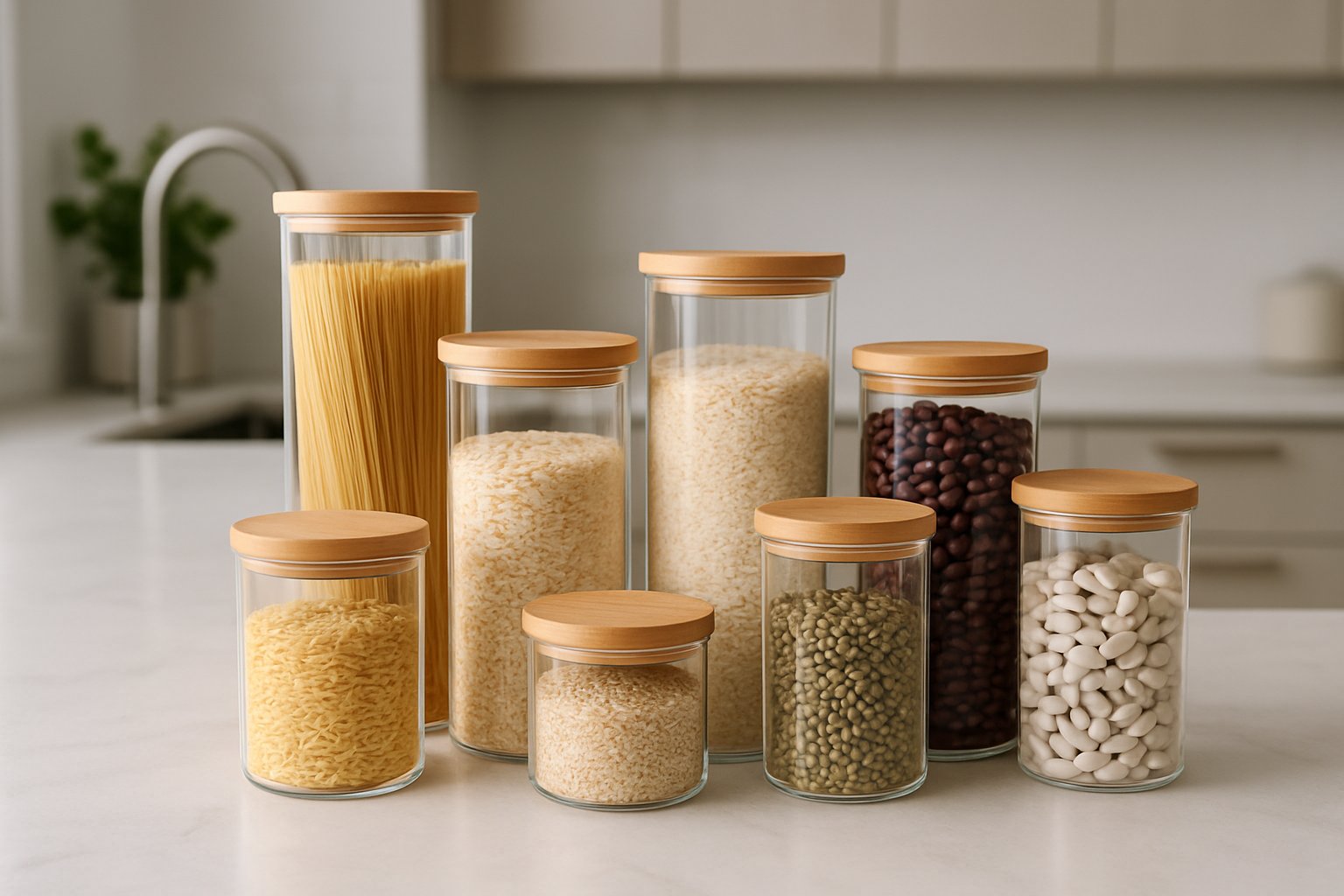
Bamboo-lidded containers look great—glass bottoms with warm bamboo tops and usually a silicone seal for airtight storage. Stainless steel is tough and works for dry goods, but you can’t see inside without opening them.
Ceramic looks pretty but is heavy and not the best for everyday use. Honestly, mixing materials based on what you’re storing usually works better than sticking to just one type.
Sizing and Capacity for Pantry Staples and Snacks
Small containers (4-8 oz) are for spices and baking extras. Medium (1-2 liters) handles rice, pasta, or granola. Large (3-5 liters) holds big bags of flour, sugar, or cereal.
Measure what you usually buy before you invest in containers. A 5-pound bag of flour? You’ll want about 4 liters of space. Cereal boxes hold about 12-16 cups, so a 4-liter container is a safe bet.
Keeping containers the same height looks tidy even if the widths vary. Modular sets with the same footprint stack best and help you use every inch of cabinet space.
Designing Your Pantry and Cabinets for a Clean Aesthetic
Getting matching storage to work means thinking about where things go, labeling clearly, and stacking smart to use space and keep things looking sharp.
Arranging Matching Storage by Size and Contents
Biggest containers go on lower shelves—they’re easier to grab and don’t make the space look heavy at eye level. Medium containers belong at eye level for easy access to the stuff you use most. Small containers fit up top or in tight spots.
Group by contents, not just size. Baking stuff together, breakfast in one spot, snacks in another. Cuts down hunting time.
Storage Zone Ideas:
- Lower shelves: Bulk grains, big flour containers, pet food
- Eye level: Daily staples, coffee, tea, oils
- Upper shelves: Special ingredients, seasonal stuff, spices
- Door storage: Flat containers with snacks, seasoning packets
Having zones means you’re not shuffling everything around just to find one thing.
Labeling Tips for Clear and Chic Storage
Pick labels that fit your kitchen’s vibe but are easy to read. Black on white works for a modern look, kraft paper for farmhouse style.
Put the contents and purchase date on each label. Helps with freshness and stock rotation. Place the label at the same spot on every container—usually front and center.
For clear containers, skip big decorative labels that block your view. Simple top or small front tags work best. Waterproof labels are a must in humid kitchens.
What to Put on Labels:
- Item name (keep it consistent)
- Purchase or fill date
- Expiry date for perishables
- Quantity or measurement if it matters
Pre-printed labels save time, but custom ones let you pick fonts and colors that match your kitchen.
Vertical and Horizontal Stacking Techniques
Stack vertically if you’ve got the shelf height—use all the space up to the ceiling. Square and rectangular containers stack way better than round ones and don’t waste corner space.
Horizontal rows are easier for stuff you grab often. Line up containers with labels facing out. Shelf risers double up your storage within one shelf.
Heavy stuff on the bottom, lighter stuff on top. Don’t stack more than two or three high unless the lids are really stable. Lazy Susans let you get to the back of deep cabinets without unstacking everything.
Stacking Cheat Sheet:
| Container Type | Best Stacking | Max Height |
|---|---|---|
| Square/Rectangle | Vertical, 3-4 high | Depends on lid stability |
| Round | Horizontal rows | 2 high max |
| Uniform sets | Either | 4-5 containers |
Leave a little space between stacks for airflow and so you can grab containers without knocking over the whole row. No one wants a domino disaster during dinner rush.
Making the Most of Drawers and Shelves
Drawer dividers keep utensils sorted and easy to reach. Open shelving looks great with matching containers. Smart storage works in any kitchen if you tweak it for your own stuff.
Custom Drawer Dividers for Utensils and Gadgets
We need drawer dividers that actually fit how we cook—not those one-size-fits-all trays that never seem right. Adjustable bamboo or acrylic dividers let us create spots for everything, from fat spatulas to skinny measuring spoons.
It’s easier when each drawer has a single job. One for daily utensils, another for baking tools, another for knives and boards. No more digging through a pile for that one thing.
Deep drawers love vertical dividers—stand tools up so you can see and grab what you need. Slotted organizers are great for knives, and little bins keep gadgets and measuring spoons in check.
Spring-loaded dividers move as your collection grows. No need to commit to one setup forever. Metal looks sleek in modern kitchens, wood feels classic.
Open Shelving That Looks and Works Beautifully
Open shelves mean everything’s on display, so matching containers are a must. Group by size and shape for clean lines that look organized, not messy.
Glass jars with matching lids are perfect for dry stuff like pasta and rice. You see what you’ve got instantly. Keeping containers the same height gives the shelves a nice rhythm.
Put heavy and big containers on the lower shelves, lighter and smaller ones up top. That way you’re not lifting heavy stuff overhead, and daily ingredients stay within reach.
Don’t fill every inch—leave some breathing room between groups. It keeps things from looking crowded and makes cleaning easier.
Creative Storage Solutions for Every Kitchen Size
Small kitchens need to go vertical—use wall and door space. Over-the-door racks hold spices, and rails keep utensils handy without eating up counter space.
Pull-out shelves turn deep cabinets into usable storage. You can reach the back without emptying the front. These are especially handy for pots, pans, and appliances.
Corner cabinets love lazy Susans—they bring stuff to you, so you’re not reaching into the abyss. Stick to matching containers of the same height to keep things from tipping.
Drawer organizers with separate spots for lids and containers finally solve the lid mess. Stack containers by size in one section, stand lids upright in another.
Maintaining a Minimalist and Tidy Kitchen
Keeping matching storage containers working for you means washing them soon after use and setting up habits that stop clutter before it starts. We all need practical ways to handle leftovers and bulk buys while holding onto that clean, tidy vibe we worked so hard to create.
Regularly Refreshing Your Storage Containers
Let’s be honest—no one wants to open a cabinet and see stained, greasy containers. If you wash them soon after emptying, you’ll avoid those stubborn oil stains and that weird tomato tint that never really comes out.
With glass containers, hot soapy water and a bottle brush usually do the trick, especially for those annoying corners. Plastic ones need a lighter touch—skip the dishwasher’s hot dry cycle or you’ll end up with warped lids that never fit right again. If a lid starts to smell funky, just soak it in baking soda and water for half an hour. Works most of the time.
Weekly maintenance checklist:
- Check seals and gaskets for cracks or warping
- Wipe down anything you’re using right now
- Glance at expiration dates on what’s inside
- Sort out mismatched lids
We try to rotate containers so nothing just sits in the back collecting dust. If a container’s been untouched for months, we ask ourselves—do we actually need it, or is it just taking up space?
Dealing with Leftovers and Bulk Buys
Leftovers can ruin a tidy kitchen fast if you don’t have a plan. We keep a set of containers just for the fridge—usually square or rectangular ones that stack well and don’t waste shelf space.
When we buy in bulk, we empty everything into our matching containers right away. Rice, pasta, flour—straight into airtight bins with a label and the date. It’s easier on the eyes and you’re not constantly fighting with floppy bags.
For leftovers, a quick piece of masking tape with the date and what’s inside saves a lot of guesswork later. We always put the new stuff behind the old so nothing gets lost and goes bad. The fridge looks a lot calmer when everything matches, honestly.
Bulk storage tips:
- Transfer bulk foods within a day
- Use the biggest containers for your go-to items
- Stack same-size containers to free up space
- Keep a “use first” section for things about to expire
Systems to Keep Countertops Clutter-Free
We keep countertops clear by giving everything a home in a cabinet or drawer. Only appliances we use every single day get to stay out. The rest? Out of sight.
Matching containers live in zones based on how often we reach for them. Breakfast stuff on one shelf, baking supplies on another. Lid chaos is real, so we stand them up vertically in bins—no more avalanche every time you need one.
There’s a “landing zone” basket near the pantry for stuff we’re too busy to put away right this second. But we empty it out every day, or it just becomes another clutter magnet. If something doesn’t fit in its container, we either eat it soon or store it properly—no exceptions.
We try to follow the “one in, one out” rule. If a new container comes in, an old one gets donated or recycled. Keeps things from getting out of hand.
Adding Personality and Function to Your Kitchen Aesthetic
A clean kitchen doesn’t have to be boring or stiff. You can show some style and still keep things practical with the right storage and a few personal touches.
Blending Decorative and Practical Storage Solutions
The best kitchen organization ideas pull double duty. We like open shelves for displaying matching containers—they’re easy to grab and look intentional if you group them by size or what’s inside.
Statement storage pieces make a difference. Glass canisters with wooden lids? They actually look good on the counter and keep dry goods handy. Tiered stands help use vertical space and add a bit of flair.
Key storage solutions that balance form and function:
- Clear containers with matching lids for a tidy look
- Wire or wicker baskets for texture and sorting
- Labeled jars for easy ID and a little style
- Drawer dividers in materials that fit your vibe
It’s really about picking stuff that fits with your kitchen’s colors and keeping it consistent, not fussy.
Incorporating Plants, Textiles, and Natural Touches
Fresh herbs in little pots add life to the kitchen and make cooking easier. We keep basil, rosemary, or mint by the window—if they’re handy, we actually use them.
Tea towels are a simple way to bring in color or pattern. We swap them out for the season or just stick to classic stripes—whatever matches our mood and the containers. Hanging them on hooks or draping them nearby keeps them useful.
Natural materials—wood cutting boards, bamboo utensil holders, stone trivets—warm up the space and break up all the clean lines from the containers. We only display what we use a lot, and stash the rest to keep things looking neat.
How Matching Containers Support Meal Prep and Cooking Flow
Matching containers really do make meal prep less of a hassle. It’s so much faster to grab what you need when everything’s in a similar container—no more hunting through a pile of random shapes and sizes. Stackable containers with the same footprint save space in the fridge and pantry, too.
Using the same system for storing and prepping food just makes sense. You can see what you’ve got at a glance, which helps avoid buying too much or letting things go bad.
Workflow benefits we’ve noticed:
- Quicker ingredient grabs when cooking
- Leftovers fit right into the system
- Less mess with fewer container types
- Easier portion control with standard sizes
Standardized lids mean no more rummaging for a match. We keep certain sizes for specific jobs—small for sauces, medium for veggies, large for meal prep. It’s not perfect, but it works.
Frequently Asked Questions
Here are some answers to the kitchen organization questions we get all the time—budget tips, space savers, and more.
What are the top space-saving storage container solutions for tiny kitchens?
Stackable containers are a lifesaver in small kitchens. They let you use every inch of vertical space in cabinets and pantries, and you can actually see what you have.
Square or rectangular containers just fit better than round ones—no weird gaps. Modular sets that nest when empty are even better.
Magnetic containers on the wall are great for spices and tiny stuff. They clear out drawer and counter space and look kind of cool, honestly.
How can I organize my kitchen on a budget without compromising on style?
Start with cheap glass jars from discount stores, or save matching jars from groceries. A consistent label style pulls everything together, even if the jars aren’t all the same.
Dollar stores sometimes have surprisingly nice containers. We’ve found sets that look like the pricey ones for way less.
Splurge on a few good-looking pieces for things you keep out, like flour or coffee. Use the budget options for stuff hidden in cabinets.
Can you suggest some creative ways to store kitchen items without cabinets?
Open shelves with matching containers double as storage and decor. We arrange them by height and group similar things for a balanced look.
Rolling carts with stacked containers work well for baking supplies or snacks—they tuck into corners or under counters and you can move them around.
Pegboards with hanging containers are handy for oils, utensils, and little tools. Everything’s right there, but the space still looks tidy.
Share:
How to Properly Store Leftovers to Extend Their Shelf Life
The Most Effective Ways to Organize Kitchen Drawers