

Check out our latest home & kitchen collection!
Leftovers pile up in most kitchens, but they often get shoved to the back of the fridge and forgotten, or wind up in the trash before their time.
The difference between a week of easy meals and a bin full of wasted food? It really comes down to what you do with those containers after dinner. If you cool food quickly, use airtight containers, and refrigerate within two hours, you’ll keep food safe for 3 to 4 days in the fridge, or months in the freezer.
Who hasn’t opened a mystery container and wondered if it’s still edible? The upside: storing leftovers doesn’t require fancy gadgets or chef skills. With a few straightforward habits and a little attention, you can stretch your food budget, cut down on waste, and always have something tasty ready to go.
Knowing the basics of leftover storage makes life so much easier. From picking the right containers to figuring out how long something lasts, a little know-how saves money and keeps your household safe from foodborne illness.
Key Takeaways
- Refrigerate leftovers within two hours and use airtight containers to slow bacterial growth and lock in freshness
- Most cooked leftovers last 3 to 4 days in the fridge, or 2 to 6 months in the freezer if packed right
- Label containers with dates, portion out large batches, and always reheat to 165°F for best results
Essential Food Safety Tips for Leftover Storage
Food safety makes or breaks your leftovers. If you follow the right time limits, keep an eye on temperatures, cool and reheat food properly, and know when something’s gone off, you’ll avoid most of the pitfalls.
Safe Time Limits for Refrigeration and Freezing
Most cooked leftovers keep for 3 to 4 days in the fridge—think meats, casseroles, veggies, you name it.
If you want to store food longer, freeze it within those first few days. Frozen leftovers stay safe for a long time, though you’ll notice the taste and texture start to fade after 3 or 4 months.
Don’t forget:
- Refrigerate leftovers within 2 hours of cooking
- If it’s hotter than 90°F, get them in the fridge within 1 hour
- Toss anything left out longer than that
Once you thaw leftovers, use them within 3 to 4 days. If you want to refreeze, make sure you reheat them to 165°F first.
Optimal Fridge and Freezer Temperatures
Keep your fridge at 40°F or below, and your freezer at 0°F or lower. These temps slow down or stop bacteria.
Honestly, it’s worth buying a simple appliance thermometer. Fridge displays aren’t always accurate, and you want to catch temperature swings before they become a problem.
Temperature cheatsheet:
- Fridge: 40°F or below
- Freezer: 0°F or lower
- Hot holding: 140°F or warmer
- Cold serving: 40°F or below
If you’re serving leftovers buffet-style, keep hot foods hot with warming trays, and cold foods on ice. Don’t let things hang out at room temp for too long.
Avoiding the Danger Zone: Cooling and Reheating
The “danger zone” (40°F to 140°F) is where bacteria go wild. You want food to pass through this range quickly.
Split big portions into shallow containers—don’t shove a whole pot of stew in the fridge. Cut up large meats or poultry. The faster it cools, the safer it is.
It’s fine to put hot food straight in the fridge. No need to wait for it to cool on the counter.
When reheating:
- Heat everything to 165°F (use a food thermometer if you’re not sure)
- Bring soups and sauces to a rolling boil
- Stir and rotate food in the microwave for even heat
- Cover dishes to keep moisture in
You can reheat frozen leftovers straight from the freezer. It just takes a bit longer.
Detecting Spoilage in Stored Foods
Even if you follow all the rules, always check leftovers before eating. Spoiled food isn’t always obvious, but there are telltale signs.
Watch out for:
- Weird or sour smells
- Mold (any color)
- Slimy or sticky feel
- Odd colors or dark spots
- Off or tangy taste
When in doubt, toss it. Food poisoning isn’t worth the risk. Never taste something to “see if it’s still good”—a tiny bite can make you sick.
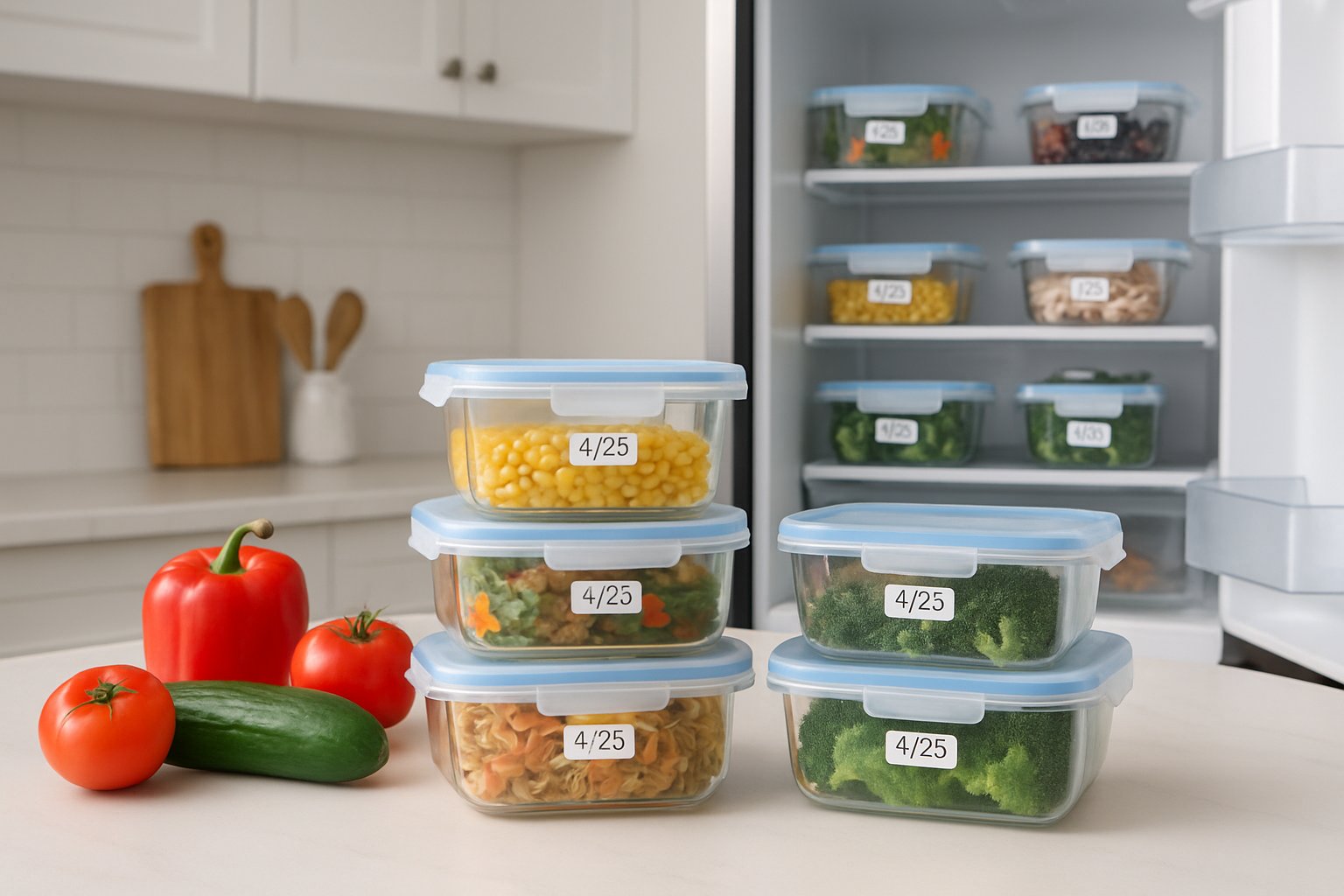
Labeling containers with dates is a lifesaver. Just slap on a piece of tape with the date so you’re not guessing.
Best Containers and Tools for Storing Leftovers
Good storage containers and a bit of organization keep leftovers fresher, longer. You want containers that seal tight, a way to track what’s inside, and some smart portioning to save both space and sanity.
Choosing Airtight Containers and Storage Materials
Airtight containers are your best friend. They slow down bacteria and keep food fresh for days. Go for ones with tight-locking lids or silicone seals.
Glass containers (like borosilicate glass) don’t stain or hold onto smells. They’re oven- and microwave-safe, which makes reheating easy. Downsides: they’re heavier and break if dropped.
BPA-free plastic containers are lighter and usually cheaper. Tritan plastic resists stains and cracks. They’re great for lunches or on-the-go since they won’t shatter.
For greasy foods, glass is better—plastic can absorb oils. Acidic foods (like tomato sauce) also do better in glass, since plastic can discolor.
What matters most:
- Clear containers so you can see what’s inside
- Dishwasher-safe for easy cleanup
- Freezer-safe if you freeze leftovers
- Microwave-friendly (just remove the lid)
Labeling and Organizing Leftovers
Always label containers with what’s inside and the date. Masking tape and a Sharpie work, or you can get reusable labels.
Try the “first in, first out” method—put new leftovers behind older ones so you use up the oldest first.
What to write:
- Food name (and allergens if needed)
- Date stored (critical for the 3-4 day rule)
- Any special reheating notes
Dedicate a fridge shelf for leftovers. You’ll spot them faster and avoid digging around. Clear containers help—no more guessing games.
Portioning and Stacking for Efficiency
Break up big batches into smaller portions before storing. Single servings reheat faster and you won’t have to reheat the whole batch every time.
Rectangular and square containers use fridge space better than round ones. They stack nicely and don’t waste space.
How we portion:
- Singles for quick lunches
- Meal-sized for family dinners
- Shallow containers for speedier cooling
When storing, leave some space at the top if you’re freezing—food expands. Fill containers about 80% full to avoid cracks or lid pop-offs.
Step-by-Step Guide: How to Store Leftovers Like a Pro
Storing leftovers right means acting fast, staying organized, and sealing things up well. Let’s break it down from cooking to storage.
When and How to Store Leftovers After Cooking
Don’t dawdle with hot leftovers. The FDA says get them in the fridge within two hours (or one hour if it’s over 90°F).
Hot food can go in the fridge, but if it’s piping, let it cool for 30-60 minutes first—just don’t leave it out for ages. Divide big pots or casseroles into shallow containers to speed up cooling and avoid the “danger zone.”
If you’re in a rush, set the container in an ice bath or on a cooling rack. Once it’s room temp or just warm, stick it in the fridge. Keep that fridge at 40°F or below.
Separating Foods for Maximum Freshness
Some foods shouldn’t be stored together. Keep sauces apart from pasta, rice, or grains—otherwise, they’ll get mushy. Store proteins away from crispy stuff like fried chicken or breaded cutlets, since moisture ruins the crunch.
Always keep raw and cooked foods separate. Raw goes on the bottom shelf, away from ready-to-eat meals. Group like with like—veggies with veggies, meats with meats—to prevent cross-flavoring and cross-contamination.
Divide leftovers into meal-sized portions so you only reheat what you need. This helps avoid repeated temperature swings that can mess with both taste and safety.
Best Practices for Sealing and Wrapping
Airtight containers are the go-to. Glass resists stains and smells, and you can pop it in the microwave. Make sure the lid fits tight so air and moisture stay out.
When wrapping, press plastic wrap right against the food to push out air, then cover with foil for extra protection. For soups or stews, freezer bags work well—squeeze out the air and lay them flat to save space.
Always label with the date and what’s inside. Masking tape and a marker are all you need. If you meal prep a lot, a vacuum sealer might be worth it—it keeps freezer burn away and stretches freezer life to three months or more.
Storing Different Types of Leftovers
Different foods need different storage tricks to stay fresh and safe. Proteins are the most finicky, but grains and liquids have their own quirks.
Proper Storage for Meat, Seafood, and Poultry
Handle cooked meat, seafood, and poultry with extra care—they spoil fastest. Store them in airtight containers within two hours of cooking (or one hour if it’s hot out).
They’ll last 3-4 days in the fridge at 40°F or below. Slice big pieces into smaller chunks before storing so they cool quickly and reheat evenly.
For best results:
- Keep proteins on the bottom shelf so they don’t drip
- Store each type separately to avoid cross-contamination
- Take meat off the bone to save space and speed up cooling
- Use shallow containers (no deeper than 2 inches)
If you won’t eat them within four days, freeze right away. Wrapped well, they’ll keep for 2-3 months at 0°F.
Best Ways to Store Grains, Pasta, and Rice
Grains are a bit easier, but you still need to store them right. Let rice, pasta, and other grains cool before refrigerating—just don’t let them sit out longer than two hours.
Use airtight containers or resealable bags (push out the air). They’ll last 3-5 days in the fridge. A little oil or butter before storing helps keep things from sticking, which makes reheating way less annoying.
Rice needs extra attention—if you don’t cool it fast enough, Bacillus cereus bacteria can survive and cause trouble. Spread hot rice on a baking sheet to cool it faster if you’re in a hurry.
Tips for grains:
- Label with the date
- Store plain grains separately from sauced ones
- Freeze single servings for fast meals
- Always reheat to 165°F to stay safe
Keeping Sauces, Soups, and Stews Fresh
Liquids need extra care since they cool slowly, giving bacteria more time to multiply. We split big batches into smaller, shallow containers—cooling is quicker and portions are easier to grab.
Leave an inch of space at the top, since frozen liquids expand. Glass containers are great for soups and stews, but only if they're freezer-safe. Otherwise, you risk a mess.
Most sauces, soups, and stews keep for 3-4 days in the fridge, up to 6 months in the freezer. Cream-based sauces don't last as long—usually just 2-3 days. Sometimes, after freezing, cream sauces separate a bit. A quick whisk while reheating usually brings them back together.
Keep these away from the fridge door, where temps bounce around. If we're in a rush, we cool hot liquids in an ice bath before refrigerating—this keeps the fridge from heating up and affecting other foods.
Freezer Storage Strategies to Extend Shelf Life
Freezing leftovers the right way stretches their life from a few days to months. But it's not just about tossing things in the freezer—containers, air exposure, and knowing shelf life all matter. These tricks help us save space and keep food tasting good.
Freezer Meals: Prep and Packing Tips
When freezing leftovers, we portion them into meal-sized containers. It makes reheating later a breeze. Let hot food cool to room temp first (but no more than two hours) to keep bacteria at bay.
Airtight containers matter a lot. Glass with snug lids is solid—no odor absorption, no stains. BPA-free plastic is lighter and handy for the freezer. For liquids, always leave that inch of headspace for expansion.
Freezer bags are space-savers. Lay them flat to freeze, then stand them up to file away. Squeeze out as much air as you can to avoid ice crystals.
Label everything with contents and date. Trust me, mystery blobs in the freezer rarely get eaten. Also, cooling casseroles and stews in shallow containers helps them chill faster and stay safer.
Preventing Freezer Burn and Odor Transfer
Freezer burn shows up when food gets exposed to air—think dry, weirdly colored patches that taste off. Not dangerous, but the texture and flavor take a hit. We wrap food tightly to keep air out.
For meats and solid foods, we usually wrap them in plastic wrap first, then foil or a freezer bag. This double layer blocks air and keeps temps steady.
Good airtight containers stop flavors and smells from mingling. No one wants their berries tasting like last week's chili. Stash strong-smelling stuff in its own sealed container.
Keep your freezer at 0°F (-18°C) or below. A cheap thermometer can help you keep tabs. And don't overfill—the air needs to move around to keep everything evenly cold.
How Long Can You Freeze Various Foods?
Some foods freeze better than others. Here's a rough guide:
| Food Type | Freezer Storage Time |
|---|---|
| Cooked leftovers (casseroles, pasta dishes) | 2-3 months |
| Soups and stews | 3-6 months |
| Cooked chicken or turkey | 4 months |
| Cooked beef, pork, or lamb | 2-3 months |
| Raw ground meat | 3-4 months |
| Raw steaks or roasts | 6-12 months |
| Baked goods (breads, muffins) | 2-3 months |
These are for best quality, not safety—food stays safe indefinitely at 0°F, but flavors and textures fade. Rotate your stash: eat older stuff first, and put new things toward the back.
Freezer meals like casseroles or marinated meats usually last 3-4 months. Skip freezing high-water foods like lettuce, cucumbers, or cream sauces—they get mushy or separate. Fried foods lose crunch, and soft cheeses get weird, so eat those fresh.
Smart Organization and Leftover Management
If we keep leftovers organized, we're way more likely to eat them before they spoil. Turning yesterday's dinner into something new keeps things interesting and cuts waste. A little system goes a long way for storage and rotation.
First In, First Out: Using Leftovers Efficiently
FIFO isn't just grocery lingo—it saves us from finding mystery science projects in the fridge. Label every container with the date, and put newer stuff behind the old.
Pick a shelf or fridge zone for "eat first" foods. It's a visual nudge to use things up within the 3-4 day window. Clear containers help us spot what's inside at a glance.
Some folks use phone reminders or slap a whiteboard on the fridge to track it all. Before we cook, a quick check often reveals we've got ready-to-eat meals waiting. This habit alone slashes food waste and saves cash.
Creative Ways to Reuse and Refresh Stored Foods
Nobody wants the same meal three days running. We turn roast chicken into tacos, soup, or chicken salad. Leftover rice? Stir-fry it with veggies and eggs.
Quick transformation ideas:
- Roasted veggies → pasta sauce or frittata
- Plain pasta → pasta salad with fresh mix-ins
- Cooked grains → grain bowls or breakfast porridge
- Meat → sandwiches, pizza toppings, or stir-fries
Mixing up small amounts of leftovers makes "kitchen sink" meals like casseroles or grain bowls. We toss in fresh herbs, a squeeze of lemon, or new spices to shake things up. Adding a splash of broth or water while reheating brings back lost moisture.
Frequently Asked Questions
Leftovers shouldn't sit out more than two hours—get them in the fridge quick. Most fridge leftovers stay safe for 3-4 days. Reheating too many times ups contamination risk, and the right container makes more difference than you'd think.
What's the real deal on how long you can leave those tasty leftovers out before they turn into tiny science experiments?
We've got a two-hour window to get leftovers chilled before bacteria go wild. If it's over 90°F, that shrinks to just one hour.
Bacteria double fast between 40°F and 140°F—the "danger zone." Room temp lands right in the middle, so don't risk it.
Hot foods need to hit the fridge within two hours after cooking or coming off the heat. Cold stuff like deli meats and dairy? Same deal.
Have you ever wondered if it's cool to zap your leftovers in the microwave more than once, or is that just a recipe for disaster?
Every time we reheat, bacteria get another shot at multiplying while food cools and reheats. It's not automatically dangerous, but the risk creeps up.
Always reheat to 165°F to kill the bad guys. The main problem is that repeated heating and cooling runs food through the danger zone too often, and the quality tanks.
Best bet? Only reheat what you'll eat right away. Keep the rest chilled at 40°F or below until next time.
Ever played the guessing game of how many days those fridge leftovers are still a safe bet for your midnight snack attack?
Most leftovers are good for 3-4 days at 40°F or below. That's not just a guess—USDA says so for most cooked foods.
Even in the fridge, bacteria keep growing, just slower. After 3-4 days, the risk of illness jumps.
Freezing buys you 3-4 months. Foods with mayo, cream sauces, or lettuce? They'll be safe, but don't expect them to look or taste great after thawing.
Glass vs. Plastic showdown: Which containers will up your leftovers game and keep that meal prep on point?
Both work if they're airtight, but each has pros. Glass doesn't stain or hold smells, and you can take it from fridge to oven. Plastic is lighter and less breakable, great for lunches or the freezer—just make sure it's BPA-free and food-safe.
Honestly, the best container is the one you'll actually use and seal tightly. That keeps bacteria out and locks in moisture and flavor.
Shallow containers cool food faster than deep ones. That's key, because big warm portions can let bacteria multiply even in the fridge.
Are you reheating food like a pro or just cooking up a bout of food poisoning? Let's find out if that overnight-out-of-fridge meal is still a go.
Food left out overnight? Sorry, it's gotta go, no matter how good it looks or smells.
Some bacteria don't change the way food looks or smells, so you can't always tell. Nasty bugs like Salmonella and E. coli love room-temp leftovers and can make you sick.
When reheating leftovers, use a thermometer and make sure everything hits 165°F. Microwaves can leave cold spots, so stir well and check temps in a few places.
Chill out or toss it out: Got the 411 on the 2-2-4 rule, or is your leftover strategy a bit, shall we say, half-baked?
The 2-2-4 rule boils leftover safety down to three numbers you might actually remember. Two hours—that’s how long you can let food hang out at room temp before it needs to hit the fridge.
Now, the second "2" is trickier. If it’s scorching hot out (over 90°F), you really only get one hour before things get sketchy. So yeah, maybe it’s a 2-1-4 rule when summer’s in full swing. And the "4"? That means you’ve got about 3-4 days to eat those leftovers if your fridge is 40°F or colder.
Here’s something folks overlook: you need to split big batches into shallow containers so they cool off fast enough in those first couple hours. A giant pot of soup or a whole roast can stay warm in the middle for ages—even in the fridge—and that’s just asking for bacteria to move in.
Share:
The Benefits of Glass Storage Jars for a Cleaner, Safer Kitchen
Creating a Clean Kitchen Aesthetic with Matching Storage Containers