

Check out our latest home & kitchen collection!
Kitchen trash piles up fast. Plastic wrap, takeout boxes, wilted lettuce, and all that packaging from grocery runs, before you know it, the garbage can is overflowing.
But switching to reusable storage systems can seriously cut kitchen waste and keep food fresher. Zero-waste isn’t about buying fancy stuff or doing everything perfectly, it’s about building small habits that mean less gets tossed.
Honestly, storage is where a lot of us lose the battle. You buy veggies, then they wilt in the drawer. Leftovers disappear into the fridge abyss. Single-use bags? Too easy to grab.
But when you switch to sturdy containers, organize your pantry so you can actually see your food, and pick storage that fits your cooking style, things change. Food stays good longer, prepping meals gets way less stressful, and you’re not hauling as much trash out to the curb.
This guide isn’t about overhauling your life overnight. It’s about simple swaps and systems that actually work in a busy kitchen.
We’ll look at how to spot your biggest waste culprits, set up a pantry that won’t sabotage your produce, and compost what’s left. These tweaks aren’t just good for the planet, they’ll save you money and hassle, too.
Key Takeaways
- Reusable containers and wraps can replace hundreds of single-use plastics every year and help food last longer
- Organizing your pantry and fridge so you can see (and use) food first helps prevent spoilage and waste
- Pairing good storage with meal planning and composting turns your kitchen into a low-waste zone
Core Principles of a Zero-Waste Kitchen
A zero-waste kitchen starts with a few basic ideas: the 5 R’s, understanding why waste matters, and picking items that’ll last.
Reduce, Reuse, and Recycle: The 5 R's in Action
That old “reduce, reuse, recycle” slogan? It’s grown up a bit—now it’s refuse, reduce, reuse, recycle, and rot (compost). First, refuse what you don’t need, like plastic bags or pointless packaging.
Reducing means buying less and picking stuff with less packaging. Reusing is about giving new life to things—think glass jars for storage or cloth napkins instead of paper. Recycling comes after all that, since it still uses energy and resources. Composting (rot) is the last step—turn food scraps into soil, not landfill gas.
If you follow this order, you’ll cut waste at the source. It’s not about being perfect, just doing more of what works and less of what doesn’t.
Why Minimizing Waste Matters for the Planet
Kitchen waste is a big part of our carbon footprint. Food in landfills creates methane, a greenhouse gas way worse than CO2.
Plastic packaging? It breaks down into microplastics, polluting soil and water. By storing food better and using less plastic, we lower demand for new plastic (which is made from fossil fuels, by the way).
Everything we toss took resources to make and ship. If we waste less food, we’re also saving the water, energy, and labor that went into it. Some studies suggest a zero-waste kitchen can cut household trash by half or more. That’s not nothing.
Quality Over Quantity: Buying Smart
Investing in sturdy, multipurpose storage pays off. Glass containers with tight lids aren’t cheap, but they last for years. Disposable bags? You’ll keep buying them.
Look for stuff made from stainless steel, bamboo, or glass—skip the flimsy stuff that’ll break in a month. Bulk buying cuts down on packaging and usually costs less per ounce, but only if you’ll actually use it.
A few rules of thumb:
- Go for reusable over disposable
- Pick things you can repair or that have warranties
- Don’t get sucked in by trends—buy what lasts
- Think about cost per use, not just sticker price
Quality beats quantity every time. It’s less waste, less clutter, and less money down the drain.
Assessing Your Kitchen and Setting Sustainable Goals
Before you start swapping out containers, it helps to know where your kitchen’s waste is coming from. A quick check-in can reveal patterns you might miss and help you focus on what actually matters.
Tracking Food Waste and Packaging Habits
Try a one-week waste audit. Just jot down everything you toss: moldy berries, takeout leftovers, cereal boxes, plastic bags.
Things to track:
- Food scraps you could compost
- Spoiled or expired food
- Packaging (plastic, cardboard, glass)
- Disposables like paper towels or wrap
If you’re tossing out a head of lettuce every week or drowning in snack wrappers, that’s your starting point. Set a specific goal, like “cut produce waste in half” or “ditch single-use bags this month.” Vague goals don’t stick—concrete ones do.
Identifying High-Waste Zones in Your Kitchen
We all have those kitchen “black holes” where waste piles up. The produce drawer is a classic offender. Deep pantry shelves hide expired stuff. Bread gets moldy because it’s not stored right. Herbs wilt and die in a corner.
Check your fridge’s crisper—are veggies rotting from too much moisture? Scan your pantry for stale grains in torn bags. Look under the sink—are you buying new bottles instead of refilling?
Watch out for:
- Produce drawers with bad airflow
- Forgotten corners of the pantry
- Bread left out or in cheap bags
- Herbs and greens shoved in the back
Fix one area at a time. Start with the worst offender and build from there. No need to overhaul everything in a day.
Storage Solutions: Swapping Out Single-Use for Reusables
Switching to reusable storage cuts waste and usually saves money over time. The trick is finding what fits your kitchen and habits—glass for leftovers, silicone for freezing, whatever makes sense for you.
Out with Plastics: The Best Reusable Alternatives
Single-use plastics are everywhere, but you don’t have to toss everything at once. Start by swapping plastic wrap for beeswax wraps or silicone lids that stretch over bowls.
Some easy swaps:
- Plastic sandwich bags → silicone or cloth snack bags
- Plastic produce bags → mesh or cloth produce bags
- Disposable containers → glass or stainless steel
- Paper towels → washable Swedish dishcloths
Glass containers with tight lids can handle soups, meal prep, and more—no worries about microwaving plastic. Mason jars are pantry MVPs; they hold beans, grains, sauces, and more. One 16 oz jar can replace a can of beans or tomatoes.
Yes, reusables cost more upfront. But if you use them daily, they pay off fast.
Choosing and Organizing Reusable Containers
Not all containers are equal. Match them to your needs. Glass jars stack well and work for pantry or fridge.
Look for:
- Airtight lids to keep food fresh
- Freezer-safe materials like tempered glass or silicone
- Stackable shapes to save space
- Clear sides so you can see what’s inside
Don’t buy a hundred containers at once. Start with a few sizes: small jars for spices, medium for single servings, big ones for family meals.
Keep it organized. Store similar sizes together. Nest lids or stash them in a basket to avoid cabinet chaos. Thrift shops and yard sales are gold mines for glass storage if you’re on a budget.
Beeswax Wraps, Silicone Bags, and More
Beeswax wraps are a game changer. They use your hands’ warmth to seal around food or bowls. They’re reusable, last about a year, and you can find vegan versions too. Just don’t use them on raw meat.
Silicone bags are tough, leakproof, and freezer-friendly. Some even work in the microwave. We use them to freeze berries, rice, or soup in single servings.
Quick guide:
| Need | Best Option | Why It Works |
|---|---|---|
| Covering bowls | Silicone lids or beeswax wraps | Seal tight, no plastic wrap |
| Sandwiches | Beeswax or cloth bags | Breathable, reusable |
| Freezing | Silicone bags | Airtight, stack well |
| Bulk shopping | Cloth produce bags | Washable, lightweight |
Mesh produce bags are handy for shopping and fridge storage. They let veggies breathe, and some stores let you fill jars or containers right at the bulk bins.
Bulk Buying and Pantry Organization
Buying in bulk cuts packaging and lets you buy just what you need. The right storage keeps things fresh and easy to find.
Shopping at Bulk Stores and Using Bulk Bins
Bulk stores let you skip all the little bags and boxes. Bring your own jars, bags, or canisters and fill up on grains, nuts, spices, flour, whatever you use most.
They’ll weigh your empty container first and subtract it at checkout, so you only pay for the food. No more plastic bags or cardboard boxes.
Start with your staples—rice, oats, beans, coffee. Try out small amounts before buying in bulk. Some stores even let you refill oil, vinegar, or honey bottles.
Smart Storage for Bulk Goods
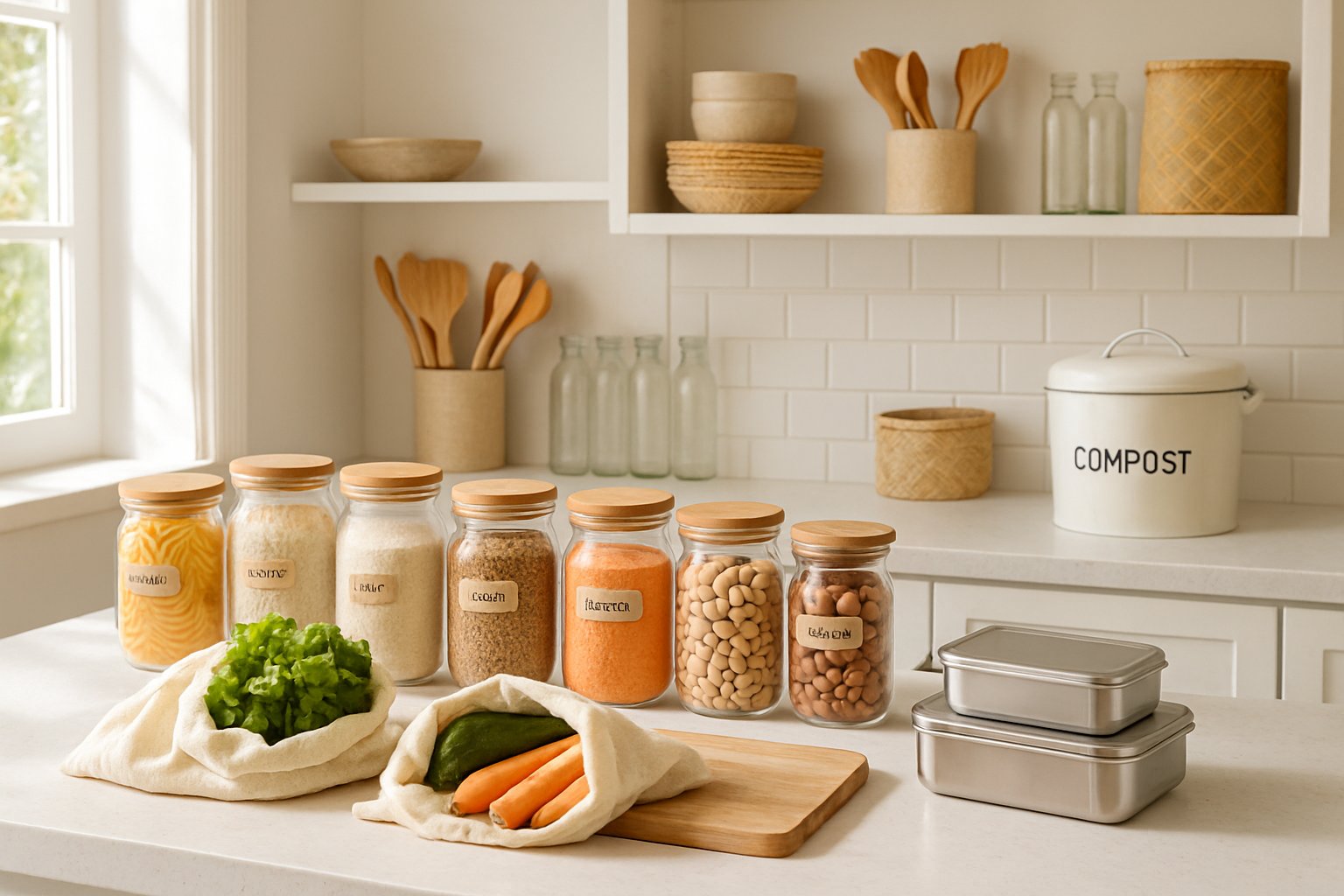
Glass jars and stainless canisters are best for bulk stuff. They’re airtight, durable, and don’t leach chemicals. Mason jars come in all sizes and stack nicely.
Label each jar with what’s inside and when you bought it. Grains and flour last for months if sealed; nuts and seeds do best in the fridge.
Storage tips:
- Grains/pasta: Room temp, airtight jars
- Nuts/seeds: Fridge, sealed tight
- Spices: Small jars, cool and dark
- Legumes: Airtight, away from heat
Clear containers make it easy to see what you’ve got—no more buying duplicates or letting food go stale.
Reducing Packaging with Mason Jars and Cloth Bags
Mason jars aren’t just for storage—bring them to the store and fill them right at the bulk bins. Many stores are cool with it and some even give discounts.
Cloth bags (cotton, mesh, whatever you have) are perfect for things that don’t need a jar, like dried fruit or snacks. They’re light, washable, and last forever. You can sew your own or buy some with drawstrings.
Keep your set of jars and bags by the door or in your car so you don’t forget them. It’s a simple habit that slashes packaging waste from every grocery run.
Meal Planning, Prep, and Cooking for Less Waste
Planning meals ahead keeps food from dying in the fridge, and prepping smartly makes ingredients last longer and easier to use.
Meal Plans to Reduce Spoilage
We can't cut waste if our produce keeps turning to mush in the crisper. A good meal plan starts with a quick check of what's already in the fridge and pantry before running out to buy more.
The trick is to plan recipes that share ingredients. If we grab a bunch of celery for one dish, let's find a couple more ways to use it that week. Same goes for fresh herbs, half-used cans of tomato paste, or anything else that tends to linger.
A few planning moves that help:
- Build meals around what's already on hand
- Cluster recipes that use similar ingredients in the same week
- Cook with the most perishable stuff first
- Schedule a "use-it-up" night to clear out leftovers and random bits
Seasonal produce really does last longer, probably because it's fresher when it gets to us. Tomatoes from the farmers market? They'll hang out on the counter for days. Out-of-season ones? Sometimes they're mushy in under 48 hours.
Batch Cooking and Using Leftovers
Batch cooking gives us more control over portions and storage. Cooking in larger batches means we can toss extra servings in the freezer before they have a chance to go bad.
The best way is to cook base ingredients that can be used in different meals. Roast a bunch of veggies, and you've got toppings for grain bowls, omelets, or soup. A whole chicken covers tacos, salads, and sandwiches—plus, the bones make broth.
Freeze leftovers in single-serving containers within a few days. Label them with what's inside and the date—future us will thank us when we're not guessing if it's chili or pasta sauce.
Some leftover ideas:
- Stale bread → breadcrumbs, croutons, or bread pudding
- Veggie scraps → homemade stock
- Overripe fruit → smoothies or muffins
- Leftover rice → fried rice or rice pudding
Storing Ingredients to Extend Freshness
The way we store food can make it last way longer. Plastic bags often trap moisture, making produce spoil faster.
A few storage tips:
| Ingredient | Best Storage | Extends Freshness By |
|---|---|---|
| Leafy greens | Wrapped in cloth, refrigerated | 5-7 days |
| Root vegetables | Cool, dark, dry place | 2-4 weeks |
| Fresh herbs | In water like flowers or wrapped in damp cloth | 1-2 weeks |
| Tomatoes | Counter until ripe, then fridge | 3-5 days |
| Berries | Unwashed in breathable container | 4-6 days |
Keep tomatoes and potatoes away from other produce—they give off ethylene gas, speeding up ripening (and rotting) for everything nearby. Onions and potatoes together? They spoil each other faster.
Glass containers with tight lids keep pantry staples like flour, rice, and beans fresh for ages. It's also easier to see what we have and avoid buying doubles.
Composting and Dealing With Food Scraps
Composting turns kitchen waste into something useful instead of letting it rot in a landfill and pump out methane. Even in a tiny kitchen, we can set up a system that works.
Setting Up a Compost Bin at Home
We need a spot to collect scraps before they go into the main compost. A small bin with a good lid works fine on the counter or under the sink. Some folks use the freezer to store scraps—no smell, and you can wait longer between emptying.
The main compost setup depends on our space. Got a yard? A simple pile, three-bin system, or tumbler will do the trick. Indoors, electric composters break stuff down fast (but they're pricey), and Bokashi bins fit under most sinks.
What goes in:
- Fruit and veggie scraps
- Coffee grounds & filters
- Tea bags (take out the staples)
- Eggshells
- Yard waste like leaves and grass
What to skip:
- Meat and dairy
- Oils and fats
- Pet waste
- Diseased plants
Composting Food Scraps and Organic Waste
Food scraps in landfills crank out methane, which is way worse than CO₂ for the climate. Composting those scraps creates something useful—nutrient-rich soil.
Mix "green" stuff (food scraps) with "brown" stuff (paper, dry leaves). Aim for about 1 part greens to 2-3 parts browns.
Compost needs air and a bit of moisture. We turn the pile every week or two and keep it as damp as a wrung-out sponge. Hot piles break down fast (weeks), cold ones take months.
No yard? Community drop-off sites and city collection programs will take our scraps. We just keep collecting in the kitchen and drop them off when we can.
Vermicompost, Pickling, and Other Creative Ideas
Vermicomposting uses worms to turn food scraps into fertilizer. Red wigglers are happy in a bin under the sink or in a closet—eating about half their weight daily. It's faster than regular composting and great for apartments.
We can also preserve scraps that would otherwise get tossed. Veggie peels and stems make awesome stock. Broccoli stems pickle up nicely. Herb stems freeze well in olive oil ice cubes for cooking later. Citrus peels? Soak them in vinegar for a homemade cleaner. Stale bread? Toast it into croutons or blitz into breadcrumbs.
Some of us have backyard chickens that love kitchen scraps, or neighbors who'll take them for their compost. And honestly, a lot of things we thought were trash—like carrot tops or radish greens—are actually tasty in salads or pesto.
Power Moves: Appliances, Habits, and Sustainable Upgrades
Energy-efficient appliances can drop our kitchen's electricity use by nearly half compared to old models. Smart maintenance routines also help us ditch single-use cleaning stuff and packaging.
Switching to Energy-Efficient Appliances
Want to shrink the kitchen's energy use? Focus on the big stuff: fridges, dishwashers, and ovens. ENERGY STAR fridges use about 15% less energy and save a couple hundred bucks over their lifetime. When shopping, look for inverter compressors—they adjust cooling as needed instead of blasting full power all the time.
Dishwashers with soil sensors use less water by figuring out how dirty the dishes are. Induction cooktops heat up fast—half the time of gas or coils—and use most of the energy they draw.
A few appliance upgrades to consider:
- Convection ovens cook faster and more evenly at lower temps
- French door fridges lose less cold air when opened
- Compact dishwashers are perfect for smaller households and don’t waste water
Before buying, it's smart to check the EPA's Energy Star calculator. That extra $100 upfront for an efficient model usually pays off in 3-4 years of lower bills.
Cleaning and Maintenance with Low Waste
We keep appliances in shape using bulk vinegar and baking soda, skipping single-use cleaners. White vinegar clears mineral deposits from dishwashers and coffee makers—just run a cup through once a month.
Vacuum fridge coils every few months to boost efficiency. For oven spills, a paste of baking soda and water does the trick and saves the oven from working harder.
Low-waste cleaning habits:
- Reusable spray bottles with a 1:1 vinegar-water mix for stainless steel
- Old t-shirts as rags instead of paper towels
- Store supplies in glass jars to avoid buying new containers
Check door seals monthly—close them on a dollar bill, and if it slides out, it's time to replace. Bad seals can bump up energy use by a quarter. These habits help appliances last and cut down on cleaning product waste.
Frequently Asked Questions
Switching to zero-waste storage raises lots of questions about keeping food fresh and organized without disposable plastics. Here’s what we’ve figured out along the way.
What clever container swaps can transform my fridge organization for the better?
Glass containers with silicone lids have changed the game for us. They're stackable, clear, and don't hold stains or smells.
Stainless steel containers are great for things you grab a lot—cheese, deli stuff, snacks. They last forever and keep things fresh.
Cotton mesh bags are perfect for produce that needs air. We hang them from fridge shelves with clips to use vertical space.
Mason jars? Not just for canning. We use them for salad dressings, chopped veggies, you name it. Wide-mouth jars are way easier to fill and clean.
Could you spill the beans on the best ways to store leftovers without the plastic cling wrap?
Beeswax wraps mold around bowls and food with just the heat of your hands. They last about a year if you take care of them, and cover anything but raw meat.
Silicone stretch lids come in all sizes and fit over almost any bowl or dish. We keep a few handy for everything from small cups to big mixing bowls.
Glass containers with snap-lock lids mean you don’t need wrap at all. Just portion leftovers right into them.
For half an avocado or onion, we put it cut-side down on a plate. It’s simple, but honestly, it works fine for a day or two.
How do you keep the crunch in your veggies without using a crisper drawer?
Glass containers lined with a tea towel or cloth napkin soak up extra moisture but keep things humid enough. Lettuce, carrots, and celery stay crisp for a week or more.
Finding the right moisture level is key—too dry and things wilt, too wet and they get slimy. We check containers every few days and swap out damp cloths.
Leafy greens last longest upright in glass jars with a bit of water, like flowers. Change the water every couple days.
Root veggies like carrots and radishes do great in containers filled with water. They stay crunchy way longer than loose in the fridge.
Are there any top-tier tricks to keeping your spices both tidy and within sniffing distance?
Uniform glass jars with labels make spice storage so much easier. We like 4-ounce jars—they fit in drawers or on narrow shelves.
Magnetic spice jars stick right to the fridge or a metal board near the stove, keeping favorites at eye level and freeing up space.
We sort alphabetically within groups—baking spices, savory herbs, etc. It sounds a little obsessive, but it saves time and stops us from buying doubles.
Buying in bulk and refilling our own jars cuts way down on packaging. We bring jars to the co-op and fill up straight from the bins.
Let's talk portions: What's the scoop on storing prepped meals without getting into a food container fiasco?
Sticking to two or three sizes of glass containers keeps the lid chaos under control. We mostly use 2-cup and 4-cup sizes—they cover most needs.
Prepping ingredients instead of full meals gives more flexibility and keeps flavors from mixing. Cooked grains, chopped veggies, and proteins stored separately work best.
Stacking containers with matching footprints saves fridge space, and we nest empties to save on cabinet clutter.
For freezer meals, wide-mouth mason jars are great—just leave an inch at the top so they don't crack. Freezing food flat in stainless steel containers works too and stacks nicely.
What are the secrets to a pantry that stays disaster-free and still gives a nod to Mother Earth?
Honestly, square or rectangular containers just make more sense—they fit together like puzzle pieces and save so much space. When we swapped everything to square glass jars, we suddenly had about 30% more room. Why don't more people do this?
We try to stick with the "first in, first out" rule. It's simple: older stuff moves to the front so it gets used up first. We jot down purchase dates on reusable labels, which helps us remember what needs to go soon.
Bulk buying with our own containers has been a game changer. We bring cloth bags for flour and sugar, and jars for things like honey or nut butters. No extra packaging, no guilt—just the food.
On the inside of our pantry door, there's a running inventory list. It keeps us from buying things we already have and helps us use stuff before it goes bad. Honestly, it cuts down on food waste more than I expected.
Share:
How to Store Fruits and Vegetables to Keep Them Crisp
A Beginner’s Guide to Organizing Baking Supplies