

Check out our latest compact vacuum sealer for food collection!
Tired of spending your evenings chained to the cutting board while dinner waits, and your ingredients turn limp or bland? You’re not alone. Many home cooks struggle to balance speed and quality in the kitchen, but it doesn’t have to be a trade-off.
Ingredient prep is the hidden bottleneck of weeknight cooking. The good news? With the right habits, tools, and techniques, you can slash your prep time in half without sacrificing flavor, texture, or nutrition. This guide reveals practical, pro-level strategies that actually work in real home kitchens, from mastering sharp knives and mise en place to smart batch prepping, storage hacks, and multitasking tricks.
By the end, you’ll know exactly how to prep ingredients faster while keeping every bite fresh and delicious, so you can enjoy stress-free meals even on the busiest nights.
Key Takeaways
- Sharp knives and good technique mean faster prep and better-looking ingredients
- Organizing your workspace (hello, mise en place) and keeping tools handy makes everything smoother
- Batch prepping and smart storage let you get ahead without ending up with limp, sad veggies
Fundamental Rules for Speedy and High-Quality Ingredient Prep
Speed and quality aren't opposites when it comes to prepping. The basics are simple: start with good ingredients, use tools that fit the job, and get your station set up before you even think about chopping.
Why Freshness Always Comes First
Fresh ingredients just work better and take less effort. Buy crisp veggies and proteins that look and smell right, and you won't waste time trimming away wilted bits or dealing with weird textures.
Freshness also makes a big difference in storage. A lively bell pepper will stay crunchy in the fridge for days after cutting, but an old one? It goes mushy fast. So yeah, checking produce at the store saves you headaches later.
If you start with top-notch stuff, you'll notice: herbs stay fragrant, garlic minces neatly, and greens don't need endless washing to get rid of slimy bits. It really does pay off.
Choosing the Right Tools for Each Job
Sharp knives are non-negotiable. A well-honed chef's knife slides through onions and tomatoes, while a dull one just mashes things and slows you down.
We keep it simple with a few go-to tools:
- Chef's knife for most chopping
- Paring knife for small stuff and peeling
- Serrated knife for bread and soft fruits
- Food processor for big batches
- Mandoline for even slices
A garlic press knocks out cloves in seconds, and a salad spinner dries greens way better than towels. The right tool really does keep things moving.
The Power of Mise en Place for Kitchen Flow
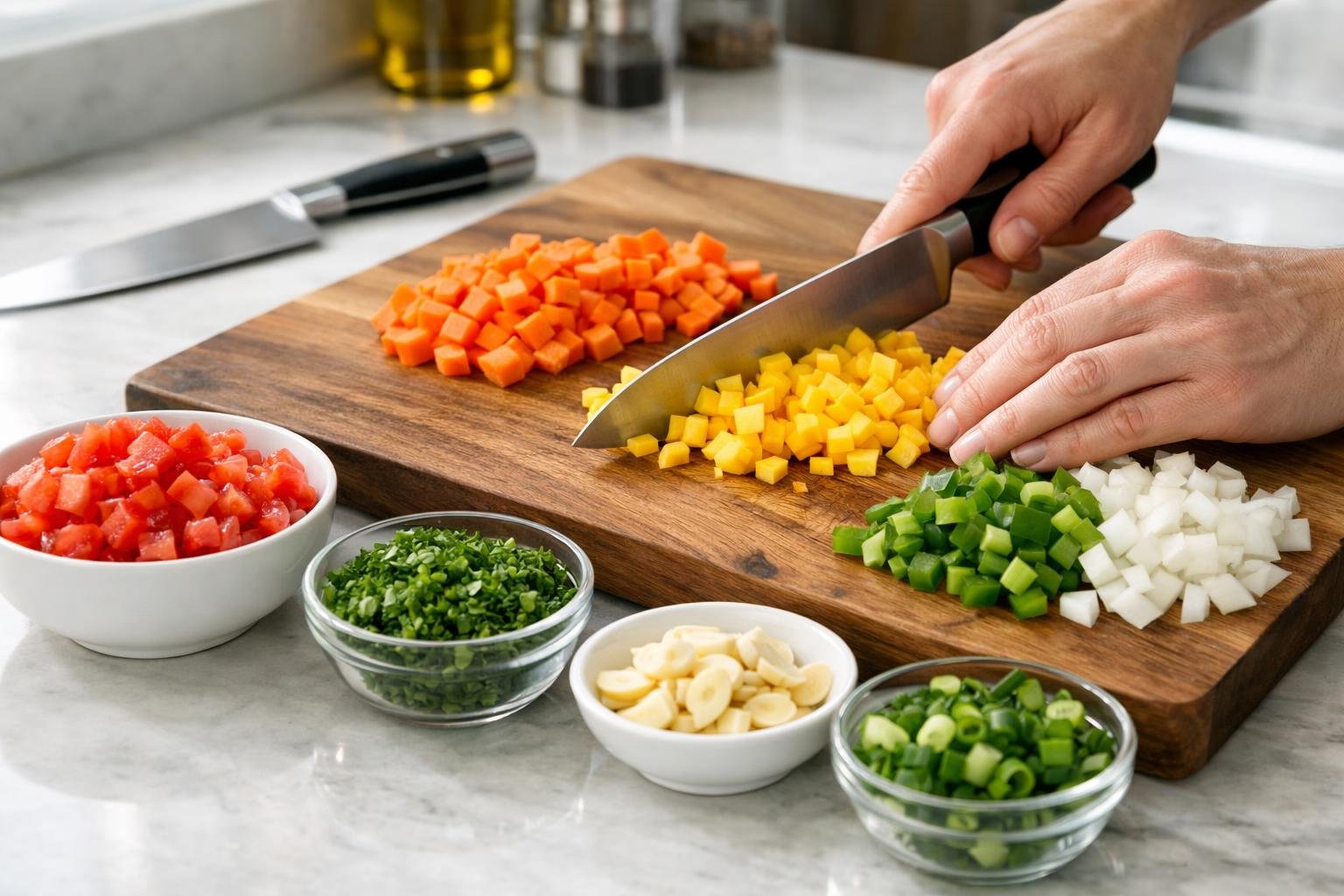
Mise en place—basically, getting everything in place before you start—turns chaos into something you can handle. We set out boards, bowls for scraps, and containers for finished bits before any food comes out.
When prepping for more than one meal, grouping similar tasks saves time. Chop all the onions, wash all the greens, and suddenly you're not running back and forth to the sink every five minutes.
This system also makes it obvious if you're missing something before you're knee-deep in a recipe. Lining up your ingredients by order of use keeps things on track and your head clear.
Knife Skills and Cutting Techniques That Save Time
Sharp knives and solid technique make prep faster and your ingredients look better. Using the right cut for each food and keeping your blades sharp pays off in both speed and consistency.
Sharpening Your Knives Like a Pro
A sharp knife lets you work quickly and safely. We check our knives on a ripe tomato—if the blade glides through, you're good. If it slips or squashes, time for a tune-up.
For regular upkeep, we run a honing steel down the blade before cooking. Hold it upright on the board, then sweep the knife down at about a 15–20 degree angle, switching sides for a handful of passes. This straightens the edge without grinding metal away.
When honing isn't enough, it's sharpening time. Most folks do fine with a pro sharpening two or three times a year, but a whetstone gives you more control if you want to learn.
Essential Knife Cuts: Slicing, Chopping, and Dicing
Slicing is for thin, even pieces. Use a smooth, forward-down motion—great for cucumbers, mushrooms, or meat. If something rolls, cut a flat base first.
Chopping is your go-to for soups and stews where size isn't super precise. Keep pieces about the same thickness so they cook evenly. The rocking motion is quicker than picking up the knife every time.
Dicing makes tidy cubes. Slice into planks, stack, cut into sticks, then turn and chop into cubes. Don't worry about perfect squares; just keep the thickness even.
Getting Comfortable With a Whetstone
A whetstone takes a little practice but gives you a razor-sharp edge. You'll want a coarse side (about 1000 grit) for shaping and a finer side (3000–6000) for finishing.
Soak the stone for 10–15 minutes, set it on a damp towel so it doesn't slide, and hold the knife at a slight angle—think two coins under the spine. Pull the blade across the stone from heel to tip, keeping your angle steady. Do 10–15 strokes per side on each grit.
Afterward, your knife should slice paper with barely any effort. Once you get the hang of it, sharpening only takes a few minutes and keeps prep easy for months.
Must-Have Tools for Lightning-Fast Ingredient Prepping
The right gadgets can turn tedious prep into something you almost look forward to. We've narrowed it down to the tools that actually save time and give you consistent results.
Food Processor Hacks
Our food processor isn't just for onions, it shreds cheese, blitzes veggies, and makes quick work of batch prep.
The pulse button is your friend for chunky salsas or spreads. Want smooth hummus? Let it run longer. For herbs, we chill them in the bowl for a few minutes first to keep the color bright.
A few tips:
- Chill the blade before chopping nuts or chocolate
- Cut ingredients roughly the same size for even chopping
- Don't fill it more than two-thirds full
We usually prep veggies in big batches on Sunday, storing them in airtight containers with a paper towel to soak up extra moisture. It speeds up weeknight meals and keeps things crisp for days.
Why an Instant-Read Thermometer Matters
An instant-read thermometer takes the guesswork out of cooking protein. We check chicken as soon as it looks done and pull it at 73°C for juicy results.
It speeds up cooking since we're not cutting into meat over and over. We also use it to make sure the fridge is cold enough (below 4°C), which helps ingredients last longer.
Our go-to temps:
- Medium-rare beef: 57°C
- Pork: 63°C
- Fish: 63°C
- Bread dough water: 43°C
No more overcooked veggies either, a quick check tells us when root veggies hit that sweet spot at 93°C.
Immersion Blender for Sauces and Soups
We keep our immersion blender out because we use it all the time. It purees soup right in the pot (no risky transfers), and cleanup is a breeze.
For dressings, we blend right in a jar, 30 seconds and done. The jar goes straight into the fridge. We also make big batches of pesto, freeze it in cubes, and toss them into pasta all week.
It's great for smoothing out lumpy gravy or making whipped cream last-minute without dragging out the big mixer.
Salad Spinner and Its Unexpected Talents
Our salad spinner isn't just for lettuce. We use it for herbs (which stay fresh longer wrapped in paper towels in the basket), berries, cherry tomatoes, and even cooling cooked pasta fast.
That spinning action gets rid of extra water that can wreck dressings or cause freezer burn.
Other tricks:
- Spin grated potatoes for crispier hash browns
- Dry mozzarella before slicing for better pizza
- Get blanched veggies ready for freezing
Getting things really dry before storing them makes a huge difference. Our greens last almost a week now instead of turning slimy after two days.
Batch Cooking and Ingredient Prep: The Home Cook's Secret Weapon
Batch prepping changes the game for weeknight meals. Instead of scrambling every night, you have ready-to-use parts that make dinner a breeze.
Batch Prep Versus Meal Prep: Finding What Works
Batch prep means prepping big amounts of single ingredients, not whole meals. We like it because it gives us options—no eating the same leftovers all week.
Chop five onions, roast a few trays of veggies, or cook a big pot of rice, and suddenly you can mix and match meals. Roasted veggies go into grain bowls, tacos, or pasta, all from the same batch.
Meal prep (making whole dishes ahead) is great if you know what you want to eat and don't mind repeats. It's more rigid but saves the most time.
Most of us end up somewhere in between. We batch prep staples and maybe make a couple of full meals, which keeps things easy but not boring.
Storing Prepped Ingredients for Maximum Freshness
How you store things matters—a lot. The right method keeps ingredients fresh for days instead of turning sad and wilted.
What works for us:
- Wrap leafy greens in paper towels and store in containers
- Keep chopped onions and peppers in sealed containers for up to five days
- Store herbs with stems in water or wrapped in damp towels
- Leave a little air in containers of cut veggies to avoid sogginess
Let cooked grains and proteins cool all the way before storing to avoid condensation. Shallow containers help them cool faster and reheat better. Most cooked stuff lasts four to five days in the fridge.
We label everything with dates, just masking tape or a marker does the trick and cuts down on mystery leftovers and food waste.
Using Airtight Containers To Stay Organised
Airtight containers make it way easier to keep ingredients fresh and our fridge less of a chaotic mess. We stick with glass or decent plastic containers that actually snap shut—none of those flimsy takeout lids that pop open and leak everywhere.
Clear containers are a lifesaver. You can see what’s inside without opening them, so you’re not letting all the cold air out hunting for last week’s leftovers. We go for stackable, uniform sizes because, honestly, a messy fridge just means things get lost and go bad.
Our container organization system:
- Small containers (1-2 cups) for chopped aromatics, herbs, and spices
- Medium containers (3-4 cups) for prepped vegetables and grains
- Large containers (6+ cups) for batch-cooked proteins and soups
We give each fridge zone a purpose—raw proteins on the bottom shelf, cooked stuff in the middle, produce on top. That helps avoid cross-contamination and makes grabbing what you need way faster.
Square containers just fit better than round ones. After years of awkward gaps between round tubs, we finally switched and haven’t looked back.
Fast-Track Strategies for Popular Dishes
Not every dish needs the same prep. Figuring out which ingredients can be prepped together or stored the same way saves a surprising amount of time.
Prepping for Salads and Sandwiches
If you want salad and sandwich prep to go fast, start by washing greens the second you get home. We dry them well and store them in containers lined with paper towels. That way, when it’s time to eat, you’re not stuck washing and drying lettuce while you’re starving.
For sandwiches, we slice up tomatoes, cucumbers, and onions in batches and stash them in separate airtight containers with paper towels to soak up extra moisture. Tomatoes keep for 2-3 days like this, while crisper veggies last up to 5.
We’ve taken over a fridge shelf for sandwich stuff—pre-washed greens, sliced meats or proteins, spreads, and veggies all together. Making a sandwich takes less than two minutes. For salads, we keep chopped veggies and grains apart from greens and just toss them together right before eating to dodge sogginess.
Grains and Legumes: Quinoa, Barley, Lentils, and More
Batch-cooking grains and legumes totally changes weeknight meals. We’ll cook up a big pot of quinoa, barley, or lentils, then portion them into meal-sized containers.
Grains keep for 5-7 days in airtight containers if you let them cool before sealing—otherwise, you get condensation and mush. For longer storage, we freeze flat portions in zip-top bags. They defrost fast and don’t hog freezer space.
Lentils are our go-to because they cook quickly and don’t need soaking. We cook them just until tender, spread them out to cool, then pack them up. They keep their bite for salads and soups.
Using Frozen Vegetables Without Compromising Quality
Frozen veggies are a real time-saver and, honestly, sometimes fresher than what’s in the crisper drawer. We always have spinach, peas, corn, and a couple of mixed bags on hand for soups, stir-fries, and grain bowls.
Some frozen veggies work better than others, though. Broccoli, cauliflower, and Brussels sprouts roast up great straight from frozen at high heat (220°C). No need to thaw—just spread them on parchment and roast. Thawing just makes them soggy.
For soups and stews, we toss frozen veggies in during the last 5-10 minutes. They add a bit of liquid as they thaw, which actually boosts the broth’s flavor. Spinach is especially good this way—it wilts fast and stays bright green.
Organizing Your Kitchen and Reducing Food Waste
A kitchen that’s set up well makes ingredient prep go so much faster. And when you plan and store things smartly, you waste less food (and money).
Smart Storage Layouts for Ingredient Accessibility
Keep your most-used stuff—cutting boards, knives, peelers—right by the sink. Oils, vinegars, and seasonings live on a tray next to the stove.
Grouping things by use just feels natural. We have a baking shelf, a spot for Asian staples, and a breakfast zone. No more digging through cabinets while you’re elbow-deep in raw chicken.
Vertical storage is a game-changer. Magnetic knife strips, hanging rails for utensils, and shelf risers in cabinets make everything easy to spot. When you can see it, you use it.
Clear containers for dry goods like flour, rice, and pasta let you see what you have and keep things fresh—plus, no more guessing how much is left in a floppy bag.
Time-Saving Meal Planning Routines
Meal planning saves time by cutting down on indecision and extra grocery runs. We start by checking what’s already in the fridge and pantry, then build our menu around that.
Batch planning similar meals together helps a ton. If we’re chopping onions for Monday, we’ll chop extra for Wednesday too. Planning two stir-fries in a week means we use up all the veggies.
We use a shopping list organized by store layout. It saves us from zigzagging through the store and forgetting things we’ll need later.
Reduce Food Waste With Flexible Ingredient Use
We buy flexible ingredients that work in lots of dishes—parsley, cilantro, basil—so if plans change, nothing goes to waste.
Flexible ingredient swaps:
- Yogurt for sour cream
- Any vinegar instead of wine for deglazing
- Swap leafy greens in cooked dishes
- Use whatever root veg needs eating
We rotate older stuff to the front and label leftovers with dates. One fridge shelf is the “use first” zone—a visual nudge so nothing gets lost in the back.
If something’s about to go bad, we freeze it right away—ginger, citrus zest, herbs in oil, even overripe bananas (smoothie time).
Prepping for Busy Weeks: Storing, Freezing, and Multitasking
When life gets hectic, it’s not just what you prep—it’s how you store, freeze, and multitask. A few tricks with slow cookers, freezing, and stacking tasks can make meal prep way less overwhelming.
Make-Ahead Cooking With Slow Cookers
Slow cookers are a lifesaver when you don’t have time to stand at the stove. Toss in tough cuts, root veg, or dried beans in the morning, and by dinner, you’ve got tender, flavorful ingredients.
We’ll set up chicken breasts with broth and spices, then shred them for tacos or salads all week. Same goes for pulled pork, stew meat, or even whole sweet potatoes.
We usually cook proteins and starches separately so we can mix and match. Slow-cooked black beans work in tacos or grain bowls, so we’re not eating the same thing every night.
Using Freezer-Friendly Prep Techniques
Not everything freezes well, but grains, roasted veggies (not watery ones), and most proteins do fine for up to three months.
We portion before freezing. Individual servings in clear containers or freezer bags make it easy to grab just what you need. Flat bags stack neatly and thaw faster.
Doubling recipes and freezing half is a favorite time-saver. If we’re making meatballs or sauce, we just make extra. Labels with dates and contents save us from mystery freezer meals later.
Multitasking Tips for Streamlined Cooking
We layer tasks instead of doing them one by one. While veggies roast, we chop herbs, cook grains, and marinate proteins.
Our go-to multitasking combos:
- Roasting veg + cooking grains + chopping raw veg
- Slow cooker proteins + making dressings + portioning snacks
- Boiling pasta water + sautéing aromatics + assembling freezer packs
We group similar tasks—chop all the veggies at once, wash all the produce, measure all the dry goods. Fewer dishes, less mess.
Multiple timers on our phones keep us from burning anything while juggling a few things at once.
Frequently Asked Questions
Sharp knives, good storage, and a bit of organization are the backbone of fast prep. Handling ingredients right keeps them fresher, too.
What’s the secret to chopping veggies like a pro while keeping them garden-fresh?
A sharp chef’s knife is essential, dull blades crush vegetables and cause them to wilt faster. Keep vegetables cold until you’re ready to chop to maintain crispness. For leafy greens, wash in cold water, spin dry thoroughly, and store in airtight containers with a damp paper towel. For root vegetables like carrots or beets, submerge chopped pieces in cold water to prevent oxidation and keep them crisp for hours.
Can you spill the beans on speed-slicing without turning my onions into a tear-jerker?
Chill onions in the fridge for 30 minutes before slicing to slow the release of eye-irritating compounds. Use a sharp knife to minimize cell damage, and cut near running water or under a vent hood. Leave the root end intact until last, as it contains most of the sulfur compounds.
Got any tips for marinating meat quicker without compromising that gourmet flavour?
Score the meat with shallow cuts and pound it to an even thickness so the marinade penetrates faster, flavors can develop in 15–30 minutes. Add a splash of acid like lemon juice or vinegar to speed things up, but avoid over-marinating to prevent mushy texture. Vacuum-sealing or using zip-top bags helps the marinade stay in direct contact with the meat, cutting marinating time in half.
How can I whip up a mise en place that would make a chef nod with approval?
Read the full recipe first to understand the order of preparation. Group ingredients that go into the dish at the same time in one bowl or ramekin. Prep hardy vegetables (onions, carrots) before delicate herbs or proteins. Keep your cutting board, knife, and waste bowl within easy reach. For large prep sessions, label containers with masking tape and a marker.
Is there a trick to keeping my herbs perky while blitzing through prep time?
Treat soft herbs like cut flowers: trim the stems, place them in a glass of water, cover loosely with a plastic bag, and refrigerate, they can last up to a week. For hardy herbs, wrap in a damp paper towel and store in an airtight container. Wash herbs just before use. If you have extras, freeze them in olive oil using ice cube trays for later use.
Could you share how to organise a pantry so I can grab ingredients like a kitchen ninja?
Create zones based on frequency of use: keep everyday items like oils, salt, and common spices at eye level. Store rarely used ingredients on higher or lower shelves. Use clear airtight containers and label them with the item name and purchase date. Group similar items together, baking supplies in one area, grains and pasta in another, canned goods in their own section. Follow the first-in, first-out rule by placing newer items behind older ones. Shelf risers or tiered organizers make everything visible. Keep a running inventory list on your phone or inside the pantry door.
Share:
What Smart Food Storage Looks Like in a Modern Home Kitchen
What Is The Most Efficient Way To Manage Daily Cooking Tasks