

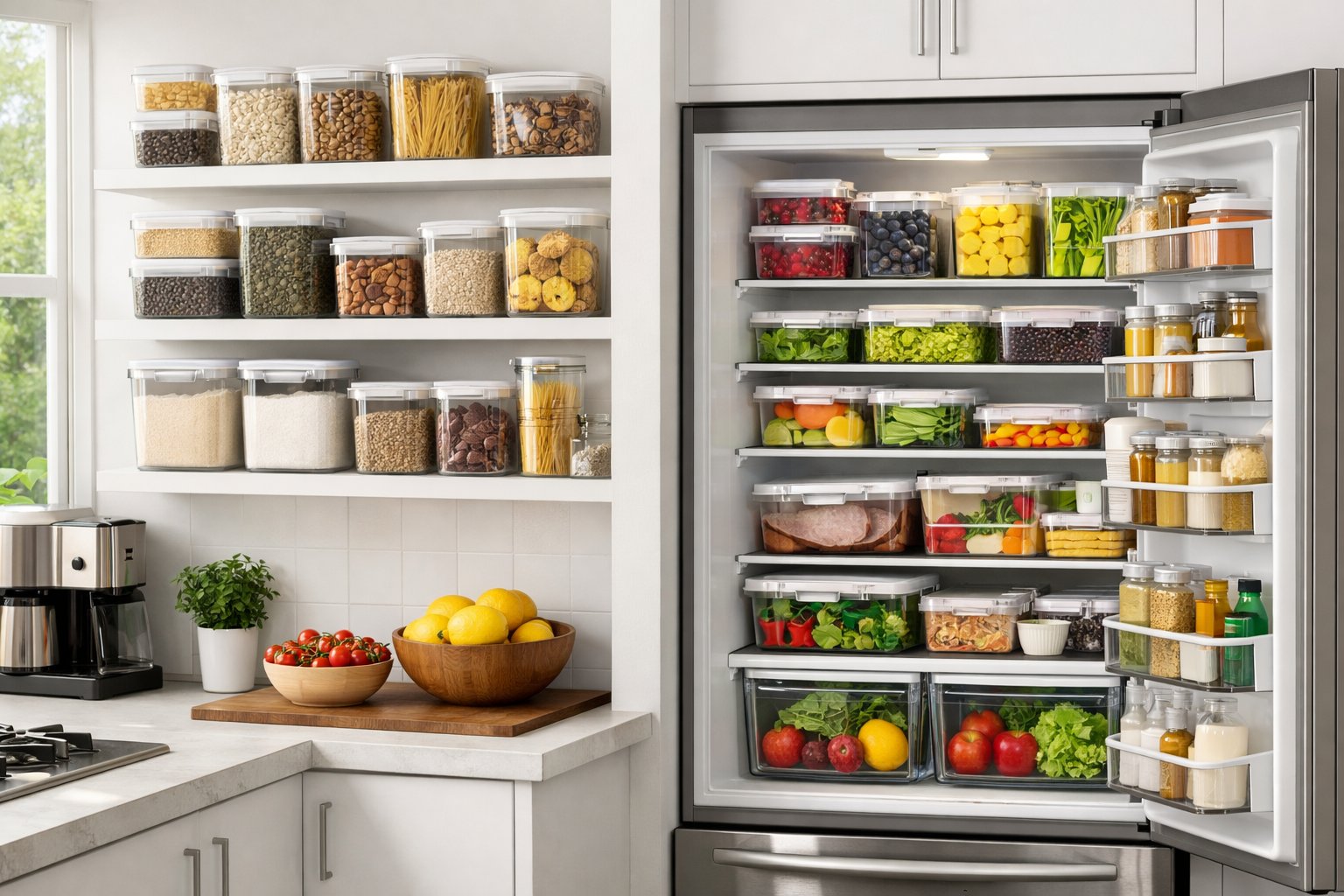
Check out our latest compact vacuum sealer for food collection!
Modern kitchens need storage that does more than just hide clutter. We want systems that actually keep food fresher, make meal prep less of a hassle, and help us stop wasting money on groceries that go bad before we even remember buying them.
Smart food storage in a real kitchen is about using the right containers, organizing things in a way that fits your life, and sticking to habits that work for you, not some airbrushed Pinterest dream.
The difference between a kitchen that drives you nuts and one that just works? Usually, it’s about being able to see your food and grab what you need without digging through a mess.
When ingredients are visible and easy to reach, cooking feels less like a chore and you throw out a lot less food. Clear containers, dedicated spots for different foods, and tools like vacuum sealers or humidity-controlled bins can turn a random pantry into something that actually helps you out.
You don’t need to buy every trendy organizer or splurge on a smart fridge. The best systems are practical and match your space, your shopping habits, and the way you actually cook.
Let’s look at what really works in all kinds of kitchens, from tiny city apartments to big family homes, focusing on the stuff that keeps food fresh and your kitchen running smoothly.
Key Takeaways
- Smart food storage means using the right containers, organizing with intention, and building habits that help keep food fresh and cut waste
- Visibility and accessibility; think clear containers, labeled shelves, and vertical storage, make it easier to cook and harder to forget about food
- Good storage systems fit your real-life routines, not just design trends
Food Storage Fundamentals for a Modern Kitchen
Before we get fancy with gadgets and matching bins, we’ve got to nail the basics. Smart food storage starts with knowing why it matters, spotting the habits that trip us up, and setting up simple systems that keep food fresh and easy to find.
Why Smart Storage Matters
An organized kitchen changes how we cook and how much money we waste. If we can’t see what’s in our pantry or fridge, we end up buying doubles (or triples) and letting stuff expire. There’s real research showing that better storage can cut home food waste by up to 30%.
Smart storage also speeds up meal prep. Less time searching for ingredients means more time actually cooking (or relaxing). When everything has a home, weeknight dinners don’t feel so overwhelming.
The right storage also protects the food you splurged on. Spices stay flavorful, produce stays crisp, and dry goods don’t get invaded by pests. It’s not just about organizing—it’s about making your groceries last.
Common Storage Mistakes to Avoid
A lot of us put things in the wrong spots. Storing oils by the stove? They’ll go rancid faster. Heavy stuff up high? That’s just asking for trouble. We need to think about how often we use things and what keeps them fresh.
Skipping labels is another classic mistake. If we don’t label containers, we forget when we opened them or what’s inside. That’s how you end up with mystery science projects in the fridge.
And let’s be honest—overcrowding is a killer. When drawers and cabinets are jammed, things get lost, smashed, or just never used. Giving storage areas a little breathing room makes it way easier to keep things organized.
Keeping Food Fresh and Easily Accessible
Where you put things matters. Keep what you use all the time at eye level and close by. Stuff you don’t need as often? Tuck it up high or down low. This setup lets you move naturally through the kitchen without extra steps.
Different foods want different homes. Onions and potatoes do best in cool, dark spots—but not together. Herbs last longer if you stand them in water, like a bouquet. Leafy greens? Wrap them in slightly damp paper towels inside a sealed container.
Clear, airtight bins let you see what you have and keep food safe from moisture and bugs. Square or rectangular containers use shelf space better than round ones. Stackable options help you go vertical—just don’t build a wobbly tower that falls apart every time you grab something.
Clever Pantry Solutions: From Walk-In to Cabinet
Modern kitchens need pantry solutions that fit the space you’ve got. Whether you’re lucky enough to have a walk-in or you’re squeezing storage out of a single cabinet, the right setup makes it way easier to find and use what you buy.
Walk-In and Built-In Pantry Ideas
Walk-in pantries are a dream, but only if you plan them well. Floor-to-ceiling shelves use every inch, and keeping things visible means you’ll actually use them. Create zones: baking stuff in one spot, cans in another, snacks at eye level for quick grabs.
Built-in pantries work best when they’re part of your main kitchen flow. Pull-out drawers fix the problem of losing stuff in the back—they slide everything out where you can see it. Glass jars and matching containers look good and keep dry goods fresh.
Adjustable shelves are a lifesaver when your storage needs change. Space them 12 to 16 inches apart for most things, with a few tall spots for big items. Motion-sensor lights? Honestly, they’re underrated—you won’t have to fumble around in the dark for a can of beans.
Optimizing Narrow and Corner Cabinets
Corner cabinets are notorious for swallowing stuff, but lazy Susans and spinning shelves make everything reachable. Oils, vinegar, and spices fit perfectly on these turntables instead of getting lost.
Those skinny spaces beside appliances? Slide-out racks turn them into spice storage or a spot for baking sheets and cutting boards. Even over-the-fridge space can work—stackable bins with labels keep backup supplies organized and out of the way. Pull-down baskets help you reach things up high, but stick to lighter items like napkins or special-occasion pans.
Embracing Open Shelving and Vintage-Inspired Pantries
Open shelves look great but demand a bit more discipline. You can see everything, which makes grabbing ingredients fast, but you’ve got to keep it tidy. Baskets help corral small stuff and keep things looking intentional.
Vintage pantries—think wood crates, wire baskets, glass jars—add character and work especially well in farmhouse-style kitchens. Metal brackets and reclaimed shelves hold heavy items and give the space a curated vibe.
The downside? Dust and the need to keep things neat. We group items by how often we use them—everyday stuff within reach, pretty or rarely used things up high. Matching jars and clear labels stop the shelves from looking like a jumble.
Smart Storage Systems and Innovative Features
Smart storage systems these days blend clever mechanics with thoughtful design. Pull-out drawers, rotating platforms, and smart vertical solutions tackle clutter and make everything easier to reach.
Pull-Out Drawers and Shelves
Pull-out drawers rescue deep cabinets from becoming graveyards for forgotten cans and gadgets. Smooth rails handle heavy loads—usually up to 100 pounds—so you can stash appliances or bulk items without worry.
Deep drawers are great for:
- Pots and pans
- Small appliances you use often
- Big containers of dry goods
- Produce bins with airflow
Pull-out shelves slide forward but stay open on top, letting you reach everything without digging. Standard shelves are usually 20 inches deep, but you can go bigger if you need to store large cookware.
The real win is being able to see everything at a glance. No more blindly reaching into the dark and buying duplicates because you forgot what you had.
Integrating a Lazy Susan for Awkward Spaces
Corner cabinets are usually dead zones, but a lazy Susan spins everything into view. We love them in base cabinets where corners are hardest to access.
Full-circle lazy Susans come in sizes from 18 to 32 inches. Big ones fit base cabinets; smaller ones work up top. Kidney- or D-shaped versions squeeze into tricky spots where the cabinet door is smaller than the inside.
Best for lazy Susan storage:
- Oils and vinegars
- Spices
- Canned goods
- Baking ingredients
Pick a lazy Susan with a raised edge (at least 2 inches) so stuff doesn’t slide off. Two-tier models double your storage and make it easy to separate categories—breakfast up top, dinner stuff below.
Magnetic and Wall-Mounted Storage
Most of us ignore vertical wall space, but it’s prime real estate. Magnetic knife strips and wall-mounted racks clear out drawers and counters, keeping essentials right where you need them.
A magnetic knife strip goes on the wall or a cabinet side—strong magnets hold 8 to 12 knives, depending on size. Mount it at chest height near your main prep area (about 48 to 54 inches from the floor) so you’re not reaching awkwardly.
Wall-mounted storage isn’t just for knives:
- Magnetic spice jars stick to metal backsplashes or panels
- Rails with S-hooks hold utensils and small pans
- Floating shelves keep oils and favorite spices handy
- Pegboards let you move hooks and bins around as your needs change
These options shine in small kitchens with limited cabinets. Install them in the space between your counter and upper cabinets—usually 18 to 24 inches above the counter—to create a functional storage zone that doesn’t crowd your workspace.
Organizing Essentials: Bins, Baskets, and Dividers
The right tools can turn a chaotic kitchen into a place where everything actually has a spot. Baskets keep things visible, drawer dividers stop utensils from tangling, and stackable containers help you use every inch while keeping food fresh.
Choosing Between Woven, Wire, and Labeled Baskets
Woven baskets are perfect for pantry shelves—snacks, root veggies, baking stuff. They add a cozy touch to open shelves and keep little messes hidden. We like them for stuff you grab all the time, like breakfast bars or lunch items.
Wire baskets let air flow, which is key for onions, garlic, and potatoes. They’re also great in the fridge because you can see what’s inside without pulling everything out.
Labels make life easier. When more than one person uses the kitchen, labeled baskets mean everyone knows where things go—“Kids’ Snacks,” “Baking,” “Breakfast.” Just make sure the baskets fit your shelves, leaving a little wiggle room for easy sliding.
Drawer Dividers for Utensils and Gadgets
Drawer dividers can rescue even the messiest junk drawer. Measure before you buy—if the divider’s too small, it’ll just slide around and make things worse. Expandable dividers work well for utensils, giving forks, spoons, and knives their own lanes.
For gadgets, adjustable dividers help you fit weird-shaped tools like peelers or can openers. Some even stack, letting you double up in one drawer.
Set up your drawers to match how you cook. Keep your go-to tools close to your main prep space and stash less-used stuff farther away. A dab of museum putty under the dividers keeps them from shifting every time you open the drawer.
Glass Jars and Stackable Containers
Glass jars give us instant visibility into what’s left, so we’re not guessing or digging. We like them for dry goods—flour, sugar, rice, pasta—since they’re airtight and keep things fresh way longer than those flimsy bags from the store. Square or rectangular jars? They’re the real MVPs for shelf space, fitting together without those annoying gaps.
Stackable containers help us use every inch of vertical space in cabinets and pantries. We hunt for sets with the same-size lids so we’re not losing our minds matching tops to bottoms. Clear containers let us spot when we’re running low, which makes grocery planning less of a shot in the dark.
Storage bins corral similar items in pantries and fridges. Shallow bins are perfect for little things—spice packets, sauce mixes—that vanish in the clutter. Deeper bins handle cans or backup supplies. Instead of rummaging, we just pull out the whole bin, saving time and keeping our system from falling apart.
Kitchen Zones and Access: Making Meal Prep Effortless
When we organize our kitchen into zones, everything we need is close by. It turns frantic cooking into something smoother, almost enjoyable. Assigning spots for those things we always reach for, planning storage around real meal routines, and giving appliances a proper home—these changes stop the endless hunt for stuff.
Designated Spots for Frequently Used Items
We need a prep zone near where we actually work—a spot for oils, spices, cutting boards, and knives, all within arm’s reach. The sweet spot? Between the sink and stove. That’s the “golden triangle,” if you ask kitchen designers.
Most-used items deserve prime real estate:
- Olive oil, salt, and pepper within a foot of the cooktop
- Knives on a magnetic strip or in a block right at counter height
- Cutting boards stashed vertically near the sink
- Wooden spoons and spatulas in a crock by the stove
If you’re always trekking across the kitchen for a tool, just get a second one. A backup set of measuring spoons by the pantry saves steps during baking. It’s not about owning more, just putting what you already have where you actually use it.
Meal Planning with Easy Access Storage
When storage matches our meal plans, we spend less time searching and more time actually cooking. Instead of sorting by category, we group ingredients by meal type. If Italian night happens often, pasta, canned tomatoes, and garlic all go together.
Clear containers give us an instant inventory, making it easier to avoid buying duplicates. We label shelves by meal: breakfast stuff on one, dinner staples on another, lunch fixings at eye level so we can grab and go.
Some smart storage ideas:
- Breakfast zone with oats, coffee, and cereal in one cabinet
- Snack station at kid height with grab-and-go choices
- Dinner prep area with ingredients we always combine
We keep a notepad or tablet nearby to jot down what’s running low while we’re staring at the shelves.
Small Kitchen Appliances and Their Home
Small appliances only clutter counters when we don’t give them a home that makes sense. We keep daily-use things like coffee makers and toasters out, but stash blenders and mixers in lower cabinets—ideally with outlets nearby.
An appliance garage with a tambour door hides the big stuff but keeps it handy. We even put outlets inside deep drawers for our stand mixer and food processor, so we don’t have to hoist heavy gear onto the counter.
Appliances we use monthly or just for special occasions go up high or in the pantry, accessories bundled together in labeled bins. Our waffle maker lives with its batter bowl and measuring cups, so when we’re feeling brunchy, we grab everything in one trip.
Maximizing Vertical and Hidden Spaces
Modern kitchens reward anyone willing to get creative with storage. There’s all this vertical space and hidden nooks just waiting for a purpose—no renovation required.
Vertical Storage Hacks for Tall Cabinets
Tall cabinets are storage gold, but most of us just stack stuff until it topples. Adjustable shelves let us change heights for whatever we’re storing. Stackable bins make it easy to corral snacks or baking supplies, keeping things in sight and close at hand.
Wall-mounted magnetic strips turn empty wall space into storage for knives and utensils, freeing up drawers. Hanging rails inside cabinets create spots for measuring cups and whisks. Open shelves stretching to the ceiling let us show off containers or cookware while using every inch.
Vertical dividers keep baking sheets and cutting boards from becoming a messy pile. No more avalanches when you pull out one tray.
Hidden Storage: Under-Cabinet and Door-Mounted Options
The space under upper cabinets isn’t just for lights. Hanging racks hold wine glasses, mugs, or even paper towels, clearing the counters for real work. Spice racks that hang on cabinet doors keep seasonings handy without hogging shelf space.
Toe-kick drawers under lower cabinets are surprisingly useful for flat items—baking mats, platters, stuff you don’t use every day. The inside of cabinet doors is prime real estate for lid organizers or cleaning caddies that would otherwise be clutter.
Pull-out shelves behind panels hide small appliances or bulk containers but keep them easy to reach with a quick slide.
Corner Solutions and Pull-Outs You'll Love
Corner cabinets usually become black holes where food goes to disappear. Lazy Susans fix this by spinning everything right to you—great for oils, vinegars, or cans. Pull-out shelves designed for corners use clever angles so you can finally reach what’s back there.
Diagonal corner drawers make use of awkward spots and let you see everything at once. Magic corner systems with folding shelves pull out together, turning weird angles into usable space for pots, bowls, or dry goods.
Sustainability and Smart Tech in Food Storage
Smart storage today is about more than just space—it’s about cutting waste and stretching freshness, often with a little help from technology. There’s some pretty wild stuff out there now: AI-powered monitoring, eco-friendly materials, and even automated inventory tracking.
Reducing Food Waste with Modern Systems
Smart fridges with AI sensors can cut food waste by up to 60%—no joke. They track expiration dates, send alerts when stuff’s about to go bad, and even suggest recipes for what needs to be used up.
IoT-connected containers take it further, monitoring temperature, humidity, and food condition in real time. If something starts to spoil, we get a ping on our phone so we can deal with it before it’s too late. These systems learn our habits and adjust storage conditions, too.
Smart pantries sync with grocery apps, so we’re not buying what we already have. Households using connected storage save 10-15% on energy versus old-school appliances, and they shrink their environmental footprint at the same time.
Sustainable Materials for Kitchens
Sustainable kitchen design means using materials that are better for the planet. These days, storage containers come in recycled plastic, bamboo, stainless steel, and glass—not single-use junk.
Some smart containers use biodegradable parts for the non-electronic bits. They keep the high-tech features but are easier to recycle or compost when you’re done. Manufacturers are starting to design for the circular economy, making products that come apart easily and can be reused.
Energy-efficient storage is the norm now. Smart fridges use better insulation and compressors to keep food cold with less power. Some even work with home energy systems to run during off-peak hours, lowering bills and easing strain on the grid.
Integrating Technology: The Rise of the Smart Pantry
Smart pantries blend organization with automation. Barcode scanners, weight sensors, and cameras keep tabs on dry goods, cans, and packages.
Voice assistants like Alexa or Google let us check what’s on hand, add items to shopping lists, or get recipe ideas without lifting a finger. It just makes meal planning less of a headache.
Advanced systems connect fridges, pantries, and countertop containers into one network. Now, nothing gets forgotten in the back, and we use what we buy. With an app, we can check inventory from the store and avoid buying stuff we already have.
Frequently Asked Questions
Modern kitchen storage raises plenty of real-world questions about pull-out systems, DIY hacks, and mixing style with function. Here’s what people ask us most about storage that actually works for daily cooking.
What innovative solutions are available for integrating pull-out drawers in my kitchen for better food storage?
Pull-out drawers turn deep cabinets into easy-access storage. Soft-close drawers with adjustable dividers let us customize for different foods.
Tiered pull-out trays are great for cans and spices—they bring everything forward in one motion. Deep drawers with high sides hold root veggies and bulk goods without everything toppling. Temperature-controlled pull-outs are showing up more for items that need cool but not cold storage.
Corners get a big boost from rotating pull-out systems. Pull-out trash and recycling bins in lower cabinets keep waste tidy and off the floor.
Can you share some tips on creating a DIY pantry with drawers to maintain food freshness?
Start by measuring your space and planning zones for different foods. Use shallow drawers (4–6") for spices, medium ones (8–10") for cans, and deep drawers (12"+) for bulk items.
Line drawers with washable liners for easy cleanup. Make sure your slides can handle the weight—food gets heavy fast.
Airtight containers inside drawers keep dry goods safe from humidity and bugs. Label them with purchase dates and use clear bins for quick checks. Stick-on LED strips under drawer lips add light without rewiring.
How do pull-out shelves in a pantry contribute to a more organized and efficient kitchen?
Pull-out shelves mean no more digging through stacks to find what’s in back. One glance and we see everything, so we don’t buy doubles or let food expire.
Prep is faster with ingredients immediately at hand. Full-extension slides let us pull shelves all the way out for easy restocking. Stacking multiple pull-outs vertically packs in more storage than fixed shelves.
We’ve noticed pull-out systems help us rotate food better—older items stay visible, not buried. It’s a huge help for meal prep since we can grab what we need without moving everything else.
What are the must-know tricks to keep a smartly organized kitchen for a seamless cooking experience?
Group foods by meal or method, so breakfast, baking, or cuisine-specific stuff stays together. We set up zones for different activities instead of scattering similar things everywhere.
Keep most-used items between waist and eye level—no more bending or stretching. Track inventory on your phone or with a magnetic pad on the fridge.
Follow “first in, first out” by putting new buys behind older ones. Pouring bulk goods into matching containers keeps things neat and makes it easy to see what’s left. Clear off rarely used appliances so there’s room to actually cook.
In what ways can thrifty decor ideas be applied to enhance the storage systems in a modern kitchen?
Tension rods in cabinets make cheap dividers for baking sheets and boards—no drilling needed. Adhesive hooks inside cabinet doors hang measuring cups, lids, or small gadgets.
Mason jars and glass containers are affordable and just as good as fancy storage. Old magazine holders work surprisingly well for storing foil, plastic wrap, and parchment vertically.
Wire baskets from home stores are modular and way cheaper than custom cabinets. We’ve used pegboards on empty walls for flexible hanging storage that changes as our needs do. Chalkboard paint or printable tags give everything a unified look without splurging on a label maker.
What's the secret behind maintaining the balance between kitchen aesthetics and functional storage with smart habits?
Consistent container styles really help create visual harmony and keep food organized and fresh. We usually go for storage solutions in similar finishes—maybe all matte white, clear glass, or bamboo—instead of mixing whatever’s on hand.
Open shelving actually looks good if we stick to attractive, frequently used items and stash backup supplies elsewhere. Three matching canisters on display? That feels intentional. But twenty random jars? It just looks messy.
We try to edit often, tossing expired stuff and donating tools we never use. Giving everything a designated spot makes it easier to tidy up without much thought. Drawer and cabinet organizers help keep hidden spaces from turning into chaos, so we’re not just shoving clutter out of sight and pretending it’s organized.
Share:
How to Prevent Cross-Contamination During Storage
How Can You Prep Ingredients Faster Without Losing Quality