

Check out our latest compact vacuum sealer for food collection!
Cooking can take up more time than expected, especially when the same prep and cleanup tasks repeat every day. Chopping, washing, organizing, and putting everything away can quickly turn a simple meal into a long routine. The good news is that a few smart changes can make cooking feel faster, easier, and far less tiring.
The good news? Smart planning, some strategic prep, and a more organized kitchen can slash your daily cooking time. We're not talking about cutting corners that wreck your food. These are real world methods that professional chefs and efficient home cooks use to make routines smoother without losing out on taste or nutrition.
Tweaking your workspace, batch prepping, and picking the right tools can make a real difference. In this guide, you will learn practical ways to reduce repetitive cooking tasks, speed up meal prep, and create a kitchen setup that works better every day.
Key Takeaways
- Planning meals and organizing your kitchen layout helps you stop wasting time searching for ingredients or figuring out what to cook
- Batch prepping and using time-saving tools like food processors means less repetitive chopping and prep all week
- Smart storage and one-pot meals cut down on both cooking time and cleanup
Mastering Meal Planning Like A Chef
Meal planning can turn chaotic weeknight cooking into something you actually look forward to. When you map out your weekly menus and stock up on the right stuff, you avoid that last-minute scramble.
Building A Weekly Meal Plan For Success
Spending 20 minutes on Sunday to sketch out meals saves hours of indecision later. Check your calendar for busy nights, plan simple meals there, and save the ambitious stuff for when you’ve got time.
If you’re buying fresh herbs for Monday’s pasta, plan Tuesday’s dinner to use the rest. Roast extra chicken on Wednesday so Thursday’s lunch or Friday’s soup is halfway done before you even start.
We usually keep a running template with breakfast, lunch, and dinner for each day. That doesn’t mean cooking three meals from scratch, just knowing Monday’s dinner becomes Tuesday’s lunch, or that Wednesday’s breakfast uses leftovers or what’s already on hand.
Leave room for “flex meals,” nights where you use up leftovers or just go with whatever’s in the fridge. Plans change, and honestly, nobody wants to feel boxed in by a rigid schedule.
Choosing Recipes That Minimize Repetition
Picking the right recipes saves you from chopping onions every single night. Look for meals with similar prep, less mental energy, less mess.
Batch-friendly recipes are gold. Cook a pot of grains and use it for three meals. Prep a pile of veggies, and you’re set for days. When you choose recipes with overlapping ingredients, you do the work once and reap the benefits all week.
We gravitate toward recipes with interchangeable proteins or veggies. A basic stir-fry method works with chicken, tofu, or whatever’s left in the fridge. Why reinvent the wheel every night?
Stocking Up On Time-Saving Staples
A well-stocked pantry means you’re never starting from scratch. We keep canned beans, rice, pasta, canned tomatoes, and broth on hand. They’re the backbone of quick meals.
We organize by meal type: breakfast stuff together, baking supplies in their own spot, dinner staples close at hand. Clear containers with labels help us see what’s running low, so we’re not halfway through a recipe before realizing we’re out of something.
Our must-have staples:
- Canned beans (chickpeas, black beans, white beans)
- Pre-cooked or quick-cooking grains
- Pasta (all shapes)
- Canned tomatoes and tomato paste
- Olive oil and a neutral oil
- Dried herbs and favorite spices
- Garlic and onions
- Frozen veggies
- Stock or broth
We rotate stock, new stuff goes behind old. A quick note on our phones helps track what needs refilling. This saves time and a lot of frustration when it’s time to cook.
Effortless Meal Prep Strategies
A bit of planning up front can make your kitchen routine feel way less frantic. Batch cooking, smart portioning, and a few strategic habits can help you dodge the daily “what’s for dinner?” grind.
Batch Cooking Fundamentals
Batch cooking means you put in the effort once or twice a week, not every single day. Cook a big pot of rice or quinoa, and portion it out for several meals.
When you roast extra chicken breasts or double up on grains, the extra effort is minimal, but suddenly you’ve got protein sorted for half the week. Same goes for veggies and beans.
Start with versatile basics. A pot of quinoa can be Monday’s side, Wednesday’s grain bowl, and Friday’s stir-fry base. It keeps things flexible and avoids that “ugh, leftovers again” feeling.
What we batch-cook most:
- Proteins (chicken, ground meat, tofu)
- Grains (rice, quinoa, couscous, pasta)
- Roasted veggies (sweet potatoes, broccoli, peppers)
- Legumes (lentils, chickpeas, canned beans heated in batches)
Portioning And Storing For Later
Batch cooking isn’t much use if food spoils before you eat it. Portion out meals right after cooking, while they’re still warm (but not steaming). Glass containers are great for reheating; stackable plastic ones save freezer space. Label everything with what it is and the date.
Freezers are lifesavers. Grains like quinoa freeze well for months. Freeze them on a baking sheet first so they don’t clump, then toss them in bags. That way, you can grab just what you need.
Our go-to storage times:
- Fridge: 3-4 days for cooked proteins and grains
- Freezer: 2-3 months for cooked meals and components
- Prepped raw veggies: 3-5 days in airtight containers
Meal Prepping For Time-Saving Wins
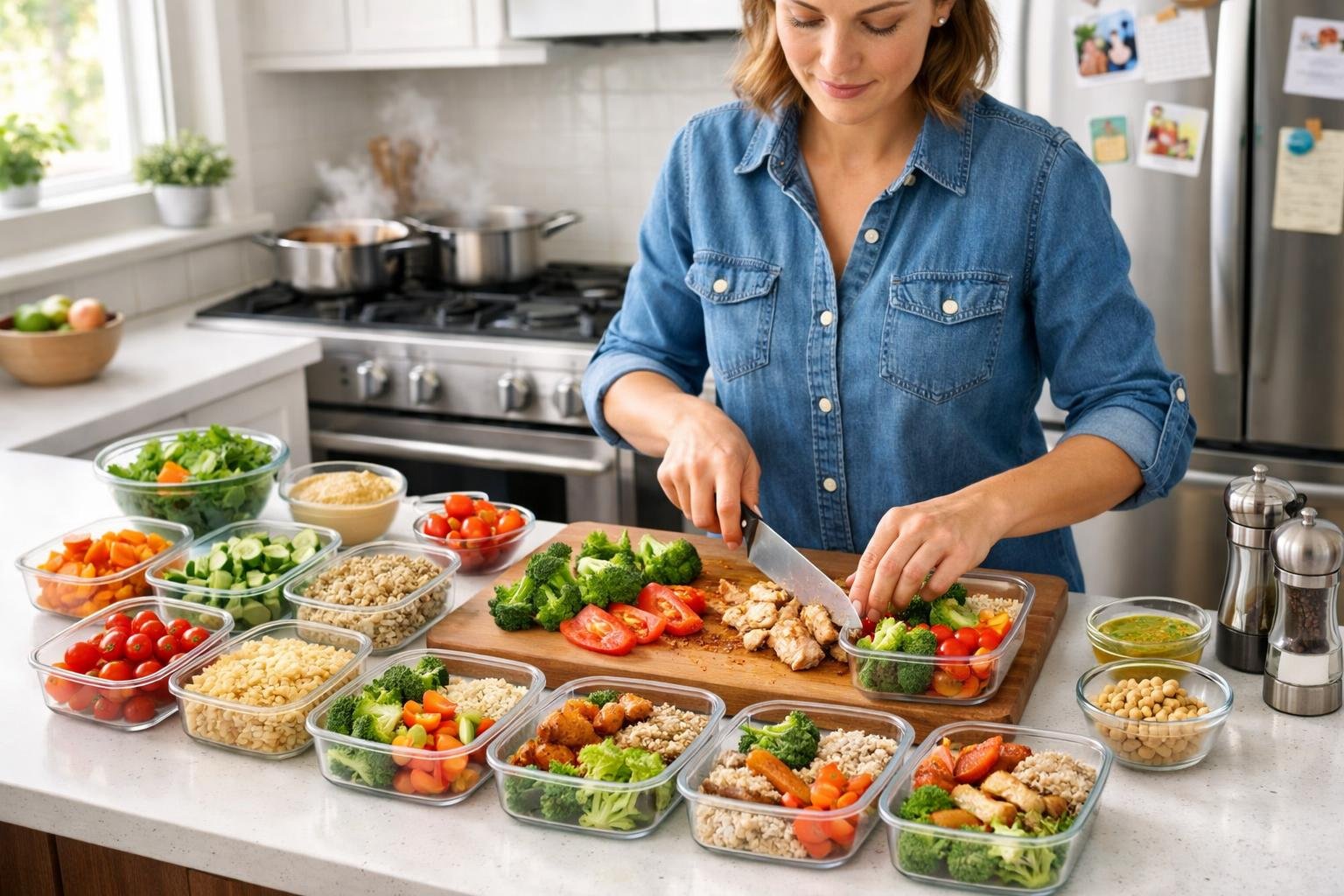
Meal prepping goes beyond batch cooking. We wash, chop, and store veggies separately so they’re ready to use. It’s like having your own salad bar at home.
Instead of boxing up full meals, we keep prepped ingredients in separate containers. Grilled chicken, cooked grains, and veggies can mix and match for different meals. It keeps things interesting without extra work.
We usually block off a couple hours on Sunday (or whenever works) for prep. In that time, we can cover most lunches and dinners for the week. Beans get rinsed, grains cooked, proteins seasoned and cooked, sometimes we’ll have the oven and stovetop going at once.
Weeknight cooking then becomes more about assembly than actual cooking. Heat things up, mix them together, and you’re done. No more starting from square one every night.
Prepping Ingredients in Advance
Getting ingredients ready before cooking saves a ton of time. When veggies are washed and chopped, proteins portioned, and seasonings mixed, you can breeze through recipes without stopping every two minutes.
The Mise En Place Method
Mise en place, “everything in its place,” is a fancy way of saying get organized before you start. Wash, chop, measure, and lay out all your ingredients before turning on the stove. You won’t be running around looking for spices or realizing too late you forgot to dice an onion.
This habit also helps you spot missing ingredients before you’re halfway through. Set out little bowls or containers for each prepped item. It’s less stressful, and you make fewer mistakes since you’re not rushing.
Spending 15 minutes on mise en place can save you double that during actual cooking. It’s especially handy for stir-fries or any recipe that moves fast.
Using Pre-Cut and Frozen Vegetables
Pre-cut veggies, either store-bought or from your own prep sessions, shave off a lot of time. Sure, they can cost more, but sometimes the convenience is worth it. You can also chop your own in bulk and store them for the week.
Frozen veggies are another time-saver. They’re already washed and chopped, and they keep their nutrition. Toss frozen broccoli or spinach straight into a pan, no fuss.
Keep pre-cut veggies in airtight containers and use them within a few days. Frozen ones last for months if your freezer’s cold enough.
Making Marinades Ahead of Time
Mixing marinades in advance makes weeknight dinners easier. We’ll whip up a few different ones on Sunday, stash them in jars in the fridge, and just drop proteins in when it’s time to cook. Some marinades last a week or more, especially the vinegar or citrus-based ones.
Same goes for salad dressings or sauce bases. You can even freeze some marinades in small batches and thaw as needed.
Optimizing Your Kitchen Setup For Efficiency
An organized kitchen saves you from repeating the same annoying tasks. Keeping things within reach and knowing where everything is can make cooking feel less like a chore.
Organizing Your Pantry And Tools
Group items by how you actually use them, not just by category. Baking stuff in one bin, breakfast foods in another, spices you use daily near the stove. Suddenly, your pantry isn’t a black hole.
Keep your go-to tools, chef’s knife, cutting board, wooden spoons, right by your prep area. Pots and pans should be next to the stove, not in a cabinet across the room.
Clear containers help a lot. Pour flour, rice, and pasta into see-through bins with labels. No more digging through mystery bags.
Here’s a quick breakdown:
- Prep area: Knives, cutting boards, mixing bowls, measuring cups
- Cooking zone: Pots, pans, spatulas, oils
- Cleaning station: Soap, sponges, towels
Smart Storage Habits For Freshness
We always put newer groceries behind the older ones. That way, we use up what’s about to expire and waste less food.
Assign fridge zones, dairy on one shelf, veggies in labeled bins, leftovers in stackable containers. It’s easier to spot what needs using up.
Temperature matters. The back of the fridge is coldest (good for milk and eggs), while the door is warmer (best for condiments).
After shopping, we wash lettuce, chop veggies, and portion proteins into meal-sized containers. It takes a bit of time up front, but it pays off all week.
Keeping A Clean As You Go System
We always fill the sink with hot soapy water before cooking. As soon as we’re done with a tool, it goes straight in to soak, no more crusty, stubborn messes later.
A scrap bowl on the counter changes everything. All the peels, skins, and odds and ends go in there, so we’re not running to the bin every two minutes. Keeps the mess contained and the counter clear.
Wiping surfaces right after use takes a few seconds. If you wait, you’re in for sticky, dried-on cleanup. We keep a damp cloth hanging nearby for quick wipes as we go. Spills and splatters? Gone before they become a problem.
Washing tools between recipe steps and loading the dishwasher as we go means we finish dinner with just the serving dishes left. It’s a relief not to face a pile of dirty dishes at the end.
Utilising Kitchen Gadgets To Speed Up Cooking
The right gadgets really do turn tedious prep into quick, almost fun work. Food processors, blenders, mandolines, they blitz through tasks in seconds, so we can focus on the fun parts of cooking.
Choosing The Right Tools For Repetitive Tasks
Investing in the right gadgets for our most repetitive jobs pays off fast. A food processor takes over the chopping for veggies, nuts, and herbs. An immersion blender purees soups right in the pot, no more transferring hot liquids. These tools handle the boring stuff and keep everything consistent.
We try to pick gadgets that solve our biggest time drains. If salads are a daily thing, a good mandoline is a must. For batch cooking, a stand mixer kneads dough and mixes batters without breaking a sweat. We skip single-use gadgets that just take up space.
Electric kettles boil water in a flash. Garlic presses crush cloves instantly. Spiralizers turn veggies into noodles in seconds. Each one shaves off a few minutes, and those minutes add up.
Food Processor And Blender Benefits
Food processors chop, slice, shred, and puree with a quick blade swap. Dicing an onion or shredding cheese for the week? Done in seconds. The even cuts help everything cook the same way, which means better texture and flavor.
Blenders are our go-to for smooth sauces, soups, and smoothies. The good ones blitz through fibrous veggies and frozen fruit without leaving chunks. We use them for everything from breakfast smoothies to creamy tomato sauce.
Batch prep is where these really shine. We process a bunch of veggies at once, stash them in the fridge, and they’re ready to go later. No more dragging out the cutting board for every single meal. Both gadgets save time and keep our results consistent.
Mandolines And Sharp Knives For Effortless Slicing
A mandoline gives us paper-thin, even slices in a fraction of the time it’d take with a knife. We use it for potatoes, cucumbers, anything that needs to cook evenly. The adjustable blade lets us pick the thickness we want.
Sharp knives are still essential. A well-kept chef’s knife glides through food and doesn’t tire your hand out. We sharpen ours regularly, dull knives just make things harder and messier.
Good knife skills speed things up even more. Quick mincing and efficient chopping make prep fly by, even without gadgets. We mix manual knife work for small jobs with gadgets for the big stuff, so we’re ready for any recipe.
Time-Saving Cooking Techniques
Picking the right cooking method can seriously cut kitchen time, and you still end up with delicious meals. These techniques focus on less active time, fewer dishes, and a smoother path from prep to plate.
One-Pot Meals And One-Pot Pasta
One-pot meals let us toss everything into one pot and walk away. The flavors develop together, and we don’t have to juggle a bunch of pans.
One-pot pasta is a game changer. The noodles cook right in the sauce with just enough liquid. The pasta starch thickens everything up, no draining or extra steps.
Why we love one-pot cooking:
- Only one pot to wash
- Flavors meld together
- Less stirring and monitoring
- Fewer steps from start to finish
Soups, stews, risottos, curries, they all work great as one-pot dishes. We’ll sometimes use a slow cooker or Instant Pot for even more hands-off cooking.
Sheet Pan Dinners For Minimal Cleanup
Sheet pan dinners put the whole meal on one tray. We spread out proteins and veggies, season everything, and let the oven do its thing while we focus elsewhere.
To make it work, we cut everything to similar sizes so it all cooks evenly. Dense veggies like potatoes go on first, then we add faster-cooking stuff like fish or greens later.
Once it’s in the oven, there’s not much to do. We might prep lunch or tidy up while dinner roasts. Cleanup? Just one pan, a spatula, and maybe a bowl if we used a marinade.
Efficient Cooking Methods: Stir-Frying, Grilling, And Pressure Cooking
Stir-frying gets dinner on the table fast, usually under 15 minutes. We prep everything before heating the pan, then add ingredients in stages. The high heat sears food quickly and keeps veggies crisp.
Grilling cooks food faster than the oven, and we can do a bunch at once. The heat caramelizes everything for great flavor, no fancy sauces needed.
Pressure cooking uses steam to speed things up. Tough cuts of meat turn tender in under an hour. Beans, grains, and stews that usually take ages are done fast. The Instant Pot lets us sauté, steam, and slow cook, too.
Quick Ingredient And Recipe Solutions
Stocking the right ingredients and using convenience items when it makes sense can save loads of time, without giving up on taste or nutrition.
Frozen And Canned Ingredients For Speed
Frozen veggies are lifesavers. They’re pre-washed, pre-cut, and ready to toss into any dish. We use frozen broccoli, cauliflower, peppers, and spinach all the time, no peeling or chopping needed. They’re perfect for stir-fries, soups, and casseroles.
Canned beans are always in our pantry. They’re cooked and soft, so we skip the soaking and long simmering. A quick rinse, and they’re ready for chili, salads, or bowls.
Frozen fruit makes breakfast a breeze. We throw it in smoothies, oatmeal, or yogurt, no prep required. Berries, mango, pineapple, they blend right in and even chill smoothies without watering them down.
Smart Use Of Prepped And Store-Bought Items
Store-bought prepped ingredients aren’t cheating, they’re just smart. Pre-minced garlic, pre-cut squash, spiralized veggies from the shop, they save us knife work on busy nights. We keep jarred garlic and ginger paste on hand for recipes that need just a little.
Rotisserie chicken, pre-washed greens, shredded cheese, these all cut down on active cooking time. That chicken can go in tacos, salads, or soups, and the bones make a quick stock.
Quick-cooking starches like couscous, instant rice, and thin pasta are staples. They cook in under ten minutes and pair perfectly with our prepped ingredients for speedy meals.
Kitchen Hacks For Everyday Efficiency
Mastering a few knife tricks and picking up some pro habits can seriously cut down daily prep time and make things safer, too.
Knife Skills And Safe Slicing Tricks
A sharp knife is faster and safer. We sharpen ours every few weeks and hone them before each use to keep the edge.
The claw grip keeps our fingers safe. We tuck fingertips in and use our knuckles to guide the blade. With practice, we chop faster and more confidently.
Cuts worth learning:
- Julienne for quick veggie strips
- Brunoise for even diced aromatics
- Chiffonade for delicate herbs
Prepping ingredients in batches with good knife skills lets us store chopped veggies in airtight containers for a few days. Hard veggies like carrots and peppers hold up best.
Time-Saving Cooking Hacks Pros Swear By
We fill a sink or big bowl with hot soapy water before cooking, dropping used tools in as we go. No more caked-on food at the end.
Other kitchen time-savers:
- Keep most-used spices in a caddy near the stove
- Store oils next to the cooktop for quick grabs
- Put wooden spoons and spatulas in a crock within reach
- Use a damp towel under cutting boards to keep them from slipping
We lay out ingredients in the order we’ll use them (mise en place). This avoids mid-recipe confusion and missing ingredients.
Boiling eggs while another dish simmers makes the most of burner space. Toasting nuts in the oven while veggies roast uses heat efficiently. Layering tasks like this shaves off more time.
Frequently Asked Questions
Reducing repetitive cooking tasks starts with a better system. These quick answers cover simple ways to prep faster, stay organized, and make everyday cooking easier.
What are your top tips for prepping ingredients like a pro to shave off cooking time?
Set aside one prep session each week to wash, chop, and store ingredients in advance. Keep sharp knives and everyday tools close by, and read recipes before you start so everything is ready when you need it.
Could you dish out some wisdom on making the most of my freezer to streamline meal prep?
Freeze cooked grains, sauces, and single meal portions so they are easy to reheat later. Frozen vegetables and herb cubes are also great for saving prep time during busy weeks.
Hey, what's the secret to organizing my pantry for maximum efficiency and minimal fuss?
Keep everyday staples at eye level and store them in clear labeled containers. Group items by use, such as breakfast, baking, or dinner basics, so you can find things quickly.
Mind sharing some clever food storage tricks to keep my ingredients fresher for longer?
Store chopped vegetables in airtight containers and use paper towels for moisture-sensitive produce. Label containers with dates so you can use older ingredients first and reduce waste.
I'm all ears for your suggestions on smart shopping habits that minimize kitchen redundancies!
Check your fridge and pantry before shopping, then build meals around what you already have. Choosing ingredients that work across multiple meals also helps reduce extra prep and wasted food.
Got any neat hacks for batch cooking without losing the love for what's on my plate?
Cook versatile basics like grains, proteins, and roasted vegetables that can be mixed into different meals. Portion them right away so they stay convenient, fresh, and easier to enjoy throughout the week.
Share:
Which Kitchen Setup Works Best For Daily Meal Preparation
What Are The Most Effective Meal Prep Strategies For Beginners