

Check out our latest compact vacuum sealer for food collection!
A messy kitchen drains more than just counter space. When you’re hunting for a pan or rummaging for a spatula, even simple meals can feel like a slog. It’s amazing how much time and energy gets wasted on tiny frustrations like these.
How we organize storage shapes how fast and smoothly we cook by cutting down on searching, reducing waste, and creating a natural flow from prep to plating. The difference between a chaotic dinner rush and a breezy one? Often, it’s just whether your go-to tools and ingredients are actually easy to grab.
After years of trying different storage setups and organization hacks, we’ve figured out what really works, not the kind of thing you see in glossy magazines, and definitely not the kind that requires fancy gadgets. These are practical, realistic ideas that help you cook better food with less hassle, no matter your kitchen size or budget.
Key Takeaways
- Organizing storage around your cooking routine slashes prep time and cuts down on daily headaches
- Good food storage keeps ingredients fresh and helps avoid waste
- Making use of overlooked spaces creates handy zones for all sorts of kitchen tasks
The Link Between Storage Organization and Cooking Efficiency
How you organize storage has a huge effect on how fast you cook and how much you enjoy it. When everything has a home and clutter isn’t taking over, you spend less time searching and more time actually cooking.
Impact on Cooking Flow and Time Savings
Who hasn’t had that moment where you can’t find the right spice in the middle of a recipe? Apparently, Americans spend about 41 minutes a day searching for kitchen stuff—that's nearly 5 hours a week just looking for things.
A well-organized kitchen slashes this wasted time by:
- Keeping everyday items within easy reach
- Grouping similar things together (all baking stuff in one spot, oils in another)
- Using see-through containers so you know what’s inside at a glance
- Placing prep tools close to where you actually use them
When you set up clear zones for different cooking jobs, everything just flows better. Coffee stuff stays put in the morning corner, dinner prep has its own area, and you’re not zigzagging around to grab things one at a time.
How Decluttering Sets the Stage
Decluttering comes first—it’s tough to organize when your cabinets are bursting with expired spices or tools you never use.
Start by emptying a single cabinet or drawer. Toss anything that’s expired or broken. If you’ve got three garlic presses but only use one, keep the favorite. Clearing out what you don’t need frees up space so you can actually see and reach what’s left. It’s wild how much easier meal planning becomes when you can spot everything at a glance.
Try to do a quick declutter every few months. Keeping up with it is way less painful than letting the mess build up for years.
Reducing Stress and Increasing Enjoyment
A well-organized kitchen can turn cooking from a chore into something you actually look forward to. When you know exactly where that garlic press is, you’re not breaking your rhythm to search for it.
Research says that good kitchen layouts drop meal prep stress by over two-thirds. Makes sense—when you’re not constantly problem-solving (“Where did I put that?”), you can just cook.
Plus, when things are tidy, you’re way more likely to try new recipes. Clear counters make room for creativity (and, let’s be honest, less mess feels good). You see what needs using up, so you waste less food and save cash by not buying things you already own but couldn’t find. Maybe you’ll even cook at home more often—good for your health and your wallet.
Foundations of an Efficient Kitchen Layout
How your kitchen is set up can make meal prep feel like a breeze or a daily battle. Where you put appliances, counters, and storage changes how many steps you take, how fast you can grab what you need, and whether two people can cook together without bumping elbows.
Work Triangle Principles
The “work triangle” connects your sink, stove, and fridge. Way back in the 1920s, someone figured out that putting these in a triangle cuts walking during meal prep by 84% compared to a straight line.
There’s a sweet spot for distances: the total triangle should add up to 13–26 feet, with each side between 4 and 8 feet. Too tight and you’re cramped. Too far and you’re running laps just to make dinner.
Keep the triangle clear. If a dining table or island blocks your path, you end up taking detours that add dozens of steps every meal. The most efficient L-shaped kitchens put the sink on one wall, stove on the other, and fridge near the corner where they meet.
Cooking Zones and Storage Zones
Instead of treating your whole kitchen as one big space, divide it into zones for different tasks. The cooking zone puts your stove with pots, pans, utensils, and spices all within reach. The prep zone puts mixing bowls, cutting boards, and the food processor close to counter space and the fridge.
The cleanup zone pairs the sink with the dishwasher, dish storage, and trash can, so you’re not carrying dirty dishes through your cooking area. Store the things you use most in your main triangle, stash occasional-use stuff in outer cabinets, and keep bulk items in a pantry.
In galley kitchens, it’s smart to put cooking and prep on one wall and cleanup and storage on the other. That way, you’re not tripping over yourself in a narrow space.
Adapting Layouts for Multiple Cooks
If you’re the only one cooking, the work triangle works great. But if you’ve got helpers, you’ll need more than one station. Islands are a lifesaver here—they create a second prep zone that doesn’t get in the way.
U-shaped kitchens with an island in the middle let two people work without running into each other. Set up coffee bars or baking stations around the edges, and keep the main cooking triangle free. Make sure there’s enough room for two people to pass or work back-to-back.
Putting the cooktop on the island can help the cook stay part of the action, but watch out for little kids—pan handles can be tempting. And if people have to walk through your main cooking area to get elsewhere, expect some traffic jams.
Storage Solutions That Enhance Everyday Cooking
Smart storage can completely change how you move through daily cooking. Pull-out shelves, vertical storage, and organized drawers mean you spend less time searching and more time actually making food.
Pull-Out Shelves and Trays
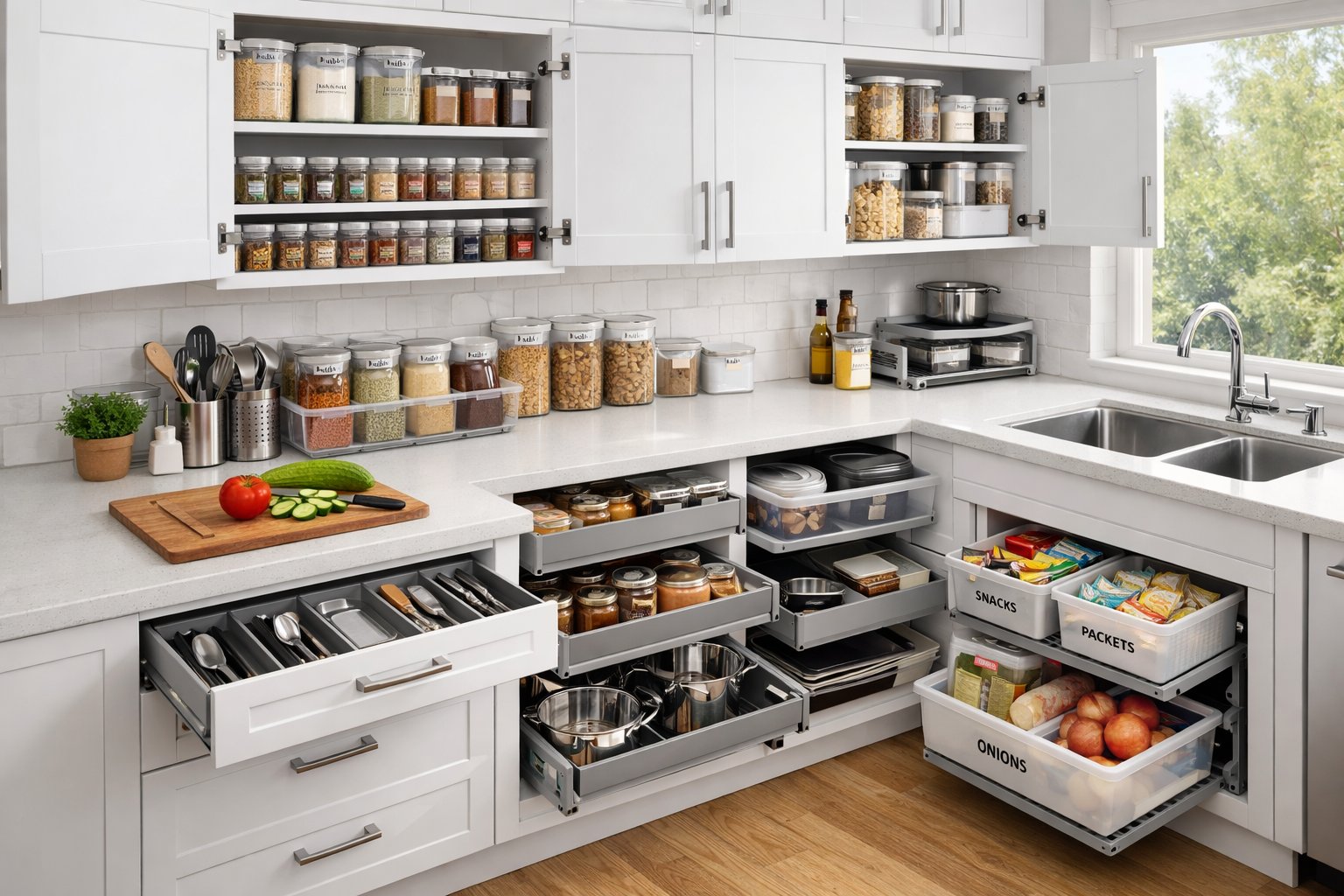
Pull-out shelves save you from crawling into cabinets to dig for the right pan. With one quick pull, everything comes forward—no more forgotten cans or lost lids. They’re especially handy for heavy stuff like stand mixers or food processors, which you can keep at waist height and just slide out when you need them.
Why pull-outs rock:
- You see everything at once
- Less bending and stretching
- Heavy pots are easier to grab
- Cleaning cabinets is a breeze
Most pull-out systems fit standard cabinets and you can add them without a full remodel.
Maximizing Vertical Storage
The wall space between your counter and upper cabinets is prime real estate. Hang a magnetic knife strip, a rail with S-hooks for utensils, or racks for measuring cups. Keeps counters clear but everything’s still right there.
Inside cabinets, vertical dividers keep baking sheets, cutting boards, and lids from turning into a teetering mess. Upright storage means you can grab what you need without unstacking the whole pile. Pegboards or grid walls let you move hooks and shelves wherever you want—super flexible if your cooking style changes.
Deep Drawers and Drawer Dividers
Deep drawers are way better than old-school cabinets for pots, bowls, and even appliances. You look down and see everything—no more pulling out half the shelf to find a pan. Soft-close drawers keep things quiet, too.
Drawer dividers are a must. Without them, utensils get tangled and tools vanish under the clutter. Adjustable ones let you make compartments for your exact tools, whether it’s whisks, spatulas, or thermometers.
Special drawer inserts for spices, knives, or baking stuff keep everything sorted and easy to spot. Some drawer organizers even let you stack things in two layers, doubling your storage but still keeping things visible.
Smart Kitchen Organization Techniques for Prep and Storage
Setting up your kitchen for efficient cooking really comes down to having a solid prep zone, labeling things clearly, and grouping items in a way that makes sense for how you cook. These tricks save time and keep meal prep from turning into a scavenger hunt.
Mise en Place: Prep Zone Essentials
“Mise en place” is just a fancy way of saying “everything in its place.” We like to claim a counter near the stove for prep, with cutting boards, knives, and measuring tools right there.
Small bowls for chopped ingredients live in a drawer under the prep surface, so they’re always handy. No more searching through random cabinets mid-recipe.
We keep oils, salt, and pepper in a tray on the counter—out in the open, not buried in a cupboard. A crock with our go-to tools (spatulas, wooden spoons, tongs) sits next to the stove. This cuts down on running around while you’re cooking.
Set things up based on what you do most. If you bake a lot, make a baking zone with flour, sugar, and mixing bowls together.
Labeling Strategies for Fast Access
Labels take the guesswork out of storage. Waterproof labels on clear bins show what’s inside and when you put it there, which helps with freshness and cuts down on wasted food.
Chalkboard labels are perfect for stuff that changes often (like bulk grains or leftovers). Just wipe and rewrite—no sticky residue.
Label shelves and cabinet sections, too. A simple “baking” or “breakfast” label helps everyone put things back where they belong. Add expiration or “use by” dates to pantry staples to keep things rotating.
For spices stored in drawers, label the tops so you can see what’s what without pulling out every jar.
Group Similar Items and Stackable Containers
Group kitchen basics by category and how often you use them. Baking stuff in one spot, breakfast things in another, and keep oils by the stove. That way, you only have to look in one place.
Stackable containers save space in cabinets and pantries. We like square or rectangular bins for dry goods—no wasted gaps like with round containers.
Organize pantry shelves by type: cans together, snacks together, grains in their own spot. Put new stuff behind old to keep things fresh.
For pots and pans, nest them by size with protectors in between. Store lids upright in a rack inside a cabinet door. Makes matching lids to pots way less annoying.
Pantry and Food Storage Tactics for Freshness and Safety
Keeping food fresh and safe starts with good storage. Smart systems like bins and lazy susans make it easy to spot what you have and grab what you need.
Organizing Food Storage and Produce Bins
Storage bins can really tame a chaotic pantry and turn it into a prep-friendly zone. Clear, airtight containers work best for dry goods like flour, rice, and pasta—they keep moisture and pests out, and you can see what’s inside without opening everything.
Rectangular containers just fit shelves better than round ones. Stack them up, and suddenly every inch of space counts.
With produce, separating certain fruits and veggies matters more than you’d think. Apples and bananas give off ethylene gas, which speeds up spoilage in stuff like lettuce and broccoli. Potatoes and onions? They need their own bins with airflow, and don’t store them together unless you want mushy potatoes in a week.
Temperature matters for pantry storage:
- Ideal range: 50°F to 70°F
- Go for cool, dry spots away from heat
- Don’t stash food near ovens or dishwashers
Simple labeling helps—just painter’s tape and a marker for purchase dates. Don’t get too hung up on those printed expiration dates for canned or dried goods. If it looks and smells fine, it’s probably still good.
Spice Racks and Lazy Susans in Practice
A multi-tiered lazy susan in a corner cabinet or deep shelf brings those lost oils and condiments back into reach. Just spin and grab—no more digging through a jumble of bottles.
Spice racks should be shallow and easy to scan. Only buy small amounts of ground spices (about 1 ounce or 3 tablespoons) unless you go through them quickly. They lose flavor faster than most people realize.
Effective lazy susan placement:
- Corner cabinets for condiments and oils
- Refrigerator shelves for jars and sauces
- Pantry shelves for grab-and-go items
Tiered organizers beat single-level lazy susans, since you get vertical storage without losing sight of what you have. Keep spices away from heat and light if you want them to last.
Honestly, most dried herbs start out weak and fade fast on the shelf. Fresh herbs taste better for the same cost, except for maybe dried oregano and thyme—those are worth keeping around.
Preventing Cross-Contamination
Cross-contamination sneaks in when bacteria move from raw foods to ready-to-eat stuff—could be from hands, surfaces, or just bad storage. Stash raw meat, poultry, and seafood on the bottom fridge shelf so nothing drips down onto other foods.
Use separate bins for raw proteins and produce. Never put cooked food back into anything that touched raw ingredients unless you’ve washed it with hot, soapy water.
Storage hierarchy in the refrigerator:
- Top shelves: Ready-to-eat foods, leftovers
- Middle shelves: Dairy, eggs
- Bottom shelves: Raw meat, poultry, seafood (in sealed containers)
- Drawers: Fruits and veggies (separated)
Clean shelves and bins regularly to keep pests away—crumbs and spills are just invitations. When produce starts looking tired, steam, roast, or toss it in a pan right away for grain bowls, salads, or pasta.
Keep cleaning supplies far from food storage. Even sealed food shouldn’t share a shelf with chemicals.
Maximizing Awkward Spaces and Specialty Zones
Ever stared at those weird kitchen corners and wondered if they could actually do something useful? With some vertical storage, a few rotating gadgets, and a little tech, you can turn those dead zones into real prep stations that make cooking smoother.
Hooks, Racks, and Hanging Solutions
Hanging pots and pans on wall racks or ceiling hooks frees up cabinets and keeps your go-tos right by the stove. It’s a game changer when you need to grab a sauté pan mid-recipe and don’t want to fumble with cabinet doors.
Hooks and racks make the most of vertical wall space or the sides of an island. Magnetic strips for knives, S-hooks for utensils, even pegboards that change as your tool collection grows—they all help. That sliver of space between the fridge and wall? Slide in a skinny rolling cart with hooks on the side, and it’s suddenly useful.
Door organizers inside cabinets make pockets for random small stuff like measuring spoons or spice jars. Mounting these inside pantry doors means you can actually see what you have, instead of losing things at the back.
Cabinet Organization Hacks
Corner cabinets swallow mixing bowls for breakfast. Toss in a lazy Susan, and you can spin everything into view—no more lost gear.
Pull-out drawers in lower cabinets save your knees and back. Put everyday pans up front, stow the specialty stuff in back, and use clear bins to group things so you don’t have to unpack the whole cabinet to find one lid.
Adjustable shelves help when your needs change—one month it’s tall appliances, the next it’s dinner plates. Tray dividers keep baking sheets and cutting boards upright instead of stacked, so you can grab one without toppling the pile.
Voice-Activated Assistants in the Kitchen
Setting up a voice assistant in the kitchen is a modern lifesaver—especially when your hands are covered in dough or chicken juice. Just ask for conversions, set timers, or pull up recipe steps without touching your phone.
These gadgets can even talk to smart ovens or slow cookers, letting you preheat or adjust settings with a quick command. We keep ours on the island so it’s easy to hear from anywhere—sink, stove, or prep area. Makes for a handy little hub.
Frequently Asked Questions
How can strategic kitchen cabinet organization improve meal prep speed?
Put your most-used stuff between hip and eye level. It’s a small change, but it saves a surprising amount of time and effort.
Group tools by task—cutting boards near knives, measuring cups near mixing bowls, spices near the stove. You’ll make fewer trips across the kitchen and keep your flow going.
Clear containers and labels mean you don’t have to open five things just to find the flour. Grab and go, no momentum lost.
What are top-tier tips for maximizing storage in cramped kitchen spaces?
Vertical space is your secret weapon in tight kitchens. Wall racks, magnetic strips, and hanging pot organizers clear up counters and cabinets.
Stackable, uniform containers—preferably square or rectangular—fit shelves better and squeeze out wasted space.
Door organizers create storage out of thin air. The inside of cabinet doors can hold spices, spoons, or even cleaning stuff. And don’t let those corner cabinets go to waste—lazy Susans or pull-outs can turn them into actual storage instead of black holes.
Could you dish out the key steps to maintaining a kitchen that's both organized and safe for food prep?
Set up separate zones for raw proteins, ready-to-eat foods, and cleaning supplies. That way, you avoid cross-contamination and never mistake dish soap for cooking oil.
Do a quarterly purge—check dates on spices, canned goods, and condiments, and toss whatever’s expired or just… questionable.
Keep storage clean. Wipe shelves monthly and mop up spills right away. Crumbs and moisture attract pests and bacteria—no thanks.
In what ways does an efficient kitchen layout contribute to a better cooking experience?
The work triangle—sink, stove, fridge—should be easy to move between, with nothing in the way. Fewer steps means less fatigue, especially if you’re cooking for a crowd.
Counter space near each appliance gives you room to set things down—no more playing Tetris with hot pots and cutting boards.
Good lighting is underrated. You’ll caramelize onions just right and spot problems before they get messy. Under-cabinet lights are a game changer.
What are your go-to solutions for keeping kitchen cupboards tidy and cook-friendly?
Shelf risers double up space for plates, cans, and spices. Suddenly, everything’s visible instead of buried.
Pull-out drawers in base cabinets mean you don’t have to kneel and dig for pots. Just slide and grab.
Inside drawers, dividers and organizers keep utensils and tools sorted. Give each type its own spot—no more tangled whisks or missing measuring spoons.
How does adopting smart storage habits impact the freshness and accessibility of ingredients?
Good storage containers with tight seals really help dry goods last. Flour, sugar, and grains just seem to stay fresher way longer when they're safe from air and moisture sneaking in.
We always rotate older items to the front when restocking, so nothing gets forgotten in the back. It's a simple habit, but honestly, it’s saved us a lot of food from going to waste.
Clear containers make it easy to spot what’s running low. No more realizing you’re out of rice halfway through dinner prep. And putting the stuff we use most often right at eye level? It’s a little thing, but it means we actually use them up before they go stale.
Share:
Why Fixed Storage Zones Matter More Than Extra Cabinets
Why Overfilled Storage Leads to Daily Kitchen Stress