

Check out our latest compact vacuum sealer for food collection!
Most of us reach for the same solution when storage gets tight: add another cabinet. But after years of organizing kitchens and storage spaces, one thing became clear: strategically planned storage zones deliver better access, smoother workflow, and less wasted space than simply adding more cabinets ever could. It's not just about having more places to put stuff. It's about creating spots where specific items actually belong, based on how and when you use them.
Take your kitchen, for example. Maybe you've got plenty of cabinet space, yet you still find yourself digging through cluttered shelves to find that one ingredient. That's what happens when storage is random and not intentional. Fixed storage zones tackle this by organizing your space around what you actually do, prep, cook, clean, so everything lands where you use it most.
Let’s break down why zoning beats cabinet overload every time, how to set up zones that fit your real cooking habits, and what modern storage offers beyond endless cabinetry.
Key Takeaways
- Fixed storage zones group items by activity and frequency of use, so you spend less time searching and more time actually cooking.
- Tossing in more cabinets without a strategy just scatters your stuff and makes things harder to maintain.
- Modular and vertical storage options squeeze more efficiency out of your space than traditional cabinets do.
What Are Fixed Storage Zones?
Fixed storage zones give every item or category a permanent home. This makes it easier to keep things in order and grab what you need without rifling through a dozen places. Whether it's a warehouse or your own kitchen, these zones are the backbone of a solid storage system.
Definition of Fixed Locations in Storage
A fixed location means you always put the same item type in the same spot. If the pasta always goes in the left-side cabinet, or baking supplies live on the top shelf, that’s a fixed location.
It's a whole different ballgame from just stuffing things wherever there's space. With fixed spots, you build a mental map of your storage. You know exactly where the quinoa is, where the canned tomatoes are hiding, and which drawer has the measuring cups.
What makes a location "fixed"?
- Each item category gets its own main spot.
- The spot doesn’t change, even if you run low.
- If a space is empty, it’s still reserved for its item.
- Anyone can find things without a scavenger hunt.
This system works best for stuff you use a lot or need to restock regularly. It speeds up meal prep and helps you avoid buying duplicates.
Types of Storage Zones and Their Functions
Storage zones group related items together, based on how you use them. In kitchens, you’ll see zones for dry goods, fridge stuff, prep, and maybe a few special categories.
Here’s a quick cheat sheet:
| Zone Type | Function | Typical Contents |
|---|---|---|
| Active Zone | Daily-use items | Coffee, cooking oils, go-to spices |
| Reserve Zone | Backup stash | Bulk buys, extras |
| Specialized Zone | Needs special handling | Fridge stuff, things that need dark/cool |
| Prep Zone | Ready-to-use | Chopped veggies, portioned ingredients |
We decide on these zones by how often we grab things and what they need for storage. Daily-use stuff should be at eye level or easy to reach. Backups can go on higher shelves. Temperature-sensitive items get their own protected zone.
Each zone plays a role in your cooking rhythm. Prep zones bridge storage and cooking, while reserve zones mean fewer emergency grocery runs.
Difference Between Fixed and Flexible Zoning
Fixed zoning means every area has a permanent job. Flexible zoning lets zones shift as your needs change.
With fixed zones, the baking area stays the baking area, even if you haven’t baked in a while. This consistency makes things reliable but means you need to plan out your space early.
Flexible zones adapt as seasons or inventory change. Maybe the summer produce shelf turns into a winter squash zone. It’s handy, but you have to remember where things are moving.
Fixed zoning perks:
- No need to relearn where things go.
- Everyone in the house catches on quickly.
- Less hunting during busy times.
- Easier to track what you have.
Flexible zoning perks:
- Shifts with the seasons or your habits.
- Handles changing amounts of stuff.
- Makes use of every inch.
Most homes do best with mostly fixed zones and a few flexible spots for overflow or seasonal items. It’s a balance—stable but not rigid.
Core Benefits of Fixed Storage Zones Over Extra Cabinets
Fixed storage zones actually make a difference in day-to-day life. When you know where everything goes, you get better accuracy, faster access, and smarter use of your space.
Inventory Accuracy and Control
Fixed zones give you predictable patterns. If flour is always in Zone A and spices in Zone B, you don’t lose stuff in random cabinets or discover expired cans lurking in the back.
You can check stock without opening every door or shuffling through piles. Once zones are set up, the system pretty much runs itself.
Some real wins:
- Fewer duplicate buys because you can see what you have.
- Better rotation with clear spots for old vs. new.
- Easier expiration checks since you know where to look.
Extra cabinets just mean more places for food to hide and go bad. Fixed spots make your storage trustworthy and simple to maintain.
Faster Item Retrieval and Reduced Travel Distance
Travel distance is a sneaky time-waster in the kitchen. Fixed zones make it easy by grouping related items together. No more running back and forth for every ingredient.
If your baking supplies are all in one spot, you can grab everything for cookies in one go. That’s less time prepping and less frustration.
And honestly, everyone else in the house learns the system too. Fewer “where’s the olive oil?” moments at dinner.
Maximized Space Utilization and Efficiency
Fixed zones make you think about what actually needs prime space. You stop wasting the best shelves on rarely used gadgets and stash slow movers in less convenient spots.
You get more out of your space by stacking vertically in each zone, not spreading out across endless cabinets. A single well-planned canned goods shelf beats three half-empty cabinets any day.
When zones are clear, you can see where you have room to grow or where you’re just stockpiling stuff you never use. It’s eye-opening.
Zoning Strategies for Home Kitchens
Good kitchen storage starts with creating zones around the three workhorses—fridge, sink, and stove—then putting tools and ingredients where you’ll actually use them.
Organizing the Refrigerator, Sink, and Range Centers
Anchor your storage zones around these three main appliances. The fridge area needs some counter space nearby for unloading groceries and prepping cold stuff.
The sink is for cleaning and the first round of food prep. Keep dish soap, brushes, and colanders close—usually under the sink or in a wall caddy. A trash bin right by the sink saves steps.
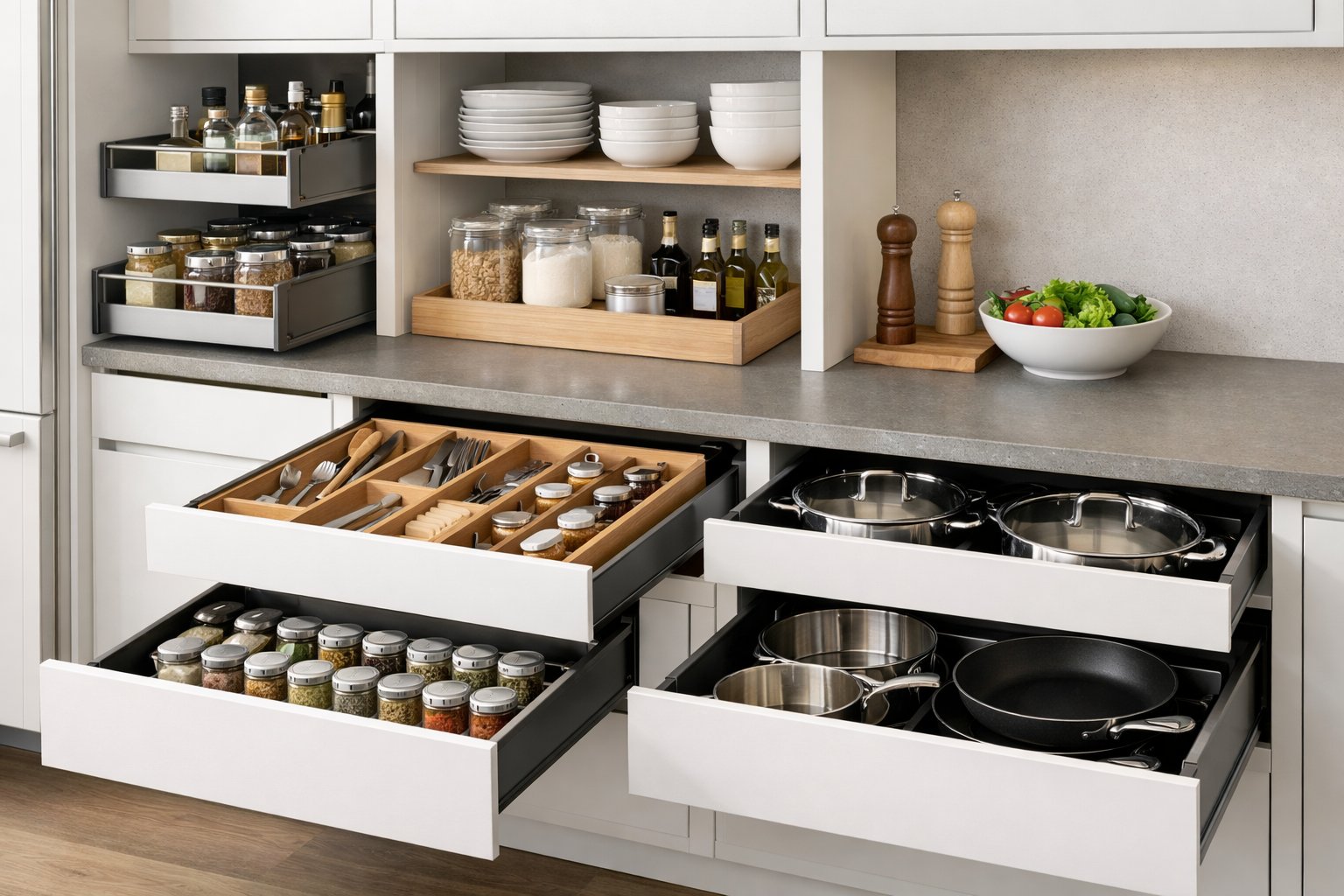
The range needs heat-safe tools within reach. Pot holders, utensils, and oils should be in drawers or hanging nearby. Pots and pans go right below the cooktop—vertical dividers or pull-outs are way better than a jumbled pile.
These three centers are the backbone of any zoning plan, no matter how tiny or awkward your kitchen is.
Smart Placement for Kitchen Tools and Ingredients
Put things where you first use them, not just wherever there’s space. Cutting boards, knives, and mixing bowls should be between the fridge and sink, where most prep happens. Measuring cups and spoons fit best in a shallow divided drawer in the prep zone.
A few examples:
- Baking sheets and racks near the oven
- Coffee stuff and mugs right by the coffee maker
- Spices within reach of the stove
- Plastic wrap and foil close to where you portion leftovers
Same goes for ingredients. Oils, vinegars, and salt live near the range. Flour and sugar belong in the prep area. It’s about cutting down on those annoying back-and-forth trips.
Customizing Storage Zones for Cooking Flow
Tailor your zones to how you actually cook, not just some Pinterest ideal. If you bake daily, make room for a baking zone with flour, sugars, extracts, and tools all together.
Meal preppers need a whole section for food storage containers, close to both the prep area and fridge. Organize containers by size, using dividers or vertical files so you’re not constantly hunting for matching lids.
Zone tweaks by cooking style:
| Cooking Style | Zone Priority |
|---|---|
| Daily scratch cooking | Bigger prep zone with easy ingredient access |
| Quick meals | Microwave/pantry zone near the table |
| Batch cooking | Space for big pots, more cooktop clearance |
Small kitchens can still do zoning—just think “mini-zones.” A single drawer near the stove might hold both utensils and go-to spices. It’s all about grouping what you use together, even in tight quarters.
Fixed Storage in Warehouse and Industrial Environments
Fixed storage zones make warehouse life a lot less chaotic. When receiving and shipping have set locations, teams work faster and don’t waste time searching for inventory. Designated spots mean less confusion and more volume moved, even without expanding your space.
Warehouse Receiving and Shipping Zones Explained
The receiving zone is where all incoming stuff lands for inspection and sorting. Fixed locations within this zone keep things flowing—each product type gets a consistent landing spot. Workers know where to put every pallet, based on SKU or customer.
A warehouse management system (WMS) links these spots to digital records, so you can track items from the minute they come in. The shipping zone works the same way on the way out. Fixed staging spots for outgoing orders keep things neat, sorted by carrier or delivery priority.
Clear boundaries matter, especially when receiving and shipping happen at the same time. Without them, inbound and outbound loads get mixed up. Fixed zones prevent that mess by keeping pathways and holding areas separate.
Boosting Warehouse Efficiency With Structured Zoning
Warehouse teams work faster when they follow the same pick, pack, and restock routes every time. Fixed storage zones cut down on travel by putting best-sellers close to packing stations and docks. Some operations have shaved pick times by 30% just by moving fast movers to fixed slots near the action.
Automated retrieval systems (ARS) absolutely require fixed locations. These systems can’t handle random placement, so structured zoning is a must if you’re automating. Even without robots, fixed zones mean better inventory accuracy—items always go back to the same spot.
Training new folks gets easier, too. When storage follows a consistent pattern, people learn the layout much faster.
Limitations of Adding More Cabinets Versus Optimized Zones
Adding cabinets might feel like a solution, but without a strategy, you just multiply your problems. Extra units often make things less functional, not more.
Why More Cabinets Don't Solve Space Problems
It’s tempting to install another cabinet when space feels tight. The logic is simple: more storage, more room. But cabinets only help if they serve a real purpose within a zone.
Modular cabinets can actually make things worse if you just tack them on wherever there’s room. Each new unit eats up valuable wall or floor space you might need for moving around. You end up with stuff scattered everywhere instead of grouped where it makes sense.
The real issue isn’t how many cabinets you have—it’s where and how you use them. Three cabinets near the stove for ingredients beat five random ones across the kitchen. Modular storage only works when each piece has a job in a functional zone.
Let’s be real: corner cabinets with lazy Susans are often dead zones. You barely use the stuff in the back because it’s a pain to reach. Fixed zones solve this by giving your most-used items the best, most accessible spots.
Avoiding Clutter and Improving Accessibility
More cabinets usually just collect stuff we don’t really need. When we skip zone-based organization, we end up filling every inch just because it’s there. Pretty soon, the kitchen feels cluttered, and cooking slows way down.
Fixed zones make us think twice about what actually belongs in the kitchen. Say you’ve got a set spot for baking supplies—well, you can’t just toss them anywhere. That little bit of discipline keeps things from piling up.
Accessibility isn’t about having endless storage. It’s about keeping what you need close to where you’ll use it. Oils by the stove, knives near the prep area. Cabinets across the room? Honestly, they just add extra steps and waste time.
Zone-based layouts cut down on the hunt for stuff. You know where everything lives because each area has its own job. With random cabinets, you’re opening doors left and right, just hoping to spot the cinnamon.
Modern Solutions: Modular Storage and Vertical Optimization
Modular furniture adapts to changing kitchen needs without permanent installation. Vertical storage taps into that empty wall space cabinets usually ignore.
Modular Furniture for Evolving Needs
Modular storage systems make it easier to reorganize as your cooking habits shift. Unlike fixed cabinets that lock you in, modular units let you add shelves, swap drawer inserts, or move things around when you start meal prepping differently or bring home a new gadget.
Modular furniture can boost storage capacity by as much as 40 percent compared to old-school setups. That’s because you’re customizing each piece for your stuff, not wrestling with whatever size cabinet the builder picked.
What’s great about modular storage is you’re never stuck with one setup. If you move from bulk dry goods to more fresh produce, you just reconfigure shelves and bins. No need to call in a contractor. Swap out what you need, add a piece or two—so much better than pricey custom cabinets that might not fit your life in a few years.
Using Vertical Storage to Save Floor Space
Vertical storage turns those blank walls above counters and between cabinets into storage goldmines. Most of us ignore the space from eye level up, but it’s perfect for keeping everyday stuff handy and stashing less-used items higher up.
Wall-mounted racks, magnetic strips, and adjustable shelves squeeze more out of what you already have. Even a pegboard can keep measuring cups and utensils visible and close at hand. Stacking organizers and tiered shelves let you pack more into a small spot.
Just match the vertical solution to what you’re storing. Heavy cast iron? That goes low. Lightweight plastic containers? Up top. This way, counters and floors stay clear for actual cooking—not extra storage furniture.
The Role of Technology and Automation in Storage Zones
Automation takes fixed storage zones from static shelves to dynamic systems that track inventory in real time. When you pair warehouse management software with automated retrieval tools, storage zones turn into precision instruments, not just boxes to hold stuff.
Integrating WMS and Automated Retrieval Systems
A warehouse management system (WMS) acts as the brain behind your storage, tracking where things are and when they need to move. Connect this software to automated retrieval systems (ARS), and you get a smooth flow—items assigned to zones based on how often you use them, their size, or what they go with.
WMS keeps location data fresh while ARS physically moves things around. You don’t need to memorize where everything lives or waste time poking through cabinets.
Automated retrieval systems talk directly to the WMS to handle storage and picking—no human guesswork needed. So your fixed zones stay organized on their own, adjusting to inventory changes without you having to reshuffle everything.
Key integration benefits:
| Feature | Impact |
|---|---|
| Real-time location tracking | Eliminates search time |
| Automated zone assignment | Optimizes space usage |
| Direct system communication | Reduces manual input errors |
How Automation Enhances Inventory Precision
Automation takes the guesswork out of inventory management. IoT sensors and automated systems keep tabs on every item as it moves in or out, updating records instantly.
You get precision because the system tracks product quantities, expiration dates, and usage patterns—no more manual counts. That’s especially helpful for perishables or anything that needs to be rotated for freshness.
During busy times, when manual tracking just can’t keep up, automated systems keep everything on track. Whether you’re grabbing two items or two hundred, your storage zones stay organized and accurate.
Frequently Asked Questions
Fixed storage zones solve a bunch of kitchen headaches, from keeping ingredients fresh to making cooking less of a scramble. Here are some practical questions and answers about using zone-based storage for better results.
How can fixed storage zones improve kitchen organization and efficiency?
Fixed storage zones give every item a home, so you’re not guessing where things belong. Keep flour near the baking zone, oils by the stove, and you’ll move less during meal prep.
This setup cuts down on decision fatigue because everything goes back to the same spot. No more opening five cabinets for the paprika or digging through drawers for the can opener.
Muscle memory kicks in after a few weeks—your hands just know where to reach.
In what ways does strategic shelf placement contribute to food freshness and waste reduction?
Storing things at the right height and temperature really matters for freshness. Keep opened grains and cereals in airtight containers at eye level—if you see them, you’ll use them before they go stale.
Root veggies do best in lower, cooler cabinets; oils and vinegars should stay away from heat. This isn’t just random—it’s about preserving food naturally.
Visibility is huge for waste reduction. When every food type has a set spot, nothing gets lost in the back to expire.
Could you share tips for maintaining a smooth cooking flow with well-planned storage zones?
Keep prep tools like cutting boards and knives near your main work surface. Measuring cups and mixing bowls should be within arm’s reach where you actually combine ingredients.
Hot zones near the stove are perfect for pot holders, cooking utensils, and your go-to spices. Cold zones by the fridge work well for storage containers and wraps.
If you have to take more than three steps to grab something you use all the time, it’s probably in the wrong zone.
Why is it important to establish good storage habits in the kitchen for both amateur chefs and culinary aficionados?
Consistent storage habits free up brainpower for the fun part—cooking. If you’re not wondering where the strainer is, you can focus on nailing that pasta sauce.
Amateurs feel less overwhelmed, and confidence grows. No more hunting for tools mid-recipe.
Experienced cooks love the speed. When your hands know where everything is, you can prep for complex dishes without missing a beat.
What are the benefits of having dedicated zones for different types of kitchen supplies?
Dedicated zones keep cleaning supplies away from food—no one wants dish soap next to their spices.
Grouping similar items also protects your investment in good tools. Knives all in one block? No more dulling blades by tossing them in with everything else.
Specific zones make it easy to check what you’re low on. A quick glance at the baking zone and you know if you’re out of baking powder—no need to rummage through five cabinets.
How do fixed storage zones impact the overall aesthetics and practicality of a kitchen space?
Fixed zones cut down on visual clutter since you’re not leaving random stuff all over the counters. With a spot for everything—drawers, cabinets, shelves—the surfaces are actually usable for prepping food, not just holding whatever’s left out.
The kitchen ends up looking more put together. No more awkward piles of containers or that leaning tower of mixing bowls threatening to topple over every time you reach for something.
On the practical side, fixed zones make life easier. Anyone in the house can find what they need or put things away without a scavenger hunt. Even guests can pitch in without having to ask where every little thing belongs. Isn’t that the dream?
Share:
How Poor Storage Layout Slows Down Everyday Cooking
How Storage Organization Shapes Cooking Efficiency