

Check out our latest compact vacuum sealer for food collection!
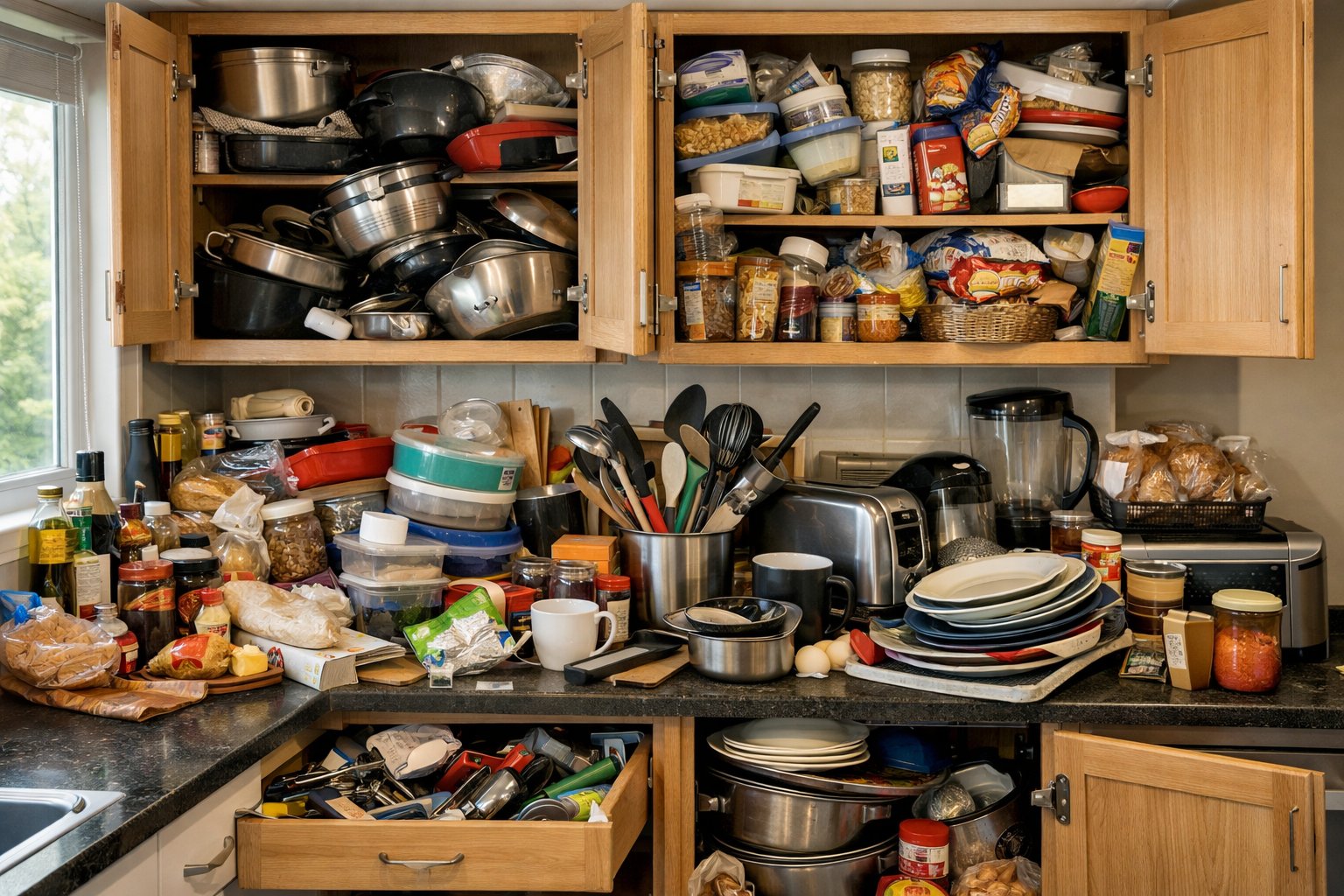
We've all been there: rushing to get dinner started, yanking open a cabinet, and getting smacked in the face by falling plastic containers, mystery gadgets, and lids that never seem to fit anything.
What should be a quick search for a mixing bowl turns into a 10-minute dig, and by the time you finally find it, you're already frazzled. It's not just a minor annoyance, it adds real stress, and honestly, it happens way more than it should.
Overfilled kitchen storage creates daily stress by making us waste time hunting for stuff, messing with our cooking flow, and just wearing us down with all that visual noise. About 58% of homeowners say kitchen clutter is a big source of daily stress, and it's easy to see why.
When grabbing a spatula turns into an ordeal, every meal feels harder than it should. That mental load, navigating chaos, plus the physical hassle of digging through crammed shelves, can turn cooking into something we avoid.
So, why does overfilled storage mess with us so much? Honestly, just understanding the problem is a big step. You don't need a full kitchen makeover or to toss everything you own. A few practical tweaks can help your storage work for you, not against you.
Key Takeaways
- Overstuffed cabinets eat up precious time and throw off your cooking rhythm
- Visual clutter actually triggers stress and fogs up your brain
- Simple habits and smarter storage can turn kitchen stress into something way more manageable
How Overfilled Storage Breeds Daily Kitchen Stress
Packed cabinets and drawers don't just make things harder—they set off stress responses that stick with us. The mess ramps up cortisol, that stress hormone, and leaves us mentally drained long after we leave the kitchen.
The Link Between Clutter and Stress
About 77% of people feel more anxious in cluttered spaces, and the kitchen is a classic offender. Open an overstuffed cabinet, and your body reacts—sometimes before your mind even catches up.
Visual clutter sparks a real stress response, not just a vague feeling. Overfilled storage creates this low-level, background stress that just keeps building. Every time you dig for a measuring cup or dodge a falling container, frustration piles on. Over time, this can make us want to avoid cooking altogether.
Funny thing is, we don't always realize kitchen stress is tied to our storage chaos. We just know cooking feels like a battle.
Why Visual Mess Overloads the Brain
Every extra item in a jam-packed cabinet fights for our attention. When you look at a messy shelf, your brain's trying to process way too much at once. It's exhausting before you even start chopping.
Our brains crave order because it's just easier. A messy cabinet forces us to sift through visual junk, using up energy we could spend on, you know, actually cooking. This mental drain turns simple stuff into a slog.
And then there's decision fatigue. We're not just picking recipes—we're making a million micro-decisions about what to move, where to put things, and how to avoid a plastic avalanche. Each one chips away at our focus before we even get started.
Cluttered Kitchen, Cluttered Mind
Your kitchen's state really does reflect—and shape—your mental state. Overflowing cabinets and tangled utensils don't just stay in their lane; that chaos seeps into your mood and thoughts.
A messy kitchen means mental clutter. Instead of focusing on recipes or meal plans, we're distracted by the mess and overwhelmed by disorder. Cooking starts to feel like a chore, not a creative break.
And the stress follows us, even when we're not cooking. Just knowing you'll have to face that overstuffed pantry can make you dread meal prep. Sometimes we order takeout not because we can't cook, but because the whole process feels like too much.
Impact on Productivity, Focus, and Cooking Flow
Overstuffed cabinets don't just slow you down—they zap your mental energy and break up the rhythm you need to actually enjoy cooking. When you can't find what you need or face too many choices, it's hard to stay focused or have fun.
Decision-Making and Kitchen Paralysis
Open a spice cabinet that's bursting at the seams, and suddenly you're staring at 20 half-used jars, wondering which cumin is still good. Instead of just grabbing what you need, you freeze up, second-guessing everything.
That's decision fatigue in action. We only have so much brainpower for choices, and wasting it on clutter means less left for stuff that matters—like timing or seasoning.
With too many options and no trust in what you have, you end up using the same five ingredients every time. That overflowing pantry actually limits you. It's easier to stick to the usual than dig through chaos for something new.
Before you know it, you're stuck. You know you've got ingredients for a great meal, but the hassle of finding them pushes you toward takeout instead.
How Disorganization Drains Productivity
Every minute spent digging through packed cabinets is a minute lost to actual cooking. Studies suggest messy storage can add 10-15 minutes to meal prep. That adds up fast if you cook most nights.
To get to one thing, you have to pull out three others. They end up cluttering your counter, shrinking your already limited prep space. Now you're moving stuff around just to chop an onion.
Momentum takes a hit. If you're sautéing veggies and have to stop to find a buried lid, you lose track of what's happening in the pan. That's how you end up with burnt garlic and overcooked pasta.
Classic productivity killers in cluttered kitchens:
- Hunting for tools you know are there… somewhere
- Rearranging cabinets mid-recipe just to reach something
- Picking up spilled containers that tumble out
- Shuffling clutter to carve out a few inches of counter space
Creativity and Cooking Enjoyment
When cabinets are crammed, you can't see half your ingredients, so you forget what you even have. Inspiration? Good luck with that. If you can't spot the chickpeas, you're not making hummus tonight.
Creativity in cooking comes from seeing possibilities. A neat pantry with visible ingredients sparks ideas—pasta next to tomatoes, or beans beside spices, and suddenly dinner plans come together.
But when you can't find anything, cooking just feels like work. The fun of experimenting with flavors disappears when you can't even find a spatula. You stop trying new recipes because even the old ones feel like a hassle.
About 77% of people say cluttered spaces make them more anxious. If your kitchen stresses you out, the joy of cooking kind of vanishes.
Frequent Interruptions and Lost Tools
That one spatula you need? It's always buried under a pile of other tools. Every cooking session turns into a mini scavenger hunt.
Lost tools don't just eat up time—they kill your concentration. You're focused on a sauce, then suddenly digging through a drawer for a whisk. By the time you find it, you might forget what you were doing.
The interruptions add up. Can't find the measuring cups, the mixing bowl's behind five others, and your go-to spice fell behind the shelf. Each snag chips away at your focus and makes cooking feel choppy instead of smooth.
When your stuff isn't where it should be, you start making do. Maybe you grab the wrong pan because it's easier, or you skip an ingredient because finding it would mean tearing apart the pantry.
Kitchen Layout and the Domino Effect
When storage overflows, your kitchen's layout can turn tiny hassles into daily headaches. How you arrange appliances, cabinets, and work surfaces can either help tame the chaos or make it worse.
Space Constraints and the Work Triangle
The classic work triangle links your sink, stove, and fridge in a path that's supposed to keep things efficient. But cram too much storage into this area, and suddenly every task has extra steps and obstacles.
A cabinet stuffed with mixing bowls between the sink and stove means you have to dodge it every time you move. You might walk an extra hundred steps just trying to prep dinner because you can't get to what you need when you need it.
Corner cabinets in L-shaped kitchens are notorious for swallowing stuff. Things disappear for months, so you end up buying duplicates. The work triangle just stops working when overflow blocks the natural flow.
Storage Systems Gone Wrong
Drawer organizers are great—until you cram in too many utensils. Pull-out pantries jam when you overload them with cans or boxes that stick out.
Stacking items three or four deep in cabinets is a recipe for forgetting what you own. Stuff in the back goes bad, but you don't see it until it's too late. Upper cabinets packed to the max mean you have to unload half the shelf just to reach one thing.
Kitchen islands with storage sound awesome, but overfill them and you can't open the drawers without stuff catching or spilling out.
Blocked Countertops and Prep Zones
Countertop clutter explodes when cabinets can't hold everything, so appliances and containers end up living on your work surfaces. A mixer, coffee maker, knife block, and utensil holder can easily swallow up six or eight square feet.
For basic prep, you really need about 36 inches of clear counter next to the sink. But with storage overflow, you're lucky to find 12 or 18 inches here and there. Countertop organization falls apart when there's nowhere else to stash things, so the blender just stays out forever.
The space next to the fridge—the landing zone—vanishes under piles of stuff. Suddenly you're balancing grocery bags on your hip because there's no clear spot to set them down.
Mental Health Matters: The Emotional Toll of Too Much Kitchen Stuff
Overflowing kitchen storage isn't just a physical mess—it sets off a chain reaction in your mind. Too many kitchen items fight for attention, ramp up stress hormones, and leave you feeling like you're always behind.
Anxiety and Burnout in a Cluttered Kitchen
We've all felt that mini panic when you open a cabinet and three containers tumble out. It's not just irritating—it's your brain flagging another unfinished task.
Cluttered spaces create a nagging sense of unfinished business. When you're surrounded by duplicate utensils, expired pantry goods, and lidless containers, your mental space gets just as crowded.
A 2025 survey found that 58% of American homeowners say kitchen clutter stresses them out daily. The kitchen is a "hot zone" because we use it all the time, so the mess is always in our face. Unlike a messy closet you can ignore, an overflowing kitchen is impossible to avoid.
Eventually, this constant stress leads to burnout. Meal prep gets skipped, and takeout becomes the default—not because you can't cook, but because facing the chaos is just too much.
Cortisol, Mood, and Daily Wellness
Cluttered kitchens crank up cortisol, the stress hormone, even if we're not consciously thinking about the mess.
Studies show people in cluttered homes have higher cortisol all day long. The endless visual noise—stacks of dishes, crowded counters, overflowing drawers—keeps your stress response on a low simmer.
Research from 2025 with over 500 adults found a direct link between household clutter and worse mental health. The effect is even stronger during stressful times; clutter just piles on top of everything else.
Other impacts? Sure:
- Mood dips from constant low-level irritation
- Decision fatigue from always navigating disorganized storage
- Lower life satisfaction when it feels impossible to keep up
- Sleep issues because kitchen tasks never feel done
Perfectionism, Overwhelm, and Mindset Shifts
Not everyone feels kitchen clutter the same way, and that really shapes how we deal with it.
If you lean perfectionist, you probably notice the mess more. You picture a spotless, organized kitchen, but then you open a drawer and—ugh—everything’s crammed in. That gap between the ideal and the reality? It fuels shame and makes it easy to put things off. Sometimes we think, “I have to fix everything at once,” so nothing gets done.
For folks with depression or ADHD, keeping a kitchen organized isn’t just about willpower. When executive function is tough, clutter piles up way faster than we can handle.
Still, mindset shifts can help. If we see our kitchen as a workspace—not a magazine spread—the pressure drops. Micro-actions work: clear one shelf, toss expired stuff from just one cabinet. That’s enough to build momentum and avoid feeling buried.
We don’t need a perfect kitchen. We just need one that works for us and doesn’t sap our energy every time we walk in.
Common Culprits: What Makes Kitchen Storage Overflow
Cabinets don’t fill themselves—certain things sneak in and multiply until finding a mixing bowl feels like a game of Tetris. Spotting which items cause the mess helps us get to the heart of it.
Appliances, Gadgets, and Utensil Pile-Ups
Small appliances are sneaky space hogs. That bread maker we used twice, the can opener that’s just collecting dust, the juicer we thought would change our lives—they all end up jammed in the back.
Gadgets pile up because they promise to make life easier, but most of us use the same few tools day after day. A drawer with three potato peelers, five wooden spoons, and a garlic press we forgot about? It’s chaos when we just want the one spatula that actually works.
Without a utensil organizer or pot rack, everything turns into a tangled mess. Whisks inside measuring cups, tongs jamming drawers, and suddenly you need two hands just to get a ladle out. Daily tools get buried under random specialty items.
Common space hogs:
- Bulky food processors and blenders
- Duplicate utensils that do the same job
- Single-use gadgets (avocado slicers, egg separators)
- Mismatched containers with missing lids
Expired Food and Forgotten Ingredients
Expired food lurking in the back is a sneaky culprit for both overflow and food waste. That can of coconut milk from three years ago or the jar of mustard we bought for a single recipe—they just sit there, taking up space.
Spices are especially bad. Without a solid spice rack system, bottles pile up, topple over, and hide in the back. We buy duplicates because we can’t find what’s already there, so the old cinnamon sits next to the new jar.
Pantry staples get pushed to the back and expire out of sight. Flour gets stale, baking powder goes flat, canned goods sit untouched. This cycle creates layers of clutter that make it harder to see what’s actually usable.
Drawers and Cabinets in Disarray
When storage isn’t organized, it fills up fast. Shoving things wherever they fit means we lose track of what we own and waste space that could be used better.
Cabinets without organizers turn into black holes. Stacked plates trap bowls, nested pots refuse to come apart unless you pull everything out, and kitchen organization falls apart because grabbing one thing means moving ten.
Drawers without dividers become a jumble. Utensils tangle, making it impossible to grab what we need quickly. Junk drawers swallow takeout menus, dead batteries, and random twist ties alongside actual cooking tools. This mess turns simple tasks into frustrating scavenger hunts that slow us down.
Smart Storage Habits to Prevent Kitchen Clutter Overload
Building habits around regular decluttering, using shelf risers and open shelving, investing in stackable clear containers, and keeping countertops clear naturally keeps clutter at bay.
Decluttering Routines You'll Actually Stick With
Honestly, regular decluttering works way better than random cleaning frenzies. If we spend just 15 minutes every couple of weeks on one drawer or shelf, it keeps things manageable and stops clutter from sneaking back in.
We ask real questions about each item: Have I used this in the last three months? Is there something else that does the same job?
The “one in, one out” rule helps. Bring home a new mixing bowl or gadget? Let something similar go. It’s simple but keeps things from piling up again.
Quick decluttering checklist:
- Expired pantry items and spices
- Duplicate tools and gadgets
- Broken or damaged containers
- Single-use items we never use
- Appliances that haven’t been touched in six months
Smart Shelf Solutions: Vertical Storage Unleashed
Most of us don’t use the vertical space in our cabinets and pantries nearly enough. Adding shelf risers basically doubles what we can store, making it easier to spot things in the back.
Under-shelf baskets hook right onto shelves and grab wasted air space. We stash snack bags, napkins, or lunch containers here—stuff that would otherwise make a mess.
Pull-out shelves turn deep cabinets into usable space. No more reaching blindly or knocking over everything just to get to the back.
Open shelving is great if we limit it to stuff we use often. Adjustable shelves let us tweak the spacing for tall bottles or short jars, whatever we need.
| Vertical Storage Solution | Best For | Space Gained |
|---|---|---|
| Shelf risers | Plates, cans, mugs | 50% more capacity |
| Under-shelf baskets | Lightweight items | Previously wasted vertical space |
| Pull-out shelves | Deep cabinets | 100% accessibility |
| Adjustable shelves | Mixed-height items | Customized efficiency |
Stackable, Clear, and Airtight Containers
At first, we thought clear containers were just for looks, but being able to see what’s inside actually cuts down food waste. No more mystery bags or forgotten leftovers.
Stackable containers let us use vertical space in pantries and fridges. Uniform shapes mean we can fit way more in the same area instead of wrestling with odd-shaped packages.
Airtight containers keep food fresh and keep pests out. We label them with contents and “opened” dates—tape or dry-erase markers work fine.
It’s worth it. We waste less food and meal prep gets faster when we can see what we’ve got at a glance.
Maintaining Clear Countertops for Calm
Clear counters aren’t about some strict minimalism—they’re about having space to work. We keep daily-use stuff like the coffee maker or knife block out, and stash everything else in cabinets or on shelves.
Drawer dividers help too. They give everything a spot, so we’re not digging for twist ties or measuring spoons.
“Clean as you go” isn’t always easy, but it makes a huge difference. Wiping surfaces and putting things back between steps stops clutter from building up.
Walking into a kitchen with clean counters just feels better. It’s less stressful and makes us way more likely to cook instead of just giving up and ordering takeout.
From Chaos to Calm: The Benefits of an Organized Kitchen
Getting organized in the kitchen unlocks real, everyday perks. Cooking gets easier, we spend less, and it just feels better to be in the space.
Meal Planning and Cooking Efficiency
When the kitchen’s organized, meal planning is so much easier. We can see what we have, so we’re not digging for that can of tomatoes or wondering if we’re out of rice.
Cooking goes faster when everything has a spot. No more rifling through drawers for the peeler or moving a pile just to grab a cutting board. Studies show that keeping tools near where we use them actually cuts prep time.
Grouping stuff by task helps: baking supplies together, oils by the stove, spices within reach. It creates natural work zones, so we’re not constantly running around.
A cleaner workspace just happens when we put things back after using them. Counters stay open for the next meal.
Reductions in Food Waste and Grocery Overbuying
We waste less food when we can see what’s in the fridge and pantry. Clear containers and organized shelves stop ingredients from hiding until they go bad.
Seeing our inventory helps us avoid buying the same thing twice. How many times have we bought another bottle of soy sauce because the first two were buried in the back?
Good storage keeps food fresh longer, too. When produce is stored right and dry goods are sealed, they last. That means fewer trips to the trash and less wasted money.
A simple system lets us use older stuff first and track expiration dates without much effort.
Better Mood and Motivation to Cook
Honestly, an organized kitchen just feels different. Cooking is less of a slog when the space doesn’t overwhelm us.
There’s less mental clutter. We’re not constantly solving little problems like “where’s the spatula?” or “why is this drawer jammed?” That makes it easier to cook, especially after a long day.
We’ve noticed a feedback loop: the more we cook in a tidy space, the more we want to keep it that way. Less stress, more good meals, and way fewer headaches.
Frequently Asked Questions
Organized storage really does change how we cook—saves time, cuts stress, keeps food fresher. Here are some practical fixes for daily kitchen headaches.
How does proper food storage improve meal prep efficiency and reduce stress?
When storage works, prep time drops. We can see and reach ingredients fast—no digging, no hunting, just cooking.
Clear containers and grouping by type show us what’s there before we even start. That helps us plan meals around what we have, not what we forgot.
Airtight containers keep staples fresh, so there are fewer surprises like stale flour in the middle of a recipe. Fresh food tastes better and means fewer last-minute store runs.
When everything has a spot, cleanup gets easier. There’s less mental load and the whole cooking process just feels smoother.
What are the top organizational strategies to prevent kitchen clutter and chaos?
Keep only what you’ve used in the past year. If that fondue set hasn’t seen daylight in three years, it doesn’t need to take up space.
Store by zone—coffee stuff together, baking supplies together—so you’re not running laps for a cup of coffee.
Stackable containers make the most of vertical space and stop the avalanche when you open a cabinet. Square or rectangle shapes fit better than round ones.
Drawer dividers sort tools by job, so no more fishing through a mess of spatulas and whisks. Adjustable ones are great as needs change.
Stick to “one in, one out.” New pan comes in, old one goes out.
Declutter every few months—check expiration dates, donate duplicates, and see if those specialty gadgets are really earning their keep.
Can optimizing pantry layout help ease the pressure of a busy kitchen?
A smart pantry layout puts the stuff we use most at eye level. Less-used ingredients go up high or down low, freeing up space for daily essentials.
Grouping by meal or recipe type speeds things up. A baking zone with flour, sugar, and baking powder together means no more shelf scavenger hunts.
First-in, first-out only works if we can see what we own. Shelf risers or lazy susans bring things forward so old stuff gets used first.
Labeling shelves or container zones gives everything a home. No more “where does this go?” every time we unpack groceries.
Counter-height or pull-out shelves save our backs and make it more likely we’ll put things away instead of leaving them out.
How does a cluttered kitchen negatively impact cooking flow and meal quality?
Cluttered counters leave us prepping in tight spaces, which slows down chopping and honestly makes cross-contamination way more likely. If raw chicken’s squeezed up next to fresh veggies because there’s nowhere else to put it, well, that’s just asking for trouble.
Overstuffed cabinets? They throw off the whole cooking rhythm. You’re halfway through a recipe, suddenly digging around for a lid or the right spice, and poof—focus gone. That momentum that makes cooking fun just sort of fizzles out.
Visual mess ramps up stress and clouds our thinking. Instead of playing around with flavors, we’re just trying to remember where the heck we stashed the measuring spoons. Ever stood there, staring blankly at a pile of kitchen stuff, wondering where to even start? Yeah, not exactly inspiring.
Digging through chaos for ingredients can tack on an extra 10-15 minutes to meal prep. Honestly, after a long day, that might be enough to make us bail on a homemade meal and just order takeout.
And when we can’t find what we know we bought last week, we either skip it or head to the store again. Either way, the meal isn’t quite what we pictured.
What are some innovative food preservation tips to maximize kitchen space and freshness?
Pouring dry goods into airtight containers isn’t just about neatness—it keeps stuff like rice, pasta, and flour fresh and safe from pests. Plus, those containers stack way better than all the weirdly shaped bags and boxes.
Vacuum-sealed bags? Total game-changer. They flatten out bulky foods, so you can cram more into the freezer and skip the freezer burn.
Mason jars—honestly, they’re underrated. They hold everything from dried herbs to leftover sauces and look kind of charming in the fridge or on a shelf. The see-through glass saves you from guessing what’s inside.
For herbs, try sticking them in a glass of water like flowers. They’ll last longer (sometimes over a week), and it’s a lot nicer than pulling a sad, wilted bunch out of the crisper.
Freezing stock or sauce in ice cube trays gives you handy little portions. Once they’re solid, toss the cubes into a bag and reclaim your trays for the next batch.
A simple trick: jot the purchase date on containers with a marker. That way, you’ll actually know what needs to get used up first, and maybe waste less food.
Why is creating a designated storage system crucial for maintaining a stress-free culinary environment?
Designated storage cuts down on that annoying decision fatigue—no more wondering where the stand mixer goes after baking. It always has its spot, so your brain can focus on more important things, like what’s for dinner.
When everyone in the kitchen knows where stuff belongs, it’s way easier to work together. You’re not constantly asking, “Hey, where’s the spatula?” or playing hide-and-seek with the measuring cups. Things just flow better, and honestly, it’s less stressful for everyone.
If your spice shelf starts overflowing, it’s a pretty clear sign you might’ve gone overboard on oregano. Having set spots for things helps you spot clutter before it gets out of hand.
Prepping for a meal becomes a breeze when you know exactly where everything lives. Instead of wandering around opening every drawer, you just grab what you need and get cooking. That’s the dream, right?
When it’s simple to put things away, you’re way less likely to leave stuff out on the counter. Clutter sneaks up fast, but an easy system makes it less tempting to just walk away.
And let’s be real—kitchen tools aren’t cheap. Storing knives properly keeps them sharp, and stacking pans with a little care means they last longer. Why not protect your investment?
Share:
How Storage Organization Shapes Cooking Efficiency
How Ingredient Grouping Improves Kitchen Workflow