

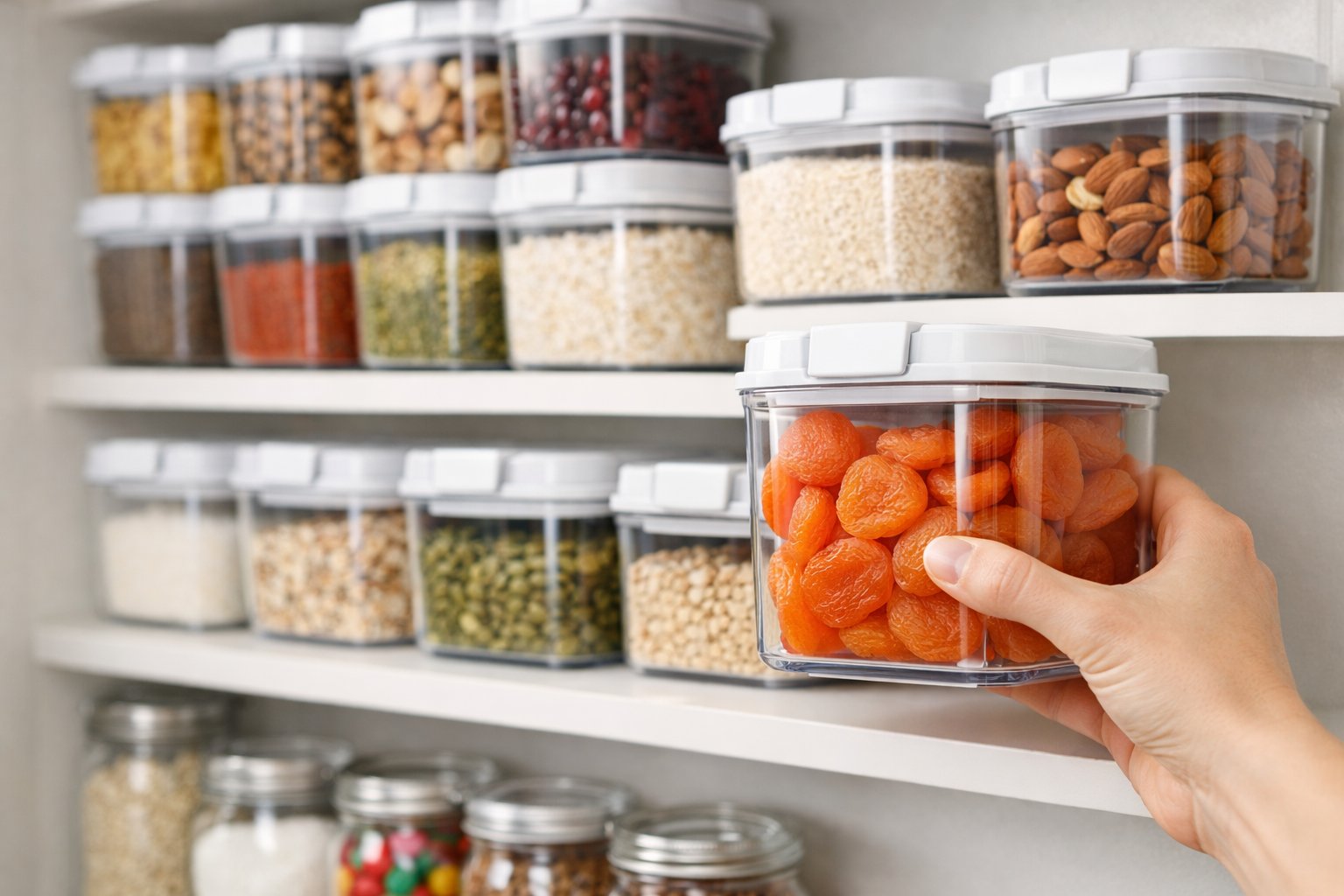
Check out our latest compact vacuum sealer for food collection!
Ever opened your fridge only to discover your strawberries taste faintly of onions? Or maybe your butter’s mysteriously picked up a whiff of last night’s garlic bread? Yeah, it’s annoying.
The trick to keeping flavors in their lane is using airtight containers, arranging your fridge thoughtfully, and sealing up strong-smelling foods so they can’t invade everything else. Once you get how odors and tastes hop from one food to another, you can stop the weird flavor mash-ups and keep everything tasting like it should.
Flavor transfer’s all about aromatic compounds escaping from one food and drifting over to something else. Porous foods, think dairy, fruit, baked goods, are like little sponges for stray smells. Onions, garlic, fish, and those punchy cheeses? They’re usually the troublemakers.
Let’s talk through some real-life storage fixes that’ll guard your food’s original flavor and keep your kitchen running smoothly. I’ll cover which containers actually work, how to set up your fridge, and a few daily habits that make the biggest impact on freshness.
Key Takeaways
- Keep strong-smelling foods sealed tight and away from foods that soak up odors easily
- Arrange your fridge so raw stuff stays low and ready-to-eat foods stay up high—this reduces contamination risks
- Clean containers and shelves often, and don’t forget to wash your hands to keep everything safe and fresh
Why Flavor Transfer Happens In Stored Foods
Four things drive flavor transfer: air movement carrying odors, direct food contact, ethylene gas from ripening produce, and plain old oxygen exposure. Knowing what’s going on behind the scenes helps you stop cross-contamination and keep your food at its best.
Air Circulation And Odor Penetration
Fridges circulate air to keep things cool, but that moving air also spreads odor molecules all over. Foods like onions and garlic release compounds that hitch a ride on moisture droplets. Those droplets land on whatever’s nearby.
This happens quicker than you’d expect. Leave butter unsealed, and it can pick up onion smells from a few shelves away in less than a day. Soft cheeses and eggs? They’re especially vulnerable.
Loose lids and single layers of plastic wrap don’t do much to block this. Air slips right in. Airtight containers and vacuum bags are way better for stopping those odors in their tracks. Sometimes, just double-sealing strong foods can save your other groceries.
Cross-Contamination Risks In The Fridge
When raw and cooked foods touch or drip on each other, you risk more than just weird flavors—you risk foodborne illness. Raw meats can carry bacteria like Salmonella and E. coli that survive even in the cold.
If you put raw chicken above a salad, for example, juices can drip down and contaminate your greens. Using the same cutting board for raw and cooked foods? That’s another way bacteria spread.
The solution’s simple: raw meat goes on the lowest shelf, in leakproof containers. Cooked foods get the upper shelves. Wipe down containers before putting them away. These little habits go a long way.
Ethylene Gas Effects On Produce
Some fruits and veggies give off ethylene gas as they ripen. This gas makes nearby produce spoil faster and taste off. Apples, bananas, tomatoes, and avocados are the big ethylene producers.
Sensitive items like lettuce and berries wilt or turn bitter if stored with high-ethylene foods. The gas breaks down their cell walls and speeds up ripening.
The effect’s even worse in enclosed spaces. One banana in the crisper can ruin a whole batch of lettuce in two days. Cooler temps only slow the process.
To avoid this, keep high-ethylene foods in open bins or separate drawers. Store sensitive veggies in sealed or vented containers. A little separation can buy you several extra days of freshness.
Oxidation Impact On Taste
Oxygen messes with flavor by breaking down fats and proteins—a process called oxidation. This is what makes foods taste stale or rancid. Fatty foods like nuts, oils, and cooked meats go off fastest.
As soon as food hits the air, oxidation starts. Cut fruit browns in minutes. Cooked chicken tastes “off” after a day if it’s not sealed tight. Even in the fridge, exposure to air means flavors fade three times faster than in vacuum-sealed storage.
Moisture and light speed things up. That’s why clear containers sometimes don’t keep food as fresh as opaque ones.
To slow oxidation, squeeze out as much air as possible before storing food. Vacuum sealing works wonders. Pressing plastic wrap right onto the food helps too. Fill containers to the top to cut down on extra air space. These tricks help keep things tasting like they should.
Best Storage Containers And Tools
The right containers create a real barrier against air, moisture, and odors. Good sealing keeps your food fresh and stops flavors from mingling.
Airtight Containers Versus Ordinary Containers
Most basic containers with snap-on lids let air slip through, so odors still move around. Airtight containers with silicone gaskets or locking lids are a game-changer—they block almost all air exchange.
Glass containers with four locking clips are my go-to for stopping flavor leaks. They seal tighter than flimsy plastic ones, and glass just feels more solid. If you’re storing something like kimchi or curry, airtight is the only way to keep those smells from spreading.
Things to look for:
- Silicone gaskets around the lid
- Four-point locking systems
- BPA-free plastic if you’re not using glass
- Stackable designs that don’t mess up the seal
Clear containers help you see what’s inside without popping the lid, which helps keep air out.
Vacuum-Sealed Storage Solutions
Vacuum sealing pulls out almost all the air from bags or containers, which slows down spoilage and keeps flavors in their lane. It’s especially handy for meal prep.
Some vacuum sealers have two chambers so you can keep raw and cooked foods separate while sealing. Adjustable pressure is nice—you don’t want to crush delicate foods like berries.
Vacuum-sealed meals keep their flavor way longer than stuff in regular containers. You can store saucy meats or veggies without worrying about leaks or flavors mixing.
Food-Grade Bags For Special Items
Thicker vacuum bags (at least 0.12 mm) with sturdy construction are best for liquids and fatty foods that might leak or transfer flavors. They hold up in the freezer and the microwave.
We like to use labeled or color-coded bags for raw proteins vs. cooked meals. Some bags have easy-tear edges, which means you don’t need scissors—less chance of cross-contamination. For portioning, single-use bags help avoid repeated thawing, which can make foods go bad faster.
Fridge Organization And Placement Strategies
A little organization goes a long way. Smart fridge placement stops flavor mixing by keeping foods apart and making use of different temperature zones.
Designated Storage Zones For Different Foods
Fridges have hot spots and cold spots. Upper shelves are the most consistent, so we keep leftovers, drinks, and ready-to-eat stuff up there. Dairy and eggs do best in the middle, toward the back where it’s coldest.
Raw meats belong on the bottom shelf. The door is a bad place for milk or eggs—it’s too warm and gets opened a lot—so stick condiments and pickles there.
Crisper drawers are for fruits and veggies, but keep them separate. Fruits give off ethylene gas that can wreck your greens. High-humidity drawers keep herbs and leafy veggies crisp, while low-humidity drawers are better for fruits.
Storing Raw Meat Safely
Raw meat always goes on the lowest shelf, in leakproof containers or on trays. This keeps any drips from messing up other foods.
Keep meat in its original packaging until you’re ready to use it, or transfer it to an airtight container. If you’re marinating, use a tight lid and set it on a tray just in case.
Don’t store raw meat near produce or cooked food, even if it’s wrapped. For fish and seafood, which can really stink up a fridge, double-wrap or use a dedicated container to keep the smell from spreading.
Produce And Fresh Herbs Separation
Delicate herbs need a different approach than sturdy veggies. Wrap herbs like cilantro or parsley in damp paper towels, then pop them in a loose bag or vented container. Basil’s happier at room temp, standing in a glass of water.
Keep onions, garlic, and other strong-smelling produce in sealed containers. Their odors travel fast and can mess with eggs, cheese, and berries.
Store ethylene-heavy fruits (apples, pears, tomatoes) in the low-humidity drawer, away from sensitive veggies like lettuce and carrots. Only wash produce right before eating—it lasts longer, and less moisture means less flavor transfer.
Practices To Prevent Cross-Contamination
Keeping bacteria and funky flavors from spreading is all about separation and clean habits. Use different tools for raw and cooked foods, handle proteins carefully, and keep surfaces clean.
Using Separate Cutting Boards
Have at least two cutting boards: one for raw meats, one for everything else. Color-coded boards make it obvious—red for meat, green for produce, blue for seafood. It’s a simple way to avoid mistakes.
Plastic boards are easier to sanitize, so they’re best for raw meat. Wood is fine for produce, but you’ve got to clean and dry it carefully. Replace boards if they get deep grooves—bacteria love to hide there.
Handling Raw Meat With Care
Raw meat needs extra attention. Always store it on the bottom shelf in leakproof containers. This stops drips from contaminating other foods.
Keep your fridge below 40°F. Don’t let raw meat sit out more than two hours (or just one if it’s really hot out).
Store raw chicken separate from other meats—it cooks at different temps. After handling any raw protein, wash your hands well before touching anything else.
Safe Food Contact Surfaces
Every surface that touches food needs regular sanitizing—not just a quick wipe. We clean countertops, cutting boards, and utensils with hot soapy water right after they touch raw meat, then follow up with a sanitizing solution (one tablespoon unscented bleach per gallon of water).
Kitchen sponges and towels can turn into bacteria traps if we’re not careful. We usually run sponges through the dishwasher daily or microwave them, damp, for a minute. Dish towels get tossed in the wash with hot water after they touch raw meat juices.
We keep separate utensils for tasting and stirring during cooking. The tasting spoon never goes back in the pot. This simple habit keeps bacteria from our mouths out of food that’s still cooking.
Cleaning, Sanitizing, And Hand Washing Habits
Cleaning gets rid of food bits and residues that hold on to flavors. Sanitizing goes a step further, killing bacteria that can also mess with taste. Our hands, honestly, are the main culprits for moving flavors between foods, so regular hand washing is a must if we want to keep flavors distinct.
How To Clean And Sanitize Containers
We always clean and sanitize storage containers in two steps. First, we wash them with hot, soapy water to get rid of visible food and oils—those are flavor magnets. Soap removes the residue, but that alone doesn’t kill all bacteria.
Next, we sanitize by soaking containers in a solution of one tablespoon unscented liquid chlorine bleach per gallon of water for at least a minute, then let them air dry. This takes care of bacteria and stubborn flavor compounds soap can’t handle.
Glass and hard plastic containers do best with this method. We skip bleach on porous plastics with scratches—those little grooves just trap flavors and bacteria. For those, if they’re dishwasher safe, we let the sanitize cycle do the work.
Washing Cutting Boards Correctly
We scrub cutting boards with hot, soapy water right after each use. When possible, we use different boards for raw meats, veggies, and ready-to-eat foods to keep flavors from crossing over.
After washing, we sanitize boards with the same bleach solution we use for containers. Non-porous boards—acrylic, plastic, or glass—hold up well. We pay extra attention to knife grooves and scratches, since they love to hang on to flavors.
Wooden boards need a different approach. We scrub them with coarse salt and half a lemon to get rid of odors and flavors, then rinse and dry them standing upright. We never soak wooden boards or put them in the dishwasher—warping and deep cracks just make things worse.
Proper Hand Washing Steps
We start by wetting our hands with clean running water, then add soap and lather for 20 seconds, making sure to rub palms, backs of hands, between fingers, and under nails. That 20 seconds really matters—it takes time to break down oils and particles carrying flavors.
We wash hands before handling food and between touching different ingredients. After working with raw meat, strong-smelling veggies like onions, or bold spices, we wash up right away. Otherwise, those flavors end up everywhere.
We dry hands with single-use paper towels or clean cloth towels. Shared kitchen towels can collect bacteria and soak up all sorts of flavors, so we swap them out and wash them hot.
Reducing Food Waste And Keeping Food Fresh
Organizing storage and tracking dates helps keep food fresh and cuts down on waste. If we rotate groceries and keep an eye on expiration dates, we can stretch our food’s lifespan and avoid spoilage before it sneaks up on us.
First In First Out Storage Method
The first in, first out (FIFO) method helps us use older items before new ones. When we get groceries, we move the older stuff up front and stash new purchases behind. This keeps food from getting lost in the back and going bad.
We use FIFO everywhere—fridge, pantry, freezer. In the fridge, newer dairy, meats, and produce go behind the old. Pantry staples like canned goods and dry ingredients get rotated too. Freezer items? Same deal: older stuff where we’ll see it first.
Clear containers and open bins make this easier, since we can actually see what needs using. We label containers with purchase or freeze dates if the original packaging isn’t obvious. This keeps things moving and stops us from finding a science experiment in the back of the fridge.
Tracking Use-By Dates
Understanding date labels makes food safety a lot less stressful. "Use by" dates mean perishable foods like meat and dairy should be eaten by then for safety. "Best before" dates are about quality—food might lose flavor or texture after, but it’s usually still safe.
We check dates often and organize storage so items nearing their use-by dates are easy to spot. Leftovers usually last 2-3 days in the fridge—though rice dishes are best eaten within a day, since Bacillus cereus bacteria can survive cooking.
A weekly date-check routine helps us stay ahead of expiring food. We’ll set aside a fridge shelf or pantry spot just for items that need using up. Freezing foods before their use-by date can buy us months of extra time without sacrificing quality.
Minimizing Spoilage With Smart Storage
Temperature control is the backbone of spoilage prevention. We keep fridges at or below 4°C and freezers at -18°C or colder, checking with a thermometer now and then. The danger zone for bacteria is 5°C to 60°C, so we cool cooked foods to room temp and refrigerate within 2 hours.
Placement matters too. Raw meat, fish, and poultry go in sealed containers on the bottom shelf to keep drips away from other foods. Cooked and ready-to-eat stuff stays on upper shelves, safely away from raw ingredients.
Storage duration guidelines:
| Food Type | Refrigerator | Freezer |
|---|---|---|
| Fresh meat | 1-2 days | 4-12 months |
| Cooked meat | 3-4 days | 2-3 months |
| Fresh poultry | 1-2 days | 9-12 months |
| Cooked poultry | 3-4 days | 4 months |
| Fresh fish | 1-2 days | 2-4 months |
| Leftovers | 2-3 days | 3 months |
We avoid stuffing storage too full so air can circulate. If there’s a spill, we wipe it up right away, and we clean storage areas often to keep microbes from getting a foothold.
Food Safety Guidelines For Avoiding Foodborne Illness
Proper food storage isn’t just about flavor—it keeps us safe from foodborne illness by maintaining safe temperatures and following food safety protocols that get rid of harmful bacteria.
Safe Internal Temperatures And Food Thermometers
Honestly, we can’t see, smell, or taste the bacteria that cause foodborne illness. That’s why a food thermometer is our best friend in the kitchen. Guessing at doneness is risky, especially with pathogens like Salmonella and E. coli around.
Different foods need different safe internal temps. Ground meats should hit 160°F. Whole cuts of beef, pork, and lamb are safe at 145°F (with a three-minute rest). Poultry needs 165°F everywhere, and fish should reach 145°F or look opaque and flake easily.
We stick the thermometer into the thickest part of the meat, steering clear of bone and fat for a true reading. Digital instant-read thermometers make it easy—no more guessing. We usually check a couple of spots to be sure the whole piece is safe.
Following Foodsafety.gov Recommendations
Foodsafety.gov gives us four basics: Clean, Separate, Cook, and Chill. We wash hands for at least 20 seconds before handling food and clean all surfaces that touch raw ingredients.
Cross-contamination is sneaky. Using the same cutting board for raw chicken and fresh veggies without cleaning in between? That’s a problem. We keep raw meats separate from ready-to-eat foods in the fridge, storing them on lower shelves where drips can’t reach anything else.
"Chill" means refrigerating perishable foods within two hours (or one hour if it’s above 90°F). The fridge should stay at 40°F or below, freezer at 0°F or below, to slow bacteria. About 1 in 6 Americans gets food poisoning each year, but these simple steps really do cut the risk.
Frequently Asked Questions
Good food storage is about more than just containers—it’s also about where things go and how different foods interact. Here’s how we tackle common issues with spices, fridge organization, and keeping smells where they belong.
What are some effective strategies to keep my spices from mixing scents with other pantry items?
We stash spices in airtight glass jars with tight lids to keep their strong aromas from escaping. Ground spices, especially, love to share their scent with everything nearby.
It helps to keep spices in their own drawer or cabinet, away from flour, sugar, and other staples that soak up odors. Whole spices tend to hold up better than ground ones and don’t spread their scent as much.
Always double-check lids after using spices. Even a slightly loose cap on something like cumin can make crackers or cereal smell weird within a day.
Can you offer tips for organizing my fridge to prevent food smells from mingling?
We organize the fridge by food type and how strong things smell. Pungent stuff like onions, garlic, and fish go in sealed containers on lower shelves—cold air is strongest there.
Raw meats stay on the bottom shelf in leak-proof containers so juices can’t drip onto anything else. This also keeps bacteria away from ready-to-eat foods stored higher up.
We like to group foods by category—dairy together on upper shelves, produce in its own drawer, leftovers in the middle where we can’t miss them.
What's the best way to package leftovers to maintain their taste while avoiding scent transfer?
For extra-aromatic leftovers, we double-wrap. Lasagna, for example, goes in a container with a tight lid, then into a resealable bag for good measure.
Vacuum sealing is a game changer for strong flavors like curry or barbecue—it removes air, so odors can’t travel.
We always let food cool to room temp before sealing it up. Otherwise, condensation builds up inside and helps flavors migrate.
Could you provide guidance on the ideal containers to use for various types of food to ensure freshness and avoid flavor mixing?
Glass containers with silicone gasket lids are our go-to for wet or saucy dishes. They seal tight, block odors, and don’t hang onto old smells like plastic sometimes does.
Shallow containers cool food faster and keep temps even. We portion out single servings to avoid opening the whole batch over and over.
For raw meats and boldly seasoned proteins, we use food-grade vacuum bags—at least 0.12 mm thick. They resist punctures and keep out air better than basic storage bags.
How do I arrange my kitchen to streamline my cooking flow while also preventing foods from absorbing unintended aromas?
We separate prep areas by food type. One cutting board and knife set for veggies and cooked foods, another for raw meats and seafood.
Dry goods like pasta, rice, and baking supplies go in sealed canisters—not their original packaging—to keep them from soaking up stray kitchen smells.
We keep our most aromatic ingredients (coffee, tea, spices) in closed cabinets, away from heat. Warmth and steam speed up scent transfer, so we keep those items far from the stove and dishwasher.
What are the do's and don'ts of keeping strong-smelling items in the refrigerator to maintain overall freshness?
We usually wrap cut onions and garlic in aluminum foil, then put them in sealed containers. That double layer really helps keep their sulfur smell from creeping into milk, butter, and eggs.
Don't toss fish or seafood into just any old plastic container. We go for specialized containers with carbon filters, or sometimes we wrap them up tight in plastic wrap and then add a layer of foil.
We swap out our fridge baking soda every month, no exceptions. Instead of just one box shoved in the back, try leaving an open box on each shelf. It makes a difference in catching odors.
Don't leave strong cheeses like blue or aged cheddar unwrapped. We like to use wax paper first, then stick them in airtight containers. That way, you get all the flavor without the rest of your food picking up weird smells.
Share:
What Makes Long-Term Storage Different from Short-Term Storage
Why Temperature Fluctuations Ruin Stored Ingredients Faster