

Check out our latest home & kitchen collection!
Kitchen countertops just attract stuff, mail, gadgets, and all those random things we swear we’ll use every day. But let’s be honest, cluttered counters make cooking a hassle, cleaning a pain, and the whole space just feels stressful.
Keeping your counters clear really comes down to only leaving out what you use every day, and finding clever spots for everything else.
We’ve all played Tetris around a juicer that hasn’t moved in months, piles of mail, and knickknacks we thought would look cute.
The upside? You don’t need to gut your kitchen or spend a weekend overhauling everything. Just a dose of practicality about what actually deserves a spot out in the open, plus a little creativity about where to stash the rest.
So, let’s get into it. Here’s how to go from “where did all this come from?” to clean, usable counters. We’ll figure out which appliances earn their keep, and how to store everything else without making life harder.
Key Takeaways
- Only keep appliances and tools on your countertop that you use daily or multiple times per week
- Use vertical storage solutions like shelves, magnetic strips, and wall-mounted organizers to free up counter space
- Create designated stations for specific tasks and establish daily habits to prevent clutter from accumulating again
Assessing Your Kitchen Countertop Essentials
Getting your kitchen counters under control starts with a reality check about what actually belongs on them, and finding spots for everything else.
Identifying Daily-Use Items
Time for some honesty: what do we really use every single day? If it doesn’t get touched daily, it shouldn’t be taking up counter space.
Coffee maker? Sure, if you’re brewing every morning. That stand mixer that’s more of a countertop sculpture than a tool? Not so much.
Try this: clear everything off and sort it into three piles:
- Daily essentials: Coffee maker, dish soap, maybe your favorite knife
- Weekly items: Blender, toaster, cutting boards
- Occasional use: Stand mixer, food processor, specialty gadgets
Be tough here. Just because we spent a bunch of money on something doesn’t mean it deserves a spot in the spotlight. We’re after function, not guilt.
Most of us honestly use fewer things than we think. Usually, it’s just soap, a coffee maker, and maybe a utensil jar. The rest? It can live in cabinets or drawers.
Designating a Stash Zone for Miscellaneous Clutter
Mail, keys, school forms, and random receipts—they just love the counter. Stopping them entirely? Probably not happening. But we can at least decide where they land.
Set up a drop zone. A basket, tray, or bowl works. Put it in one corner, or better yet, near the door or in another room if you can swing it.
Stash zone ideas:
| Location | Best For | Why It Works |
|---|---|---|
| Kitchen drawer | Papers and mail | Out of sight, easy access |
| Entryway basket | Keys and wallets | Catches items at entry point |
| Decorative tray on counter | Daily necessities | Contains clutter visually |
Make it obvious and easy to use. If it’s a pain, stuff will just end up everywhere again. A basket or tray that says “put stuff here” helps everyone get the idea.
Giving Everything a Home
Everything in the kitchen needs a spot—no freeloaders. If things don’t have homes, they’ll just drift back onto the counters.
Start by squeezing the most out of your cabinets. Use organizers, risers, dividers—whatever makes sense. The appliances you use weekly? Stash them in lower cabinets for easy grabbing. Out-of-season stuff can go up high or even out to the garage.
If you’re out of cabinet space, look up. Wall hooks can hold pots, and floating shelves can show off cookbooks or glassware.
Don’t overthink it. The toaster goes near the bread. Mixing bowls above the mixer. If putting things away feels logical, you’ll actually do it.
If you need to, label shelves or use clear bins. We’re not aiming for a home organization show here—just making cleanup less of a mental workout.
Strategic Decluttering for a Clutter-Free Countertop
Getting clear counters means getting rid of what doesn’t belong, cleaning up regularly, and being intentional about what stays out.
Purging Non-Essentials
Let’s not kid ourselves—most things don’t deserve a permanent spot on the counter. Only what you use daily or almost daily should be out.
Coffee maker, knife block, dish rack—these usually make sense. That bread maker you used twice last year? Tuck it away. Same with decorative stuff that just gathers dust and makes wiping down harder.
Time to move these off the counter:
- Appliances used less than three times a week
- Mail and paperwork (stash zone instead)
- Expired meds or vitamins
- Random gadgets without a real home
- Too many decorative things
Give everything else a real spot in a drawer, cabinet, or pantry. The less you leave out, the less mess you’ll have to deal with later. Counter space is prime real estate—treat it that way.
Establishing a Daily Counter Cleaning Routine
Wipe down your counters after every meal or cooking session, not just when things look bad. It takes two minutes and saves you from the slow buildup that makes cleaning a nightmare.
Before bed, do a quick sweep: put away dishes, wipe surfaces, and put stuff back where it goes. This way, you wake up to a clean slate.
Quick nightly checklist:
- Get rid of dirty dishes and utensils
- Trash, recycling, and compost—deal with it now
- Put appliances and tools back in their spots
- Wipe everything down
- Check for stuff that belongs in other rooms
After a while, it just becomes automatic. You’ll stop seeing the counter as a dumping ground and start treating it like a workspace that needs to be ready to go.
Making Smart Use of Available Surfaces
Not every inch of counter is created equal. The stove area? Keep it clear for pots and prep. By the sink? That’s fine for dish soap and a drying rack.
Use your walls—hang racks or magnetic strips for knives and tools, instead of cluttering the counter. Corners can hold small “appliance garages” or tiered organizers for things you reach for often but don’t want spread out.
Set up a drawer or bin for keys, sunglasses, and other pocket junk. Hooks inside cabinet doors are a sneaky way to store measuring cups, potholders, or other lightweight stuff.
Creative Storage Solutions to Maximize Space
If you’re short on counter space, look to the walls, cabinets, and those weird little nooks for storage. There’s almost always some hidden spot you can use.
Incorporating Open Shelves and Vertical Storage
Open shelves turn empty walls into useful storage without the hassle of installing new cabinets. Mount floating shelves between the counter and uppers for mugs, oils, or spices you use a lot. Corners are surprisingly good for stacked shelves—why waste that space?
Vertical storage isn’t just shelves, though. Hang a towel bar or pegboard and use S hooks for utensils, measuring cups, or potholders. Keeps things handy but off the counter.
Just don’t pack the shelves too full. Stick to stuff you use weekly and group it in matching containers or neat clusters. It’ll look tidy and keep the counters clear.
Using Kitchen Organizer Baskets
Baskets are lifesavers for all the little things that wander onto the counter—tea bags, snacks, chargers. Under the sink, sliding baskets make cleaning supplies easy to grab.
Wire or woven baskets on shelves help you organize by category: one for baking, one for breakfast, one for oils and vinegar. They’re practical, but they also look nice.
If you can’t totally clear the counter, use one good-looking basket or tray as a landing zone for essentials. It keeps things contained and easy to reach.
Embracing Appliance Garages
Appliance garages—those little cabinets with roll-up or lift-up doors—hide things like coffee makers or toasters but keep them plugged in and ready. You get the convenience without losing counter space.
They work best in corners or at the end of counters so the doors don’t get in the way. If you don’t have one built in, a deep cabinet with an outlet inside works too. Pull the appliance out when you need it, push it back when you’re done.
They’re especially helpful in small kitchens, where every inch really counts.
Smart Organizers for Everyday Items
The right organizers make your kitchen feel less like chaos and more like a system that works. Utensil holders, tiered lazy susans, and pull-out spice racks can turn a mess into something manageable.
Selecting the Best Utensil Holders
Honestly, the best utensil holders don’t take up much space but still fit your go-to tools. Aim for something that holds 8-12 spatulas, whisks, spoons—without tipping over or splaying out everywhere.
Weighted bases or non-slip bottoms are great. Ceramic or stainless steel are sturdy, and dividers help you find what you need without digging around.
Look for:
- Drain holes if you toss in wet utensils
- 6-7 inches tall for most tools
- At least 4 inches wide
- Easy to clean
Keep it close to the stove—but not so close that it gets greasy. Corners near prep space are perfect in tight kitchens.
Using Tiered Lazy Susans and Spin Organizers
A tiered lazy susan can rescue dead corner space. These spinning trays are perfect for oils, vinegars, sauces, or anything you grab often.
Two-tier models usually fit in smaller spaces but add a bunch of vertical storage. Put taller bottles on the bottom, smaller jars up top. One quick spin, and you can see everything.
Keep one near your stove for cooking stuff, or by the breakfast area for spreads and syrups. Clear acrylic lets you see what you’ve got, but bamboo or marble looks nice too.
Great for storing:
- Oils and vinegars
- Vitamins and supplements
- Coffee syrups, sweeteners
- Frequently used condiments
Setting Up a Pull-Out Spice Rack
Pull-out spice racks make life so much easier. They install inside cabinets and bring all your spices right out where you can see them. Usually, they mount to the cabinet door or slide out from the base, holding anywhere from 20 to 40 jars.
Tiered racks are best—spices sit at an angle so you can actually read the labels. No more digging through a jumble or leaving a messy spice rack on the counter.
Door-mounted racks work for smaller collections; drawer-style pull-outs are better if you’ve got a lot. Measure your cabinets before buying—most need at least 3 inches deep and 12 inches wide.
Transfer spices to matching jars with clear labels. Alphabetizing is nice, but honestly, grouping by cuisine (Italian, Asian, etc.) might be more useful when you’re cooking.
Designating Dedicated Kitchen Stations
Setting up zones for different kitchen tasks keeps stuff grouped where you need it, instead of all over the place. When everything has a home base, keeping counters clear gets a whole lot easier.
Creating a Coffee Station or Hot Drink Station
Try carving out a little nook for your morning routine. A coffee station really works best near an outlet and water source, so you can keep your coffee maker, mugs, and supplies all in one spot.
Stick your coffee beans or grounds in an airtight container right next to the machine. Keep your go-to mugs handy—either on hooks under the cabinets or on a small mug tree. I like using a tray or mat underneath to catch drips and make the area feel defined.
Only keep what you actually use every day—sugar, stirrers, filters. The rest? Tuck it away in a nearby drawer or cabinet. Tea drinkers, same idea: kettle, favorite mugs, maybe a small organizer for tea bags.
Vertical storage is honestly a lifesaver here. Put up wall-mounted shelves above your coffee maker for backup supplies, so you don't lose counter space. A two-tiered stand is perfect for pods, syrups, or sweeteners without hogging room.
Establishing an Efficient Cooking Prep Zone
Your main prep area should have clear counter space near the stove and sink. Try to keep it mostly empty except for a container with your most-used utensils—spatulas, wooden spoons, tongs.
Keep your cutting board here, and maybe a small bowl for scraps. One good knife on a magnetic strip beats a bulky knife block, hands down. Toss less-used tools in the nearest drawer so they're still close, but not crowding you.
If you’re always reaching for olive oil and salt, keep a small dish for each within arm's reach. Everything else—specialty oils, vinegars, random spices—belongs in the pantry or a cabinet. This spot should feel open and ready, not like an obstacle course.
Maintaining a Clutter-Free Kitchen Long-Term
Getting your counters clear is one thing. Keeping them that way? That's a whole other challenge. We need systems that actually fit our daily lives.
Adopting Consistent Habits
Honestly, the secret isn't a one-time organizing spree—it’s what you do every day. Clean as you cook, put tools away as soon as you're done, don't let things pile up.
A quick five-minute reset at night makes a world of difference. Before heading to bed, just wipe down the counters, put things back where they belong, and load any last dishes. That way, you’re not starting your day with yesterday’s mess.
Try a "one in, one out" rule for kitchen stuff. Buy a new spatula? Let an old one go. This keeps drawers manageable and helps prevent that slow creep onto the countertop.
Deal with mail right away. Recycle junk, file the important stuff, and only keep what needs action in a little basket on the counter.
Leveraging Seasonal Decluttering
It helps to schedule a kitchen audit every few months before clutter gets out of hand. Each season is a natural chance to see what actually deserves a spot.
Spring and fall are great for deep pantry purges. Check expiration dates on oils, spices, and condiments that seem to migrate onto the counter. Toss expired stuff, move rarely-used items to higher shelves, or donate them.
Before holidays, clear space for special cooking tools and ingredients. Afterward, put those items away and remove appliances you haven’t touched in months.
Rotating items with the seasons can help too. Maybe the blender stays out in summer, but in winter, the slow cooker takes its place.
Encouraging a Family System for Tidiness
A clutter-free kitchen needs everyone’s buy-in. Assign zones based on what people use most.
Visual systems make it easier—labels, marked spots, or color-coded areas take away the “I didn’t know where it goes” excuse. Kids love picture labels on lower cabinets.
Try a "no drop zone" rule for counters. Use wall organizers, hooks for bags, or set up a command center somewhere else for papers and devices.
Family accountability checklist:
- Everyone clears their own dishes after eating
- Whoever cooks gets help with cleanup
- Homework happens at the table, not on counters
- Phones charge in bedrooms or at a charging station
When everyone pitches in, you’re not constantly cleaning up after each other. It actually sticks.
Frequently Asked Questions
Keeping countertops clear brings up all sorts of practical questions—storage, routines, and what actually belongs out. Here’s what’s worked for us.
What are some clever ways to maximize space on small kitchen countertops?
Vertical space is your best friend if you’re short on counter. Hang a magnetic knife strip, put utensil holders on the backsplash, or add floating shelves above to move everyday stuff up and off the surface.
Corners often get ignored, but a tiered corner organizer can hold oils, spices, or coffee supplies without crowding your main workspace. Try using the inside of cabinet doors for measuring spoons, pot holders, or cleaning supplies with adhesive hooks or racks.
Stackable containers and nesting bowls really help. They keep things you need accessible but take up way less room.
Could you share tips on maintaining a clutter-free countertop after a big meal prep session?
Clean as you go—don’t wait for the mountain of mess after. Keep a big bowl or bin on the counter for scraps and packaging, then just empty it once at the end.
Put ingredients away right after using them, instead of letting bottles and jars pile up. It takes seconds, but saves you a lot of cleanup later.
Before you eat, do a quick five-minute reset: load the dishwasher, wipe down surfaces, and put away cutting boards and tools. It’s way easier while pots are simmering than after everything’s dried on.
What items should absolutely stay on the countertop for both aesthetics and functionality?
Only daily-use items get a permanent spot. Coffee makers, kettles, or stand mixers you use every morning are fine for most.
A nice knife block or magnetic strip looks good and is practical—good knives shouldn’t live in a drawer. A small cutting board propped up and a jar of wooden spoons near the stove also make sense if you cook a lot.
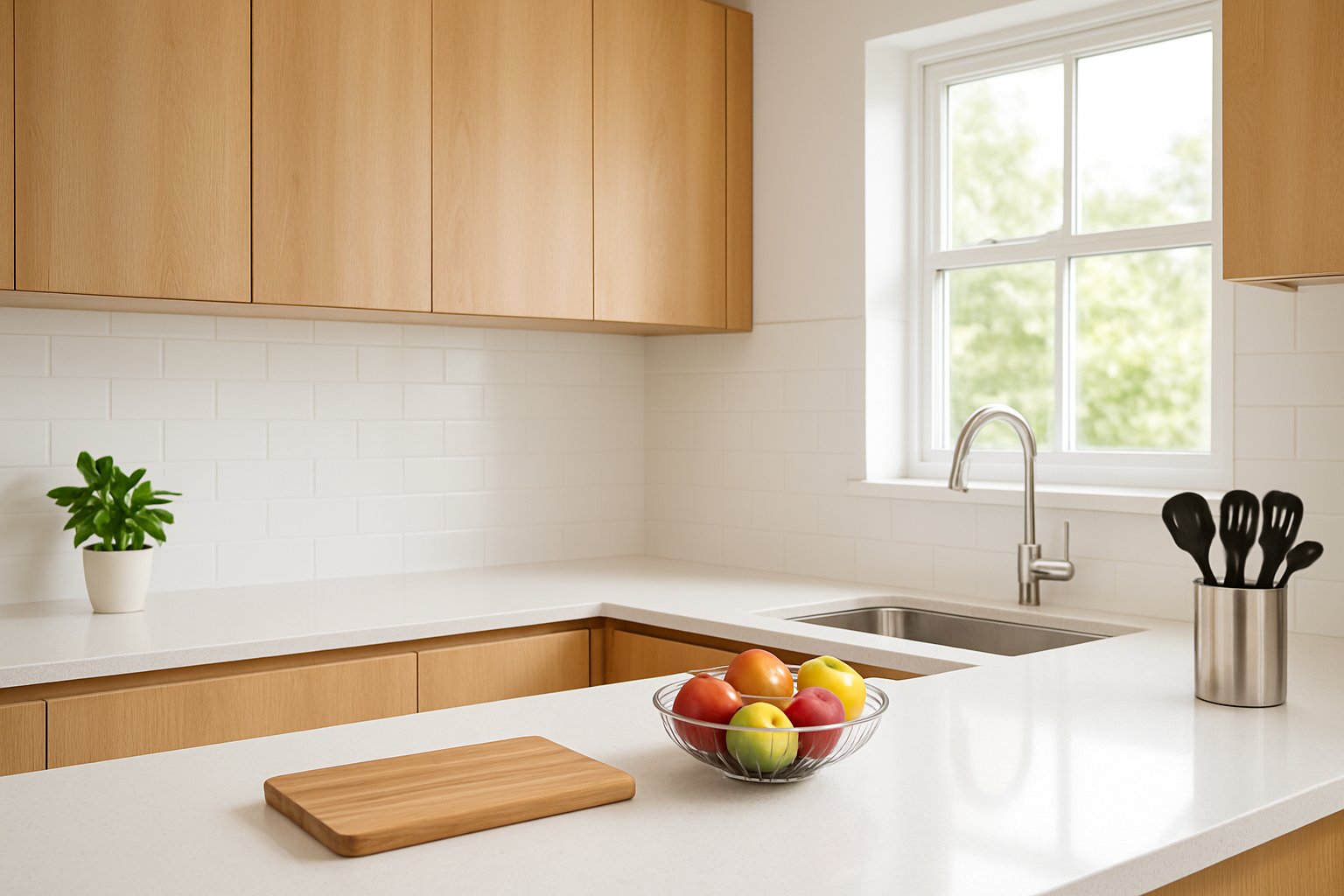
For looks, keep it minimal—maybe a small plant, a nice soap dispenser, or a decorative fruit bowl. In our experience, less really is more. Three things look intentional, six looks like clutter.
What's the secret to keeping a kitchen counter organized when you have limited cabinet space?
Drawer organizers and cabinet risers are essential. When you can stack plates vertically or use dividers for baking sheets, you suddenly free up space that used to get cluttered.
A rolling cart is a lifesaver. Use it for appliances that aren’t daily drivers—the blender, food processor, or waffle maker can live there and roll out of the way when you’re not using them.
Ask yourself if something actually needs to live in the kitchen. If you use an appliance once a month, stash it in the basement or a closet. Cutting down duplicates—like keeping two spatulas instead of five—also frees up surprising space.
Can you suggest daily habits that will help maintain a clutter-free kitchen countertop?
Try the "never leave the kitchen empty-handed" rule: every time you walk out, grab something that doesn’t belong and put it away.
Reset the countertops at least once a day, ideally before bed. Put everything back, sort mail over the recycling bin, and wipe down surfaces. If you do it daily, it takes under five minutes—wait a week, and it’s a half-hour job.
Deal with stuff as it comes in. Unpack groceries right away, sort mail immediately, and wash dishes after each meal instead of letting them pile up. Honestly, putting things away now takes the same time as later, but doing it now saves you from that overwhelming visual chaos.
What are the best organizers or tools to invest in for an always tidy countertop?
A decorative tray or shallow basket gives you a spot to toss things that always seem to end up on the counter—phone chargers, sunglasses, keys, whatever. Instead of letting stuff scatter everywhere, you corral the mess in one spot. Not a bad trick, honestly.
A sturdy utensil crock near the stove just makes sense for those go-to cooking tools. I’d go for one that’s heavy or has a wide base, so it doesn’t topple when you’re in a rush and grab a spatula.
Under-cabinet paper towel holders and mug racks? Total space-savers. They keep things right where you need them but off the actual counter. And if you cook a lot, a countertop compost bin with a charcoal filter is surprisingly handy—no more running outside or dealing with gross-smelling trash.
Honestly, a few solid airtight containers for your everyday pantry stuff—coffee, flour, sugar—make a big difference. They look tidier than random bags and boxes, plus they stack up neatly. I’m partial to square or rectangular ones because they fit together better and don’t waste space.
Share:
How to Organize a Family Kitchen for Stress-Free Cooking
A Guide to Organizing Kitchen Shelves for Easy Access