

Check out our latest home & kitchen collection!
Fresh coffee beans can lose their flavor shockingly fast if you store them wrong, suddenly, your prized beans taste flat and lifeless. Oxygen, light, heat, and moisture are the main culprits, breaking down the oils and compounds that give coffee its unique taste and aroma.
Keep your beans in an airtight container, tucked away in a cool, dark spot far from heat and moisture. That way, you’ll hang onto their best flavor for about two weeks after opening.
Honestly, who hasn’t bought a bag of fancy beans, expecting greatness, only to end up with something that tastes like cardboard after a week? The gap between good and great coffee often depends more on how you store it than on the beans themselves. A lot of us make simple mistakes that slowly strip away the flavor, sometimes without even noticing.
The upside? You don’t need fancy gear or complicated routines. With just a few tweaks to your storage habits, you can keep your beans tasting fresh and vibrant for longer.
Here’s what actually matters, real-world storage tips, mistakes to avoid, and what works for different lifestyles and brewing habits.
Key Takeaways
- Use airtight containers and keep beans away from light, heat, and moisture
- Whole beans stay fresh longer than ground—grind just before brewing
- For best flavor, use beans within one to two weeks of opening
Why Coffee Bean Storage Matters
Coffee beans start losing their best flavors quickly when exposed to the environment. Knowing what causes beans to go stale helps you get the most out of every bag.
The Impact of Oxygen on Coffee Freshness
Oxygen is the main villain here. The moment beans hit the air, oxidation kicks in, breaking down those tasty oils and compounds. This process speeds up fast after you open the bag.
Aromatics are the first to vanish—sometimes in just a few days. The oils that give coffee body and richness stick around a bit longer, but they also fade within two weeks.
While you can’t stop oxidation, you can slow it down. Airtight containers cut oxygen exposure by about 90% compared to leaving beans in an open bag. That means beans can stay fresh for around two weeks in a sealed container, while they’ll go stale in just a few days if left out.
How Storage Affects Flavor and Aroma
Light, heat, and moisture team up with oxygen to ruin coffee. Light causes photodegradation and off-flavors. Heat speeds up all the chemical reactions that make coffee stale.
Moisture is especially brutal—coffee beans soak up water from the air, and even a little bit can make them go musty or moldy. Beans stored in humid places lose their brightness and pick up weird flavors.
Temperature swings cause condensation on the beans, which is just asking for trouble. A cool, steady pantry is way better than a cabinet near the stove that heats up and cools down all day.
CO₂ Degassing and Bean Resting Period
Freshly roasted beans release carbon dioxide for several days. That’s normal, but it complicates storage. Too much trapped CO₂ can make your coffee taste sharp or weird.
Those one-way valves on coffee bags? They let CO₂ escape but keep oxygen out. Beans usually need 24-72 hours after roasting to degas enough for brewing.
Don’t brew beans right after roasting, but don’t wait forever, either. Most beans taste best between 3-14 days post-roast. After that, even the best storage won’t save them from losing their peak flavors.
Key Factors that Influence Coffee Bean Freshness
Coffee beans are up against oxygen, light, temperature swings, and moisture—all of which chip away at their flavor and aroma.
Light Exposure and Opaque Storage
Light breaks down the oils and aromatics in coffee. UV rays are especially harsh—they destroy the flavor molecules we’re trying to protect.
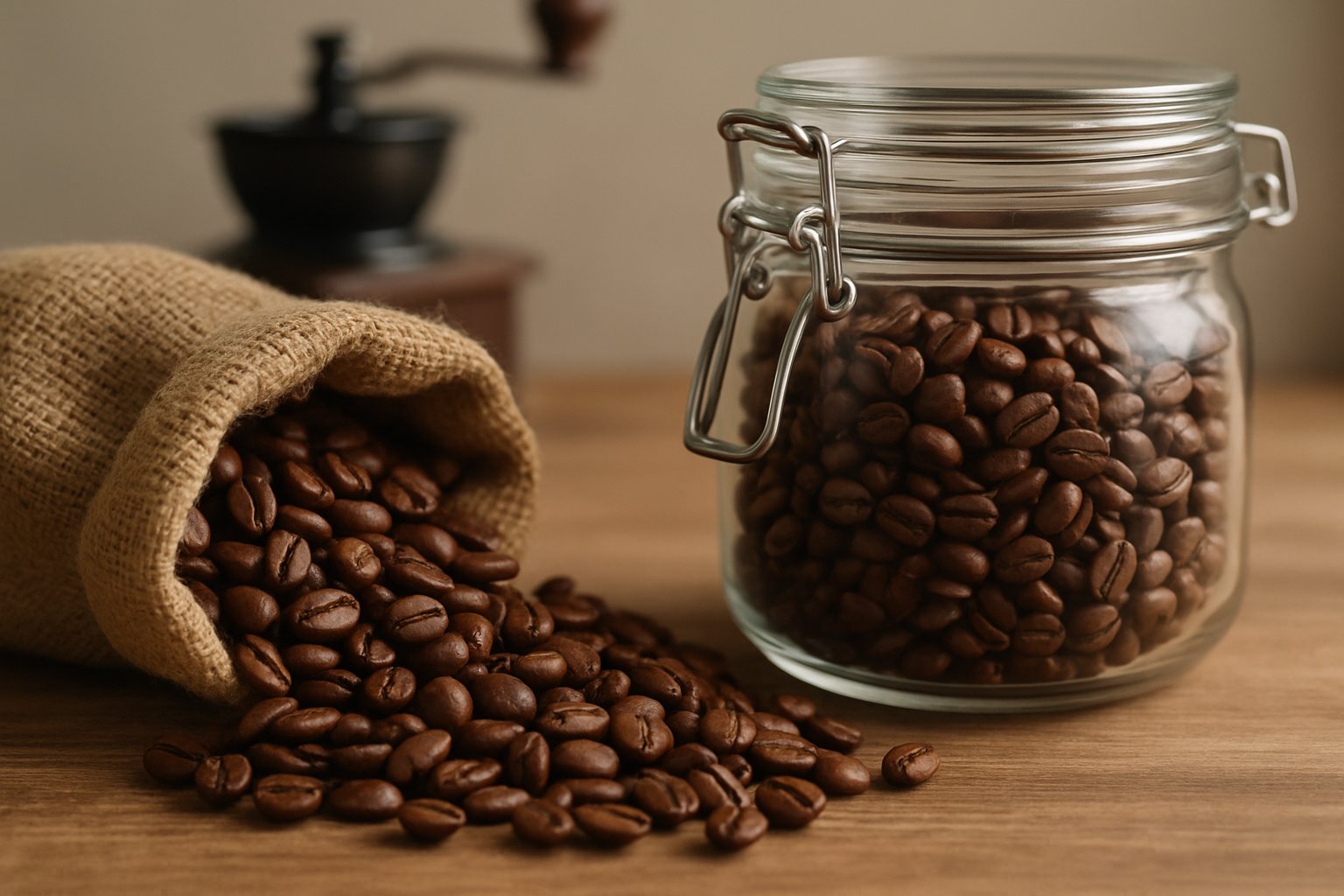
Opaque containers are the way to go. Sure, clear glass jars look nice, but they let in too much light. Even indirect sunlight or overhead lights can mess with your beans over time.
Good opaque storage options:
- Stainless steel canisters with tight lids
- Ceramic containers with rubber gaskets
- Dark glass (amber or cobalt) if you want to see inside
- The original bag, if it’s foil-lined and opaque
If you can, stash your container in a dark pantry or cabinet for extra protection. The less light, the better.
Temperature and Humidity Considerations
Beans do best at room temperature, ideally 50-70°F. Heat speeds up staling and can make oils go rancid.
Keep beans away from the stove, oven, or sunny windowsills. Temperature ups and downs are just as bad as constant heat—they create condensation inside the container.
Humidity is the other big problem. Moisture ruins beans and can even lead to mold. That’s why we don’t recommend storing coffee in the fridge or freezer if you’re using it daily—those places are full of moisture.
A pantry shelf usually beats the countertop. If you live somewhere humid, toss a food-grade silica gel packet in with your beans to help soak up extra moisture.
Understanding Hygroscopic Nature
Coffee is hygroscopic—it absorbs moisture from the air. Humid conditions or even a brief exposure to damp air can make beans go stale and taste flat.
This is why airtight storage matters so much. Every time you open the container, you let in humidity. If you want to be extra careful, portion out just a few days’ worth into a smaller container and leave the rest sealed up tight.
Bags with one-way valves help too, letting CO₂ out without letting moisture in.
Odor Absorption Risks
Coffee beans don’t just soak up water—they grab onto odors, too. That’s why coffee grounds work as fridge deodorizers, but it’s not great when your morning brew tastes like onions or last night’s leftovers.
Beans can pick up smells from:
- Spices and herbs in the same cabinet
- Cleaning products under the sink
- Strong-smelling foods in the fridge or freezer
- Smoke or kitchen odors
A dedicated, airtight container solves most of this. Never store coffee in the fridge with other foods. A sealed container in a pantry keeps the flavors pure.
Best Practices for Storing Coffee Beans
If you want to keep beans tasting their best, you need the right container, a smart storage spot, and a few good habits.
Choosing Airtight Containers
Airtight containers are a must. Oxygen wrecks flavor, so go for containers with a real seal.
Glass jars with gasket lids work for short-term storage, but for longer periods, we’d pick opaque ceramic or stainless steel. Coffee-specific canisters with one-way CO₂ valves are even better—they let gas out but keep air from getting in.
Vacuum-sealed containers, like the Fellow Atmos, go a step further by sucking out the air. They can keep beans fresh for days or even weeks longer than regular airtight jars.
Don’t leave beans in the original bag unless it’s resealable and has a one-way valve. Most paper bags aren’t airtight. If you have to use the original packaging, clip it shut and stick it inside another airtight container.
Tip: Pick a container size that fits the amount of beans you’ll use in a week or two. A half-empty jar means more air inside.
Optimal Storage Locations
Store beans somewhere cool, dark, and dry. A pantry away from heat works great. Kitchen cabinets far from appliances are also good.
Room temp (60-70°F) is ideal. Anything above 75°F speeds up staling, and humidity is a killer.
The countertop is handy but exposes beans to light and temperature swings. The fridge is a no-go—it causes condensation and beans can pick up odors. The freezer? Only use it for long-term storage (over a month), and only freeze beans in single-use, vacuum-sealed portions. Let them come to room temp in the sealed bag before opening to avoid condensation.
Never refreeze beans once you’ve thawed them.
Avoiding Common Storage Mistakes
People make the same storage mistakes all the time. The biggest? Buying too much coffee at once. Whole beans stay fresh for 2-3 weeks after opening, so only buy what you’ll finish in that window.
Grinding ahead of time is another killer—ground coffee loses flavor way faster than whole beans. Grind only what you need for each brew. Pre-ground coffee stales about 15 times faster than whole beans.
Opening and closing your main container all the time lets in air and humidity. Portion out a few days’ worth into a smaller jar and keep the rest sealed.
Don’t store beans near the dishwasher, oven, or coffee maker—those places get hot and steamy. Keep containers at least a few feet from any heat source.
Clear glass jars on the counter look good but let in too much light. If you use clear containers, keep them in a dark cabinet. And once you open a bag with a one-way valve, seal over the valve or put the bag inside another container.
Whole Beans vs. Ground Coffee: What to Store
Whole beans stay fresh way longer than ground coffee. Grinding increases the surface area, speeding up flavor loss. What you store makes a real difference in how long your coffee tastes great.
Benefits of Storing Whole Coffee Beans
Whole beans act like a natural shell, protecting the oils and aromatics inside. Keeping beans whole means less oxygen exposure—the main reason coffee goes stale.
Whole beans usually stay fresh for 2-3 weeks after roasting if you store them right. Ground coffee? It starts losing its best flavors in just a few days. It all comes down to surface area—a whole bean exposes way less to the air than a pile of grounds.
Whole beans give you flexibility, too. Need a coarse grind for French press today and fine for espresso tomorrow? No problem. Pre-ground locks you in.
They’re easier to store, less likely to clump, and don’t cake up like ground coffee. A grinder is your best friend—fresh grind, better taste, every time.
Drawbacks of Pre-Ground Coffee
Pre-ground coffee loses its aromatics crazy-fast. Grinding creates tons of surface area for oxygen to attack. What takes weeks to go stale in whole beans happens in days with ground.
Pre-ground is convenient, sure, but you pay for it in flavor. Ground coffee keeps its best taste for only 1-2 weeks, even in an airtight jar. The good stuff—those oils and aromatics—evaporates fast.
Ground coffee also absorbs moisture and odors more easily. It can pick up weird flavors from nearby foods or get stale faster if the air’s humid. The fine powder makes it extra vulnerable.
Plus, you can’t check the grind or freshness when you buy pre-ground. Different brew methods need different grinds, and pre-ground almost never matches your coffee maker perfectly.
Grinding Just Before Brewing
Grinding right before brewing locks in coffee’s peak freshness. Those wild, fragrant aromas that burst out when you grind? They’re strongest in the first few minutes—exactly when you want them, not fading away on the countertop.
A burr grinder beats a blade grinder for getting even coffee grounds. Consistency matters; if your grounds are all over the place, you’ll end up with a cup that’s either too bitter or just plain weak. We only grind what we need, whether it’s a single mug or enough for a crowd.
You can really taste the difference between coffee ground fresh and coffee ground yesterday. Grinding right before brewing keeps the bright, complex flavors alive—the stuff that makes specialty coffee worth fussing over. The smell alone is a dead giveaway.
It does mean owning a grinder and spending another minute or two prepping, but honestly, that’s a small price for a better cup.
Advanced Coffee Storage Techniques
If you want to keep beans fresh longer, there are some next-level storage tricks out there. These go beyond just a sealed jar—they’re designed to fight off the usual coffee enemies: oxygen, moisture, light, and heat.
Using One-Way Valve Bags
One-way valve bags tackle a specific issue with freshly roasted beans. After roasting, coffee releases CO2 for days—sometimes up to two weeks. Without a valve, this gas just builds up, making bags puff out or even pop.
The valve lets CO2 escape but keeps oxygen out. That means you can seal up beans right after roasting—no worries about bursting bags or stale coffee. Most pros use these bags, but you can grab them for home too.
For best results, push out any extra air before you seal the bag. Roll it up from the bottom, squeeze out the air, and let the valve do its job. Stash these bags in a cool, dark spot away from heat. They’re perfect if you’ll use the beans within a couple weeks—not for long-term stashing.
Vacuum Sealing and Specialized Canisters
Vacuum-sealing nearly eliminates oxygen, which really slows down staling. The Fellow Atmos canister, for example, has a twist lid that actually pulls air out, not just seals it in. Give it a twist, air gets sucked out, and your beans stay safe.
Some canisters use pumps or plungers instead. The big difference from regular containers is that these actively remove air, not just trap whatever’s inside. Tests show vacuum storage can keep beans tasting fresh for an extra week or two.
Match canister size to how much coffee you use. If you store a little coffee in a huge canister, there’s still plenty of air in there. A few smaller canisters beat one big one. And don’t forget—light still hurts coffee, so use opaque or UV-blocking containers even if you vacuum seal.
When and How to Freeze Coffee Beans
Freezing is an option for long-term storage—think more than a month—but you have to do it right. Divide beans into single-use portions before freezing. Don’t keep opening and closing the same bag; that just invites in moisture.
Seal each portion in vacuum bags or double up with freezer-safe, airtight bags. Moisture is the real enemy here, so waterproof packaging is critical. Jot down the roast date and origin on each bag.
When you’re ready to use some, pull out a portion and let it warm up to room temp (30-60 minutes) before opening. That way, you avoid condensation on the cold beans. Once thawed, keep them at room temperature and use within a week. Don’t refreeze.
If you’ll use the beans within a month, just store them properly at room temperature. Freezing is more hassle than it’s worth for short-term storage.
Optimizing Storage for Different Coffee Types and Lifestyles
How you store coffee depends on the beans, your climate, and how you brew. Here’s how to tweak storage for roasted beans, humid places, and different prep styles.
Roasted Coffee Beans Storage Tips
Roasted beans hit their sweet spot 2-14 days after roasting, depending on roast level. Light roasts usually peak sooner, while dark roasts need a little more time to degas. Always look for bags with the roast date, not just a vague “best by.”
Freshness timeline:
- First week: Keep in the original bag with a valve (tape it shut after opening)
- Weeks 2-4: Move to an airtight container, store in a dark spot
- After 4 weeks: Flavor drops off fast
Dark roasts fade quicker than light ones. The roasting process makes them more porous, so they lose CO2 and soak up oxygen faster. If you buy several bags, keep unopened ones sealed tight and only open what you’ll use in two weeks.
Don’t mix old beans with new ones. Stale beans can actually speed up the decline of fresh ones thanks to moisture and oil transfer.
Coffee Storage for High-Humidity Climates
Humidity and coffee don’t mix. Beans soak up moisture super fast, which can mean mold and stale flavors—sometimes in just days if you live somewhere tropical.
In humid spots (over 60% humidity), vacuum-sealed containers are your friend. The Fellow Atmos or similar canisters pull out air and block moisture. If you’re on a budget, double up: put beans in a sealed bag, then inside an airtight container with a silica gel packet.
Tips for high humidity:
- Use containers with rubber gaskets
- Toss in food-safe silica packets (swap them monthly)
- Store coffee away from windows and outside walls
- Check beans every week for condensation or weird smells
- Break up your stash into smaller amounts so you use them quicker
If it’s always hot and sticky (over 80°F and 70% humidity), the fridge can actually help. Just make sure beans are in a truly airtight container and only take out what you’ll use in a couple days. Let beans come to room temp before opening to dodge condensation.
Adapting Storage for Various Brewing Methods
How you brew changes how you should store and grind your beans. Espresso lovers, you need the freshest beans possible—high pressure brings out both the best and worst in coffee.
Espresso: Buy small bags (8-12 oz) and use them up within 10 days of roasting. Always grind just before brewing. Even a 15-minute wait after grinding can kill your crema.
Pour-over and drip: These are more forgiving. Buy up to a couple pounds and use within three weeks. Grind just before brewing for the best flavor, but if you’re desperate, grinding the night before won’t totally ruin things.
French press and cold brew: Larger grinds don’t stale as fast. You can grind enough for 2-3 days at a time and store the grounds airtight. Cold brew actually works well with beans that are a week or two past their best—long steeping pulls out plenty of flavor even from slightly older beans.
If you use coffee pods, just keep them in their original sealed packaging in a drawer or cabinet. Once you open them, use within a month.
Frequently Asked Questions
Coffee storage brings up a lot of practical questions—what really works, what’s just hype, and how to keep your beans tasting great.
What's the scoop on keeping coffee beans fresh for months? Does it really work?
You can keep whole beans fresh for 6-9 months if they’re sealed up airtight and stored somewhere cool and dark. But once you open the bag, you’ve got maybe 2-4 weeks before the flavor starts to fade.
As soon as beans hit air, they start losing their punch. An opaque, airtight container helps by blocking oxygen, light, and moisture.
If you never open the original sealed package, beans can last up to a year. But once that seal breaks, the countdown starts. Write the roast date on your container so you know where you stand.
Is it cool to just stash my coffee beans in the fridge, or is that a no-go for flavor?
Nope, don’t do it. Coffee soaks up moisture and smells from its environment like crazy.
Fridges are full of humidity and all sorts of odors—leftovers, veggies, who knows what else. Those smells will sneak into your beans, and you might end up with garlic-scented coffee. Not ideal.
Moisture in the fridge also speeds up staling. Stick to a pantry or cabinet—dry, dark, and away from strong smells is the way to go.
I've got an airtight container; how long will it be my coffee beans' flavor-saving hero?
A truly airtight container keeps whole beans fresh for about 6 months after opening. But it’s only as good as its seal—those loose lids don’t cut it.
Look for containers with rubber seals or vacuum features. Glass jars with clamp lids, stainless steel canisters, or containers designed for coffee work best.
Pre-ground coffee just doesn’t last as long, even in a perfect container. You’ll get days, maybe a week, before the flavor drops off. If you can, always buy whole beans and grind as needed.
Can freezing my coffee beans actually lock in the taste, or is it just a frosty myth?
Freezing beans is a hot topic. Cold temps do slow staling, but moisture can sneak in and mess with flavor.
The big problem is condensation. If you keep taking beans in and out of the freezer, they’ll get wet, and that ruins the oils and flavors.
If you freeze, do it once with a big batch in a freezer-safe, airtight container. Only thaw what you’ll use in a week or two. Don’t keep refreezing. Honestly, for most of us, buying smaller amounts and storing them well at room temp works better than freezing.
Does keeping my beans in the original bag preserve their kick, or should they move out?
If the bag has a one-way valve and you seal it tight after each use, it’s fine for a week or two. Those valves let gases out but keep oxygen from getting in.
But most bags aren’t totally airtight or opaque after you open them, even if you fold and clip the top. The seal just doesn’t hold up.
You’ll get better results moving beans to an airtight, opaque container as soon as you open the bag. If your bag has a ziplock and a valve, you can keep using it—just make sure it’s really sealing each time.
What's the real deal on storing beans long-term without turning my cuppa into a blah brew?
If you want beans to last, stash them in a sealed package somewhere cool, dark, and dry. Whole beans can hang in there, unopened, for about a year under the right conditions.
But crack that seal, and freshness starts slipping away. Honestly, it's smarter to buy only what you'll use in 2-4 weeks. Toss 'em in an airtight container, keep them away from heat and sunlight, and you'll notice the difference in your cup.
Got a mountain of beans or just couldn't resist a good deal? Try splitting them up into smaller airtight containers. Open one at a time—less air hits the beans, and your coffee stays lively longer.
Skip the fridge or freezer. They sound tempting, but a pantry or cabinet—somewhere away from the stove, dishwasher, or windows—just works better. Beans like it stable and dry. Your taste buds will thank you.
Share:
How to Label Kitchen Containers for Long-Term Organization
How to Organize a Family Kitchen for Stress-Free Cooking