

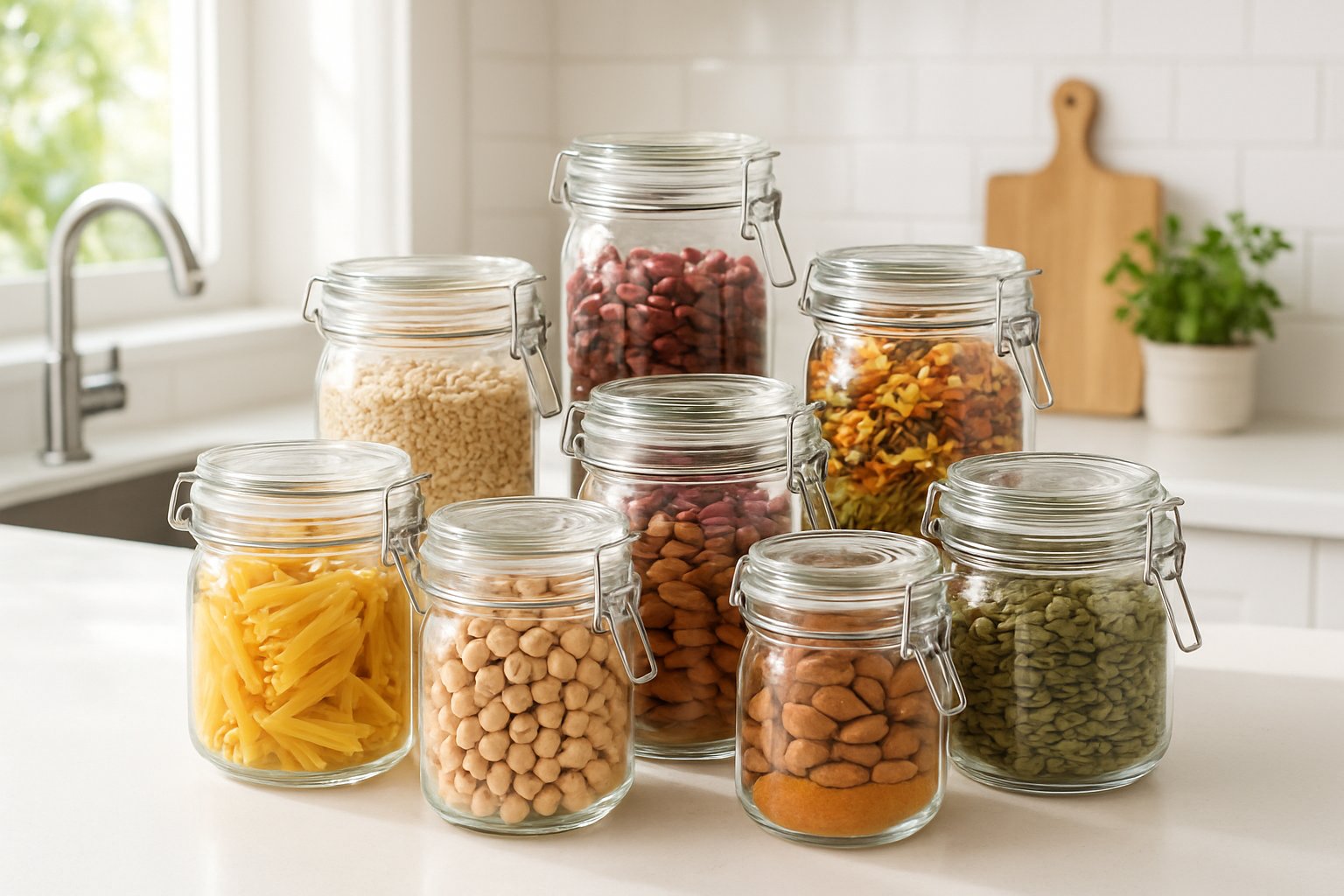
Check out our latest home & kitchen collection!
The kitchen is where we prep meals for ourselves and our families, so the containers we pick for storage really do matter, probably more than we realize.
Plastic containers? They get scratched up, trap bacteria, leach weird chemicals into food, and just add to the mountain of environmental waste.
Glass storage jars, on the other hand, offer a cleaner, safer alternative with a non-reactive surface that keeps food pure, plus they're way more durable and endlessly reusable.
Honestly, who hasn't dealt with a stained plastic container that smells like last week's chili, no matter how hard you scrub? Glass jars just don't have that problem.
They won't hold onto odors or stains, they're fine in the dishwasher, and they don't break down or get weird over time like plastic does.
Switching to glass storage jars isn't just about aesthetics or keeping up with trends. It's about making the kitchen a safer place, cutting down on waste, and making life a little easier when it comes to staying organized.
Whether you're stashing dry goods, canning homemade sauces, or prepping meals for the week, glass jars earn their keep every single day.
Key Takeaways
- Glass jars won't leach chemicals into food and offer a non-reactive surface that keeps flavors true.
- Airtight seals and the non-porous nature of glass preserve freshness, block odors, and stop stains.
- Glass containers last for years, can be recycled over and over, and outshine single-use plastic for sustainability.
Why Glass Storage Jars Are the Safer Choice
Glass storage jars cut out the chemical risks that come with plastic and give us a surface that just won't trap odors or let bacteria hide. Glass is inert, so our food stays as it should—pure, uncontaminated, and tasting like itself.
Avoiding Harmful Chemicals Like BPA and Phthalates
Using plastic containers for food storage means risking exposure to chemicals like BPA and phthalates. BPA (bisphenol A) is linked to hormonal issues, which is why "BPA-free" labels are everywhere now. But here's the kicker: those BPA-free plastics often swap in BPS or BPF, which might not be much better.
Heating plastic or storing acidic or fatty foods in it? That's when the leaching gets worse. That tomato sauce sitting in a plastic tub? It's probably picking up some unwanted extras. And if the plastic is scratched or old, the risk jumps.
Glass jars avoid all of this. No BPA, no phthalates, no sneaky substitutes. Store hot soup, lemon juice, or oily dressings—nothing's going to leach into your food.
Non-Porous and Odor-Free Qualities
Glass jars have a super smooth, non-porous surface, so food bits and bacteria can't hide in tiny cracks. Plastic, on the other hand, is porous and grabs onto odors and stains that never truly come out.
We've all had that plastic container that smells like garlic forever or is stained orange from curry. If it smells or looks weird, it's interacting with your food—never a good sign. Plus, those tiny pores are perfect hiding spots for bacteria.
Glass jars come out of the dishwasher spotless and don't hold onto any old smells. Store fish one day, berries the next—no flavor crossover. They keep looking new, too, even after years of use.
Food Safety With Inert Materials
Glass doesn't react with anything you put in it. That means your food keeps its real taste and nutrition, without any weird aftertaste or chemical reactions. Whether it's acidic pickles, beans, or nut butters, glass just stays stable.
What you put in is what you get out. No plastic taste, no chemical surprises, no flavors getting weird over time. This matters even more for long-term storage or preserves like jams and ferments.
Plastic can mess with food on a molecular level, especially if you heat it or let it sit for a while. Glass lets you relax, knowing your food is safe from storage to table.
Preserving Freshness and Flavor With Airtight Seals
Airtight seals on glass storage jars keep oxygen, moisture, and random contaminants out, which helps food keep its flavor, texture, and nutrition.
How Airtight Lids Keep Food Fresh
Seal food in a jar with a good airtight lid, and you keep oxygen out. Oxygen causes fats to go rancid, colors to fade, and flavors to get dull.
Most good glass jars use silicone or rubber gaskets for a tight fit. Close the lid right, and air can't sneak in or out. Want to check the seal? Fill the jar with water, flip it upside down—no drips means you're good.
Common airtight seal types:
- Clamp-seal jars with rubber gaskets and metal clips
- Screw-top jars with flat disc lids and metal rings
- Twist-lid jars with silicone gasket inserts
For dry stuff like flour or nuts, airtight seals keep things from going stale. For leftovers, they slow down bacteria and keep your food tasting like you made it.
Moisture Prevention and Mold Resistance
Moisture is the enemy of stored food. Even a little humidity can ruin dry goods or let mold take hold. Airtight glass jars keep outside moisture away.
Seals work both ways, too—they keep moisture in when you need it, so things like cheese or veggies don't dry out in the fridge. We've all found sad, dried-out veggies—proper sealing helps avoid that.
Mold needs moisture and air. By blocking both, airtight jars make mold much less likely. That's especially handy for bread, baked goods, or produce you keep at room temp.
Maintaining Nutritional Value and Taste
Fresh food is full of vitamins and oils that break down when exposed to air or light. You might not notice it right away, but over time, both nutrition and taste suffer.
Airtight seals slow this down. Vitamin C, for example, disappears quickly if left in open air. Essential oils in spices fade when containers aren't sealed. Ever opened paprika and found it dull and lifeless? That's why.
With glass and a solid seal, you get the best results: no chemical leaching, no lost aromas, just food that stays fresher longer. Open a jar of coffee beans weeks later, and the smell is still there—just like it should be.
Glass Jars vs. Plastic Containers: A Clear Winner
Stack up glass jars against plastic for kitchen storage, and the differences jump out. Glass holds up better over time, doesn't bring health risks, and stays clean and clear without staining or picking up odors.
Comparing Durability and Longevity
Plastic containers warp, crack, and get gross after a few dishwasher runs or a spin in the microwave. They just don't hold up.
Glass jars—especially tempered or borosilicate ones—keep their shape and clarity for years. They don't scratch up, so bacteria can't hide. The surface stays smooth and easy to clean.
Sure, glass can break if you drop it, but honestly, with normal use, a set of glass jars will usually outlast several rounds of plastic. Some folks have glass jars from their grandparents that still work just fine. Usually, it's the lids that give out before the glass does.
Glass jars cost a bit more upfront, but since you don't have to keep replacing them, they end up being cheaper in the long run.
Health and Environmental Advantages
Plastic containers come with health risks. Many still have BPA (bisphenol A), which messes with hormones. Even "BPA-free" plastic often has similar chemicals like BPS or BPF, and phthalates—none of which you want in your food.
Plastic is porous and can leach chemicals, especially when heated or used for acidic or oily foods. That stained container isn't just ugly—it's soaked up stuff from your food and might give it back.
Glass is inert and non-porous. No leaching, no matter what you store or how hot or acidic it is. Tomato sauce, lemon juice, olive oil—no worries.
Environmentally, glass is a winner. It's 100% recyclable, forever, without losing quality. The same jar can be melted and remade endlessly. Plastic usually gets "downcycled" into lower-quality stuff, and most of it ends up in landfills, sticking around for centuries.
Stain and Odor Resistance
Glass jars just don't stain. Store turmeric, tomato sauce, whatever—you won't see a trace after washing. Plastic grabs onto colors and oils and never lets go.
Odors can't get into glass. We've all opened a plastic container that still reeks of last week's leftovers. Glass? No problem. It comes out of the dishwasher fresh every time.
Cleaning glass jars is easy. Food rinses off, they handle high temps in the dishwasher, and you don't get that cloudy film plastic develops. Less scrubbing, less hassle.
This resistance means your glass jars look and smell new after every wash, ready for whatever you want to store next.
Kitchen Organization Made Effortless
Glass storage jars bring order to messy pantries and fridges with their clear walls and stackable shapes. You can spot ingredients in a second, keep shelves looking sharp, and customize each jar for your needs.
Transparent Design for Easy Identification
Clear glass means no more guessing what's inside. You can see if you're running low on flour or beans without opening anything. That saves you from buying duplicates and helps cut food waste—nothing gets lost in the back.
Glass jars are great in the fridge, too. The lighting makes it easy to spot leftovers and meal preps. Layer salads, overnight oats, or veggies—it's all visible. When you can see everything, you're more likely to use it up before it goes bad.
Uniformity for a Tidy Pantry and Fridge
Mismatched containers make shelves look chaotic, even if they're organized. Glass jars with matching lids and shapes turn random ingredients into a tidy system. Square or rectangular jars save space by fitting snugly, while round ones are easy to grab for everyday use.
Stackable glass containers make the most of vertical space in deep cabinets or narrow pantries. Build stable stacks of pasta, rice, snacks—whatever you need. The uniform look makes it easier to keep things organized, and honestly, it's just more satisfying to put things away when it looks this good.
Labeling and Customization Tips
Chalkboard labels let you change jar contents easily—handy when you swap out ingredients. Vinyl labels look sleek and stick well to glass. Add purchase dates or expiration info to keep track of freshness.
For a minimalist vibe, write directly on the glass with chalk markers or dry-erase pens. It wipes off when you want to relabel. Pre-printed label sets save time, but custom labels let you match your actual pantry. Place labels at eye level so you can read them when jars are stacked or lined up.
Eco-Friendly and Sustainable Storage Solutions
Glass storage jars give you a way to cut kitchen waste and save money over time. They're built to last, can be endlessly recycled, and just make sense if you're trying to shrink your environmental footprint.
Endless Reusability and Recyclability
Glass containers can handle hundreds of uses without getting gross. Wash them in the dishwasher, use them for canning, freeze them, whatever—they won't leach chemicals or fall apart.
When a glass jar finally reaches the end of its life, it's 100% recyclable. It can be melted and remade into new jars or bottles again and again, with no loss in quality. Plastic, by contrast, gets worse each time it's recycled and usually ends up in a landfill after a few rounds.
Repurposing glass jars is easy, too. Old jam jars become spice holders, craft organizers, or even drinking glasses. Their versatility means they keep getting used, long after their original job is done.
Reducing Plastic Waste
Switching to glass storage jars cuts out disposable plastic containers and bags. Every jar we start using saves dozens of single-use plastic items from ending up in the trash each year.
Glass storage containers don’t add to the plastic mess in our oceans and ecosystems. Choosing glass really does shrink our household’s share of the estimated 8 million tons of plastic waste dumped into marine environments annually.
A typical household can drop overall waste by as much as 30% by moving to glass jars. That means fewer garbage bags, less frequent trash pickups, and a noticeably smaller carbon footprint.
Long-Term Value and Cost Efficiency
Glass jars cost more upfront than disposables, but honestly, the savings show up fast. A good set of glass containers can last decades, so you’re not stuck buying new plastic ones all the time.
Most households save $200–$300 a year by switching to reusable glass. We’re not constantly tossing out warped or stained plastic containers, and we can skip buying new disposable bags and wraps month after month.
It’s also easier to avoid food waste with glass jars since you can see exactly what’s inside. No more mystery leftovers rotting in the back of the fridge. That visibility helps us use up ingredients before they go bad and keeps us from buying duplicates at the store.
Types and Features of Glass Storage Jars
Glass storage jars come in all sorts of shapes and sizes to fit your kitchen routine. From the width of the mouth to the size of the jar, these details can actually make a difference in how smoothly your daily cooking goes.
Wide-Mouth Jars for Easy Access
Wide-mouth jars, usually with openings of 3 inches or more, are a game changer when you’re reaching for flour at dawn or trying to grab the last pickle. We find them essential for chunky foods like pickles, whole fruits, or granola—narrow openings just make things harder than they need to be.
Cleaning is way easier too. You can get your whole hand in there to scrub, unlike regular-mouth jars that make you wrestle with bottle brushes. This design is great for sticky stuff like nut butters, honey, or overnight oats that need a spatula.
A lot of wide-mouth jars fit standard mason jar lids, so you can swap between solid lids and pour spouts without buying more jars. Sure, they take up more space, but the convenience is worth it for things you grab often.
Varieties and Sizes for Every Need
You’ll find glass jars as tiny as 2 ounces for spices, all the way up to gallon-sized monsters for bulk storage. The little ones (2–8 oz) are perfect for herbs and spice blends. Medium jars (16–32 oz) are just right for rice, pasta, and coffee beans. The big guys (64 oz and up) handle flour, sugar, or anything you buy in bulk.
Some common shapes:
- Straight-sided jars—even width, easy to fill and clean
- Mason jars—slight taper, threaded mouths
- Bail-lid jars—hinged wire closures with rubber gaskets
- Hexagonal jars—stack well and don’t roll
Closure systems matter too. Two-piece mason jar lids seal tight for canning. Continuous thread lids work for everyday use. Bail-lid systems clamp down for a super-tight seal, which is great for stuff like coffee or flour that needs to stay dry.
Best Practices for Use and Care
Glass jars can go in the dishwasher, but hand-wash lids with rubber gaskets to make them last longer. Don’t pour boiling liquids into a cold jar or set hot jars on cold counters—sudden temperature changes can crack them.
Keep jars out of direct sunlight to protect what’s inside. Label them with the contents and date using removable labels or glass markers. For staples, it helps to store jars with labels facing out at eye level for quick grabs.
Check rubber gaskets and seals every few months. Swap out any that crack or lose their stretch. When stacking, put heavier jars on the bottom shelves and don’t stack more than two high—no one wants a jar avalanche.
Frequently Asked Questions
Glass jars offer chemical-free storage and solid seals that keep nutrients and flavors intact while helping us cut down on waste. Knowing these perks can make it a lot easier to decide if it’s time to overhaul your kitchen storage.
Why are glass jars considered superior for storing food long-term?
Glass jars are awesome for long-term storage because they’re non-porous and inert. Unlike plastic, which can break down or absorb smells, glass holds up for hundreds of uses without getting stinky, stained, or cracked in sneaky ways that trap bacteria.
They don’t fall apart with heat, cold, or acidic foods. We can stash tomato sauce or pickles without worrying about the container messing with our food.
With a good seal, glass jars can keep food fresh for months—or even years. They work for canning, fermenting, freezing… you name it. If you’re serious about food storage, nothing beats glass.
What safety concerns are addressed by using glass containers over plastic?
Glass takes away the worry of chemicals leaching into your food. Plastics can release things like BPA and phthalates, especially when heated or holding acidic stuff.
With glass, you just don’t have to think about that—it’s chemically inert and won’t react with what you put inside, no matter the temperature or acidity.
Plus, you can see what’s inside right away. If something’s gone bad, you’ll spot mold or weird colors before opening the jar, which helps you steer clear of spoiled food.
How does the sealing mechanism in glass jars contribute to food preservation?
Modern glass jars use airtight seals—rubber gaskets or metal clamps—that create a vacuum. This keeps oxygen out, stopping oxidation and bacteria from spoiling your food.
A good seal also locks in moisture, so food stays fresh. That’s especially important for fruits and veggies you want to keep crisp.
These sealing systems hold up through years of use. Unlike plastic lids that warp or stop fitting, a well-maintained glass jar seal can last for decades.
Can you explain how glass storage helps maintain flavor and nutritional value?
Glass doesn’t soak up or transfer flavors, so you can store pungent stuff like kimchi, then use the same jar for jam later—just wash it well and you’re good.
The airtight seal keeps oxygen out, which helps preserve vitamins and minerals. Nutrients stay stable in the low-oxygen environment glass jars provide.
If you use amber or colored glass, you also protect food from light, which can break down sensitive nutrients and shorten shelf life for things like dried herbs or oils.
In what ways are glass jars more environmentally friendly than their counterparts?
Glass jars can be reused almost endlessly without losing quality. That means no more single-use plastic containers piling up in landfills after a few uses.
Households can cut their waste by up to 30% with glass storage. That’s hundreds of plastic containers a year that never hit the trash.
And when a glass jar finally does break, it’s fully recyclable. Unlike plastic, which gets weaker every time it’s recycled, glass can be made into new jars over and over without losing quality.
What are some creative ways to organize your pantry using glass jars?
Uniform jar sizes just look good, don’t they? They help you stack things neatly and make the shelves feel calm instead of chaotic. You can sort by food type, color, or even how often you use something—whatever works for your brain and your space.
Labels are your friend here. A swipe of chalkboard paint or a simple sticker label makes it easy to keep track of what’s inside and when you bought it. That way, you’re not accidentally buying a third bag of quinoa or letting the rice get stale in the back.
Why not turn your staples into a little display? Stick the flour, sugar, and pasta in matching jars right on open shelves. It’s practical, but it also looks kind of charming—plus, you don’t have to dig for what you use all the time.
Try grouping similar things together—maybe all the baking stuff in one spot, snacks in another, grains off to the side. With glass jars, you can see exactly what’s running low, so there’s less guesswork when you’re making your grocery list.
Share:
How to Design a Kitchen Layout That Supports Daily Cooking
How to Properly Store Leftovers to Extend Their Shelf Life