

Check out our latest home & kitchen collection!
Moisture control might sound technical, but honestly, it's something we deal with all the time, usually without thinking much about it.
That bag of chips that went limp after a sticky summer day, strawberries getting fuzzy in the fridge, or crackers that lost their crunch because someone left the box open? All moisture problems.
Knowing how to manage moisture in food storage is what keeps food fresh for weeks instead of letting it spoil in days.
We usually think of food storage as just keeping stuff cold or sealed up, but there's more to it. Different foods need their own humidity sweet spots. Fresh veggies love humidity; crackers, not so much. If you get it wrong, you end up tossing food, and money, way too soon.
But here's the thing: you don't need fancy gadgets or a science background to get moisture control right. With a little know-how about how water messes with food, and some practical tricks, you can keep your groceries tasting great for much longer.
Key Takeaways
- Moisture levels play a huge role in whether food stays good or spoils fast—bacteria and texture changes are the main culprits
- Different foods need different humidity: fresh produce likes 80-95%, dried goods want less than 15%
- You can manage moisture with good packaging, temperature control, and a few storage hacks—no lab coats required
Why Moisture Control Is Essential for Food Storage
Moisture control really decides how long your food stays fresh and safe. If you handle water content right, you block microbes, keep good texture and flavor, and avoid a bunch of health risks.
Impact on Food Quality and Freshness
Moisture can make or break stored food. Leave crackers or chips out in the humid air, and they'll lose their crunch in no time. Bread dries out and gets hard if it loses too much water, but goes moldy if there's too much moisture.
Texture is a big one—fresh veggies wilt and get floppy when they lose water. Meats get freezer burn if exposed to air, turning dry and patchy. That ruins taste and looks.
Moisture affects:
- Texture: Crunch, firmness, tenderness
- Appearance: Color and how appetizing it looks
- Flavor: Strength of taste, no weird off-flavors
- Aroma: That “fresh” smell
Dried herbs and spices lose flavor if they get damp and clump up. Sugar and salt suck up humidity and turn into hard lumps. Even coffee beans or tea leaves can go stale or taste musty if they sit in a moist kitchen.
Moisture and Food Spoilage
Food spoils way faster when it's too wet. Bacteria, mold, and yeast love moist places. We've all seen moldy strawberries or slimy lunch meat that sat in the fridge too long.
Most spoilage bugs need water to grow. Keep things dry, and they can't take over. That's why stuff like pasta, rice, and jerky last forever if you store them right.
Different foods have their own weak spots. Grains and flour can get moldy or buggy if humidity goes over 60%. Produce rots if water collects in its container. Cheese gets weird mold if you wrap it wrong, and cured meats can go slimy or spoil on the surface.
Influence on Food Safety and Foodborne Illnesses
Moisture control isn't just about keeping things tasty—it's a big deal for safety. Bad bacteria like Salmonella, E. coli, and Listeria need moisture to multiply. Let humidity get out of hand, and you’re basically inviting trouble.
Food poisoning often starts with moisture problems in storage. Raw chicken in a wet container can grow bacteria in a matter of hours. Cooked rice left out in a humid kitchen? That’s a classic setup for Bacillus cereus, which nobody wants.
Most of these headaches are avoidable. Refrigeration helps by keeping both temperature and moisture in check. Airtight containers keep dry stuff safe from humidity. If you’re really into it, a cheap hygrometer can help you keep pantry humidity in the 30-50% zone, which is pretty good for most things.
The Science Behind Moisture and Humidity in Storage
Temperature decides how fast bacteria grow, but humidity is what makes food dry out or turn into a petri dish. Water activity is what matters for microbes, and condensation can turn even the cleanest container into a soggy mess.
Understanding Humidity: Relative vs. Absolute
Absolute humidity is just how much water vapor is in the air, measured in grams per cubic meter. Think of it as the total “wetness” floating around. Relative humidity is a percentage—it compares current moisture to the max the air can hold at a certain temperature.
Here's a weird thing: cool the air down and its capacity to hold water drops fast. Air at 20°C with 10 grams of water per cubic meter might be 50% humidity, but chill it to 5°C and suddenly you’re at 90% humidity, even though you didn’t add water. That’s why fridges feel damp even though they're cooling and drying the air.
Most veggies like 90-95% humidity, but bread prefers 50-60%. It’s not one-size-fits-all.
Water Activity and Its Role
Water activity (aw) is a scale from 0 to 1.0, showing how much water is “free” for microbes and reactions. Pure water is 1.0, bone-dry stuff is close to zero. It’s more important than total water content for spoilage.
Bacteria need aw above 0.90, mold likes 0.80+, yeast can survive down to 0.75. Fresh meats are 0.98-0.99—no wonder they spoil fast. Dried fruits are around 0.60, so they hang in there much longer.
You can lower water activity by chilling, adding salt or sugar, or drying stuff out. That makes water less available for spoilage, even if the air’s humidity stays the same.
Moisture Transfer and Condensation
Moisture always tries to move from wetter to drier areas. Put warm food in a cold fridge, and you’ll get condensation—water vapor turns into droplets on cooler surfaces.
Condensation usually happens when:
- You open the fridge a lot and let warm air in
- You store uncovered liquids or wet produce
- Air doesn’t move well, so cold spots form
- You mix warm and cold stuff together
The dew point is when air gets so saturated it can’t hold more water, and condensation starts. In fridges running 0-4°C, even minor temp swings can make water appear. That’s why you find puddles under the crisper or drips on lids.
Airtight containers help by blocking air exchange, but you should let food cool before sealing it. Trap warm food, and you trap moisture, which can speed up spoilage.
Optimal Humidity Levels for Different Foods
Different foods need different humidity. What keeps lettuce crisp will ruin crackers, and bread’s happy place will shrivel carrots. Get it right and food lasts. Get it wrong and, well, you know how that goes.
Vegetables and Crisper Drawers
Most veggies love high humidity—90-95% is the sweet spot for greens, broccoli, carrots, cucumbers. That’s why fridges have those crisper drawers you can adjust.
Set the high-humidity drawer for veggies that dry out fast. Shut the vents to trap moisture. Peppers, zucchini, green beans—they all do well here.
But not all produce plays by the same rules. Mushrooms and herbs can get slimy if it’s too wet, so give them some air. Wrapping them in paper towels helps soak up extra moisture without drying them out.
A few veggies—onions, garlic, winter squash—actually prefer lower humidity (60-70%). They do best in a cool, dry spot outside the fridge. Potatoes too—high humidity plus starch is a recipe for spoilage.
Grains, Cereals, and Dried Fruits
Grains and cereals want it dry—10-15% humidity is ideal. More than that, and you risk mold, bugs, or rancid flavors.
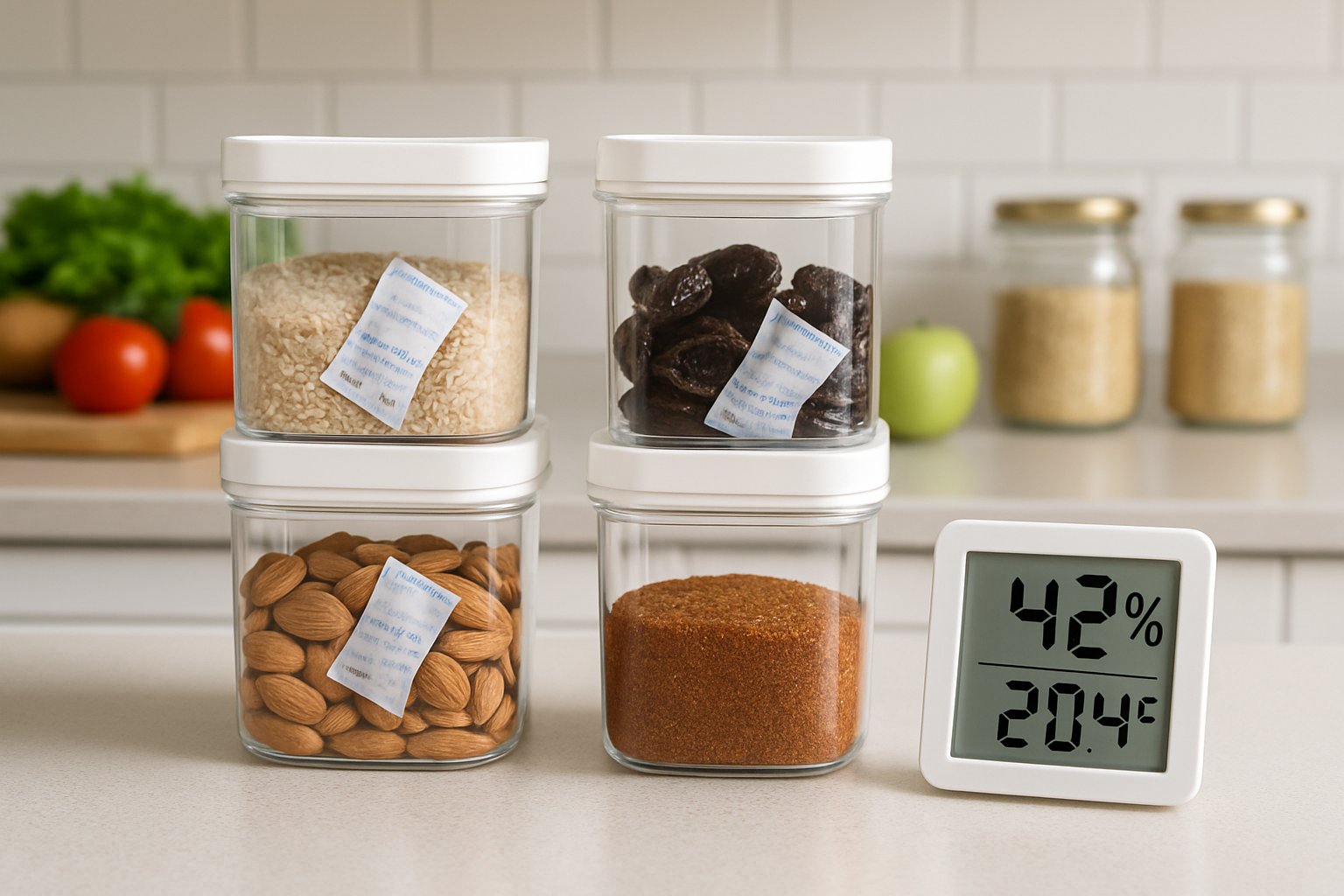
Store rice, flour, pasta, cereal in airtight containers. Even if your house feels dry, humidity can sneak in and mess things up. In humid spots, silica gel packets or oxygen absorbers can help.
Dried fruits are a bit trickier. They need a touch more humidity (60-65%) to avoid getting too hard, but not so much that they get sticky or moldy. They’ve got some moisture inside for texture, but you don’t want that creeping up.
Cereals lose their crunch fast if humidity goes above 20%. Stale cereal is the worst, and it’s usually from letting moisture in. Dumping open boxes into sealed containers right away helps a lot.
Meats, Dairy, and Other Sensitive Items
Fresh meats like moderate to high humidity (80-85%) and cold temps. That keeps the surface from drying out but slows bacteria as long as it stays cold.
Cheese is picky—hard cheeses like 65-70% humidity to avoid cracks, but don’t go too wet or you’ll get mold. Soft cheeses need a bit more (75-80%) and do better with breathable wraps than plastic.
Deli meats last longer in their original packaging or sealed containers. Too dry and they shrivel, too wet and they spoil. The trick is a sealed space that keeps their original moisture.
Eggs actually do better with lower humidity (70-80%) and decent air flow. They’re happier in the main fridge compartment, not the door where things get warm and damp every time you open it.
Common Moisture Problems in Food Storage
Too much moisture causes three big headaches: mold and bacteria, frost and ice in the cold, and weird changes in taste or texture. Each has its own telltale signs if you know what to look for.
Mold and Microbial Growth
Once humidity tops 60%, mold and bacteria start moving in. They love moist places and can show up on food in a day or two.
Mold looks fuzzy—white, green, black, orange, you name it. It’s not just ugly; some molds make toxins that aren’t safe even if you scrape the visible bits off. Bacteria are sneakier—no fuzz, but you’ll get slime, bad smells, or weird colors when things go bad.
Dried foods are at risk because they soak up moisture from the air. If their water content goes above 10-15%, they’re suddenly not shelf-stable anymore.
Keep humidity below 50% and let air move around your food. Check containers for condensation—that’s a red flag moisture is sneaking in.
Frost and Ice Build-Up
In cold storage, frost and ice build up when warm, humid air hits cold surfaces. That water freezes right away, making layers of ice on coils, walls, even ceilings.
Ice acts like insulation, so your fridge or freezer has to work harder. Just a quarter-inch of frost can cut efficiency by 30-40%. If you ignore it, you’ll end up defrosting and shutting things down.
Every time you open the door, you let humid air in. Loading docks are especially bad—warm air rushes in fast. Even tiny gaps in door seals can let moisture seep in all day.
Watch for ice in these spots:
- Coils and fans
- Ceiling panels near doors
- Floors by busy areas
- Wall holes or utility access points
The fix? Keep doors closed as much as you can, use fast-closing doors, and make sure your fridge or freezer is sealed up tight. Vapor barriers in walls and ceilings help too.
Moisture Absorption Leading to Off-Flavors
Moisture messes with food in ways that go beyond just making things soggy. Dried herbs lose their punch and end up tasting musty. Crackers and cereals? Soggy, stale, and honestly disappointing. Powders clump up and become a hassle to use.
Some foods just seem to soak up water from the air—think salt, sugar, powdered milk, and flour. In humid conditions, these hygroscopic foods pull in moisture fast. That moisture often drags in weird smells and airborne flavors you never asked for.
Even in the fridge, moisture can cause headaches. Produce stored at the wrong humidity either shrivels up or gets that gross surface moisture that speeds up decay. Cheese is notorious for absorbing both moisture and odors from whatever’s nearby. Suddenly, your cheddar tastes like last night's leftovers.
So, what actually helps? Match the storage humidity to what the food needs, and use airtight containers with good seals. Keeping strong-smelling foods away from moisture-sensitive ones also makes a big difference.
Methods and Tools for Effective Humidity Management
Controlling humidity in food storage isn’t magic—it’s about using the right tools and knowing what to look for. Sensors, dehumidifiers, and a few old-school tricks all play their part.
Humidity Sensors and Monitoring
You can’t fix what you don’t track. That’s why humidity sensors are essential for keeping moisture in check. Digital hygrometers tell you the relative humidity—usually with decent accuracy, often within a few percentage points.
Smart sensors take it further. They log data, spot patterns, and send alerts to your phone if things go off track. Some even sync up with home monitoring systems for a more hands-off approach.
If you’re serious about storage, look for sensors that measure both temperature and humidity (since those two are joined at the hip when it comes to moisture control). Calibration certificates are a bonus. Analog hygrometers are fine for the basics, but digital ones are just easier to read and more reliable.
Dehumidifiers and Humidification Systems
Dehumidifiers pull moisture out of the air, keeping things dry. Refrigerant-based dehumidifiers are great for warm spaces, while desiccant types handle cold storage better—like in walk-in coolers below 65°F.
Sometimes, though, the air gets too dry. That’s where humidifiers come in. Ultrasonic and evaporative models work for small areas, but newer systems with micron-sized droplets can keep humidity high (up to 98%) without soaking your food or packaging.
It’s all about matching the tool to the space. A tiny dehumidifier won’t cut it in a big room, and an oversized one will just waste energy in a small pantry.
Desiccants and Moisture Absorbers
Desiccants are the low-tech heroes of moisture control. Silica gel packets are everywhere—they suck up water vapor, up to 40% of their own weight, and stay dry to the touch.
Other options:
- Calcium chloride – Absorbs more moisture but turns into a liquid mess when full
- Activated charcoal – Tackles both moisture and odors
- Clay desiccants – Cheap and effective for bigger spaces
Rechargeable desiccant units are a personal favorite. Dry them in the oven, reuse them, and save money and waste. For large storage, hanging bags or bucket-style absorbers handle a lot of air without hogging shelf space.
Storage Techniques and Packaging Innovations
Modern storage is all about matching technology to what your food needs. The right packaging and humidity control can keep things fresh way longer.
Modified Atmosphere Packaging (MAP)
Modified atmosphere packaging (MAP) swaps out the air in a package for a specific mix of gases—usually nitrogen or carbon dioxide—to slow down spoilage. You’ll see this with salads, deli meats, and fresh pasta. Removing oxygen keeps things from browning or growing mold.
The gas mix depends on the food. Red meat needs higher oxygen to keep its color, while baked goods and nuts last longer in pure nitrogen. At home, vacuum sealing does something similar, though it can squash more delicate foods.
MAP only works if the seal stays tight. Even a tiny puncture lets in air and ruins the effect, so check packaging before buying and eat soon after opening. With refrigeration, MAP can double the shelf life of produce compared to regular packaging.
Proper Use of Storage Containers
Airtight containers are your first line of defense. Glass jars with gasket lids, plastic snap-lock containers, and vacuum bags all have their place, depending on what you’re storing.
For dry foods like flour or cereal, you want something that blocks out humidity—hard-sided containers with silicone seals beat zip-top bags every time. For moist foods, pick containers that keep moisture in but block out air, like glass or BPA-free plastic with solid lids.
Container size actually matters more than you might think. Too much empty space means more air and more condensation, especially when temperatures swing. Try to match the container to the food volume, or vacuum seal to get rid of air gaps.
Tips for Reducing Ambient Humidity in Pantries
The room itself is just as important as the containers. Keeping pantry humidity between 35-50% helps avoid most moisture issues, but that’s easier said than done in muggy weather.
Start with ventilation—install a small fan or just make sure vents aren’t blocked. Closet-sized dehumidifiers work well for pantries under 100 square feet and don’t cost much to run.
Silica gel packets are handy for small areas. Toss them in flour canisters, spice drawers, or storage bins. They change color when full and can be dried out in the oven (200°F for a couple hours). For more coverage, hanging calcium chloride absorbers handle 10-20 square feet and last a few months before needing a swap.
Best Practices for Kitchen Moisture Control
Keeping kitchen humidity in check means staying on top of things, organizing smartly, and adapting as the seasons change. It’s not glamorous, but it works.
Routine Monitoring for Optimal Results
Check your containers and storage spots at least weekly. Every time you grab something, glance for condensation, water drops, or any signs of spoilage. Mold or weird smells? Act fast.
For pantry and bulk storage, every two to three weeks is usually fine. A basic hygrometer tracks humidity in your pantry or fridge—aim for 30-50% in the pantry, and about 80% in crisper drawers (30-40% elsewhere in the fridge).
Spot an issue? Don’t wait. Even a little moisture can turn into a bacteria party fast. Wipe things down, check seals, and swap out any containers that look worn.
Organizing Food for Maximum Effectiveness
How you organize things matters. Keep high-moisture foods (like produce) away from dry goods (like flour or cereal) to stop humidity from spreading.
A quick guide:
| Food Category | Storage Location | Container Type |
|---|---|---|
| Dry goods (grains, pasta, flour) | Pantry shelves | Airtight glass or plastic |
| Fresh vegetables | Crisper drawer (high humidity) | Vented containers or bags |
| Leafy greens | Refrigerator | High-humidity drawer |
| Leftovers | Refrigerator | Sealed glass containers |
Throw a few rice grains or desiccant packets in with dry goods. Label everything with storage dates so you use up older stuff before it goes bad.
Seasonal and Climate Considerations
Seasons and climate throw curveballs at your kitchen. Summer humidity can spike, so run a dehumidifier or crank up the A/C to keep things below 50%. In winter, the air gets dry, but condensation forms wherever warm air hits cold surfaces—avoid storing food near windows or exterior walls.
If you live by the coast, salt air means even more moisture. Check containers more often and replace desiccants every few weeks instead of monthly.
Adjust your approach based on your climate. In humid places, airtight containers and desiccants are crucial. In dry spots, focus more on keeping food from drying out.
Frequently Asked Questions
Managing moisture in food storage is about knowing your humidity targets, picking the right containers, and using practical fixes to keep things fresh.
What are the top five tips for managing humidity levels in pantry storage?
Start with good ventilation—open pantry doors now and then to keep air moving and avoid condensation.
Use airtight containers for sensitive foods like flour, sugar, and cereal. They block out humidity and stop spoilage.
Think about where you put things. Store low-humidity foods on upper shelves (air’s drier up there), and humidity-tolerant stuff lower down.
Toss silica gel or other desiccants into containers with dried goods. They soak up extra moisture inside.
Keep an eye on temperature too. Pantries between 50-70°F help control humidity since cool air holds less moisture.
Can you break down the science behind why controlling moisture is key to keeping food fresh longer?
Microbes—bacteria, mold, yeast—need water to grow. Control humidity, and you cut down on the moisture they need to multiply.
Water moves from wetter areas to drier ones, a process called moisture migration. If your food sits in a humid spot, it soaks up moisture, which speeds up spoilage and messes with texture.
Moisture also speeds up enzyme reactions that break down food, changing flavor, color, and nutrition.
Different foods need different levels of water activity. Crackers and pasta stay crisp below 0.6, while fresh produce needs higher humidity to avoid wilting.
Got any smart hacks for DIY moisture absorbers in food storage areas?
Rice is a classic—drop a few grains in salt shakers or spice containers to keep things dry.
Plain chalk sticks work too. Toss a few in with dried herbs or spices to soak up moisture.
Dried coffee grounds pull double duty by absorbing moisture and odors. Put them in a small fabric pouch for the pantry.
Powdered milk packets in sugar containers absorb moisture and are easy to remove when you need the sugar.
Charcoal briquettes (untreated, please) in perforated containers help regulate humidity on pantry shelves.
What's the scoop on the best containers for battling the food-spoilage nemesis known as moisture?
Glass jars with rubber seals are fantastic for dried goods—they don’t absorb odors or moisture, and you can see what’s inside.
Food-grade plastic containers with locking lids and silicone gaskets seal out humidity really well.
Vacuum-sealed bags remove both air and moisture. Great for long-term storage of things like dried fruit, nuts, or coffee beans.
Metal tins with tight lids are good for tea, spices, and baking supplies, as long as the inside is food-safe.
There are also humidity-controlled containers with built-in regulation that both absorb and release moisture as needed. A bit high-tech, but they really work for tricky foods.
Could you spill the beans on setting up the ideal storage conditions for a variety of food groups?
Fresh veggies and fruits? They do best in high humidity, somewhere between 90-95%. I usually toss leafy greens, broccoli, and carrots into crisper drawers or use containers that keep things moist but not soggy—nobody wants condensation puddles.
Dried goods like grains, cereals, and pasta are a whole different story. They’re happiest with humidity below 15%. I stash them in airtight containers and tuck them away in a cool, dry pantry, far from stoves or anything steamy. Heat and moisture just ruin them.
Cured meats and cheeses? They’re a bit picky—aim for 65-75% humidity. If it’s too dry, they get tough. Too damp, and you’re looking at mold. I try to keep them in spots where the air isn’t too dry or clammy.
Nuts and seeds last longer if you keep humidity around 50-60%. I always use sealed containers and pick cooler spots, since warmth and moisture just make them go rancid way too fast.
Herbs and spices really hold their flavor at 35-50% humidity. I keep them in small, tight containers and out of direct sunlight. Too much air or dampness just kills the flavor, and honestly, who wants bland spices?
Baked goods like bread are a balancing act. Around 40-60% humidity keeps them from drying out or molding up. Too dry, and they go stale. Too damp, and, well, you know what happens.
Ever wondered why your pasta turned into a science project? How do temperature and humidity actually work together in food preservation?
Temperature and humidity always seem to be in cahoots, linked by the idea of relative humidity—which just means how much water vapor the air’s holding, depending on how warm it is. Warm air can hang onto more moisture, so a room at 70°F with a certain amount of water in the air feels very different from a chilly basement with that same amount.
This dynamic shows up fast when temperatures bounce around. Ever moved food from a cold spot to a warmer room? Suddenly, you get condensation—water beads on the surface, like your leftovers are sweating. That’s just moisture in the air settling onto something cooler.
Cooler temps put the brakes on microbes, no matter the humidity. So, we stash stuff in pantries at 50-70°F or fridges at 32-40°F, and try to keep humidity in check too, hoping to stretch out shelf life as much as possible.
But here’s a headache: even sealed containers aren’t immune to moisture issues. When the temperature rises, the air inside expands and might suck in humid air through those not-so-perfect seals. Suddenly, your crackers aren’t so crisp anymore.
Most dried pantry staples do best around 50-70°F and under 60% relative humidity. Those conditions keep things from soaking up extra moisture or breaking down faster because of heat.
The freezer? That’s a different story. At 0°F, moisture freezes solid—microbes pretty much give up. But you still have to package things well, or you’ll end up with freezer burn as moisture sneaks away and crystallizes.
Share:
How to Maintain Freshness When Storing Prepared Lunches
Smart Food Storage Habits That Reduce Grocery Costs