

Check out our latest compact vacuum sealer for food collection!
Not all frozen foods are created equal when it comes to staying flavorful. We've all had that letdown, pulling out a freezer meal for dinner, hoping for something tasty, only to find it bland or weirdly off. Meanwhile, some things seem to survive months in the deep freeze and still taste pretty much as you remember.
So, why do some frozen foods lose flavor so fast? It mostly comes down to how quickly they were frozen, their water and fat content, how well they're packaged, and the conditions in your freezer.
The foods that lose flavor quickest? Usually, they have high water content, fragile cell structures, or they're just great at soaking up odors.
Leafy greens and cucumbers, for example, fall apart fast since ice crystals rupture their cells. Fish can pick up weird flavors from oxidation. On the flip side, meals with less moisture and solid, airtight packaging hang onto their taste much longer.
Key Takeaways
- Freezer burn, ice crystals, temperature swings, and bad packaging all mess with flavor
- Foods loaded with water or delicate structures degrade faster than sturdy, well-wrapped items
- Fast freezing, airtight seals, and keeping your freezer cold and steady help preserve taste
What Causes Flavor Loss in Frozen Foods?
Frozen foods lose flavor mainly through four things: surface dehydration, cell damage from ice, chemical breakdown of fats, and picking up odors from other foods. Each food reacts differently, which is why your frozen strawberries might taste fine after months, but fish gets funky in just a few weeks.
Freezer Burn and Dehydration
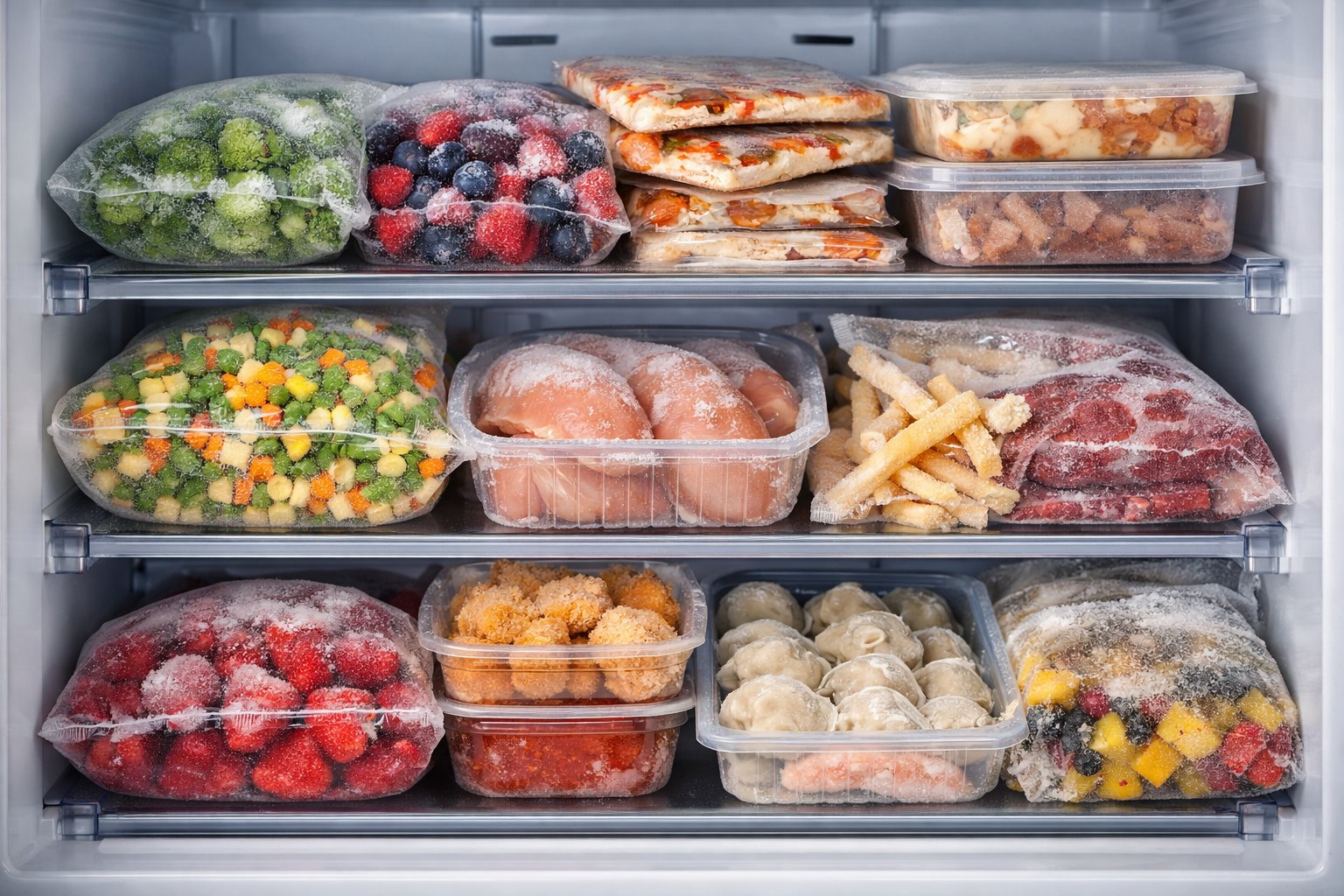
Freezer burn is probably the easiest problem to spot. When water on the food’s surface turns straight from ice to vapor (sublimation), it leaves dry, weird-looking patches that taste like cardboard. This usually happens because moisture escapes from foods that aren’t wrapped tightly enough.
Temperature swings make freezer burn much worse. Every time you open the freezer or there’s a power blip, the temp rises a bit, which speeds up moisture loss. Foods stored near vents or the freezer walls are at higher risk since those spots fluctuate the most.
Those dry patches taste so bad because flavor compounds dissolve in water. No moisture means those flavors can’t reach your taste buds. To avoid freezer burn, use airtight packaging, keep the freezer at 0°F (-18°C), and don’t leave stuff in there forever.
Ice Crystal Formation and Cell Damage
Ice crystals are sneaky. As food freezes, water expands (by about 9%) and forms crystals that act like tiny knives, shredding cell walls. If you freeze food slowly at home, you end up with big crystals and lots of damage. When you thaw it, all that liquid (and the flavor) just leaks out.
How fast you freeze matters. Commercial flash-freezing creates tiny crystals that slip around cells instead of slicing through them. That’s why store-bought frozen veggies usually taste better than what you freeze at home. Foods with lots of water—like tomatoes, cucumbers, or greens—get hit hardest.
You’ll see this when thawing: puddles of flavorful liquid left behind. That’s your taste and nutrients, gone.
Absorption of Odors During Storage
Frozen foods can soak up smells from their neighbors more than most of us realize. Water molecules on the surface can trap odors released by other foods, leading to some odd flavor mashups. Ever opened ice cream and caught a whiff of last week’s fish? Not fun.
Fatty foods are especially prone to this since many odor compounds dissolve in fat. That’s why butter, cheese, and ice cream pick up weird flavors faster than veggies. Even well-wrapped foods can get contaminated if the packaging gets a tiny tear.
The fix? Wrap things tightly, keep strong-smelling foods apart, and maybe stash a box of baking soda in there to help with stray odors.
Lipid Oxidation and Chemical Changes
Fats and oils keep breaking down in the freezer, just more slowly. Lipid oxidation creates those nasty, stale, or metallic flavors that seem to creep in over time. Fatty fish, nuts, and processed meats are especially vulnerable.
As water freezes, leftover pockets concentrate oxygen and other stuff that actually speeds up oxidation. Some changes happen faster in the freezer than you’d think.
Enzymes can still work in frozen foods, just at a crawl. They keep breaking down flavors, vitamins, and colors, which is why unblanched frozen veggies turn off-tasting and pale after a few months. Blanching before freezing kills most of those enzymes, so blanched veggies last way longer.
Speed Matters: Rapid Freezing vs. Slow Freezing
How fast you freeze food really changes everything—texture, moisture, and especially flavor.
Why Freeze Food Quickly?
Quick freezing creates small ice crystals that don’t wreck the food’s cells. When freezing happens slowly, big crystals form and tear up the cell walls, which means more moisture and flavor leaks out when you thaw.
Flash freezing (think -40°F and lots of airflow) freezes food in minutes. That’s what companies use for things like berries, corn, and shrimp—each piece stays separate and tasty.
Some perks of fast freezing:
- Better texture in fruits, veggies, and proteins
- Less liquid loss when thawing meats and seafood
- Brighter colors and better looks overall
- More nutrients since cells stay mostly intact
Foods with more water benefit the most, since their water doesn’t have time to migrate and form big, damaging crystals.
Glass Transition and Recrystallization
The glass transition is a fancy way of saying the water in food gets so thick it stops moving, trapping everything in place. Rapid freezing gets you there fast, locking in quality.
Recrystallization is what happens when little crystals melt and refreeze into bigger ones during temp swings. That’s bad news for texture and flavor.
You’ll notice this if:
- The freezer temp goes above 0°F a lot
- Food sits in there forever
- Things get partially thawed and refrozen
Slow-frozen foods are hit hardest since their crystals are already big. Each temp swing just makes them bigger, wrecking texture and draining out more moisture and flavor.
Slow Freezing and Flavor Loss
Slow freezing lets big ice crystals form, which rip up cells and proteins. When you thaw these foods, all the good stuff—flavor, nutrients, and water—leaks out. That’s why slow-frozen strawberries get mushy, chicken dries out, and sauces split.
Plus, enzymes stay active longer during slow freezing, so they keep breaking down flavors, colors, and nutrients. Leafy greens, delicate fish, and ready-made meals really suffer here.
Home freezers usually freeze food much slower than commercial equipment, which is why store-bought frozen veggies often taste better than your own attempts.
The Role of Temperature and Storage Conditions
How cold you keep your freezer and how steady that temp stays makes a huge difference for flavor. If your freezer’s all over the place, you’ll end up with bland, mushy food no matter how well you packaged it.
Consistent Freezer Temperature Tips
Keep your freezer at 0°F (-18°C) or lower. That’s the sweet spot to stop most enzyme and chemical reactions.
A few ways to help:
- Don’t open the door more than you need to, and don’t leave it hanging open
- Organize things so you can find stuff fast
- Keep it at least 75% full—frozen food helps keep itself cold
- Check the door seal for gaps or wear
Don’t put hot food straight into the freezer. Let it cool in the fridge first, or you’ll warm everything up and risk more flavor loss.
The Impact of Temperature Fluctuations
When your freezer temp goes up and down, you get mini freeze-thaw cycles that destroy food structure. Ice crystals melt and refreeze, getting bigger each time. This rips up cell walls and causes moisture and flavor loss.
Power outages and constant door opening are the main culprits. If you see frost on packages or ice inside sealed bags, your freezer’s probably not holding a steady temp. A simple freezer thermometer can help you keep an eye on things.
Effects of Frozen Storage Duration
Freezing slows down food breakdown but doesn’t stop it. Even at 0°F, fats can still oxidize, proteins degrade, and flavors fade.
Most frozen veggies taste best for 8-12 months. Meats last 4-12 months, but fatty cuts go off faster than lean ones. Label everything with dates and use the oldest stuff first. If you keep food past its prime, it’s usually safe, but don’t expect much in the way of flavor.
Vacuum-sealed foods last longer than those in regular freezer bags. Air speeds up flavor loss, even in the cold.
Packaging Perfection: Protecting Food Flavor
Good packaging is your best defense against flavor loss. Seal food away from air, moisture, and odors to keep it tasting right.
Why Airtight Packaging Is Crucial
Air leads to freezer burn and oxidation. When food touches air, moisture escapes, and you get those dry, gross patches. Fats and proteins break down, making things taste dull or just plain bad.
You want packaging that gets rid of air pockets. Even tiny gaps let moisture out and ice crystals form. These crystals mess up the texture and suck out flavor.
Airtight packaging helps with:
- Preventing surface dehydration
- Stopping ice crystals from forming on the outside
- Slowing down fat oxidation (so no rancid flavors)
- Protecting vitamins from air
Make sure containers snap shut and bags seal tight—no wrinkles or open spots.
Vacuum Sealing and Freezer Bags
Vacuum sealing is the gold standard. It removes almost all the air, so flavors stick around three to five times longer than with regular containers. Meats, fish, and sauces do especially well vacuum-sealed.
If you’re using freezer bags, get the heavy-duty kind (at least 2mm thick) and squeeze out as much air as you can—try the water displacement trick for a tighter seal. Double-wrap delicate stuff like fish or marinated meats: cling wrap first, then a sturdy freezer bag.
That’s pretty much the gist—if you freeze smart and store things right, you can keep food tasting a whole lot better, a whole lot longer.
Preventing Odor Absorption and Drip Loss
Frozen foods have a knack for soaking up strong smells from whatever’s nearby—onions, fish, pungent cheeses, you name it. To stop this, we usually wrap foods in a couple of layers or stash the smelliest stuff in airtight containers. Honestly, glass containers with those rubber gaskets seem to block odors better than plastic ones.
Drip loss is another headache. When ice crystals inside food melt and refreeze, they turn into surface ice and suck out moisture. We get around this by wrapping meats tightly in plastic before bagging them, creating a decent barrier against moisture loss. Flattening packages helps food freeze faster and cuts down on ice crystals.
Best practices for odor and moisture control:
- Keep raw proteins on lower shelves so nothing drips down
- Wrap cheese and fish in foil before bagging
- Use sturdy containers for liquids and sauces
- Label everything so you don’t stand there with the freezer door open
Food Types: Why Meat, Seafood, and Produce Behave Differently
Different foods freeze and thaw in their own weird ways. Meat loses moisture, seafood can get rubbery fast, and produce needs a little TLC to keep its crunch and flavor.
Frozen Meat: Tenderness and Thaw Loss
When we freeze meat, ice crystals form inside the muscle and can poke holes in the cells. If you freeze quickly, you get smaller crystals and less damage.
Thaw loss is that puddle of liquid under your defrosting steak. It’s not just water—there’s protein, vitamins, and minerals in there. Slow freezing makes bigger ice crystals, which bust up the cells more and cause more of that loss.
If too much juice leaks out, meat dries up and toughens, losing that juicy bite. Studies say frozen meat keeps its protein and vitamins A and D, but the texture depends a lot on how fast you freeze it.
To keep more moisture in, freeze meat fast at super-low temps and thaw it slowly in the fridge. Squeeze out the air from packaging to avoid freezer burn, which just makes things worse.
Frozen Fish and Seafood Preservation
Seafood is a whole different beast. The proteins are more delicate, and there’s a lot of water. Fish muscle fibers are short and fragile, so they’re easy victims for ice damage.
Commercial processors often add cryoprotectants—stuff like sugar or salt—to help protect fish during freezing. These additives lower the freezing point and keep ice crystals tiny.
Fatty fish like salmon can go off faster in the freezer, since their oils oxidize and turn rancid. Lean fish like cod usually hold up better.
Quick-freezing tech works wonders for shellfish. Dropping the temperature to -40°F in no time preserves that snap and firmness you want in shrimp or scallops.
Frozen Vegetables, Fruits, and Berries
Plant cells are loaded with water—sometimes up to 95% in leafy greens. That makes frozen veggies and fruits more likely to get mushy.
Frozen berries actually do pretty well because they’re small and freeze fast, holding onto vitamins C and K. Same goes for spinach, which keeps its iron and calcium.
Fruits and veggies frozen at their peak often have more nutrients than “fresh” ones that have been shipped halfway across the country. Freezing messes with texture more than nutrition, so frozen produce tends to work better in cooked dishes.
Smaller ice crystals help keep veggies from turning to mush. That’s why store-bought frozen produce, made with industrial quick-freeze systems, usually has a better texture than what we freeze at home.
Blanching Vegetables Before Freezing
Blanching—basically dunking veggies in boiling water or steam for a couple of minutes—stops enzymes from wrecking flavor, color, and nutrients even after freezing.
If you skip blanching, veggies can taste weird, lose color, or just turn to mush. Those enzymes don’t quit at freezing temps; they just slow way down.
Blanching usually takes 2-5 minutes, depending on the veggie. Then, a quick ice bath locks in color and stops the cooking. This step also washes off dirt and germs. Starchy veggies like corn benefit a lot, since blanching stabilizes moisture and helps them freeze more evenly.
Best Practices for Maintaining Frozen Food Quality
Keeping frozen food at its best means paying attention to how you freeze, organize, and thaw stuff. Each part matters for flavor and texture.
Proper Freezing Techniques at Home
Freeze food as fast as you can—big ice crystals are the enemy. Crank your freezer to its coldest setting before you load it up.
Split big portions into smaller, meal-sized packs. Flatten things like ground meat or soups in freezer bags so they freeze quicker—just lay them flat on a baking sheet first.
Key packaging steps:
- Squeeze out as much air as you can
- Wrap meats in plastic before bagging
- Use airtight, freezer-safe containers (not the flimsy stuff)
- Leave some space in containers with liquids for expansion
Don’t overload your freezer with a ton of warm food at once. That’ll warm up everything inside and slow the freezing process. Cool things to room temp or fridge temp before freezing.
Rotation, Labeling, and Storage Habits
Trusting your memory? Not a great idea. Write the contents, date, and any reheating notes on every package.
Follow the first in, first out rule—new stuff goes to the back, older stuff comes to the front. That way, nothing sits there forever and picks up weird flavors.
Storage tips:
- Group similar foods together
- Put the stuff you use most at eye level or up front
- Keep a freezer inventory list handy
- Check the freezer temp monthly—should stay at 0°F (-18°C) or lower
Try not to open the freezer too often or for too long. Every time you do, warm air sneaks in and can mess with the temperature, risking partial thawing and refreezing.
Tips for Thawing Food Without Flavor Loss
The best way to thaw? Move food to the fridge about a day ahead. Slow and steady keeps texture intact and bacteria at bay.
If you’re in a hurry, dunk sealed packages in cold water, swapping the water every half hour. Don’t use hot water—it’ll start cooking the edges while the center stays frozen.
Thawing techniques ranked by quality:
- Refrigerator thawing – Best for flavor and texture, but needs planning
- Cold water thawing – Faster, still good quality, but you have to watch it
- Microwave thawing – Fastest, but can make hot spots, so cook it right away
- Counter thawing – Honestly, just don’t; it’s risky and uneven
Some foods—veggies, thin fish, ready meals—can go straight from freezer to heat. They often turn out better that way. Just tack on a little extra cooking time.
Frequently Asked Questions
Freezer burn looks like grayish-brown patches, ice crystals signal lost moisture, and airtight packaging with quick freezing keeps flavors locked in better than slow freezing.
How can I tell if my frozen foods are suffering from freezer burn?
Check for grayish-brown or whitish spots on the surface—those areas usually feel dry and leathery. You might see ice crystals inside the package too.
These spots lost moisture to air, so the texture and flavor change. Freezer-burned food is still safe to eat, but those bits will taste bland or just off.
What's the secret to keeping flavors locked in when freezing food?
Honestly, getting rid of as much air as possible makes the biggest difference. Heavy-duty freezer bags or airtight containers keep oxidation out and flavors in.
Freeze food fast, too. Spreading things in a single layer before stacking helps form smaller ice crystals, which do less damage and keep taste closer to fresh.
Could you please dish out tips for preventing loss of taste in frozen foods?
We always wrap meats and fish tightly in plastic before bagging—double layers keep air out and flavors in.
Label everything with the freeze date so you use older stuff first. Keep the freezer at 0°F or below, don’t open the door more than you have to, and organize so you can grab things fast.
Blanch veggies before freezing to stop enzymes from dulling flavors. And don’t put a bunch of warm food in at once, since that slows freezing for everything.
Why do some foods taste different after being frozen and then thawed?
Ice crystals that form while freezing bust up cell walls, letting moisture leak out and changing texture. That affects how flavors hit your taste buds.
Foods with lots of water show the biggest changes—dairy sauces might separate, fried stuff gets soggy, and lettuce just collapses. Seasonings can shift too: garlic and pepper might get stronger, while salt seems milder, so you may need to tweak flavors after thawing.
Is there a difference in flavor preservation between rapid freezing and traditional freezing techniques?
Yep—rapid freezing makes smaller ice crystals, which do less harm to food cells. Fast freezing means better texture and taste when you thaw and eat.
Slow freezing lets big ice crystals form, which tear up cells and lead to more moisture loss and mushy food.
Commercial freezers freeze faster than home freezers, but you can get closer by setting yours as cold as possible and spreading things out instead of piling them up.
What are the best practices for long-term storage of frozen foods to maintain their yumminess?
We stick to the first in, first out rule so nothing lingers too long. Most cooked meals stay tasty for about two to three months. Raw meats? It depends on the cut, but you’re usually good for four to twelve months.
Dividing food into meal-sized portions before freezing saves a lot of hassle later. That way, we can grab just what we want—no need to thaw and refreeze the whole batch, which just ruins texture and flavor.
We keep a freezer inventory list taped right on the door. It’s not fancy, but it saves us from standing there, door wide open, hunting for dinner. Every now and then, we check for frost buildup; if there’s a lot, it probably means the freezer’s not keeping a steady temp, and that can mess with everything we’ve tucked away.
Share:
When Freezer Storage Makes More Sense Than Refrigeration
What Causes Ice Crystals to Form on Stored Food and How to Prevent It