

Check out our latest home & kitchen collection!
You know how it goes, you spend a whole Saturday sorting out your kitchen, feeling pretty pleased as you line up every spatula and spice jar. Then, a couple of weeks later, it’s back to chaos. The problem isn’t effort or motivation, it’s that most stuff doesn’t have a home that matches how we actually use it.
When we just shove things wherever there’s a bit of space, we set ourselves up for a daily scavenger hunt. That’s why you find the spatulas three cabinets away from the stove, or keep stumbling on half-empty paprika bottles in weird places. If we don’t have zones that group things by what they’re for and where we use them, even the best organizing spree won’t last.
But here’s the kicker: you don’t need a fancy kitchen renovation or overpriced gadgets to fix this. Understanding zones, and making a few changes that fit the way you actually cook and clean, can make a world of difference. Once your kitchen layout matches your workflow, staying organized doesn’t feel like an uphill battle.
Key Takeaways
- Kitchen organization falls apart when stuff doesn’t have clear, logical zones
- Setting up zones for prep, cooking, storage, and cleaning keeps things where you need them
- Good zones help prevent clutter and make cooking less of a hassle
Why Clear Storage Zones Are the Backbone of Kitchen Organization
If you don’t have clear areas for specific tasks and tools, you end up with scattered stuff, wasted counter space, and a lot of frustration. Defined zones make it way easier to grab what you need—no more digging through cabinets while your onions burn.
Common Pitfalls Without Defined Zones
Pretty much everyone’s opened three cabinets just to find a measuring cup or realized the cutting board lives on the wrong side of the kitchen. That’s what happens when we organize by “wherever it fits” instead of “where do I use this?”
Pots get stashed far from the stove. Spices hide in random cabinets. It all adds up to extra steps and wasted time.
It gets worse when more than one person cooks. Without clear zones, you end up bumping into each other or constantly asking, “Where’s the spatula?” The sink and fridge turn into traffic jams because everything overlaps.
And then there’s countertop clutter. If you don’t have storage near the spots where you actually use things, stuff piles up. That stand mixer stays out because putting it away is such a pain.
Benefits of a Zoned Kitchen Layout
When you set up zones, cooking stops feeling like a treasure hunt. Grouping tools, appliances, and ingredients by task means what you need is right there when you need it.
You save real time, right away. Put knives, boards, bowls, and main ingredients in the prep zone. Keep pots, pans, utensils, and oils by the stove. Suddenly, there’s no more running circles around the kitchen for every meal.
Cleanup gets easier, too. Messes stick to their zones instead of spreading everywhere. Dirty prep tools stay by the sink. Cooking splatters don’t wander into your food storage.
Multiple cooks can actually work together. One person chops, another stirs—no one’s getting in the way.
A clutter-free kitchen kind of happens on its own when zones make sense. Things go back where they belong, not because you’re forcing it, but because it just works.
Essential Kitchen Zones and Their Purposes
A functional kitchen divides work into areas for each main task. The prep zone is for getting ingredients ready, the cleaning zone is for dishes and messes, and the cooking zone is where the magic happens.
Prep Zone Essentials
The prep zone should have counter space near the fridge so you can move ingredients straight from cold storage to the cutting board. Ideally, this spot sits between the fridge and stove—honoring the classic work triangle and keeping raw stuff away from clean dishes.
Prep zone must-haves:
- Cutting boards (standing up in a narrow cabinet or drawer)
- Knife blocks or magnetic strips nearby
- Mixing bowls nested in deep drawers
- Measuring cups and spoons in drawer dividers
- Food processors and blenders on the counter or tucked in an appliance garage
Cabinets here work best with pull-out shelves, so you’re not digging around blind. Keep prep tools right where you use them—not scattered because you ran out of room.
A trash pull-out or compost bin right here saves you from hauling scraps across the kitchen. The idea is to keep everything for chopping and mixing within a quick reach.
Cleaning Zone Must-Haves
The cleaning zone is all about the sink and dishwasher, placed where dirty dishes naturally pile up. This zone should sit between the cooking area and wherever you eat, so plates move easily from table to sink.
Cleaning zone essentials:
- Dish soap and brushes in a caddy or mounted holder
- Dishwasher next to the sink (not across the room)
- Pull-out trash and recycling under the sink
- Drying rack on the counter or wall-mounted above the sink
- Cleaning supplies in under-sink organizers with shelves
The under-sink cabinet tends to turn into a black hole—half-empty bottles, random bags. Use door racks and stackable bins to make the most of the space and keep what you need in sight.
Lighting above the sink helps, and waterproof storage is a must since things get wet. When the cleaning zone is organized, “clean as you go” actually feels doable.
Cooking and Baking Zones
The cooking zone lives at the stove and oven. Store pots, pans, and lids in drawers right below the cooktop—not in some far-off cabinet.
Cooking zone priorities:
- Pots and pans in drawer dividers or vertical racks
- Cooking utensils (spatulas, tongs, ladles) in a crock by the stove
- Oils, salt, and main spices within arm’s reach
- Pot holders and trivets in a nearby drawer
- Baking sheets stored upright in a pull-out
If you bake, set aside a spot for those tools: muffin tins, cake pans, rolling pins, mixers—all grouped near your main prep counter.
Spices need some extra thought. Mount them inside cabinet doors, use tiered shelves, or install a slim pull-out rack so they don’t get lost. And try to keep hot pans away from busy walkways, but close enough to the sink for filling pots.
Classic Mistakes That Sabotage Kitchen Storage and Organization
Most kitchen storage fails come down to three things: not measuring before organizing, letting too much stuff pile up, and ignoring all that vertical space you could be using.
Lack of Accurate Space Measurement
We’ve all done it—buying storage bins only to realize they don’t fit. That’s what happens when you skip the measuring tape and just guess.
Measuring really matters. Even an extra inch can make or break whether a drawer divider fits or a bin sits flush. Grab the height, width, and depth of every cabinet and drawer before you buy anything.
Don’t forget about things like door hinges, pipes under the sink, or how much room you need to open the doors. Sometimes, garbage disposals or water filters eat up more space than you’d think.
What to measure:
- Inside cabinet dimensions (all sides)
- Drawer depths and widths
- Space between shelves
- Clearance around pipes or fixtures
If you’ve got weird corners or angles, jot those down too. A quick sketch with numbers saves you from returns and wasted money on stuff that just doesn’t fit.
Overcrowding and Clutter Buildup
Packing every inch of cabinet space leads to a mess where you can’t find anything and things get lost or broken. We tend to hang onto appliances we barely use, duplicate tools, and expired pantry items that hog space.
When cabinets are jammed, you end up buying extras of things you already have, which just makes the problem worse.
Countertops take the brunt of this. If you leave out the coffee maker, toaster, blender, stand mixer, knife block, and every utensil holder, you lose work space and things start to feel overwhelming. Studies even show cluttered counters make cooking more stressful.
The fix? Edit ruthlessly. If you haven’t used it in a year, donate or toss it. Multifunction tools help cut down on the number of gadgets you need.
Try leaving about 20% of each cabinet empty. That breathing room makes it way easier to grab things and put them away—no more kitchen Tetris.
Neglecting Vertical Space
Most of us just stack things horizontally, wasting all that space above. Meanwhile, we’re cramming everything into the bottom shelves.
Add shelf risers, stackable racks, or adjustable shelves to create more levels. Vertical dividers are great for baking sheets, cutting boards, and lids—store them on their sides, not stacked flat.
Ideas for vertical storage:
- Shelf risers for plates and cans
- Vertical dividers for trays and pans
- Hanging racks on cabinet doors
- Magnetic knife strips on the wall
- Ceiling-mounted pot racks
The space between the top of your cabinets and the ceiling is usually wasted. Install shelves or extra cabinets up there for stuff you rarely use, like holiday platters.
Walls are fair game, too. Pegboards, rail systems, and open shelves turn blank space into storage for your most-used items—without crowding the counters.
Tools and Storage Solutions for Defined Zones
The right tools turn vague kitchen areas into real, functional zones. Drawer dividers, lazy susans, and open shelving help keep the boundaries between prep, cooking, and storage areas clear.
Drawer Dividers and Their Impact
Drawer dividers save you from the chaos of tangled utensils and tools. We’ve all dug through a messy drawer looking for one thing.
Dividers give every tool a home. Separate cooking utensils from prep tools, keep knives in one place, peelers in another. Things stay put, and you’re not chasing spatulas across the kitchen.
Why drawer dividers help:
- Keep tools in their zones
- Save time searching
- Prevent tool damage
- Organization actually sticks
Adjustable dividers are best—you can size them for your stuff. Spring-loaded versions fit any drawer, and bamboo or acrylic ones hold up well.
Maximizing Space with Lazy Susans
Lazy susans solve the “stuff lost in the back” problem. Just spin to grab what you need, no cabinet excavation required.
They’re perfect for pantry zones—oils, vinegars, condiments all grouped together and easy to see. Corner cabinets finally become usable, not just places where food goes to expire.
In the cooking zone, a lazy susan by the stove keeps spices and oils handy. Two-tier versions double your storage and keep everything within reach.
Open Shelving for Visibility and Access
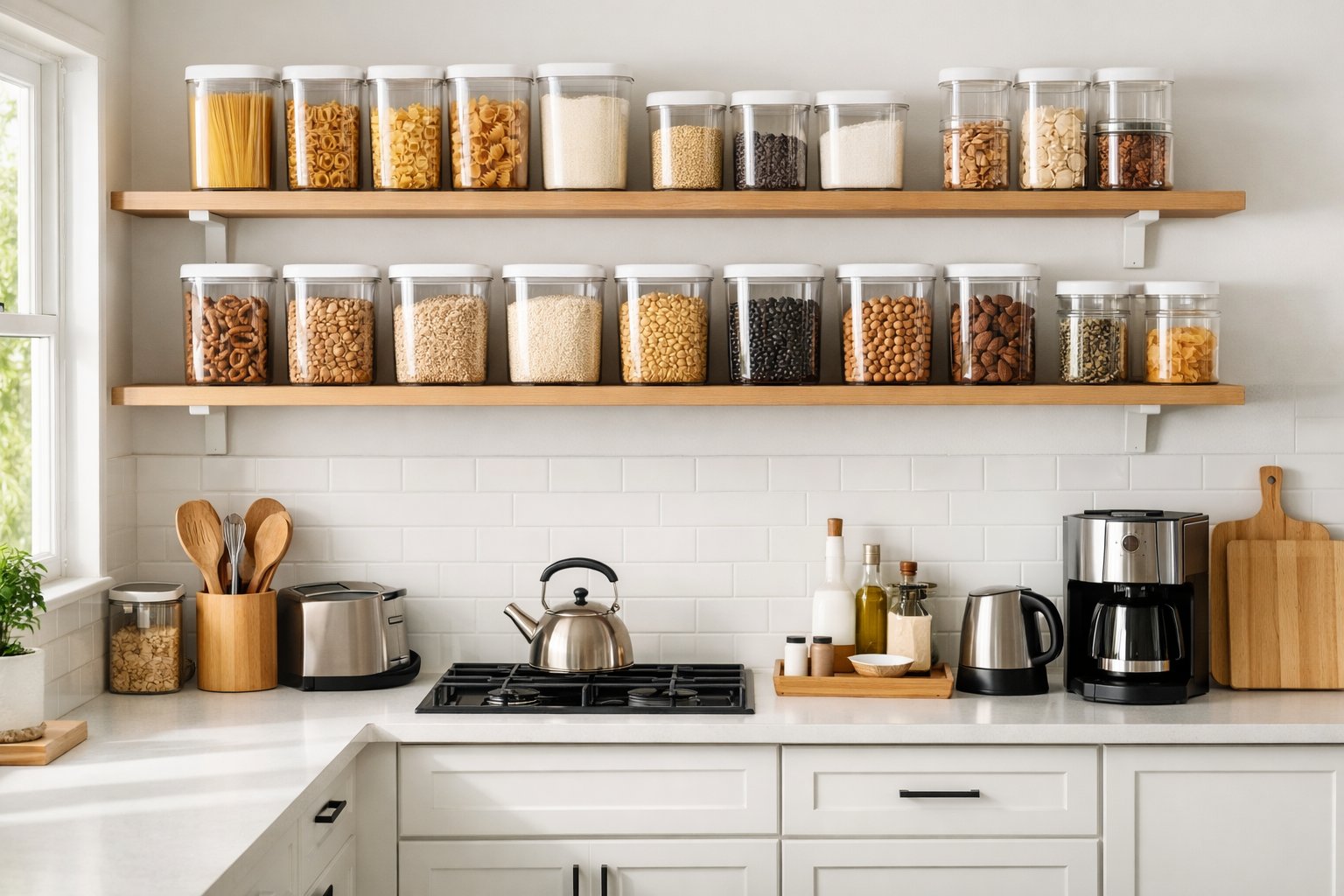
Open shelves keep your go-to items visible, which makes it easier to stick to your zones. You’re more likely to put a mug back in the right spot when you can see the empty space.
They work best for things you use daily in each zone. Plates and bowls by the dishwasher make unloading easier. Mixing bowls and measuring cups on prep shelves stay close at hand.
Clear bins on shelves help you see what’s inside and keep things contained. Snacks, baking supplies, breakfast stuff—it’s all right there without looking messy.
Open shelves do need a little more upkeep—dust and grease happen. Just keep your collection edited to what you actually use, and clean things off now and then.
Creating an Efficient System Everyone Can Follow
A kitchen organization system only works if everyone in the house can actually use it. Clear labels and real buy-in from everyone who uses the space—that’s what turns fleeting neatness into a lasting solution.
Labeling and Signage Tips
Visible labels save us from that endless guessing game that leads to misplaced stuff and cluttered counters. Just slap simple labels on cabinet doors, drawers, and containers—no lengthy explanation needed.
You don’t need fancy tools here. A label maker is great, but masking tape and a permanent marker work fine for drawer dividers and shelf sections. The pantry really benefits from clear container labels showing both the contents and expiration dates. For canned goods or boxed items, labeling the shelf edge instead of each container makes things easier to find.
If you’ve got young kids, add picture labels next to the words. A little drawing of a cup next to “cups” on a lower cabinet? Makes cleanup way less of a battle.
Color-coding can help in more complicated setups. Assign a color to baking supplies, snacks, breakfast stuff, or dinner ingredients, so anyone can spot what’s what in a flash.
Sustaining Organization With Household Buy-In
If only one person understands or maintains the system, it’s doomed. Everyone who uses the kitchen needs a say in how it’s organized.
Try holding a quick family meeting and ask what annoys people most about the current setup. Where do folks naturally look for things? Organize around those habits instead of fighting them.
The system should make putting stuff away easier than leaving it out. If your spice zone means moving three jars just to put one back, no one’s going to bother. The fifteen-second rule helps—if it takes longer than that to return something, that zone needs simplifying.
Five-minute resets are a lifesaver. When everyone knows where things go, a quick tidy-up after dinner or before bed keeps the kitchen from becoming a weekend disaster zone.
Optimizing Kitchen Cabinet Storage for Lasting Results
Cabinet storage works best when it fits your space and your stuff. Combine vertical tricks with the right organizers, and suddenly cramped cabinets become functional zones that actually stay tidy.
Vertical and Horizontal Organization Hacks
Stacking stuff on top of each other wastes space and makes things hard to reach. Vertical dividers fix this by giving baking sheets, cutting boards, and pan lids their own slots. Suddenly, you can see everything and fit way more in.
Shelf risers are great for horizontal space. Instead of burying mugs or cans in the back, create tiered levels so everything’s at eye level. This trick is especially handy for small appliances or spices.
Here’s a quick rundown:
| Cabinet Type | Best Vertical Solution | Best Horizontal Solution |
|---|---|---|
| Base cabinets | Pull-out drawers | Shelf risers |
| Upper cabinets | Stackable organizers | Under-shelf baskets |
| Corner cabinets | Lazy Susans | Tiered turntables |
Measure your cabinets first before buying organizers. It’s easy to skip, but nothing’s more annoying than organizers that don’t fit.
Specialized Storage for Challenging Items
Some kitchen stuff is just tricky to store. Pot lids are notorious for ending up everywhere—try a wall-mounted rack or an over-the-door organizer.
Small appliances like blenders and air fryers deserve their own spots based on how often you use them. Daily gadgets go on lower shelves, while the once-a-year stuff can live up high. Appliance garages help hide countertop clutter without making things impossible to grab.
Battery storage can be a mess. Use organizers with individual slots to prevent corrosion and see what you’ve got left. Same goes for plastic container lids—a vertical file holder keeps them from tumbling out every time you open the cabinet.
Clear containers are still the best for dry goods and baking supplies. You can see what’s inside instantly, which saves time and keeps you from buying duplicates.
Frequently Asked Questions
Small kitchens need space-saving tricks. Cluttered cabinets need real decluttering. Here are some practical answers for the most common kitchen storage struggles.
What's the secret to making the most of tiny kitchen spaces?
Maximize tiny kitchens by thinking vertical and using every surface. Floating shelves on empty walls hold everyday stuff like spices and oils. Hang measuring cups or pot lids inside cabinet doors.
Stackable containers and drawer dividers help cram more into tight spots. Clear bins let you see what’s inside without digging. Don’t forget about corners—lazy Susans make them usable.
Under-shelf baskets add extra layers without tools. Magnetic knife strips and hanging racks keep counters clear but tools handy.
Can you share a foolproof 7-step game plan for cupboard decluttering?
Start by emptying one cabinet and sorting everything into keep, donate, or toss. This way you don’t get overwhelmed.
Check expiration dates and get rid of anything old. Wipe down the empty cabinet before putting things back. Group similar items together—baking stuff in one spot, cans in another.
Use bins for small, loose items. Label everything so everyone knows where it goes. Finally, stick to the one-in-one-out rule: if something new comes in, something old goes.
Got any golden kitchen layout tips for peak organization vibes?
Organize by workflow zones instead of just stuffing things wherever. Keep pots, pans, utensils, and oils near the stove.
Set up a prep zone near your main counter with cutting boards, knives, and mixing bowls. Cleaning supplies live under or beside the sink. Food storage stays in a pantry zone with clear containers and labels.
Honestly, the biggest game-changer? Store things where you use them. Coffee mugs belong near the coffee maker, not across the room. It just makes life easier.
Hit me with the ultimate dish sorting strategy, no more pile-ups, please!
Sort dishes by how often you use them, not just by type. Everyday plates and bowls go in the easiest-to-reach cabinets. Special occasion stuff moves up high or to the back.
Stack similar sizes to avoid the leaning tower of plates. Plate racks or vertical dividers let you grab one without moving the whole stack. Bowls nest, but don’t go overboard—five or six per stack is plenty.
Set up a “staging zone” near the dishwasher for clean dishes waiting to be put away. It keeps counters clear and makes the process less of a chore.
I need pro chef hacks for kitchen arrangements – where's the magic at?
Professional kitchens use the “work triangle” between sink, stove, and fridge. We try to keep our most-used tools and ingredients within that triangle for efficiency.
Chefs swear by “mise en place”—everything in its place before cooking. We copy this by giving frequently used items like salt, pepper, and olive oil a home right by the stove. Small crocks or containers keep spatulas and spoons upright and easy to grab.
“Clean as you go” is another pro trick. Have a spot for dirty dishes and wipe spills right away. The real magic? Prep, cooking, and cleanup each get their own space and tools nearby. That’s when the kitchen really works for you.
Why do my cabinets look like a clearance sale, and how do I fix it?
Cabinets end up looking like a mess when nothing has a set spot. Stuff just drifts to wherever there's space, and suddenly you can't find anything you need. It's a visual headache, honestly.
So, what can you do? Start by pulling everything out and tossing it into piles by type. You'll probably discover you own three open bags of rice and enough mugs for a small army. It's easy to lose track when things get buried or shoved behind each other.
Try using shelf risers for extra layers, and pull-out organizers for the stuff that always hides in the back. Keep each area focused on one thing—snacks don't need to hang out with baking supplies. Clear containers with labels help a ton, too. Not only do they look nicer, but you can actually see what you've got (and maybe stop buying the same thing over and over).
Share:
What Makes a Kitchen Feel Organized Versus Just Clean
Understanding the Role of Containers in Kitchen Organization