

Check out our latest compact vacuum sealer for food collection!
Most of us grew up defaulting to the fridge for food storage, but let’s be honest, the freezer, often sitting ignored right next to it, is way more powerful than people realize. It’s not just for ice cream or those mystery leftovers you forgot about.
If you use it right, the freezer can stretch your groceries for months, keep flavors at their prime, and honestly, help you waste less and save cash.
Freezer storage just makes more sense than refrigeration when you’re looking to keep food for weeks or months, want to lock in that just-picked freshness, or if you’re buying in bulk or batch-cooking.
Knowing when to freeze instead of refrigerate? That’s not just about avoiding spoiled milk. It’s about building a kitchen system that fits your life, cuts down on waste, and keeps ingredients ready for whenever inspiration (or hunger) strikes.
Let’s dig into what really separates freezer-worthy foods from fridge-only stuff, peek at the science behind why freezing works, and share some real-life strategies for transforming your freezer from a frosty afterthought into a kitchen MVP.
Whether you’re working with a tiny apartment freezer or a giant chest freezer, figuring out when to freeze instead of refrigerate will change how you shop, cook, and plan ahead.
Key Takeaways
- Freezing keeps food safe for months by stopping bacteria in their tracks. Refrigeration just slows them down for a little while.
- Using your freezer smartly means less food waste, easier bulk buying, and always having batch-cooked meals on hand for those hectic days.
- Good packaging, smart organization, and knowing what freezes well are what really make freezer storage work.
Key Differences: Freezer Storage vs Refrigeration
Freezers and refrigerators both use the same basic cooling process, but the difference in temperature is huge—and that difference changes everything about how you store food.
How Freezers and Refrigerators Work
Both appliances use a compressor to push refrigerant through coils, pulling heat out of the inside and dumping it outside. It’s the same science, but freezers are built to go much colder. They’ve got thicker insulation, tighter seals, and parts designed to keep things way below freezing, even if you’re opening the door a lot.
Refrigerators, on the other hand, focus more on keeping things accessible and at the right humidity. They’re not trying to freeze your lettuce solid—just keep it crisp and fresh.
Defining the Purpose of Each Appliance
Refrigeration slows down bacteria, but doesn’t stop it. It buys you some time—days, maybe a week or two for the right foods—by making it harder for microbes to multiply.
Freezing, though, basically hits pause on spoilage. Once food is frozen, ice crystals form inside, and everything—bacteria, enzymes, all of it—goes dormant. That’s why freezers are perfect for storing bulk buys, seasonal produce, or meals you want to have ready months from now.
So, what’s the deciding factor? Timeline. If it’s tomorrow’s lunch, yeah, toss it in the fridge. If you’re prepping for winter or just caught a great sale on chicken thighs, the freezer’s your friend.
Typical Temperature Ranges
Fridges run between 32°F and 40°F, with 37°F being the sweet spot for most stuff. That keeps milk, veggies, and leftovers safe without turning them into ice blocks. Drop below 32°F, and your lettuce is toast. Go above 40°F, and things spoil fast.
Freezers? They’re set at 0°F or lower—some go down to -10°F. At 0°F, bacteria and enzymes basically stop working. Every 10 degrees colder can double how long food lasts.
Of course, freezers use more energy because they’re working harder, but that tradeoff means you get to keep food for months, not just days.
When Freezer Storage Truly Makes Sense
The freezer is the obvious choice when you want to keep food for more than a few days, keep nutrition locked in, or just stop bacteria from ruining your dinner plans. These perks help you decide what should go in the freezer instead of the fridge.
Long-Term Storage Needs
If you’re looking at more than three to five days, it’s time to freeze. The fridge is just a short-term solution, but the freezer stretches that out by months.
Frozen veggies hold up for 8 to 12 months, and meat or poultry can last 6 to 12 months at 0°F. That’s why freezing is perfect for bulk buys or saving summer produce for winter.
Batch-cooking? Freeze individual portions and you’ve got meals ready for weeks. Things like casseroles, soups, and even bread (which stays good for up to six months when frozen right) are perfect candidates.
And let’s be honest, the freezer saves money. Bought too much? Produce getting soft? Freeze it instead of letting it rot in the fridge.
Preserving Nutritional Value and Quality
Here’s something that surprises people: frozen produce can actually have more nutrients than “fresh” stuff that’s been sitting in your fridge all week. Most frozen fruits and veggies get processed and frozen right after harvest, so they hang onto those vitamins and minerals.
Fresh produce loses nutritional value the longer it sits around, whether that’s in transit or in your crisper drawer. Freezing just hits pause.
You get peak-season flavor all year. Those berries you froze in July taste way better in January than the sad, out-of-season ones at the store. And since freezing is the preservative, you skip a lot of the additives that show up in refrigerated foods.
Slowing Bacterial Growth and Preventing Spoilage
Freezing food at 0°F stops bacteria and mold from growing. They’re still there, just not doing anything. In the fridge, bacteria keep multiplying, especially on meat and dairy, so things go bad quickly.
The freezer also comes through during power outages. Frozen food stays safe way longer than refrigerated stuff, so you’re less likely to lose everything if the power’s out for a day.
If you see something hitting its expiration date, toss it in the freezer to buy yourself more time. It’s a great way to take the pressure off meal planning.
What to Store in the Freezer Instead of the Fridge
Some foods just do better in the freezer. Cooked meals, produce for smoothies, and anything close to expiring are prime candidates. Handle them right, and you’ll be amazed at how much you can save.
Best Foods for Freezing
Cooked meals? They’re freezer gold. Chili, beef stew, pumpkin soup, fried rice—they all freeze and reheat beautifully. Pesto pasta, roasted veggies, and chicken stir fry also hold up surprisingly well.
Bread is another winner. Stash loaves, bagels, and tortillas in the freezer and avoid the gross mold that shows up way too fast on the counter or in the fridge.
Nuts and whole grain flours have oils that go rancid if left out. The freezer keeps them fresh for months. Same goes for ginger—it’s actually easier to grate straight from the freezer.
Fruit for smoothies or baking? Freeze it at peak ripeness and you’ll always have the best flavor ready to go.
Items at Risk of Spoiling Quickly
Bulk produce almost always goes bad before you can finish it. Instead of letting it wilt, blanch or roast, then freeze in small containers. Works great for broccoli, green beans, peppers, and the like.
Raw meat and poultry should hit the freezer if you’re not cooking them within two days. The fridge just doesn’t keep them safe for long.
Fresh herbs die fast in the fridge. Chop and freeze them in ice cube trays with oil or water for easy use later.
Cheese can be frozen if you’re not going to eat it soon—hard cheeses handle freezing better than soft, but with the right wrapping, both work. Texture might change a bit, but it’s worth it for the longer shelf life.
Foods Prone to Bacterial Growth
Freezing stops bacteria from multiplying, but doesn’t kill them. Don’t freeze food that’s already gone bad—it’ll just be gross when you thaw it.
Cooked rice and pasta can get sketchy in the fridge after a few days. Freeze them right after cooking and cooling for safer, longer storage.
Dairy like milk and butter freeze well, though milk might separate a bit when thawed. Freeze milk in small containers (it expands), and butter stays fresh for months without picking up weird fridge smells.
Leftover cooked proteins, especially seafood and ground meats, are risky in the fridge. Freeze them within a couple of hours after cooking to stay safe.
Considering Leftovers and Batch Cooking
Batch cooking only works if you have the right storage. The freezer turns a Sunday cooking marathon into two weeks of grab-and-go meals, while the fridge limits you to just a few days.
Portion leftovers into shallow, freezer-safe containers so they freeze and thaw evenly. Smaller portions also mean you’re not stuck eating the same thing for days. Label everything with dates so you know what to eat first.
Freeze individual chicken breasts or fish fillets with parchment paper between them to avoid the dreaded frozen brick. That way, you only thaw what you need.
Homemade stock and sauces? Freeze in ice cube trays or muffin tins, then pop the cubes into bags for easy recipe boosts without defrosting a whole container.
Food Science: Why Freezing Preserves Food Longer
Freezing takes food from a shelf life of days to months (or even years) by turning water into ice, which slows down bacteria and enzymes. It’s not magic, but it’s pretty close.
How Freezing Inhibits Chemical Reactions
Freezing food below 32°F (0°C) basically puts everything on hold. Water turns to ice, and that stops the chemical reactions and bacteria that ruin food.
Bacteria and spoilage microbes need liquid water to grow. Once everything’s frozen, they shut down. Same goes for enzymes that would otherwise break down nutrients and cause weird flavors or colors.
But let’s be clear: freezing doesn’t kill bacteria. It just puts them to sleep. That’s why you should always handle food safely before freezing.
The colder you go, the slower any remaining reactions. Food stored at -18°C (0°F) or colder keeps quality much longer than food at higher freezing temps.
The Ice Crystal Formation Effect
How fast you freeze food matters. Quick freezing makes tiny ice crystals that don’t mess up the texture. Slow freezing makes big, jagged crystals that burst cell walls and leave you with mushy food.
You’ll see this most with delicate stuff like berries or leafy greens. Commercial freezers blast food cold way faster than a home freezer can, which is why store-bought frozen veggies often have better texture than what you freeze at home.
So, if you’re freezing at home, spread food out in a thin layer to help it freeze faster and keep the texture as close to fresh as possible.
Freezer Burn and How to Avoid It
Freezer burn pops up when ice turns straight from solid to vapor, skipping the melting step, and leaves behind grayish-brown or white patches on frozen food. Those spots get tough, dry, and taste a bit off, but the food’s still safe to eat.
Air is the main culprit. If frozen food meets too much air, freezer burn speeds up. Airtight packaging helps by keeping food away from the dry freezer air. Vacuum-sealed bags are a top choice, but even heavy-duty freezer bags with the air squeezed out do a decent job.
Simple ways to prevent freezer burn:
- Squeeze out as much air as possible from packaging
- Wrap things in a couple of layers (plastic wrap, then a freezer bag)
- Use freezer paper with the plastic side against the food
- Store food in the back of the freezer where the temperature doesn’t swing as much
- Keep the freezer at 0°F (-18°C) or colder
Temperature swings don’t help either. Every time the freezer defrosts or we forget the door open, ice on the surface melts and then refreezes—slowly pulling moisture out of the food.
Types of Freezers and Choosing the Right Setup
Picking a freezer is all about your space, how you like to organize, and what you’re actually freezing. Every type has its own perks for storage, access, and keeping things cold.
Chest Freezer vs Upright Freezer
Chest freezers open from the top and give you the most storage for the space they take up. They're great for big hauls, giant cuts of meat, or awkwardly shaped stuff that just won’t fit on a shelf. The cold air stays put when you open the lid, so the temperature inside doesn’t jump around much.
Upright freezers are more like a regular fridge. You get shelves and door bins, so it’s easier to see what you’ve got—no digging required. They use less floor space but need more height.
Which one's better? Depends on how you use it. If you’re in and out a lot, grabbing small things, uprights make life easier. If you’re stocking up for the long haul and don’t care about daily access, chest freezers win on sheer volume and energy savings.
Evaluating Storage Capacity
Most folks need about 2.5 cubic feet of freezer space per person for everyday use. So, a family of four might want 10-12 cubic feet, but if you’re a hunter, gardener, or buy meat in bulk, you’ll want more.
Freezers run best when they’re about two-thirds to three-quarters full. Too much empty space means the compressor works harder to cool air instead of frozen food. It’s smarter to match your freezer size to your actual needs than just buying the biggest one you can find.
General guidelines:
- Compact (5 cu. ft.): 1-2 people, extra storage
- Small (6-9 cu. ft.): 2-3 people, some bulk buying
- Medium (12-18 cu. ft.): 4-5 people, regular bulk storage
- Large (18+ cu. ft.): 6+ people, serious food preservation
Temperature Control and Monitoring
Good freezer storage means keeping things at 0°F (-18°C) or colder. Most freezers don’t have accurate built-in thermometers, so it’s worth tossing a separate freezer thermometer in the middle for a true reading.
Fluctuating temps can ruin food quality. Look for freezers with adjustable thermostats and maybe a fast freeze setting for when you’re adding a lot of new food. Some models have alarms that beep if the temperature creeps up.
Chest freezers hold their chill better since cold air sinks and doesn’t spill out when you open them. Uprights lose more cold air with each door swing, but if you don’t overpack them, the air circulates better.
Comparing Energy Consumption and Costs
If you’re weighing a freezer vs a fridge for storage, it helps to know what each will cost you in energy and money. Freezers usually use 200 to 1000 kWh a year, while fridges run from 150 to 700 kWh, depending on size, age, and how you use them.
Energy Efficiency: Freezers vs Refrigerators
Freezers burn more energy than fridges because they’re fighting to stay at 0°F (-18°C), while fridges only need to keep things around 37°F to 40°F (3°C to 4°C). That’s a big difference, so freezers have to work harder.
Chest freezers are more efficient than uprights. Their design keeps cold air from pouring out when opened—cold air sinks, after all—so they hold their temperature better.
If you spring for a modern Energy Star freezer, you’ll save at least 10% on your bill compared to an old clunker. Some freezers from the '90s use double the energy of a new one. For big hauls or long-term storage, a dedicated, efficient freezer usually beats trying to cram everything into your fridge.
How Usage Affects Energy Consumption
How you use your freezer matters—a lot. Every time you open the door, warm air rushes in, and the freezer has to work overtime to get back to temp. Quick, infrequent openings help keep costs down.
A packed freezer actually runs more efficiently than an empty one because the frozen food helps keep everything cold. All that frozen mass acts like a big cold battery, so the compressor doesn’t have to cycle as much.
Stick your freezer somewhere cool, away from ovens or sunlight. For every degree hotter the room is, your freezer uses about 2.5% more energy to keep up.
Cost Considerations for Storage Choices
A modern freezer costs $30 to $120 a year to run, depending on size and efficiency. Fridges are a bit cheaper—$20 to $80 a year. But for bulk storage, a freezer can pay off by slashing food waste. If you’re freezing garden veggies, bulk meat, or meal prep, the savings from not tossing spoiled food can outweigh the extra energy.
What to consider:
- Upfront price vs long-term energy savings
- Storage efficiency for your needs
- How long you need to store food
- Local power rates
- How much food waste you can avoid
Standalone freezers cost more at first, but if you need the space, they're usually a better deal than trying to get by with just fridge freezer space.
Maximizing Freezer Organization and Maintenance
A little organization saves you from digging through frozen chaos, and regular maintenance keeps your freezer running smoothly for years.
Best Practices for Organization
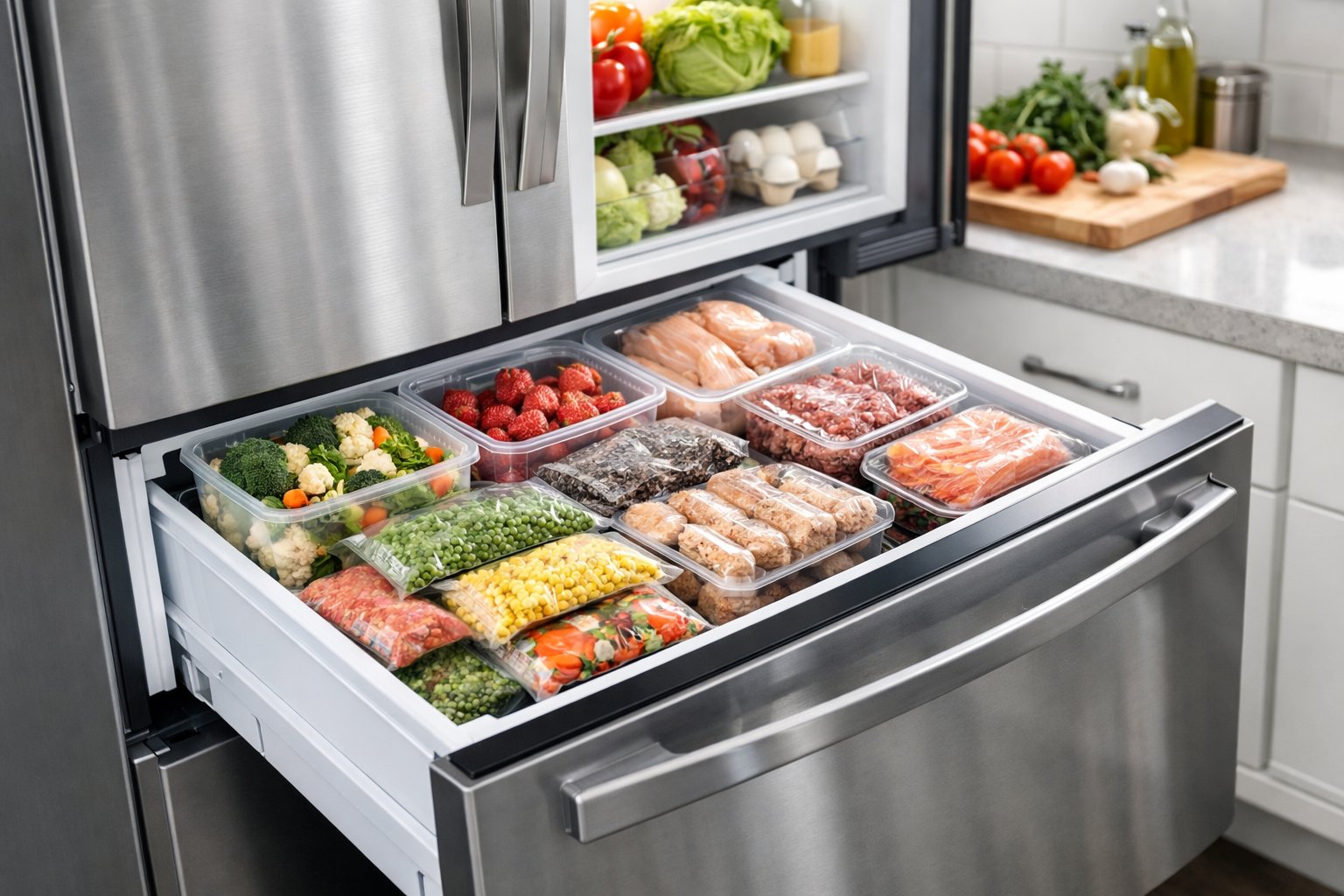
Grouping similar foods together really helps. Create zones—meats, veggies, prepared meals, breakfast stuff—so you’re not hunting for that one bag of peas under a mountain of frozen waffles.
Bins or boxes are a lifesaver for small things that like to vanish into the back. Clear bins are great for uprights, and sturdy boxes with handles work well in chest freezers where you need to lift stuff out.
Label everything with what it is and when you froze it. Trust me, you won’t remember what’s in that mystery bag three months from now. Freezer-safe labels or a Sharpie right on the bag work fine.
Freeze soups and sauces flat in bags, then stand them up once they’re solid. It saves space and lets you flip through your stash like a file cabinet. Vacuum-sealed bags make this even better—less air, less bulk.
Keeping a freezer inventory (on your phone or taped to the door) helps you track what’s in there and stops you from buying duplicates or letting things expire.
Preventing and Managing Freezer Burn
Freezer burn is just food losing moisture and getting exposed to air—those weird gray patches and icy bits we’ve all found on old steaks. It’s still safe, but the taste and texture take a hit.
Good packaging is key. Squeeze out the air, or use a vacuum sealer if you have one. Wrapping things tight in freezer paper or foil before bagging gives double protection.
Keep that freezer at 0°F or below, and don’t leave the door open longer than you need to. Don’t pack it so full that air can’t move around.
Check your stash every so often for freezer burn—look for discoloration, ice crystals, or shriveled bits. Rotate older stuff to the front and use it first. Stick to recommended storage times: fresh poultry up to nine months, steaks and roasts four to twelve, cooked meats two to six.
Defrosting, Cleaning, and Upkeep
Manual defrost freezers need a cleanout when frost gets about a quarter inch thick. Too much frost cuts storage space and makes your freezer work harder.
Try to defrost when you’re running low on food. Move what’s left to a cooler, unplug the freezer, and prop the door open. Towels catch the melting ice, and please—don’t hack at the frost with anything sharp.
Once it’s thawed, wipe down the inside with warm water and baking soda (a tablespoon per quart is plenty). That clears out odors without leaving weird chemicals behind. Don’t forget the door seals—wipe them and check for cracks.
Regular maintenance:
- Vacuum the condenser coils every six months
- Make sure the door seals tight
- Keep drainage tubes clear
- Use a freezer thermometer to check temps
- Listen for odd noises that could mean trouble
Frost-Free Technologies and Appliances
Frost-free freezers use automatic defrost cycles—a heating element briefly warms up the inside, melts frost, and drains away the water. You never have to chip away ice, and frost just doesn’t build up.
Fans move air around, stopping moisture from settling and keeping temps even throughout the freezer.
The tradeoff? Frost-free models use a bit more energy because of those cycles and fans. They also dry out food faster, so good packaging becomes even more important.
Honestly, if you hate defrosting (who doesn’t?), frost-free is worth it. If you go with manual defrost for the energy savings or lower price, just be sure you’re up for regular defrost sessions.
Space Constraints and Choosing an Appliance
How much room you’ve got—and where you want the freezer—matters. Chest freezers need more floor space but give you more storage for the size. Uprights fit into tighter spaces but don’t use every inch as efficiently.
When a Dedicated Freezer Makes Sense
You’ll want a standalone freezer when your fridge’s freezer just isn’t cutting it. A 22-cubic-foot chest freezer needs about a 2x6-foot area, while an upright with the same space only takes up 2.5x2.5 feet.
This stuff matters in basements or garages where space is weirdly shaped. If you’ve got a narrow spot, uprights give you 18-22 cubic feet in about six square feet. Chest freezers are better for big, open spaces but need more floor area.
What you’re freezing plays a role, too. Whole turkeys or big meat hauls fit easier in chest freezers since there aren’t shelves in the way. Uprights are better for organizing, with shelves and bins that make it easier to grab what you need.
Refrigerator-Freezer Combos vs Standalone Freezers
Fridge-freezer combos come in four main layouts, and each one handles freezer space differently. Top-freezer fridges give you about 30% of their space for freezing, which is the most in this group. Bottom-freezer models are similar but make you bend down to reach frozen stuff.
Side-by-sides split the space vertically—usually 40-45% goes to the freezer, but it’s a narrow column. French door fridges have the least freezer space, usually just a bottom drawer with 25-30% of the total.
Adding a standalone freezer gives you 5 to 25 extra cubic feet for frozen food, and you keep all your fridge space for fresh stuff. It costs more upfront and uses more energy, but you get way more flexibility.
Extra Features: Ice Makers and Water Dispensers
Built-in ice makers and water dispensers eat up 1-2 cubic feet of freezer space in fridge-freezer combos. That’s a decent chunk gone, especially if you’re already short on room.
The trade-offs:
- Through-door ice dispensers shave off 3-4 inches of freezer width
- In-door water tanks can take up the space of 2-3 shelves in a side-by-side
- Ice bins usually hold 3-5 pounds, right where you want to store food
You get convenience, sure, but lose storage. Sometimes it makes more sense to pick a basic model and add a small standalone freezer instead.
Thawing and Bringing Frozen Foods Back to Life
Safe thawing keeps food tasting good and stops bacteria from taking over. How you thaw things can make the difference between a tasty meal and a soggy, sad dinner.
Safe Thawing Methods
There are three main ways to thaw frozen foods, and each fits different needs. The refrigerator method takes the longest, but it gives you the most control. Your food sits safely at 40°F or below, so bacteria can’t multiply while it slowly thaws overnight or longer.
Cold water thawing speeds things up. You just submerge the food—sealed in leak-proof packaging—in cold water (below 70°F), swapping the water every 30 minutes. This works well for things that thaw in under two hours.
Microwave thawing is the fastest, but there’s a catch. You have to cook the food right after thawing, since some spots might start to cook while others are still icy. That mix of temperatures can let bacteria thrive if you don’t act quickly.
Don’t thaw foods at room temperature. Even if the center stays frozen, the outer parts can slip into the danger zone (40-140°F), where bacteria multiply like crazy.
Impact on Food Texture and Quality
How you thaw something really changes what ends up on your plate. Frozen fruits are best when they’re still a bit icy—it hides the mushy texture that freezing leaves behind. Water-rich foods lose some of their cell structure in the freeze-thaw process.
Most vegetables skip thawing. We usually cook them straight from frozen to keep their texture. Corn on the cob and leafy greens are exceptions—they need a little thawing first for even cooking.
Meat and poultry stay juicier when you thaw them slowly in the fridge. Quick-thawing works if you’re in a hurry, but the fridge method gives you better texture and flavor. When breading or stuffing, we always fully thaw first for safety and easier handling.
Short-Term Storage: When Refrigeration Still Wins
Freezers are great for long-term storage, but the fridge is unbeatable for foods you’ll use within days or weeks. Some foods actually get worse in the freezer, and refrigeration keeps them just right for immediate use.
Foods That Lose Quality When Frozen
Not everything likes the freezer. Fresh lettuce, cucumbers, and celery turn limp and watery after freezing—their high water content forms ice crystals that break down cell walls. Soggy salads? Been there.
Soft cheeses like cream cheese and ricotta get grainy and separated. Mayonnaise-based foods split, leaving a weird oily mess. Eggs in their shells will crack, though scrambled eggs freeze pretty well.
Fresh herbs lose their color and delicate texture in the freezer. Milk-based sauces often separate and need a lot of whisking to fix. Cooked pasta gets mushy after freezing and reheating, so for meal prep, the fridge is the way to go.
| Food Type | Why Freezing Fails | Refrigeration Time |
|---|---|---|
| Leafy greens | Cell wall damage, wilting | 3-7 days |
| Soft cheeses | Texture breakdown | 1-2 weeks |
| Creamy dressings | Separation | 1-2 months |
| Fresh pasta | Texture degradation | 2-3 days |
Ideal Uses for Refrigeration
Short-term storage shines when you want food ready to cook, no thawing required. Marinating proteins works best in the fridge, where flavors soak in safely. Prepping veggies for the week ahead? The fridge keeps them crisp and ready to use.
Dairy keeps its intended texture in the fridge. Yogurt stays smooth, milk pours easily, and butter spreads without crumbling. Leftovers last three to four days, which is perfect for quick lunches.
Open condiments, partial cans, and fresh fruits all do better in the fridge. You avoid those weird texture changes freezing brings, and everything stays safe. This keeps your cooking flow smooth, with ingredients ready to grab.
Monitoring Refrigerator Freshness
Keeping your fridge at 37-40°F slows down bacteria without freezing delicate foods. A simple fridge thermometer can confirm you’re in the right range.
Dating containers helps track how long something’s been in there. We mark leftovers with the prep date and check before using. It’s a habit that cuts down on waste and makes sure you eat things at their best.
A quick visual check helps catch spoilage early. Look for changes in color, smell, or texture—if something seems off, it probably is. Organizing shelves by age keeps older foods in sight, so you’re less likely to forget about them until it’s too late.
Frequently Asked Questions
Freezer storage can get confusing—what foods freeze best, how do you keep quality up, and when should you freeze instead of refrigerate? Here’s what we’ve figured out.
What items are absolutely better off in the deep chill than simply keeping cool in the fridge?
Raw meats and poultry top the list—they last just a few days in the fridge but months in the freezer. Bread actually freezes really well, better than leaving it on the counter or in the fridge.
Nuts and whole grain flours? The freezer’s your friend, since their oils can go rancid at room temp. Freezing fresh herbs in oil or water makes handy portions that beat wilted fridge herbs any day.
Stock and broth freeze beautifully in small portions, so you’ve got instant flavor ready. Butter also keeps great in the freezer—grab a stick when you need it, no worries about spoilage.
How can I prevent freezer burn to ensure my gourmet ingredients stay top-notch?
Freezer burn happens when air sneaks in and dries out the food, leaving those telltale gray patches. To avoid it, squeeze out as much air as you can from containers and bags before sealing.
Double wrapping helps for long-term storage. We wrap meat tightly in plastic wrap, then add a freezer bag or foil for another barrier.
Freezer-specific bags matter—they’re thicker and designed to keep moisture in at freezing temps. Keeping your freezer at 0°F or below stops ice crystals from forming and ruining texture. And don’t overload the freezer all at once, or you’ll get temperature swings.
Could you dish out some tips for optimizing my freezer layout to keep my meal-prep game strong?
We organize by food category—proteins in one spot, meals in another, veggies together. It cuts down on digging around and keeps things easy to find.
Flat freezing is a game changer for soups and sauces. Freeze them in bags laid flat, then stack them vertically like files. Saves tons of space, and it’s easy to grab a portion.
Keep what you use most at eye level. Bulk items you don’t need often go in the back or bottom, out of the way.
Clear containers let you see what’s inside without opening everything. We keep our current meal-prep and ready-to-use items near the front, where they’re easy to grab.
What's the scoop on freezing dairy – is it a culinary do or a kitchen don't?
Hard cheeses freeze fine, though they get a bit crumbly. Shredded cheese freezes best and works great for cooking, even if you wouldn’t serve it on a cheese board after thawing.
Butter freezes with no issues. We stock up when it’s on sale and stash extra pounds in the freezer—never noticed a difference.
Milk can be frozen, but it’ll separate a bit when thawed. A good shake brings it mostly back, but we use it for cooking, not drinking. Heavy cream is similar—okay for cooking, but don’t expect it to whip after thawing.
Soft cheeses and sour cream don’t freeze well; they get grainy and weird. Yogurt’s the same—unless it’s going in a smoothie, we skip freezing it.
For meal planners and bulk buyers – how can I tell when it's time to freeze it rather than just refrigerate?
If you know you won’t use something within its fridge life, freeze it right away. Fresh meat you won’t cook in two days? Straight to the freezer.
Bulk buys get portioned and frozen on shopping day. We split big packs into meal-sized portions, so we only thaw what we need.
Batch-cooked meals for future weeks go into the freezer as soon as they’re cooled. Today’s dinner can stay in the fridge, but anything meant for later in the week belongs in the freezer.
Seasonal produce at its peak freezes better than stuff that’s been sitting around. We prep and freeze berries, corn, and tomatoes while they’re fresh, not after they’ve started to decline in the fridge.
Could you whisk together some advice for labeling frozen goods to keep track of freshness and flavors?
We jot down three things on every package: what's inside, how much is there, and when it went into the freezer. That way, we're never left guessing about mystery bags or ancient leftovers.
Permanent markers honestly beat regular pens for this—pens just smear or fade, especially on cold, damp surfaces. We write directly on freezer bags, and for containers, freezer tape holds up better since condensation loves to make stickers slide right off.
Sometimes we scribble a quick note like "cook from frozen" or "thaw overnight." It's a small thing, but it saves us from standing in front of the freezer, debating what to do when we're already hungry.
We also keep a running freezer inventory taped to the door. It's not fancy, just a list. When we toss something in or take it out, we make a quick update. It’s not perfect, but it keeps us from losing track of stuff until it’s way past its prime.
Share:
How to Prevent Moisture Damage in Stored Dry Ingredients
Why Some Frozen Foods Lose Flavor Faster Than Others