

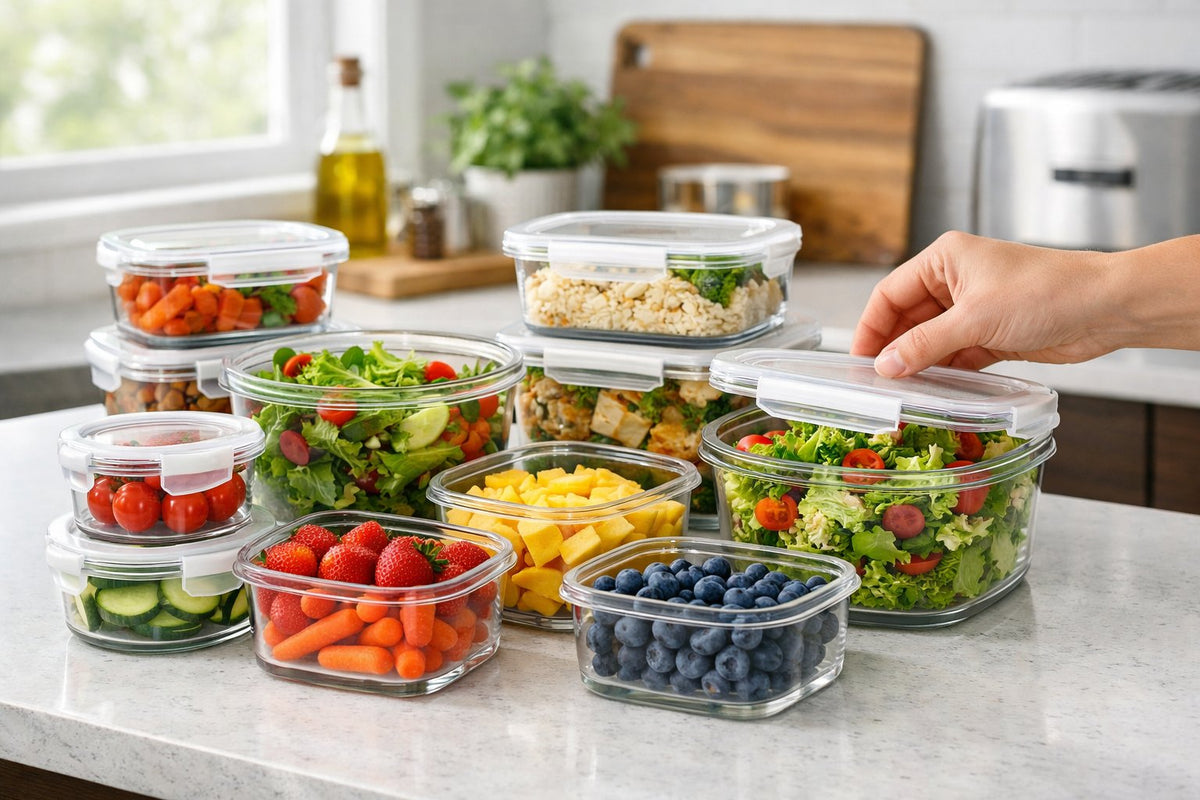
We've all opened the fridge and found a mystery container, maybe Tuesday's leftovers, maybe last week's failed experiment. Honestly, if we can't see what we've got, we don't use it.
Clear storage containers fix this by making every ingredient visible. That cuts down on waste and helps us actually eat what we buy before it goes bad. It's not just about a tidy pantry; it's about having a system that works with the way we naturally operate in the kitchen.
Storing food in clear containers versus opaque ones is like the difference between a messy junk drawer and a neat toolbox. When we see everything, we make better choices about what to cook and what needs to be used.
Clear storage takes out the guesswork that leads to buying doubles or letting things rot in the back of the shelf. It's a simple fix that just works.
Clear containers also help us keep food safe and the kitchen running smoothly. Whether we're prepping meals for the week or just trying to keep leftovers from turning into science projects, being able to see what's inside makes everything feel a little more manageable.
Key Takeaways
- Clear containers let us see food instantly, so we use ingredients before they spoil and waste less
- Transparent storage makes the kitchen more organized—you don't have to open every lid to find what you need
- It's easier to plan meals and handle food safely when you can quickly check what's fresh and how much is left
The Visibility Advantage: See It, Use It
When we see what we've got, we actually use it. Clear containers end the guessing game that leads to wasted food and forgotten leftovers.
Quick Ingredient Identification
Clear containers let us spot ingredients in seconds. No need to open lids or shuffle things around, which matters most when we're rushing to get dinner started.
You can tell all-purpose flour from bread flour, or white sugar from powdered sugar, just by glancing. No more grabbing the wrong thing halfway through a recipe.
Common ingredients you can spot at a glance:
- Flours and grains
- Sugars and sweeteners
- Pasta shapes
- Nuts, seeds, dried fruit
- Spices in clear jars
This is especially handy when more than one person cooks. Everyone can find what they need without tearing the pantry apart or asking a million questions.
Reducing Forgotten and Expired Foods
Clear containers make it way less likely to forget about leftovers or let ingredients expire. Food in opaque containers at the back of the fridge just disappears until it's too late.
We've all had that moment—opening a container to find something unidentifiable, or realizing we bought an ingredient weeks ago and never used it. With clear storage, everything's right there. One quick look tells us what needs to be eaten soon.
Studies have shown that seeing food leads to using it. If we see those chopped veggies or that container of cooked rice every time we open the fridge, we're way more likely to use them. Same goes for pantry goods—clear jars mean dry goods don't get lost in the shuffle.
Streamlined Meal Prep and Cooking
Clear containers can make meal prep feel less like a slog. We see our prepped ingredients and meals right away, so grabbing what we need is simple.
During meal prep, clear containers let us organize by recipe or meal. We know exactly how much chopped onion or chicken is left without opening everything. That saves time and cuts down on cleanup.
When meals are stored in clear containers, we can quickly check what’s ready for the week. No more forgetting about that grain bowl or losing track of snacks. The transparency keeps our meal prep from going to waste.
Maximizing Freshness and Food Safety
Clear containers help keep food fresh and safe by sealing in freshness and making it easy to spot anything that needs attention before it turns into a problem.
The Importance of Airtight Seals
Airtight seals are the first line of defense against spoilage. If we use containers without good seals, we're basically letting bacteria, moisture, and odors run wild in the fridge.
Quality airtight lids keep oxygen out and freshness in. When food gets exposed to air, it breaks down quicker and loses nutrients. We've all opened a container of crackers to find them soft and stale—that's what happens without a good seal.
Look for containers with silicone gaskets or snap-lock lids. These keep moisture in (which prevents freezer burn) and block outside contaminants. For pantry staples, airtight storage can add months to the shelf life of things like flour and cereal.
Quick tip: Test your seals by filling a container with water, sealing it, and turning it upside down. If it doesn't leak, you're good.
Preventing Cross-Contamination
Clear containers with secure lids help us avoid cross-contamination by keeping different foods separated. Raw meat above ready-to-eat food? That's a no-go, but with clear storage, we can check our fridge setup in a second.
Cross-contamination happens when bacteria move from one food to another. We prevent this by using separate containers for raw proteins and keeping them on lower shelves.
Clear containers also mean we don't have to open everything to see what's inside, so we handle food less and lower the risk of spreading germs.
Labels help, too—even though we can see through the containers, it's easy to mix up similar-looking foods. Marking contents and dates keeps things straight.
Spotting Spoilage Instantly
The see-through factor really pays off when it comes to spoilage. We can spot mold, weird colors, or texture changes without opening anything and accidentally spreading germs.
Early detection stops us from using sketchy ingredients. That fuzzy patch on yesterday's pasta? We'll see it right away, not halfway through making dinner.
A quick scan of the fridge tells us what needs to get used up. Limp veggies, separating dairy, or weird-looking meat all stand out.
This also helps us notice patterns—what gets eaten quickly, what always spoils—so we can shop smarter and waste less.
Types of Clear Storage Containers: What's Best for You?
Most clear storage comes in glass or plastic. Glass is durable and heat-resistant, while BPA-free plastic is lighter and usually cheaper.
Glass Containers: Pros and Cons
Glass containers are tough and safe. They don't soak up smells or stains, so Tuesday's tomato sauce won't mess up Thursday's leftovers. We can move them from freezer to oven to table without stressing.
But they're heavy and cost more. Glass isn't great for hauling lunch around, and if you drop one, well, cleanup isn't fun. The upfront price is higher, but they tend to last longer and keep food fresh.
Most glass containers have plastic or silicone lids, which might need replacing eventually. Just check that the seal is still tight. Even though they're pricier, glass containers usually pay off over time.
Plastic Containers: BPA-Free and Beyond
BPA-free plastic is the norm now, since BPA can leach into food. Most brands use polypropylene or Tritan, which are safer. Still, always check for the BPA-free label.
Plastic containers win on price, weight, and flexibility. They're great for meal prep, and you don't have to worry about breaking them. Many are microwave- and dishwasher-safe, but it's worth checking the details.
Downsides? They don't last as long, can stain, and might get cloudy or warped over time. They also tend to hold onto strong smells. If you see cracks or discoloration, it's time to replace them—usually every year or two.
Kitchen & Pantry Organization Made Easy
A well-organized kitchen means setting up systems that match how we actually cook and shop. Clear jars and smart storage keep everything easy to find. Grouping, labeling, and using space efficiently can turn a chaotic pantry into a workspace that actually works.
Creating an Efficient Pantry System
Start by figuring out what you use most. Put those items at eye level, and stash rarely used stuff higher or lower.
Pull-out drawers are great for deep cabinets—they stop things from getting lost in the back. A lazy susan works for corners or deep shelves, spinning things around so you don't have to dig.
Clear pantry glass jars make everyday ingredients like flour, rice, pasta, oats, and snacks easy to find. Seeing the amount left helps you notice when oats are nearly finished or whether there’s enough rice for dinner before adding more to your shopping list. Label similar-looking ingredients and keep original cooking instructions and date information.
For shelf organization, square glass jars line up neatly with fewer gaps between containers. Group them by use, such as breakfast, baking, or snacks, and keep frequently used ingredients within easy reach.
A pull-out pantry in narrow spaces between appliances can hold a surprising amount—spices, oils, canned goods—without taking up much room.
Labeling and Inventory Hacks
Labels save time and stop the guessing game. Mark what's inside and when you bought it (or when it expires).
Useful label info:
- Name of the item
- Purchase or expiration date
- Cooking instructions (for bulk stuff)
- How much is left (if you want to get fancy)
Masking tape and a marker work, but reusable labels or a label maker look nicer. We like labeling both the front and top, especially for high shelves or drawers.
A quick inventory list on your phone or taped to the pantry door helps with shopping. Update it when you finish something, so you never run out.
Grouping and Stacking for Space Optimization
Keep like with like, and group by how often you use things. Baking stuff in one spot, breakfast in another, snacks somewhere else. This makes cooking faster because you know where to look.
Stackable clear containers make the most of vertical space. Square or rectangular ones fit better than round, and leaving a gap between stacks means you can grab what you need without causing a landslide.
Grouping ideas:
- Breakfast (oats, cereal, coffee)
- Baking (flour, sugar, baking powder)
- Cooking staples (oils, vinegars, stocks)
- Snacks
- Canned goods by type
Smaller items—like spices—fit well on tiered shelves or in shallow drawers. Don't stack these; digging through layers is a pain.
Reducing Waste: The Sustainable Side of Clear Storage
Clear containers help us waste less by making forgotten food visible, and smart material choices can lower our environmental impact. Seeing what we've got changes the way we handle food and think about sustainability.
Minimizing Food Waste at Home
Household food waste adds up fast—the average family throws away hundreds of dollars a year. Clear storage tackles the "out of sight, out of mind" problem that leads to spoiled produce and sad leftovers hiding in the fridge.
Our brains react faster to what we see than what we remember. Spotting that leftover soup right away means we're more likely to eat it, instead of finding it weeks later when it's way past saving. This visibility nudges us to use what we have before buying more.
Airtight clear containers also keep food fresh longer. Veggies stay crisp, herbs keep their flavor, and dry goods don't go stale as quickly. We're not just being organized—we're actually preserving food and stretching our groceries further.
Choosing Sustainable Storage Materials
Glass containers are probably the most sustainable clear storage option—they’re endlessly recyclable and don’t leach chemicals into your food. You can move them from freezer to oven, and they stay clear year after year. No weird clouding, no stains.
BPA-free plastic, like polypropylene or Tritan, gives you a lighter alternative that’s still pretty safe and durable. These plastics don’t crack easily and hold up to lots of washing. Still, even BPA-free plastics won’t last forever and eventually add to the waste pile.
Silicone lids and storage bags are another solid choice. They’re flexible, reusable for years, and some brands now use recycled ocean plastic—turning trash into something useful. Really, it comes down to picking materials you’ll actually use for the long haul, not just whatever’s convenient that week.
Tackling Plastic Waste with Better Choices
Single-use plastic bags and throwaway containers create a mountain of waste that reusable storage can seriously cut down. Every time you use a glass or sturdy plastic container instead, that’s dozens of bags or containers kept out of the landfill each year.
It’s not just about where plastic ends up, either. Making traditional plastics burns up petroleum and pumps out greenhouse gases. Biodegradable plastics sound good, but most need special composting facilities—most of us don’t have those. They usually don’t break down in your backyard compost or the landfill, despite the marketing.
If you want to cut plastic waste, buy fewer, better-quality clear containers that’ll last. Cheap sets that crack and stain just pile up in the trash. Glass or high-end BPA-free plastic means you’re not replacing them every few months. And when a plastic container finally bites the dust, check if your local recycling actually takes that type—lots don’t.
Extra Tips: Keeping It Practical and Stylish
Getting the right sizes, prepping meals ahead, and making your storage look halfway decent on the shelf all help keep your kitchen running smoothly. Plus, who doesn’t like a little eye candy in the pantry?
Pick the Right Size for Every Need
Ever try to cram a half-cup of leftover sauce into a giant two-quart box? Yeah, us too. It’s worth building up a stash of clear food containers in different sizes that fit what you actually keep around.
For flour or sugar, go big—think 4-6 quarts. Little guys (8-16 ounces) are perfect for spices, nuts, or seeds. Mediums (1-2 quarts) work for pasta, rice, or snacks.
Here’s what’s usually on hand:
- Small (1-2 cups): Herbs, spices, tiny snack bits
- Medium (4-6 cups): Grains, pasta, chopped veggies
- Large (8+ cups): Flour, cereal, bulk stuff
Measure your cabinet shelves before you buy tall containers. Trust us—realizing your new set doesn’t fit is the worst.
Meal Prep and Leftovers: Maximize Usage
Clear containers turn meal prep from a guessing game into something you can actually manage. When we prep for the week, we portion everything into stackable clear storage—grabbing lunch on a busy morning takes seconds, not minutes.
Masking tape and a date scribbled on the lid keeps things straight if you’re storing lots of batches. We try to move older stuff to the front so nothing gets lost in the back and turns into a science experiment.
Rectangular or square containers stack way better than round ones and save a ton of fridge space. After we switched to all rectangular food storage containers, we somehow found 30% more room.
For leftovers, use containers that actually match your portion sizes. One chicken breast in a giant box just wastes space and makes your fridge look emptier.
Aesthetic Upgrades for Open Shelving
If you keep your clear food containers on open shelves, matching lids and shapes look a lot more pulled together than a random jumble. We stick with one brand or style for the shelves everyone sees.
Line them up by height—tall in back, short in front. It just looks better and makes things easier to grab. Grouping similar stuff together (baking supplies here, breakfast stuff there) helps, too.
Labels make a difference. A label maker or chalkboard stickers look more intentional than our rushed handwriting (though, let’s be honest, we still do that sometimes).
Wipe off fingerprints and smudges from the container fronts. A quick swipe with a microfiber cloth before company comes over makes the kitchen look surprisingly organized.
Frequently Asked Questions
How you store food changes how long it stays good, how much you actually use, and how much you toss. Clear containers and a little organization can turn daily chaos into something you can actually handle.
How does decluttering storage space contribute to food freshness?
When you clear out clutter, air can move around your food, which keeps moisture from building up and causing mold or bacteria. Getting rid of extra packaging and combining things into the right containers gives each item room to “breathe.”
If your shelves are crammed, things get stacked too close, trapping heat and humidity. We’ve found that leaving at least an inch between containers in the fridge or pantry can stretch shelf life by 20-30% for a lot of foods.
Clear containers also make it obvious when you’re hoarding doubles or keeping expired stuff. You end up using what you have instead of buying more, and that keeps things naturally decluttered.
Can you share tips for organizing a pantry to prevent food spoilage?
Group things by expiration date, not just by type. Put the stuff that’ll go bad soonest right in front and at eye level so you use it first.
Label clear bins with what’s inside and when you bought it. Takes maybe 30 seconds after a grocery run and saves you from the “what is this and how old is it?” game later.
Store grains, flour, and pasta in airtight clear containers instead of their bags. Bugs and humidity can’t get in, and you’ll see when you’re running low. If you can, keep the pantry at 50-70°F—higher temps make dry goods spoil faster.
What are the best practices for container usage to maximize food shelf life?
Pick the right size for what you’re storing. Too much empty space means more air, which makes produce limp and crackers stale fast.
Use glass for acidic foods—tomato sauce, citrus—since it won’t stain or hold onto smells. Plastic works well for dry goods and short-term stuff.
Fill containers about 80-90%, leaving just a bit of headspace. Make sure they’re clean and dry before each use; even a little moisture can breed bacteria. Check seals from time to time and swap out containers with cracked gaskets or lids.
How can rearranging the fridge layout help in reducing food waste?
The top shelf stays the most consistent, so we keep leftovers and ready-to-eat stuff there—makes it easy to see what needs eating soon.
Lower shelves are colder, perfect for raw meat and fish (in sealed containers to avoid nasty leaks). The door shelves? Too warm for much besides condiments or salty stuff.
Crisper drawers aren’t all the same. We use the high-humidity drawer for greens and herbs, low-humidity for fruits that give off gas. Putting things where they belong can double how long they last.
What kind of storage solutions work best for maintaining optimal food quality?
Vacuum-sealed containers pull out air, so coffee beans stay fresh way longer and meat doesn’t get freezer burn. We use them for anything that’ll be around more than a few days.
Modular clear containers with snap-lock lids make airtight seals—great for keeping produce crisp or crackers crunchy. Squares and rectangles stack better and waste less space.
Some containers for produce have built-in vents that control humidity and gas. We’ve kept strawberries fresh for nearly two weeks in those, versus just a few days in regular containers. For big items like flour or sugar, 3-5 quart clear containers with pour spouts make it easy to see what’s left and pour without a mess.
In what ways does efficient kitchen storage contribute to smarter meal planning?
Visible inventory helps dodge the classic "Wait, we had that the whole time?" moment that can really mess with meal plans. When everything's right there in plain sight, it just feels easier to whip up meals with what's already on hand, instead of automatically heading out to buy more stuff.
Clear containers make it simple to eyeball exactly how much rice or pasta is left—no more guessing and getting caught short mid-recipe. Honestly, I’ve noticed this cuts down those annoying extra grocery runs by almost half.
Grouping similar things together—like tossing all the Asian sauces in one bin, or keeping baking stuff in its own spot—just saves time. You don't end up digging through five different cabinets for one ingredient. It’s weird how knowing where everything lives can turn a half-baked dinner idea into an actual plan.
Share:
How Storage Placement Affects How Often Ingredients Are Used
Understanding Air, Light, and Moisture in Food Storage