

Check out our latest collection of compact vacuum sealer for food!
Freezing meat should protect its quality, not leave you with dry, tough, or flavorless results months later. The texture you get after thawing depends on how well the meat is prepared, wrapped, frozen, stored, and thawed.
The best way to preserve meat texture during long-term freezer storage is to remove as much air as possible through vacuum sealing or proper wrapping, freeze the meat quickly at 0°F or below, and avoid temperature changes that create large ice crystals and moisture loss.
With the right freezer habits, you can keep meat firmer, juicier, and closer to its original quality. In this guide, you’ll learn how to prepare, package, freeze, store, and thaw meat so it stays fresher for longer.
Key Takeaways
- Vacuum sealing or tightly wrapping meat with minimal air exposure prevents freezer burn and preserves texture
- Freezing meat quickly at 0°F or colder limits large ice crystals that mess up texture
- Thawing in the fridge and avoiding refreezing helps keep the original texture and quality
Fundamental Freezer Practices for Superior Texture
Keeping the right freezer temperature, tracking what’s inside, and understanding how long different meats stay at their best are the basics. These habits work together to minimize texture loss and help your frozen meat taste closer to fresh.
Essential Freezer Temperature Control
Keep your freezer at 0°F (-18°C) or below, always. That temp stops bacteria and slows the chemical changes that break down meat. But it’s not just about the number. Consistency is huge. If your freezer gets warmer and then colder again, ice crystals inside the meat melt and refreeze, getting bigger each time. Those big crystals really mess up muscle fibers and cell membranes.
Temperature control checklist:
- Stick a standalone freezer thermometer inside. Don’t just trust the dial
- Check it every week so you can catch problems early
- Try not to open the door a bunch
- Don’t overload the freezer with a bunch of unfrozen meat all at once
Notice your freezer creeping above 0°F? Adjust it right away and give it a day to settle before adding new stuff.
Organizing and Rotating Freezer Inventory
You can have the perfect temperature, but if you forget what’s in there, you’ll wind up with mystery meat and sad texture. A simple FIFO system (first in, first out) keeps things moving and helps you use meat while it’s still good.
Label every package with what it is, how much, and the date you froze it. Write straight on freezer bags with a marker, or use labels that actually stick in the cold.
Put newer packages behind older ones so you grab the oldest first. Group similar stuff together, with ground meat here, whole cuts there, and poultry in its own zone. You’ll spend less time digging around, which means less warm air sneaking in.
Optimal Freezer Storage Times for Different Meats
Frozen meat stays safe to eat at 0°F, but texture and flavor do fade with time. Each type of meat has its own ideal freezer window, depending on fat and structure.
| Meat Type | Optimal Storage Time |
|---|---|
| Beef steaks, roasts, chops | 4-12 months |
| Ground beef, pork, poultry | 3-4 months |
| Pork cuts | 4-12 months |
| Whole poultry | Up to 12 months |
| Poultry pieces | 9-12 months |
| Processed meats | 1-2 months |
Ground meats have shorter windows because grinding exposes more surface area, so they lose quality faster. Fattier cuts go downhill sooner too, since fat oxidizes and picks up weird flavors even in the freezer.
You’ll get the best texture if you use meat within these timeframes. Wait too long, and you’ll see more drip when thawing, a drier bite, and muted flavor.
Perfecting Meat Preparation Before Freezing
How you handle meat before freezing makes a huge difference. Start with good cuts, portion them smartly, and freeze them fast. It all adds up.
Selecting Fresh and Lean Meats
Fresh meat always freezes better than stuff that’s been hanging out in the fridge for days. Look for bright color, firm texture, and little to no odor. The sell-by date should give you a buffer.
Leaner cuts usually hold up better in the freezer than fatty ones. Fat can go rancid over time, even when frozen. That doesn’t mean you have to skip marbled steaks, but try to use fattier cuts within 3-4 months, and save lean ones like sirloin, tenderloin, or chicken breast for longer storage.
If the meat’s wet, pat it dry with paper towels before wrapping. Less surface moisture means fewer ice crystals and less freezer burn.
Proper Portioning for Rapid and Even Freezing
Big roasts and whole packages take forever to freeze, and that slow freeze leads to big ice crystals and mushy meat. Divide bulk buys into meal-sized portions first. For a family of four, 1.5-2 pounds of ground beef works. Steaks go in packs of 2-4. Chicken breasts can be frozen solo or in pairs.
Portioning perks:
- Faster freezing, often 30-60 minutes instead of 4-6 hours
- Smaller ice crystals, less cell damage
- Only thaw what you need, so less waste
- Even thickness means even freezing
Flatten ground meat to about an inch thick instead of leaving it in a ball. That way, it freezes fast and thaws way quicker.
Quick Freezing to Prevent Ice Damage
How fast you freeze meat really matters. Commercial blast freezers do it in minutes, making tiny ice crystals that don’t wreck texture. At home, we’re stuck with slower freezers, but there are tricks.
Crank your freezer to its coldest setting a few hours before adding new meat. If it has a “quick freeze” button, use it. That’ll drop the temp to -10°F or -20°F for a bit.
Lay new packages in a single layer with space between them so cold air can get all around. Don’t stack them until they’re solid, which usually takes 24 hours. Once frozen, stack away and return the freezer to normal.
Put new packages right on the freezer shelf or against the wall, since those spots are coldest. Some freezers even have special shelves for this.
Choosing Optimal Packaging Materials
What you wrap your meat in seriously affects how it holds up. Good packaging blocks air and moisture, which are the main reasons for freezer burn and texture loss.
Vacuum Sealing: Gold Standard for Longevity
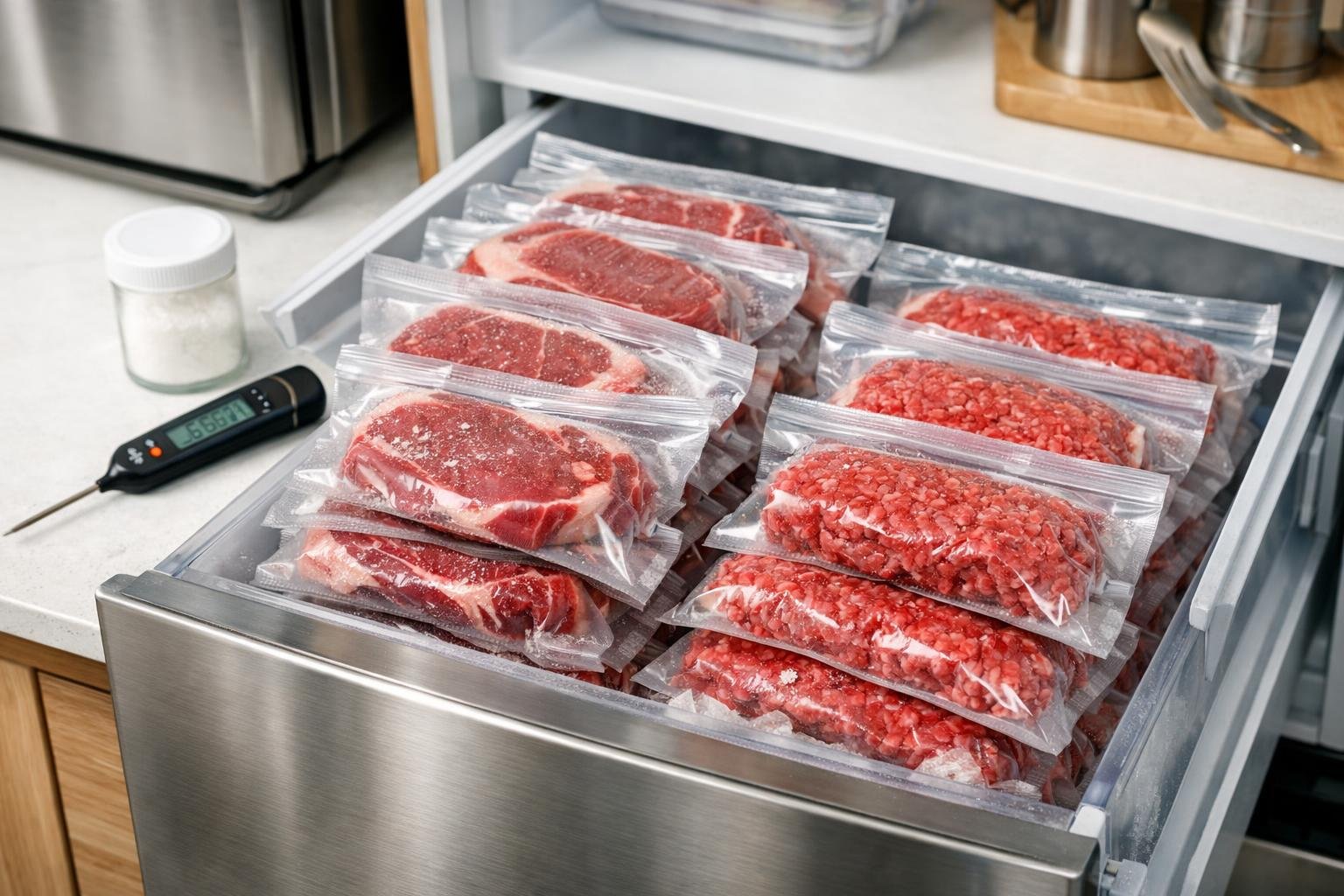
Vacuum sealing pulls out nearly all the air before sealing, creating a space where freezer burn can’t start. A decent vacuum sealer and thick freezer-safe bags can stretch storage from 3-6 months to over a year, sometimes two, while keeping texture and flavor.
No oxygen means no ice crystals on the surface and less chance for fat to go rancid. Multi-layer bags with nylon and polyethylene keep moisture in and air out.
If you regularly buy meat in bulk or hunt, a vacuum sealer is worth it. For bone-in cuts, grab puncture-resistant bags or wrap sharp edges with a paper towel first so you don’t poke holes.
Double Wrapping with Plastic Wrap and Freezer Paper
Double wrapping is a good budget option. Start with plastic wrap, pressing it right up against the meat to squeeze out air. Then wrap that in freezer paper, with the shiny side in.
Freezer paper’s got a plastic coating inside to block moisture, and the paper outside protects from bumps. Done right, this keeps meat fresh for 6-12 months.
The trick is getting all the air out with the plastic wrap. Smooth it tight and seal the edges. When you add freezer paper, fold the corners tight and use freezer tape, not regular tape, since that just falls off in the cold.
Freezer Bags, Airtight Containers, and Freezer Tape
Heavy-duty freezer bags are a solid middle ground. Look for ones labeled freezer-safe because they’re thicker and don’t crack in the cold.
To get the air out, put the meat in the bag, submerge it in water up to the seal, and zip it shut. Water pressure pushes out most of the air, kind of like a DIY vacuum seal.
Rigid airtight containers work well for ground meat or smaller cuts. Use freezer-safe plastic or glass, fill them up to minimize air, and tape the lids for extra protection.
Avoiding and Managing Freezer Burn
Freezer burn happens when moisture escapes and oxygen sneaks in, drying out the meat. Good packaging and storage habits can prevent it, but you can sometimes salvage meat that’s just starting to show signs.
Understanding Causes and Signs
Freezer burn is basically moisture leaving the meat and turning straight to vapor through sublimation, while oxygen moves in and messes with color and flavor. You’ll see grayish-white or brown leathery spots that feel dry, sometimes with ice crystals or shriveled areas.
Temperature swings make freezer burn worse. Every time you open the door, warm air gets in, and when it refreezes, ice crystals get bigger. Bad packaging with air pockets speeds up the damage. Foods with more water get hit hardest, though eventually, any meat will show freezer burn if left long enough.
Proactive Steps for Preventing Freezer Burn
Kick out air from the start. Double wrapping works: plastic wrap first, then foil or a freezer bag with the air pressed out. Vacuum sealing is even better for long-term storage.
Keep your freezer at 0°F or lower to freeze meat faster. Smaller ice crystals mean less cell damage and less freezer burn.
Key prevention moves:
- Use airtight containers sized to fit the meat, so there’s not a bunch of empty space
- Label packages with the date so you know how old things are
- Store meat in the coldest part of the freezer, usually the back
- Don’t open the freezer unless you have to
- Organize so you can grab stuff fast
Try to use frozen meat within two to four months for best quality, even though it’s safe much longer if stored right.
Remedies for Minor Freezer Burn
Freezer-burned meat is still safe to eat since bacteria can't survive at 0°F. If you notice discolored or dried-out spots, just trim those away with a sharp knife while the meat's still a bit frozen.
When only small areas are affected, you can add moisture back during cooking. Braising, stewing, or using a slow cooker helps rehydrate the meat and softens up any tough bits. Marinades also do a decent job, adding both flavor and moisture as the meat thaws.
The texture of freezer-burned meat usually turns out drier and a little tougher, so it's smart to adjust your cooking method. Ground meat with minor freezer burn works fine in saucy dishes, chilis, or casseroles since the extra liquid helps. For steaks or chops, low and slow really is the way to go, so skip the high-heat sear.
Safely Thawing Frozen Meat
Thawing meat the right way keeps the texture better and prevents bacteria from multiplying. There are three main safe methods: refrigerator thawing, cold water thawing, and microwave thawing. Each has its own quirks, but all can get the job done if you follow a few simple rules.
Refrigerator Thawing for Best Quality
Refrigerator thawing is the best choice for keeping meat texture intact. It keeps everything at a steady 40°F or below, which is ideal. The catch? It takes time. Bigger cuts need about 24 hours per 5 pounds, and even small stuff like ground meat or chicken breasts will need a full day.
Set the meat on a plate or in a container to catch any drips. No one wants a mess or cross-contamination. Keeping it on a lower fridge shelf helps, since temps are more consistent down there.
Once thawed, ground meat and poultry stay good for another day or two, while steaks and roasts last three to five days. If you change your mind, you can refreeze refrigerator-thawed meat without cooking, but you might notice a slight dip in quality.
Cold Water Thawing for Speed
Cold water thawing is much faster, but you need to pay attention. Always seal the meat in a leak-proof plastic bag so water can't get in and turn the texture weird.
Drop the bagged meat into cold tap water and swap out the water every 30 minutes to keep it cold. A pound of meat usually thaws in under an hour; bigger packages, around three to four pounds, take two to three hours.
Heads up: You have to cook meat right after thawing it this way. Never refreeze cold water-thawed meat unless you cook it first, since some parts may have warmed up enough for bacteria to grow.
Microwave Thawing Considerations
Microwave thawing is the quickest option, but it’s not perfect. Some spots might start to cook while others are still icy, which can mess with the final texture.
It works best for ground meat or thin cuts, not big roasts or whole chickens. Take off all packaging and use a microwave-safe container. Use the defrost setting and enter the meat's weight.
You really should cook meat immediately after microwave thawing, since warm spots can let bacteria multiply. Like with cold water thawing, don’t refreeze unless you’ve cooked it first. Honestly, if you’re not in a huge rush, cooking from frozen sometimes gives better results than zapping it in the microwave.
Special Techniques and Alternative Preservation Methods
Besides freezing, making jerky or curing and smoking meat are tried-and-true ways to keep it for months, and they create totally different flavors and textures. These methods work by drying out the meat and adding stuff that keeps bacteria away.
Making Jerky at Home
Start by heating meat to 160°F before dehydrating to kill off bacteria. Most dehydrators can’t get that hot, so you’ll need to boil or roast the strips first.
Slice partially frozen meat into quarter-inch strips across the grain for the best chew. Trim off all visible fat, otherwise, you’ll get rancid flavors later. Marinate the strips in the fridge, then heat them using boiling marinade or a 325°F oven until they reach 160°F inside.
After heating, dry the strips at 140-150°F for five to six hours. They should crack but not snap when you bend them. Rotate trays every hour to keep the drying even.
Storage guidelines:
- Room temperature: 1-2 months in airtight containers
- Refrigerated: 6 months
- Frozen: up to 1 year
Wipe off any oil before packaging. Beef, pork, or venison work best. Poultry just doesn't have the right texture for good jerky.
Curing and Smoking for Extra Shelf Life
Curing pulls moisture out and adds salt and nitrites to keep bacteria away. You can use dry rubs or brine solutions, and the process can take days or even weeks depending on how thick the meat is.
Use about 3.5% salt by weight for dry curing. Always cure in the fridge. For brining, mix 1 tablespoon of salt per quart of water. Soak meat for an hour to cut strong flavors, or longer if you want to preserve it.
Smoking adds yet another layer of protection by coating the meat with antimicrobial compounds. Cold smoking below 90°F preserves without cooking; hot smoking from 165-185°F both cures and cooks. Curing and smoking together can keep meat good for weeks in the fridge and over a year in the freezer, with a nice firm texture.
Frequently Asked Questions
Freezer storage quality depends on meat type, packaging, temperature, and thawing method. Here are quick answers to common questions about keeping frozen meat in better condition.
How long can different cuts of meat stay in the freezer before texture noticeably declines?
Beef steaks, roasts, pork cuts, and whole poultry usually hold texture best for 4 to 12 months. Ground meat is best within 3 to 4 months, while processed meats are best within 1 to 2 months.
What packaging method best prevents freezer burn when you do not own a vacuum sealer?
Double wrap the meat with plastic wrap first, then freezer paper or a heavy-duty freezer bag. Press out as much air as possible before sealing.
Which freezer containers or wraps protect meat texture best: freezer paper, bags, or rigid containers?
Vacuum-sealed freezer bags protect texture best. Without a vacuum sealer, use plastic wrap plus freezer paper or a thick freezer bag for strong air and moisture protection.
How should you portion and wrap raw meat to avoid ice crystals and mushy texture after thawing?
Divide meat into meal-sized portions and flatten thick pieces when possible. Smaller, even packages freeze faster and form fewer large ice crystals.
What is the safest way to thaw frozen meat so it stays juicy instead of turning watery and tough?
Thaw meat in the refrigerator. Slow, cold thawing helps protect texture, reduces moisture loss, and keeps the meat at a safe temperature.
Can meat that has been frozen for many years still be safe, and what texture changes should you expect?
Meat kept constantly at 0°F can remain safe, but quality declines over time. Expect drier, tougher, or less flavorful meat, especially if freezer burn is present.
Partager:
How Can Meal Prep Be Organized To Reduce Waste And Save Time
Which Bag Features Matter Most For Sous Vide Cooking At Home